Skip to content Skip to sidebar Skip to footer

Carvana’s High-MPG Comeback: Can America’s Favorite Vending Machine for Cars Keep Rolling? -( $CVNA $SPY )

Carvana (CVNA) has pulled off one of Wall Street’s more improbable U‑turns, morphing from near‑bankruptcy case to S&P 500 member and meme‑stock celebrity, all while selling used cars like they’re the new luxury good of a high‑rate world. Now, as short sellers circle and the debt meter still blinks bright red, investors are asking a simple question with a very complicated balance sheet behind it: how long can this engine run hot without overheating.


A Turnaround Story That Refused to Stall

In late 2022, Carvana looked destined for the corporate scrapyard, with bankruptcy chatter louder than the auctioneer at a Friday lane sale. Instead, management downshifted hard into a three‑step plan focused first on profitability, then scale, then sustained growth. By 2024 that plan was delivering: revenue jumped to about 13.7 billion dollars, up roughly 27 percent year over year, as operational efficiency finally caught up with the company’s marketing swagger.

The income statement tells an even more dramatic tale, with operating results swinging from a 72 million dollar loss in 2023 to roughly 990 million dollars of operating income in 2024, pushing margins into healthy mid‑single‑digit territory. Net income followed suit, flipping from a 200 million dollar loss in the fourth quarter of 2023 to a 159 million dollar profit in the same quarter of 2024, and a 404 million dollar profit for the full year. For a business once known for burning cash faster than it dispensed cars from glass towers, the new narrative is less “money pit” and more “cash‑flow conscious disruptor.”


Debt, Leverage, and the Art of Driving With a Heavy Balance Sheet

Of course, no good Wall Street redemption arc is complete without a little leverage drama, and Carvana still carries enough debt to make a private‑equity fund blush. The company’s long‑term obligations hover around 5.8 billion dollars, with a debt‑to‑equity ratio near 4 times, a level that would be comforting only to those who consider roller coasters a relaxing commute. Yet management has been methodically easing off the financial accelerator, restructuring roughly 4.5 billion dollars of obligations in 2023 to reduce interest expense and push out maturities.

Cash resources help cushion the ride, with liquidity in the mid‑single‑digit billions and free cash flow in 2024 rising about 15 percent to more than 800 million dollars. The integration of the ADESA auction network, acquired during the pandemic boom, is now paying off in logistics efficiencies, including same‑day or next‑day delivery for around 40 percent of sales in some markets. In other words, Carvana is still highly leveraged, but it has more than a few tools in the trunk to keep the credit markets from reaching for the tow hook.


Short Sellers, Meme Traders, and the Used‑Car Thunderdome

High‑octane rallies attract skeptics, and Carvana has become a recurring character in the hedge‑fund horror anthology of crowded shorts. After the stock surged roughly 10,000 percent off its 2022 lows, a prominent short seller alleged that the company’s profits were overly reliant on related‑party benefits and aggressive accounting, sending shares tumbling more than 14 percent in a single session and briefly erasing its 2026 gains. Critics have also questioned claims of outsized per‑unit profits that far exceed long‑term industry norms, a discrepancy that naturally invites forensic spreadsheets and pointed footnotes.

Yet the same volatility that keeps analysts busy has kept meme‑stock veterans entertainment as retail traders continue to treat Carvana as both a turnaround wager and a volatility theme park. Wall Street analysts, for their part, have been quick to defend the core operating story, pointing to strong cash generation, debt reduction of around 1.2 billion dollars over the last two years, and a more disciplined growth strategy. The result is a stock that behaves less like a traditional auto retailer and more like a real‑time sentiment poll on the future of asset‑light, data‑heavy commerce.


A Red‑Hot Used‑Car Market in a High‑Rate World

Carvana’s resurgence is riding shotgun with a structurally strong U.S. used‑car market, where price fatigue on the new‑vehicle side is pushing buyers toward pre‑owned options. Average transaction prices for new cars crept toward the high‑40,000‑dollar range in 2025, with typical monthly payments well above 700 dollars, nudging budget‑conscious drivers into the arms of used‑car specialists. Industry forecasts call for the U.S. used‑car market to add roughly 40 billion dollars in value between 2024 and 2029, growing at a low‑to‑mid single‑digit annual rate as online channels gain share.

Digital platforms are already reshaping how Americans shop for second‑hand wheels, with organized dealers and online specialists handling over half of used‑car transactions and pure‑play digital players using AI‑driven pricing and logistics to carve out margin. Carvana has leaned into this shift, selling more than 100,000 retail units in a single quarter in 2024 and commanding gross profit per vehicle north of 7,400 dollars after integrating its auction footprint. For consumers, the pitch is simple: skip the haggling, tap the app, and let the car come to you—ideally with a warranty and a delivery window more precise than “sometime on Tuesday.”


The Road Ahead: Glass Towers, Real Cash

Looking forward, Carvana’s investment case is a mash‑up of solid execution metrics and lingering balance‑sheet suspense, not unlike a road movie in which the car is running beautifully but the fuel gauge still makes the audience nervous. On the plus side, the company is delivering robust unit growth, expanding margins, and healthier free cash flow, all in a used‑car market that appears structurally supportive as long as new‑car prices and rates remain elevated. On the risk side, leverage remains high, regulatory and accounting questions have not vanished, and any stumble in demand or execution could quickly re‑ignite concerns that were very fresh just a few years ago.

For now, Carvana sits at an unusual intersection: it is simultaneously a Fortune 500‑climbing retailer, a high‑beta meme favorite, and a live case study in how far a digital‑first auto seller can push scale before the debt stack demands a pit stop. Investors who can tolerate the bumps may see upside if management continues to convert operational efficiency into sustainable, de‑leveraging cash flows, while skeptics will keep watching for any misfire that suggests the turnaround was more joyride than secular shift. Either way, the used‑car vending machine has firmly re‑entered Wall Street’s main stage—and this time, everyone is reading the fine print on the financing.


The Sources


[1] Carvana shares plummet 14% after report by short seller Gotham https://www.ft.com/content/7c939207-b1e2-40a2-bacc-831a1fcca93e
[2] Carvana Targeted by Short Seller, Sending Shares Tumbling https://www.bloomberg.com/news/articles/2026-01-28/carvana-targeted-by-short-seller-gotham-sending-shares-tumbling
[3] Carvana Stock Plummeted Today, Erasing Its 2026 Gains. Here’s Why. https://www.investopedia.com/carvana-stock-plummeted-today-erasing-its-2026-gains-here-s-why-cvna-gotham-11894591
[4] Carvana (CVNA) 2025: Strategic Shifts & Financial Analysis | Monexa https://www.monexa.ai/blog/carvana-cvna-2025-strategic-shifts-financial-analy-CVNA-2025-06-16
[5] Carvana Stock Falls on Short-Seller Report Alleging Overstated … https://www.wsj.com/livecoverage/fed-interest-rate-decision-01-28-2026/card/YPVoYZK9AiMNlVpmubUD
[6] Carvana jumped 63 spots on the Fortune 500—CFO explains what … https://fortune.com/2025/06/04/carvana-jumped-63-spots-fortune-500-cfo-what-fueled-rise/
[7] Carvana: Fortifying Their Business in 2025 | Trade Genie https://tradegenie.com/carvana-fortifying-their-business-in-2025/
[8] Carvana’s Red-Hot Growth Runs on a Cycle of Borrowed Money https://www.bloomberg.com/news/features/2026-02-01/carvana-growth-fueled-by-hot-used-car-market-meme-stocks-debt
[9] Carvana Slides as Short Seller Claims Clash With Strong Cash Flow … https://www.investing.com/analysis/carvana-slides-as-short-seller-claims-clash-with-strong-cash-flow-story-200674184
[10] CVNA down 20% on the day after Gotham City Research claims fraud. https://www.reddit.com/r/wallstreetbets/comments/1qpjuyr/cvna_down_20_on_the_day_after_gotham_city/
[11] Carvana Shares Rebound as Analysts Defend Firm From Short Seller https://www.bloomberg.com/news/articles/2026-01-29/carvana-shares-rebound-as-analysts-defend-firm-from-short-seller
[12] US Used Car Market Analysis, Size, and Forecast 2025-2029 https://www.technavio.com/report/used-car-market-in-us-industry-analysis
[13] US Used Car Market Size, Drivers & Opportunities 2025 – 2031 https://www.mordorintelligence.com/industry-reports/united-states-used-car-market
[14] Carvana shares fall 14% following short-seller accusations – CNBC https://www.cnbc.com/2026/01/28/carvana-shares-fall-14percent-following-short-seller-accusations.html
[15] 20 Used Car Dealership Digital Marketing Statistics in 2025 https://www.demandlocal.com/blog/used-car-dealership-digital-marketing-statistics/

IonQ’s $1.8 Billion SkyWater Deal: Building America’s First Vertically Integrated Quantum Chip Powerhouse

IonQ’s (IONQ) decision to buy SkyWater Technology for $1.8 billion reads like a quantum-age industrial policy love story: a fast‑growing quantum upstart marries a scrappy U.S. chip foundry, and the honeymoon is scheduled right onshore. For investors, the deal is a bet that vertical integration, not just clever algorithms, will separate the quantum winners from the merely quirky.

A $1.8 Billion Leap Toward Quantum Industrialization

IonQ agreed to acquire SkyWater Technology in a cash-and-stock transaction valuing the foundry at about $1.8 billion, or $35 per share. SkyWater shareholders are set to receive $15 in cash and $20 in IonQ common stock per share, structured with a collar that should keep the consideration from wandering too far into parallel universes. Once the deal closes, SkyWater will become a wholly owned subsidiary of IonQ, retaining its name and operating as a pure-play foundry within the combined company.

Building a Vertically Integrated Quantum Stack

IonQ is pitching the transaction as a “transformational” step toward becoming the only vertically integrated, full‑stack quantum platform company, spanning design, chip fabrication, advanced packaging, and deployment. By bringing SkyWater’s U.S.-based 200 mm fabrication, R&D, and packaging capabilities in‑house, IonQ aims to secure an end‑to‑end domestic supply chain for quantum computing, networking, sensing, and security. The combined platform targets customers across aerospace and defense, pharmaceuticals, finance, and cloud and enterprise computing, effectively turning SkyWater’s fabs into regional “quantum production hubs.”

Timelines: From Nine-Month Wafer Cycles to Quantum Speed Dating

IonQ has been explicit that this isn’t just about bragging rights—it’s about calendar math. Embedded access to SkyWater’s trusted U.S. foundry is expected to cut chip iteration cycles from roughly nine months to as little as two months, potentially turning multi‑year R&D loops into something closer to a quarterly habit. With the foundry in the family, IonQ now expects functional testing of its planned 200,000‑qubit quantum processing units in 2028, supporting more than 8,000 logical qubits, and believes it can pull forward a multi‑million‑qubit system by up to a year.

Washington, Wafer Fabs, and the Quantum Supply Chain

The deal also fits neatly into Washington’s desire for secure, onshore semiconductor capacity, particularly for advanced and defense‑related technologies. SkyWater brings a DMEA Category 1 Trusted U.S. foundry designation, positioning the combined company as a go‑to supplier for federal programs, including Defense Department initiatives and microelectronics networks seeking secure quantum and semiconductor solutions. IonQ’s CEO Niccolo de Masi has framed the acquisition as part of the broader momentum in U.S. semiconductor and quantum efforts nurtured under the Trump administration, now being channeled into scaling a domestic quantum manufacturing base.

What SkyWater Shareholders—and Quantum Investors—Are Really Getting

For SkyWater investors, the $35-per-share consideration represents a healthy premium to the company’s recent trading levels, with the structure giving them both upfront cash and exposure to IonQ’s higher‑growth quantum narrative. Post‑close, SkyWater’s shareholders are expected to own roughly 4.4% to 6.7% of the combined company, depending on final adjustments within the collar. If IonQ delivers on its roadmap and revenue guidance—aiming to hit or exceed the high end of its 2025 outlook—the foundry’s once‑niche role in specialty semis could age into a central position in the quantum economy rather than a footnote in someone else’s supply chain.

The Fine Print: Approvals, Timelines, and Closing Conditions

Boards of both companies have unanimously approved the transaction, signaling strong alignment at the top. The acquisition is expected to close in the second or third quarter of 2026, subject to SkyWater shareholder approval, regulatory reviews, and other customary closing conditions that, in true Wall Street fashion, come with more acronyms than an options chain. Until then, both firms will continue operating independently—one fabricating chips, the other fabricating ever‑larger qubit counts—while investors model what a vertically integrated quantum‑chip champion might be worth if everything goes right.


The Sources


[1] IonQ to Buy SkyWater in $1.8B Deal, Betting on Vertically Integrated … https://finance.yahoo.com/news/ionq-buy-skywater-1-8b-060626583.html
[2] IonQ to Acquire SkyWater: First Vertically Integrated Quantum Platform https://www.ionq.com/news/ionq-to-acquire-skywater-technology-creating-the-only-vertically-integrated-full-stack-quantum-platform-company
[3] IonQ to Acquire SkyWater Technology in $1.8 Billion Vertical … https://quantumcomputingreport.com/ionq-to-acquire-skywater-technology-in-1-8-billion-vertical-integration-transaction/
[4] IonQ SkyWater Acquisition Signals Path to Fault-Tolerant Quantum https://futurumgroup.com/insights/ionq-buys-a-foundry-is-vertical-integration-the-path-to-fault-tolerant-quantum/
[5] Quantum-Computing Company IonQ to Buy Chip Maker SkyWater … https://www.wsj.com/business/deals/quantum-computing-company-ionq-to-buy-chip-maker-skywater-for-1-8-billion-08916998
[6] IonQ to acquire SkyWater in a $1.8B deal – Evertiq https://evertiq.com/design/2026-01-27-ionq-to-acquire-skywater-in-a-18b-deal
[7] IonQ to spend $1.8B on chipmaker SkyWater to advance US … https://www.manufacturingdive.com/news/ionq-spend-nearly-2-billion-chips-maker-skywater-us-quantum-computing/810601/
[8] IonQ acquires SkyWater for $1.8 billion, bulks up with quantum chip … https://www.constellationr.com/insights/news/ionq-acquires-skywater-18-billion-bulks-quantum-chip-foundry
[9] IonQ to buy SkyWater in $1.8B quantum chip deal | SKYT SEC Filing https://www.stocktitan.net/sec-filings/SKYT/425-sky-water-technology-inc-business-combination-communication-7c6bbebcf0f1.html
[10] IonQ to acquire SkyWater Technology … https://www.eenewseurope.com/en/ionq-to-acquire-skywater-technology/
[11] IonQ to Buy SkyWater in $1.8B Deal, Betting on Vertically Integrated U.S. Quantum Chip Foundry https://www.marketbeat.com/instant-alerts/ionq-to-buy-skywater-in-18b-deal-betting-on-vertically-integrated-us-quantum-chip-foundry-2026-02-01/
[12] IonQ Buys SkyWater: Why This Acquisition Redefines The Quantum … https://seekingalpha.com/article/4863048-ionq-buys-skywater-why-this-acquisition-redefines-the-quantum-economics
[13] Quantum Computing Company Acquires SkyWater – Semiecosystem https://marklapedus.substack.com/p/quantum-computing-company-acquires
[14] SkyWater Technology to Be Acquired by IonQ in $1.8B Deal to Build … https://finance.yahoo.com/news/skywater-technology-acquired-ionq-1-040218709.html
[15] IonQ acquires pure-play chipmaker SkyWater Technology for $1.8bn https://www.datacenterdynamics.com/en/news/ionq-acquires-pure-play-chipmaker-skywater-technology-for-18bn/

Leidos’ $2.4 Billion Power Play: Why the ENTRUST Deal Could Supercharge Its Energy Future ( $LDOS $SPY )

Leidos (LDOS) is betting that the future of power isn’t just about electrons—it’s about engineering, data and a lot of capital expenditure, and it’s writing a $2.4 billion all‑cash check for ENTRUST Solutions Group to prove it. The deal doesn’t just bulk up Leidos’ utility business; it almost doubles its energy‑infrastructure footprint and nudges the company deeper into the trillion‑dollar grid modernization wave now rolling across U.S. utilities.

A $2.4 Billion Spark in the Grid

Leidos has agreed to acquire ENTRUST Solutions Group from private‑equity owner Kohlberg for roughly $2.4 billion in cash, its largest purchase since it bought Lockheed Martin’s IT services business in 2016. ENTRUST is expected to bring in about $650 million of annual revenue at attractive margins, implying a purchase multiple of roughly 16 times next‑twelve‑month EBITDA after factoring in tax benefits.

The transaction, expected to close by the end of the second quarter of 2026, will be financed with a mix of new debt, existing cash and commercial paper, leaving Leidos within its targeted leverage range. Management says the deal should support revenue growth and margin expansion immediately and turn accretive to adjusted earnings per share by 2027—Wall Street’s equivalent of promising dessert after the vegetables.

Doubling Down on Energy Engineering

ENTRUST designs and engineers infrastructure for gas and electric utilities, from power delivery and transmission lines to natural‑gas systems—precisely the kind of “behind‑the‑scenes” work that keeps the lights on and regulators calm. Folded into Leidos, the acquisition is expected to essentially double the company’s energy‑infrastructure engineering business to about $1.3 billion of annual revenue and add more than 3,000 employees, taking the energy workforce to roughly 5,500.

Executives say the combined operation will create an integrated platform spanning power generation, transmission and distribution, as well as gas‑infrastructure design—without straying into riskier construction work. In consultant‑speak, this makes Leidos one of the top players in U.S. transmission and distribution engineering; in investor‑speak, it makes the company more relevant every time a utility board decides its aging grid suddenly looks very 1970s.

Riding the Trillion‑Dollar Grid Wave

The timing isn’t accidental: U.S. utilities are projected to invest around $1 trillion over the next decade to modernize aging networks, handle surging load from data centers and electrification, and harden systems against cyber and physical threats. Leidos executives point to an ongoing pivot in utility spending priorities as load growth accelerates and regulators push for more resilient, digital‑ready grids.

That backdrop dovetails neatly with Leidos’ “North Star 2030” strategy, which emphasizes growth in sectors where customer demand is rising and the company can layer specialized technology on top of engineering services. ENTRUST’s deep utility relationships give Leidos more seats at the table just as those multi‑year capital plans are being drawn up—a useful place to sit when a trillion dollars is looking for engineering invoices.

Cyber, Data and the Leidos Playbook

Leidos isn’t just chasing poles and wires; it is also chasing the data and cybersecurity wrapped around them. Management highlights cross‑selling opportunities, from injecting Leidos’ cybersecurity and IT offerings into ENTRUST’s utility client base to applying data analytics and automation to grid design and asset management. With cyber threats to critical infrastructure rising, the ability to pair engineering blueprints with security architectures could become a differentiator—and a handy talking point on earnings calls.

The company also emphasizes cultural fit and prior M&A experience, noting that the same leadership group that successfully integrated the Kudu acquisition will oversee ENTRUST’s integration. Synergy plans lean more toward technology and scale efficiencies than sweeping job cuts, which should reassure both employees and regulators that the only thing being “de‑energized” here is redundant software.

What It Signals for Investors

For Leidos shareholders, the ENTRUST deal underscores the company’s evolution from a defense‑and‑IT stalwart into a broader engineering and infrastructure player tethered to long‑cycle utility capex. The transaction increases exposure to regulated utility spending, which tends to be steadier than some federal budget lines, while maintaining optionality to layer in higher‑margin technology, cyber and AI‑driven services over time.

Of course, integration risk, regulatory timing and higher leverage are the usual footnotes, and investors will be watching closely to see if promised “tens of millions” in synergies arrive on schedule. But if Leidos executes to plan, this $2.4 billion wager could turn its once “hidden gem” energy unit into a flagship business—proving that in today’s market, the real power move isn’t flipping the switch, it’s owning the grid‑design schematics.


The Sources

  1. Yahoo Finance – “Leidos to Buy ENTRUST for $2.4B Cash Deal, Aiming to ‘Turbocharge’ Energy Growth by 2026” https://finance.yahoo.com/news/leidos-buy-entrust-2-4b-093803488.html[1]
  2. Yahoo Finance – “Leidos Expands Energy Infrastructure Presence With $2.4B ENTRUST Deal” https://finance.yahoo.com/news/leidos-expands-energy-infrastructure-presence-151900809.html[6]
  3. Leidos – “Leidos to acquire power design firm ENTRUST, bolstering its energy infrastructure portfolio” https://www.leidos.com/insights/leidos-acquire-power-design-firm-entrust-bolstering-its-energy-infrastructure-portfolio[11]
  4. ENR – “Leidos Inks $2.4B Deal to Buy Power Design Firm ENTRUST Solutions” https://www.enr.com/articles/62428-leidos-inks-24b-deal-to-buy-power-design-firm-entrust-solutions[9]
  5. The Wall Street Journal – “Leidos to Buy Kohlberg’s Entrust for $2.4 Billion” https://www.wsj.com/finance/investing/leidos-to-buy-kohlbergs-entrust-for-2-4-billion-c7deafef[10]
  6. Reuters – “Leidos to acquire ENTRUST for $2.4 billion to enhance its energy infrastructure business” https://www.reuters.com/legal/transactional/leidos-buy-power-design-firm-entrust-about-24-billion-2026-01-26/[8]
  7. Yahoo Finance – “Leidos signs agreement to acquire ENTRUST Solutions in $2.4bn deal” https://finance.yahoo.com/news/leidos-signs-agreement-acquire-entrust-112601795.html[2]
  8. Washington Technology – “Leidos makes $2.4B bet on utility infrastructure with Entrust acquisition” https://www.washingtontechnology.com/companies/2026/01/leidos-makes-24b-bet-utility-infrastructure-entrust-deal/410926/[3]
  9. WashingtonExec – “Leidos to Acquire ENTRUST Solutions Group for $2.4B” https://washingtonexec.com/2026/01/leidos-to-acquire-entrust-solutions-group-for-2-4b/[4]
  10. GovConWire – “Leidos Strikes $2.4B Deal for Power Design Firm ENTRUST” https://www.govconwire.com/articles/leidos-2-4b-entrust-acquisition[5]
  11. Kohlberg – “Kohlberg Announces Sale of ENTRUST Solutions Group to Leidos for $2.4 Billion” https://www.kohlberg.com/kohlberg-announces-sale-of-entrust-solutions-group-to-leidos-for-2-4-billion/[7]

Senate’s Last-Minute Funding Victory Dodges At Least One Shutdown Bullet -( $DIA $SPY $QQQ $GLD $SLV )

Lawmakers pulled off a bipartisan high-wire act, passing a massive funding package that secures most federal operations through September. While a brief partial shutdown looms over the weekend, the deal signals Washington’s knack for threading the needle at deadline’s door.

Bipartisan Sprint to Stability

The Senate approved the $1.2 trillion measure in a decisive 71-29 vote on Friday evening, blending five full-year spending bills for key agencies like Defense and Health with a two-week lifeline for Homeland Security. President Trump’s Thursday endorsement on Truth Social greased the wheels, urging a “much needed Bipartisan ‘YES’ Vote” amid House recess delays.

This compromise sidesteps a repeat of last fall’s 43-day saga, punting DHS debates—fueled by recent ICE tensions—to future talks with built-in “guardrails” for accountability.

Weekend Hiccup, Not Headache

A partial lapse hits at midnight, furloughing some non-essential staff across affected programs, but leaders eye House approval by early next week for swift resolution. House Speaker Mike Johnson pledged to rally members pronto, minimizing what one aide quipped as “D.C.’s weekend version of daylight saving time—short and forgettable.”

Impacts stay contained: TSA and FEMA operations persist via other funds, while markets shrug off the blip, buoyed by funding continuity for 96% of government functions.

Immigration Patch Buys Negotiation Time

DHS’s short extension allows haggling over reforms, from Republican sanctuary city crackdowns to Democratic ICE oversight demands post-Minnesota incident. Sen. Chuck Schumer hailed it as a Democratic win, while Lindsey Graham extracted amendment votes—though all flopped—to vent on earmarks and probes.

Analysts see this as pragmatic politics: a temporary truce letting Trump 2.0 priorities simmer without stalling the fiscal engine.

Outlook: Full Steam Ahead

With the package now House-bound, expect rapid ratification and presidential ink, restoring seamless operations and underscoring Congress’s evolved shutdown aversion. In the grand ledger of governance, this counts as a tidy balance sheet—slight red ink over the weekend, black by Monday.

The Sources


[1] Here’s what federal programs are headed for a (possibly brief) shutdown https://www.politico.com/live-updates/2026/01/30/congress/government-shutdown-agencies-list-00758705
[2] Senate passes $1.2T government funding deal – Politico https://www.politico.com/news/2026/01/30/shutdown-senate-passes-funding-deal-00758615
[3] Senate passes funding deal but a partial government shutdown is … https://finance.yahoo.com/news/senate-passes-funding-deal-but-a-partial-government-shutdown-is-on-tap-for-this-weekend-140109435.html
[4] Senate passes spending package ahead of shutdown deadline, but … https://www.cbsnews.com/live-updates/government-shutdown-deadline-senate-funding-deal/
[5] Trump-backed funding bill clears the Senate, putting pressure … – CNN https://www.cnn.com/2026/01/30/politics/government-shutdown-senate-vote-congress-dhs-ice-funding
[6] Trump-blessed deal to keep government funded gets snagged in Senate https://www.politico.com/news/2026/01/29/shutdown-spending-deal-trump-00756372
[7] Senate passes bill to resolve shutdown clash, punting on DHS for … https://www.nbcnews.com/politics/congress/senate-passes-bill-resolve-shutdown-clash-punting-dhs-two-weeks-rcna256540
[8] Senate passes massive government funding package – The Hill https://thehill.com/homenews/senate/5715914-senate-government-funding-package/
[9] Senate votes to fund government ahead of Friday deadline but will … https://abcnews.go.com/Politics/graham-blockade-stalls-government-funding-deal-hours-shutdown/story?id=129712452
[10] US Senate approves spending package, but short government … https://www.aljazeera.com/news/2026/1/31/us-senate-approves-spending-package-but-short-government-shutdown-likely
[11] The latest on Senate passing funding bill ahead of possible partial … https://www.youtube.com/watch?v=XsPpphJTT9o
[12] Trump strikes deal with Democrats in government shutdown funding … https://www.nbcnews.com/politics/congress/trump-says-democrats-are-getting-close-deal-resolve-shutdown-fight-rcna256507
[13] Senate expected to pass funding deal as partial government … https://www.aha.org/news/headline/2026-01-30-senate-expected-pass-funding-deal-partial-government-shutdown-approaches
[14] WATCH: Senate approves funding deal to avoid shutdown, delaying … https://www.pbs.org/newshour/politics/watch-live-senate-scrambles-to-avoid-shutdown-after-democrats-strike-deal-with-white-house
[15] Senate to move ahead with spending deal but shutdown … – NPR https://www.npr.org/2026/01/29/g-s1-107762/senate-shutdown-vote-fails

Weekly Market Wrap January 30, 2026: S&P Edges Higher as Warsh Nomination, Earnings, and Gold & Silver Surge & Selloff -( $MODD $MTWO $SER $SOAR $SPY $VIX Rise!)

Wall Street closed the week ending January 30, 2026 looking like a marathoner who technically finished in positive territory but clearly felt the hill at the end. The S&P 500 managed a modest weekly gain of about 0.3%, while the Dow and Nasdaq limped to small losses, and small caps, once the life of the party, spent the week nursing a hangover. The Russell 2000, which had recently been the market’s over‑caffeinated overachiever, cooled notably as investors rotated back toward quality and earnings visibility ahead and after the first Fed meeting of the year.

Macro data and Fed watch

Macro data gave the market just enough good news to stay constructive and just enough “sticky” inflation to keep everyone slightly irritated. Inflation gauges tied to the Fed’s preferred PCE measure hovered near 2.8% year over year, reinforcing the view that the disinflation victory lap will have to wait. Real GDP for the latest reported quarter was revised up to roughly 4.4% annualized, underlining that the U.S. economy has not yet received the memo about imminent recession. Weekly jobless claims hovered near 200,000, signaling a labor market that is cooling politely rather than cracking outright. Durable‑goods orders and related manufacturing indicators sat in the “good enough to avoid panic, not good enough to declare a boom” zone, leaving investors to focus more on earnings than on any single data print.

Fed decision and yield curve

The week’s main event was the January FOMC meeting, where the Federal Reserve did exactly what markets expected—and still managed to keep everyone talking. Policymakers left the federal‑funds rate unchanged in a 3.5% to 3.75% target range, pausing after three straight cuts late last year and signaling that the bar for additional easing has crept higher. The decision was not entirely unanimous: two governors dissented in favor of another 25‑basis‑point cut, underscoring the internal debate over how quickly to ease policy with inflation still “somewhat elevated” and growth described as “solid” rather than merely “moderate.” Chair Powell used the press conference to lean slightly hawkish, emphasizing that the economy is on “firm footing” and that future cuts will depend on inflation’s willingness to keep cooperating, even as he left the door open to modest easing later in 2026.

Treasury markets took the decision with what passes for good manners these days. The 10‑year yield hovered in the mid‑4.2% range after the meeting, while the 2‑year hung around the mid‑3.5% area, preserving a still‑pinched but less alarming inversion as investors penciled in fewer than two quarter‑point cuts for the year.

President Trump’s Fed pick: Warsh enters the stage

Late in the week, monetary policy acquired a distinctly political accent as President Trump moved to nominate former Fed Governor Kevin Warsh as the next chair of the central bank, putting markets on notice that the Powell era may be entering its final act. The choice of Warsh, long viewed as more skeptical of ultra‑easy policy, was read by bond traders as a tilt toward a somewhat more hawkish stance over time, even though the formal rate path remains in the hands of the current committee for now. In practical terms, the announcement helped nudge Treasury yields higher and lent fresh support to the dollar, as investors began to game out a future in which rate cuts arrive more slowly and balance‑sheet policy is managed with a firmer hand. Equity markets, already digesting an on‑hold Fed and a still‑resilient economy, treated the news with wary respect: not an immediate reason to sell, but a reminder that the “central‑bank put” may be priced a bit too generously in some corners of the tape.

Policy, politics, tariffs, and shutdown

Policy and politics provided the week’s more theatrical moments beyond the Fed. On the fiscal front, Washington spent the week inching toward another funding deadline, as a continuing resolution set to expire January 30 kept shutdown odds uncomfortably elevated and introduced the perennial question of whether economic data will arrive on time or fashionably late. While there were no new, market‑moving tariff salvos, trade policy remained an ever‑present risk factor, especially given prior episodes in which fresh tariff threats quickly pressured equities and boosted the dollar. Against that backdrop, investors found themselves not only data‑dependent but also headline‑dependent, forced to track central‑bank statements, budget negotiations, and trade hints with equal vigilance.

Earnings, sectors, and single‑stock highlights

Pharam

Eli Lilly extended its reign as the market’s GLP‑1 monarch, with the stock grinding higher as investors leaned into the still‑towering demand for obesity and diabetes therapies and the company’s expanding manufacturing build‑out. Taiwan Semiconductor added to its AI‑supply‑chain credentials, with shares buoyed by continued strength in advanced node demand and its status as the indispensable foundry behind nearly every marquee chip roadmap. Nvidia traded like a sentiment gauge for the entire AI complex, wobbling on profit‑taking but remaining firmly elevated after another stretch of blistering data‑center demand and expectations for outsized earnings later in the quarter. Apple’s week was more measured, as the stock reflected a tug‑of‑war between cautious iPhone and hardware expectations and investor optimism that services and AI‑related features will keep the ecosystem’s cash machine humming.

Chips, connectivity, and industrial infrastructure

Micron spent the week riding the memory‑cycle upswing, with investors betting that AI servers and high‑bandwidth‑memory demand would keep pricing power intact through 2026. Corning’s shares benefitted from its role as a quiet enabler of next‑gen displays, fiber, and optical components, a “picks‑and‑shovels” story that gained renewed attention as hyperscalers stepped up capex. Broadcom continued to trade as an AI‑infrastructure bellwether, with the stock edging higher on the combination of custom accelerators, networking silicon, and software‑driven recurring revenue that many strategists now view as a more diversified way to play the AI build‑out than single‑product GPU exposure. Nokia, meanwhile, saw more modest moves as it remained tethered to the slower, but still necessary, 5G and network‑equipment upgrade cycle that underpins the data‑and‑AI traffic boom.

Consumer, commodities, and legacy tech

McDonald’s provided its usual dose of defensive comfort, with the stock reflecting steady global traffic, pricing power, and the chain’s ability to thread the needle between value and margin expansion. Rio Tinto had a choppier ride, as the miner’s shares moved with every incremental data point on China’s growth outlook and industrial‑metals demand, leaving the stock as a liquid proxy for the global capex and infrastructure cycle. Oracle maintained its position as a sleeper AI and cloud beneficiary, with investors increasingly focused on its infrastructure‑as‑a‑service growth and the company’s ability to convert database incumbency into higher‑margin recurring revenue. Intel’s week was more conflicted: the stock still rode the broader semiconductor tide, but every headline on process‑node execution and foundry ambitions kept the valuation tethered to the market’s patience for a lengthy turnaround.

High‑beta growth, housing, and nuclear

Tesla once again traded like a leveraged bet on both EV adoption and macro liquidity, with the shares swinging around earnings expectations, price‑cut chatter, and the market’s appetite for long‑duration growth stories after the Fed’s latest hold. Meta drifted lower from recent highs as investors digested its heavy AI‑ and data‑center capex plans, balancing robust revenue growth against the question of how long markets will indulge “spend now, monetize later” strategies. Palantir cooled after a spectacular 2025 run, as fresh commentary highlighted that, while the company’s AI and data‑analytics franchises remain in demand, its valuation leaves little room for missteps and may lag more diversified AI hardware winners this year. Opendoor, by contrast, saw bursts of strength earlier in the month tied to improving housing‑liquidity hopes and policy tailwinds for mortgage markets, keeping the stock firmly in the high‑beta camp whenever rate‑cut narratives resurface.

Speculative energy and AI power plays

OKLO remained a poster child for speculative AI‑powered nuclear energy, with the stock giving back some ground this week but still up sharply year‑to‑date as investors weighed outsized long‑term upside against very real regulatory and execution risk. The company’s positioning at the intersection of small modular reactors, data‑center power demand, and national‑security themes kept it in the news flow and on watchlists, even as near‑term earnings are absent and volatility remains extreme. Across this group—spanning pharma, semis, platforms, and nuclear upstarts—the unifying thread was clear: the market continued to pay a premium for credible exposure to AI, data, and structural growth, while quietly punishing any story that could not match ambitious narratives with equally convincing fundamentals.

Cross‑asset moves: gold, oil, and bitcoin

In the background, the cross‑asset picture told its own story about investor psychology. Gold continued to benefit from demand for scarce assets amid expectations that the Fed will eventually pivot toward cuts, with prices holding near record levels around 4,900 dollars an ounce and drawing in investors who increasingly see the metal as the “sensible adult” in the portfolio despite Friday’s selloff. Silver and other precious metals followed suit, albeit with their traditional extra dose of volatility and a significant selling off occurred on Friday, while oil prices drifted near the low‑60s per barrel as traders trimmed exposure ahead of the week’s Fed and inventory signals. Bitcoin, for its part, managed a modest gain on the week but continued to lag the spectacular rise in gold, as enthusiasm for crypto ETFs cooled and the asset’s once‑legendary volatility oddly found itself competing with central‑bank watching for drama. If there was a unifying theme, it was that across equities, bonds, commodities, and digital assets, investors spent the week balancing FOMO against fatigue—waiting, as ever, for the Fed, the data, and Washington to finally agree on the same story.

Vista Partners Watchlist Updates

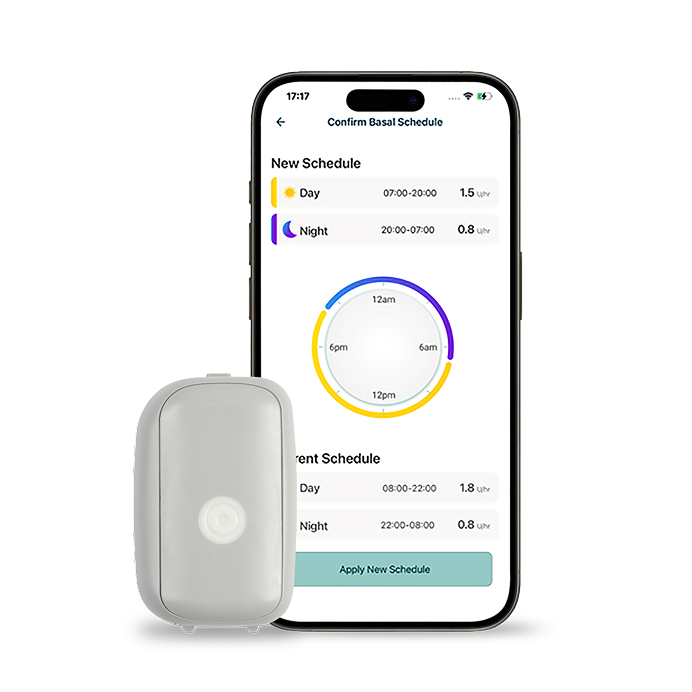
Modular Medical, Inc. (Nasdaq: MODD., $.4510), a leader in innovative insulin delivery technology targeting the $3 billion adult “almost-pumpers” diabetes market with user-friendly, affordable patch pumps, announced (Dec. 10) that it had priced an underwritten public offering (the “offering”) of 12,173,000 shares of its common stock and accompanying warrants to purchase 6,086,500 shares of its common stock. Each two shares of common stock are being offered and sold together with one accompanying warrant at a combined offering at a price of $0.77, yielding an effective price of $0.38 per share and $0.01 per warrant. The warrants will have an exercise price of $0.45 per share, are exercisable immediately upon issuance and will expire five years following the date of issuance. In connection with the offering, Modular Medical has granted the underwriter a 30-day option to purchase up to an additional 15% of common shares and/or warrants at the public offering price, less underwriting discounts and commissions. The over-allotment option may be elected with respect to, at the underwriter’s sole discretion, shares and warrants together, solely shares, solely warrants, or any combination thereof. Newbridge Securities Corporation is acting as the sole bookrunner for the offering. Assuming no exercise of the over-allotment option, the gross proceeds to the Company from the offering are expected to be approximately $4.68 million, before deducting underwriting discounts, commissions, and estimated offering expenses payable by the Company. The Company intends to use the net proceeds from the offering to fund operations and for working capital and general corporate purposes, including capital expenditures.

On Nov. 17, Modular announced Institutional Review Board (“IRB”) approval to conduct an in-house study of its next-generation Pivot™ insulin delivery system using insulin on people with diabetes (the “Study”). Pursuant to U.S. Food and Drug Administration (“FDA”) regulations, an IRB is a group that has been formally designated to review and monitor biomedical research involving human subjects. The Study will simulate real-world conditions by delivering insulin to adult participants to gather critical data on device function and usability and obtain user feedback. Modular Medical’s Pivot tubeless patch pump aims to enhance accessibility for underserved patients with diabetes and drive market penetration and expansion.

On Nov. 14, Modular Medical announced the 510(k) premarket submission of its next generation Pivot™ tubeless patch pump to the U.S. Food and Drug Administration (the “FDA”). The Company expects to commence the commercial launch of its Pivot pump in Q1 2026. On Nov. 3, Modular Medical the successful validation of its Pivot controller line, a critical milestone in preparing for the commercial launch of its Pivot patch pump targeted for Q1 2026. The Pivot controller line validation further demonstrates manufacturing readiness for high-volume production, positioning Modular Medical to meet the growing demand in the diabetes treatment market for advanced technology.

Eupraxia Pharmaceuticals Inc. (NASDAQ: EPRX, $8.28), a clinical-stage biotechnology company leveraging its proprietary Diffusphere™ technology to optimize local, controlled drug delivery for diseases with significant unmet need, announced (Nov. 13) the second set of 52-week follow up data from its ongoing Phase 1b/2a RESOLVE trial evaluating a single administration EP-104GI for the treatment of eosinophilic esophagitis (“EoE”). James A. Helliwell, Chief Executive Officer of Eupraxia stated,“These data further highlight the strong durability and tolerability profile of EP-104GI, reinforcing its potential to become a convenient, once-a-year treatment that fits seamlessly into routine disease management by aligning with annual patient endoscopies. The Cohorts 5 & 6 patients – the only groups to have reached 52 weeks in the trial – are demonstrating levels of symptom relief that is durable and clinically meaningful – we are very encouraged by this outcome. We’re also pleased that our previously announced 52-week data were presented as a late-breaking presentation at the American College of Gastroenterology Annual Scientific Meeting (ACG). These new results build on that momentum. Given that current EoE therapies often struggle with long-term adherence, we believe a durable, once-yearly treatment could meaningfully improve patient outcomes and establish EP-104GI as a preferred option for both physicians and their patients.”

GeoVax Labs, Inc. (Nasdaq: GOVX, $2.80), a clinical-stage biotechnology company developing multi-antigen vaccines and immunotherapies for infectious diseases and cancer.

GeoVax is heading into the 44th Annual J.P. Morgan Healthcare Conference week (“JPM2026”) in San Francisco, CA Jan. 12-15 with the kind of narrative biotech investors typically like to hear: a differentiated platform, large funded trials lining up, and multiple shots on goal in both infectious disease and oncology. The company is leaning into its MVA platform as a potential franchise engine rather than a one‑product science experiment. Specifically, investors can meet David Dodd, Chairman & CEO of GeoVax, during his presentation at the Hilton Union Square, 333 O’Farrell Street, Yosemite A (Ballroom Level), San Francisco, CA on January 13, 2026, 2:30 pm PST.

GeoVax announced (Dec. 19) that it has entered into definitive securities purchase agreements with several institutional and individual investors for the purchase and sale of approximately 13.2 million units, each comprised of one share of the Company’s common stock and warrants, as described below, to purchase shares of the Company’s common stock, at a price of $0.245 per unit in a public offering. The Company will issue warrants to purchase up to approximately 26.5 million shares of common stock. The warrants will have an exercise price of $0.245 per share, will be exercisable immediately following the date of issuance and will have a term of five years following the date of issuance. Roth Capital Partners is acting as the exclusive placement agent for the offering. The gross proceeds to the Company from this offering are expected to be approximately $3.2 million, before deducting the placement agent’s fees and other offering expenses payable by the Company. The Company intends to use the net proceeds from this offering for working capital and general corporate purposes. The closing of the offering is expected to occur on or about December 22, 2025, subject to the satisfaction of customary closing conditions.

GeoVax announced (Dec. 18) the publication of a peer-reviewed article in Frontiers in Immunology titled: “Multi-antigen MVA-vectored SARS-CoV-2 vaccine, GEO-CM04S1, induces cross-protective immune responses to ancestral and Omicron variants.” The study provides definitive preclinical evidence that GeoVax’s multi-antigen COVID-19 vaccine candidate, GEO-CM04S1, delivers full cross-variant protection, driven predominantly by robust T-cell responses, even in the absence of neutralizing antibodies. The findings reinforce the design philosophy behind GeoVax’s MVA-based, multi-antigen platform and provide mechanistic insight that is increasingly relevant for immunocompromised individuals, who often fail to respond optimally to the first-generation COVID-19 vaccines.

GeoVax announced (Dec. 17) the successful completion of fill-finish for the initial clinical batch of GEO-MVA, its next-generation Mpox/smallpox vaccine. The product has now entered final release evaluation, the concluding quality-control and compliance process required before shipment for clinical use, positioning the Company for Phase 3 immunobridging trial start-up activities in Q1 2026. Fill-finish – the sterile, cGMP-regulated process of filling, sealing, and packaging vaccine vials – marks the last manufacturing step before a vaccine may enter clinical study supply channels. With fill-finish complete and GEO-MVA now undergoing final release evaluation, GeoVax has moved into the final pre-clinical-deployment phase of its EMA-aligned clinical program. In June 2025, the European Medicines Agency (EMA) Scientific Advice confirmed that a single Phase 3 immunobridging study demonstrating immune comparability to the approved MVA vaccine, Imvanex(R), would be sufficient to evaluate GEO-MVA’s efficacy. This provides a clear, accelerated regulatory path to licensure. This milestone coincides with increasing Mpox activity globally – including expanding Clade I outbreaks in Africa and emerging cases in the United States – exposing vulnerabilities associated with global dependence on a sole foreign MVA vaccine supplier. GEO-MVA is designed to expand supply, diversify sources, and strengthen biodefense infrastructure.

Volato Group, Inc. (NYSE American: SOAR, $.6440, +43.11% over the last 5-days) and M2i Global, Inc. (MTWO, $.0477, +.21% over the last 5-days), a company specializing in the development and execution of a complete global value supply chain for critical minerals, reaffirmed, on Tuesday, Jan. 20, their expectation to complete their targeted first-quarter 2026 closing timeline for the previously announced business combination, citing steady advancement through the SEC review process alongside continued progress in operational planning and integration readiness. Subject to the effectiveness of the registration statement on Form S-4, stockholder approvals, and other customary closing conditions, the companies continue to expect the merger to close in the first quarter of 2026. To align the transaction timeline with the current stage of the SEC review process, the companies have mutually agreed to extend the end date of the merger agreement through March 31, 2026. This extension reflects disciplined execution and provides additional runway to complete the remaining regulatory steps in an orderly manner, while maintaining transaction commitment and protecting stockholder interests. Amendment No. 1 to the Form S-4 was filed on Monday, January 12, 2026, to respond to SEC comments and advance the registration statement through the review process. The review timeline was affected in part by a temporary slowdown in SEC operations following the recent federal government shutdown. With the amendment now on file, the companies are focused on completing the remaining steps of the SEC review process.

On Jan. 9, M2i Global and Volato Group announced that they have entered into a strategic collaboration agreement with Australian company Titanium X to advance critical mineral development in the US. This partnership represents a significant move towards enhancing domestic refining capacity and strengthening the critical materials supply chain that underpins US industry and national security. Titanium X and M2i Global will work together on the financing, development and commercialisation of the former’s critical mineral assets. M2i Global will apply its global experience in delivering mineral projects to support these initiatives. The companies are also in talks to conclude an exclusive titanium concentrate supply agreement.

On Jan. 7, M2i Global, Inc. (MTWO , $,05) along with Volato Group, Inc. (NYSE American: SOAR, $.45), a technology-driven company, announced a strategic collaboration agreement with Titanium X, marking a major step forward in advancing domestic refining capabilities and securing the critical materials supply chain essential to U.S. industry and national security.

Volato Group, Inc. today (Dec. 29) announced the appointment of Alan D. Gaines to its Board of Directors, effective immediately. Mr. Gaines will also serve as Chairman of the Audit Committee.

On Dec. 23, Volato Group, Inc. announced preliminary financial guidance for the fourth quarter and full year ending December 31, 2025, reflecting continued execution against its strategic and balance sheet objectives. For the fourth quarter of 2025, Volato expects to report revenue between $27 million and $28 million. For the full year 2025, the Company anticipates total revenue between $78 million and $79 million, with net income of $6 million to $8 million. These results reflect a year of meaningful progression aligning operational performance with Volato’s long-term growth initiatives and advancing its pending merger with M2i Global, Inc. (OTC: MTWO). During 2025, Volato also made substantial progress strengthening its balance sheet. As of September 30, 2025, the Company reduced total liabilities to $9.5 million, satisfying the debt reduction condition required under its pending merger agreement with M2i Global, Inc. (OTC: MTWO). Volato expects continued improvement in its capital structure as it advances toward a targeted first-quarter 2026 closing of the transaction. “Our 2025 results reflect a year of transformation and disciplined balance sheet execution,” said Mark Heinen, Chief Financial Officer of Volato. “We made significant progress reducing liabilities while sharpening our focus on scalable, technology-driven businesses that are designed to complement and strengthen the M2i Global platform over the long term.”

Serina Therapeutics (NYSE American: SER, $3.25, +13.24% over the last 5-days), Alabama-based biotech is betting its proprietary POZ platform and reimagined approach to apomorphine delivery may redefine the treatment paradigm for patients who have exhausted standard oral therapies.

On Jan. 29, The U.S. Food and Drug Administration cleared Serina Therapeutics’ investigational new drug (IND) application for SER‑252, the company’s POZ‑enabled formulation of apomorphine being developed for patients with advanced Parkinson’s disease. This clearance allows Serina to move ahead with a registrational‑intent clinical program under the 505(b)(2) NDA pathway, leveraging existing data on apomorphine while aiming to improve its dosing profile and tolerability for patients who need more consistent symptom control. In practical terms, the FDA’s feedback and subsequent clearance provide Serina with a more capital‑efficient route to a potential new drug application, shortening the distance between preclinical promise and commercial reality. For Parkinson’s patients and their clinicians, the stakes are high: SER‑252 is designed to offer a more predictable therapeutic profile, potentially smoothing out some of the daily volatility, patient caregiver burden that has long defined advanced disease management.

On Dec. 11, Serina announced the appointment of Joshua Thomas, Ph.D., as Vice President and Head of Chemistry. He will oversee internal and external chemistry efforts to optimize POZ-based candidates, supporting efficient translation from discovery through development.

The InterGroup Corporation (NASDAQ: INTG, $30.75, +2.95% over the last 5-days) announced (Jan. 6) that on December 29, 2025, it completed the sale of a non-core 12-unit apartment complex in Los Angeles County for a gross sales price of approximately $4,850,000. InterGroup expects to report a GAAP net gain on sale of approximately $3,509,000, which will be reflected in the Company’s Form 10‑Q for the quarter ended December 31, 2025. The transaction is expected to result in federal and state income tax liability, the amount of which will be determined based on the Company’s final tax position and applicable tax rules.

DoubleVerify Holdings Inc. (DV) closed at $10.82. DoubleVerify, which built its franchise on media verification and ad performance analytics, is now the first badged TikTok Marketing Partner focused specifically on attention measurement, tapping impression-level signals from the platform. Brands gain a granular view of how exposure and user interaction come together across TikTok formats, ad sets, creatives, and objectives, effectively treating every swipe as a tiny A/B test.

flyExclusive, Inc. (NYSE American: FLYX, $2.96), one of the nation’s largest private jet operators and a certified Part 145 Repair Station, today announced it has signed an authorized dealership agreement with Starlink, becoming a certified dealer and installer for Starlink’s high-speed, low-latency aviation connectivity system.

The Sources

  1. Yahoo Finance – “Stock market today: Dow, S&P 500, Nasdaq slide to cap volatile week and month, metals sink after Trump taps Warsh for Fed”[ca.finance.yahoo]​
    https://ca.finance.yahoo.com/news/stock-market-today-dow-sp-500-nasdaq-fall-as-wall-street-digests-warsh-as-trumps-fed-pick-2341
  2. MarketPulse – “US Stocks fall from Warsh’s nomination – Month-End flows and US Index Outlook”[marketpulse]​
    https://www.marketpulse.com/markets/stocks-fall-from-warsh-nomination/
  3. Washington Post – “How major US stock indexes fared Friday, 1/30/2026”[washingtonpost]​
    https://www.washingtonpost.com/business/2026/01/30/financial-markets-box-sp-nasdaq-dow/bc04c688-fe22-11f0-954b-b80c7ed67fc7_story.html
  4. CNBC – “Stock market news for Jan. 30, 2026”[cnbc]​
    https://www.cnbc.com/2026/01/29/stock-market-today-live-updates.html
  5. Investopedia – “Markets News, Jan. 30, 2026: S&P 500, Dow Post Gains in January …”[investopedia]​
    https://www.investopedia.com/dow-jones-today-01302026-11895896
  6. J.P. Morgan Asset Management – “Weekly Market Recap”[am.jpmorgan]​
    https://am.jpmorgan.com/us/en/asset-management/adv/insights/market-insights/market-updates/weekly-market-recap/
  7. Edward Jones – “Weekly Stock Market Update”[edwardjones]​
    https://www.edwardjones.com/us-en/market-news-insights/stock-market-news/stock-market-weekly-update
  8. Nasdaq – “After Hours Most Active for Jan 22, 2026: INTC, AVTR, NVDA, SNAP …”[nasdaq]​
    https://www.nasdaq.com/articles/after-hours-most-active-jan-22-2026-intc-avtr-nvda-snap-kmi-aapl-kvue-tsla-comp-bgl-t
  9. Forbes – “The Fed Is Suddenly Hurtling Toward A $34 Trillion BlackRock Gold …”[forbes]​
    https://www.forbes.com/sites/digital-assets/2026/01/25/bitcoin-will-take-the-place-of-gold-fed-suddenly-braced-for-a-34-trillion
  10. T. Rowe Price – “Global markets weekly update”[troweprice]​
    https://www.troweprice.com/personal-investing/resources/insights/global-markets-weekly-update.html
  11. CNBC – “Monday stocks from analyst calls like Nvidia”[cnbc]​
    https://www.cnbc.com/2026/01/26/monday-stocks-from-analyst-calls-like-nvidia.html
  12. KuCoin News – “Bitcoin Faces Macro Test as Fed and Oil Data Converge on Super …”[kucoin]​
    https://www.kucoin.com/news/flash/bitcoin-faces-macro-test-as-fed-and-oil-data-converge-on-super-wednesday
  13. Yahoo Finance – “S&P 500 (^GSPC) Historical Data”[finance.yahoo]​
    https://finance.yahoo.com/quote/%5EGSPC/history/
  14. Motley Fool / Nasdaq – “3 AI Stocks That Will Trounce Palantir in 2026, According to Wall Street”[finance.yahoo]​
    https://finance.yahoo.com/news/3-ai-stocks-trounce-palantir-100400493.html
  15. Bullion Exchanges – “Gold, Silver, and Crypto Prices Surge Amid Global Risks”[bullionexchanges]​
    https://bullionexchanges.com/blog/market-report-by-bullion-exchanges-jan-26-2026
  16. Yahoo Finance – “Russell 2000 Index (^RUT) Historical Data”[finance.yahoo]​
    https://finance.yahoo.com/quote/%5ERUT/history/
  17. Investing.com – “Russell 2000 Historical Data (RUT)”[investing]​
    https://www.investing.com/indices/smallcap-2000-historical-data
  18. Wall Street Journal – “Russell 2000 Index Price & News – RUT”[wsj]​
    https://www.wsj.com/market-data/quotes/index/RUT/historical-prices
  19. MarketWatch – “Russell 2000 Index Overview – RUT”[marketwatch]​
    https://www.marketwatch.com/investing/index/rut
  20. Walters Wealth Management – “Weekly Market Report: Week of January 20, 2026”[walterswm]​
    https://walterswm.com/weekly-market-report/weekly-market-report-week-of-january-20-2026
  21. BEA – “GDP by Industry, and Corporate Profits (Revised)” (PDF)[bea]​
    https://www.bea.gov/sites/default/files/2026-01/gdp3q25-updated.pdf
  22. Federal Reserve – “Calendar: January 2026”[federalreserve]​
    https://www.federalreserve.gov/newsevents/2026-january.htm
  23. [lipperalpha.refinitiv]​ Lipper Alpha Insight – “This Week in Earnings 25Q4 | January 30, 2026”
    https://lipperalpha.refinitiv.com/2026/01/this-week-in-earnings-25q4-january-30-2026/
  24. CBC – “U.S. Inflation Eases, Spending Holds Strong, Savings Shrink”[cbcal]​
    https://cbcal.com/economic-report/inflation-spending-income-pce-review-jan2026/
  25. Kiplinger – “January Fed Meeting: Updates and Commentary”[kiplinger]​
    https://www.kiplinger.com/investing/live/january-fed-meeting-live-updates-and-commentary
  26. [jjadvisor]​ JJ Advisor Group – “Market Commentary | January 26th, 2026”
    https://jjadvisor.com/market-commentary/market-commentary-january-26th-2026/
  27. FEBA Benefits – “The 2026 Government Shutdown Outlook: Key Dates and Pay Rules”[febabenefits]​
    https://febabenefits.org/blog/the-2026-government-shutdown-key-dates-and-pay-rules/
  28. Investing.com – “Durable goods orders to headline Monday’s economic calendar”[investing]​
    https://www.investing.com/news/stock-market-news/durable-goods-orders-to-headline-mondays-economic-calendar-93CH-4463558
  29. Federal Reserve – “The Fed – Meeting calendars and information”[federalreserve]​
    https://www.federalreserve.gov/monetarypolicy/fomccalendars.htm
  30. RBC Wealth Management – “Market Week: January 26, 2026” (PDF)[us.rbcwealthmanagement]​
    https://us.rbcwealthmanagement.com/delegate/services/file/5370112/content
  31. CNBC – “Treasury yields hold steady after hot producer prices, Trump picks Warsh for chair”[cnbc]​
    https://www.cnbc.com/2026/01/30/us-treasury-yields-investors-await-trumps-fed-chair-pick-.html
  32. J.P. Morgan – “Fed Leaves Rates Unchanged to Start 2026: Is a Cut Coming in …”[jpmorgan]​
    https://www.jpmorgan.com/insights/markets-and-economy/economy/fed-meeting-january-2026
  33. Wall Street Journal – “Stock Market News for Jan. 28, 2026: Federal Reserve Holds Rates …”[wsj]​
    https://www.wsj.com/livecoverage/fed-interest-rate-decision-01-28-2026
  34. CNBC – “Fed meeting recap: Powell says economy on ‘firm footing’ …”[cnbc]​
    https://www.cnbc.com/2026/01/28/fed-meeting-today-live-updates.html
  35. Trading Economics – “United States Fed Funds Interest Rate”[tradingeconomics]​
    https://tradingeconomics.com/united-states/interest-rate
  36. CNN Business – “Fed holds interest rates steady for first time since July”[cnn]​
    https://www.cnn.com/business/live-news/federal-reserve-interest-rate-01-28-2026
  37. CNBC – “10-year Treasury yield moves lower as investors weigh Fed decision”[cnbc]​
    https://www.cnbc.com/2026/01/29/us-10-year-treasury-yields-rise-as-investors-weigh-fed-decision.html
  38. YouTube – “Morning Report 29 Jan 26: Wall Street muted after Fed holds rates”[youtube]​
    https://www.youtube.com/watch?v=bx5jOi8fR_U
  39. Nuveen – “The Fed – FOMC meeting commentary January 2026”[nuveen]​
    https://www.nuveen.com/en-us/insights/investment-outlook/fed-update
  40. Bloomberg – “Trump’s Fed Pick Eases Bond Market Fears, Sending Dollar Higher”[bloomberg]​
    https://www.bloomberg.com/news/articles/2026-01-30/treasury-yields-rise-on-expectations-warsh-will-be-fed-chair
  41. Reuters – “Investors bet on later Fed cuts to support markets after pause”[reuters]​
    https://www.reuters.com/business/investors-bet-later-fed-cuts-support-markets-after-pause-2026-01-29/
  42. Reuters – “Fed leaves rates unchanged, sees ‘somewhat elevated’ inflation and …”[reuters]​
    https://www.reuters.com/business/fed-expected-hold-rates-steady-rate-cut-pause-begins-2026-01-28/
  43. Wall Street Journal – “Treasury Yields Lose Steam as Powell Talks to Reporters”[wsj]​
    https://www.wsj.com/finance/investing/jgb-futures-edge-higher-focus-on-40-year-auction-f9d7f8fc
  44. Yahoo Finance – “Stock Market News for Jan 29, 2026”[finance.yahoo]​
    https://finance.yahoo.com/news/stock-market-news-jan-29-132100714.html
  45. Yahoo Finance – “Federal Reserve leaves interest rates unchanged after 3 straight cuts …”[finance.yahoo]​
    https://finance.yahoo.com/news/federal-reserve-leaves-interest-rates-unchanged-after-3-straight-cuts-as-2-officials-vote-against-190000555.html

Dow Edges Higher as Nasdaq Falls: Full Jan. 29, 2026 Market Recap, Fed Outlook and Gold’s Record Run”- Jan. 29, 2026 -( $AAPL $DV $FLYX $GLD $LLY $MCD $META $MU $NVDA $RIO $SER $SOAR Rise!)

Wall Street tiptoed through Thursday’s session like a tightrope walker over Times Square: plenty of wobble, very little actual fall. The major indexes finished mixed, with Big Tech nursing a post-earnings hangover while old‑economy names politely pretended not to notice.

Indexes: Tech Nurses the Migraine

The S&P 500 slipped 0.13% to 6,969.01, a modest decline that belied the drama beneath the surface as tech heavyweights dragged while value and defensives played chaperone. The Dow managed a 0.11% gain to 49,071.56, quietly higher despite a tech selloff, underscoring how industrials and classic blue chips are enjoying their moment in the policy sun. The Nasdaq fell 0.72% to 23,685.12, pulled down by megacap tech in what’s becoming a recurring reminder that earnings gravity still functions, even in the age of AI. The Russell 2000 inched up by less than 0.05% to 2,654.78, signaling that smaller companies are more spectators than protagonists in this phase of the macro drama.

Macro, Fed, Yields and Tariffs

Weekly jobless claims edged lower, reinforcing a picture of a labor market that is softening at the edges but still far from recessionary, and keeping talk of imminent rate cuts in the “not yet” bucket. Revisions to manufacturing productivity showed stronger gains in durable goods and slightly lower unit labor cost growth, supporting the Fed’s emerging narrative that productivity can carry some of the load in cooling inflation without crushing growth. The latest FOMC decision left the federal funds rate unchanged at 3.50%–3.75%, with policymakers signaling a pause in the rate‑cutting cycle as they assess tariff‑related inflation risks and generally solid growth. Fed officials and the Trump administration are converging on a view that tariff‑driven price increases are largely one‑off rather than a persistent inflation engine, giving both sides some cover to sound hawkish in speeches while staying patient in practice.

On the yield curve, traders continued to price a “later, fewer” profile for rate cuts, with forward markets now leaning toward mid‑year before the next move, keeping longer yields capped but not collapsing. Tariff rhetoric remained more about interpretation than fresh action, as policymakers emphasized temporary inflation effects and productivity offsets, a stance that markets interpret as “no new tariff shock today, just the old ones aging in the barrel.”

Commodities and Crypto: Gold Steals the Show

Gold continued to dominate the safe‑haven narrative, trading above 5,500 dollars an ounce and sitting near fresh record highs after an extraordinary January surge of roughly 30%, a move that makes most equities look underachieving by comparison. Silver at $115.70, having logged an eye‑watering gain of around 300% over the past year, eased from recent records of $121.575 as some investors finally decided that trees—and metals—do not grow to the sky in a single month. Oil prices shot up to close at $65.41, +3.48% today, with benchmark crude holding near recent multi‑month highs as energy markets leaned into the narrative of sticky inflation pressure and geopolitical risk i.e U.S vs Iran turmoil, rather than imminent disinflation. Bitcoin, meanwhile, slipped to the $84.3L range as it failed to hold the higher end of the recent range, trading well below prior highs near 90,000 to 126,000 and leaving macro traders to quietly re‑file it under “volatile risk asset” rather than “digital gold.”

A Few Corporate Updates

Eli Lilly (LLY) traded modestly higher, as investors continued to reward the company’s obesity and metabolic‑disease franchise, keeping the stock in the “quality growth at any price” bucket even on a tech‑weak tape.

Taiwan Semiconductor (TSM) eased slightly, with the market treating the name as a high‑beta proxy on AI spending and remaining sensitive to any sign of hesitation in chip‑capex commentary from U.S. megacaps.

NVIDIA (NVDA) rose by .52% to $192.51, as investors question just how fast hyperscaler AI spending will translate into visible earnings.

Micron Technology (MU) edged up .12% to $435.78, with traders locking in gains after a strong run on AI‑driven memory demand and bracing for the usual volatility around pricing and inventory commentary later in the quarter.

Apple (AAPL) traded nervously ahead of earnings but still up .72% to $258.28, with the stock drifting rather than breaking as investors weighed iPhone and services resilience against an already demanding valuation. after the bell Apple is up again as they logged an earning beat as exceeded holiday quarterly goals.

Tesla (TSLA) fell 3.32% today.

Broadcom (AVGO) held up relatively well but edged down .75%, with its reputation as a cash‑generating AI infrastructure toll‑collector helping cushion the downdraft.

Meta Platforms (META, $738.31, +10.40%) outperformed sharply, extending an 8–9% post‑earnings jump as investors cheered strong guidance and a massive planned ramp in AI‑related capital expenditures, apparently deciding that this particular spending spree is worth funding.

Nokia (NOK) fell 7.77% to $6.29 despite recent upgrades demo Morgan Stanley.

McDonald’s (MCD, $315.51, +.87%) provided its usual defensive ballast, with the shares roughly flat as investors continued to prize steady traffic and pricing power over any near‑term excitement.

Rio Tinto Group (RIO) tracked the broader materials and metals complex rising 1.88% to $95.13, with gold and industrial‑metal volatility keeping the mining giant on traders’ radars but not delivering a dramatic single‑day move.

Oracle (ORCL) traded with a slight positive bias but fell 2.19% as the Street leaned back into the company’s swelling cloud and AI‑infrastructure backlog, treating it as a more patient way to play data‑center build‑out.

Intel (INTC) gave back some recent AI‑optimism gains falling .25% today, as investors digested a mix of turnaround hopes, foundry ambitions, and the uncomfortable memory that chip cycles do sometimes still exist.

Oklo (OKLO, $86.04, -8.85%), the advanced‑nuclear upstart, stayed in speculative territory with choppy trading and more attention on its long‑dated reactor commercialization story than on today’s tape action.

Opendoor (OPEN, $5.58) remained volatile but directionally tied to the rate and housing narrative, with the stock drifting as investors balanced improving transaction volumes against still‑fragile housing affordability.

Palantir Technologies (PLTR) edged 3.49% lower as profit‑taking met a drumbeat of skeptical analyst commentary about rich AI valuations, though the underlying story of sticky government and enterprise data‑analytics demand remains intact.

Vista Partners Watchlist Updates

Modular Medical, Inc. (Nasdaq: MODD., $.4260), a leader in innovative insulin delivery technology targeting the $3 billion adult “almost-pumpers” diabetes market with user-friendly, affordable patch pumps, announced (Dec. 10) that it had priced an underwritten public offering (the “offering”) of 12,173,000 shares of its common stock and accompanying warrants to purchase 6,086,500 shares of its common stock. Each two shares of common stock are being offered and sold together with one accompanying warrant at a combined offering at a price of $0.77, yielding an effective price of $0.38 per share and $0.01 per warrant. The warrants will have an exercise price of $0.45 per share, are exercisable immediately upon issuance and will expire five years following the date of issuance. In connection with the offering, Modular Medical has granted the underwriter a 30-day option to purchase up to an additional 15% of common shares and/or warrants at the public offering price, less underwriting discounts and commissions. The over-allotment option may be elected with respect to, at the underwriter’s sole discretion, shares and warrants together, solely shares, solely warrants, or any combination thereof. Newbridge Securities Corporation is acting as the sole bookrunner for the offering. Assuming no exercise of the over-allotment option, the gross proceeds to the Company from the offering are expected to be approximately $4.68 million, before deducting underwriting discounts, commissions, and estimated offering expenses payable by the Company. The Company intends to use the net proceeds from the offering to fund operations and for working capital and general corporate purposes, including capital expenditures.

On Nov. 17, Modular announced Institutional Review Board (“IRB”) approval to conduct an in-house study of its next-generation Pivot™ insulin delivery system using insulin on people with diabetes (the “Study”). Pursuant to U.S. Food and Drug Administration (“FDA”) regulations, an IRB is a group that has been formally designated to review and monitor biomedical research involving human subjects. The Study will simulate real-world conditions by delivering insulin to adult participants to gather critical data on device function and usability and obtain user feedback. Modular Medical’s Pivot tubeless patch pump aims to enhance accessibility for underserved patients with diabetes and drive market penetration and expansion.

On Nov. 14, Modular Medical announced the 510(k) premarket submission of its next generation Pivot™ tubeless patch pump to the U.S. Food and Drug Administration (the “FDA”). The Company expects to commence the commercial launch of its Pivot pump in Q1 2026. On Nov. 3, Modular Medical the successful validation of its Pivot controller line, a critical milestone in preparing for the commercial launch of its Pivot patch pump targeted for Q1 2026. The Pivot controller line validation further demonstrates manufacturing readiness for high-volume production, positioning Modular Medical to meet the growing demand in the diabetes treatment market for advanced technology.

Eupraxia Pharmaceuticals Inc. (NASDAQ: EPRX, $8.35), a clinical-stage biotechnology company leveraging its proprietary Diffusphere™ technology to optimize local, controlled drug delivery for diseases with significant unmet need, announced (Nov. 13) the second set of 52-week follow up data from its ongoing Phase 1b/2a RESOLVE trial evaluating a single administration EP-104GI for the treatment of eosinophilic esophagitis (“EoE”). James A. Helliwell, Chief Executive Officer of Eupraxia stated,“These data further highlight the strong durability and tolerability profile of EP-104GI, reinforcing its potential to become a convenient, once-a-year treatment that fits seamlessly into routine disease management by aligning with annual patient endoscopies. The Cohorts 5 & 6 patients – the only groups to have reached 52 weeks in the trial – are demonstrating levels of symptom relief that is durable and clinically meaningful – we are very encouraged by this outcome. We’re also pleased that our previously announced 52-week data were presented as a late-breaking presentation at the American College of Gastroenterology Annual Scientific Meeting (ACG). These new results build on that momentum. Given that current EoE therapies often struggle with long-term adherence, we believe a durable, once-yearly treatment could meaningfully improve patient outcomes and establish EP-104GI as a preferred option for both physicians and their patients.”

GeoVax Labs, Inc. (Nasdaq: GOVX, $2.83), a clinical-stage biotechnology company developing multi-antigen vaccines and immunotherapies for infectious diseases and cancer.

GeoVax is heading into the 44th Annual J.P. Morgan Healthcare Conference week (“JPM2026”) in San Francisco, CA Jan. 12-15 with the kind of narrative biotech investors typically like to hear: a differentiated platform, large funded trials lining up, and multiple shots on goal in both infectious disease and oncology. The company is leaning into its MVA platform as a potential franchise engine rather than a one‑product science experiment. Specifically, investors can meet David Dodd, Chairman & CEO of GeoVax, during his presentation at the Hilton Union Square, 333 O’Farrell Street, Yosemite A (Ballroom Level), San Francisco, CA on January 13, 2026, 2:30 pm PST.

GeoVax announced (Dec. 19) that it has entered into definitive securities purchase agreements with several institutional and individual investors for the purchase and sale of approximately 13.2 million units, each comprised of one share of the Company’s common stock and warrants, as described below, to purchase shares of the Company’s common stock, at a price of $0.245 per unit in a public offering. The Company will issue warrants to purchase up to approximately 26.5 million shares of common stock. The warrants will have an exercise price of $0.245 per share, will be exercisable immediately following the date of issuance and will have a term of five years following the date of issuance. Roth Capital Partners is acting as the exclusive placement agent for the offering. The gross proceeds to the Company from this offering are expected to be approximately $3.2 million, before deducting the placement agent’s fees and other offering expenses payable by the Company. The Company intends to use the net proceeds from this offering for working capital and general corporate purposes. The closing of the offering is expected to occur on or about December 22, 2025, subject to the satisfaction of customary closing conditions.

GeoVax announced (Dec. 18) the publication of a peer-reviewed article in Frontiers in Immunology titled: “Multi-antigen MVA-vectored SARS-CoV-2 vaccine, GEO-CM04S1, induces cross-protective immune responses to ancestral and Omicron variants.” The study provides definitive preclinical evidence that GeoVax’s multi-antigen COVID-19 vaccine candidate, GEO-CM04S1, delivers full cross-variant protection, driven predominantly by robust T-cell responses, even in the absence of neutralizing antibodies. The findings reinforce the design philosophy behind GeoVax’s MVA-based, multi-antigen platform and provide mechanistic insight that is increasingly relevant for immunocompromised individuals, who often fail to respond optimally to the first-generation COVID-19 vaccines.

GeoVax announced (Dec. 17) the successful completion of fill-finish for the initial clinical batch of GEO-MVA, its next-generation Mpox/smallpox vaccine. The product has now entered final release evaluation, the concluding quality-control and compliance process required before shipment for clinical use, positioning the Company for Phase 3 immunobridging trial start-up activities in Q1 2026. Fill-finish – the sterile, cGMP-regulated process of filling, sealing, and packaging vaccine vials – marks the last manufacturing step before a vaccine may enter clinical study supply channels. With fill-finish complete and GEO-MVA now undergoing final release evaluation, GeoVax has moved into the final pre-clinical-deployment phase of its EMA-aligned clinical program. In June 2025, the European Medicines Agency (EMA) Scientific Advice confirmed that a single Phase 3 immunobridging study demonstrating immune comparability to the approved MVA vaccine, Imvanex(R), would be sufficient to evaluate GEO-MVA’s efficacy. This provides a clear, accelerated regulatory path to licensure. This milestone coincides with increasing Mpox activity globally – including expanding Clade I outbreaks in Africa and emerging cases in the United States – exposing vulnerabilities associated with global dependence on a sole foreign MVA vaccine supplier. GEO-MVA is designed to expand supply, diversify sources, and strengthen biodefense infrastructure.

Volato Group, Inc. (NYSE American: SOAR, $.6414, +10.61%) and M2i Global, Inc. (MTWO, $.0426), a company specializing in the development and execution of a complete global value supply chain for critical minerals, reaffirmed, on Tuesday, Jan. 20, their expectation to complete their targeted first-quarter 2026 closing timeline for the previously announced business combination, citing steady advancement through the SEC review process alongside continued progress in operational planning and integration readiness. Subject to the effectiveness of the registration statement on Form S-4, stockholder approvals, and other customary closing conditions, the companies continue to expect the merger to close in the first quarter of 2026. To align the transaction timeline with the current stage of the SEC review process, the companies have mutually agreed to extend the end date of the merger agreement through March 31, 2026. This extension reflects disciplined execution and provides additional runway to complete the remaining regulatory steps in an orderly manner, while maintaining transaction commitment and protecting stockholder interests. Amendment No. 1 to the Form S-4 was filed on Monday, January 12, 2026, to respond to SEC comments and advance the registration statement through the review process. The review timeline was affected in part by a temporary slowdown in SEC operations following the recent federal government shutdown. With the amendment now on file, the companies are focused on completing the remaining steps of the SEC review process.

On Jan. 9, M2i Global and Volato Group announced that they have entered into a strategic collaboration agreement with Australian company Titanium X to advance critical mineral development in the US. This partnership represents a significant move towards enhancing domestic refining capacity and strengthening the critical materials supply chain that underpins US industry and national security. Titanium X and M2i Global will work together on the financing, development and commercialisation of the former’s critical mineral assets. M2i Global will apply its global experience in delivering mineral projects to support these initiatives. The companies are also in talks to conclude an exclusive titanium concentrate supply agreement.

On Jan. 7, M2i Global, Inc. (MTWO , $,05) along with Volato Group, Inc. (NYSE American: SOAR, $.45), a technology-driven company, announced a strategic collaboration agreement with Titanium X, marking a major step forward in advancing domestic refining capabilities and securing the critical materials supply chain essential to U.S. industry and national security.

Volato Group, Inc. today (Dec. 29) announced the appointment of Alan D. Gaines to its Board of Directors, effective immediately. Mr. Gaines will also serve as Chairman of the Audit Committee.

On Dec. 23, Volato Group, Inc. announced preliminary financial guidance for the fourth quarter and full year ending December 31, 2025, reflecting continued execution against its strategic and balance sheet objectives. For the fourth quarter of 2025, Volato expects to report revenue between $27 million and $28 million. For the full year 2025, the Company anticipates total revenue between $78 million and $79 million, with net income of $6 million to $8 million. These results reflect a year of meaningful progression aligning operational performance with Volato’s long-term growth initiatives and advancing its pending merger with M2i Global, Inc. (OTC: MTWO). During 2025, Volato also made substantial progress strengthening its balance sheet. As of September 30, 2025, the Company reduced total liabilities to $9.5 million, satisfying the debt reduction condition required under its pending merger agreement with M2i Global, Inc. (OTC: MTWO). Volato expects continued improvement in its capital structure as it advances toward a targeted first-quarter 2026 closing of the transaction. “Our 2025 results reflect a year of transformation and disciplined balance sheet execution,” said Mark Heinen, Chief Financial Officer of Volato. “We made significant progress reducing liabilities while sharpening our focus on scalable, technology-driven businesses that are designed to complement and strengthen the M2i Global platform over the long term.”

Serina Therapeutics (NYSE American: SER, $3.54, +30.15% on 66.17 million shares of trading), Alabama-based biotech is betting its proprietary POZ platform and reimagined approach to apomorphine delivery may redefine the treatment paradigm for patients who have exhausted standard oral therapies.

On Jan. 29, The U.S. Food and Drug Administration cleared Serina Therapeutics’ investigational new drug (IND) application for SER‑252, the company’s POZ‑enabled formulation of apomorphine being developed for patients with advanced Parkinson’s disease. This clearance allows Serina to move ahead with a registrational‑intent clinical program under the 505(b)(2) NDA pathway, leveraging existing data on apomorphine while aiming to improve its dosing profile and tolerability for patients who need more consistent symptom control. In practical terms, the FDA’s feedback and subsequent clearance provide Serina with a more capital‑efficient route to a potential new drug application, shortening the distance between preclinical promise and commercial reality. For Parkinson’s patients and their clinicians, the stakes are high: SER‑252 is designed to offer a more predictable therapeutic profile, potentially smoothing out some of the daily volatility, patient caregiver burden that has long defined advanced disease management.

On Dec. 11, Serina announced the appointment of Joshua Thomas, Ph.D., as Vice President and Head of Chemistry. He will oversee internal and external chemistry efforts to optimize POZ-based candidates, supporting efficient translation from discovery through development.

The InterGroup Corporation (NASDAQ: INTG, $30.92) announced (Jan. 6) that on December 29, 2025, it completed the sale of a non-core 12-unit apartment complex in Los Angeles County for a gross sales price of approximately $4,850,000. InterGroup expects to report a GAAP net gain on sale of approximately $3,509,000, which will be reflected in the Company’s Form 10‑Q for the quarter ended December 31, 2025. The transaction is expected to result in federal and state income tax liability, the amount of which will be determined based on the Company’s final tax position and applicable tax rules.

DoubleVerify Holdings Inc. (DV) closed at $11.09, +1.09%. DoubleVerify, which built its franchise on media verification and ad performance analytics, is now the first badged TikTok Marketing Partner focused specifically on attention measurement, tapping impression-level signals from the platform. Brands gain a granular view of how exposure and user interaction come together across TikTok formats, ad sets, creatives, and objectives, effectively treating every swipe as a tiny A/B test.

flyExclusive, Inc. (NYSE American: FLYX, $3.32,+2.15%), one of the nation’s largest private jet operators and a certified Part 145 Repair Station, today announced it has signed an authorized dealership agreement with Starlink, becoming a certified dealer and installer for Starlink’s high-speed, low-latency aviation connectivity system.

The Sources

  1. Reuters – Fed and administration policy outlook on rates and tariffs
    https://www.reuters.com/world/us/amid-policy-clash-over-rates-fed-administration-share-key-points-about-outlook-2026-01-29/[reuters]​
  2. Federal Reserve – FOMC statement
    https://www.federalreserve.gov/newsevents/pressreleases/monetary20260128a.htm[federalreserve]​
  3. BBVA Research – Fed pauses rate‑cutting cycle
    https://www.bbvaresearch.com/en/publicaciones/us-fed-pauses-the-rate-cutting-cycle-as-the-outlook-improves/[bbvaresearch]​
  4. RSM – Market Minute: revising Fed rate call and growth scenarios
    https://realeconomy.rsmus.com/market-minute-revising-our-fed-rate-call-and-our-growth-scenarios/[realeconomy.rsmus]​
  5. Washington Post – How major US stock indexes fared Thursday, 1/29/2026
    https://www.washingtonpost.com/business/2026/01/29/wall-street-stocks-dow-nasdaq/45cc9252-fd5a-11f0-954b-b80c7ed67fc7_story.html[washingtonpost]​
  6. Yahoo Finance – How major US stock indexes fared Thursday, 1/29/2026
    https://finance.yahoo.com/news/major-us-stock-indexes-fared-213315787.html[finance.yahoo]​
  7. Barron’s – Stock Market Today: Dow, S&P 500, Nasdaq Fall
    https://www.barrons.com/livecoverage/stock-market-news-today-012926[barrons]​
  8. Investor’s Business Daily – Stock Market Today: Dow Cuts Losses; Defense Firms, Meta Up
    https://www.investors.com/market-trend/stock-market-today/dow-jones-sp500-nasdaq-microsoft-earnings-meta-stock-tesla-stock-apple/[investors]​
  9. U.S. Bureau of Labor Statistics – Productivity and Costs News Release
    https://www.bls.gov/news.release/archives/prod2_01292026.htm[bls]​
  10. U.S. News – US Weekly Jobless Claims Fall
    https://money.usnews.com/investing/news/articles/2026-01-29/us-weekly-jobless-claims-fall-slightly-prior-weeks-data-revised-up[money.usnews]​
  11. Trading Economics – United States Initial Jobless Claims
    https://tradingeconomics.com/united-states/jobless-claims[tradingeconomics]​
  12. Reuters – Gold falls as investors take profits after record high
    https://www.reuters.com/world/india/gold-extends-record-run-races-past-5400oz-2026-01-28/[reuters]​
  13. Forbes – Gold Sets Record Above $5,500, Leaving Crypto In The Dust
    https://www.forbes.com/sites/digital-assets/2026/01/29/gold-sets-record-above-5500-leaving-crypto-in-the-dust/[forbes]​
  14. Yahoo Finance UK – Gold tumbles to $5,200, silver sinks from record
    https://uk.finance.yahoo.com/news/gold-tumbles-to-5200-silver-sinks-from-record-as-precious-metals-rally-enters-dangerous-phase[uk.finance.yahoo]​
  15. Deriv – Why Bitcoin can’t hold $90K while Gold and Oil surge
    https://deriv.com/fr/blog/posts/bitcoin-weakness-amid-gold-oil-surge[deriv]​
  16. MarketPulse – Bitcoin under price pressure: fails to hold the $88,000 level
    https://www.marketpulse.com/markets/bitcoin-under-price-pressure-btcusd-fails-to-hold-the-88000-level-is-a-recovery-on-the-way/[marketpulse]​
  17. Economic Times – Bitcoin price slips as Fed holds rates
    https://economictimes.com/news/international/us/btc-usd-crash-today-why-is-crypto-down-today-bitcoin-price-slips-as-fed-holds-ra[economictimes]​
  18. MarketBeat – New York State Common Retirement Fund sells Eli Lilly shares
    https://www.marketbeat.com/instant-alerts/filing-new-york-state-common-retirement-fund-sells-eli-lilly-and-company-lly-shares/[marketbeat]​
  19. Public.com – Trade Eli Lilly (LLY) stock pre‑market
    https://public.com/stocks/lly/pre-market[public]​
  20. Yahoo Finance – Why Taiwan Semiconductor Manufacturing Stock Could Be the Best …
    https://finance.yahoo.com/news/why-taiwan-semiconductor-manufacturing-stock-112000820.html[finance.yahoo]​
  21. MarketBeat – TSMC shares acquired by institutions
    https://www.marketbeat.com/instant-alerts/filing-taiwan-semiconductor-manufacturing-company-ltd-tsm-shares-acquired-by-td-waterh/[marketbeat]​
  22. Morningstar – Taiwan Semiconductor Manufacturing Co. ADR quote
    https://www.morningstar.com/stocks/xnys/tsm/quote[morningstar]​
  23. StockAnalysis – TSMC stock price history
    https://stockanalysis.com/stocks/tsm/history/[stockanalysis]​
  24. MarketBeat – NVIDIA stock position increased by Janney Montgomery Scott
    https://www.marketbeat.com/instant-alerts/filing-nvidia-corporation-nvda-stock-position-increased-by-janney-montgomery-scott-llc/[marketbeat]​
  25. Morningstar/MarketWatch – How Nvidia’s stock can get back to its winning ways
    https://www.morningstar.com/news/marketwatch/20260129167/how-nvidias-stock-can-get-back-to-its-winning-ways-after-an-underwhelming[morningstar]​
  26. NVIDIA Investor Relations – Stock quote and chart
    https://investor.nvidia.com/stock-info/stock-quote-and-chart/default.aspx[investor.nvidia]​
  27. CNBC – Monday stocks from analyst calls like Nvidia
    https://www.cnbc.com/2026/01/26/monday-stocks-from-analyst-calls-like-nvidia.html[cnbc]​
  28. CNBC – S&P 500 closes at a record Tuesday as tech giants rally
    https://www.cnbc.com/2026/01/26/stock-market-today-live-updates.html[cnbc]​
  29. Business Insider – Stock Market This Week: Big Tech Earnings, Fed Meeting Loom
    https://www.businessinsider.com/stock-market-fed-decision-tech-earnings-tsla-meta-msft-appl-2026-1[businessinsider]​
  30. StockInvest.us – Red day on Wednesday for Apple
    https://stockinvest.us/stock-news/red-day-on-wednesday-for-apple-2026-01-28[stockinvest]​
  31. Investors.com / Nasdaq – Intel, Oracle among market cap stock movers on Monday
    https://www.investing.com/news/stock-market-news/intel-oracle-among-market-cap-stock-movers-on-monday-93CH-4465814[investing]​
  32. Nasdaq – Eli Lilly and Company common stock historical data
    https://www.nasdaq.com/market-activity/stocks/lly/historical[nasdaq]​
  33. Yahoo Finance – 3 AI Stocks That Will Trounce Palantir in 2026
    https://finance.yahoo.com/news/3-ai-stocks-trounce-palantir-100400493.html[finance.yahoo]​
  34. Nasdaq / MarketWatch – 3 AI Stocks Will Trounce Palantir in 2026, According to Wall Street
    https://www.nasdaq.com/articles/3-ai-stocks-will-trounce-palantir-2026-according-wall-street[nasdaq]​

Serina Therapeutics Wins FDA Green Light as It Supercharges Leadership for SER‑252 Parkinson’s Program -( $SER $IBB $XBI )

Serina Therapeutics (NYSE: SER) is stepping into 2026 like a biotech that just got upgraded from the lab bench to the big leagues, pairing a key FDA green light with a timely boost to its chemistry brain trust to advance its lead Parkinson’s candidate, SER‑252.

FDA Clearance: Opening the Door for SER‑252

The U.S. Food and Drug Administration has cleared Serina Therapeutics’ investigational new drug (IND) application for SER‑252, the company’s POZ‑enabled formulation of apomorphine being developed for patients with advanced Parkinson’s disease. This clearance allows Serina to move ahead with a registrational‑intent clinical program under the 505(b)(2) NDA pathway, leveraging existing data on apomorphine while aiming to improve its dosing profile and tolerability for patients who need more consistent symptom control.

In practical terms, the FDA’s feedback and subsequent clearance provide Serina with a more capital‑efficient route to a potential new drug application, shortening the distance between preclinical promise and commercial reality. For Parkinson’s patients and their clinicians, the stakes are high: SER‑252 is designed to offer a more predictable therapeutic profile, potentially smoothing out some of the daily volatility, patient caregiver burden that has long defined advanced disease management.

The POZ Platform: Polymer Science Meets Wall Street Scrutiny

At the center of Serina’s strategy is its proprietary POZ Platform, a polymer‑based drug optimization technology designed to fine‑tune pharmacokinetics across multiple therapeutic modalities. The company believes POZ can serve as a kind of molecular cruise control, helping drugs stay in the therapeutic lane longer while avoiding the potholes of peak‑and‑trough exposure that often limit existing treatments

Management has consistently framed SER‑252 not just as a single product opportunity but as an early validation of the broader POZ ecosystem, which spans small molecules, RNA‑based therapeutics, and antibody‑drug conjugates. For investors, that means SER‑252 is both a near‑ to mid‑term catalyst and a live test case for whether POZ can support a portfolio of polymer‑enabled assets rather than a one‑drug story.

Strengthening the Bench: A New Head of Chemistry

In parallel with its regulatory progress, Serina has fortified its leadership team by appointing Dr. Joshua Thomas as Vice President and Head of Chemistry, a move that gives the POZ platform a seasoned chemist at the helm as it scales from concept to clinic. Dr. Thomas joins from Mersana Therapeutics, where over roughly 13 years he helped build and lead discovery chemistry capabilities, including work on a novel STING agonist ADC platform and multiple antibody‑drug conjugate programs that advanced into clinical development.

His track record spans the design of cytotoxic payloads with differentiated mechanisms of action and sophisticated linker systems that enable precise bioconjugation—skills that translate neatly into Serina’s ambition to expand POZ into oncology‑relevant and other high‑value indications. Having already spent two years advising Serina, Thomas arrives with an insider’s view of the company’s science and culture, which should shorten the typical learning curve and allow him to focus on pipeline expansion rather than orientation.

Strategy, Capital, and the 505(b)(2) NDA Pathway Advantage

Serina’s regulatory dialogue with the FDA has centered on structuring SER‑252’s development as part of a registrational program under the 505(b)(2) NDA pathway framework, a pathway that allows the company to lean on existing apomorphine data while tailoring its POZ‑enabled formulation for advanced Parkinson’s. This approach is designed to compress timelines and conserve capital, an attractive combination in a market that has lately demanded both scientific differentiation and fiscal discipline from emerging biotechs.

To support that plan, Serina has lined up access to up to 20 million dollars in financing led by Director Greg Bailey, with associated warrants that could bring in an additional 20 million dollars if fully issued and exercised—a structure that gives the company runway while keeping a close eye on dilution. Once the IND is cleared and clinical hold questions are resolved, Serina expects to initiate dosing in a global registrational program that includes sites in Australia and, subsequently, the United States, with early patient data intended to enrich the overall regulatory package.

Why This Moment Matters for Serina

For a company that only recently completed its merger to list on the NYSE American under the ticker SER, this confluence of IND clearance, FDA engagement, leadership expansion, and structured financing marks a notable maturation point. SER‑252’s trajectory will now increasingly be measured in patient enrollments, clinical readouts, and regulatory milestones rather than just preclinical promise and platform theory.

If Serina (NYSE: SER) can execute on its registrational‑intent program, manage its clinical hold interactions, and demonstrate that POZ can deliver a clinically meaningful edge, it has the potential to graduate from an interesting polymer story to a recognized player in polymer‑enabled therapeutics. On Wall Street, that’s the difference between being a footnote in someone else’s pipeline slide and becoming the company other management teams cite when they talk about “next‑generation delivery platforms.”


The Sources:

  1. Serina Therapeutics – FDA feedback supports registrational trial design of SER‑252 in advanced Parkinson’s disease.[finance.yahoo]​
  2. Serina Therapeutics – Strengthens leadership team with appointment of Dr. Joshua Thomas as VP, Head of Chemistry.[finance.yahoo]​
  3. Serina Therapeutics – Third quarter 2025 financial results and regulatory update for SER‑252.[finance.yahoo]​
  4. Serina Therapeutics – Secures up to 20 million dollars to advance lead program and POZ platform.[finance.yahoo]​
  5. Serina Therapeutics – Draws first 5 million dollar funding tranche and provides IND and ethics approvals update.[finance.yahoo]​
  6. Serina Therapeutics – Corporate and listing background, ticker SER on NYSE American.finance.yahoo+1

Billion‑Dollar Exit, Billion‑Dollar Hearts: How One CEO Turned a $1.7 Billion Deal Into $240 Million for Workers In Louisiana

An American CEO just turned a classic corporate exit into something closer to a feel‑good Main Street miracle. Graham Walker, the outgoing chief of Fibrebond, sold his family’s Louisiana manufacturing company for $1.7 billion—and insisted that a hefty slice of the pie go straight to the people on the factory floor.

A $1.7 Billion Deal With a Human Footnote

When Walker agreed to sell Fibrebond to power‑management giant Eaton, he added a twist that most M&A lawyers do not see in their boilerplate templates. He made it non‑negotiable that 15 percent of the sale proceeds be reserved for employees, even though they did not own a single share of stock.

That clause translated into roughly $240 million in bonuses tied to the $1.7 billion sale price, earmarked for 540 full‑time workers at the company’s Minden, Louisiana campus. On average, it works out to about $443,000 per employee—real‑world money, not just the kind that appears in inspirational LinkedIn posts.

Life‑Changing Envelopes on the Factory Floor

The windfall did not arrive with champagne and confetti, but with sealed envelopes that landed in workers’ hands starting in June 2025. Many employees reportedly assumed it was a prank before the numbers sank in, followed by tears, stunned silence, and the occasional “is there a camera somewhere?” glance around the room.

Longtime employee Lesia Key, who started at Fibrebond in 1995 earning just over five dollars an hour, used her bonus to pay off her mortgage and open a clothing boutique—upgrading from paycheck‑to‑paycheck stress to something closer to financial breathing room. Another assistant manager chose a different route and promptly retired after receiving several hundred thousand dollars, while co‑workers steered their payouts toward credit card bills, college tuition, retirement accounts, and the occasional fully‑paid car.

A Retention Plan Disguised as Generosity

This was not just a grand gesture; it was also a very deliberate retention strategy. The bonus pool is structured to vest over five years, encouraging employees to stay through the transition to Eaton and turning a viral kindness story into one of the stickiest retention packages in recent memory.

Walker has been clear that the employees’ share of nearly a quarter‑billion dollars simply “felt fair,” given what they endured: a factory‑destroying fire in 1998, layoffs during the dot‑com bust, years of frozen pay, and then a high‑stakes bet on data‑center infrastructure that helped sales surge in the 2020s. For a workforce that once worried about whether the company would survive, being explicitly written into the sale is a rare inversion of the usual script.

When a Bonus Becomes a Local Stimulus Package

Minden, a town of roughly 12,000 people, is not used to quarter‑billion‑dollar headlines, so the ripple effects reached far beyond the plant gates. Local retailers have reportedly seen noticeable increases in spending as employees paid down debt, shopped locally, and, in at least one case, launched a new small business with bonus money.

While taxes naturally trimmed the headline numbers—Washington and Baton Rouge rarely pass up a good liquidity event—workers still called the payouts “life‑changing,” a phrase that rarely shows up in the same sentence as “corporate transaction” without heavy irony. In an era defined by charts showing CEO‑to‑worker pay gaps stretching like elastic bands, Fibrebond’s exit landed more like a community‑level stimulus plan than a standard private liquidity moment.

A Different Kind of Exit Story in Corporate America

Founders sharing some of their exit proceeds with staff is no longer unheard of, but doing so at this scale—and for employees without equity—is still uncommon enough to make national headlines. Walker’s non‑negotiable 15 percent clause has become a case study in how succession, liquidity, and loyalty can coexist in the same term sheet.

The episode has gone viral across social platforms as a counter‑programming moment: a CEO trending not for a golden parachute, but for putting hundreds of millions of dollars in the hands of welders, line workers, and managers who helped build the business over decades. In a corner of corporate America often criticized for short‑termism, Fibrebond’s sale reads like a reminder that spreadsheets may drive deals, but people still write the legacy.


The Sources


[1] CEO left each employee at his family-owned company a … – Fortune https://fortune.com/2025/12/30/fibrebond-ceo-graham-walker-leaves-443000-to-each-employee-240-million/
[2] Factory boss gives workers $240 million in bonuses after $1.7B sale … https://komonews.com/news/nation-world/graham-walker-fibrebond-eaton-boss-gifts-workers-240-million-in-bonuses-after-17-billion-sale-of-family-company-cincinnati-manufacturing-blue-collar-workhorse-society-business-owners-shifts-stock-ownership-campus-non-negotiable-requirement-retirement
[3] The Boss Who Gave His Employees a $240 Million Gift – WSJ https://www.wsj.com/business/fibrebond-eaton-bonus-walker-30844d62
[4] After selling Fibrebond for $1.7 billion, Graham Walker … – Instagram https://www.instagram.com/p/DT9JwH9DydB/
[5] Family firm thanks staff — with $240M – LinkedIn https://www.linkedin.com/news/story/family-firm-thanks-staff-with-240m-6844756/
[6] Louisiana boss hands workers $240M in bonuses after selling his … https://nypost.com/2025/12/25/business/louisiana-boss-hands-workers-240m-in-bonuses-after-selling-his-company-for-1-7b/
[7] Factory boss gives workers $240 million in bonuses after $1.7B sale … https://abc6onyourside.com/news/nation-world/graham-walker-fibrebond-eaton-boss-gifts-workers-240-million-in-bonuses-after-17-billion-sale-of-family-company-cincinnati-manufacturing-blue-collar-workhorse-society-business-owners-shifts-stock-ownership-campus-non-negotiable-requirement-retirement
[8] The Boss Who Gave His Employees a $240 Million Gift – AOL.com https://www.aol.com/articles/boss-gave-employees-240-million-190042539.html
[9] A billionaire deal — with a heart.** When Graham Walker sold his … https://www.facebook.com/groups/923087749391233/posts/1439268897773113/
[10] Even though Fibrebond’s employees did not hold company stock … https://www.instagram.com/reel/DS1ujDOEa2S/?hl=en
[11] CEO Rewards Staff with $240M After Company Sale – YouTube https://www.youtube.com/shorts/3iuoOTfz4t8
[12] Exiting CEO left each employee at his family-owned company a … https://finance.yahoo.com/news/exiting-ceo-left-employee-family-165419714.html
[13] Boss gives employees bonuses after selling company : r/antiwork https://www.reddit.com/r/antiwork/comments/1pw9zak/boss_gives_employees_bonuses_after_selling_company/
[14] When Graham Walker sold his family company Fibrebond for $1.7 … https://www.facebook.com/groups/SignsFromOurLovedOnes/posts/32996904236622191/
[15] Louisiana-based Fibrebond’s outgoing CEO allocated $240 million … https://www.instagram.com/p/DTQkgHriPlA/

Tesla’s Q4 Beat: Profits, Bots, and a Wink to Wall Street & A Market That Believes -( $SPY $TSLA $QQQ )

Tesla’s (TSLA) latest quarter delivered the kind of result that lets both the bulls and the skeptics claim victory, but only one group saw the stock pop more than 3% in after-hours trading. The company reported adjusted earnings per share of 0.50, topping consensus estimates of 0.45, even as quarterly revenue of 24.9 billion landed just shy of the roughly 25.1 billion analysts were looking for.

That earnings outperformance came with a notable improvement in profitability, as Tesla’s gross margin climbed to about 20.1%, comfortably ahead of estimates closer to 17.1%, suggesting that cost discipline and software-heavy revenue are doing some quiet heavy lifting behind the scenes. Yet for all the margin math, investors seemed more focused on the narrative: an EV maker that insists it would rather be judged as an AI-and-robots platform than a mere car company.

EV Sales Slowdown Meets Robot Ambition

Under the hood, the core auto story looks decidedly less glamorous, with global deliveries falling to roughly 418,000 vehicles in the quarter, down about 15–16% from nearly 496,000 a year earlier. For the full year, Tesla’s vehicle deliveries slipped around 8% versus 2024, marking a second consecutive annual decline and underscoring the pressure from expiring U.S. tax credits, intensifying competition, and some high-profile controversies surrounding its CEO.

This sales soft patch comes as Chinese rivals and legacy automakers aggressively crowd the EV lane, forcing Tesla to lean on price cuts, new lower-priced trims, and a growing dependence on software and services to keep the growth narrative in motion. In response, management is effectively telling investors that the real story is shifting from sheet metal and batteries to autonomy, data, and humanoid robots—with factories increasingly resembling AI laboratories that happen to ship cars.

Optimus Steps Onto the Production Stage

The scene-stealer of the update was Optimus, Tesla’s humanoid robot project, which the company now expects to move into production before the end of 2026, with an eventual goal of churning out up to one million units per year. Management plans to introduce Optimus V3 in the first quarter of this year, framing it as a major leap toward factory-ready and, eventually, customer-ready robotic labor.

Tesla has already begun reshaping its industrial footprint around this vision, including plans to convert space previously used for higher-end vehicle lines into an Optimus-focused facility, with executives calling the humanoid platform a key long-term growth driver. While current deployments remain largely experimental—performing basic factory tasks and constantly being upgraded—Musk and his team are clearly positioning Optimus not as a side project, but as a pillar of Tesla’s future revenue mix.

Robotaxis, FSD, and the Subscription Pivot

If Optimus is the hardware star, Tesla’s robotaxi and Full Self-Driving efforts are the software engine that could define its valuation narrative for years. The company highlighted that subscriptions for its FSD service doubled in 2025, as it leans into a 99-per-month subscription model and phases out the large one-time purchase option in favor of recurring revenue.

Meanwhile, Tesla has reduced the use of safety drivers in its robotaxi operations in Austin, a move that some analysts call an important early step toward scaled paid autonomy, even as regulators continue to scrutinize how these capabilities are marketed and deployed. Street commentary suggests that the next pivotal chapter for the stock revolves less around how many cars Tesla sells and more around how quickly it can build a real business in robotaxis, subscriptions, and physical AI—without hitting too many regulatory speed bumps along the way.

Investors Bet on an AI-and-Robots Future

For all the headline pressure around slowing EV sales and a year in which net income fell sharply, Tesla’s Q4 performance still gave optimists fresh material, particularly the combination of an earnings beat, improving margins, and visible milestones around Optimus and autonomy. Some analysts describe the quarter as a “quality beat”—not huge in magnitude, but rich in signals that the business mix is tilting toward higher-margin, software-and-services-driven lines.

The big debate now is whether Tesla can execute on its ambitious timelines for robotaxis and humanoid robots faster than the market loses patience with its EV growing pains. For the moment, the stock’s positive reaction suggests that investors are still willing to pay for the possibility that Tesla’s factories will one day build as many robots as cars—and that, in true Wall Street fashion, the future remains just close enough to keep the story compelling.

The Sources

  1. Yahoo Finance – “Tesla stock climbs on Q4 earnings beat, Optimus robots on track for end-of-year production”
    https://finance.yahoo.com/news/tesla-stock-climbs-on-q4-earnings-beat-optimus-robots-on-track-for-end-of-year-production-211804761.html
  2. Finviz – “Tesla Stock Climbs After Q4 Earnings Report: Here’s Why”
    https://finviz.com/news/290784/tesla-stock-climbs-after-q4-earnings-report-heres-why
  3. MarketBeat – “Tesla Q4 Earnings Call Highlights”
    https://www.marketbeat.com/instant-alerts/tesla-q4-earnings-call-highlights-2026-01-28/
  4. Simply Wall St – “Tesla’s Robotaxis And Optimus Push The EV Maker Deeper Into AI”
    https://simplywall.st/stocks/us/automobiles/nasdaq-tsla/tesla/news/teslas-robotaxis-and-optimus-push-the-ev-maker-deeper-into-a
  5. Fortune – “Tesla reveals 2 billion investment in Elon Musk’s xAI and officially …”
    https://fortune.com/2026/01/28/tesla-earnings-2-billion-xai-investment-elon-musk-ends-model-s-model-x-optimus/
  6. The Verge – “Tesla hits a grim milestone: its second straight year of decline”
    https://www.theverge.com/transportation/869603/tesla-q4-2025-earnings-revenue-profit-musk-robotaxis
  7. Yahoo Finance – “Tesla profit tanked 46% in 2025”
    https://finance.yahoo.com/news/tesla-profit-tanked-46-2025-211611664.html
  8. Teslarati – “Tesla (TSLA) Q4 and FY 2025 earnings results”
    https://www.teslarati.com/tesla-tsla-q4-and-fy-2025-earnings-results/
  9. Tesla – “2025 Q4 Quarterly Update Deck” (PDF)
    https://assets-ir.tesla.com/tesla-contents/IR/TSLA-Q4-2025-Update.pdf
  10. Yahoo Finance Video – “Tesla earnings call: Musk explains ‘amazing abundance’ mission”
    https://finance.yahoo.com/video/tesla-earnings-call-musk-explains-amazing-abundance-mission-233551778.html
  11. Simply Wall St – “Tesla’s Robotaxis And Optimus Push The EV Maker Deeper Into AI” (duplicate analytical context)
    https://simplywall.st/stocks/us/automobiles/nasdaq-tsla/tesla/news/teslas-robotaxis-and-optimus-push-the-ev-maker-deeper-into-a
  12. Business Insider – “Tesla Earnings Recap: Musk Talks XAI Investment, Optimus 3 …”
    https://www.businessinsider.com/tesla-q4-earnings-tsla-stock-live-updates-2026-1

Meta Just Put a Price Tag on the AI Future, Superintelligence Labs & Reality— And Wall Street Is Applauding -( $META $NVDA )

Meta’s latest quarter landed with the kind of thud Wall Street likes to hear: heavy, solid, and full of cash-generating advertising. Revenue for the fourth quarter clocked in around 59.9 billion dollars, up roughly 24% year over year, while earnings per share hit about 8.88 dollars, comfortably ahead of consensus estimates. Investors responded in kind, pushing the stock higher as guidance for the coming quarters suggested the ad engine is not just intact, but still accelerating.

The catch, such as it is, comes on the expense line, where “AI” now reads like a very expensive three‑letter word. Meta’s operating margin has begun to reflect the cost of its ambitions, with overall expenses rising sharply even as profits remain robust. For now, shareholders seem content to tolerate the higher spending, so long as the ad business keeps spitting out record‑level cash and the growth narrative remains more science than fiction.

The 135 Billion Dollar Question: How Much AI Is Enough?

The headline that stopped even jaded tech investors mid‑scroll was Meta’s forecast that 2026 capital expenditures could reach between 115 billion and 135 billion dollars. That would be nearly double the 72.2 billion dollars the company spent in 2025, itself a step‑function increase from the prior year. In other words, Mark Zuckerberg is preparing to sign a check that would make some sovereign wealth funds blink.

Most of that outlay is earmarked for AI infrastructure — data centers, custom hardware, and the Meta Superintelligence Labs initiative that now sits at the center of the company’s long‑term story. Management has been clear that “AI” in this context is less about buzzwords and more about concrete, depreciable assets designed to power future models and services. On the earnings call, Meta framed the ramp as an unavoidable cost of staying relevant in a world where the leading models are already coming out of Google, OpenAI, and Anthropic.

Reality Labs: Still the Expensive Punchline

If AI capex is the serious part of Meta’s spending story, Reality Labs remains the line item that invites nervous laughter from value investors. The division posted about 955 million dollars in revenue for the quarter, modestly below expectations, while racking up roughly 6 billion dollars in operating losses. Losses in the unit have continued to grow even as the rest of the business posts record profitability, ensuring that Meta’s metaverse dreams still come with a very real income‑statement hangover.

Management has started to reposition parts of that spending, trimming jobs in metaverse‑centric operations and steering some of the savings toward AI‑adjacent efforts, including wearable devices and smart glasses with embedded AI assistants. The message to investors is that Reality Labs is evolving from a costly virtual playground into a testbed for more practical AI‑enabled hardware, though the numbers still look more science‑project than margin‑accretive business line.

Catching Up in the AI Arms Race

One awkward reality Meta is now addressing more openly: despite its early push into large language models with the Llama family, it entered 2025 trailing the perceived leaders in cutting‑edge AI. The company has encountered delays in rolling out its next major model, with internal deliberations about whether to keep the open‑weights strategy or pivot toward something more proprietary. That debate matters not only to developers, but also to investors trying to decide whether Meta will be a platform for others’ innovation or a full‑stack AI competitor in its own right.

Zuckerberg has promised a “major AI acceleration” in 2026, pointing to new hires and a rebuilt AI organization under the Meta Superintelligence Labs banner. The company plans to ship new models and products over the coming months, arguing that the trajectory — the speed at which performance improves — will matter more than the first version’s leaderboard ranking. For a firm that already commands a massive global user base and a lucrative ad machine, even “fast follower” status in AI could prove commercially powerful, particularly if it supercharges engagement and ad pricing across its apps.

Can AI Spending Pay Off Before Investors Lose Their Nerve?

The central tension in the Meta story now is less about whether the company can afford to spend, and more about how long investors will stay patient while it does. Research and development costs have surged — with quarterly R&D in the mid‑teens of billions of dollars — and overall expenses are slated to rise again as 2026 capex ramps. Yet cash generation remains powerful, with strong free cash flow even after the recent burst of infrastructure investment.

For now, Wall Street appears willing to treat Meta’s AI budget like a long‑dated call option funded by current ad profits rather than a mortal threat to the income statement. The risk, of course, is that AI turns out to be more utility than gold rush, compressing returns just as the industry’s capital bills come due. But if Meta’s models and products succeed in lifting engagement, ad pricing, and new revenue streams across billions of users, that 135 billion dollar bet may eventually look less like extravagance and more like table stakes.


The Sources


[1] Meta Rakes in Record Revenue and Profits for Q4, Details Massive AI Investments for 2026 https://finance.yahoo.com/news/meta-rakes-record-revenue-profits-210711445.html
[2] Meta earnings live recap: Stock climbs 8% on revenue beat as investors weigh big capex spending https://www.businessinsider.com/meta-q4-earnings-stock-price-ai-capex-live-updates-2026-1
[3] Meta stock climbs on Q4 earnings beat, plans to spend as much as … https://finance.yahoo.com/news/meta-stock-climbs-on-q4-earnings-beat-plans-to-spend-as-much-as-135-billion-on-ai-build-out-in-2026-154456872.html
[4] Meta beats Q4 revenue estimates, forecasts big 2026 AI spending https://finance.yahoo.com/video/meta-beats-q4-revenue-estimates-forecasts-big-2026-ai-spending-211746435.html
[5] Meta Q4 earnings beat as Zuckerberg predicts up to $135 billion in … https://fortune.com/2026/01/28/meta-q4-earnings-beat-mark-zuckerberg-ai-acceleration/
[6] Meta stock pops as revenue guidance outweighs higher than … https://finance.yahoo.com/news/meta-stock-pops-revenue-guidance-215026394.html
[7] Meta Q4 2025 presentation: Revenue surges 24% as AI investments … https://www.investing.com/news/company-news/meta-q4-2025-presentation-revenue-surges-24-as-ai-investments-accelerate-93CH-4471646
[8] Meta touts growth but AI spending to surge | LinkedIn https://www.linkedin.com/news/story/meta-touts-growth-but-ai-spending-to-surge-6931748/
[9] Meta beats earnings as 2026 AI capex tops out at $135 billion https://finance.yahoo.com/news/meta-beats-earnings-2026-ai-231659486.html
[10] Meta Just Proved The AI Bulls Right – Seeking Alpha https://seekingalpha.com/article/4863613-meta-just-proved-the-ai-bulls-right
[11] Meta Reports Fourth Quarter and Full Year 2025 Results https://investor.atmeta.com/investor-news/press-release-details/2026/Meta-Reports-Fourth-Quarter-and-Full-Year-2025-Results/default.aspx
[12] Meta shares jump 10% on stronger-than-expected revenue forecast https://www.cnbc.com/2026/01/28/meta-q4-earnings-report-2025.html
[13] Meta Platforms Q4 Earnings Call Highlights – Yahoo Finance https://finance.yahoo.com/news/meta-platforms-q4-earnings-call-010006140.html
[14] Meta posts stronger-than-expected Q4 results though costs continue … https://finance.yahoo.com/news/meta-posts-stronger-expected-q4-213605534.html
[15] LIVE: Meta Q4 earnings call – YouTube https://www.youtube.com/watch?v=1Tm7gX-WctI

Your Guide To Staying Informed In The Markets

Subscribe For Free Email Updates Access To Exclusive Research

Vista Partners — © 2026 — Vista Partners LLC (“Vista”) is a Registered Investment Advisor in the State of California. Vista is not licensed as a broker, broker-dealer, market maker, investment banker, or underwriter in any jurisdiction. By viewing this website and all of its pages, you agree to our terms. Read the full disclaimer here