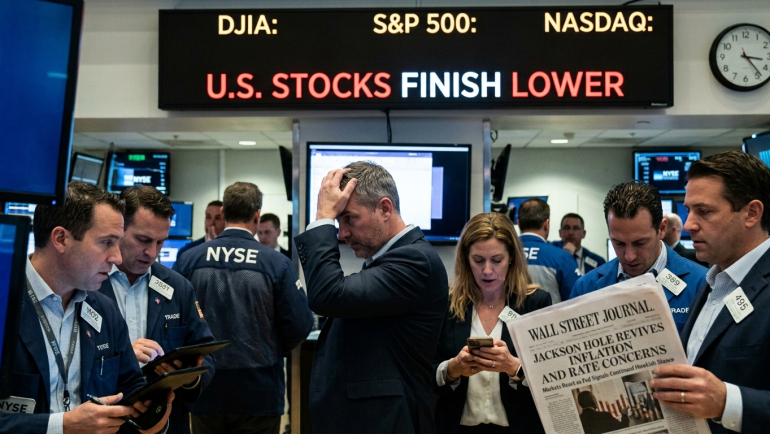
Companies are rediscovering the value of the analog world: when investors can’t be sure what’s real on a screen, they’d rather judge a person across the table. Their mistrust doesn’t end with algorithms either; it now extends to the very humans whose job it is to interpret those algorithms.
When AI Polishes, Trust Tarnishes
Over the past two years, artificial intelligence has become the unofficial ghostwriter of corporate life, quietly drafting earnings remarks, Q&A scripts, talking points, and even internal memos. Executives love the speed and polish, but markets trade on something AI cannot manufacture: credibility. Investors are beginning to recognize that messages which sound a little too smooth, a little too “on brand,” may have been honed more for algorithms than for actual owners of the company. In that environment, even a minor misalignment between the spoken word and operational reality can feel like a software bug in the trust stack.
That credibility gap is widening just as AI‑driven tools scrape and summarize thousands of corporate transcripts, painting sentiment heat maps that sometimes look rosier than the underlying fundamentals. When sentiment dashboards flash “bullish” while guidance edges lower, investors start to ask an uncomfortable question: are we hearing management, or are we hearing the model? The more presentations are optimized for search, engagement, and machine parsing, the more human listeners wonder what might be left on the cutting‑room floor. It is one thing for AI to auto‑format the footnotes; it is another when shareholders suspect it may be auto‑generating the conviction.
Deepfakes, Real Money
The trust problem is no longer theoretical; it now carries case numbers and legal filings. Synthetic media and deepfake technology have already been used to impersonate executives, authorize fraudulent transfers, and promote fabricated “official” investment opportunities. In a world where a convincing video of a CEO can be spun up by anyone with a GPU and a grudge, the old comfort of “I saw them say it on video” has become remarkably fragile. When even live‑streamed press conferences can be questioned, skepticism stops being a personality trait and starts being a risk control.
These incidents don’t just tarnish individual brands; they weaken the baseline assumption that faces and voices can be trusted as evidence at all. If a forged executive could, in principle, move billions with a few well‑timed comments, then every digital interaction carries a small but nagging probability of being counterfeit. That ambient doubt is corrosive. Once investors internalize that even their screens can lie to them convincingly, the natural response is to seek venues where the probability of fakery drops dramatically—rooms where the air conditioning is mediocre, the coffee is lukewarm, and the people are demonstrably real.
The Return of the Room
Against this backdrop, in‑person investor events are enjoying a quiet renaissance. Annual General Meetings, once dismissed as sleepy procedural theater, have reemerged as critical forums where management and shareholders can interrogate each other without a digital filter. In the spring meeting season, executives lay out operational performance, strategic road maps, and macro views, while investors use open Q&A to evaluate not just the answers, but the way those answers are formed in real time. That live, occasionally uncomfortable exchange has become a differentiator in a sea of perfectly edited virtual briefings.
Beyond statutory meetings, investor conference calendars remain busy with growth, sector, and thematic events. These conferences give investors the chance to stack a day with one‑on‑ones, corridor conversations, and serendipitous introductions that no AI‑generated FAQ can truly replicate, but do not provide a company specific and targeted audience that is solely hearing about their prospects so all a bit short. A handshake, a factory tour, or a candid aside over coffee or a private dining event often reveals more about a management team’s risk appetite and culture than another dozen bullet‑point slides ever could. When markets hover near highs and volatility lingers at the edges, many investors quietly admit they are more willing to underwrite a story after at least one real‑world encounter with the people steering the ship.
Risk Factors and Real Faces
Corporate risk disclosures have started to catch up with this new reality. Artificial intelligence now appears in many filings not only as a driver of efficiency, but as a vector for reputational harm, misinformation, and operational errors. Boards warn that AI‑related missteps—from biased models to misleading content—can erode stakeholder trust faster than traditional operational issues precisely because they scale at machine speed. For investor‑facing teams, that raises the bar: it is no longer enough to be accurate; communications must also be convincingly, credibly human.
At the same time, compliance and security teams face the awkward question of who is actually speaking on behalf of the firm in any given channel. Verifying identities, authenticating messages, and monitoring for synthetic imposters is the new cost of doing business online. One pragmatic response—seldom featured in glossy strategy decks but increasingly common in practice—is to bring more interactions back into the physical world. However much extra line items for travel and venue rentals may sting, there is still no more definitive “proof of life” than a CEO taking unscripted questions in front of a room full of shareholders.
AI as Tool, People as Signal
None of this implies a Luddite retreat from AI. Used thoughtfully, AI can help investor relations and advisory teams analyze sentiment, surface anomalies in disclosures, and tailor outreach more precisely, so long as humans remain firmly in the pilot’s seat. In a healthy architecture, algorithms operate as support infrastructure: they crunch data, stress‑test scenarios, and highlight blind spots, while actual people decide what to say, when to say it, and—crucially—how to say it in person. The message may pass through machines, but the accountability must rest with human beings.
For investors, the emerging rule of thumb is straightforward: AI is a powerful tool for research, but authenticity is best judged live. As more market participants lean on automated tools for screening and analysis, those same participants are becoming more discriminating about which management teams they will trust without a face‑to‑face. In practice, that means more roadshows, more on‑site visits, and more investor days where the key assets on display are not models or slideware, but judgment, temperament, and the ability to handle a tough question without checking with a chatbot.
When The Street Loses Its Shine
Layered on top of the AI dilemma is a more familiar trust problem: skepticism toward traditional research. Many investors now approach sell‑side reports with a raised eyebrow, well aware that bank analysts often juggle potential conflicts tied to investment banking relationships and corporate access. Price targets change, ratings drift gently from “hold” to “buy,” and somehow every company manages to be “well‑positioned” for the next quarter. It is not that the work is always bad—it is that the perceived incentives do not always line up cleanly with the needs of the end investor.
Paid research has fared no better in the court of investor opinion. Sponsored “independent” coverage and pay‑to‑publish reports may increase the volume of information, but they also leave sophisticated readers wondering who is the true client: the company being written about or the investor trying to make a decision. That lingering doubt has helped fuel the rise of self‑directed research, online communities, and analysts with no traditional platform beyond a handle and a following. The success of retail‑oriented brokerages like Robinhood and their peers sits squarely on this shift: a growing cohort of investors who would rather parse raw filings, transcripts, and firsthand impressions than outsource judgment to a neatly formatted PDF.
As younger, mobile‑first investors pour into markets, their expectations are different. They want direct access to management, unfiltered information, and the ability to ask their own questions—even if those questions are delivered via live streams, town halls, or community calls rather than hushed institutional meetings. In many ways, the skepticism toward sell‑side and paid research is the mirror image of the skepticism toward AI‑polished corporate narratives: in both cases, investors are wary of anything that feels like it might have been engineered to sell, rather than to inform. That is precisely why live interactions—site visits, investor days, Q&A‑heavy events—have become a form of due diligence all their own.
The Human Premium
If the last technology cycle rewarded firms for how aggressively they could remove friction, the current one is beginning to reward those that are selective about which frictions they keep. Investors have discovered that while AI can write fast, trust tends to compound slowly and can still evaporate in an instant. Rebuilding it often requires old‑fashioned logistics: boarding passes, name tags, and the universal bond of mutually underwhelming conference catering. Companies that embrace that reality—using AI as a back‑office force multiplier while elevating tangible, in‑person interactions to center stage—are discovering a new form of multiple: the human premium.
That human premium is measured not just in valuation metrics, but in the resilience of the shareholder base when markets wobble. Investors who have met the team, walked the production floor, or debated strategy in a room are less likely to bolt at the first sign of volatility. In an era where headlines can be hallucinated and quotes can be fabricated in convincing detail, the unglamorous work of building real‑world relationships becomes a strategic asset rather than an optional courtesy. The paradox of the AI age is that the more powerful synthetic communication becomes, the more valuable the unscripted, unmediated conversation is.
Where Vista and Tribe Step In
This is exactly the fault line where CA Investment Advisor, Vista Partners (“Vista”) (www.VistaPGlobal.com), and its sister organization, Tribe Public LLC (www.TribePublic.com), have chosen to build. Vista’s advisory platform is designed around helping emerging and established companies articulate their story to the market with clarity, discipline, and a deep understanding of how worldwide community of institutional, registered investment advisors, brokers, family offices, retail investors, accredited investors, business owners, members of media and consumers who actually consume information today. It is one thing to have a compelling business; it is another to translate that into a credible narrative that survives contact with analysts, portfolio managers, and an increasingly skeptical public. Vista sits at that intersection, working with management teams to shape strategy, refine messaging, and stay in front of the right audiences via its targeted content creation, social media reach, distribution email network, and even influencer relationships—not just in quarterly cycles, but over the full arc of a company’s evolution while maximizing the companies other marketing, investor relations and PR initiatives seamlessly and with minimal company management time.
Tribe Public picks up that thread and runs it into the room. Its “Build Your Tribe” offering is a purpose‑built platform for connecting companies directly with curated communities of investors, family offices, and thought leaders through live events, interactive discussions, and ongoing engagement. Where Vista helps a company define what it should be saying and to whom, Tribe focuses on creating the environments where those conversations actually happen—conference rooms & 41 event venues across the U.S., and virtual stages that have spanned 31-countries where investors can ask their own questions, read the body language, and decide for themselves whether they believe the people behind the ticker.
The combination is deliberately designed for this moment of AI‑driven uncertainty. Vista provides the strategic advisory backbone: capital markets insight, positioning, and narrative discipline that ensure a company’s message is coherent, compliant, and compelling. Tribe then operationalizes that narrative in front of real investors, repeatedly, in formats that emphasize authenticity over automation. The result is a feedback loop that not only broadcasts a story, but tests it, refines it, and rebuilds trust conversation by conversation.
For issuers, this integrated approach offers something algorithms cannot: a structured way to convert abstract “market awareness” into real human conviction. For investors, it offers access not just to information, but to the people responsible for turning that information into execution. In an age when no one is entirely sure whether what they are reading was written by a human or a machine, Vista Partners and Tribe Public have staked out a simple, quietly radical proposition: the best way to prove you are real is to show up, tell your story, and let investors and consumers look you in the eye.
The Sources
- Dickenson World – “AI Wrote It. Do Investors Still Trust It?”
https://dickensonworld.com/ai-wrote-it-do-investors-still-trust-it/dickensonworld - Ragan Consulting – “More Companies See New Risks to Reputation from AI”
https://raganconsulting.com/public-companies-disclose-new-reputation-risks-from-artificial-intelligence/raganconsulting - Boyla – “AI writes fast. Trust breaks faster. A framework for AI risk in corporate communications”
https://www.linkedin.com/pulse/ai-writes-fast-trust-breaks-faster-framework-risk-corporate-boyla-jza7elinkedin - Fast Company – “The rise of AI in CEO communications—and the credibility risk it poses”
https://www.fastcompany.com/91358554/the-rise-of-ai-in-ceo-communications-and-the-credibility-risk-it-poses-ai-corporate-communicationsfastcompany - 5WPR – “The Future of Investor Communications in an AI Economy”
https://www.5wpr.com/new/the-future-of-investor-communications-in-an-ai-economy/5wpr - Investing.com – “2025 Shareholder Meetings May Signal Economic Trends Amid Recession Fears”
https://in.investing.com/analysis/2025-shareholder-meetings-may-signal-economic-trends-amid-recession-fears-200628618investing - EU Law Enforcement – “When Seeing Isn’t Believing: Deepfakes, Financial Markets and EU Law Enforcement”
https://eulawenforcement.com/?p=9492eulawenforcement - ScienceDirect – “The transparency dilemma: How AI disclosure erodes trust”
https://www.sciencedirect.com/science/article/pii/S0749597825000172sciencedirect - Wall Street Horizon – “Q3 2025 Investor Conference & Events Highlights”
https://www.wallstreethorizon.com/blog/Q3-2025-Investor-Conference–Events-Highlightswallstreethorizon - TwoFiveSeven – “How Deepfake Scams Threaten Financial Institutions”
https://www.twofourseven.co.uk/blog/9/5/2025/how-deepfake-scams-threaten-financial-institutionstwofourseven - FinCEN – “FinCEN Issues Alert on Fraud Schemes Involving Deepfake Media Targeting Financial Institutions”
https://www.fincen.gov/news/news-releases/fincen-issues-alert-fraud-schemes-involving-deepfake-media-targeting-financialfincen - CFO.com – “Growing reliance on AI for research drives CFOs to focus on trust and controls”
https://www.cfo.com/news/investors-growing-reliance-on-ai-gartner-research-drives-finance-to-boost-/810532/cfo - New Constructs – “A Cautionary Tale on Sell-Side Ratings”
https://www.newconstructs.com/a-cautionary-tale-on-sell-side-ratings/newconstructs - Harvard Business School – “The Bias of Wall Street Analysts”
https://www.library.hbs.edu/working-knowledge/the-bias-of-wall-street-analystslibrary.hbs - Nanalyze – “The Dangers of Paid Stock Research Reports”
https://www.nanalyze.com/2020/09/paid-stock-research-reports/nanalyze - Simonov, CFA Institute paper – “Solving the Sell-Side Research Problem: Insights from Buy-Side Professionals” (PDF)
http://andreisimonov.com/N4106/pdf/FAJ_AnalystConflictsAnalysis4.pdfandreisimonov - Reuters – “Robinhood profit surpasses expectations as retail traders ride market momentum”
https://www.reuters.com/business/finance/robinhood-profit-skyrockets-retail-traders-ride-market-momentum-2025-11-05/reuters - Robinhood – “Retail Access – Policy Positions”
https://robinhood.com/us/en/policy/retail-accessrobinhood
Stay Updated with Vista Partners
Subscribe to receive market insights, investing ideas, and the latest updates directly in your inbox.