Skip to content Skip to sidebar Skip to footer

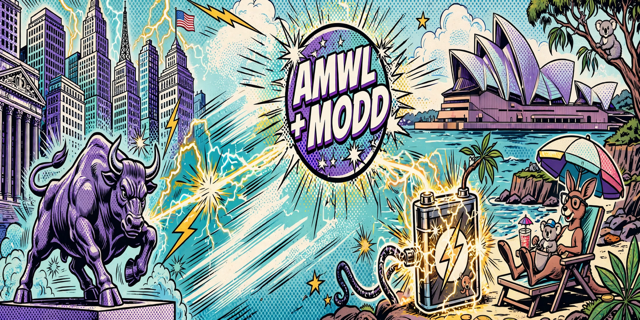
May 20, 2026 – Stocks Pop Higher Apparently All It Took Was Less War, More GPUs, & NVIDIA On Center Stage -( $ALAB $AMWL $BZFD $EPRX $MODD $NVDA $TSLA Rise!)

US equities ripped higher on Wednesday, May 20, 2026, as cooling oil prices, ebbing Middle East risk, and anticipation around blockbuster NVIDIA earnings combined to extend this year’s AI-led risk rally.

Index recap and risk tone

  • The Dow Jones Industrial Average surged roughly 645 points to close at 50,009.35, with cyclicals, financials and select industrials leading as oil’s retreat eased stagflation fears.
  • The S&P 500 (7,432.97, +1.08%) and Nasdaq Composite (26,270.36, +1.54%) both rallied, powered by mega‑cap tech and AI beneficiaries into NVIDIA’s after‑the‑bell print.
  • Volatility compressed as traders faded recent geopolitical risk premia tied to the Strait of Hormuz, while positioning skew in options markets tilted toward upside calls in mega‑cap tech and semis. The CBOE Volatility Index (VIX) closed at 417.44, -3.43%.

Macro, rates and commodities: oil deflates the war premium

  • Crude gave back ground falling 4.90% to closes at $99.05/bbl as markets digested President Donald Trump’s pledge to backstop shipping insurance in the Persian Gulf, easing fears of a prolonged disruption in the Strait of Hormuz and pulling Brent and WTI off recent triple‑digit spikes.
  • Earlier in the month, repeated shutdown and reopening headlines out of Iran had driven double‑digit percentage moves in oil, whipsawing inflation expectations and rate‑cut odds; today’s retreat helped stabilize breakevens and took some pressure off long‑end yields.
  • Lower energy prices translated directly into strength in fuel‑sensitive groups such as airlines, truckers and select consumer discretionary names, while energy equities lagged the broader tape.
  • Interest rates drop nicely with the 10-yr declining 2.04% to 4.57.

NVIDIA: AI “factory” super‑cycle goes vertical

NVIDIA’s fiscal Q1 2027 results, released after the close, reinforced the narrative that the AI infrastructure build‑out remains in full hyper‑growth mode.

  • Revenue hit a record 81.6 billion dollars for the quarter ended April 26, 2026, up 20% sequentially and 85% year over year, with GAAP gross margin just under 75%.
  • Data Center revenue reached 75.2 billion dollars, rising 21% quarter on quarter and 92% from a year ago, underscoring voracious demand for AI compute across hyperscale and enterprise “AI factory” deployments.
  • The company paired these numbers with a shareholder‑friendly capital return reset: an additional 80 billion dollars of share repurchase authorization, on top of prior capacity, and a dividend step‑up from 0.01 dollars to 0.25 dollars per share, payable in late June to holders of record in early June.
  • Management framed AI infrastructure as “the largest expansion in human history,” positioning NVIDIA’s platform—spanning cloud, edge, agentic AI software stacks, networking and automotive/robotics—as the central picks‑and‑shovels provider to this cycle.

From a market‑structure lens, these results extend NVIDIA’s role as both sentiment barometer and liquidity magnet for the entire AI complex. The combination of triple‑digit earnings growth, high‑70s non‑GAAP gross margins, and aggressive buybacks/dividend re‑rating is likely to keep the stock front‑and‑center in performance chases and benchmark‑hugging portfolios.

SpaceX and the private‑to‑public pipeline

  • In the background of today’s tape, SpaceX continued to inch toward the public markets, with recent reports highlighting plans for a five‑for‑one stock split ahead of a potential IPO and naming Goldman Sachs as lead‑left underwriter.
  • While timing remains fluid, the prospect of one of the most closely watched private unicorns coming public in 2026 adds another potential liquidity event for growth‑oriented investors already rotating toward AI, space and defense adjacencies.

What it all means for positioning

  • Macro: A softer oil tape and contained rate expectations give equities more room to run, but the path remains hostage to headlines out of the Strait of Hormuz and evolving US–Iran dynamics.
  • Earnings: NVIDIA’s blow‑out quarter and massive capital return program effectively validate the AI capex super‑cycle, raising the bar for peers across semis, cloud and networking into their next prints.
  • Flows: With mega‑cap tech continuing to dominate index‑level earnings power, benchmarked money faces growing pressure to add or at least neutralize underweights in AI leaders, even as concentration risk at the index level grinds higher.

VP Watchlist Updates

Below is an update‑style snapshot on the VP Watchlist names for the week, focused on recent catalysts, positioning, and narrative rather than precise price moves.

Astera Labs, Inc. (Nasdaq: ALAB, $287.48, +17.69%)

Astera Labs, Inc. (Nasdaq: ALAB), a leader in semiconductor-based connectivity solutions for rack-scale AI infrastructure, today announced preliminary financial results for the first quarter of fiscal year of 2026, ended March 31, 2026.

Amwell® (NYSE: AMWL, $7.89, +.77%)

Amwell® (NYSE: AMWL), a leading provider of a comprehensive SaaS-based technology-
enabled healthcare platform, highlighted (May 18) results from an independently led, National Institute of Mental Health-funded randomized trial published in Nature Human Behaviour examining SilverCloud® by Amwell®, the company’s digital behavioral health solution.

Amwell announced (May 5) financial results for the first quarter ended Mar. 31, 2026.
“Entering 2026, Amwell’s main focus was to consolidate our platform to fulfill the unmet needs of our Payer and Provider customers. The Technology-Enabled Care infrastructure we have developed to fill that gap in the market continues to gain traction as customers recognize its clear advantages: lower costs, better outcomes, stronger market share and an increased level of control and agility. Our platform is performing well and built to leverage the latest AI-powered innovations, positioning it as essential infrastructure for tech-enabled care delivery,” said Dr. Ido Schoenberg, Chairman and CEO of Amwell. “We are seeing powerful validation of the platform with significant pipeline growth and a number of meaningful renewals. With this momentum and the favorable regulatory tailwinds, Amwell is well-positioned for continued strong execution this year and to reach our goal of positive cash flow from operations in the fourth quarter.”

Eupraxia Pharmaceuticals (EPRX, $6.37, +1.27%)

Eupraxia Pharmaceuticals Inc. (EPRX), a clinical-stage biotechnology company leveraging its proprietary Diffusphere™ technology designed to optimize local, controlled drug delivery for applications with significant unmet need, announced (May 5) the first Eosinophilic Esophagitis Endoscopic Reference Score (EREFS) data from its ongoing Phase 1b/2a part of the RESOLVE trial evaluating EP-104GI for the treatment of eosinophilic esophagitis (“EoE”). These data were also presented at the ongoing Digestive Disease Week (“DDW”) conference in Chicago. “The EREFS is an important, validated visual index of severity of EoE disease in the esophagus of patients. It measures edema, rings and strictures and other visible markers of disease often associated with symptoms. Today’s data demonstrated improvement in two key outcomes with EP-104GI in the treatment of EoE: first, that a full injection protocol of 20 injections resulted in more pronounced improvement than a protocol with fewer injections and less coverage area within the esophagus; second, with the higher number of injections, a consistent response in both the inflammatory and fibrotic sub scores of EREFS was observed,” said Dr. James A. Helliwell, Chief Executive Officer of Eupraxia. “This EREFS data being reported at DDW is consistent with the improvements we have seen in EoE symptoms and tissue health (EoEHSS) and suggests improvement in inflammation, fibrosis and the associated narrowing of the esophagus.”

Eurpraxia announced on Friday, May 1, the appointment of Dr. Jeymi Tambiah as Chief Medical Officer (CMO) as well as the retirement of Dr. Mark Kowalski, Eupraxia’s current CMO. Dr. Jeymi Tambiah (MB ChB, FRCS, MS, FAPCR, FFPM), is a Board Certified Cardiothoracic Surgeon physician scientist who practiced at Guys and St Thomas’ Hospitals prior to entering the biopharmaceutical industry in 2008. Dr. Tambiah brings over 18 years of experience in clinical development, medical and regulatory strategy, and product commercialization across pharmaceutical and biotechnology organizations.

Eupraxia recently co-hosted a Tribe Public www.TribePublic.com, CEO Presentation & Q&A Webinar event, Wednesday, April 1 titled “Turning EOE Into a Once-a-Year Appointment.” The event featured James A. Helliwell, M.D., Co‑founder and CEO of Eupraxia Pharmaceuticals (NASDAQ: EPRX), who discusses the company’s precision drug‑delivery platform, its approach to Eosinophilic Esophagitis (EoE), and broader pipeline priorities, followed by a focused 5–10 minute Q&A. You may watch it now at this Youtube link.

Modular Medical (MODD, $3.95, +18.62%)

  • Modular Medical, Inc. (NASDAQ:MODD), a leader in innovative, patient-centric insulin delivery, saw (May 1) CEO Jeb Besser join Tribe Public’s members to unpack a simple question with big implications: what happens when an “almost‑pumper” market finally meets an FDA‑cleared device built for the rest of us, not just the superusers? Tribe Public hosted its CEO Presentation and Q&A Webinar, “From FDA Wins to Scaling Manufacturing – What Investors Should Watch,” on Friday, May 1, 2026, at 8:00 a.m. PT / 11:00 a.m. ET. In keeping with Tribe’s reputation for efficient programming, the session ran approximately 30 minutes, pairing a focused prepared talk with a 5–10 minute live Q&A segment that allowed investors to drill into timelines, capital needs, and commercial strategy. Besser’s formal remarks were framed under the title “From FDA Wins to Scaling Manufacturing – What Investors Should Watch,” setting the tone for a discussion that sat at the intersection of regulation, innovation, and recurring‑revenue hardware. By registering, attendees also joined Tribe Public’s membership base, ensuring they will receive future invitations to CEO briefings, sector spotlights, and investor wish‑list events.
  • Modular Medical announced (APRIL 19) the pricing of a registered direct offering consisting of 750,000 shares of the Company’s common stock at an offering price of $4.50 per share. The gross proceeds to the Company from the Offering are estimated to be approximately $3.4 million before deducting placement agent fees and other offering expenses. The Offering is expected to close on or about April 21, 2026, subject to the satisfaction of customary closing conditions.
  • Modular Medical’s latest regulatory milestone upgrades the narrative: the company has now (April 9) secured FDA 510(k) clearance for its Pivot tubeless insulin patch pump, moving from “launch‑ready” to “launch‑approved” in the heart of the fast‑growing diabesity market. The FDA has cleared Modular Medical’s Pivot patch pump as a tubeless, removable insulin delivery system, formally validating the device’s design and performance for commercial use in U.S. adults living with diabetes. The clearance converts what had been a Q1 2026 launch “subject to FDA response” into a tangible commercial pathway, giving the company permission to sell into an insulin pump market that has been estimated at roughly 8 billion dollars globally. Pivot is engineered as a simplified, two‑part patch pump with a 3‑milliliter removable reservoir, no need for battery recharging, and the ability to bolus without a dedicated controller, aiming squarely at patients who have stayed on multiple daily injections because traditional pumps felt too complex, cumbersome, or costly. By clearing Pivot, the FDA is effectively endorsing Modular Medical’s attempt to make advanced insulin delivery feel less like adopting a gadget and more like upgrading a daily habit.

The InterGroup Corporation (INTG, $37.05)

  • The InterGroup Corporation (NASDAQ: INTG) announced financial (May 11) results for the fiscal third quarter ended March 31, 2026. InterGroup is a diversified holding company with interests in hospitality (through its majority‑owned subsidiary Portsmouth Square, Inc.), real estate operations, and investment transactions. The discussion below is derived from the Company’s Quarterly Report on Form 10‑Q for the quarter ended March 31, 2026. Third Quarter Fiscal 2026 Highlights (Three Months Ended March 31, 2026 vs. 2025) are as follows:
    • Total revenues increased to $20.372 million from $16.824 million (+21%).
    • Income from operations increased to $4.260 million from $2.350 million (+81%).
    • GAAP net income was $0.595 million, compared to a GAAP net loss of $0.750 million in the prior‑year quarter.
    • Net income attributable to InterGroup was $0.457 million, or $0.21 per diluted share, compared to a net loss attributable to InterGroup of $0.578 million, or $0.27 per share, in the prior‑year quarter.
    • Hotel revenues increased to $16.497 million from $12.210 million (+35%). For additional context, Hotel revenues for the quarter ended March 31, 2026 exceeded the comparable pre‑pandemic quarter ended March 31, 2019 by approximately $1.028 million.
    • Real estate revenues were $3.875 million compared to $4.614 million in the prior‑year quarter (‑16%).
    • Net loss from investment transactions was $(0.342) million compared to $(1.379) million in the prior‑year quarter.

Volato Group, Inc. (SOAR) & M2i Global, Inc. (MTWO)

Nokia (NOK, $13.62)

  • Nokia has quietly stitched together a new chapter in its comeback story—one that runs from American living rooms to Pentagon test ranges, and now straight through NVIDIA’s (NVDA) data centers. With NVIDIA’s billion‑dollar vote of confidence in the fall and another blockbuster NVIDIA earnings report due today, the old handset icon is suddenly speaking fluent AI.

NVIDIA (NVDA, $223.47, +1.30%)

Nvidia’s First Quarter Fiscal 2027 earnings report have finally crossed the tape today (May 20), and the immediate takeaway is that the AI engine is still running at full throttle, even if Wall Street was already leaning hard on the accelerator. The story today is less about whether Nvidia is growing and more about just how far into “infrastructure of AI” territory it has now ventured.

McDonald’s (MCD, $280.27)

  • Morgan Stanley (April 21) has adjusted its price target on McDonald’s (MCD) to $334, maintaining an Equal Weight stance on the stock. The firm’s analyst highlighted consumer strength heading into first-quarter results, noting that earnings quality will likely vary across the restaurant and food distribution landscape . While some operators may face headwinds, the underlying consumer backdrop remains robust, which could support McDonald’s performance as one of the industry’s quality players positioned to navigate the current environment .

Tesla (TSLA, $417.26, +3.25%)

Tesla’s Q1 2026 performance underscored strong revenue growth and signs of margin stabilization, supported by continued investment in solar and AI initiatives. The narrative is further bolstered by Tesla’s stake in SpaceX, with anticipation building around a potential SpaceX IPO that could unlock additional shareholder value soon. However, elevated capital expenditure levels remain a key overhang, tempering investor enthusiasm despite these strategic advantages.

Serina Therapeutics (NYSE: SER, $1.70, +5.59%)

Serina Therapeutics, Inc. (“Serina” or the “Company”) (NYSE American: SER), a clinical-stage biotechnology company developing its proprietary POZ Platform™ drug optimization technology, reported (May 14) its financial results for the first quarter ended March 31, 2026, along with key business updates. The company highlighted the follow: Phase 1b Registrational Clinical Study of SER-252 Underway in Advanced Parkinson’s Disease; TFL data from the SAD study arm targeted for first half of 2027 & Closed $21.2 million private placement financing to support continued advancement of SER-252. “With our Phase 1b registrational study of SER-252 now underway and a strengthened balance sheet, Serina is entering an important execution phase as we work toward our first clinical data in patients with advanced Parkinson’s disease,” said Steve Ledger, Chief Executive Officer of Serina. “SER-252 represents the first clinical validation of our POZ Platform™, which is designed to optimize well-understood therapeutics by improving pharmacokinetics, tolerability and dosing profiles. We believe this approach has the potential to unlock meaningful value across multiple modalities, and we are building a pipeline and partnership strategy to fully leverage the breadth of the platform.”

BuzzFeed, Inc. (BZFD, $1.57, +19.85%)

BuzzFeed, Inc. (NASDAQ: BZFD) has entered into a transaction agreement with Allen Family Digital, LLC, an affiliate of Byron Allen’s family office, that would see Allen invest $120 million for a majority stake in the once high-flying digital media pioneer. Under the deal, Allen’s vehicle will purchase 40 million shares at $3.00 apiece, giving it roughly 52% of BuzzFeed’s outstanding shares when the transaction closes.

FMC Corporation (NYSE: FMC, $12.69)

FMC Corporation (NYSE:FMC) reported (April 29) first quarter 2026 results above guidance with Adjusted EBITDA above high end of range, reaffirms full-year outlook. Their first quarter 2026 revenue of $759 million, down 4 percent versus first quarter 2025. First quarter 2026 revenue, excluding India, was $762 million, down 4 percent versus first quarter 2025, which included India. On a GAAP basis, the company reported a loss of $2.25 per diluted share in the first quarter, a decrease of $2.13 versus first quarter 2025. First quarter adjusted loss per diluted share of $0.23 was down 41 cents versus first quarter 2025. FMC Corporation also announced today that its board of directors declared a regular quarterly dividend of 8 cents per share (roughly 2.26%), payable on July 16, 2026, to shareholders of record as of the close of business on June 30, 2026.

The Sources

  1. CNBC – Market Open: May 20, 2026 (real-time look at equity markets and sector moves)cnbc
    https://www.cnbc.com/video/2026/05/20/market-open-may-20-2026.html
  2. Yahoo Finance – How major US stock indexes fared Friday 5/15/2026 (context on recent index performance into mid‑May)finance.yahoo
    https://finance.yahoo.com/markets/stocks/articles/major-us-stock-indexes-fared-202242234.html
  3. Zacks Investment Research – Stock Market News for May 14, 2026 (macro, inflation data, and equity reaction)zacks
    https://www.zacks.com/stock/news/2920948/stock-market-news-for-may-14-2026
  4. Finbold – Machine learning algorithm predicts Nvidia stock price on May 31, 2026 (AI expectations and NVDA sentiment into late May)finbold
    https://finbold.com/machine-learning-algorithm-predicts-nvidia-stock-price-on-may-31-2026/
  5. Morningstar – 1 Reason Nvidia Stock Could Surge in 2026 (longer‑term AI/GPU demand backdrop)finance.yahoo
    https://finance.yahoo.com/news/1-reason-nvidia-stock-could-232300856.html
  6. SiliconData – GPU Pricing Trends 2026: What to Expect in the Year Ahead (GPU market dynamics and AI/data‑center demand)silicondata
    https://www.silicondata.com/blog/gpu-pricing-trends-2026-what-to-expect-in-the-year-ahead
  7. Gotrade – US Market Outlook May 11–15, 2026: CPI Is Key (broader macro and risk‑on/risk‑off setup into mid‑May)heygotrade
    https://www.heygotrade.com/en/news/weekly-economic-outlook-2026-05-11/

Nvidia’s AI Money Machine: Q1 2027 Earnings Rewrite the Playbook -( $NVDA )

Nvidia’s First Quarter Fiscal 2027 earnings report have finally crossed the tape, and the immediate takeaway is that the AI engine is still running at full throttle, even if Wall Street was already leaning hard on the accelerator. The story today is less about whether Nvidia is growing and more about just how far into “infrastructure of AI” territory it has now ventured.


Nvidia’s Q1 2027: The Numbers That Matter

Nvidia reported its first‑quarter fiscal 2027 results after the close today, delivering another blockbuster set of figures that extend the company’s extraordinary run from last year’s record fiscal 2026. Coming off a Q4 where revenue hit 68.1 billion and non‑GAAP EPS landed around 1.62, expectations for Q1 were already lofty, with Street forecasts clustered near 78–79 billion in revenue and about 1.75–1.78 in earnings per share.

Management had effectively pre‑set the bar by guiding to roughly 78 billion in Q1 revenue, plus or minus 2 percent, and today’s print plays out against that high‑wire act. With consensus already pricing in nearly 80 percent year‑on‑year revenue growth and more than a doubling in EPS, even a solid beat risks being met with the kind of shrug reserved for sequels that were already assumed to be blockbusters.


Data Center Still the Main Character

If there was any doubt about what business Nvidia is really in, today’s numbers should resolve them: the data‑center segment once again dominates the narrative. Heading into the release, analysts expected data‑center revenue around 73.1 billion, up sharply from the 62.3 billion posted in the prior quarter and continuing the vertical climb that defined fiscal 2026.

The underlying driver is the same one that has defined Nvidia’s past few quarters: hyperscalers and AI developers racing to build and expand clusters, with AI capital expenditures projected to top 1 trillion by 2027. In practice, that means Nvidia’s GPUs, systems, and networking gear are increasingly treated less like components and more like essential infrastructure, with customers effectively reserving capacity as if they were booking gates at an airport.


Margins, Guidance, and the AI CAPEX Wave

Beyond headline revenue and EPS, investors are laser‑focused on gross margins and guidance—two datapoints that say as much about Nvidia’s market power as any earnings line. The Street came into the print expecting Q1 gross margins in the mid‑70 percent range, a slight step down from the 75.2 percent non‑GAAP level in Q4 but still firmly in “premium pricing power” territory.

On the conference call, management’s forward‑looking commentary on Q2 and the rest of fiscal 2027 may prove more market‑moving than the quarter just reported. With analysts modeling another leg up in revenue and expecting operating margins in the mid‑60s as scale kicks in, any sign that AI infrastructure spending is slowing—or, conversely, that demand is broadening further—could reprice not just Nvidia, but the entire AI‑linked complex. For Q2 Nvidia said it believes that revenue should come in the range of $89.1 billion – $92.8 billion. Wall Street had speculated $87.3 billion. NVIDIA also announced $80 billion additional share repurchase authorization and increases its quarterly cash dividend from $.01 to $.25/share.


Wall Street’s Verdict: Can Anything Live Up to the Hype?

Today’s report lands in a market that has been scripting Nvidia as the central protagonist of the AI cycle, and the early reaction reflects that starring role. Options pricing and retail forums had telegraphed expectations for a big move into the print, with traders obsessing over whether the stock could justify its post‑Q4 rally and rich multiple.

For long‑term investors, though, the more important question is less cinematic: does this quarter reinforce the view of Nvidia as a durable AI infrastructure supplier with multi‑year visibility, or does it hint at a more cyclical, stop‑and‑go demand pattern? So far, the combination of massive Q1 revenue, robust profitability, and continued strength in data‑center orders suggests that, for now, the “infrastructure” thesis is holding—though the market will test that narrative again with every guidance line and every new AI capex forecast.

The Sources

Here’s a clean, numbered source list you can use and adapt:

  1. CNBC – “Nvidia (NVDA) Q1 2027 earnings report: Live updates”
    https://www.cnbc.com/2026/05/20/nvidia-nvda-earnings-report-q1-2027.htmlcnbc
  2. Nvidia Investor Relations – “NVIDIA 1st Quarter FY27 Financial Results” (event page)
    https://investor.nvidia.com/events-and-presentations/events-and-presentationsinvestor.nvidia
  3. Nvidia Newsroom – “NVIDIA Announces Financial Results for Fourth Quarter and Fiscal 2026”
    https://nvidianews.nvidia.com/news/nvidia-announces-financial-results-for-fourth-quarter-and-fiscal-2026nvidianews.nvidia
  4. S&P Global Market Intelligence – “Nvidia earnings preview: Q1 2027”
    https://www.spglobal.com/market-intelligence/en/news-insights/research/2026/05/nvidia-earnings-preview-q1-2027spglobal
  5. IG – “NVIDIA Q1 FY 2027 earnings preview: is AI demand strong enough?”
    https://www.ig.com/en/news-and-trade-ideas/nvidia-q1-fy-2027-earnings-preview-260513ig
  6. Zacks / TradingView – “AI Datacenter Growth Likely to Power NVIDIA’s Strong Q1 Revenues”
    https://www.tradingview.com/news/zacks:d4a469fe8094b:0-ai-datacenter-growth-likely-to-power-nvidia-s-strong-q1-revenuestradingview
  7. MarketBeat – “NVIDIA Q1 2027 Earnings Report”
    https://www.marketbeat.com/earnings/reports/2026-5-20-nvidia-co-stockmarketbeat
  8. Kiplinger – “Nvidia Earnings: Live Updates and Commentary May 2026”
    https://www.kiplinger.com/investing/live/nvidia-earnings-live-updates-and-commentary-may-2026kiplinger
  9. Reddit – r/NVDA_Stock community and Q1 FY27 estimates thread
    https://www.reddit.com/r/NVDA_Stock/reddit
    https://www.reddit.com/r/NvidiaStock/comments/1t96qpm/nvda_q1_fy27_earnings_revenue_guide_full_estimatesreddit
  10. Facebook posts flagging Nvidia’s FY27 Q1 earnings week
    https://www.facebook.com/MansfieldNewsJournal/facebook
    https://www.facebook.com/Delawareonline/facebook

How a Billion From NVIDIA Turned Nokia Into a Sneaky AI Dividend on 6G -( $INSG $LMT $NOK $NVDA $TMUS )

Nokia has quietly stitched together a new chapter in its comeback story—one that runs from American living rooms to Pentagon test ranges, and now straight through NVIDIA’s (NVDA) data centers. With NVIDIA’s billion‑dollar vote of confidence in the fall and another blockbuster NVIDIA earnings report due today, the old handset icon is suddenly speaking fluent AI.


Nokia’s New AI Era

Over the past few months, Nokia (NOK) has rolled out a string of announcements that read less like a restructuring memo and more like a tech‑era relaunch. In place of phones and ringtones, the company is now talking about AI‑native networks, home broadband “agents,” and defense‑grade 5G as if it were born in Silicon Valley rather than Espoo.

At the center of this pivot is a strategy to become the plumbing of the AI age: Nokia wants to carry not just voice and data, but the torrents of machine learning traffic that are quickly becoming the internet’s dominant load. And, for once, the company is not going it alone.


NVIDIA’s Billion‑Dollar Bet

The inflection point came last fall, when NVIDIA (NVDA) agreed to invest 1.0 billion dollars in newly issued Nokia (NOK) shares at 6.01 dollars apiece, taking a roughly 2.9% stake in the company. Nokia’s board approved a directed share issuance of more than 166 million shares, in a deal that instantly put the Finnish group back on investors’ radar—and sent the stock sharply higher on the news.

Beyond the optics of a jet‑fuelled stock chart, the structure mattered: this was not a passive financial stake but capital earmarked to accelerate AI‑RAN development, data‑center networking, and the broader shift from 5G to 6G. In other words, NVIDIA is not just renting Nokia’s balance sheet; it is renting Nokia’s place in the world’s wireless infrastructure.


Building the AI Platform for 6G

The partnership between Nokia (NOK) and NVIDIA (NVDA) aims to “pioneer the AI platform for 6G,” which is corporate shorthand for a simple idea: put an AI‑ready data center behind every radio network. NVIDIA introduced its Arc Aerial RAN Computer, a 6G‑ready telecom computing platform, and Nokia agreed to build new AI‑RAN products on top of it.

The two companies plan to fuse NVIDIA’s processors with Nokia’s radio and transport portfolio, enabling operators to launch AI‑native 5G‑Advanced and 6G networks that can adapt to traffic patterns, energy prices, and user behavior in real time. In a nice bit of role reversal, Nokia’s own data‑center switching technology will also feed back into NVIDIA’s AI infrastructure, turning the onetime handset maker into a key cog in the GPU age.


U.S. Telecom Ambitions and T‑Mobile’s Role (NOK, NVDA, TMUS)

The deal is wrapped in a bigger ambition: to “power America’s return to telecommunications leadership,” an aspiration that plays well on both sides of the Atlantic. T‑Mobile U.S. (TMUS) is already working with Nokia (NOK) and NVIDIA (NVDA) to integrate AI‑RAN technologies into its 6G development process, making the magenta carrier an early proving ground for what these AI‑native networks can actually do.

If AI‑RAN lives up to its billing, operators could squeeze more performance out of existing spectrum and hardware, while automating much of the network tuning that used to require armies of engineers. For Nokia, being at the heart of that effort offers something it has not had in years: a seat at the policy and standards tables where the future of wireless is decided.


From Fixed Wireless to Agentic Home Networks

The new Nokia story is not confined to cell towers and fiber rings; it also extends into the living room. Earlier this month, Nokia (NOK) launched “agentic AI” for home and broadband networks, signaling a push to embed more intelligence directly in consumer‑facing equipment.

That push is aided by fresh U.S. regulatory breathing room: Nokia recently secured FCC approval for its in‑home broadband devices, a green light that should keep deployments across the country on schedule. In practical terms, that means the same company once known for indestructible feature phones now wants to manage your Wi‑Fi, prioritize your streaming, and quietly optimize the traffic from your kids’ game consoles—all with a bit more silicon‑driven subtlety.


Defense‑Grade 5G and Fixed Wireless Shake‑Up

The company has also been busy in domains where latency and reliability are more than mere inconveniences. Through Nokia Federal Solutions, it has partnered with Lockheed Martin (LMT) to introduce a mission‑critical 5G solution for the U.S. Department of Defense, built on an open suite of standards.

In parallel, Nokia (NOK) agreed to sell its Fixed Wireless Access business to Inseego (INSG), which aims to fashion a global wireless broadband leader from the acquired assets. Shedding a non‑core business while doubling down on AI‑native RAN and secure, standards‑based 5G suggests a management team willing to trade breadth for focus—a habit investors tend to appreciate once the dust settles.


Leadership and Europe’s Tech Wake‑Up Call

Inside the company, Nokia (NOK) has been refreshing the org chart to match its new ambitions. It recently appointed Emma Falck as President of Mobile Infrastructure and a member of the Group Leadership Team, putting fresh leadership atop the unit that will have to execute much of the AI‑RAN and 6G roadmap.

Externally, Nokia has called for Europe’s tech sector to “act as One Europe, Now,” framing connectivity, AI, and 6G as strategic assets rather than nice‑to‑have upgrades. Coming from a company that once lost a front‑row seat in the smartphone era, the message carries a hint of hard‑earned urgency.


NVIDIA’s Earnings Clock and the Nokia Trade

All of this now sits in the shadow of another market‑moving event: NVIDIA’s earnings report is due today. NVIDIA (NVDA) last reported record quarterly revenue in the prior fiscal year, with data‑center momentum setting the tone for the broader AI trade.

When a company of that scale takes a billion‑dollar swing at an old‑line telecom name, investors tend to notice. Nokia’s (NOK) tie‑up with NVIDIA (NVDA) effectively makes its equity a small, leveraged derivative on the broader AI infrastructure trade: if NVIDIA’s data‑center engine keeps roaring, the logic behind its Nokia stake—and Nokia’s AI‑RAN roadmap—only grows stronger.


What It Means for Investors

For investors scanning for “AI beneficiaries” that are not already priced like AI royalty, Nokia’s (NOK) evolving story has a few appealing ingredients. The company now sits at the crossroads of three themes: AI‑native wireless networks, secure government‑grade 5G, and intelligent home broadband, each reinforced by a strategic partnership with NVIDIA (NVDA) and supported by ecosystem players such as T‑Mobile (TMUS), Lockheed Martin (LMT), and Inseego (INSG).

The risk, as always with turnarounds, is execution: integrating new AI‑RAN platforms, closing the NVIDIA transaction, and delivering on defense and broadband commitments is a multi‑year marathon, not a quarter‑to‑quarter sprint. But with NVIDIA’s capital on the balance sheet, its GPUs in the stack, and another earnings spotlight on the calendar today, Nokia’s role as a second‑derivative AI infrastructure play is suddenly harder to ignore.

The Sources

  1. Nokia Newsroom – main corporate news page
    https://www.nokia.com/newsroom/en-us/nokia
  2. Nokia Investor Relations – background on strategy and financials
    https://www.nokia.com/about-us/investors/nokia
  3. Nokia Oyj (NOK) – press releases and corporate news on Yahoo Finance
    https://finance.yahoo.com/quote/NOK/press-releases/finance.yahoo
  4. Inside Information: NVIDIA to make USD 1.0 billion equity investment in Nokia (NOK)
    https://www.nokia.com/newsroom/inside-information-nvidia-to-make-usd-1-billion-equity-investment-in-nokia-in-addition-to-new-strategic-collaborationnokia
  5. NVIDIA and Nokia to pioneer the AI platform for 6G
    https://www.nokia.com/newsroom/nvidia-and-nokia-to-pioneer-the-ai-platform-for-6g–powering-americas-return-to-telecommunication-leadershipnokia
  6. Nvidia takes 1 billion dollar stake in Nokia (NOK) – CNBC coverage
    https://www.cnbc.com/2025/10/28/nvidia-nokia-ai.htmlcnbc
  7. Reddit ValueInvesting discussion of NVIDIA’s 1 billion dollar investment in Nokia (NOK)
    https://www.reddit.com/r/ValueInvesting/comments/1oifvf1/nvidia_invest_1_billions_into_nokia_seeing_thatreddit
  8. NVIDIA Announces Financial Results for Fourth Quarter and Fiscal 2026 (NVDA)
    https://nvidianews.nvidia.com/news/nvidia-announces-financial-results-for-fourth-quarter-and-fiscal-2026nvidianews.nvidia
  9. NVIDIA Announces Financial Results for Third Quarter Fiscal 2026 (NVDA) – prior earnings reference
    https://nvidianews.nvidia.com/news/nvidia-announces-financial-results-for-third-quarter-fiscal-2026nvidianews.nvidia

Nvidia’s AI Earnings Hump Day Showdown: Can The Chip King Keep Its Crown? – ( $AMD $AMZN $CBRS $GOOG $NVDA )

Nvidia’s (NVDA) next earnings report is shaping up less like a routine quarterly check‑up and more like a global event in the church of AI, with Wall Street sharpening its pencils while rivals sharpen their chips. Expectations are sky‑high on revenue and data‑center growth, even as a new crop of competitors and in‑house silicon from Big Tech try to chip away at Jensen Huang’s empire.

Countdown To An AI Earnings Spectacle

Nvidia is slated to unveil its first‑quarter results on May 20, a date that has quietly circled itself on Wall Street calendars as the marquee moment of this earnings season. Analysts surveyed by Bloomberg are looking for earnings per share of about 1.76 dollars on revenue nearing 78.75 billion dollars, a step‑change from the already blistering growth Nvidia posted a year ago.

The focus is less on whether Nvidia clears the bar and more on how high it decides to raise it for the rest of the fiscal year. In a market that has turned AI leadership into a macro theme rather than a sector story, Nvidia’s guidance has become a proxy referendum on the durability of the entire AI spending cycle.

From GPU Vendor To AI Utility

Over the last several years, Nvidia has morphed from a graphics specialist into something closer to a global AI utility—an essential provider of compute power for everything from large language models to recommendation engines. Datacenter revenue has already dwarfed gaming, with that segment alone hitting roughly 39.1 billion dollars in an earlier fiscal first quarter as hyperscalers rushed to stand up AI infrastructure.

For the upcoming quarter, analysts expect data centers to do most of the heavy lifting again, with estimates that roughly 72.85 billion dollars of revenue could come from, including both compute and networking. Of that, about 60.4 billion dollars is projected to be tied to compute—think high‑end GPUs and systems—while roughly 12.45 billion dollars is expected from networking gear that keeps those AI clusters humming.

Stock Price: Priced For Perfection

Nvidia’s stock has already staged the kind of run that makes even bullish analysts reach for their valuation spreadsheets twice. As of mid‑May, shares are up more than 21% year‑to‑date and roughly 74% over the past 12 months, leaving the company with a multi‑trillion‑dollar market capitalization and a price‑to‑earnings ratio that assumes the AI party is far from over.

With expectations this elevated, the risk is less about a traditional “miss” and more about how the market reacts if Nvidia’s commentary sounds even slightly less euphoric than last quarter’s. When a stock is priced for perfection, guidance that merely confirms strength rather than upgrades it can translate into some very imperfect price action the next day.

Cerebras, AMD And The New Silicon Squeeze

Nvidia’s dominance hasn’t gone unanswered, and the competition is starting to look less like a ragtag coalition and more like a coordinated campaign. Cerebras (CBRS), a specialist in wafer‑scale AI processors, recently made its public‑market debut with shares jumping about 68% on opening day, a move that signaled investor appetite for alternatives to Nvidia’s hardware.

AMD, for its part, is rolling out a rack‑scale system designed to go toe‑to‑toe with Nvidia’s DGX and related platforms later this year, giving cloud providers another option when they build out AI clusters. Layer in custom chips from hyperscale customers—Amazon (AMZN) and Alphabet (GOOG) among them—that they now increasingly offer to third‑party clients, and Nvidia is navigating an ecosystem where the fiercest competition sometimes comes from its own best customers.

AI Boom Meets Geopolitical Headwind

Even as AI‑related demand has lifted global semiconductor sales to record territory, geopolitical friction has added a new difficulty setting to Nvidia’s growth story. Tighter U.S. export controls to China on advanced AI chips have forced Nvidia to rework product roadmaps and create region‑specific SKUs, complicating what was once straightforward unit growth into that market.

Yet the broader context still leans in Nvidia’s favor: global semiconductor revenues topped 686 billion dollars in the 12 months ending mid‑2025, rising nearly 20% year‑over‑year as AI, cloud and advanced telecommunications systems soaked up more compute. Against that backdrop, even a partial slowdown in one geography may be offset by hyperscale build‑outs in North America, Europe and parts of Asia that are racing to keep up with AI workloads.

Data Centers: The New Power Plants

Nvidia’s datacenter business has effectively become the backbone of the global AI build‑out, supplying the chips and networking that power sophisticated models and high‑performance workloads. With forecasts that upwards of three‑quarters of first‑quarter revenue will be tied to data centers, the company’s earnings call will double as a pulse check on how aggressively cloud providers are still ordering hardware.

Within that, networking has quietly graduated from supporting role to co‑star. At an expected 12‑plus billion dollars for the quarter, Nvidia’s networking franchise—bolstered by past acquisitions and in‑house development—has become a critical differentiator as customers increasingly buy tightly integrated systems rather than standalone cards.

Gaming: No Longer The Main Character

While Nvidia’s gaming roots built the brand, they no longer drive the narrative. Analysts expect gaming revenue around 3.64 billion dollars for the first quarter, a modest figure next to data centers and a slight year‑over‑year decline as cyclical GPU upgrades give way to AI‑first demand.

For investors, that shift is both a blessing and a reminder: Nvidia has successfully repositioned itself from consumer‑centric cycles toward enterprise AI budgets, but it also means the stock is now tethered to a capex‑heavy, sentiment‑sensitive spending cycle at the biggest cloud and internet platforms.

Valuation, Volatility And The Fine Print

On many traditional metrics, Nvidia now trades in rare air. Recent quotes put the company’s valuation at several trillion dollars with a forward earnings multiple that hovers in the mid‑40s, levels that leave minimal room for operational missteps or sudden pauses in AI infrastructure spending.

At the same time, Nvidia’s balance sheet and profitability metrics—robust margins, strong returns on assets and a cash‑rich profile—provide a cushion that many high‑growth peers lack. The combination of premium valuation and premium fundamentals has turned Nvidia into both a momentum favorite and an asset‑allocation debate topic for institutions that now must decide whether being “underweight AI” has quietly joined the list of career risks.

The Stakes For This Earnings Call

In practical terms, Nvidia’s May 20 report will be judged on three fronts: headline numbers, guidance and competitive positioning. A clean beat on revenue and EPS may be the baseline expectation, but the real market reaction will likely hinge on commentary around data‑center demand sustainability, China‑related headwinds and how Nvidia plans to defend share now that credible rivals are stepping onto the field.

If Nvidia outlines a roadmap that keeps it at the center of the AI universe—through next‑generation architectures, tighter software integration and expanded networking solutions—investors may decide the premium is still justified. Should that tone wobble, even slightly, the stock could remind newcomers that AI may be the future, but earnings season is still very much the present tense.

Sources


[1] Nvidia to report Q1 earnings as chip competition grows https://finance.yahoo.com/markets/stocks/article/nvidia-to-report-q1-earnings-as-chip-competition-grows-191200841.html
[2] Global Semiconductors: AI Boom Lifts Sales, but US Faces Rising … https://www.investing.com/analysis/global-semiconductors-ai-boom-lifts-sales-but-us-faces-rising-asia-competition-200665051
[3] NVIDIA (NVDA) Earnings: Latest Report, Earnings Call & Financials https://public.com/stocks/nvda/earnings
[4] Top Semiconductor Stocks to Watch in May 2026 | IG International https://www.ig.com/en/trading-strategies/best-semiconductor-stocks-to-watch-250311
[5] NVIDIA Announces Financial Results for First Quarter Fiscal 2026 https://nvidianews.nvidia.com/news/nvidia-announces-financial-results-for-first-quarter-fiscal-2026
[6] NVIDIA: NVDA Stock Price Quote & News – Robinhood https://robinhood.com/us/en/stocks/NVDA/
[7] NVIDIA Stock Price Quote – NASDAQ: NVDA – Morningstar https://www.morningstar.com/stocks/xnas/nvda/quote
[8] NVIDIA (NVDA) Earnings Date & Report – Investing.com https://www.investing.com/equities/nvidia-corp-earnings
[9] NVDA: NVIDIA Corp – Stock Price, Quote and News – CNBC https://www.cnbc.com/quotes/NVDA
[10] Financial Reports – NVIDIA Investor Relations https://investor.nvidia.com/financial-info/financial-reports/default.aspx
[11] Financial Info – Quarterly Results – NVIDIA Corporation https://investor.nvidia.com/financial-info/quarterly-results/default.aspx
[12] Events & Presentations – NVIDIA Investor Relations https://investor.nvidia.com/events-and-presentations/events-and-presentations/default.aspx
[13] Latest Trends in Compound Semiconductor Chip Market – LinkedIn https://www.linkedin.com/pulse/latest-trends-compound-semiconductor-chip-market-strong-growth-ttqre
[14] Vol. 34, No. 4: Headlines https://www.wsj.com/articles/vol-34-no-4-headlines-11620943687
[15] Writing and Editing For Digital Media (PDFDrive) PDF – Scribd https://www.scribd.com/document/479437428/Writing-and-Editing-for-Digital-Media-PDFDrive-pdf

Bonds Throw a Global Tantrum -( $DIA $QQQ $SPY )


Global bond markets are rarely accused of theatrics, but this week they staged something close to a full-blown protest. Yields surged across major economies, with the U.S. 30-year Treasury drifting toward levels not seen in nearly two decades, while German bunds, U.K. gilts, and Japanese government bonds joined the synchronized selloff.

Equity markets, typically the louder sibling, suddenly found themselves taking cues from fixed income—a reversal that tends to make even seasoned investors sit up straighter.

The message from bonds is not subtle: inflation risks are no longer theoretical, and patience for long-duration assets is wearing thin.

Oil Fuels the Inflation Narrative

At the center of the unease sits energy. A prolonged geopolitical conflict has shuttered roughly 20% of global crude flows and an even larger share of natural gas supply. Three months in, hopes for a swift resolution are fading, replaced by a more durable reality of constrained supply.

Higher energy costs rarely stay in their lane. They bleed into transportation, manufacturing, and ultimately consumer prices. In other words, expensive gas tends to make everything else expensive too—an economic domino effect that central banks cannot ignore.

The bond market, ever forward-looking, appears to be pricing in exactly that.

The Long End Loses Its Appeal

For investors, the long end of the yield curve has become an increasingly uncomfortable place to park capital. Ajay Rajadhyaksha, Barclays’ global chairman of research, summarized the mood succinctly, noting that with debt rising faster than growth and inflation risks intensifying, “there is little reason to reach for the long end.”

It is a polite way of saying that locking in long-term rates today feels less like prudence and more like wishful thinking.

Rising sovereign debt levels across developed markets add another layer of concern. Governments continue to borrow heavily, yet political appetite for meaningful fiscal reform remains elusive. The result is a supply-demand imbalance that pushes yields higher and tests investor confidence.

Stocks Feel the Heat

Equities, which had grown accustomed to a relatively benign rate environment, are beginning to recalibrate. Higher yields increase the discount rate applied to future earnings, which in turn pressures valuations—particularly in growth-oriented sectors.

The shift has been subtle but noticeable. What began as a bond market adjustment is increasingly spilling into broader asset pricing.

Investors are being reminded, once again, that the cost of money matters—and when it rises quickly, it rarely does so quietly.

A Market Looking for Anchors

The current environment leaves markets searching for stability in a landscape where traditional anchors feel less secure. Central banks remain cautious, geopolitical tensions persist, and inflation signals refuse to fade cleanly into the background.

If there is a silver lining, it may be that markets are rediscovering discipline. Higher yields can eventually offer attractive entry points and restore balance between risk and reward. But getting there may involve a few more bouts of volatility—and perhaps a few more bond market “tantrums” along the way.

For now, fixed income has reclaimed the spotlight, and equities are listening more closely than they have in years.


The Sources

  1. Federal Reserve Bank of New York – “Innovations in Baby Bonds”
    https://www.newyorkfed.org/newsevents/events/regional_outreach/2025/0116-2025newyorkfed
  2. Stanford Center on Longevity – “Baby Bonds” overview
    https://longevity.stanford.edu/baby-bonds/longevity.stanford
  3. Institute on Race, Power and Political Economy – “Baby Bonds” policy explainer
    https://racepowerpolicy.org/baby-bonds/racepowerpolicy
  4. Investopedia – “Baby Bonds: Affordable Investment Options for Individual Investors”
    https://www.investopedia.com/terms/b/babybond.aspinvestopedia
  5. Cbonds – “Baby Bonds: Transforming Financial Futures for Children in the U.S.”
    https://cbonds.com/glossary/baby-bond/cbonds
  6. Yahoo Finance – “Baby Bonds: Definition, Pros and Cons, Examples”
    https://finance.yahoo.com/news/baby-bonds-definition-pros-cons-000418033.htmlfinance.yahoo
  7. New York Fed / media commentary on “taming the inflation dragon” in bond markets (example social post)
    https://www.facebook.com/wmur9/posts/a-bond-rout-is-deepening-as-inflation-fears-take-hold-of-the-treasury-market-thr/1026202566facebook
  8. Stock Adobe – Baby dragons imagery for metaphorical “inflation dragon” art
    https://stock.adobe.com/search?k=baby+dragonsstock.adobe
  9. Vecteezy – Baby dragon vectors (for dragon-themed market illustrations)
    https://www.vecteezy.com/free-vector/baby-dragonvecteezy
  10. VectorStock – Crying cute dragon vectors (visual reference for “tantrum” dragon)
    https://www.vectorstock.com/royalty-free-vectors/crying-cute-dragon-vectorsvectorstock

AI Wants More Juice: GridCARE’s $64M Raise Targets The Grid’s Weakest Links -( $ALAB $NVDA $SNOW )

GridCARE’s $64 million Series A is less about another flashy AI startup and more about solving the unglamorous bottleneck that keeps the entire boom from blowing a fuse: power.

Power Is The New Silicon

For the last decade, venture capitalists have waxed poetic about compute, from GPUs to cloud data warehouses. GridCARE’s latest round flips the script, arguing that in the AI era, electrons—not algorithms—are the scarce resource that matters. The company has closed an oversubscribed $64 million Series A, a notable valuation step-up less than a year after emerging from stealth with roughly $13.5–14 million in seed funding, bringing total capital to around $77–78 million.

Leading the round is Sutter Hill Ventures, early backer of NVIDIA (NVDA), Snowflake (SNOW), and Astera Labs (ALAB)—firms that helped define accelerated computing, cloud data infrastructure, and AI connectivity, respectively. In a market where investors usually chase the next model or chip, Sutter Hill and co‑lead John Doerr are instead underwriting a thesis that power, not compute, is now AI’s defining constraint.

Meet GridCARE, AI’s Power Concierge

GridCARE is a Redwood City–based spinout linked to Stanford’s sustainability ecosystem, founded in 2024 to tackle the snarliest part of AI infrastructure: getting megawatts to the metal. The company bills itself as a “one‑stop power solution” for AI data centers, combining grid physics and machine learning to identify pockets of latent capacity in existing transmission and distribution networks. Where developers today can wait five to seven years for traditional grid upgrades, GridCARE says its platform can compress time‑to‑power to roughly six to twelve months by surfacing where capacity actually exists and how to unlock it.

Its Energize‑branded toolkit works across the project lifecycle: Power Finder helps developers choose viable sites, Power Activation focuses on unlocking underutilized capacity, and Power Operations supports ongoing management once the electrons start flowing. The target clients are the usual suspects of the AI boom—hyperscalers, major data‑center builders, and forward‑leaning utilities—who are discovering that the hardest part of building a cutting‑edge cluster is sometimes securing an old‑fashioned connection agreement.

The Investor Lineup Reads Like A Who’s Who Of The Energy–AI Convergence

If cap tables tell stories, GridCARE’s reads like a thesis on the next decade of infrastructure. Alongside Sutter Hill and John Doerr, the Series A includes strategic capital from National Grid Partners and Future Energy Ventures, as well as Emerson Collective, Stanford University, and a set of existing climate‑ and AI‑focused funds such as Xora, Aina Ventures, Overture, Acclimate, and Clearvision. That roster spans the spectrum from early AI investors to incumbent utilities, signaling that both Silicon Valley and the grid’s old guard see the same problem—and the same opportunity.

Previous rounds brought in names like Temasek‑backed Xora Innovation, Andreessen Horowitz and other climate‑tech investors, anchoring GridCARE firmly in the fast‑maturing clean‑infrastructure stack rather than the frothier corners of “AI for everything.” The oversubscription of the new round suggests a familiar market pattern: once a few high‑signal investors crowd into a deal that sits at the intersection of AI, energy, and climate, the rest of the syndicate tends to arrive promptly—if only to avoid being left in the dark.

Turning Grid Headaches Into A New Asset Class

Behind the marketing phrase “Power Acceleration” lies a pragmatic business model: transform snarled grid queues and underused assets into something closer to a tradable resource. GridCARE ingests billions of data points across utility planning models, interconnection queues, permits, rate structures, and extreme‑weather scenarios, then uses grid‑aware AI to produce detailed capacity maps highlighting where power can be delivered fastest. Before those insights go to customers, the company works directly with utilities to validate assumptions, aligning the model with the physics—and politics—of real‑world networks.

That approach is attracting a growing pipeline, including partnerships with utilities such as National Grid and Portland General Electric and a reported development funnel exceeding 2 gigawatts of potential AI compute capacity. In an era when energy‑hungry data centers are being blamed for straining local grids, the ability to reframe “demand surge” as “beneficial load growth” is not just clever branding; it is an invitation for regulators and utilities to treat AI infrastructure as a grid‑modernization partner rather than a problem to slow‑walk.

Why This Matters For AI, Energy, And Investors

The broader backdrop is simple enough: global energy startups have pulled in tens of billions of dollars in recent years, but much of that capital has chased generation, storage, or electrified mobility. GridCARE sits in a narrower but increasingly critical lane—software‑ and data‑driven orchestration of where power goes and how quickly it gets there for AI workloads. As large language models and GPU clusters continue to scale, the marginal dollar of AI infrastructure is less likely to be constrained by transistor counts and more by transformer capacity.

For investors, the company’s trajectory offers a familiar pattern in a new category: stealthy technical team from a top university, oversubscribed seed round, rapid follow‑on financing with strong step‑up, and early commercial traction with utilities and hyperscalers. For policy makers and grid planners, it’s an early indicator that the market is beginning to treat power availability for AI as an investable problem, not a footnote in data‑center permitting. And for the AI sector itself, the message is blunt: if compute defined the last decade, power may define the next one—and GridCARE is betting that knowing where to plug in will become as valuable as what you plug in.

The Sources

  1. GridCARE $64M Series A coverage – Yahoo Finance
    https://finance.yahoo.com/sectors/energy/articles/gridcare-raises-64-million-series-110000185.htmlfinance.yahoo
  2. Official $64M Series A press release – Business Wire
    https://www.businesswire.com/news/home/20260514546216/en/GridCARE-Raises-64-Million-Series-A-from-Leading-AI-and-Energy-Investorsbusinesswire
  3. ESG/energy transition angle on the raise – ESG Today
    https://www.esgtoday.com/gridcare-raises-64-million-to-squeeze-more-power-out-of-grids/esgtoday
  4. Early‑stage company and funding profile – Startup Intros
    https://startupintros.com/orgs/gridcarestartupintros
  5. Seed round and stealth emergence context – DataCenterDynamics
    https://www.datacenterdynamics.com/en/news/gridcare-raises-135m-to-reduce-grid-connection-timelines-for-data-centers/datacenterdynamics
  6. Deep dive on “invisible grid capacity” and GridCARE’s model – Latitude Media
    https://www.latitudemedia.com/news/can-ai-help-track-down-invisible-grid-capacity/latitudemedia
  7. Company overview and mission – GridCARE LinkedIn page
    https://www.linkedin.com/company/gridcarelinkedin
  8. GridCARE corporate site and product overview
    https://gridcare.ai/ (linked from LinkedIn)linkedin
  9. Founder/CEO commentary on the $64M round – LinkedIn post (Shaneez Mohinani)
    https://www.linkedin.com/posts/shaneez-mohinani_proud-to-announce-our-heavily-oversubscribed-activity-7460732562580250624-uFualinkedin
  10. Social blurb of the funding news – Instagram snippet
    https://www.instagram.com/p/DYXdBi8kRvc/instagram

May 19, 2026 – Higher for Longer: The Fed, AI Mania, and the Market’s Sudden Reality Check -( $AMWL $GOVX $INM $JNJ $MTWO $MRK $SER Rise!)

U.S. equities closed lower on Tuesday, May 19, 2026, as another move higher in long‑term yields pressured the AI‑heavy growth complex and extended the market’s pullback from recent record highs.markets.

Closing levels and performance

The major U.S. indices finished in the red, giving back a portion of their strong year‑to‑date advances as the bond market re‑priced the “higher for longer” rate narrative.

  • S&P 500: closed around 7,353.61, down roughly 0.67% on the day.
  • Dow Jones Industrial Average: finished near 49,363.88, off about 0.65% as rate sensitivity and profit‑taking weighed on blue chips.
  • Nasdaq Composite: ended the session .84% lower at 25,870.71, underperforming the S&P 500 as semiconductor and broader growth shares remained under pressure; intraday quotes showed the index down close to 1%.

Even with today’s declines, year‑to‑date gains remain sizable: recent data show the S&P 500 up just over 8%, the Dow higher by roughly 3% and the Nasdaq ahead by more than 12% for 2026.

Macro and rates backdrop

Today’s selling was once again anchored in the bond market, where the 10‑year Treasury held in the mid‑4% range and the 30‑year hovered above 5%, near the highest levels since 2023. That move in the long end keeps pressure on equity multiples, particularly for long‑duration growth assets whose valuations are most sensitive to the discount rate.

Recent global macro outlooks continue to flag a regime of moderate growth and sticky inflation into 2026, leaving central banks with little room to deliver the kind of aggressive easing cycle that equity bulls had hoped for earlier in the year. Inflation‑linked indicators in bond markets still suggest price growth staying above pre‑pandemic norms, a dynamic that has helped push term premia higher and contributed to the latest leg up in yields.

Sector dynamics and AI trade

The AI and semiconductor complex remained the fulcrum of today’s equity weakness. After a powerful run that helped drive record highs in the Nasdaq and S&P 500 earlier this month, chipmakers and high‑multiple software names extended their pullback as investors questioned how much future AI growth is already discounted in prices. With bond yields marching higher, the market’s tolerance for long‑dated narratives has narrowed, and flows have rotated incrementally toward value and defensive franchises with nearer‑term cash‑flow visibility.

Energy shares softened alongside a modest downtick in crude, which eased after recent geopolitical‑driven spikes but remains elevated versus levels seen earlier this year. That small reprieve on oil helps at the margin on the inflation front, but traders remain acutely focused on headline risk from the Middle East given its direct feed‑through into inflation expectations and rate pricing..

Takeaways

Today’s tape fits the pattern of a rate‑driven reset rather than a wholesale unwind of the bull market. With the S&P 500 and Nasdaq still up firmly year‑to‑date, higher long‑end yields are forcing investors to:

  • Re‑underwrite positions in AI and semis with a sharper focus on earnings visibility, capital intensity, and timeline to cash returns.
  • Rebalance portfolios away from pure duration trades and toward quality balance sheets and steady free‑cash‑flow generators that can justify their multiples in a 4–5% yield world.
  • Watch yield curves and breakeven inflation as the primary referees for equity valuations from here, with each move in the long end likely to dictate whether pullbacks present opportunities or signal a more extended consolidation phase.

VP Watchlist Updates

Below is an update‑style snapshot on the VP Watchlist names for the week, focused on recent catalysts, positioning, and narrative rather than precise price moves.

InMed Pharmaceuticals’ (NASDAQ: INM, $1.60, +135.05%)

InMed Pharmaceuticals’ planned merger with Mentari Therapeutics reads less like a struggling micro-cap pivot and more like a biotech coming‑of‑age story set against a trillion‑dollar headache: migraine. If the deal closes as outlined, a once‑overlooked cannabinoid platform could become the Nasdaq wrapper for one of the more ambitious next‑gen migraine franchises now making its way toward the clinic.

Amwell® (NYSE: AMWL, $7.83, +.90%)

Amwell® (NYSE: AMWL), a leading provider of a comprehensive SaaS-based technology-
enabled healthcare platform, highlighted (May 18) results from an independently led, National Institute of Mental Health-funded randomized trial published in Nature Human Behaviour examining SilverCloud® by Amwell®, the company’s digital behavioral health solution.

Amwell announced (May 5) financial results for the first quarter ended Mar. 31, 2026.
“Entering 2026, Amwell’s main focus was to consolidate our platform to fulfill the unmet needs of our Payer and Provider customers. The Technology-Enabled Care infrastructure we have developed to fill that gap in the market continues to gain traction as customers recognize its clear advantages: lower costs, better outcomes, stronger market share and an increased level of control and agility. Our platform is performing well and built to leverage the latest AI-powered innovations, positioning it as essential infrastructure for tech-enabled care delivery,” said Dr. Ido Schoenberg, Chairman and CEO of Amwell. “We are seeing powerful validation of the platform with significant pipeline growth and a number of meaningful renewals. With this momentum and the favorable regulatory tailwinds, Amwell is well-positioned for continued strong execution this year and to reach our goal of positive cash flow from operations in the fourth quarter.”

FMC Corporation (NYSE: FMC, $12.76)

FMC Corporation (NYSE:FMC) reported (April 29) first quarter 2026 results above guidance with Adjusted EBITDA above high end of range, reaffirms full-year outlook. Their first quarter 2026 revenue of $759 million, down 4 percent versus first quarter 2025. First quarter 2026 revenue, excluding India, was $762 million, down 4 percent versus first quarter 2025, which included India. On a GAAP basis, the company reported a loss of $2.25 per diluted share in the first quarter, a decrease of $2.13 versus first quarter 2025. First quarter adjusted loss per diluted share of $0.23 was down 41 cents versus first quarter 2025. FMC Corporation also announced today that its board of directors declared a regular quarterly dividend of 8 cents per share (roughly 2.26%), payable on July 16, 2026, to shareholders of record as of the close of business on June 30, 2026.

Eupraxia Pharmaceuticals (EPRX, $6.29)

Eupraxia Pharmaceuticals Inc. (EPRX), a clinical-stage biotechnology company leveraging its proprietary Diffusphere™ technology designed to optimize local, controlled drug delivery for applications with significant unmet need, announced (May 5) the first Eosinophilic Esophagitis Endoscopic Reference Score (EREFS) data from its ongoing Phase 1b/2a part of the RESOLVE trial evaluating EP-104GI for the treatment of eosinophilic esophagitis (“EoE”). These data were also presented at the ongoing Digestive Disease Week (“DDW”) conference in Chicago. “The EREFS is an important, validated visual index of severity of EoE disease in the esophagus of patients. It measures edema, rings and strictures and other visible markers of disease often associated with symptoms. Today’s data demonstrated improvement in two key outcomes with EP-104GI in the treatment of EoE: first, that a full injection protocol of 20 injections resulted in more pronounced improvement than a protocol with fewer injections and less coverage area within the esophagus; second, with the higher number of injections, a consistent response in both the inflammatory and fibrotic sub scores of EREFS was observed,” said Dr. James A. Helliwell, Chief Executive Officer of Eupraxia. “This EREFS data being reported at DDW is consistent with the improvements we have seen in EoE symptoms and tissue health (EoEHSS) and suggests improvement in inflammation, fibrosis and the associated narrowing of the esophagus.”

Eurpraxia announced on Friday, May 1, the appointment of Dr. Jeymi Tambiah as Chief Medical Officer (CMO) as well as the retirement of Dr. Mark Kowalski, Eupraxia’s current CMO. Dr. Jeymi Tambiah (MB ChB, FRCS, MS, FAPCR, FFPM), is a Board Certified Cardiothoracic Surgeon physician scientist who practiced at Guys and St Thomas’ Hospitals prior to entering the biopharmaceutical industry in 2008. Dr. Tambiah brings over 18 years of experience in clinical development, medical and regulatory strategy, and product commercialization across pharmaceutical and biotechnology organizations.

Eupraxia recently co-hosted a Tribe Public www.TribePublic.com, CEO Presentation & Q&A Webinar event, Wednesday, April 1 titled “Turning EOE Into a Once-a-Year Appointment.” The event featured James A. Helliwell, M.D., Co‑founder and CEO of Eupraxia Pharmaceuticals (NASDAQ: EPRX), who discusses the company’s precision drug‑delivery platform, its approach to Eosinophilic Esophagitis (EoE), and broader pipeline priorities, followed by a focused 5–10 minute Q&A. You may watch it now at this Youtube link.

Modular Medical (MODD, $3.33)

  • Modular Medical, Inc. (NASDAQ:MODD), a leader in innovative, patient-centric insulin delivery, saw (May 1) CEO Jeb Besser join Tribe Public’s members to unpack a simple question with big implications: what happens when an “almost‑pumper” market finally meets an FDA‑cleared device built for the rest of us, not just the superusers? Tribe Public hosted its CEO Presentation and Q&A Webinar, “From FDA Wins to Scaling Manufacturing – What Investors Should Watch,” on Friday, May 1, 2026, at 8:00 a.m. PT / 11:00 a.m. ET. In keeping with Tribe’s reputation for efficient programming, the session ran approximately 30 minutes, pairing a focused prepared talk with a 5–10 minute live Q&A segment that allowed investors to drill into timelines, capital needs, and commercial strategy. Besser’s formal remarks were framed under the title “From FDA Wins to Scaling Manufacturing – What Investors Should Watch,” setting the tone for a discussion that sat at the intersection of regulation, innovation, and recurring‑revenue hardware. By registering, attendees also joined Tribe Public’s membership base, ensuring they will receive future invitations to CEO briefings, sector spotlights, and investor wish‑list events.
  • Modular Medical announced (APRIL 19) the pricing of a registered direct offering consisting of 750,000 shares of the Company’s common stock at an offering price of $4.50 per share. The gross proceeds to the Company from the Offering are estimated to be approximately $3.4 million before deducting placement agent fees and other offering expenses. The Offering is expected to close on or about April 21, 2026, subject to the satisfaction of customary closing conditions.
  • Modular Medical’s latest regulatory milestone upgrades the narrative: the company has now (April 9) secured FDA 510(k) clearance for its Pivot tubeless insulin patch pump, moving from “launch‑ready” to “launch‑approved” in the heart of the fast‑growing diabesity market. The FDA has cleared Modular Medical’s Pivot patch pump as a tubeless, removable insulin delivery system, formally validating the device’s design and performance for commercial use in U.S. adults living with diabetes. The clearance converts what had been a Q1 2026 launch “subject to FDA response” into a tangible commercial pathway, giving the company permission to sell into an insulin pump market that has been estimated at roughly 8 billion dollars globally. Pivot is engineered as a simplified, two‑part patch pump with a 3‑milliliter removable reservoir, no need for battery recharging, and the ability to bolus without a dedicated controller, aiming squarely at patients who have stayed on multiple daily injections because traditional pumps felt too complex, cumbersome, or costly. By clearing Pivot, the FDA is effectively endorsing Modular Medical’s attempt to make advanced insulin delivery feel less like adopting a gadget and more like upgrading a daily habit.

The InterGroup Corporation (INTG, $37.29)

  • InterGroup Corporation delivered (Feb. 17) a notably stronger quarter, highlighted by a 20% jump in total revenue to $17.3 million and a 27% surge in hotel revenue as renovated rooms returned to service and travel demand improved. The company swung from a prior-year net loss to $1.0 million in net income, with operating income more than doubling to $2.0 million, underscoring better cost control and improved operating efficiency. Management further enhanced liquidity and sharpened strategic focus by selling a non-core 12‑unit Los Angeles multifamily property, generating a meaningful gain and additional working capital while maintaining stable performance across its real estate portfolio.

Volato Group, Inc. (SOAR) & M2i Global, Inc. (MTWO, +10.99%)

Nokia (NOK, $13.67)

  • Nokia is quietly turning the humble home router into a mini network strategist, and Wall Street is starting to notice. NVIDIA’s billion‑dollar bet on the Finnish vendor in 2025 only sharpened that narrative, tying living‑room Wi‑Fi to the coming 6G, AI‑native era. Nokia has rolled out “agentic AI” for home and broadband networks, aiming to move consumer connectivity from reactive trouble‑ticket handling to proactive, autonomous optimization. Instead of waiting for a frustrated customer to reboot the router, Nokia’s software layer watches traffic patterns, anticipates congestion, and adjusts in real time to keep streaming, gaming, and video calls on track. The company describes agentic AI as a paradigm where AI systems set and pursue goals with limited or no human intervention, making decisions continuously rather than executing one‑off predictions. In practice, that means fleets of micro‑agents embedded in broadband platforms like Corteca and other access software, each tasked with jobs such as fault isolation, congestion management, or quality‑of‑experience tuning.

NVIDIA (NVDA, $220.61)

NVIDIA CEO Jensen Huang is working through significant regulatory headwinds by joining President Trump’s delegation to China in an effort to repair trade ties after a dramatic collapse in the company’s China revenue, which previously made up a substantial portion of its data center business. Although the U.S. authorized H200 chip sales to 10 Chinese companies in late 2025, demand has remained soft as Chinese buyers have been reluctant to commit.

NVIDIA will host a conference call on Wednesday, May 20, at 2 p.m. PT (5 p.m. ET) to discuss its financial results for the first quarter of fiscal year 2027, which ended April 26, 2026. The call will be webcast live (in listen-only mode) on investor.nvidia.com.

McDonald’s (MCD, $280.80)

  • Morgan Stanley (April 21) has adjusted its price target on McDonald’s (MCD) to $334, maintaining an Equal Weight stance on the stock. The firm’s analyst highlighted consumer strength heading into first-quarter results, noting that earnings quality will likely vary across the restaurant and food distribution landscape . While some operators may face headwinds, the underlying consumer backdrop remains robust, which could support McDonald’s performance as one of the industry’s quality players positioned to navigate the current environment .

Tesla (TSLA, $404.11)

Tesla’s latest reveal reads a bit like a family group chat gone public—over $500 million in revenue tied to Elon Musk’s own empire, because apparently vertical integration now includes your boss’s other companies. Meanwhile, the solar business is having a cloudy moment, robotics competition is heating up, and just to keep things interesting, Tesla snagged a jaw-dropping 370 Semi order. Oh, and in case that wasn’t enough, there’s talk of a casual $119 billion chip manufacturing push—because why not add semiconductors to the to-do list?

Serina Therapeutics (NYSE: SER, $1.61)

Serina Therapeutics, Inc. (“Serina” or the “Company”) (NYSE American: SER), a clinical-stage biotechnology company developing its proprietary POZ Platform™ drug optimization technology, reported (May 14) its financial results for the first quarter ended March 31, 2026, along with key business updates. The company highlighted the follow: Phase 1b Registrational Clinical Study of SER-252 Underway in Advanced Parkinson’s Disease; TFL data from the SAD study arm targeted for first half of 2027 & Closed $21.2 million private placement financing to support continued advancement of SER-252. “With our Phase 1b registrational study of SER-252 now underway and a strengthened balance sheet, Serina is entering an important execution phase as we work toward our first clinical data in patients with advanced Parkinson’s disease,” said Steve Ledger, Chief Executive Officer of Serina. “SER-252 represents the first clinical validation of our POZ Platform™, which is designed to optimize well-understood therapeutics by improving pharmacokinetics, tolerability and dosing profiles. We believe this approach has the potential to unlock meaningful value across multiple modalities, and we are building a pipeline and partnership strategy to fully leverage the breadth of the platform.”

Everspin (MRAM, $31.72)

Chandler, AZ’s Everspin’s (MRAM) new $40 million defense pact reads less like a routine semiconductor contract and more like a carefully scripted act in Washington’s ongoing bid to onshore critical tech—with an Arizona memory specialist unexpectedly cast in a leading role.

BuzzFeed, Inc. (BZFD, $1.31)

BuzzFeed, Inc. (NASDAQ: BZFD) has entered into a transaction agreement with Allen Family Digital, LLC, an affiliate of Byron Allen’s family office, that would see Allen invest $120 million for a majority stake in the once high-flying digital media pioneer. Under the deal, Allen’s vehicle will purchase 40 million shares at $3.00 apiece, giving it roughly 52% of BuzzFeed’s outstanding shares when the transaction closes.

GeoVax Labs (GOVX, $2.01, +46.72% over the last 5-days)

A new Ebola outbreak in Congo is once again testing global health systems, but it is also spotlighting a small group of vaccine developers who have spent the quiet years preparing for noisy ones like this. As health agencies scramble on the ground, companies from micro-cap GeoVax to blue-chip Merck (MRK, $114.24, +1.49%) and Johnson & Johnson (JNJ, $230.00 +.47%) are jostling—politely—for a role in turning cutting-edge science into boots-on-the-ground protection.

The Sources

  1. Yahoo Finance – Stock Market News for May 18, 2026
    https://finance.yahoo.com/markets/stocks/articles/stock-market-news-may-18-120100990.htmlfinance.yahoo
  2. Yahoo Finance – Live Market Coverage (Stocks)
    https://finance.yahoo.com/markets/stocks/live/stock-market-today-monday-may-18-earnings-nvidia-232705005.htmlfinance.yahoo
  3. CNBC – Stock Market Today: Live Updates
    https://www.cnbc.com/2026/05/17/stock-market-today-live-updates.htmlthestreet
  4. Charles Schwab – Stock Market Update
    https://www.schwab.com/learn/story/stock-market-update-openschwab
  5. Edward Jones – Daily Market Snapshot
    https://www.edwardjones.com/us-en/market-news-insights/stock-market-news/daily-market-recapedwardjones
  6. J.P. Morgan Asset Management – Weekly Market Recap (PDF)
    https://am.jpmorgan.com/content/dam/jpm-am-aem/americas/us/en/insights/market-insights/wmr/weekly_market_recap.pdfjpmorgan
  7. Federal Reserve – Summary of Economic Projections (March 2026, PDF)
    https://www.federalreserve.gov/monetarypolicy/files/fomcprojtabl20260318.pdffederalreserve
  8. IMF – World Economic Outlook, April 2026
    https://www.imf.org/en/publications/weo/issues/2026/04/14/world-economic-outlook-april-2026imf
  9. Nvidia – Q4 & Fiscal 2026 Financial Results
    https://nvidianews.nvidia.com/news/nvidia-announces-financial-results-for-fourth-quarter-and-fiscal-2026nvidianews.nvidia
  10. Nvidia – Events & Presentations (Earnings, IR)
    https://investor.nvidia.com/events-and-presentations/events-and-presentations/default.aspxinvestor.nvidia
  11. Fortune – Current Price of Oil as of May 18, 2026
    https://fortune.com/article/price-of-oil-05-18-2026/fortune
  12. Democracy Now – Headlines for May 18, 2026 (War & Geopolitics)
    https://www.democracynow.org/2026/5/18/headlinesdemocracynow

Reverse Merger, Forward Thinking: InMed, Mentari and the Billion‑Patient Migraine Market -( $INM )

InMed Pharmaceuticals’ (NASDAQ: INM) planned merger with Mentari Therapeutics reads less like a struggling micro-cap pivot and more like a biotech coming‑of‑age story set against a trillion‑dollar headache: migraine. If the deal closes as outlined, a once‑overlooked cannabinoid platform could become the Nasdaq wrapper for one of the more ambitious next‑gen migraine franchises now making its way toward the clinic.

Migraine’s Billion‑Person Market Meets a Billion‑Dollar Problem

Migraine is no niche orphan; it is a chronic, sometimes career‑derailing neurological disorder affecting more than 1 billion people worldwide, rivaling depression and back pain as a leading cause of disability. Over the past decade, anti‑CGRP drugs have transformed care, but the shine has worn off for many patients: roughly 40–50% of those treated never see a 50% reduction in monthly migraine days, and fewer than one‑third reach a 75% reduction.

That gap between expectation and lived reality is increasingly where investors hunt for value in neurology. It is also where Mentari has planted its flag, positioning itself not as just another CGRP follow‑on, but as a company built around parallel, complementary shots on goal aimed at the biology that CGRP alone does not capture.

A Reverse Merger With Forward Ambitions

Under the agreement, Vancouver‑based InMed will merge with privately held Mentari in an all‑stock transaction that effectively turns InMed into Mentari’s public‑market vehicle on Nasdaq. Indigo Merger Sub entities—wholly‑owned InMed subsidiaries—will facilitate the reverse‑merger mechanics, leaving Mentari equity holders with the clear upper hand in the combined entity’s cap table and strategic direction.

For InMed shareholders, the pitch is straightforward: swap a small‑molecule platform with limited traction for equity in a late‑preclinical migraine specialist with a US$290 million oversubscribed private placement already spoken for and operations funded into 2028. For Mentari, the appeal is equally plain—instant Nasdaq listing, existing public company infrastructure, and a capital structure already pointed toward clinical value‑inflection points.

Two Shots at Migraine Biology

Mentari’s story hinges on two pipeline assets, MT‑001 and MT‑002, both injectable migraine prevention candidates but with distinct ambitions. MT‑001 is an anti‑PACAP antibody targeting a pathway that has emerged as a compelling complement to CGRP biology, while MT‑002 is a bispecific that goes after both CGRP and PACAP in a single construct.

In non‑human primate studies, both molecules have shown equal or superior in‑vitro potency versus benchmark antibodies and pharmacokinetic profiles projected to support convenient subcutaneous dosing—a non‑trivial detail in a market where patients already juggle acute therapies, preventives, and the occasional lifestyle app. First‑in‑human regulatory filings are on a near‑dated timetable: Mentari expects to file for MT‑001 in mid‑2026 and for MT‑002 in the first quarter of 2027, setting up a staggered cadence of clinical milestones.

If the biology holds, the strategy is clear: use MT‑001 to establish PACAP as a second major pillar of migraine prevention, then lever the bispecific MT‑002 to test whether dual pathway blockade can capture the two‑thirds of patients who do not get adequate relief from today’s anti‑CGRP options. It is the kind of parallel‑track development that has become more common in oncology and immunology, now being imported into neurology’s migraine corridor.

Cash, Structure, and Investor Math

Any biotech merger press release can talk about “synergies”; the more immediate comfort for investors here is the capital stack. Alongside the all‑stock deal, Mentari is lining up a US$290 million private placement that has already been described as oversubscribed, providing the combined company with an operational runway through 2028. The private placement was led by Fairmount with participation from a subset of the ‘biotech mafia” of prominent investors that included Commodore Capital, Deep Track Capital, Janus Henderson Investors, a16z Bio + Health, Venrock Healthcare Capital Partners, Wellington Management, TCGX, Blackstone Multi-Asset Investing, BB Biotech, Farallon Capital, RTW Investments, LP, Vivo Capital, Perceptive Advisors and other leading investment management firms. Furthermore, in an environment where many early‑stage biotechs are cutting programs to conserve cash, a two‑plus‑year window to reach Phase 1 and early Phase 2 readouts is the kind of luxury Wall Street still pays attention to.

On announcement, InMed shares spiked sharply—in some commentary, by triple‑digit percentages—as the market repriced the stock from a thinly traded cannabinoid story to a leveraged bet on migraine biology and late‑preclinical immunology assets. The combined entity has been pegged in filings and secondary coverage at a notional valuation north of US$400 million, with Mentari’s pipeline constituting the lion’s share of that implied worth.

Why This Merger Fits the New Biotech Playbook

Seen in isolation, an all‑stock deal that effectively hands control to the private partner may look like capitulation by a small cap struggling to gain traction. In the broader context of biotech financing, it fits a familiar pattern: early‑stage platforms pairing up with capital, infrastructure, and market access to accelerate high‑risk programs without waiting for the next bull market.

Academic and industry analyses have long noted that drugs born of alliances and structured partnerships are more likely to reach FDA approval, in part because they combine complementary capabilities across preclinical science, development, and commercialization. In that sense, InMed‑Mentari is less an odd couple and more a case study in how small, focused R&D engines now plug into public markets—sometimes by acquisition, sometimes by SPAC, and sometimes, as here, by reverse merger.

Risks, Read‑Throughs, and the Market’s Migraine

Of course, biotech history is littered with mergers that looked elegant in PowerPoint and much less so in Phase 2. Mentari’s lead programs are still pre‑clinical, and the projected timelines—MT‑001 into the clinic by mid‑2026, MT‑002 in early 2027—leave little slack for surprises in toxicology, manufacturability, or regulatory feedback.

Investors will also have to weigh classic reverse‑merger questions: how the legacy InMed shareholder base reacts to dilution, how cleanly the cannabinoid‑focused past is put behind the ticker, and whether the new migraine story earns coverage beyond a single trading session’s enthusiasm. But if the combined company can move its programs into humans on time and generate even early signs of differentiation against existing anti‑CGRP agents, the path from “small‑cap curiosity” to “neurology specialist” becomes easier to sketch.

From a distance, then, the InMed–Mentari merger isn’t just about one company’s reinvention; it is another data point in how capital is migrating toward focused, biology‑driven bets in large, under‑served markets. For now, Wall Street appears willing to trade one migraine—the chronic financing headache of small‑cap biotech—for another, potentially more lucrative kind.

The Sources


[1] InMed Pharmaceuticals & Mentari Therapeutics Announce Merger to … https://www.inmedpharma.com/news_release/inmed-pharmaceuticals-mentari-therapeutics-announce-merger-to-advance-migraine-prevention-therapies/
[2] InMed Pharmaceuticals & Mentari Therapeutics Announce Merger to … https://finance.yahoo.com/sectors/healthcare/articles/inmed-pharmaceuticals-mentari-therapeutics-announce-120000943.html
[3] Mentari Therapeutics to go public via InMed (NASDAQ: INM) merger https://www.stocktitan.net/sec-filings/INM/8-k-in-med-pharmaceuticals-inc-reports-material-event-1ad9a1cc1cf2.html
[4] InMed Pharmaceuticals (INM) Soars 170% on Merger with Mentari Th https://www.gurufocus.com/news/8869545/inmed-pharmaceuticals-inm-soars-170-on-merger-with-mentari-therapeutics
[5] InMed Pharmaceuticals Announces Reverse Merger with Mentari … https://www.tipranks.com/news/company-announcements/inmed-pharmaceuticals-announces-reverse-merger-with-mentari-therapeutics-2
[6] InMed and Mentari Therapeutics Merge to Advance Migraine … https://www.citybiz.co/article/848359/inmed-and-mentari-therapeutics-merge-to-advance-migraine-pipeline-backed-by-290-million-financing/
[7] Biotech-Pharma Partnerships Reach All-Time High – PMC – NIH https://pmc.ncbi.nlm.nih.gov/articles/PMC3564334/
[8] The Power of Collaboration in Biotechnology and Health Sciences https://compete.org/2025/06/18/the-power-of-collaboration-in-biotechnology-and-health-sciences-the-case-of-molnupiravir/
[9] InMed Pharmaceuticals – Small Molecule Therapeutics https://www.inmedpharma.com
[10] Investor Relations – InMed Pharmaceuticals https://www.inmedpharma.com/investors/
[11] Biotech Partnerships: How Partnerships Support R&D – Excedr https://www.excedr.com/blog/how-biotech-partnerships-support-research
[12] Stock Quotes for Inmed Pharmaceuticals Inc – Webull https://www.webull.com/quote/nasdaq-inm
[13] How to write headlines like The Wall Street Journal – Ragan Communications | Ragan Communications and PR Daily https://www.linkedin.com/posts/ragan-communications_how-to-write-headlines-like-the-wall-street-activity-7319045828017377280-MVMv
[14] Finance and Markets https://www.wsj.com/finance
[15] Prompt Library – ChatHub https://chathub.gg/prompt-library

Not Another AI Toy: How Commure Built a $6 Billion Healthcare Workhorse

Commure’s latest funding round reads less like a startup press release and more like a subtle reset for how Wall Street thinks about AI in healthcare—less science project, more infrastructure play with real revenue attached.

A $6 Billion Reminder That Healthcare Runs on Admin

Healthcare may be a $4.5 trillion industry, but the part Commure is chasing is the least glamorous line item on the bill: the more than $500 billion the U.S. spends every year just pushing paperwork and reconciling claims. The company has quietly built itself into a kind of operating rails provider for this back office, with an AI-native revenue cycle platform, ambient clinical documentation tools, and practice management software that now touch more than 130 health systems and hundreds of thousands of clinicians nationwide.

That footprint helps explain why recent funding has come at multibillion-dollar valuations, including a reported combined valuation of around $6 billion following its tie-up with Athelas and subsequent growth financings. In a market where many AI companies still lead with model benchmarks and lab demos, Commure’s pitch is artfully prosaic: it helps hospitals get paid correctly, faster, and with fewer humans staring at coding screens at 11:37 p.m. on a Tuesday.

From Overfunded Demos to Actually Working Software

For years, health-tech conference stages were crowded with demos promising seamless interoperability, ambient documentation, and automated coding—usually powered by slide decks and optimism. Commure’s platform, built to be FHIR-native and EHR-agnostic, is designed to do the unglamorous work those demos promised: make different electronic health record systems talk to each other, transcribe and structure clinical conversations, and generate billing-ready codes without blowing up compliance.

The company’s technology is already processing tens of millions of patient interactions annually across major health systems, including a large-scale ambient AI rollout with HCA Healthcare focused on emergency departments, hospital medicine, and ambulatory care. That scale matters because the economics of AI in healthcare have shifted from “if it works” to “how much time and money it saves,” and Commure’s customers increasingly treat the software less as innovation theater and more as infrastructure—closer to a utility than a gadget.

The Business Case: Automate First, Innovate Second

Hospitals have discovered an uncomfortable truth: AI that helps with clinical wizardry is nice, but AI that improves the margin gets budget approval. Commure leans into that calculus by focusing on revenue cycle management, autonomous coding, and productivity tools that directly affect operating income, turning previously manual workflows into automated sequences that handle claim creation, documentation, and follow-up.

Billions of dollars in annual revenue cycle automations now flow through the platform, and the company reports annual recurring revenue in the hundreds of millions, having doubled for three consecutive years. In an era when investors have grown wary of AI companies that scale servers faster than sales, a model where software rides on top of existing EHR installs and charges for tangible financial lift is the kind of old-fashioned story even a skeptical credit committee can appreciate.

Ambient AI Moves From Buzzword to Utility

One of Commure’s more visible bets is ambient AI—systems that listen to clinical encounters, generate documentation, and quietly push structured data back into the EHR while physicians focus on patients, not keyboards. The company is rolling out what has been described as one of the largest ambient AI deployments in U.S. healthcare, aiming to cut down on after-hours charting while keeping documentation accurate enough to satisfy both payers and auditors.

This fits a broader industry trajectory in which AI is increasingly deployed to handle high-volume, repetitive tasks such as documentation, imaging analysis, and administrative processing, freeing clinicians to focus on higher-order decisions. For hospitals, ambient AI becomes less of a gadget and more of a staffing strategy: if software can absorb a chunk of clerical work, the marginal value of each clinician shifts up, and the burnout curve, at least in theory, bends down.

Why General Catalyst and Friends Keep Writing Checks

Commure did not emerge from a garage but from a venture-creation effort led by General Catalyst, which has treated the company as a flagship bet on rebuilding healthcare’s digital infrastructure. Subsequent funding rounds, including a $200 million growth financing backed by General Catalyst’s Customer Value Fund and other investors, have been explicitly tied to performance milestones and scaled deployments, reflecting a more disciplined phase of the AI funding cycle.

The investor roster now ranges from early-stage venture names like Sequoia and Y Combinator to later-stage firms and strategics, a mix that signals expectations for both continued high growth and eventual public-market scrutiny. With more than $250 million in cash on its balance sheet after its combination with Athelas and subsequent raises, Commure has the unusual luxury—at least by startup standards—of building out its infrastructure and product suite without living quarter-to-quarter on the next term sheet.

Valuation in an Age of AI Fatigue

In a market moment where AI valuations have ranged from frothy to fantastical, Commure’s multibillion-dollar price tag is being underwritten more by installed base and recurring revenue than by speculative model IP. The platform supports more than half a million clinicians across hundreds of care sites, and more than $10 billion already flows through its systems, providing investors with the sort of usage metrics that look more like enterprise software than experimental health tech.

Growth has been robust, with the company reporting more than 300% year-over-year expansion over the past two years, aided by a health system customer list that increasingly treats AI tools as part of core operations rather than pilots. If AI fatigue has crept into broader markets, Commure’s thesis is that hospitals will remain willing buyers of software that reliably turns documentation into cash flow; as business models go, “we help you get paid” continues to age better than “we’ll eventually find a use case.”

The Broader AI-in-Healthcare Tailwind

Commure is riding a secular wave that extends beyond revenue cycle and documentation: the global AI-in-healthcare market is expected to grow from tens of billions of dollars mid-decade to several hundred billion—or more than $900 billion—by the mid-2030s, driven by demand for efficiency, better diagnostics, and personalized care. As health systems digitize everything from imaging to patient engagement, platforms that can orchestrate data, apply machine learning, and deliver measurable operational improvements stand to capture a disproportionate share of that spend.

Research and industry roadmaps suggest that ambient intelligence, predictive analytics, and connected digital infrastructures will move from pilot programs to standard of care over the next decade, making AI less of an add-on and more of the default way healthcare is delivered. If that forecast holds, companies like Commure that position themselves as operating systems for the administrative and financial side of care may find that their addressable market expands every time a hospital retires a fax machine.

Can Commure Stay Boring Enough to Win?

The paradox for Commure is that its path to long-term success may hinge on remaining relatively unexciting: healthcare infrastructure companies are at their best when they are dull, predictable, and slightly under-covered. The company will have to navigate the usual gauntlet—data privacy expectations, regulatory oversight, and the risk that payers or large health systems decide to build competing tools in-house—while continuing to deliver the mundane magic of fewer denials, faster claims, and lighter documentation loads.

For now, though, investors appear content to back a healthcare AI story whose hero is a revenue cycle engine rather than a humanoid robot or a consumer app; in a sector defined by complexity, opacity, and thin margins, an AI platform that makes the bills add up may be the most grounded version of disruption on offer.

The Sources

  1. Commure – Company Website
    https://www.commure.comcommure
  2. Commure Raises $200M in Growth Financing – Press Release / Coverage
    https://www.commure.com/press-releases/commure-raises-200m-in-growth-financing-from-general-catalysts-cvf-to-accelerate-ai-powercommure
  3. “Commure Raises $200M in Growth Financing From General Catalyst” – Fierce Healthcare
    https://www.fiercehealthcare.com/health-tech/commure-raises-200m-growth-financing-general-catalystfiercehealthcare
  4. “Commure Nabs $500M in Funding for Health Software” – MobiHealthNews
    https://www.mobihealthnews.com/news/commure-nabs-500m-funding-health-softwaremobihealthnews
  5. Commure Revenue, Valuation & Funding – Sacra
    https://sacra.com/c/commure/sacra
  6. Commure Company Profile – LinkedIn
    https://www.linkedin.com/company/commurelinkedin
  7. “Commure Raises $200M, Valued at $6B, With AI-Powered Healthcare Platform” – LinkedIn Post
    https://www.linkedin.com/posts/jesselandry23_patient-fhir-ehr-activity-7342953840524095489-G6XXlinkedin
  8. “Our Creation of Commure” – General Catalyst
    https://www.generalcatalyst.com/stories/announcing-commuregeneralcatalyst
  9. “Artificial Intelligence in Healthcare: Transforming the Practice of Medicine” – PMC (NIH)
    https://pmc.ncbi.nlm.nih.gov/articles/PMC8285156/pmc.ncbi.nlm.nih
  10. “AI in Healthcare Market Rises 37.66% Healthy CAGR by 2035” – Towards Healthcare
    https://www.towardshealthcare.com/insights/ai-in-healthcare-markettowardshealthcare
  11. “How AI Is Used in Healthcare and Future Trends” – USAHS
    https://www.usa.edu/blog/how-ai-is-revolutionizing-healthcare/usa

Eupraxia, Dupixent, and the Race to Redefine EoE Care -( $EPRX $REGN $SNY )

Eupraxia’s (NASDAQ: EPRX) current analyst chorus post their most recent First Quarter 2026 Financial Results report is now singing from the same hymn book: this is a late-stage GI platform story with cash in the bank, near-term catalysts, and price targets that sit comfortably above the current quote. What sharpens the narrative is the competitive backdrop: Sanofi (SNY) and Regeneron’s (REGN) Dupixent already owns the distinction of being the first approved drug for EoE, but analysts increasingly see room for a more durable and procedure-friendly alternative if EP-104GI continues to deliver.

EoE 101: A Growing Market Hiding in Plain Sight

Eosinophilic esophagitis, or EoE, is a chronic immune-mediated inflammatory disease of the esophagus that can make swallowing difficult, painful, and at times hazardous because inflammation and tissue remodeling can narrow the esophageal lumen. Analysts covering Eupraxia describe EoE as a large and growing indication with meaningful unmet need, and Raymond James estimates the U.S. opportunity at roughly 400,000 to 700,000 patients. LifeSci’s valuation framework uses about 375,000 diagnosed U.S. patients today, while third-party market research cited in recent coverage places U.S. diagnosed prevalence at roughly 445,000 to 500,000 cases and says the United States represents the largest share of diagnosed patients among major markets.

The commercial market is no longer theoretical. DelveInsight estimated the EoE treatment market across the seven major markets at about $1.8 billion in 2023, while Mordor Intelligence projects the global EoE market to reach about $2.8 billion by 2030 with North America as the largest regional market. For investors, that means EoE has graduated from orphan-like obscurity into a bona fide specialty market where a differentiated therapy can still take meaningful share.

Dupixent Opened the Door

Sanofi and Regeneron’s Dupixent was first approved by the FDA for EoE in 2022 for patients aged 12 and older, and that label was expanded in 2024 to include children as young as 1 year old weighing at least 15 kg. The prescribing information states that for EoE, patients weighing 40 kg or more receive 300 mg every week, while lower-weight pediatric patients receive weight-based dosing every two weeks. In other words, Dupixent deserves credit for proving the market exists, but it also established a treatment rhythm that asks many patients to keep showing up for frequent injections.

That matters because William Blair highlights Dupixent as the only FDA-approved chronic therapy for EoE and argues many patients still have incomplete disease control, leaving room for a safe, effective, and durable treatment that can be administered once per year during a routine endoscopy. Recent Phase 4 data from Regeneron and Sanofi also suggest Dupixent may improve esophageal function and structural disease measures over 24 weeks, reinforcing that the standard of care is improving even as competitive expectations rise.

Why EP-104GI Looks Different

The common thread across the analyst reports is that EP-104GI appears designed to compete not by imitating Dupixent, but by changing the treatment cadence and site of action. Eupraxia’s lead asset is a long-acting, controlled-release fluticasone formulation delivered through submucosal injection into the esophageal wall, and analysts believe that localized delivery may offer a combination of durability, low systemic exposure, and practical integration into GI workflows.

Several potential advantages over Dupixent recur across the Street’s framing:

  • Less frequent treatment burden, because analysts describe EP-104GI as aiming for once-yearly administration during routine endoscopy rather than weekly injections for many Dupixent-treated patients.
  • Localized delivery, because LifeSci notes systemic fluticasone exposure has remained low in the RESOLVE program while the drug appears to stay active in esophageal tissue over an extended period.
  • Durable tissue effect, because analysts cite improvements in histology, endoscopic features, and symptoms through 36 weeks in higher-dose cohorts, with the 4Q26 Phase 2b readout seen as the major de-risking event.
  • Workflow fit, because both William Blair and LifeSci emphasize that GI physicians already operate in an endoscopy-centered setting, making a procedure-based therapy potentially more natural for specialists than a long sequence of self- or caregiver-administered injections.
  • Optionality beyond EoE, because analysts also see EP-104GI as a credible candidate for benign esophageal strictures and potentially other fibro-inflammatory GI conditions, whereas current published valuation for Dupixent in these analysts’ reports are centered on its approved EoE use.

To be clear, this is still a clinical-stage story, so “seems to have” is doing important work here. Dupixent is approved, validated, and commercially real, while EP-104GI is still earning the right to make those advantages more than a persuasive slide in a conference ballroom.

The Street’s Ratings and Price Targets

On rating, Eupraxia enjoys the kind of unanimity usually reserved for blue-chip tech or post-merger arbitrage: every analyst in this document set is bullish.

FirmRatingTargetValuation view
Raymond JamesStrong Buy$18.00Risk-adjusted SOTP DCF with base and M&A scenario weighting.
LifeSci CapitalOutperform$16.00DCF through 2045 with EoE peak sales as the central driver.
Craig-HallumBuy$14.00DCF that includes EoE and additional EP-104 opportunities.
William BlairOutperform$14.00 fair valueRisk-adjusted SOTP for EP-104GI in EoE across the U.S., Europe, and Japan.

Raymond James sits at the top of the range, with an $18 target based on a blended sum-of-the-parts DCF that assigns substantial value to EP-104GI in EoE and includes a takeover scenario in the mix. LifeSci lands at $16, while Craig-Hallum and William Blair both arrive at $14, suggesting the Street sees substantial upside even without assuming perfection.

Why the Setup Has Teeth

Analysts are effectively telling the same story with slightly different accents: EP-104GI looks positioned to be a differentiated EoE therapy with a potentially friendlier practice model than today’s approved option, and the balance sheet gives the company time to prove it. Eupraxia reported roughly $139 million to $140 million in cash, cash equivalents, and investments at quarter-end, and the firms broadly agree that this should fund operations into the second half of 2028, carrying the company beyond the next key clinical milestones.

That leaves the investment case balanced on a familiar biotech hinge: if the Phase 2b RESOLVE data in 4Q26 validate the durability and efficacy suggested so far, EP-104GI could emerge as a genuine challenger in a market Dupixent helped create.

The Sources

  1. Sanofi press release – initial FDA approval of Dupixent for EoE (ages 12+; 300 mg weekly)
    https://www.sanofi.com/en/media-room/press-releases/2022/2022-05-20-19-15-00-2447906sanofi
  2. Sanofi press release – FDA approval of Dupixent for pediatric EoE (ages 1–11)
    https://www.sanofi.com/en/media-room/press-releases/2024/2024-01-25-19-30-00-2817342sanofi
  3. Dupixent HCP dosing information for EoE (weekly / every‑2‑weeks regimens)
    https://www.dupixenthcp.com/eoe/dosage-administrationdupixenthcp
  4. Dupixent full prescribing information (EoE indication included)
    https://www.regeneron.com/downloads/dupixent_fpi.pdfregeneron
  5. APFED explainer – FDA approval of Dupixent for EoE (patient‑advocacy summary)
    https://apfed.org/blog/dupixent-receives-fda-approval-to-treat-eoe-in-people-ages-12-and-older/apfed
  6. Regeneron/Sanofi news – Dupixent improves esophageal function and structure in EoE
    https://investor.regeneron.com/news-releases/news-release-details/dupixentr-dupilumab-demonstrates-improved-esophageal-functioninvestor.regeneron
  7. DelveInsight – Eosinophilic esophagitis market size and 7MM overview
    https://www.delveinsight.com/insights/eosinophilic-esophagitis-market-sizedelveinsight
  8. Mordor Intelligence – global eosinophilic esophagitis market size and forecast
    https://www.mordorintelligence.com/industry-reports/eosinophilic-esophagitis-marketmordorintelligence
  9. Coherent Market Insights – global EoE market (value and CAGR 2026–2033)
    https://www.coherentmarketinsights.com/market-insight/eosinophilic-esophagitis-market-4909coherentmarketinsights
  10. Yahoo Finance / DelveInsight summary – U.S. EoE market size (~$647M, 72% of 7MM)
    https://finance.yahoo.com/sectors/healthcare/articles/eosinophilic-esophagitis-market-us-grow-170000214.htmlfinance.yahoo
  11. ACG/DDW abstract – EP‑104GI RESOLVE Phase 1b/2a efficacy and PK in EoE
    https://gi.org/media/press-info-scientific-meeting/featured-science/p3911-efficacy-and-pharmacokinetic-results-from-ongoing-dosegi
  12. Eupraxia ISDE/DDW poster – diffusion‑based localized delivery of EP‑104GI in EoE
    https://www.eupraxiapharmaceuticals.com/wp-content/uploads/2025/08/2024_09_10_ISDE-2024-EoE-poster_FINAL.pdfeupraxiapharmaceuticals
  13. EP‑104GI DDW poster (treatment duration, safety, histology; PDF via public archive)
    https://lapal.medicinespatentpool.org/storage/resources/BfgF0hve9Pwj_EP-104IGI-DDW2024_poster_FINAL.pdflapal.medicinespatentpool
  14. Swiss trial registry entry – RESOLVE EP‑104GI study design in adults with EoE
    https://www.humanforschung-schweiz.ch/en/trial-search/study-detail/67276/translate/en/humanforschung-schweiz
  15. PatientWorthy article – lay summary of positive early EP‑104GI EoE data
    https://patientworthy.com/2024/06/11/ep104gi-performs-well-eosinophilic-esophagitis-eoe-trial/patientworthy
  16. Synapse / news summary – EP‑104GI trial, histologic improvements in EoE
    https://synapse.patsnap.com/article/eupraxia-pharmaceuticals-reports-positive-results-from-ep-104gi-trial-for-eosinophilic-esophsynapse.patsnap
  17. EOS Network article – overview of Dupilumab effectiveness and dosing in EoE
    https://www.eosnetwork.org/news/dupilumab-at-managing-eosinophilic-oesophagitiseosnetwork
  18. EOS Network feature – DiffuSphere and EP‑104GI targeted drug delivery
    https://www.eosnetwork.org/news/diffusphere-advancing-targeted-drug-deliveryeosnetwork
  19. Sanofi press release – Dupixent sBLA and pediatric EoE expansion plans
    https://www.sanofi.com/en/media-room/press-releases/2023/2023-09-26-05-30-00-2749151sanofi
  20. Reddit /r/EosinophilicE discussion – lay reaction to EP‑104GI trial news (for color, not core facts)
    https://www.reddit.com/r/EosinophilicE/comments/1tbzsbk/exciting_news_from_new_clinical_trial_results/reddit

Your Guide To Staying Informed In The Markets

Subscribe For Free Email Updates Access To Exclusive Research

Vista Partners — © 2026 — Vista Partners LLC (“Vista”) is a Registered Investment Advisor in the State of California. Vista is not licensed as a broker, broker-dealer, market maker, investment banker, or underwriter in any jurisdiction. By viewing this website and all of its pages, you agree to our terms. Read the full disclaimer here