The thruster-equipped sports car is unlikely to transform near-term earnings. Its bigger opportunity is to reinforce Tesla’s engineering identity, premium ambitions and capacity to command attention.
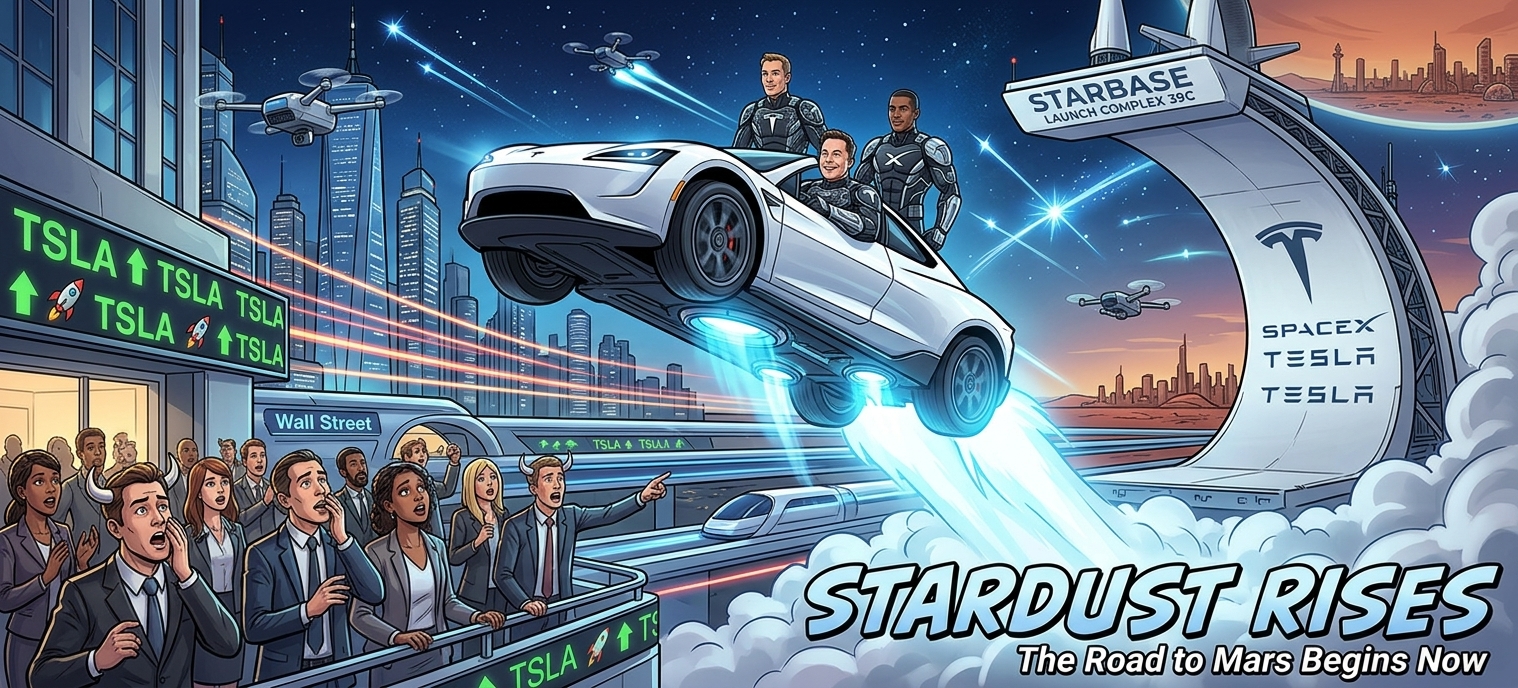
Tesla (NASDAQ: TSLA) has given many something more interesting to discuss than another electric-vehicle price adjustment: a sports car that leaves the pavement. At an October 15 demonstration at SpaceX’s (SPCX) Texas testing facility, Tesla and Elon Musk unveiled a redesigned Roadster that climbed an inverted ramp, rotated through the air and landed with help from compressed-gas thrusters. The spectacle was truly amazing. The company also demonstrated a claimed 0-to-60-mph time of 0.81 seconds and announced a production target of 2028. This was jaw dropping. Those figures remain company-presented performance results and a forward-looking manufacturing timetable, not guarantees of what customers will eventually receive. For bullish folks, the most compelling interpretation is not that airborne sports cars will suddenly become Tesla’s largest business. It is that the company has produced a conspicuous reminder of the engineering ambition behind its brand. Most automakers promise an elevated driving experience. Tesla appears to have assigned the phrase to an engineering department.
What Tesla Actually Unveiled
The new Tesla Roadster combines electric propulsion with a suction system and, in certain configurations, cold-gas thrusters developed through collaboration with SpaceX. During the demonstration, suction helped hold the vehicle against the ramp, while thrusters enabled its airborne maneuvers and controlled landing. Reuters reported that Tesla plans to begin production in 2028, more than a decade after first showing its next-generation Roadster concept. Importantly, Tesla described three distinct configurations, rather than one car with identical capabilities across the lineup:
- Performance: A two-seat, road-oriented version featuring a multimode suction system.
- Thrust: A two-seat, race-oriented version adding rear-mounted cold-gas thrusters for claimed acceleration to 60 mph in less than one second.
- Rocket: A single-seat configuration adding perimeter-mounted thrusters for upward, forward and rotational movement.
That distinction matters. The most spectacular airborne capabilities should not be casually attributed to every Roadster. TechCrunch reported that Tesla engineering executive Lars Moravy described a system using 10 thrusters connected to approximately 600 liters of compressed air. The publication also reported that Musk did not announce a selling price at the event. For many, that leaves an important separation between an attention-grabbing technical demonstration and a fully defined commercial product.
The Bull Case Is Bigger Than Roadster Sales
The Roadster’s strongest potential contribution is optionality: the possibility that a specialized product strengthens Tesla’s broader business without needing to become a mass-market vehicle itself. CNBC characterized the next-generation Roadster as a high-end, low-volume model. Yahoo Finance’s post-event analysis likewise argued that the vehicle is unlikely to determine whether Tesla beats earnings expectations when production potentially begins in 2028. That need not undermine the bullish thesis. It seems to clarify it. A halo product can be valuable because of what it communicates. The investment argument is that a convincing demonstration of unusual engineering could support Tesla’s premium positioning, attract prospective buyers and reinforce the distinction between its brand and a more conventional electric-car offering. Those benefits are potential outcomes, not disclosed financial results. But they provide a more disciplined framework than attempting to turn a barrel roll into an earnings-per-share estimate. The Roadster does not need to become the family car. It needs to make the family remember which company built it.
SpaceX Technology Gives the Story More Substance
The collaboration with SpaceX is central to the Roadster’s appeal. CNBC reported that the prototype incorporates SpaceX-developed technologies including thrusters, pressure vessels and diffusers, alongside powerful fans and a steer-by-wire system. This makes the reveal more than a styling refresh with an unusually enthusiastic launch presentation. For TSLA investors, the potential significance lies in the transfer of engineering approaches between automotive and aerospace applications. That does not establish that these systems will migrate into Tesla’s higher-volume vehicles, lower manufacturing costs or create a new revenue stream. None of those outcomes follows automatically from the demonstration. It does, however, strengthen the argument that Tesla can still pursue products outside the industry’s familiar competition over range, screen size and monthly payments. The bullish reading is differentiation, with commercial execution still to come.
Can Tesla’s Roadster Really Fly?
The answer requires a distinction that matters both technically and financially. The demonstration showed brief airborne maneuvers. It did not establish sustained, long-distance flight or an ability to operate as an everyday aerial vehicle. CNN reported that experts distinguished the Roadster’s hopping capability from the more demanding challenge of sustained flight, including the transition into stable forward movement. That limitation should not erase the engineering achievement. Nor should the achievement erase the limitation. For many, the more credible thesis is an exceptionally ambitious performance vehicle with airborne capabilities, not a proven replacement for aircraft or urban air taxis. Precision helps the bullish case. A remarkable sports car is easier to evaluate than an entirely new transportation market conjured from one evening’s demonstration.
The FAA Could Become Part of the Ownership Experience
Regulation is another unresolved variable. The New York Post, citing reporting by Wired and interviews with aviation specialists, reported that the Roadster’s airborne capabilities could bring Federal Aviation Administration oversight and potentially pilot-licensing requirements. The report did not establish a final FAA classification or a confirmed licensing rule for buyers. Many should therefore treat the pilot’s-license question as a regulatory possibility, not a settled ownership requirement. The practical questions are substantial: where airborne operation might be permitted, what approvals would be necessary and how much compliance could affect the product’s cost or timetable. A license plate and a flight plan would make an impressive glove-compartment collection. They could also make commercialization considerably more complicated.
What Many Should Watch Next
The next phase of the Roadster story should be measured by evidence rather than altitude. The most useful milestones include:
- Production progress: Whether Tesla advances toward its stated 2028 manufacturing target.
- Commercial terms: Final pricing and specifications, which were not fully established at the reveal.
- Regulatory clarity: Whether authorities establish operating restrictions or aviation-related requirements.
- Repeatable performance: Whether production-intent vehicles substantiate the capabilities shown in Tesla’s demonstration.
These milestones separate a promising halo product from an expensive exhibition.
Why the Reveal Matters for Tesla Stock
The Roadster seems to give TSLA bulls a fresh, tangible example of Tesla attempting something technically distinctive. Its strongest investment appeal today is not a quantified profit contribution, but the prospect of reinforcing a brand built around engineering ambition. The opportunity is meaningful precisely because the expectations can remain disciplined: a premium, low-volume vehicle that could strengthen Tesla’s identity while creating room for future commercial upside. The risks remain equally visible, including a long development history, an unproven production timetable and unresolved questions about airborne operation. Tesla has demonstrated that this Roadster can leave the ground. The next task is less cinematic and more important to shareholders: delivering a product, at a viable cost, under rules that allow customers to use it.
View and Be Amazed!
The Sources
- Reuters: Tesla’s New Roadster Turns in Air With SpaceX Thrusters, Won’t Land Until 2028
- CNN: Tesla Unveils What It Says Is a Flying Car
- Yahoo Finance: Tesla’s Roadster Event Is Back On for Thursday Night. Here’s What to Expect
- Yahoo Finance: Tesla Roadster Probably Won’t Drive an Earnings Beat, but the Big Reveal Did Achieve 2 Things
- CNBC: Tesla Unveils Long-Delayed Roadster Developed With SpaceX, Fueling Merger Speculation
- TechCrunch: Tesla Reveals SpaceX-Powered Roadster That Flies and Falls With Style
- New York Post: Drivers Who Own Tesla’s New ‘Flying’ Roadster May Need More Than Driver’s License to Operate
- Yahoo Finance: Tesla Just Unveiled a Flying Car That Leverages SpaceX Technology
- YouTube: User-Provided Livestream
Stay Updated with Vista Partners
Subscribe to receive market insights, investing ideas, and the latest updates directly in your inbox.