Skip to content Skip to sidebar Skip to footer

Spring Thaw on Main Street: Existing Home Sales Warm Up as Rates Cool Down – ( $SPY $HD $WMT )

US existing-home sales surprised to the upside in February, offering a rare dose of optimism for a housing market that has spent two years learning the meaning of the word “constrained.” Buyers, it seems, are finally willing to come out from behind the mortgage-rate sofa.

A Spring Thaw In A Frozen Market

Sales of previously owned homes rose 1.7% in February to an annualized pace of about 4.09 million units, marking a second monthly gain and defying expectations for another decline. That’s still below pre-pandemic norms, but in market terms, moving from “falling” to “rising” is the difference between catching a knife and catching a bid.

Economists had expected resales to fall toward 3.89 million, so February’s print qualified as a genuine upside surprise rather than a rounding error. The improvement comes as the crucial spring selling season approaches, giving agents something more cheerful to talk about than staging tips and rate-lock fatigue.

The key catalyst was a retreat in borrowing costs, with the average 30‑year fixed mortgage hovering near 6% in early March, down from higher levels earlier in the cycle. For would‑be buyers who spent 2024 doom-scrolling rate charts, that shift has started to look less like a headwind and more like a negotiable inconvenience.

Part of the rate relief reflects moves in Washington, where regulators stepped in to support mortgage markets by buying more agency bonds from Fannie Mae and Freddie Mac, helping to nudge financing costs lower. The catch: geopolitical tensions and higher oil prices are pushing Treasury yields back up, limiting how much further mortgage rates can realistically fall from here.

Inventory Is Back… But Not In Bulk

On the supply side, existing-home inventory rose roughly 2–2.4% in February to about 1.29 million units, up nearly 5% from a year earlier but still well shy of the 1.5–1.6 million range that prevailed before the pandemic. In market jargon, this is less a glut and more a polite trickle.

At the current sales pace, it would take about 3.8 months to clear the listed inventory, slightly higher than 3.6 months a year ago but still below the 5–6 month range associated with a truly balanced market. That dynamic helps explain why days on market have stretched to about 47 days from 42 a year earlier, even as sellers still enjoy enough leverage to resist fire-sale pricing.

Prices, Affordability, And The Return Of The Rookie Buyer

Median existing-home prices are essentially holding the high ground, rising only modestly—around 0.3–0.8% year over year—to roughly 398,000 dollars. The market isn’t cheap, but it is no longer sprinting away from buyers at double-digit annual gain.

That cooling pace has quietly improved affordability, with the National Association of Realtors’ index climbing for eight consecutive months to around 117.6 in February, its highest level since early 2022. First-time buyers are responding: their share has climbed to about 34%, the strongest in several years, even though economists still view 40% as the threshold for a truly healthy, renewal-friendly market.

Regional Winners, All‑Cash Players, And The Road Ahead

Regionally, the South, Midwest, and West all saw February sales increase, while the Northeast sat this round out with a decline, partly after winter weather made open houses more theoretical than practical. The West led gains with an 8%-plus jump in activity, helped by improved affordability from prior price corrections and rate relief.

All‑cash purchases still account for roughly 31% of deals, only slightly off last year’s level, underscoring how investors and equity‑rich buyers remain active even as financing costs stay elevated by historical standards. Distressed sales, meanwhile, are stuck near 3%, a reminder that this is a slow market, not a stressed one.

The Sources

  1. Yahoo Finance – “US existing home sales unexpectedly increase in February”
    https://finance.yahoo.com/news/us-existing-home-sales-unexpectedly-140129355.html[finance.yahoo]​
  2. Yahoo Finance (Canada) – “US homes sales rose in February as homebuyers seized on easing mortgage rates”
    https://ca.finance.yahoo.com/news/us-homes-sales-bounced-back-140356618.html[ca.finance.yahoo]​
  3. Business Times – “US existing home sales unexpectedly increase as mortgage rates decline”
    https://www.businesstimes.com.sg/property/us-existing-home-sales-unexpectedly-increase-mortgage-rates-decline[businesstimes.com]​
  4. National Association of Realtors – “NAR Existing-Home Sales Report Shows 1.7% Increase in February”
    https://www.nar.realtor/newsroom/nar-existing-home-sales-report-shows-1-7-increase-in-february[nar]​
  5. Markets Insider – “NAR Existing-Home Sales Report Shows 1.7% Increase in February”
    https://markets.businessinsider.com/news/stocks/nar-existing-home-sales-report-shows-1-7-increase-in-february-1035914475[markets.businessinsider]​
  6. Rate.com – “What did existing home sales look like in February 2026?”
    https://www.rate.com/mortgage/resource/what-did-existing-home-sales-look-like-in-february-2026-[rate]​
  7. Yahoo Finance – “Home sales improved in February, but higher mortgage rates threaten that progress”
    https://finance.yahoo.com/news/home-sales-improved-in-february-but-higher-mortgage-rates-threaten-that-progress-143720136.html[finance.yahoo]​
  8. Yahoo Finance – “Home Sales Rose in February as First-Time Buyers Jumped Back …”
    https://finance.yahoo.com/news/home-sales-rose-february-first-140024799.html[finance.yahoo]​
  9. Haver Analytics – “U.S. Existing Home Sales Unexpectedly Rebound in February”
    https://www.haver.com/articles/u-s-existing-home-sales-unexpectedly-rebound-in-february[haver]​

The Finn Also Rises: Nokia, Fidelity, and the Secure AI Toll Road -( $NOK $PANW $SPY )

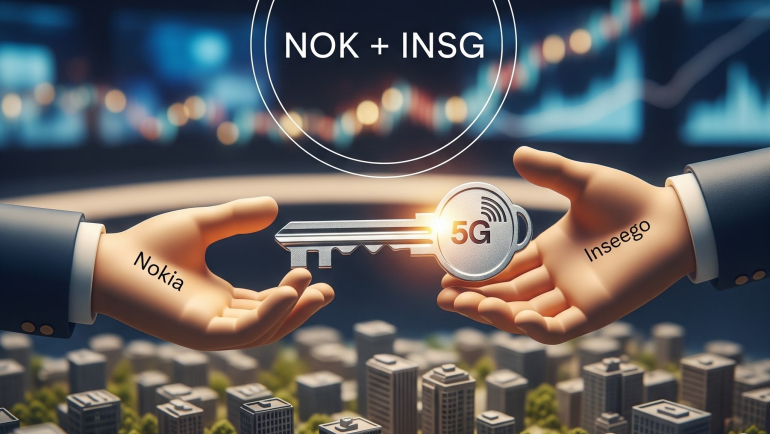
Nokia (NOK) has spent much of the past decade trying to persuade investors it is no longer defined by its flip-phone past. Now, a discreet but meaningful vote of confidence from a major asset manager—and a well-timed push into securing AI and 5G infrastructure—may help the company sharpen that story.

Nokia Gets a Quiet Vote of Confidence

The latest boost comes from FMR LLC, the parent of Fidelity, which recently increased its indirect stake in Nokia Corporation above the 5% voting-rights threshold. Crossing that line is more than a regulatory box-check; it signals a large institution is willing to take a more committed position in the Finnish telecom-equipment maker at a time when markets are still sorting out who will actually benefit financially from the AI and 5G buildout, and who will simply deliver polished slide decks about it.

For Nokia, landing on the right side of that divide matters. The company operates in a less glamorous corner of technology, providing the network plumbing—radio equipment, base stations, optical transport and other infrastructure—that keeps digital communications flowing. It is the sort of business that tends to be invisible when everything works and very visible when it doesn’t. Investors have often treated the stock accordingly, as something closer to a utility with a Scandinavian accent than a front-row growth story.

From Forgotten Hardware to Network Backbone

That is why FMR’s decision to cross a disclosure threshold is noteworthy. Institutions do not take on additional reporting obligations for a casual position. A stake above 5% suggests a deliberate view that the balance between risk and potential return is attractive enough to justify the effort. Fidelity is not known for building positions just to join the latest internet craze; if it wants drama, it can attend an AI conference like everyone else.

At the same time, Nokia has been working to make sure it is not left standing on the sidelines of the AI boom. While chipmakers and cloud platforms collect most of the headlines, the underlying reality is that AI still has to move across networks—quickly, securely and reliably. Someone has to make sure that happens, and Nokia is increasingly trying to be seen as one of those “someones.”

Chasing the AI and 5G Moment

A deepening collaboration with Palo Alto Networks (PANW) illustrates the shift. Instead of merely selling hardware and talking about throughput, Nokia is presenting itself as a partner for a world in which AI and 5G are tightly intertwined with security. The pitch to operators and industrial customers is that networks must now be built not only for speed, but with security considerations woven in from the outset.

That has particular resonance as the concept of the “AI factory” takes hold—facilities packed with compute power handling sensitive data and critical processes. In that environment, a network can no longer be treated as a simple conduit. It begins to resemble part of the security perimeter, a place where vulnerabilities can be exploited or prevented.

Security as a Feature, Not an Afterthought

Palo Alto Networks contributes the cybersecurity toolkit: firewalls, advanced threat detection, and architectures designed around the idea that nothing inside a network should be trusted by default. Nokia brings its experience building and managing complex networks across mobile, fixed, and private 5G domains, along with a practical understanding of the trade-offs between ideal designs and real-world constraints like latency, cost and legacy systems.

Together, they are promoting the idea of “secure by design” AI and 5G deployments, as opposed to the more traditional approach of building first and hardening later. For telecom operators who have grappled for years with intense competition and heavy capital requirements, this kind of offering holds out the possibility of something slightly better than commodity economics. If AI workloads are the new gold rush, secure, low-latency connectivity starts to look a lot like a toll road. Nokia would very much like to be one of the companies collecting those tolls.

Will the Narrative Translate into Numbers?

Investors still have to decide whether any of this will show up in earnings in a meaningful way. The history of telecom equipment is filled with technologies that sounded promising but ran into harsh pricing realities. In that context, FMR’s larger stake acts as a subtle signal: at least one sophisticated shareholder appears to believe that Nokia’s current market value understates its ability to participate profitably in the next wave of network spending.

There are, of course, reasons for restraint. Spending cycles in telecom can be punishing. Carriers push out investment plans when economic conditions deteriorate. Geopolitics can intrude suddenly, turning equipment vendors into bargaining chips in trade disputes. AI may be the defining tech theme of the moment, but investments still have to survive budget committees and regulatory reviews. A handful of marquee contracts can create attention-grabbing headlines without necessarily transforming the income statement.

A New Role in the AI-Era Infrastructure

Even so, the combination of a more substantial institutional backer and a strategic emphasis on securing AI and 5G environments gives Nokia a clearer storyline than it has had at times. Instead of being viewed purely as a supplier constantly battling price pressure, Nokia can argue that it sits at the intersection of three themes that markets currently care about: modern network rollouts, the industrialization of AI, and the growing importance of cybersecurity for critical infrastructure.

For a company once synonymous with the handset in a consumer’s pocket, evolving into a behind-the-scenes enabler of secure AI-era connectivity may not sound especially glamorous. But financial markets tend to reward durable cash flows more than nostalgia. If Nokia can turn its security-anchored partnerships into steady revenue and persuade more investors that its role in the AI and 5G landscape is both necessary and profitable, it may find that playing the part of quiet infrastructure partner is a solid position after all.

The Sources

Here are suggested sources you can list under your article:

  1. Nokia Corporation – “Notification under Chapter 9, Section 10 of the Finnish Securities Market Act: voting rights of FMR LLC in Nokia Corporation exceeded 5%”
    https://www.nokia.com/newsroom/notification-under-chapter-9-section-10-of-the-finnish-securities-market-act-voting-rights-of-fmr-llc-in-nokia-corporation-exceeded-5nokia+2
  2. StockTitan – “FMR LLC tops 5% voting stake in Nokia | NOK SEC Filing – Form 6-K”
    https://www.stocktitan.net/sec-filings/NOK/6-k-nokia-corp-current-report-foreign-issuer-eb154f779e00.html[stocktitan]​
  3. Investing.com – “Nokia discloses FMR LLC stake surpasses 5% threshold”
    https://www.investing.com/news/company-news/nokia-discloses-fmr-llc-stake-surpasses-5-threshold-93CH-4547724[investing]​
  4. The Globe and Mail / TipRanks – “FMR LLC Lifts Stake in Nokia Above 5% Threshold”
    https://www.theglobeandmail.com/investing/markets/markets-news/Tipranks/626438/fmr-llc-lifts-stake-in-nokia-above-5-thresholdtheglobeandmail+1
  5. Simply Wall St – “FMR Stake In Nokia Crosses 5% As Valuation And Margins Scrutinized”
    https://simplywall.st/stocks/fi/tech/hel-nokia/nokia-oyj-shares/news/fmr-stake-in-nokia-crosses-5-as-valuation-and-margins-scrutinizedsimplywall+1
  6. Trivano – “Voting rights of FMR LLC in Nokia Corporation exceeded 5%”
    https://www.trivano.com/persbericht/711558-711558.html[trivano]​
  7. Palo Alto Networks / StockTitan – “Palo Alto Networks, Nokia forge secure AI factory ecosystem”
    https://www.stocktitan.net/news/PANW/palo-alto-networks-and-global-partners-announce-secure-by-design-ai-61gu60jyzg76.html[stocktitan]​
  8. Pulse 2.0 – “Palo Alto Networks: Secure AI Factories Initiative Announced With Nokia, U Mobile, Aeris, And Celerway”
    https://pulse2.com/palo-alto-networks-secure-ai-factories-initiative-announced-with-nokia-u-mobile-aeris-and-celerway[pulse2]​
  9. Yahoo Finance – “Palo Alto Networks Announces Expanded Security Ecosystem for AI Factories”
    https://finance.yahoo.com/news/palo-alto-networks-pawn-announces-134637987.html[finance.yahoo]​
  10. Investing.com (alt article) – “FMR LLC stake in Nokia rises above 5% threshold”
    https://www.investing.com/news/company-news/fmr-llc-stake-in-nokia-rises-above-5-threshold-93CH-4547722[investing]​

Rockets, Revenue, and Deterrence: How Firefly’s Alpha Just Repriced Space Defense -( $FLY )

Firefly Aerospace’s (NASDAQ: FLY ) latest Alpha launch this week did more than light up the California coast; it lit a fire under the stock, too, as investors suddenly remembered why small‑cap space can sometimes behave like a leveraged ETF on optimism. The successful “Stairway to Seven” mission gave the market what it craves most in this sector: repeatable performance and a plausible path from science project to cash‑flow story.

Alpha’s Clean Flight and the Bid for Credibility

The Alpha rocket’s seventh mission hit its marks, reaching orbit and deploying its payload on schedule, a welcome contrast to prior high‑profile mishaps that had put a discount on Firefly’s reliability narrative. With this flight in the win column, the company effectively removed a lingering “show‑me” overhang and offered a live demonstration that the engineering fixes and process upgrades of the past year are paying off. For investors, every clean mission now serves as both proof of concept and free marketing roadshow for the next round of contracts.

The successful engine relight, avionics upgrades, and thermal protection improvements showcased on this flight matter as much to Wall Street as they do to mission assurance teams. Each validated subsystem reduces perceived technical risk, narrows the band on future launch outcomes, and nudges the conversation away from “Can they?” toward “How often, at what margin?” That subtle shift is often where multiple expansion begins in niche aerospace names.

Stock Takes Off: From Speculation to Re‑Rating

On the equity tape, Firefly’s post‑launch action resembled a controlled version of its own rocket trajectory: sharp thrust, some turbulence, then a new, higher orbit as liquidity chased the success headline. A fully successful mission allowed traders to mark down near‑term catastrophe risk, which in turn justified higher position sizes among investors who previously watched from the sidelines. In a market still nursing launch‑sector burn wounds, a clean execution tape can be more powerful than a dozen slide decks.

Short‑term, the move has the distinct flavor of a relief and momentum trade: shorts covering into strength, quant screens lighting up on volume and volatility, and fast money testing just how far sentiment can run before gravity (valuation) reasserts itself. Longer term, however, each successful Alpha flight adds data points that can underpin a more fundamental re‑rating: higher confidence in launch cadence, better visibility on revenue, and an improved chance that Firefly earns a durable premium to smaller, less diversified space peers. In other words, the stock is slowly auditioning for promotion from “story” to “franchise.”

Defense, Deterrence, and the Tactical Launch Edge

If the chart is the headline, defense is the subtext—and it’s where Firefly quietly becomes more interesting than a simple satellite‑bus to orbit. The company has already demonstrated tactically responsive launch, turning around missions on compressed timelines that would make older aerospace primes reach for the antacids. That capability maps neatly onto a world in which military planners worry less about whether satellites can be launched and more about how rapidly they can be replenished after an adversary tries to swat them out of orbit.

In defense terms, Alpha’s one‑metric‑ton niche is not a compromise; it’s a feature. It’s big enough to lift meaningful national security payloads but small and agile enough to be tasked on short notice and launched from multiple sites. That makes the rocket a useful tool for proliferated constellations, rapid replacement, and classified missions that favor flexibility over showmanship. For the stock, every new demonstration of rapid, reliable launch is another brick in a moat that’s built less from patents and more from capabilities the Pentagon can’t easily do without.

Global Launch Footprint and Strategic Optionality

Firefly’s plans to fly from multiple launch sites—including its expansion into Europe—read like industrial capacity planning, but they also carry unmistakable defense overtones. A geographically diversified launch footprint doesn’t just serve commercial customers; it makes the launch network more resilient against single‑point disruptions, whether from weather, technical hiccups, or geopolitics. In a world where space assets have moved from “nice‑to‑have” to “critical infrastructure,” that kind of resiliency starts to look like a strategic asset.

For investors, the expanding footprint adds a layer of optionality to the equity narrative. More pads and more regulatory approvals mean more launch slots to monetize, more government relationships to cultivate, and more ways to arbitrage demand across markets and missions. In defense‑speak, Firefly is quietly building a distributed launch architecture; in market‑speak, it is building capacity and political capital that tend to show up later as higher‑margin contracts and stickier revenue streams.

From Launch Startup to Space‑Defense Platform

Taken together—successful missions, stock reaction, defense positioning, and global expansion—Firefly is methodically trying to graduate from “high‑beta launch startup” to “emerging space‑defense platform.” The company’s work on lunar missions, national security payloads, and rapid‑response launches all point in the same direction: a diversified revenue mix that is less dependent on any single rocket, use case, or customer. For shareholders, that diversified profile is the difference between owning a binary outcome and owning a business that can compound through multiple space and defense spending cycles.

A sophisticated way to read this latest launch, then, is not merely as a one‑day pop but as a fresh data point in an evolving thesis: that in the next phase of the space race, the real winners may not be the loudest boosters, but the companies that quietly become indispensable to both markets and militaries.

The Sources

Here’s a clean, numbered source list you can drop straight into your piece:

  1. Firefly Aerospace Successfully Launches Alpha Flight 7 – Yahoo Finance
    https://finance.yahoo.com/news/firefly-aerospace-successfully-launches-alpha-024000262.html[finance.yahoo]​
  2. Firefly Aerospace Successfully Launches Alpha Flight 7 – Firefly Aerospace (Newsroom)
    https://fireflyspace.com/news/firefly-aerospace-successfully-launches-alpha-flight-7/[fireflyspace]​
  3. Alpha FLTA007 Mission Summary – Firefly Aerospace
    https://fireflyspace.com/missions/alpha-flta007/[fireflyspace]​
  4. Firefly Aerospace Successfully Launches Alpha Flight 7 – GlobeNewswire
    https://www.globenewswire.com/news-release/2026/03/12/3254252/0/en/Firefly-Aerospace-Successfully-Launches-Alpha-Flight-7.html[globenewswire]​
  5. Firefly Aerospace Successfully Launches Alpha Flight 7 – Investing News Network
    https://investingnews.com/firefly-aerospace-successfully-launches-alpha-flight-7/[investingnews]​
  6. Firefly Aerospace’s Alpha Rocket Reaches Orbit on 1st Launch Since Explosive Accidents – Yahoo News
    https://www.yahoo.com/news/articles/firefly-aerospaces-alpha-rocket-reaches-011651828.html[yahoo]​
  7. Firefly Aerospace Announces Alpha Block II Configuration Upgrade – Yahoo Finance
    https://finance.yahoo.com/news/firefly-aerospace-announces-alpha-block-140000983.html[finance.yahoo]​
  8. Firefly Aerospace Prepares Alpha Rocket for 1st Launch Since Explosive Mishaps – Yahoo News
    https://www.yahoo.com/news/articles/firefly-aerospace-prepares-alpha-rocket-160000634.html[yahoo]​
  9. Firefly Rockets Lockheed Payload to Orbit: Is FLY a High‑Beta Defense Trade? – Benzinga
    https://www.benzinga.com/trading-ideas/movers/26/03/51215507/firefly-rockets-lockheed-payload-to-orbit-is-fly-a-high%E2%80%91beta-defense-trade[benzinga]​
  10. Firefly Aerospace Successfully Launches Alpha Flight 7 – Barchart
    https://www.barchart.com/story/news/36539932/firefly-aerospace-successfully-launches-alpha-flight-7[barchart]​
  11. Firefly Aerospace Inc. (FLY) Stock Quote – Yahoo Finance
    https://finance.yahoo.com/quote/FLY/[finance.yahoo]​
  12. Firefly Aerospace Launches Alpha Flight 7 “Stairway to Seven” – YouTube
    https://www.youtube.com/watch?v=j4UXqDhfEbw[youtube]​

From Batman to Backend: Is Netflix Is Buying Ben Affleck’s AI Movie Studio for Blockbuster Savings? -( $NFLX $PSKY $WBD )

Netflix (NASDAQ: NFLX) is reportedly ready to spend up to $600 million on Ben Affleck’s stealth AI filmmaking startup, InterPositive, betting that smarter post-production tools will matter more than bigger studio lots in Hollywood’s next act. In the streaming wars, this is less a sequel and more a spin‑off: Netflix walking away from Warner Bros. Discovery yet happily greenlighting an algorithm with an Oscar.

A $600 Million Bet on Behind-the-Scenes AI

Netflix is preparing one of its largest acquisitions ever, with total payouts for InterPositive potentially reaching about $600 million if performance targets hit their marks, according to reports citing people familiar with the deal. The structure suggests a lower upfront check and a rich earn‑out if Affleck’s code delivers the kind of efficiencies and creative lift Netflix is quietly scripting into its long‑term model.

Unlike some AI deals chasing consumer sizzle, this one is decidedly backstage: InterPositive’s tools are designed to live inside productions, not in app stores. For a company that still spends heavily on content and keeps a close eye on operating margins, paying for software that might shorten editing time and stretch every production dollar has a certain CFO‑friendly glamour.

Ben Affleck, Now in a Senior Advisor Role

InterPositive was founded by Ben Affleck in 2022, quietly built as a filmmaker’s AI sandbox rather than a flashy “type a sentence, get a movie” demo. Under the Netflix deal, Affleck is set to become a senior advisor, bringing both his directing experience and his newly acquired title of “AI startup founder” into the same credits roll.

Alongside Affleck comes a compact but focused team of roughly 16 engineers, researchers, and creative professionals, all moving in‑house to Netflix. For a streaming giant that has long prided itself on marrying product engineering with storytelling, this is less a cameo and more a full‑time casting decision in its technology strategy.

AI That Edits, Not Replaces, Filmmakers

InterPositive’s technology trains AI models on the daily footage from a specific production, then uses that material to help with the unglamorous but essential parts of filmmaking: mixing and coloring, relighting, continuity, and layered visual effects. Affleck has been explicit that this is not about text prompts conjuring synthetic actors from the void; it is closer to a very patient, very fast assistant editor who never needs a coffee break.

Netflix has emphasized that these tools aim to “protect and expand creative choice,” positioning AI as an enhancer rather than a replacement for directors, editors, and cinematographers. In an industry that has spent the last year debating how much AI is too much, framing the tech as a craft tool instead of a creative usurper is both a diplomatic and strategic choice.

From Warner Bros. Breakup to AI Close‑Up

The timing is notable: the InterPositive deal comes on the heels of Netflix walking away from a high‑profile bid to buy the studios and streaming operations of Warner Bros. Discovery after Paramount Skydance (PSKY) sweetened its competing offer. Rather than counter at $31 per WBD share, Netflix let the legacy assets go and instead steered breakup‑fee proceeds and strategic focus toward a small, targeted AI technology bet.

That pivot underscores a broader strategic preference: NFLX appears more interested in owning the picks and shovels of modern content production than acquiring another vast library at any price. For investors, the narrative shifts from “Will Netflix buy another studio?” to “How deeply will Netflix wire AI into how every series and film gets made?”

What It Could Mean for NFLX Investors

For shareholders of Netflix (NASDAQ: NFLX), the InterPositive acquisition is less about adding visible franchises and more about quietly tuning the engine that produces them. Analysts and market watchers are already flagging the deal as part of a broader push to refine production efficiency, with the real proof expected to show up over time in content‑spend line items, operating margins, and the cadence of new releases.

Some valuation services note that NFLX shares have recently traded ahead of certain fair‑value models, which makes disciplined entry points and close tracking of execution especially important as Netflix leans harder into AI‑driven workflows. If InterPositive’s tools can shave days off post‑production and help Netflix deliver more polished content on roughly the same spend, the $600 million question starts to sound less like a punchline and more like a thesis.

The Sources

Here’s a clean, numbered source list you can use around the Netflix–Ben Affleck AI story, all tied directly to the InterPositive deal and its context.news.yahoo+11

  1. Yahoo Finance – News: “Netflix buys Ben Affleck’s AI filmmaking company InterPositive”
    https://finance.yahoo.com/news/netflix-buys-ben-affleck-ai-161957205.html[finance.yahoo]​
  2. Yahoo Canada / Yahoo Entertainment – “Netflix Could Pay as Much as $600 Million for Ben Affleck’s AI Film Start-Up InterPositive”
    https://ca.news.yahoo.com/netflix-could-pay-much-600-204704619.html[ca.news.yahoo]​
  3. Yahoo Finance – Analysis: “Netflix Bets On AI Filmmaking As InterPositive Deal Reshapes Hollywood”
    https://finance.yahoo.com/news/netflix-bets-ai-filmmaking-interpositive-050833956.html[finance.yahoo]​
  4. Yahoo Finance – News: “Netflix acquires Ben Affleck’s AI film-tech firm”
    https://finance.yahoo.com/news/netflix-acquires-ben-afflecks-ai-160242191.html[finance.yahoo]​
  5. Yahoo Finance – Markets piece: “Netflix Buys Ben Affleck’s AI Filmmaking Startup InterPositive”
    https://finance.yahoo.com/news/netflix-buys-ben-afflecks-ai-104509792.html[finance.yahoo]​
  6. Yahoo Finance – Commentary: “How Do You Like Them Apples? Netflix Buys Ben Affleck’s AI Start-Up.”
    https://finance.yahoo.com/news/them-apples-netflix-buys-ben-161700804.html[finance.yahoo]​
  7. Deadline – Industry coverage: “Netflix Acquires Ben Affleck AI Company InterPositive”
    https://deadline.com/2026/03/netflix-ben-affleck-ai-company-acquisition-1236744357/[deadline]​
  8. Variety – Film/industry focus: “Netflix Acquires Ben Affleck’s AI Filmmaker Tools Start-Up InterPositive”
    https://variety.com/2026/film/news/netflix-acquires-ben-affleck-ai-filmmaking-startup-interpositive-1236679498/[variety]​
  9. The Hollywood Reporter – Business/digital: “Netflix Buys Ben Affleck’s AI Company InterPositive for Filmmakers”
    https://www.hollywoodreporter.com/business/digital/ben-affleck-ai-netflix-1236521806/[hollywoodreporter]​
  10. Fast Company – Tech/business angle: “Netflix buys Ben Affleck’s AI startup”
    https://www.fastcompany.com/91503235/netflix-buys-ben-afflecks-ai-startup[fastcompany]​
  11. NPR – Audio and text explainer: “Netflix strikes deal with Ben Affleck’s InterPositive AI company”
    https://www.npr.org/2026/03/06/nx-s1-5739370/netflix-ben-affleck-ai-interpositive-deal[npr]​
  12. Cined – Production/tech detail: “Netflix Acquires Ben Affleck’s InterPositive AI Filmmaking Company”
    https://www.cined.com/netflix-acquires-ben-afflecks-interpositive-ai-filmmaking-company/[cined]​

March 11, 2026 – Oil Spikes, Stocks Sulk: Wall Street Rediscovers Geopolitical Risk -( $HIMS $MODD $NOK $NBIS $NVDA $OPEN $SOXX XLE Rise!)

US stocks extended their pullback on Wednesday, March 11, 2026, as investors grappled with fresh inflation data, surging oil prices, and ongoing fallout from the Iran war.

Indexes and overall tone

  • The Dow Jones Industrial Average fell close to .61%, adding to recent weakness and reflecting pressure on economically sensitive names
  • The S&P 500 also slipped .08%, while the Nasdaq Composite rose +.08%, highlighting a defensive tone beneath the surface despite resilience in parts of tech.
  • Volatility remained elevated as traders faded Tuesday’s tentative stabilization and refocused on geopolitical risk and the path of Federal Reserve policy.

Geopolitics, oil, and inflation

  • The Iran war continued to reverberate through energy and shipping markets, with attacks and disruptions around key routes keeping supply risk firmly in focus.
  • Crude oil prices jumped again to $88.85 on Wednesday after a prior sharp swing lower, as markets reassessed how durable any cease-fire talk or military “mission accomplished” rhetoric might be.
  • February Consumer Price Index data showed a 0.3% month‑over‑month rise and 2.4% year‑over‑year increase, roughly in line with expectations but released before the latest spike in energy costs, complicating the inflation narrative.

Fed expectations and macro narrative

  • With CPI on the tape and the Fed’s preferred PCE gauge due later in the week, traders debated whether higher oil will bleed into headline inflation enough to delay rate cuts.
  • Some economists warned that investors may be misreading the Fed’s reaction function, arguing that energy‑driven price spikes could keep policymakers cautious even as growth and labor data cool.
  • Credit concerns also crept in, as reports of markdowns and tighter lending standards in private credit portfolios at major banks underscored a more restrictive financial backdrop.

Sector and stock movers

  • Energy led the market, helped by the jump in crude and continued focus on supply security; the SPDR Energy sector ETF (XLE, $56.98, +2.48%) remained one of March’s strongest performers.
  • Technology was a relative bright spot, but leadership inside the group rotated toward software, & semiconductor benchmarks such as the iShares Semiconductor ETF (SOXX) edged up .97% stayed over 5% negative for the month.
  • In single‑stock action, Oracle rallied more than 10% after delivering an upbeat earnings report and outlook tied in part to AI and cloud demand, offering a rare dose of corporate optimism in an otherwise cautious tape.
  • CarMax (KMX, $42.50, +.85%) gained in early trading after activist Starboard Value disclosed a sizable stake and pushed for faster operational improvements, including board nominations aligned with the incoming CEO.

Market internals and key levels

  • Under the hood, breadth skewed negative on the NYSE, and cyclicals lagged, signaling skepticism about near‑term growth even as select tech and energy names held up.
  • Materials and consumer‑oriented sectors, which had been standouts earlier in the year, underperformed as investors rotated toward perceived quality and cash‑flow visibility.
  • Traders continued to watch the S&P 500 around the 6,800 zone, a level that has taken on technical significance since the Iran conflict escalated and that now serves as a key barometer of risk appetite.

VP Watchlist Updates

Below is an update‑style snapshot on the VP Watchlist names for the week, focused on recent catalysts, positioning, and narrative rather than precise price moves.

Hims & Hers Health, Inc. (NYSE: HIMS, $25.88, +10.27%)

Hims & Hers Health, Inc. (NYSE: HIMS) announced (March 9) a collaboration with Novo Nordisk as part of a new strategy for weight loss care treatments involving GLP-1s, evolving its US offering to match the company’s approach globally. In the US, the company now plans to provide GLP-1 customers with access to a broad assortment of FDA-approved medications and offer compounded semaglutide through the platform on a limited scale. By aligning its domestic and international models in weight loss, Hims & Hers will become the largest global consumer health platform for access to more affordable, approved medications.

Hims announced ( March 11) the appointment of Kathryn Beiser as Chief Communications Officer. In this role, Beiser will lead external and internal communications for the company as it enters a new phase of domestic and international growth. In her role as CCO, Beiser will report to CEO Andrew Dudum and focus on continuing to build the Hims & Hers brand and reputation while helping the industry understand the company’s expansive vision for the future. A seasoned communications leader, Beiser has expertise launching, building, and elevating corporate brands in highly regulated industries, serving as the Chief Communications Officer for companies including Discover, Kaiser Permanente, and, most recently, Eli Lilly and Company (LLY), and the head of the global corporate practice Edelman. She specializes in guiding companies through transformative growth phases, helping them articulate their vision and connect authentically with customers, investors, and other key stakeholders.

Eupraxia Pharmaceuticals (EPRX, $7.69)

Eupraxia Pharmaceuticals Inc. (“Eupraxia” or the “Company”), a clinical-stage biotechnology company leveraging its proprietary Diffusphere™ technology designed to optimize local, controlled drug delivery for applications with significant unmet need, recently announced the successful closing of its previously announced public offering (the “Offering”) of 7,607,145 common shares of the Company (the “Common Shares”), which includes the full exercise of the option to purchase additional shares granted to the underwriters, at a price to the public of US$7.00 per Common Share, and pre-funded warrants to purchase up to 1,428,571 Common Shares in lieu thereof (the “Pre-Funded Warrants”) at a price of US$6.99999 per Pre-Funded Warrant, which equals the public offering price per Common Share less the C$0.000001 per share exercise price of each Pre-Funded Warrant, for gross proceeds of approximately US$63.2 million, before deducting the underwriting commissions and estimated expenses incurred in connection with the Offering.“We are pleased to complete this financing, allowing us to significantly expand our pipeline, reach several additional development milestones with EP-104GI for eosinophilic esophagitis, and make meaningful progress towards commercial readiness,” said James Helliwell, CEO of Eupraxia. “We appreciate the support from both existing and new investors as we execute our mission and pursue the next phase of growth for Eupraxia.” Cantor and LifeSci Capital acted as joint book-running managers for the Offering. Bloom Burton and Craig-Hallum also acted as co-managers for the Offering. As previously stated, the Company intends to use the net proceeds from the Offering primarily for the continued advancement of EP-104GI for Eosinophilic Esophagitis, including the completion of ongoing preclinical studies, and Phase 2 clinical trials, preparations for a Phase 3 clinical trial including the related regulatory submissions, and manufacturing activities, and to undertake the necessary commercial/market development activities to prepare for the eventual product launch. The Company also intends to use a portion of the proceeds to accelerate and expand its plans to pursue clinical studies with EP-104GI in multiple additional gastrointestinal indications, including in esophageal strictures and fibrostenotic Crohn’s disease. A portion of the proceeds will be allocated to research and development of additional pipeline candidates, business development initiatives, and general corporate purposes, which may include but are not limited to employee salaries, working capital, leases for facilities, administrative expenses, and capital expenditures. The Company may also use a portion of the proceeds to expand its intellectual property portfolio and strengthen its corporate infrastructure to support future growth.

Modular Medical (MODD $.2203, +2.56%)

FIGS, Inc. (FIGS, $15.70)

  • FIGS, the direct‑to‑consumer healthcare apparel brand, operates at the intersection of e‑commerce and specialty retail, with a loyal professional customer base and a growing product portfolio. While macro headwinds and digital‑ad volatility have pressured some consumer names, FIGS’ brand equity in the medical community and ongoing product innovation offer levers for renewed growth as conditions normalize.
  • After the close (Feb. 26), FIGS released its fourth quarter and full year 2025 financial results and published a financial highlights presentation on its investor relations highlighting the following: Exceeded Top and Bottom Line Expectations, Grew Q4 2025 Net Revenues 33.0% to a Record $201.9 Million, Achieved Q4 2025 Net Income Margin of 9.2% and Adjusted EBITDA Margin of 13.2% & Plans Low Double-Digit Net Revenues Growth and Margin Expansion in FY 2026. FIGS shares have traded up to $13.74 in the aftermarket today.

GeoVax Labs (GOVX, $1.87)

DoubleVerify (DV, $10.59)

  • DoubleVerify, the leading software platform for digital media measurement, data and analytics, today announced financial results for the fourth quarter and full year ended December 31, 2025 and highlighted the following: Increased 2025 Revenue by 14% Year-over-Year to $748.3 Million, Driven by Global Growth in Social, CTV Measurement, and Programmatic Activation, Achieved 2025 Net Income of $50.7 Million and Adjusted EBITDA of $245.6 Million, representing a 33% Adjusted EBITDA margin, & $300 Million Authorized for Share Repurchases, the Largest Amount in DoubleVerify’s History.

The InterGroup Corporation (INTG, $35.90)

  • InterGroup Corporation delivered (Feb. 17) a notably stronger quarter, highlighted by a 20% jump in total revenue to $17.3 million and a 27% surge in hotel revenue as renovated rooms returned to service and travel demand improved. The company swung from a prior-year net loss to $1.0 million in net income, with operating income more than doubling to $2.0 million, underscoring better cost control and improved operating efficiency. Management further enhanced liquidity and sharpened strategic focus by selling a non-core 12‑unit Los Angeles multifamily property, generating a meaningful gain and additional working capital while maintaining stable performance across its real estate portfolio.

Serina Therapeutics (SER, $1.50)

  • Serina Therapeutics, a clinical-stage biotechnology company advancing drug candidates enabled by its proprietary POZ Platform™ drug optimization technology, announced (Feb. 19) that the first patient has been enrolled in the Company’s Phase 1b registrational trial evaluating. The Phase 1b registrational study is designed to evaluate the safety, tolerability, pharmacokinetics, and preliminary efficacy of SER-252 in patients with advanced Parkinson’s disease whose symptoms are inadequately controlled by current standard-of-care therapies. Serina remains on track to initiate dosing during the current quarter, consistent with previously disclosed guidance.

Volato Group, Inc. (SOAR) & M2i Global, Inc. (MTWO)

  • Volato Group, Inc. today announced that it has entered into an amendment to its Aircraft Management Services Agreement with flyExclusive, Inc. (“FLYX”) providing for the sale of certain legacy intellectual property assets. The agreement provides for consideration valued at approximately $1.3 million, payable in FLYX Class A common stock, subject to customary conditions. The assets relate to legacy intellectual property developed during earlier stages of the Company’s technology initiatives and are not part of Volato’s current operating platforms. Volato continues to evaluate opportunities to streamline its asset base and focus resources on strategic priorities, including the continued development of its core software platforms and the pending business combination with M2i Global, Inc.
  • Volato and M2i Global reaffirmed their goal of closing their business combination in the first quarter of 2026, citing steady advancement through SEC review and integration planning as they move toward a combined listing. The deal, originally announced in 2025, will effectively transition Volato from a pure‑play private aviation operator into a diversified platform spanning aviation technology and critical minerals, with M2i shareholders expected to own the majority of the combined entity. Operationally, the partnership is already visible: the two companies recently initiated their first shipment of titanium ore from Western Australia to the United States from Titanium X, underscoring how the critical‑minerals vertical could become a meaningful growth engine as domestic supply‑chain security rises in strategic importance.
  • On Feb. 4, M2i Global,Inc.along with Volato Group, Inc. announced that Titanium X has initiated its first shipment of titanium ore from Western Australia to the U.S. under its collaboration agreement.

NVIDIA (NVDA, $186.03, +.68%)

  • Nvidia delivered strong fourth-quarter results recently, posting revenue of $68.1 billion, well above analyst expectations. Looking ahead, the company projects $7.8 billion in revenue for the first quarter of 2026, reflecting continued robust demand for its AI chips even amid broader market headwinds.
  • NVIDIA and Nebius Group N.V. (NASDAQ: NBIS, $112, +16.14%) today (March 11) announced a strategic partnership to develop and deploy the next generation of hyperscale cloud for the AI market, from AI natives to enterprises. NVIDIA will invest $2 billion in Nebius.

McDonald’s (MCD, $325.21)

  • In the run-up to World Protein Day on 27th February, McDonald’s India (West & South), owned and operated by Westlife Foodworld, is celebrating Protein Week, reinforcing its leadership in nutrition-led innovation. Making protein more accessible, affordable and customizable, Indian consumers can use the McDonald’s app to explore these nutritious offerings and avail of protein burgers starting at just INR 69. Enhancing this convenience, consumers ordering via McDelivery can also enjoy free delivery on the Protein Plus meal range.

Nokia (NOK, $7.90, +1.28%)

  • Nokia Corporation is attracting renewed investor interest after FMR LLC lifted its indirect stake above the 5% voting-rights threshold, a move disclosed under Finnish securities law. At the same time, its new role in Palo Alto Networks’ expanded AI and 5G security ecosystem reinforces Nokia’s position in safeguarding next-generation networks, a development that could support its standing in telecom and infrastructure markets.
  • On March 2, Nokia (NOK) and TIM Brasil announced and are are quietly rewriting the script for Latin America’s telecom sector, rolling out an AI‑ready 5G network that targets nearly half of Brazil’s population while giving enterprises a front‑row seat to the AI industrial era. The expanded partnership takes what TIM started in São Paulo and extends it across 14 additional states, ultimately reaching regions that together represent roughly 42% of Brazil’s population. The upgraded network leans on Nokia’s latest AirScale portfolio, including energy‑efficient Habrok Massive MIMO radios, Remote Radio Heads and small cells designed to boost capacity, improve indoor coverage and cut power consumption at the same time. In practical terms, this is less about bragging rights on speed tests and more about building a platform for AI‑driven services: the architecture is being designed from the ground up to support 5G Advanced, 6G and AI‑native workloads at the edge, not just another round of radio swaps.

Opendoor (OPEN, $5.27, +5.19%)

The Sources

  1. Yahoo Finance – “Stock market today: Dow, S&P 500 slip for second day, oil jumps as Iran war rages on”
    https://finance.yahoo.com/news/live/stock-market-today-dow-sp-500-slip-for-second-day-oil-jumps-as-iran-war-rages-on-200311229.html[finance.yahoo]​
  2. Yahoo Finance – “Stock market today: Dow, S&P 500, Nasdaq slip amid fresh inflation data, continued Iran fallout”
    https://finance.yahoo.com/news/live/stock-market-today-dow-sp-500-nasdaq-slip-amid-fresh-inflation-data-continued-iran-fallout-1[finance.yahoo]​
  3. Yahoo Finance – “Stock market today: S&P 500 and Nasdaq rise, Dow slips amid fresh inflation data, continued Iran fallout”
    https://finance.yahoo.com/news/live/stock-market-today-sp-500-and-nasdaq-rise-dow-slips-amid-fresh-inflation-data-continued-iran-fallout-144851236.html[finance.yahoo]​
  4. Yahoo Finance – “Dow, S&P 500 end lower, oil slides as Wall Street weighs Iran war signals”
    https://finance.yahoo.com/news/live/stock-market-today-dow-sp-500-nasdaq-waver-oil-slides-as-wall-street-weighs-iran-war-signals-200311127.html[finance.yahoo]​
  5. Yahoo Finance – “Today’s Market: S&P 500, Nasdaq Dips, Dow Falls 1% After Oil Prices Spike Again”
    https://ca.finance.yahoo.com/news/todays-market-p-500-nasdaq-180831120.html[ca.finance.yahoo]​
  6. Reuters – “Wall St ends higher as hopes of Iran war resolution offset inflation fears”
    https://www.reuters.com/business/wall-st-futures-slump-iran-war-drags-oil-near-120-stokes-inflation-worries-2026-03-09/[reuters]​
  7. Investing.com – “U.S. stocks largely slip as Iran conflict rages on with no end in sight”
    https://www.investing.com/news/stock-market-news/us-stock-futures-tick-up-ahead-of-cpi-data-traders-assess-iran-war-outlook-4553[investing]​
  8. Barron’s – March 11, 2026 Market and Oil Coverage (archive page)
    https://www.barrons.com/archive/2026/03/11[barrons]​
  9. Yahoo Finance – “Oracle Corp (ORCL) Q3 2026 Earnings Call Highlights: Surging AI …”
    https://finance.yahoo.com/news/oracle-corp-orcl-q3-2026-030115242.html[finance.yahoo]​
  10. Yahoo Finance – “Oracle’s AI-Fueled Growth Silences Doubters — for Now”
    https://finance.yahoo.com/news/oracles-ai-fueled-growth-silences-145400597.html[finance.yahoo]​
  11. Bloomberg – “Stocks Whipsawed by Oil Volatility as War Drags On: Markets Wrap”
    https://www.bloomberg.com/news/articles/2026-03-09/oil-drops-as-trump-signals-iran-conflict-near-end-markets-wrap[bloomberg]​
  12. Trading Economics – “United States Stock Market Index”
    https://tradingeconomics.com/united-states/stock-market[tradingeconomics]​

When ‘Seed’ Means $1 Billion: AMI Labs and the New Math of Frontier AI -( $NVDA )

For an institutional and VC audience, AMI Labs looks less like a moonshot and more like a well-capitalized, asymmetric bet on a new layer of the AI stack—“world models” that could sit beneath, or alongside, today’s large language models.

AMI Labs: A Seed Round Built Like a Late-Stage Deal

Advanced Machine Intelligence Labs, co-founded by Yann LeCun after his departure from Meta, has raised $1.03 billion in seed funding at a $3.5 billion pre-money valuation, instantly making it a unicorn before shipping a product. The round is co-led by Cathay Innovation, Greycroft, Hiro Capital, HV Capital and Bezos Expeditions, with a strategic roster including Nvidia (NVDA), Samsung, Toyota Ventures, Temasek, Bpifrance and several European industrial and family offices.

Structurally, this looks less like a seed round and more like a late-stage platform financing: capital is earmarked primarily for compute and top-tier research talent across Paris, New York, Montreal and Singapore, giving AMI a multiyear runway to pursue fundamental research before meaningful revenue. CEO Alexandre LeBrun has signaled that 2026 will focus almost exclusively on R&D, with commercial discussions starting in 6–12 months and products potentially several years out—an R&D curve more reminiscent of a deeptech life-sciences platform than a typical SaaS startup.

The World-Model Thesis: Why This Is Not Just Another LLM Bet

AMI’s core thesis is that the next defensible frontier in AI will be systems that learn structured “world models” from reality—video, sensors, and rich environments—rather than models trained primarily on language. LeCun has argued that today’s LLMs are powerful but fundamentally myopic, excelling at pattern-matching text while lacking robust causal reasoning and physical intuition.wired+1

For institutional investors, that matters for two reasons. First, if world models become an underlying capability for robotics, autonomy, industrial automation and complex decision systems, they could represent a new horizontal platform with multi‑vertical leverage, analogous to an “operating system for the real world.” Second, by anchoring the stack in sensor-rich, proprietary datasets rather than public internet text, AMI has a clearer path to defensible data moats and differentiated IP—especially in domains like mobility, manufacturing and healthcare where partners already sit on unique streams of real‑world data.

Investor Signaling: Who Wrote the Checks and Why It Matters

The cap table offers a concise sentiment indicator for late‑cycle AI risk appetite. Nvidia’s participation reinforces its strategy of seeding demand for its own compute while securing boardroom visibility into emerging model architectures. Temasek, Bpifrance and European industrial groups bring sovereign and strategic capital, aligning AMI with the EU’s ambition to build “sovereign AI” capacity rather than outsourcing core infrastructure to U.S. hyperscalers.

Family-backed funds like Aglæ Ventures (linked to LVMH) and industrial groups such as Groupe Industriel Marcel Dassault and Mulliez indicate an eye toward sectoral deployment in luxury, retail, aerospace and mobility—signals that this is not a pure research vanity project but a platform investors expect to plug into real P&Ls. Meanwhile, the presence of Bezos Expeditions places AMI in the same long-duration, infrastructure‑style bucket as other frontier technology bets backed by Jeff Bezos, which have historically targeted markets measured in trillions, not billions.

Where AMI Sits in the Current AI Capital Stack

AMI is joining a funding environment where the bar for frontier AI has moved firmly into twelve‑figure territory. In 2025, foundation model companies alone raised about $80 billion, accounting for roughly 40% of all AI funding, with OpenAI and Anthropic capturing a double‑digit share of global venture flows. Against that backdrop, a $1.03 billion seed round looks less anomalous and more like table stakes for training capital‑intensive systems that may each cost hundreds of millions of dollars per generation.

Below is a concise snapshot of where AMI sits relative to other major AI labs and systems companies at their latest reported funding rounds.

Selected Recent AI Lab and Systems Rounds (Investor Lens)

CompanyFocusLatest major round (year)Amount raisedReported valuation / context
AMI LabsWorld-model AI, ex‑Meta team led by Yann LeCun  Seed, 2026  $1.03B  $3.5B pre-money, Europe’s largest seed round to date 
AnthropicClaude foundation models, enterprise-focused  2026 round nytimes+1$30B  $380B post-money, among largest private financings on record 
OpenAIFrontier foundation models, consumer and enterprise news. Ongoing raise discussions, reported 2025–26  Targeting up to ~$100B, per media reports  Implied valuation widely expected in high‑hundreds‑of‑billions range 
xAIGrok frontier models, consumer + infra  Series B, 2024  $6B  Accounted for ~63% of 2024 generative AI funding by value 
Mistral AIEuropean foundation models epoch+12024–25 large round  ~€468M equity + €132M debt (≈$640M)  Valued around $6B in earlier rounds, anchoring EU “sovereign AI” narrative
Scale AIData infrastructure and labeling  2025 mega‑round  $14.3B  ​Late‑stage capital for infra, with Meta reportedly taking a large strategic stake 
Anthropic (prior rounds)Foundation lab  Multiple 2023–25 raises  Cumulative >$57B  Valuations ramped from low‑billions to >$380B over three years 

For allocators, this concentration at the top means a growing share of model risk is effectively a bet on a handful of labs—and AMI’s emergence gives investors another technical thesis to underwrite beyond “bigger LLM, bigger check.”

Risk–Reward Profile: What Institutional and VC Capital Is Actually Buying

From a portfolio‑construction perspective, AMI is an early‑stage, high–technology-risk position that nonetheless comes with several mitigants: a globally recognized technical founder, a CEO with prior exits in AI, a syndicate stacked with strategics and sovereigns, and enough capital to avoid the usual “Series A or bust” scramble. The primary risks are time-to-market and scientific execution: the company is explicitly prioritizing foundational research over near‑term product, and management has guided that monetization is a multi‑year story.

On the reward side, the upside case is that world models become an essential dependency for robotics, autonomous systems and complex enterprise decision platforms, making AMI not just another model provider but a central piece of the real‑world AI stack. In that scenario, today’s $3.5 billion valuation may resemble early‑stage pricing rather than late‑stage froth—especially if exit paths include strategic acquisition by a hyperscaler, sovereign capital buy‑ins, or a future IPO once revenue visibility improves.

The Sources

  1. Reuters – “Ex-Meta AI chief Yann LeCun’s AMI raises $1.03 billion for alternative AI approach”
    https://www.reuters.com/business/ex-meta-ai-chief-yann-lecuns-ami-raises-103-billion-alternative-ai-approach-2026-03-10/[reuters]​
  2. TechCrunch – “Yann LeCun’s AMI Labs raises $1.03B to build world models”
    https://techcrunch.com/2026/03/09/yann-lecuns-ami-labs-raises-1-03-billion-to-build-world-models/[techcrunch]​
  3. Sifted – “Yann LeCun’s AMI Labs raises $1bn in Europe’s biggest seed round”
    https://sifted.eu/articles/yann-lecun-ami-labs-meta-funding-round-nvidia[sifted]​
  4. The New York Times – “Former Meta A.I. Chief’s Start-Up Is Valued at $3.5 Billion”
    https://www.nytimes.com/2026/03/10/technology/ami-labs-yann-lecun-funding.html[nytimes]​
  5. French Tech Journal – “Yann LeCun’s AMI Labs Launches With $1.03 Billion to Build AI That Understands the Real World”
    https://www.frenchtechjournal.com/yann-lecuns-ami-labs-launches-with-1-03-billion-to-build-ai-that-understands-the-real-world/[frenchtechjournal]​
  6. WIRED – “Yann LeCun Raises $1 Billion to Build AI That Understands the Physical World”
    https://www.wired.com/story/yann-lecun-raises-dollar1-billion-to-build-ai-that-understands-the-physical-world/[wired]​
  7. Observer – “Yann LeCun’s Paris A.I. Startup AMI Labs Raises Record $1B Seed Round”
    https://observer.com/2026/03/yann-lecun-ami-startup-funding-round-fund/[observer]​
  8. NewMarketPitch – “Generative AI Market Funding Trends (2022–2026)”
    https://newmarketpitch.com/blogs/news/generative-ai-funding-trends[newmarketpitch]​
  9. Crunchbase News – “6 Charts That Show The Big AI Funding Trends Of 2025”
    https://news.crunchbase.com/ai/big-funding-trends-charts-eoy-2025/[news.crunchbase]​
  10. Epoch AI – “Funding rounds – AI companies dataset (CSV)”
    https://epoch.ai/data/ai_companies_funding_rounds.csv[epoch]​
  11. CNBC – “Anthropic closes $30 billion funding round at $380 billion valuation”
    https://www.cnbc.com/2026/02/12/anthropic-closes-30-billion-funding-round-at-380-billion-valuation.html[cnbc]​
  12. The New York Times – “Anthropic Is Valued at $380 Billion in New Funding Round”
    https://www.nytimes.com/2026/02/12/technology/anthropic-valuation-380-billion-funding.html[nytimes]​
  13. Qubit Capital – “AI Startup Funding Trends 2026: Data, Rounds & What’s Next”
    https://qubit.capital/blog/ai-startup-fundraising-trends[qubit]​
  14. ScienceSoft – “Q4 2025 Investment Artificial Intelligence Trends”
    https://www.scnsoft.com/investment/investment-ai-trends[scnsoft]​
  15. Built In – “Yann LeCun Launches AMI Labs to Build AI World Models”
    https://builtin.com/articles/ami-labs-yann-lecun[builtin]​

Richest People on Earth: The Ultimate Stock‑Powered Wealth League (Mars Not Included) – ( $AMZN $DELL $GOOGL $ITX $META $MSFT $NVDA $TSLA )

Elon Musk may be racing rockets to Mars, but on Earth he is lapping the billionaire field by several orbits—and the scoreboard has rarely looked this lopsided.

A New Gilded Age, With One Clear Front‑Runner

According to recent billionaire tallies, global wealth at the top continues to balloon, with thousands of individuals now claiming ten‑figure fortunes and a combined haul measured in the tens of trillions of dollars. At the front of this gilded parade stands Elon Musk, whose net worth has surged past the $800 billion mark, cementing him as the richest individual ever recorded. Musk wears several hats: CEO and chief product architect of Tesla, ticker TSLA; CEO and CTO of SpaceX, still privately held; and the driving force behind AI venture xAI, another private vehicle for his ambitions. With that portfolio, his personal balance sheet now resembles a leveraged bet on the future of electric vehicles, reusable rockets, and generative AI—so far, the market seems comfortable underwriting the risk.

The Battle For Second Place

Behind Musk, the real drama is the crowded contest for the silver medal in global wealth. Alphabet co‑founder Larry Page currently occupies that slot with a fortune north of $250 billion, largely tethered to his stake in Alphabet, ticker GOOGL, where he remains a co‑founder and influential board member rather than a day‑to‑day operator. Close on his heels is fellow Alphabet co‑founder Sergey Brin, another GOOGL heavyweight whose fortune rises and falls with every twist in the AI arms race and the health of Google’s ad empire. Amazon founder Jeff Bezos, now executive chairman of Amazon, ticker AMZN, and Meta chief Mark Zuckerberg, the chairman and CEO of Meta Platforms, ticker META, round out the top tier, each hovering in the low‑to‑mid $200 billion range as investors recalibrate the value of cloud dominance and social‑media‑driven AI. In market terms, Musk trades like a hyper‑growth small cap; the rest look more like blue‑chip value stocks just trying to keep the spread from getting any wider.

Tech Titans At The Top

The upper reaches of the rankings read like a roll call of the technologies reshaping the global economy: EVs, cloud computing, social platforms, and AI infrastructure. Nvidia’s Jensen Huang, co‑founder, president, and CEO of Nvidia, ticker NVDA, has ridden surging demand for data‑center GPUs into the centibillionaire club, turning what was once a graphics‑card specialist into a macro proxy for the entire AI build‑out. Former Microsoft CEO Steve Ballmer still sits comfortably near the top thanks to his large personal stake in Microsoft, ticker MSFT, a reminder that sometimes the best long‑term trade is simply not selling. Warren Buffett, chairman and CEO of Berkshire Hathaway, tickers BRK.A and BRK.B, continues to demonstrate the power of compounding over decades, while Michael Dell’s fortune is anchored by his role as founder, chairman, and CEO of Dell Technologies, ticker DELL. Even Bill Gates—Microsoft co‑founder and now a low‑key board advisor with a sprawling portfolio run through private investment firm Cascade Investment—remains a fixture in the upper ranks despite years of systematic stock sales and philanthropy.

The Retail Royals And Industrial Barons

Outside of big tech, a familiar cast of retail and industrial dynasties keeps its grip on the rich list. Bernard Arnault, chairman and CEO of LVMH Moët Hennessy Louis Vuitton, ticker MC in Paris and LVMUY via ADR, sits atop a luxury empire that has turned handbags, champagne, and cosmetics into one of the most reliable cash‑flow machines in Europe. In Spain, Amancio Ortega’s fortune rests on Inditex, ticker ITX, the fast‑fashion parent of Zara that proved shoppers will always make room in their closets for one more “basic.”

Then there is the Walton family, whose collective net worth is inextricably linked to Walmart, ticker WMT. Jim Walton sits on the board and helps oversee Walton Enterprises, the family holding company, while Rob Walton, the former Walmart chairman, and Alice Walton, a major shareholder and art patron, each shoulder their share of the retail giant’s legacy and dividends. Carlos Slim, the Mexican telecom titan, anchors his wealth through América Móvil, ticker AMX, and Grupo Carso, ticker GCARSOA1, illustrating that control of fiber‑optic cables can be just as lucrative as owning pipelines.

Billionaires Go Global

This year’s billionaire census shows that wealth creation is no longer a strictly American pastime, even if the U.S. still leads the league tables. In India, Mukesh Ambani’s fortune is tied to Reliance Industries, ticker RELIANCE, a conglomerate stretching from petrochemicals to telecom and streaming. Fellow Indian magnate Gautam Adani chairs the Adani Group, with Adani Enterprises, ticker ADANIENT, serving as the flagship for an infrastructure‑heavy portfolio that ranges from ports to power. France’s Françoise Bettencourt Meyers, heir and board member at L’Oréal, ticker OR, remains the world’s richest woman and a reminder that in the age of AI, good hair days and skincare routines remain powerful profit centers.

Across regions, many of these fortunes have been built by translating domestic dominance—telecom networks, refineries, retail empires, and luxury brands—into global reach, often with a helping hand from rising middle‑class consumption. The net result is a billionaire map that looks more diverse than it did a decade ago, even if the tickers behind the fortunes still cluster around a handful of global exchanges.

More Women, More Newcomers

The billionaire ranks are also slowly diversifying. Recent lists show a record number of women at the top, led by Bettencourt Meyers at L’Oréal, while an expanding cast of self‑made founders has emerged across sectors from beauty and biotech to fintech. New entrants arrive at a pace of more than one per day, with AI entrepreneurs, consumer‑app founders, and entertainment moguls joining legacy industrialists and retail magnates in the ten‑figure club. If markets are casinos, the billionaire index is the high‑roller pit; the difference is that here the house sometimes loses—and then doubles down on the next round of innovation.

The House Always Wins—Until It Doesn’t

If markets are casinos, the billionaire index is where the chips are denominated in billions and the minimum bet is a controlling stake. Musk alone added hundreds of billions in wealth over the past year, powered by Tesla’s equity performance and rising valuations across his private holdings, even as volatility reminded investors that rockets and robotaxis do not travel in straight lines. A bad month for AMZN or META can erase tens of billions for Bezos or Zuckerberg; a wobble in NVDA can knock Jensen Huang’s standing down a peg, while a strong quarter at WMT or BRK.B can give the more traditional compounders a brief moment in the spotlight. Yet with central banks recalibrating policy, AI reshaping productivity, and consumers still lining up for luxury handbags and cloud subscriptions, the structural forces behind these fortunes remain very much in play.

In other words, the world’s richest are still playing the same game as everyone else—just on a board where each square has a ticker symbol and the dice are rolled by markets that never quite close.

The Sources

Here is a numbered list of useful, citable sources with links based on the story:

  1. Forbes – “Forbes World’s Billionaires List 2026: The Top 200”
    https://www.forbes.com/sites/chasewithorn/2026/03/10/forbes-worlds-billionaires-list-2026-the-top-200/[forbes]​
  2. Forbes – “The Richest People In The World: 2026 Billionaires List”
    https://www.forbes.com/billionaires/[forbes]​
  3. Yahoo Finance – “Here Are the World’s Richest People in 2026”
    https://finance.yahoo.com/news/world-richest-people-2026-193000304.html[finance.yahoo]​
  4. USA Today – “Forbes reveals world’s richest people of 2026. See who made the list.”
    https://www.usatoday.com/story/money/2026/03/10/forbes-2026-richest-people-list/89086707007/[usatoday]​
  5. Sky News – “Forbes 2026 World’s Billionaires List is here. Some rankings may surprise you.”
    https://news.sky.com/story/latest-worlds-richest-people-rankings-revealed-as-number-of-uber-wealthy-grows-13517650[news.sky]​
  6. Forbes – “World’s Billionaires List 2026: Facts And Figures”
    https://www.forbes.com/sites/chasewithorn/2026/03/10/2026-worlds-billionaires-list-facts-and-figures/[forbes]​
  7. Forbes – “The Richest Billionaire In Each Country 2026”
    https://www.forbes.com/sites/asia-alexander/2026/03/11/the-richest-billionaire-in-each-country/[forbes]​
  8. Forbes – “The World’s Richest Person” (Elon Musk profile)
    https://www.forbes.com/sites/mattdurot/2026/03/11/the-worlds-richest-person/[forbes]​
  9. Forbes – “The World’s Richest Woman” / coverage of Françoise Bettencourt Meyers and Alice Walton
    https://www.forbes.com/sites/mattdurot/2026/03/11/the-worlds-richest-woman/[forbes]​
  10. CultureMap Fort Worth – “Alice Walton remains world’s richest woman 2026, says Forbes”
    https://fortworth.culturemap.com/news/society/alice-walton-richest-woman-forbes/[fortworth.culturemap]​

GeoVax Joins the “Post‑Prasad” Party With a Well‑Timed Signal to Buyers and Bureaucrats -( $GOVX $INO $TNXP $VRTX $IBB $XBI )

The timing could hardly be better: as controversial FDA leader, Vinay Prasad, exits FDA’s CBER and sentiment tilts back toward innovation, GeoVax Labs (NASDAQ: GOVX) has launched formal outreach around future procurement of its GEO‑MVA mpox/smallpox vaccine. The company is effectively telling health agencies and procurement officials, “If you’re thinking about diversifying supply in a post‑Prasad world, our inbox is open.”

GeoVax has already flagged 2026 as a pivotal year, with GEO‑MVA marching toward a Phase 3 immunobridging trial and increased engagement with European and global health authorities. By coupling that clinical trajectory with proactive procurement discussions, management is trying to convert regulatory and geopolitical tailwinds into a more durable commercial narrative.

The GEO‑MVA Pitch: Second (U.S.) Source, First Call

Today’s outreach centers on one simple, Wall Street‑friendly thesis: the world should not rely on a single foreign supplier for Modified Vaccinia Ankara (MVA) vaccines to handle mpox and smallpox risk. GeoVax casts GEO‑MVA as a U.S.‑based, scalable second‑source solution that can plug directly into the biodefense and pandemic‑preparedness playbook that governments say they want but rarely fund on time.geovax+2

That story has been building for months. The company has completed fill‑finish for GEO‑MVA, framed it as a cornerstone of U.S. and global health security, and emphasized that Phase 3‑ready material is now in hand. The latest procurement outreach simply makes the subtext explicit: as procurement cycles and budgets reset, GEO‑MVA is ready to be written into the next generation of mpox/smallpox contingency plans.

How It Threads Into the Prasad Exit Narrative

Prasad’s departure is already being read as a possible “big win” for rare‑disease and advanced‑therapy names that struggled with his version of CBER skepticism. While GEO‑MVA is a more traditional vaccine construct than some of the edgier gene therapy stories, it still benefits from a regulator who prizes consistency and supply resilience over internal second‑guessing of clearly articulated public‑health needs.

Put differently, the GEO‑MVA story fits neatly into the broader shift many are hoping for: high‑need, high‑impact biologics getting a fair, predictable hearing and then graduating into the unglamorous world of multi‑year procurement contracts. From that vantage point, GeoVax’s outreach looks less like a press‑release formality and more like a declaration that the company intends to be part of the “new normal” CBER is about to help define.

Tonix, Inovio, GeoVax: Platforms Looking a Shade Less Theoretical

In parallel, names like Tonix (TNXP) (with its push into advanced antiviral and nano‑driven virucidal approaches) and Inovio (with DNA vaccines) sit in the same broad bucket of “innovative platforms that need clearer regulatory runway.” GeoVax’s move to open procurement dialogues as GEO‑MVA approaches Phase 3 gives that bucket a tangible example of how to translate scientific progress into commercial positioning while CBER’s leadership deck is being reshuffled. In addition, with GeoVax’s (NASDAQ: GOVX) GEO‑MVA heading toward Phase 3 immunobridging and management now actively courting future procurement partners, GeoVax is evolving from “interesting platform” to a tangible biodefense/surveillance asset. The upside case hinges on converting this outreach into multi‑year mpox/smallpox supply contracts, which would help de‑risk funding needs and reframe the story around recurring revenue rather than episodic trial headlines in a post‑Prasad regulatory climate.

Two Marquee Biotech ETFs Performances Post Prasad

In the background of Prasad’s exit and biotech’s cautiously renewed swagger, the sector’s two marquee ETFs are quietly telling you everything you need to know about where the money has actually gone: IBB, the iShares Biotechnology ETF, has played the role of sensible adult supervision, leaning on large‑cap stalwarts like Vertex (VRTX), Gilead, Amgen and Regeneron to grind out low‑20s percent gains over the last year, mid‑teens over six months and high‑single‑digits year‑to‑date, while XBI, the SPDR S&P Biotech ETF, has behaved more like the excitable cousin at the family reunion, its equal‑weight mix of small and mid‑cap hopefuls delivering a mid‑40s percent surge over 12 months, a mid‑30s burst in the last six months and only mid‑single‑digit progress so far in 2026 as traders catch their breath. In other words, IBB has been your large‑cap barometer of steady platform value in a post‑Prasad world, while XBI has doubled as the pure sentiment gauge on whether investors still believe that tomorrow’s Tonix‑style antivirals, Inovio DNA constructs or GeoVax‑grade vaccines can climb out of the small‑cap penalty box—and on most days lately, the tape suggests the optimists are at least back in the room.

The Sources

Prasad’s departure as potential “big win” for biotech – BioSpace
https://www.biospace.com/fda/prasads-departure-could-be-big-win-for-biotech-especially-rare-disease-space-analysts

Vinay Prasad to leave FDA again – BioSpace
https://www.biospace.com/fda/fdas-prasad-to-depart-fda-following-tumultuous-term-as-cber-chief[biospace]​

Divisive F.D.A. vaccine regulator is resigning – The New York Times
https://www.nytimes.com/2026/03/06/health/fda-prasad-resigns.html[nytimes]​

FDA’s controversial vaccine chief will exit agency next month – CNN
https://www.cnn.com/2026/03/06/health/fda-prasad-exit[cnn]​

FDA vaccine head will step down in April after string of controversial decisions – CNBC
https://www.cnbc.com/2026/03/06/fda-vaccine-head-prasad-step-down.html[cnbc]​

Vinay Prasad leaves FDA again amid dispute over Huntington’s disease therapy – BMJ
https://www.bmj.com/content/392/bmj.s455[bmj]​

FDA’s top vaccine regulator Vinay Prasad to leave in April – Axios
https://www.axios.com/2026/03/06/fda-vaccine-vinay-prasad-hhs[axios]​

Top FDA regulator Vinay Prasad to leave the agency – The Hill
https://thehill.com/policy/healthcare/5772505-fda-vinay-prasad-departure/[thehill]​

GeoVax highlights 2026 as a pivotal year for progress – GeoVax
https://www.geovax.com/investors/press-releases/geovax-highlights-2026-as-a-pivotal-year-for-progressgeovax+1

GeoVax announces completion of GEO‑MVA fill‑finish, supporting Phase 3 immunobridging – GeoVax
https://www.geovax.com/investors/press-releases/geovax-announces-completion-of-geo-mva-fill-finish-supporting-phase-3-immunobridging[geovax]​

GeoVax responds to WHO’s fourth declaration of mpox as a global public health emergency – GeoVax
https://www.geovax.com/investors/press-releases/geovax-responds-to-who-s-fourth-declaration-of-mpox-as-a-global-public-health-emergency[geovax]​

GeoVax initiates outreach regarding future procurement of GEO‑MVA – Yahoo Finance
https://finance.yahoo.com/news/geovax-initiates-outreach-regarding-future-130000548.html[finance.yahoo]​

iShares Biotechnology ETF (IBB) – iShares/BlackRock overview
https://www.ishares.com/us/products/239699/ishares-biotechnology-etfishares+1

iShares Biotechnology ETF (IBB) fact sheet (PDF) – iShares
https://www.ishares.com/us/literature/fact-sheet/ibb-ishares-biotechnology-etf-fund-fact-sheet-en-us.pdf[ishares]​

iShares Biotechnology ETF (IBB) holdings – StockAnalysis
https://stockanalysis.com/etf/ibb/holdings/[stockanalysis]​

IBB performance and historical data – Yahoo Finance / Morningstar
https://finance.yahoo.com/quote/IBB/performance/[finance.yahoo]​
https://www.morningstar.com/etfs/xnas/ibb/performance[morningstar]​

SPDR S&P Biotech ETF (XBI) performance – Barchart
https://www.barchart.com/etfs-funds/quotes/XBI/performance[barchart]​

SPDR S&P Biotech ETF (XBI) performance – Morningstar
https://www.morningstar.com/etfs/arcx/xbi/performance[morningstar]​

IBB vs. XBI ETF comparison tool – Tickeron
https://tickeron.com/compare/IBB-vs-XBI/[tickeron]​


March 10, 2026 – Nasdaq Hides In The Server Room While Crude Kicks Over The Furniture -( $EPRX $FIGS $GOVX $HIMS $MODD $NVDA $ORCL $SOAR $VRTX Rise!)

US stocks chopped sideways into the close Tuesday as oil’s historic round‑trip kept nerves frayed, leaving the Dow and S&P 500 slightly lower while the Nasdaq clung to a fractional .01% gain and traders tried to game the next headline out of Iran and the White House.

Opening Take: Geopolitics, Oil And AI

The tape still traded like a geopolitical market in recovery mode, not one that has fully priced the end of the Iran war. President Trump’s repeated hints that the conflict could end “soon” helped oil extend its two‑day slide and took some pressure off risk assets, but the lingering question of how secure the Strait of Hormuz really is kept a lid on any broad‑based relief rally.

AI‑linked large caps again played the role of shock absorber, i.e. NVIDIA (NVDA, $184.77, +1.16%) allowing the Nasdaq to edge green even as the broader market softened, with investors rotating toward cash‑rich, data‑center‑exposed franchises and away from more levered cyclicals that are one oil spike away from a margin squeeze.

Energy: From Panic To Hangover

Oil was the main story again, only this time on the way down. After spiking roughly two‑thirds from pre‑war levels as U.S. and Israeli strikes hit Iranian assets and choked traffic through Hormuz, crude has now retreated below 90 dollars a barrel, leaving energy bulls with a geopolitical hangover and options traders nursing quickly decaying upside hedges.

Energy equities tracked the give‑back, with the Energy Select Sector SPDR (XLE, $55.60, -1.28%) underperforming as investors marked down war‑premium cash flows and questioned how sustainable recent earnings beats look if crude settles closer to the mid‑80s than the triple‑digit levels some banks had started to pencil in. At the same time, the speed of oil’s reversal — helped along by talk of G7 reserve releases and the possibility of easing constraints on other producers — is forcing macro desks to rethink just how persistent any inflation shock will be if supply keeps flowing despite the fighting.

Tech: AI As Default Shelter

If the old playbook said “hide in defensives,” today’s version is closer to “hide in AI‑plumbing.” Big tech and communication services names with heavy data‑center and cloud exposure stayed in demand as investors favored balance‑sheet strength, recurring revenues, and exposure to secular capex over more economically sensitive stories.

Oracle (ORCL, up +8.63% in the aftermarket) drew interest into its earnings setup as a key beneficiary of the AI database and cloud build‑out, while broader chatter around “safe haven” tech again centered on giants like Microsoft and IBM as investors look for ways to stay in the market without being fully hostage to oil or tariffs. Under the surface, options desks reported healthy demand for downside protection tied to smaller, more speculative AI names, a reminder that even within tech there is a sharp divide between perceived infrastructure winners and story‑rich, cash‑poor hopefuls.

Biotech: Idiosyncratic Moves In A Macro Tape

Biotech traded on its own news flow, with headlines reminding investors that clinical data and C‑suite changes can still matter more than crude for individual names. Vertex Pharmaceuticals (VRTX, $499.17, +8.31%) extended gains after a late‑stage win in IgA nephropathy, reinforcing its pipeline‑execution narrative and giving fundamental investors something tangible to underwrite beyond the company’s dominant cystic fibrosis franchise.

On the flip side, BioNTech (BNTX) cratered after announcing that co‑founders Ugur Sahin and Özlem Türeci will step down to launch a new mRNA venture, rekindling questions about succession, platform value, and how much COVID‑era cash can be redeployed into a post‑pandemic pipeline. For allocators, the message was clear: in a market obsessed with oil and Iran, biotech (iShares Biotechnology ETF, IBB, $172.27, +.57%) is still delivering stock‑specific winners and losers that can move double digits on days when the major indexes barely budge.

What Today Signals

Today’s action keeps the market in a familiar holding pattern: oil and Iran define the left‑tail scenarios, AI‑linked megacaps underpin the right side of the distribution, and everything else trades in between, buffeted by each new headline. For now, the path of least resistance is a grudging grind punctuated by sharp intraday reversals — a backdrop that rewards selective risk‑taking in high‑conviction stories and punishes anyone assuming that one presidential comment is enough to declare the all‑clear on geopolitics.

VP Watchlist Updates

Below is an update‑style snapshot on the VP Watchlist names for the week, focused on recent catalysts, positioning, and narrative rather than precise price moves.

Hims & Hers Health, Inc. (NYSE: HIMS, $23.47, +5.91%)

Hims & Hers Health, Inc. (NYSE: HIMS) announced (March 9) a collaboration with Novo Nordisk as part of a new strategy for weight loss care treatments involving GLP-1s, evolving its US offering to match the company’s approach globally. In the US, the company now plans to provide GLP-1 customers with access to a broad assortment of FDA-approved medications and offer compounded semaglutide through the platform on a limited scale. By aligning its domestic and international models in weight loss, Hims & Hers will become the largest global consumer health platform for access to more affordable, approved medications.

Eupraxia Pharmaceuticals (EPRX, $8.02, +2.56%)

Eupraxia Pharmaceuticals Inc. (“Eupraxia” or the “Company”), a clinical-stage biotechnology company leveraging its proprietary Diffusphere™ technology designed to optimize local, controlled drug delivery for applications with significant unmet need, recently announced the successful closing of its previously announced public offering (the “Offering”) of 7,607,145 common shares of the Company (the “Common Shares”), which includes the full exercise of the option to purchase additional shares granted to the underwriters, at a price to the public of US$7.00 per Common Share, and pre-funded warrants to purchase up to 1,428,571 Common Shares in lieu thereof (the “Pre-Funded Warrants”) at a price of US$6.99999 per Pre-Funded Warrant, which equals the public offering price per Common Share less the C$0.000001 per share exercise price of each Pre-Funded Warrant, for gross proceeds of approximately US$63.2 million, before deducting the underwriting commissions and estimated expenses incurred in connection with the Offering.“We are pleased to complete this financing, allowing us to significantly expand our pipeline, reach several additional development milestones with EP-104GI for eosinophilic esophagitis, and make meaningful progress towards commercial readiness,” said James Helliwell, CEO of Eupraxia. “We appreciate the support from both existing and new investors as we execute our mission and pursue the next phase of growth for Eupraxia.” Cantor and LifeSci Capital acted as joint book-running managers for the Offering. Bloom Burton and Craig-Hallum also acted as co-managers for the Offering. As previously stated, the Company intends to use the net proceeds from the Offering primarily for the continued advancement of EP-104GI for Eosinophilic Esophagitis, including the completion of ongoing preclinical studies, and Phase 2 clinical trials, preparations for a Phase 3 clinical trial including the related regulatory submissions, and manufacturing activities, and to undertake the necessary commercial/market development activities to prepare for the eventual product launch. The Company also intends to use a portion of the proceeds to accelerate and expand its plans to pursue clinical studies with EP-104GI in multiple additional gastrointestinal indications, including in esophageal strictures and fibrostenotic Crohn’s disease. A portion of the proceeds will be allocated to research and development of additional pipeline candidates, business development initiatives, and general corporate purposes, which may include but are not limited to employee salaries, working capital, leases for facilities, administrative expenses, and capital expenditures. The Company may also use a portion of the proceeds to expand its intellectual property portfolio and strengthen its corporate infrastructure to support future growth.

Modular Medical (MODD $.2148, +8.70%)

FIGS, Inc. (FIGS, $16.10, +4.07%)

  • FIGS, the direct‑to‑consumer healthcare apparel brand, operates at the intersection of e‑commerce and specialty retail, with a loyal professional customer base and a growing product portfolio. While macro headwinds and digital‑ad volatility have pressured some consumer names, FIGS’ brand equity in the medical community and ongoing product innovation offer levers for renewed growth as conditions normalize.
  • After the close (Feb. 26), FIGS released its fourth quarter and full year 2025 financial results and published a financial highlights presentation on its investor relations highlighting the following: Exceeded Top and Bottom Line Expectations, Grew Q4 2025 Net Revenues 33.0% to a Record $201.9 Million, Achieved Q4 2025 Net Income Margin of 9.2% and Adjusted EBITDA Margin of 13.2% & Plans Low Double-Digit Net Revenues Growth and Margin Expansion in FY 2026. FIGS shares have traded up to $13.74 in the aftermarket today.

GeoVax Labs (GOVX, $1.93, +3.21%)

DoubleVerify (DV, $10.61)

  • DoubleVerify, the leading software platform for digital media measurement, data and analytics, today announced financial results for the fourth quarter and full year ended December 31, 2025 and highlighted the following: Increased 2025 Revenue by 14% Year-over-Year to $748.3 Million, Driven by Global Growth in Social, CTV Measurement, and Programmatic Activation, Achieved 2025 Net Income of $50.7 Million and Adjusted EBITDA of $245.6 Million, representing a 33% Adjusted EBITDA margin, & $300 Million Authorized for Share Repurchases, the Largest Amount in DoubleVerify’s History.

The InterGroup Corporation (INTG, $37.51)

  • InterGroup Corporation delivered (Feb. 17) a notably stronger quarter, highlighted by a 20% jump in total revenue to $17.3 million and a 27% surge in hotel revenue as renovated rooms returned to service and travel demand improved. The company swung from a prior-year net loss to $1.0 million in net income, with operating income more than doubling to $2.0 million, underscoring better cost control and improved operating efficiency. Management further enhanced liquidity and sharpened strategic focus by selling a non-core 12‑unit Los Angeles multifamily property, generating a meaningful gain and additional working capital while maintaining stable performance across its real estate portfolio.

Serina Therapeutics (SER, $1.62, +1.89%)

  • Serina Therapeutics, a clinical-stage biotechnology company advancing drug candidates enabled by its proprietary POZ Platform™ drug optimization technology, announced (Feb. 19) that the first patient has been enrolled in the Company’s Phase 1b registrational trial evaluating. The Phase 1b registrational study is designed to evaluate the safety, tolerability, pharmacokinetics, and preliminary efficacy of SER-252 in patients with advanced Parkinson’s disease whose symptoms are inadequately controlled by current standard-of-care therapies. Serina remains on track to initiate dosing during the current quarter, consistent with previously disclosed guidance.

Volato Group, Inc. (SOAR, +16.97%) & M2i Global, Inc. (MTWO)

  • Volato Group, Inc. today announced that it has entered into an amendment to its Aircraft Management Services Agreement with flyExclusive, Inc. (“FLYX”) providing for the sale of certain legacy intellectual property assets. The agreement provides for consideration valued at approximately $1.3 million, payable in FLYX Class A common stock, subject to customary conditions. The assets relate to legacy intellectual property developed during earlier stages of the Company’s technology initiatives and are not part of Volato’s current operating platforms. Volato continues to evaluate opportunities to streamline its asset base and focus resources on strategic priorities, including the continued development of its core software platforms and the pending business combination with M2i Global, Inc.
  • Volato and M2i Global reaffirmed their goal of closing their business combination in the first quarter of 2026, citing steady advancement through SEC review and integration planning as they move toward a combined listing. The deal, originally announced in 2025, will effectively transition Volato from a pure‑play private aviation operator into a diversified platform spanning aviation technology and critical minerals, with M2i shareholders expected to own the majority of the combined entity. Operationally, the partnership is already visible: the two companies recently initiated their first shipment of titanium ore from Western Australia to the United States from Titanium X, underscoring how the critical‑minerals vertical could become a meaningful growth engine as domestic supply‑chain security rises in strategic importance.
  • On Feb. 4, M2i Global,Inc.along with Volato Group, Inc. announced that Titanium X has initiated its first shipment of titanium ore from Western Australia to the U.S. under its collaboration agreement.

NVIDIA (NVDA, $184/77, +1.16%)

  • Nvidia delivered strong fourth-quarter results recently, posting revenue of $68.1 billion, well above analyst expectations. Looking ahead, the company projects $7.8 billion in revenue for the first quarter of 2026, reflecting continued robust demand for its AI chips even amid broader market headwinds.

McDonald’s (MCD, $327.94)

  • In the run-up to World Protein Day on 27th February, McDonald’s India (West & South), owned and operated by Westlife Foodworld, is celebrating Protein Week, reinforcing its leadership in nutrition-led innovation. Making protein more accessible, affordable and customizable, Indian consumers can use the McDonald’s app to explore these nutritious offerings and avail of protein burgers starting at just INR 69. Enhancing this convenience, consumers ordering via McDelivery can also enjoy free delivery on the Protein Plus meal range.

Nokia (NOK, $7.80)

  • Nokia Corporation is attracting renewed investor interest after FMR LLC lifted its indirect stake above the 5% voting-rights threshold, a move disclosed under Finnish securities law. At the same time, its new role in Palo Alto Networks’ expanded AI and 5G security ecosystem reinforces Nokia’s position in safeguarding next-generation networks, a development that could support its standing in telecom and infrastructure markets.
  • On March 2, Nokia (NOK) and TIM Brasil announced and are are quietly rewriting the script for Latin America’s telecom sector, rolling out an AI‑ready 5G network that targets nearly half of Brazil’s population while giving enterprises a front‑row seat to the AI industrial era. The expanded partnership takes what TIM started in São Paulo and extends it across 14 additional states, ultimately reaching regions that together represent roughly 42% of Brazil’s population. The upgraded network leans on Nokia’s latest AirScale portfolio, including energy‑efficient Habrok Massive MIMO radios, Remote Radio Heads and small cells designed to boost capacity, improve indoor coverage and cut power consumption at the same time. In practical terms, this is less about bragging rights on speed tests and more about building a platform for AI‑driven services: the architecture is being designed from the ground up to support 5G Advanced, 6G and AI‑native workloads at the edge, not just another round of radio swaps.

Opendoor (OPEN, $5.01)

The Sources

  1. Yahoo Finance – “Stock market today: Dow, S&P 500 end lower, oil slides as Wall Street weighs Iran war signals”
    https://finance.yahoo.com/news/live/stock-market-today-dow-sp-500-end-lower-oil-slides-as-wall-street-weighs-iran-war-signals-200022720.html[finance.yahoo]​
  2. Yahoo Finance – “Oil Prices Tumble After Trump Signals Iran War Could End Soon”
    https://finance.yahoo.com/news/oil-prices-tumble-trump-signals-022636898.html[finance.yahoo]​
  3. Yahoo Finance – “Oil plunges 10% on Trump’s Iran comments, but the chaos could …”
    https://finance.yahoo.com/news/oil-plunges-10-trumps-iran-022328794.html[finance.yahoo]​
  4. Yahoo Finance – “Oil Slides as Global Leaders Seen Acting to Blunt Supply Shock”
    https://finance.yahoo.com/news/oil-slides-trump-seeks-ease-233049150.html[finance.yahoo]​
  5. Yahoo Finance – “Oil price shock slams stocks as war against Iran drags on”
    https://finance.yahoo.com/news/oil-price-shock-slams-stocks-133024953.html[finance.yahoo]​
  6. Yahoo Finance – “Iran oil price shock scrambles Fed outlook, rate discussions”
    https://finance.yahoo.com/news/iran-oil-price-shock-scrambles-fed-outlook-rate-discussions-183201187.html[finance.yahoo]​
  7. Yahoo Finance – “Oil Prices Have Skyrocketed 66% Since the Iran War Began — Is a Stock Market Crash Next?”
    https://finance.yahoo.com/news/oil-prices-skyrocketed-66-since-015600187.html[finance.yahoo]​
  8. Yahoo Finance – “Oil jumps, stocks fall as Iran war threatens global economy”
    https://finance.yahoo.com/news/oil-jumps-stocks-fall-iran-120457934.html[finance.yahoo]​
  9. Yahoo Finance – “Oil prices surge on Iran strikes: Here’s what to expect” (video)
    https://finance.yahoo.com/video/oil-prices-surge-iran-strikes-153508648.html[finance.yahoo]​
  10. Yahoo Finance – “Oil prices: This would be a ‘fair target’ amid US–Iran tensions” (video)
    https://finance.yahoo.com/video/oil-prices-fair-target-amid-173000986.html[finance.yahoo]​
  11. Yahoo Finance – “Oil prices fall 25% after soaring to 4-year highs as Trump says war is …”
    https://finance.yahoo.com/news/oil-prices-fall-25-after-soaring-to-4-year-highs-as-trump-says-war-is-very-complete-224917378.html[finance.yahoo]​
  12. ABC News – “Calm returns to Wall Street as oil prices retreat below $90 per barrel”
    https://abcnews.com/US/wireStory/calm-returns-wall-street-oil-prices-retreat-below-130923564[abcnews]​
  13. WAND / AP – “Calm returns to Wall Street and the oil market following Monday’s …”
    https://www.wandtv.com/news/national/calm-returns-to-wall-street-as-oil-prices-retreat-below-90-per-barrel/article_eee750ac-42dc[wandtv]​
  14. Bloomberg via Yahoo Finance – “Option Frenzy From Oil to Corn Highlights Iran War Market Stress”
    https://finance.yahoo.com/news/option-frenzy-oil-corn-highlights-140000647.html[finance.yahoo]​
  15. Pittsburgh Post-Gazette – “U.S. stocks hold steadier as Wall Street waits for the next signal on …”
    https://www.post-gazette.com/business/money/2026/03/10/stock-market-today-march-10-2026/stories/202603100045[post-gazette]​

Mira Murati’s Thinking Machines: The AI Lab That Raised Billions Before Saying “Hello, World” -( $AMD $CSCO $NVDA )

In a funding climate where many startups now need revenue, a roadmap, and perhaps a minor miracle to get a Series A, Mira Murati’s Thinking Machines Lab just secured roughly $2 billion at a $12 billion valuation before launching a single product. Investors led by Andreessen Horowitz, joined by heavyweights like Nvidia (NVDA), Accel, ServiceNow, Cisco (CSCO), AMD, and Jane Street, effectively decided that waiting for revenue was so 2023.

The startup, founded in February 2025 by OpenAI’s former chief technology officer, is now one of the most richly valued early-stage AI labs on record, dwarfing traditional seed round vocabulary along the way. Wall Street has seen hot deals before, but a pre-product AI lab at a double‑digit billion valuation is the sort of thing that makes even seasoned venture capitalists check whether someone added an extra zero.

Talent Walks Out Of OpenAI — And Straight Into A16z’s Checkbook

Thinking Machines was born out of a familiar Silicon Valley storyline: elite talent departs a flagship AI lab and immediately becomes a magnet for capital. Nearly two‑thirds of the company’s early team are former OpenAI staffers, a detail that reads less like a hiring update and more like a cap table cheat code. That continuity of talent slots Murati’s outfit into the same breakaway cohort that produced Anthropic and Safe Superintelligence, both founded by OpenAI alumni who also raised multi‑billion‑dollar war chests.

The message to markets is straightforward: the asset isn’t just code; it’s the people who know how to ship models like ChatGPT, GPT‑4, and DALL·E at scale. When that group forms a new lab, investors move quickly, not least because in this cycle, “former OpenAI leadership” has become its own asset class.

Building Safer, More Reliable AI — With An Open‑Source Twist

Murati has been careful not to over‑define the company’s flagship product, but the broad thesis is clear: Thinking Machines wants to build AI systems that are safer, more reliable, and useful across a wider range of real‑world applications than today’s incumbent models. The lab is working on multimodal AI that interacts through language and visual input, targeting the messy ways humans actually collaborate rather than pristine benchmark tests.

Crucially, the startup has promised that its initial product will include a substantial open‑source component designed for researchers and startups fine‑tuning custom models, while also planning to publish research on advanced AI systems. In an era when some leading players are tightening access to their most powerful models, that blend of commercial ambition and open‑source rhetoric gives Thinking Machines a differentiated narrative—and just enough ambiguity to keep both academics and enterprise buyers intrigued.

A Record Seed Round Riding An AI Funding Wave

Thinking Machines’ seed round is not just large; it is historically outsized, ranking as one of the biggest early‑stage financings ever recorded for an AI startup. The raise lands against a backdrop of resurgent U.S. startup investment, with funding jumping roughly 76% to about $162.8 billion in the first half of 2025, and AI deals accounting for more than 60% of that value.

In that context, the round looks less like an outlier and more like the logical extreme of an AI capital super‑cycle where investors race to lock in exposure to any team that might define the next platform. While some in the market remain wary of ballooning valuations and long‑dated business models, the Thinking Machines deal suggests that for top‑tier AI founders, capital is still abundant—and patient enough to wait for product‑market fit to catch up with the headline number.

From Hype To Hard Problems

Behind the headlines, the real test now shifts from fundraising to execution. Murati’s lab has signaled ambitions to make AI behavior more consistent, reduce erratic outputs, and open up tools that make it easier for organizations to fine‑tune large language models for their own domains. Early work, including a product that helps users customize models more easily and has already attracted academic and commercial interest, suggests that the company is moving quickly to justify its valuation.

Still, the competitive landscape is unforgiving, with giants like OpenAI, Google, and Anthropic pouring billions into research while new entrants sprint up the curve. If Thinking Machines can turn its war chest, elite talent bench, and open‑source posture into dependable, differentiated AI systems, its $12 billion starting line may look less like excess and more like early entry into the next phase of AI infrastructure.[4][8][2][3]

The Sources


[1] Mira Murati’s AI startup Thinking Machines valued at $12 billion in … https://finance.yahoo.com/news/mira-muratis-ai-startup-thinking-170344492.html
[2] Mira Murati’s Thinking Machines Hits $12B Valuation in Seed Round https://financialit.net/news/fundraising-news/mira-muratis-thinking-machines-hits-12b-valuation-seed-round
[3] Thinking Machines Lab Raises a Record $2 Billion, Announces … https://www.wired.com/story/thinking-machines-lab-mira-murati-funding/
[4] Mira Murati’s AI startup Thinking Machines valued at $12 … – Reuters https://www.reuters.com/technology/mira-muratis-ai-startup-thinking-machines-raises-2-billion-a16z-led-round-2025-07-15/
[5] The A.I. Start-Up Soap Opera Riveting Silicon Valley https://www.nytimes.com/2026/01/22/technology/thinking-machines-ai-startup-openai.html
[6] Thinking Machines To Release Models in 2026 : r/singularity – Reddit https://www.reddit.com/r/singularity/comments/1pq4jkh/thinking_machines_to_release_models_in_2026/
[7] AI startup Thinking Machines Lab raises $2bn – Yahoo Finance https://finance.yahoo.com/news/ai-startup-thinking-machines-lab-111549134.html
[8] Thinking Machines Lab wants to make AI models more consistent https://finance.yahoo.com/news/thinking-machines-lab-wants-ai-213011412.html
[9] Thinking Machines Lab in talks for funding at $50 billion valuation … https://www.investing.com/news/company-news/thinking-machines-lab-in-talks-for-funding-at-50-billion-valuation-bloomberg-reports-93CH-4357412
[10] The chaotic ‘$50bn’ start-up where relationship drama burst the bubble https://finance.yahoo.com/news/chaotic-50bn-start-where-relationship-151000628.html
[11] Mira Murati’s Thinking Machines seeks $50 billion valuation in … https://finance.yahoo.com/news/mira-muratis-thinking-machines-seeks-212328387.html
[12] Mira Murati’s Thinking Machines Lab is worth $12B in seed round https://finance.yahoo.com/news/mira-murati-thinking-machines-lab-175929212.html
[13] Thinking Machines Raises $85M Series B to | SalesTools AI https://salestools.io/report/thinking-machines-85m-series-b-september-2025
[14] Anthropic clinches $380bn valuation after latest funding round https://www.facebook.com/nikkeiasia/posts/anthropic-clinches-380bn-valuation-after-latest-funding-round/1315059330657329/
[15] AI opening doors for startups, entrepreneurs – Yahoo Finance https://finance.yahoo.com/video/booming-entrepreneurship-ai-opening-doors-214348075.html

Your Guide To Staying Informed In The Markets

Subscribe For Free Email Updates Access To Exclusive Research

Vista Partners — © 2026 — Vista Partners LLC (“Vista”) is a Registered Investment Advisor in the State of California. Vista is not licensed as a broker, broker-dealer, market maker, investment banker, or underwriter in any jurisdiction. By viewing this website and all of its pages, you agree to our terms. Read the full disclaimer here