Skip to content Skip to sidebar Skip to footer

War, Oil and Interest Rates: Central Banking’s Least Favorite Love Triangle -( $DIA $QQQ $SPY $VIX )

Central banks just stumbled into a new plot twist: an oil‑driven inflation shock from the Iran war just as the global economy was finally catching its breath, but the story is more policy tightrope than doom spiral. The good news—for now—is that the Fed, ECB, Bank of England and others are choosing patience over panic, trying to buy time rather than accidentally engineer a recession.

A War, An Oil Shock, And An Awkward Timing Problem

The conflict in Iran has pushed crude above pre‑crisis levels as shipping routes are disrupted and tankers avoid key chokepoints, reviving the classic “oil shock meets fragile growth” storyline. Higher fuel and transport costs are already working their way into consumer prices, just months after headline inflation had begun to drift back toward targets in the U.S. and Europe..

For central bankers, this is the macroeconomic equivalent of being handed a double‑espresso right before bedtime: energy‑driven price pressures are picking up just as manufacturing, trade and GDP momentum are softening across advanced economies. The result is an uncomfortably familiar trade‑off—fight inflation harder and risk choking growth, or support growth and risk re‑anchoring inflation expectations at a higher level.

The Fed: Higher For A Little Longer

In Washington, the Federal Reserve heads into its meeting with markets no longer debating how fast cuts are coming, but whether they meaningfully arrive at all this year. Analysts now see the Fed holding its policy rate steady and sketching a path with fewer cuts in 2026, and some even float the risk of a token hike if inflation proves more stubborn.

Oil‑related pressures are expected to show up in revised projections as slightly hotter inflation and somewhat weaker growth, a combination that argues for strategic patience rather than heroics. Fed officials are signaling that they will “look through” a short‑lived energy spike, but will respond if higher fuel costs bleed into wages and stickier core prices—as they did after Russia’s invasion of Ukraine.

For investors, that likely means a “higher for longer” rate narrative that extends the carry trade and rewards balance‑sheet discipline, without yet slamming the door on a gentle landing. In Wall Street terms, the Fed is trying to stay hawkish enough to keep inflation in check, without scaring the equity market out of its soft‑landing storyline.

Europe And The UK: Energy Hangover, Growth Headache

In the euro area, the European Central Bank faces a similar but sharper dilemma: an energy‑sensitive economy, soft growth, and fresh oil‑driven upside risks to prices. ECB officials have long argued that they can “look through” temporary oil spikes, but new estimates suggest that a sustained jump in crude and gas could lift eurozone inflation by around one percentage point, with the UK not far behind.

That is awkward math for a region already flirting with stagnation, yet markets expect the ECB to hold rates steady this week while it waits for clearer data on how durable the shock will be. Long‑term bond yields have grown choppier as investors weigh higher inflation risk against the rising probability that growth undershoots, especially in energy‑importing members.

Across the Channel, the Bank of England arguably has the toughest assignment: elevated inflation risks, lackluster GDP, and a labor market losing some steam. The latest spike in fuel prices has already pushed back expectations for BoE rate cuts, underscoring that the bar for easing remains high until policymakers are convinced this oil shock is a spike, not a plateau.

Emerging Markets: Walking The Narrowest Line

For emerging Asian central banks, the calculus is even more complicated: growth needs support, but higher fuel costs and a stronger U.S. dollar raise the risk of capital outflows and currency pressure. Some, like the Reserve Bank of India, are inclined to keep policy relatively growth‑friendly while leaning more heavily on FX intervention to stabilize their currencies.

History is not entirely comforting here. Prior oil shocks have shown that higher energy prices can simultaneously lift inflation and weaken demand, leaving EM policymakers juggling inflation, fiscal pressures and financial stability all at once. Still, most central banks outside the most fragile economies are signaling caution rather than aggressive hikes, hoping that the conflict and commodity spike prove shorter‑lived than feared.

Why This Is A “Trap”—And Why It Might Still Have An Exit

Economists describe the current situation as a policy “trap” because the usual playbooks—cut rates to support growth or hike to contain prices—both carry unusually high costs in an energy‑led shock. Cut too soon, and central banks risk re‑igniting an inflation dynamic they’ve spent years wrestling back toward target; hold or hike too long, and they risk bending an already slowing global economy toward recession.

Yet there are reasons this may be more tightrope than dead end. First, if the Iran conflict and supply disruptions ease, models suggest the ultimate inflation bump could be measured in tenths of a percentage point across many advanced economies, not a 1970s‑style rerun. Second, unlike prior oil shocks, many households and firms are entering this episode with somewhat less leverage and more awareness of inflation risks, making a wage‑price spiral less automatic than in past cycles.

That leaves central banks trying to do something they are historically not famous for: nothing dramatic. By holding policy steady, emphasizing data dependence and resisting the urge to chase every headline in the oil market, they are betting that patience—and a bit of luck on the geopolitical front—can keep both inflation and growth on a survivable path.

The Sources

  1. Yahoo Finance – “Central banks face policy trap as Iran war drives inflation shock just as growth momentum fades”
    https://finance.yahoo.com/news/central-banks-face-policy-trap-as-iran-war-drives-inflation-shock-just-as-growth-momentum-fades-100015782.html[finance.yahoo]​
  2. Reuters – “Iran war fuels central bank rate hike bets on inflation fears”
    https://www.reuters.com/business/energy/iran-war-fuels-central-bank-rate-hike-bets-inflation-fears-2026-03-09/[reuters]​
  3. CNBC – “Middle East conflict puts central banks on edge as oil shock fuels inflation risk”
    https://www.cnbc.com/2026/03/04/iran-israel-us-war-middle-east-conflict-oil-gas-lng-surge-central-banks-inflation-risk.html[cnbc]​
  4. Barron’s – “Central Banks Meet As Mideast War Fuels Inflation Fears”
    https://www.barrons.com/articles/central-banks-meet-as-mideast-war-fuels-inflation-fears-a1c09ef1[barrons]​
  5. Bloomberg – “Central Banks Face Fresh Inflation Threat Amid Iran War”
    https://www.bloomberg.com/news/newsletters/2026-03-16/iran-war-central-banks-confront-fresh-inflation-threat[bloomberg]​
  6. Canadian Press via Yahoo – “Soaring fuel prices sparked by war in Middle East hit shippers and consumers in Canada”
    https://ca.news.yahoo.com/soaring-fuel-prices-sparked-war-080006699.html[ca.news.yahoo]​
  7. Modern Diplomacy – “Oil Shock From Iran War Raises Fears of Financial Stress for Central Banks”
    https://moderndiplomacy.eu/2026/03/10/oil-shock-from-iran-war-raises-fears-of-financial-stress-for-central-banks/[moderndiplomacy]​
  8. Al Jazeera – “How badly has the Iran war hit the global economy? The tell-tale signs”
    https://www.aljazeera.com/news/2026/3/16/the-tell-tale-signs-how-bad-has-the-iran-war-hit-the-global-economy[aljazeera]​
  9. Chatham House – “How will the Iran war affect the global economy?”
    https://www.chathamhouse.org/2026/03/how-will-iran-war-affect-global-economy[chathamhouse]​
  10. Forex Factory (syndicated Reuters/Yahoo) – “Central banks face policy trap as Iran war drives inflation shock just …”
    https://www.forexfactory.com/news/1389108-central-banks-face-policy-trap-as-iran-war[forexfactory]​

Diabetes Devices Go Prime Time: How MMED, MODD, and PODD Are Turning Pumps Into a Portfolio Theme -( $MDT $MMED $MODD $PODD )

MiniMed’s (MMED) IPO, Modular Medical’s (MODD) financing sprint, and Insulet’s (PODD) new data readout together sketch a surprisingly upbeat picture for diabetes tech investors watching the next leg of insulin-delivery innovation.

Diabetes Tech Steps Into the Spotlight

In early March, MiniMed Group, Inc. (Nasdaq: MMED) officially closed its initial public offering, selling 28 million shares at 20 dollars per share and raising roughly 538 million dollars in net proceeds. The Medtronic plc (NYSE: MDT) diabetes spin-out now trades on the Nasdaq Global Select Market, with Medtronic retaining about 90.03 percent ownership and signaling a preference to complete the separation via a split-off in due course.

The deal effectively recasts Medtronic’s diabetes franchise as a separately capitalized, more visibly valued asset while preserving Medtronic’s dividend narrative — a corporate two-step Wall Street tends to appreciate when capital markets are open for business. With hundreds of millions in fresh capital and a dedicated ticker, MiniMed arrives as a pure-play insulin-pump story at a time when the market is actively re-rating specialized diabetes technology platforms.

Modular Medical: The Upstart With a Pivot

A few notches down the market-cap league table, Modular Medical, Inc. (Nasdaq: MODD) is working from a very different playbook, but with the same ultimate customer: the “almost‑pumper” adult with diabetes still stuck on multiple daily injections, a roughly +$3 billion market opportunity. The company recently started production of validation lots for the disposable cartridge and infusion set of its Pivot tubeless patch pump, keeping it on track for a planned commercial launch in the first quarter of 2026, subject to FDA 510(k) clearance.

Pivot is designed as a two-part, removable, 3‑milliliter tubeless patch pump aimed at a multibillion‑dollar slice of the global insulin-pump market where cost and complexity have kept penetration stubbornly low. Management is positioning Pivot as a more affordable, user‑friendly system built on a platform intended for high-volume manufacturing, a combination that aims to make the device as routine as refilling a coffee pod — just with significantly higher stakes.

Raising Capital in the Small‑Cap Trenches

To support that commercialization path, Modular Medical has been tapping public markets with a mix of pragmatism and optimism. In early March, the company announced a roughly 12 million dollar public offering of common stock (and related warrants) priced at a small premium to market, with an expected closing around March 4, 2026, subject to customary conditions.

According to deal terms, Modular is selling about 68.1 million shares (or prefunded warrants in lieu of shares) bundled with warrants to purchase an equal number of shares at a combined public price of 0.1762 dollars per share and warrant, with the warrants immediately exercisable and carrying a five‑year term. Investors have initially responded with a roughly 33% percent move higher in the stock following the announcement, a reaction that suggests the market is willing — at least for now — to trade near‑term dilution for a clearer runway to Pivot’s launch.

Insulet’s Closed‑Loop Ambition Raises the Bar

Meanwhile, Insulet Corporation (Nasdaq: PODD) is busy redefining what “standard of care” might look like for automated insulin delivery in type 2 diabetes. The company recently reported results from its EVOLUTION 2 multicenter feasibility study of a fully closed‑loop Omnipod system purpose-built for people with type 2 diabetes, showing a 68 percent time in range without any meal or correction boluses.

Insulet, already a leader in tubeless insulin delivery with Omnipod 5, is extending its platform beyond type 1 diabetes and beyond conventional pump workflows, leaning into automation as the key unlock for both clinical outcomes and patient experience. The study underscores the company’s thesis that future Omnipod innovations can address substantial unmet needs, from simplifying therapy for injection‑weary adults to reducing the cognitive “tax” of daily diabetes management — a selling point that resonates not just with patients, but with overburdened clinicians.

A Market Growing Up, Not Slowing Down

Taken together, MiniMed, Modular Medical, and Insulet appear less like competitors in a zero-sum game and more like different expressions of the same structural tailwind in diabetes technology. MiniMed and Insulet bring scale, installed bases, and increasingly sophisticated automation, while Modular Medical is attempting to widen the funnel with a simpler, lower-friction on‑ramp for the millions of adults who have yet to make the jump to pump therapy.

For investors, the message is that insulin delivery is graduating from a niche device category to a multi‑tiered ecosystem, with large‑cap platforms like Medtronic and Insulet on one end and capital-hungry innovators like Modular Medical on the other. The near term will hinge on execution — MiniMed’s post‑IPO trading in MMED, Modular’s determined discipline at MODD, Medtronic’s stewardship at MDT, and Insulet’s ability to convert encouraging feasibility data into commercial products under the PODD banner — but the direction of travel for the sector, at least for now, seems pointed decidedly higher.

The Sources

Here’s a clean, numbered source list with direct links, based on the story context we used:

  1. MiniMed announces closing of Initial Public Offering (MMED)
    https://finance.yahoo.com/news/minimed-announces-closing-initial-public-205800618.html
  2. MiniMed announces pricing of Initial Public Offering (MMED)
    https://finance.yahoo.com/news/minimed-announces-pricing-initial-public-003500947.html
  3. MiniMed IPO recasts Medtronic’s diabetes business and dividend (MMED, MDT)
    https://finance.yahoo.com/news/minimed-ipo-recasts-medtronic-diabetes-190916960.html
  4. Medtronic MiniMed diabetes unit prices IPO at up to 784 million dollars (MMED, MDT)
    https://www.drugdeliverybusiness.com/medtronic-minimed-prices-ipo-784m/
  5. Modular Medical achieves key manufacturing milestone for Pivot insulin pump (MODD)
    https://finance.yahoo.com/news/modular-medical-achieves-key-manufacturing-133000481.html
  6. Modular Medical starts production of validation lots for Pivot pump set (MODD)
    https://finance.yahoo.com/news/modular-medical-starts-production-validation-135605935.html
  7. Modular Medical announces 12.0 million dollar public offering priced at-the-market (MODD)
    https://finance.yahoo.com/news/modular-medical-announces-12-0-142700002.html
  8. Modular Medical prices 12 million dollar stock, warrant sale (MODD)
    https://www.stocktitan.net/news/MODD/modular-medical-announces-12-0-million-public-offering-priced-at-a-94hlmxlvuulh.html
  9. Modular Medical announces successful validation of controller (MODD)
    https://finance.yahoo.com/news/modular-medical-announces-successful-validation-133000518.html
  10. Insulet presents promising study results for fully closed-loop Omnipod system in type 2 diabetes (PODD)
    https://finance.yahoo.com/news/insulet-presents-promising-study-results-200100592.html
  11. From injections to innovation – Insulet to present results from automated insulin delivery studies (PODD)
    https://finance.yahoo.com/news/injections-innovation-insulet-present-results-100000935.html

Nvidia’s GTC 2026: When AI’s Arms Dealer Bets on the Network Itself -( $META $NBIS $NOK $NVDA )

Nvidia’s GTC 2026 is less a tech conference and more a macroeconomic indicator with catering at this point, and CEO Jensen Huang’s keynote in San Jose is the closest thing Wall Street has to appointment television. Expectations are tuned, once again, to “breakthroughs that will redefine AI, accelerated computing, and technology’s future,” a phrase that now sounds less like marketing and more like quarterly guidance. Nvidia sits at the center of the AI build‑out, supplying the GPUs that power models from OpenAI, Anthropic, Meta, and a growing cohort of AI‑native startups that have collectively attracted around $150 billion in investment.

If last year’s GTC was about proving that AI demand was real, this year’s is about proving that the infrastructure to meet it can actually be built. That’s where a flurry of new ecosystem deals—stretching from hyperscale cloud to radio access networks—positions Nvidia (NVDA) less as a component vendor and more as the de facto operating system of the AI economy.

Nebius, Meta, and the Rise of AI Capacity as a Service

On the cloud side, Dutch AI infrastructure provider Nebius (NBIS) announced a five‑year agreement with Meta that could reach up to $27 billion in total value, including $12 billion of dedicated AI capacity based on one of the first large‑scale deployments of Nvidia’s Vera Rubin platform. Nebius will roll out this capacity across multiple locations starting in early 2027, with Meta tapping both dedicated resources and additional available compute that Nebius plans to sell to third‑party AI customers.

For Meta, the deal is a statement that AI investment is no longer a series of one‑off GPU orders but a multi‑year infrastructure commitment measured in tens of billions. For Nebius, it accelerates the build‑out of its core AI cloud business and effectively brands the company as a frontline carrier of Nvidia’s newest platforms into the data center. For Nvidia, the Vera Rubin deployment underscores a familiar pattern: wherever AI capex is compounding, its silicon tends to show up right in the middle of the spreadsheets.

From Data Centers to Cell Towers: Nvidia’s Billion‑Dollar Bet on Nokia

The more intriguing strategic move, however, is Nvidia’s push beyond the data center and into the radio access network via a $1 billion investment in Nokia (NOK). Under a broad partnership, Nvidia and Nokia plan to bring Nvidia‑powered, commercial‑grade AI‑RAN products into Nokia’s already sizable RAN portfolio, with the explicit goal of enabling AI‑native 5G‑Advanced and 6G networks on Nvidia platforms. Nvidia’s $1 billion will be invested at a subscription price of $6.01 per Nokia share, subject to customary closing conditions—a tidy reminder that AI doesn’t just move tokens; it moves term sheets.

Nokia will accelerate the availability of its 5G and 6G RAN software on Nvidia’s CUDA platform and embed Nvidia’s ARC‑Pro at the heart of its new AI‑RAN solution. The two companies also plan to collaborate on AI networking solutions including data center switching with Nokia’s SR Linux for the Nvidia Spectrum‑X Ethernet platform, and to explore the use of Nokia’s optical technologies within future Nvidia AI infrastructure architectures. In other words, the GPU vendor that conquered the data center is now quietly wiring itself into the backbone of tomorrow’s mobile networks.

Why Wall Street Cares: The Network Becomes an AI Peripheral

For investors, the Nvidia–Nokia pact does two important things. First, it extends Nvidia’s total addressable market from AI data centers into the multi‑trillion‑dollar mobile networking stack just as 5G‑Advanced and 6G planning ramps. Second, it reframes Nokia—from a classic telecom cyclical—to a potential AI infrastructure lever, giving equity markets a cleaner narrative: this isn’t just base stations and backhaul anymore; it’s programmable, AI‑native RAN running on the same CUDA software stack that powers leading data centers.

If Nebius and Meta showcase demand for AI compute, Nokia shows where the next leg of that demand may originate: networks that act less like pipes and more like distributed AI sensors and accelerators at the edge. Latency‑sensitive use cases—from industrial automation to immersive gaming and connected vehicles—stand to benefit if the RAN itself can run Nvidia‑accelerated models closer to the user. In that context, Nvidia’s investment in Nokia looks less like a side bet and more like vertical integration by other means.

The Strategic Thread: AI Factories, Physical AI, and an Intelligent Network

Nvidia has spent the past several years talking about “AI factories,” agent‑driven systems, and “physical AI” as the next phase of the compute cycle, where robots, vehicles, and real‑world systems are trained and orchestrated at scale. Those visions only work if the network stops being a constraint and starts behaving like an extension of the data center—programmable, observable, and AI‑accelerated from the core to the edge.

Tie that narrative back to GTC 2026 and a pattern emerges. The Vera Rubin platform in Nebius’s cloud gives hyperscalers and AI natives more raw compute to train and serve models. The Nokia partnership pulls that same AI DNA into 5G‑Advanced and 6G RAN, aided by AI‑optimized networking on Spectrum‑X and Nokia optical technologies. For a market forever hunting the next leg of Nvidia’s growth story, the message is simple enough: today’s AI chips are selling out, and tomorrow’s AI networks have barely started to price in.blogs.


Seven Boson Group and the Sovereign AI Turn

While hyperscalers chase global scale, Seven Boson Group is quietly pitching something very different at GTC 2026: sovereign AI as a service for governments and strategic institutions that want to own their destiny, not just rent it by the GPU‑hour. The firm describes itself as a sovereign AI automated decision‑intelligence platform, optimized with clean energy and built for nations and enterprises that demand full control over data, models, and infrastructure from end to end.

Seven Boson’s financial division goes beyond traditional project finance, offering turnkey capital solutions for sovereign AI clouds, data centers, and integrated energy systems—essentially bundling AI infrastructure, power, and balance‑sheet engineering into a single exported product. In a world where NVIDIA‑class compute is becoming a strategic asset, that kind of sovereign offering slots neatly into the same macro story as Nebius, Meta, and Nokia: AI infrastructure is no longer just an IT decision; it is industrial policy with a pro‑forma.

If you are a venture capital group or family office and want to meet the management of the Seven Boson Group? Then please contact our sister organization, Tribe Public LLC, at Events@TribePublic.com and they will schedule a meeting for you as soon as s possible.

The Sources

  1. Yahoo Finance – “Nvidia GTC 2026: What to expect from Nvidia’s biggest event of the year”
    https://finance.yahoo.com/news/nvidia-gtc-2026-what-to-expect-from-nvidias-biggest-event-of-the-year-132234592.html[finance.yahoo]​
  2. Yahoo Finance – GTC 2026 live coverage / Jensen Huang keynote and AI ecosystem updates
    https://tech.yahoo.com/ai/apple-intelligence/breaking-news/live/nvidia-gtc-2026-live-ceo-jensen-huang-delivers-the-keynote-on-ne[tech.yahoo]​
  3. Nvidia – GTC 2026 Conference Site (agenda, themes, positioning of AI “factories”)
    https://www.nvidia.com/gtc/[nvidia]​
  4. Nvidia Blog – “NVIDIA GTC 2026: Live Updates on What’s Next in AI”
    https://blogs.nvidia.com/blog/gtc-2026-news/[blogs.nvidia]​
  5. Nebius – “Nebius signs new AI infrastructure agreement with Meta” (up to $27B, Vera Rubin deployment)
    https://nebius.com/newsroom/nebius-signs-new-ai-infrastructure-agreement-with-meta[nebius]​
  6. CNBC – “Meta signs $27 billion deal with Nebius for AI infrastructure”
    https://www.cnbc.com/2026/03/16/meta-nebius-ai-infrastructure.html[cnbc]​
  7. Reuters (via syndicated copy) – “Nebius signs AI infrastructure deals with Meta worth up to $27 billion over 5 years”
    https://www.reuters.com/technology/nebius-signs-ai-capacity-deal-with-meta-2026-03-16/[reuters]​
  8. The Next Web – “Meta commits up to $27 billion to Nebius in one of the largest AI infrastructure deals on record”
    https://thenextweb.com/news/meta-nebius-27-billion-ai-infrastructure-deal[thenextweb]​
  9. Nvidia / Nokia – Official release: “NVIDIA and Nokia to pioneer the AI platform for 6G – powering America’s return to telecommunications leadership”
    https://www.nokia.com/newsroom/nvidia-and-nokia-to-pioneer-the-ai-platform-for-6g–powering-americas-return-to-telecommunication[nokia]​
  10. The Register – “Nvidia invests $1 billion in Nokia to push AI to the edge”
    https://www.theregister.com/2025/10/28/nvidia_nokia_partnership_6g/[theregister]​
  11. Telecompetitor – “NVIDIA to Invest $1B in Nokia to Accelerate AI-RAN Innovation”
    https://www.telecompetitor.com/nvidia-to-invest-1b-in-nokia-to-accelerate-ai-ran-innovation/[telecompetitor]​
  12. Nokia – “Nokia partners with Nvidia” (AI‑RAN products, RAN portfolio, SR Linux / Spectrum‑X networking)
    https://www.nokia.com/newsroom/nokia-partners-with-nvidia/[nokia]​
  13. TechBuzz.ai – “5 Highlights To Watch At Nvidia GTC 2026”
    https://tech.yahoo.com/articles/5-highlights-watch-nvidia-gtc-130124274.html[tech.yahoo]​
  14. Seven Boson Group – Main site (sovereign AI positioning)
    https://sevenbosongroup.com[sevenbosongroup]​
  15. Seven Boson Group – “About” (description as sovereign AI automated decision‑intelligence platform)
    https://sevenbosongroup.com/about/[sevenbosongroup]​
  16. Seven Boson Group – “Capital” (turnkey sovereign AI, infrastructure, and energy finance offerings)
    https://sevenbosongroup.com/capital/[sevenbosongroup]​
  17. Seven Boson Group – “Investment Classes” (AI, energy, and infrastructure dimensions of the strategy)
    https://sevenbosongroup.com/investment-classes/[sevenbosongroup]​
  18. World Economic Forum – “How shared infrastructure can enable sovereign AI” (macro context for sovereign AI narrative)
    https://www.weforum.org/stories/2026/02/shared-infrastructure-ai-sovereignty/[weforum]​
  19. Sovereign AI Infrastructure – Concept site outlining national‑scale AI stack patterns
    https://www.sovereignaiinfrastructure.com[sovereignaiinfrastructure]​
  20. TechBuzz / analysis piece – “GTC 2026 Outlook: How NVIDIA Is Redefining AI Infrastructure with Ecosystem Partners”
    https://tspasemiconductor.substack.com/p/gtc-2026-outlook-how-nvidia-is-redefining[tspasemiconductor.substack]​

New York’s First Severe Mpox Case Arrives – And So Does a New Chapter for Preparedness -( $GOVX $IBB $XBI )

New York City woke up this week to a headline it doesn’t particularly enjoy: its first documented case of severe mpox, specifically the clade I strain associated with more serious disease and higher mortality. Health officials confirmed that the patient had recently traveled abroad, and, critically for jumpy subway riders, there is no evidence of local transmission at this time.

Clade I is the more dangerous cousin of the clade II virus that drove the 2022 global mpox outbreak, a strain with survival rates north of 99.9%, according to prior CDC data referenced in New York City’s advisory. Clinicians note that clade I infections can be life‑threatening and are especially concerning for immunocompromised individuals and very young patients. Still, New York health officials are emphasizing that the overall risk to the general public remains low, while urging at‑risk populations to stay current on vaccination.

Lessons From a Virus With a Long Memory

Mpox has been around long enough to know its way around a map, even if most investors only met it during the 2022 outbreak. Clade I has been linked to more severe disease and deaths in the Democratic Republic of the Congo and other regions in Africa, where outbreaks over the past several years have underscored the virus’s potential to cause sustained regional crises. The DRC’s 2024 surge, driven largely by clade I, reinforced a simple truth of infectious disease: what circulates “over there” does not always stay there.

In New York’s latest case, epidemiology offers a small dose of comfort. Officials report that the infection appears travel‑related, and there is currently no sign of community spread in the city. Public health guidance remains familiar: vaccination for those at heightened risk, prompt immunization of close contacts within 14 days of exposure, and vigilance among clinicians for characteristic symptoms such as painful rashes, fever, and swollen lymph nodes. The virus, in other words, is serious; the situation, for now, is manageable.

A One‑Supplier World Meets a Two‑Supplier Problem

Behind the scenes, New York’s case lands in a vaccine market that is more concentrated than many policy makers would like to admit. The global supply of Modified Vaccinia Ankara (MVA) vaccines—used for protection against mpox and smallpox—remains heavily dependent on a single commercial manufacturer. That concentration risk has become a recurrent theme in biodefense circles, where officials worry that a sudden surge in demand could collide with a bottlenecked supply chain at precisely the wrong moment.

Recent mpox flare‑ups, along with the emergence of recombinant variants, have prompted governments and international organizations to call for diversified manufacturing and redundant capacity. The logic is simple enough for any portfolio manager: when your hedging strategy hinges on a single counterparty, you don’t have a hedge—you have a hope. That reality is helping pull smaller, specialized vaccine developers into the spotlight as potential second pillars of global readiness.

GeoVax Steps Onto the Preparedness Stage

Enter GeoVax Labs (NASDAQ: GOVX), a clinical‑stage biotechnology company that finds itself suddenly very relevant to a conversation most investors assumed had wrapped up after 2022. The company is advancing GEO‑MVA, a U.S.‑sourced MVA‑based vaccine candidate designed for prevention of mpox and smallpox, and it has begun proactive outreach to international health and preparedness organizations about potential future procurement. These are the entities that advise on, or directly purchase, vaccines for national stockpiles and global outbreak response reserves.

GeoVax describes this outreach as a turning point: a shift from pure clinical development toward commercialization planning, contingent on successful completion of a single Phase 3 trial. The company has already completed clinical material and fill‑finish work for GEO‑MVA, positioning the candidate for late‑stage execution and supply readiness. Backed by scientific guidance from the European Medicines Agency, GEO‑MVA is moving along an accelerated regulatory pathway, with a single immunobridging trial against an already licensed MVA vaccine expected to serve as the cornerstone of its registration strategy.

From Lab Bench to Stockpile

On the regulatory side, GeoVax has secured EMA scientific advice that endorses an expedited route: a pivotal immunobridging Phase 3 study rather than a sprawling collection of separate efficacy trials. The company plans to initiate that trial in late 2026, with immunobridging data expected in 2027, a timeline that could support regulatory submissions and procurement negotiations soon after. While clinical timelines can slip, the trajectory positions GEO‑MVA as a potential entrant into the mpox/smallpox vaccine market just as policymakers push hardest for supply diversification.

Operationally, GeoVax has completed fill‑finish of its initial GEO‑MVA clinical batch, a key step in demonstrating its ability to scale and meet quality‑control standards for late‑stage trials and eventual commercial supply. The company has also framed GEO‑MVA as a strategic medical countermeasure, capable of supporting both global outbreak response and national biodefense strategies, particularly in light of WHO’s repeated declarations that mpox remains a public health emergency in certain regions. If regulators and procurement agencies agree, the vaccine could transition from a development-stage asset to a stockpile staple over the next several years.

Advanced High-Capacity Manufacturing of MVA-based Vaccines

GeoVax is transitioning to an advanced MVA manufacturing process intending to significantly increase the manufacturing yield and volume capacity in response to potential epidemic and pandemic needs. The advanced MVA manufacturing utilizes a patented, proprietary continuous avian cell line system (AGE.1) for manufacturing MVA-based vaccines and immunotherapies.

Currently, MVA vaccines are manufactured in cells cultured from chicken embryonic fibroblasts (CEF), a suboptimal and time-consuming process useful primarily for niche markets and stockpile reserves. Transitioning to the AGE.1-based system is anticipated to provide lower-cost, scalable versatility for broad MVA vaccine and immunotherapy applications. In addition, the advanced MVA manufacturing process is intended to expand MVA-based vaccine production from stockpile-based solutions for niche medical markets to include the ability to respond to world needs on a timely basis, whenever and wherever they arise. GeoVax believes it will be the first supplier of MVA-based vaccines to implement such a transformative manufacturing process and intends to become the first U.S.-based supplier of the MVA vaccine to prevent Mpox, smallpox and other pox-related viruses. The initial candidates for the advanced manufacturing process include GEO-MVA (addressing Mpox and smallpox) and GEO-CM04S1 (COVID-19 vaccine).

Investing in a Future Where Mpox Is Boring

For markets, the juxtaposition is striking: on one side, a major financial center reporting its first severe clade I mpox case; on the other, a small biotech quietly mapping its route into global preparedness budgets. New York’s case, while isolated and travel‑related, is another reminder that viruses do not respect borders, investor calendars, or election cycles. At the same time, the response lens is slowly shifting from emergency improvisation to structured, diversified planning—exactly the environment in which specialized vaccine platforms can matter most.

GeoVax is not alone in chasing that opportunity, but its GEO‑MVA program aligns neatly with policy makers’ desire for additional MVA capacity and geographic manufacturing diversity. That positions the company less as a speculative swing at the next headline outbreak and more as a candidate for the relatively dull—but financially meaningful—business of long‑term government procurement. If mpox gradually fades from the front page and settles into the background noise of well‑managed infectious threats, that may be the most bullish outcome of all for public health—and, quietly, for companies positioned to keep it that way.

The Sources

Here are the key sources used, in numerical order with links:

  1. Fox News – “First case of severe mpox disease reported in major city”
    https://www.foxnews.com/health/first-case-severe-mpox-disease-reported-major-city-life-threatening[foxnews]​
  2. FOX 5 New York – “First case of mpox virus ‘clade I’ detected in New York City”
    https://www.fox5ny.com/news/first-case-mpox-virus-clade-i-detected-nyc-monkeypox[fox5ny]​
  3. PIX11 / YouTube – “First case of severe mpox virus confirmed in NYC, Health …”
    https://www.youtube.com/watch?v=xwkIlELjn48[youtube]​
  4. ABC7NY / YouTube – “First known case of severe Mpox strain discovered in NYC”
    https://www.youtube.com/watch?v=gHAKQw4MVAE[youtube]​
  5. GeoVax – “GeoVax Endorses Global Call to Sustain Mpox Response as Evidence Confirms Epidemic Far from Over”
    (via GeoVax press releases / Nasdaq mirror)
    https://www.nasdaq.com/press-release/geovax-endorses-global-call-sustain-mpox-response-evidence-confirms-epidemic-far-over[nasdaq]​
  6. GeoVax – “GeoVax Endorses Global Call to Sustain Mpox Response as Evidence Confirms Epidemic Far from Over” (company site version)
    https://www.geovax.com/investors/press-releases/geovax-endorses-global-call-to-sustain-mpox-response-as-evidence-confirms-epidemic-far-from-over[geovax]​
  7. Yahoo Finance – “GeoVax Initiates Outreach Regarding Future Procurement of GEO-MVA Mpox/Smallpox Vaccine Candidate”
    https://finance.yahoo.com/news/geovax-initiates-outreach-regarding-future-130000548.html[finance.yahoo]​
  8. GeoVax – “GeoVax Announces Completion of GEO-MVA Fill-Finish, Supporting Phase 3 Immunobridging Strategy”
    https://finance.yahoo.com/news/geovax-announces-completion-geo-mva-140000817.html[finance.yahoo]​
  9. GeoVax – Company press release index (for additional background on GOVX and GEO‑MVA program)
    https://finance.yahoo.com/quote/GOVX/press-releases/[finance.yahoo]​

March 16, 2026 – Markets Open in a Good Mood: Stocks Climb While Oil Learns Some Manners -( $EPRX $FIGS $INTG $MCD $MODD $NOK $NVDA $OPEN Rise!)

Wall Street opened the week in an oddly good mood, as if the market decided that worrying about everything, all at once, was bad for performance. Stocks climbed on Monday while oil prices eased, even as President Trump publicly prodded U.S. allies to “get involved, and quickly” in the Iran conflict, a reminder that geopolitics still writes the subtext for every trading day.

Indexes and the day’s tone

The major U.S. averages started the session firmly in the green, with the tech‑heavy Nasdaq leading gains around 1.22% as investors tiptoed back into growth stories after last week’s turbulence. The Dow and S&P 500 followed suit with more advances of roughly 0.83% and about 1.01%, respectively, suggesting a broad—if cautious—buying appetite rather than a narrow, AI‑only melt‑up. The backdrop was a familiar mix: hopes that the Federal Reserve will keep policy steady this week, and a nagging awareness that a single headline from the Strait of Hormuz can still turn a relief rally into a risk‑off rout before the closing bell.

Oil steps off its soapbox

Crude oil, the market’s self‑appointed main character in recent weeks, took a step back as prices slipped from their recent war‑premium highs to the $93/bbl area of around 55. Traders treated the dip as a tentative sign that the worst of the supply shock fears may be fading, at least for the moment, even as shipping through the Strait of Hormuz remains disrupted and the Iran war narrative is very much ongoing. Trump’s latest public warnings to allies, urging faster engagement, kept the geopolitical temperature elevated, but Monday’s price action suggested that energy markets may finally be moving from panic to price‑discovery.

Rates, the Fed, and macro cross‑currents

Lower oil gave bonds a modest tailwind, with Treasury yields slipping as investors recalibrated the inflation scare they had rapidly repriced in over the last several weeks of conflict headlines and triple‑digit crude. The 10‑year yield eased as the session got underway, while shorter‑dated yields also ticked lower, a move that looks less like a sudden burst of dovish optimism and more like a market quietly hedging into Wednesday’s Fed decision. Derivatives markets have already dialed back expectations for any meaningful easing cycle this year as energy and food costs threaten to bleed back into the data, a dynamic that keeps the Fed in a “talk softly, carry high rates” posture.

Risk appetite and side‑shows

Beyond the benchmark indexes, risk appetite showed up in familiar places: tech and AI‑linked names were in focus ahead of Nvidia’s high‑profile GTC event (GTC 2026) in San Jose, CA, where Wall Street is once again expecting silicon to solve problems that fiscal policy and diplomacy cannot. In digital assets, Bitcoin’s recent resilience above the 70,000 mark has some macro investors treating it less like a crisis hedge and more like a high‑beta satellite in diversified portfolios, a subtle but telling shift in how risk is being priced across the spectrum. For now, at least, the market seems comfortable living with contradictory narratives: a war that isn’t over, an oil shock that might be, and a Fed that is supposedly “data‑dependent” in a world where the data keep changing faster than the guidance.

VP Watchlist Updates

Below is an update‑style snapshot on the VP Watchlist names for the week, focused on recent catalysts, positioning, and narrative rather than precise price moves.

Eupraxia Pharmaceuticals (EPRX, $7.39, +.41%)

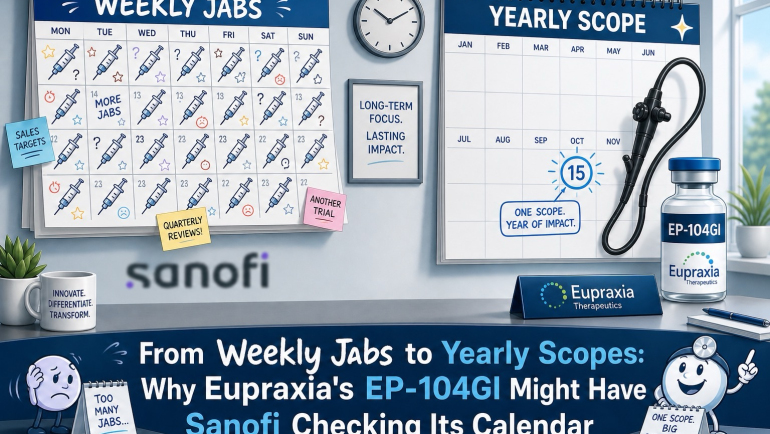
Eupraxia Pharmaceuticals Inc. (“Eupraxia” or the “Company”), a clinical-stage biotechnology company leveraging its proprietary Diffusphere™ technology designed to optimize local, controlled drug delivery for applications with significant unmet need, announced (March 12) its financial results for the fourth quarter of 2025. “2025 was a pivotal year for Eupraxia. We achieved significant clinical milestones in the development of our lead program, EP-104GI, and strengthened our balance sheet with two recent financings, positioning us well for our next phase of growth” said James Helliwell, CEO of Eupraxia. “As we look ahead to an exciting year, we anticipate multiple clinical readouts from the ongoing RESOLVE trial and the initiation of additional clinical programs in new indications to further expand and strengthen our pipeline”

Here are a few quick highlights: On November 13, 2025, the Company announced additional 52-week follow-up data from the RESOLVE trial in eosinophilic esophagitis (“EoE”) demonstrating consistent results after dosing with EP-104GI. On January 8, 2026, the Company announced positive tissue health data from its ongoing RESOLVE trial in EoE demonstrating near-complete improvement on biopsy. On February 20, 2026, the Company announced the closing of a public offering of Common Shares (the “Offering”). The Company issued 7,607,145 Common Shares at a price of $7.00 per Common Share for gross proceeds of approximately $63.2 million which included the issuance of 1,178,571 Common Shares upon full exercise of the option to purchase additional shares granted to the underwriters, and 1,428,571 Pre-Funded Warrants at a price of $6.99999 per Pre-Funded Warrant.

Modular Medical (MODD $.2310, +2.94%)

FIGS, Inc. (FIGS, $14.90, +.34%)

  • FIGS, the direct‑to‑consumer healthcare apparel brand, operates at the intersection of e‑commerce and specialty retail, with a loyal professional customer base and a growing product portfolio. While macro headwinds and digital‑ad volatility have pressured some consumer names, FIGS’ brand equity in the medical community and ongoing product innovation offer levers for renewed growth as conditions normalize.
  • After the close (Feb. 26), FIGS released its fourth quarter and full year 2025 financial results and published a financial highlights presentation on its investor relations highlighting the following: Exceeded Top and Bottom Line Expectations, Grew Q4 2025 Net Revenues 33.0% to a Record $201.9 Million, Achieved Q4 2025 Net Income Margin of 9.2% and Adjusted EBITDA Margin of 13.2% & Plans Low Double-Digit Net Revenues Growth and Margin Expansion in FY 2026. FIGS shares have traded up to $13.74 in the aftermarket today.

GeoVax Labs (GOVX, $1.71)

DoubleVerify (DV, $10.15)

  • DoubleVerify, the leading software platform for digital media measurement, data and analytics, announced recently the financial results for the fourth quarter and full year ended December 31, 2025 and highlighted the following: Increased 2025 Revenue by 14% Year-over-Year to $748.3 Million, Driven by Global Growth in Social, CTV Measurement, and Programmatic Activation, Achieved 2025 Net Income of $50.7 Million and Adjusted EBITDA of $245.6 Million, representing a 33% Adjusted EBITDA margin, & $300 Million Authorized for Share Repurchases, the Largest Amount in DoubleVerify’s History.

The InterGroup Corporation (INTG, $38.23, +4.74%)

  • InterGroup Corporation delivered (Feb. 17) a notably stronger quarter, highlighted by a 20% jump in total revenue to $17.3 million and a 27% surge in hotel revenue as renovated rooms returned to service and travel demand improved. The company swung from a prior-year net loss to $1.0 million in net income, with operating income more than doubling to $2.0 million, underscoring better cost control and improved operating efficiency. Management further enhanced liquidity and sharpened strategic focus by selling a non-core 12‑unit Los Angeles multifamily property, generating a meaningful gain and additional working capital while maintaining stable performance across its real estate portfolio.

Serina Therapeutics (SER, $1.46)

  • Serina Therapeutics, a clinical-stage biotechnology company advancing drug candidates enabled by its proprietary POZ Platform™ drug optimization technology, announced (Feb. 19) that the first patient has been enrolled in the Company’s Phase 1b registrational trial evaluating. The Phase 1b registrational study is designed to evaluate the safety, tolerability, pharmacokinetics, and preliminary efficacy of SER-252 in patients with advanced Parkinson’s disease whose symptoms are inadequately controlled by current standard-of-care therapies. Serina remains on track to initiate dosing during the current quarter, consistent with previously disclosed guidance.

Volato Group, Inc. (SOAR) & M2i Global, Inc. (MTWO)

  • Volato Group, Inc. today announced that it has entered into an amendment to its Aircraft Management Services Agreement with flyExclusive, Inc. (“FLYX”) providing for the sale of certain legacy intellectual property assets. The agreement provides for consideration valued at approximately $1.3 million, payable in FLYX Class A common stock, subject to customary conditions. The assets relate to legacy intellectual property developed during earlier stages of the Company’s technology initiatives and are not part of Volato’s current operating platforms. Volato continues to evaluate opportunities to streamline its asset base and focus resources on strategic priorities, including the continued development of its core software platforms and the pending business combination with M2i Global, Inc.
  • Volato and M2i Global reaffirmed their goal of closing their business combination in the first quarter of 2026, citing steady advancement through SEC review and integration planning as they move toward a combined listing. The deal, originally announced in 2025, will effectively transition Volato from a pure‑play private aviation operator into a diversified platform spanning aviation technology and critical minerals, with M2i shareholders expected to own the majority of the combined entity. Operationally, the partnership is already visible: the two companies recently initiated their first shipment of titanium ore from Western Australia to the United States from Titanium X, underscoring how the critical‑minerals vertical could become a meaningful growth engine as domestic supply‑chain security rises in strategic importance.
  • On Feb. 4, M2i Global,Inc.along with Volato Group, Inc. announced that Titanium X has initiated its first shipment of titanium ore from Western Australia to the U.S. under its collaboration agreement.

NVIDIA (NVDA, $183.22, +1.65%) (NOK, $8.65, +4.98%)

  • In an AI market obsessed with GPUs and stardust, Nokia (NOK) is quietly reminding investors that none of this magic moves without serious plumbing. While Nvidia (NVDA) prepares to headline its GTC 2026 “Woodstock of AI” showcase, the chip giant has already written a very real check to Nokia, committing a $1 billion investment to help rewire the world’s networks for 5G‑Advanced, 6G, and AI‑native workloads. The message is simple enough: GPUs may be the new rock stars, but networking is the stadium.
  • Nvidia delivered strong fourth-quarter results recently, posting revenue of $68.1 billion, well above analyst expectations. Looking ahead, the company projects $7.8 billion in revenue for the first quarter of 2026, reflecting continued robust demand for its AI chips even amid broader market headwinds.
  • NVIDIA and Nebius Group N.V. (NASDAQ: NBIS) (March 11) announced a strategic partnership to develop and deploy the next generation of hyperscale cloud for the AI market, from AI natives to enterprises. NVIDIA will invest $2 billion in Nebius.

McDonald’s (MCD, $326.65)

  • In the run-up to World Protein Day on 27th February, McDonald’s India (West & South), owned and operated by Westlife Foodworld, is celebrating Protein Week, reinforcing its leadership in nutrition-led innovation. Making protein more accessible, affordable and customizable, Indian consumers can use the McDonald’s app to explore these nutritious offerings and avail of protein burgers starting at just INR 69. Enhancing this convenience, consumers ordering via McDelivery can also enjoy free delivery on the Protein Plus meal range.

Opendoor (OPEN, $5.18, +4.65%)

The Sources

Here’s a clean, numbered list of key sources with links you can reference for today’s piece:

  1. Reuters – “Trump demands other countries help secure vital Strait of Hormuz as Iran vows defiance”
    https://www.reuters.com/world/middle-east/trump-calls-allies-help-secure-strait-hormuz-iran-vows-step-up-retaliation-2026-03-15/[reuters]​
  2. Yahoo Finance – “Stock market today: Dow, S&P 500, Nasdaq futures falter, oil slides as Wall Street weighs Iran war signals”
    https://finance.yahoo.com/news/live/stock-market-today-dow-sp-500-nasdaq-futures-falter-oil-slides-as-wall-street-weighs-iran-war-signals-202450040.html[finance.yahoo]​
  3. Yahoo Finance – “Dow, S&P 500 end lower, oil slides as Wall Street weighs Iran war signals”
    https://finance.yahoo.com/news/live/stock-market-today-dow-sp-500-end-lower-oil-slides-as-wall-street-weighs-iran-war-signals-200450413.html[finance.yahoo]​
  4. Yahoo Finance – “Oil Slides as Global Leaders Seen Acting to Blunt Supply Shock”
    https://finance.yahoo.com/news/oil-slides-trump-seeks-ease-233049150.html[finance.yahoo]​
  5. Yahoo Finance (video) – “Oil Falls After Trump Says War Will End ‘Very Soon’”
    https://finance.yahoo.com/video/oil-falls-trump-says-war-072055488.html[finance.yahoo]​
  6. U.S. News – “US Officials Predict Quick End to Iran War, While Tehran Says It Can Fight On”
    https://www.usnews.com/news/world/articles/2026-03-15/trump-warns-of-more-strikes-on-irans-kharg-island-pressures-allies-to-secure-oil-routes[usnews]​
  7. AP News – “Trump says he’s asked ‘about 7’ countries to join coalition to police Iran’s Strait of Hormuz”
    https://apnews.com/article/iran-iraq-us-trump-march-15-2026-9bbed3c906146844be08fdfd02595754[apnews]​
  8. The New York Times – “Iran War Live Updates: Israel Expands Lebanon Offensive; Trump’s Oil, NATO Warnings”
    https://www.nytimes.com/live/2026/03/16/world/iran-war-trump-oil-lebanon[nytimes]​
  9. CNBC – “Treasury yields move higher amid rising oil and labor costs”
    https://www.cnbc.com/2026/03/05/us-treasury-yields-investors-fears-around-us-iran-war.html[cnbc]​
  10. CNBC – “10-year Treasury yield falls as oil reverses spike”
    https://www.cnbc.com/2026/03/09/us-treasury-yields-investors-monitor-iran-war-and-soaring-oil-price.html[cnbc]​
  11. CNBC – “Treasury yields: investors weigh escalating U.S.-Iran war”
    https://www.cnbc.com/2026/03/03/treasury-yields-investors-weigh-escalating-us-iran-war.html[cnbc]​
  12. Yahoo Finance – “Trump admin weighs options to lower oil prices amid Iran conflict” (video)
    https://finance.yahoo.com/video/trump-admin-weighs-options-lower-194302837.html[finance.yahoo]​
  13. Firstonline – “Stock Market Today, March 16: Europe recovers, following Wall Street; oil slows”
    https://www.firstonline.info/en/stock-market-today-March-16-Europe-recovers-in-the-wake-of-Wall-Street-oil-slows/[firstonline]​

Nvidia’s Billion‑Dollar GTC 2026 Call to Nokia: When GPUs Need Better Phone Reception -( $NOK $NVDA $SPY )

In an AI market obsessed with GPUs and stardust, Nokia (NOK) is quietly reminding investors that none of this magic moves without serious plumbing. While Nvidia (NVDA) prepares to headline its GTC 2026 “Woodstock of AI” showcase, the chip giant has already written a very real check to Nokia, committing a $1 billion investment to help rewire the world’s networks for 5G‑Advanced, 6G, and AI‑native workloads. The message is simple enough: GPUs may be the new rock stars, but networking is the stadium.

Nokia’s AI‑Optimized Optical Push

Nokia recently introduced a new suite of application‑optimized coherent optical transport solutions aimed squarely at AI workloads, promising major gains in network efficiency, capacity, and power consumption for data center and cloud operators. These solutions are designed to move massive AI training and inference traffic with fewer watts per bit, a metric that is rapidly becoming as important as raw bandwidth as operators grapple with exploding AI demand. Under the hood, Nokia is tuning its optical layer for specific AI application profiles, effectively aligning transport behavior with the more bursty, east‑west heavy patterns of modern AI clusters rather than legacy, linear telco traffic.

At the packet layer, Nokia has already expanded its AI‑driven data center networking portfolio with high‑performance 7220 IXR‑H6 switches that can hit eye‑watering aggregate capacity while supporting both air‑cooled and liquid‑cooled configurations. Operators can run Nokia’s SR Linux or open‑source SONiC, giving hyperscalers and cloud providers the software flexibility they increasingly demand as they standardize their AI fabrics. In classic understated fashion, Nokia is positioning this not as a moonshot, but as the next logical evolution of infrastructure for the AI super‑cycle.

Nvidia GTC 2026: From GPUs to Full‑Stack AI Factories

All of this lands just as Nvidia’s GTC 2026 conference kicks off, with investors expecting fresh details on its next‑generation AI platforms, including the Vera Rubin stack and future Feynman GPUs. The focus has shifted beyond raw chip specs toward full “AI factories,” where compute, high‑bandwidth memory, and ultra‑low‑latency networking are tightly integrated to turn data into recurring revenue. Nvidia’s data center business already generates well over $190 billion in annual revenue, dwarfing its gaming segment and underscoring how central AI infrastructure has become to the story.

Analysts heading into GTC are watching not just for new hardware, but for how Nvidia will extend its software moat and networking reach in order to justify premium margins amid intensifying competition. That is precisely where Nokia sneaks into the narrative: by augmenting Nvidia’s AI platforms with carrier‑grade optical, IP, and RAN capabilities, the two companies can pitch a more complete “cloud‑to‑edge” AI blueprint to operators and hyperscalers alike.

Inside Nvidia’s $1 Billion Nokia Move

Nvidia’s decision to invest $1 billion in Nokia in 2025 at a subscription price of $6.01 per share is more than a financial footnote; it is a strategic down payment on the convergence of data centers and telecom networks. The partnership centers on AI‑RAN products—radio access networks infused with Nvidia’s accelerated computing platforms and Nokia’s RAN portfolio—to enable AI‑native 5G‑Advanced and 6G networks. In effect, Nvidia gets a front‑row seat—and a steering wheel—in the next generation of wireless infrastructure, while Nokia gains a powerful AI engine to move up the value stack beyond traditional hardware.

The agreement also extends deep into AI networking, including collaboration on data center switching with Nokia’s SR Linux software running on Nvidia’s Spectrum‑X Ethernet platform, along with Nokia telemetry and fabric management tools layered over Nvidia AI infrastructure. The companies are exploring Nokia’s optical technologies as part of future Nvidia AI architectures, hinting at integrated designs where coherent optics, Ethernet fabrics, and GPU clusters are architected as a single system rather than stitched together after the fact. For investors, that looks less like a marketing partnership and more like the early wiring diagram of how AI traffic will move in the 6G era.

Turning Networks Into Distributed AI Engines

Nokia has been steadily repositioning its portfolio around AI‑ready data center and edge networks, from AI‑driven operations tools in its Event‑Driven Automation (EDA) platform to alliances in AI‑RAN and AI‑optimized switching. Partnerships with players like Supermicro aim to deliver integrated AI‑tuned data center networking stacks that prioritize performance, scalability, and automation for AI and high‑performance computing environments. With AI workloads increasingly spilling from centralized cloud regions into edge locations, that combination of programmable optics, flexible switching, and automated operations becomes a strategic differentiator rather than a nice‑to‑have.

Nvidia’s own roadmap, meanwhile, points toward more distributed AI, with platforms designed not only for hyperscale data centers but also for factories, telecom sites, and eventually consumer‑grade devices that tap into AI services in near real time. If Nvidia’s pitch is to turn the world into one giant AI computer, Nokia’s evolving role is to make sure that computer has a resilient, low‑latency nervous system from the long‑haul fiber layer right up to the radio edge. For investors, that alignment suggests a structurally higher demand profile for the kinds of optical transport, switching, and AI‑RAN solutions Nokia is racing to commercialize.

Why This Matters for Investors

For Nvidia shareholders, the Nokia tie‑up reinforces the company’s steady march from a GPU vendor to a full‑stack AI infrastructure provider that reaches deeply into networking, telecom, and edge computing. If GTC 2026 delivers on expectations around new platforms, software monetization, and a durable margin profile, the Nokia collaboration could be framed as an upside lever in markets—like 6G and AI‑RAN—that remain underappreciated in current models.

For Nokia investors, the investment and technical partnership amount to external validation that its AI‑centric repositioning in optical, data center, and RAN networking is not just a slide‑deck story. With AI traffic expected to grow exponentially and with Ethernet and coherent optics projected to dominate AI networking, Nokia’s application‑optimized optical suite and AI‑ready switches could see increasing pull‑through from Nvidia‑aligned architectures. In a market where everyone wants to be the “brains” of AI, Nokia is quietly making the case that owning the circulatory system may be just as lucrative over the long haul.

The Sources

  1. Nokia launches suite of application‑optimized optical solutions for AI
    https://sg.finance.yahoo.com/news/nokia-launches-suite-application-optimized-134200802.html[sg.finance.yahoo]​
  2. Nokia expands network portfolio for premium performance in the AI era
    https://finance.yahoo.com/news/nokia-expands-network-portfolio-premium-130000514.html[finance.yahoo]​
  3. Nokia’s AI RAN alliances test the next leg of its growth story
    https://finance.yahoo.com/news/nokia-ai-ran-alliances-test-220953279.html[finance.yahoo]​
  4. Nokia and Supermicro partner to deliver integrated, AI‑optimized data center solutions
    https://finance.yahoo.com/news/nokia-supermicro-partner-deliver-integrated-070000550.html[finance.yahoo]​
  5. Nokia (NOK) unveils AI‑powered 5G solutions for mobile networks
    https://finance.yahoo.com/news/nokia-nok-unveils-ai-powered-162100801.html[finance.yahoo]​
  6. Nokia Oyj (NOK) latest stock news and headlines (Nokia AI and optical coverage hub)
    https://sg.finance.yahoo.com/quote/NOK/news/[sg.finance.yahoo]​
  7. Nvidia GTC 2026: What to expect from Nvidia’s biggest event of the year
    https://finance.yahoo.com/news/nvidia-gtc-2026-what-to-expect-from-nvidias-biggest-event-of-the-year-132234592.html[finance.yahoo]​
  8. 3 key things analysts are watching for Nvidia stock before GTC 2026
    https://finance.yahoo.com/news/3-key-things-analysts-watching-153002452.html[finance.yahoo]​
  9. Should you buy Nvidia stock before GTC 2026? This analyst weighs in
    https://finance.yahoo.com/news/buy-nvidia-stock-gtc-2026-171210084.html[finance.yahoo]​
  10. NVIDIA GTC 2026 AI platforms and partnerships reshape investor expectations
    https://finance.yahoo.com/news/nvidia-gtc-2026-ai-platforms-150600803.html[finance.yahoo]​
  11. NVIDIA to invest $1B in Nokia to accelerate AI‑RAN innovation
    https://www.telecompetitor.com/nvidia-to-invest-1b-in-nokia-to-accelerate-ai-ran-innovation/[telecompetitor]​
  12. Over the Wire index page referencing NVIDIA’s $1B Nokia AI‑RAN investment
    https://www.telecompetitor.com/over-the-wire/?query-47-page=7&cst[telecompetitor]​
  13. Nokia’s AI MWC26 push tests long‑term growth and margin story
    https://finance.yahoo.com/news/nokia-ai-mwc26-push-tests-031715106.html[finance.yahoo]​

Forget the HOV Lane—Try the Flight Lane: Electric Air Taxis Debut Over the Bay -( $JOBY )

Joby Aviation (NASDAQ: JOBY) just turned Bay Area gridlock into a 10‑minute flex, and investors, real estate developers, and futurists are all leaning out over the metaphorical guardrail to watch. The Santa Cruz–based electric air taxi maker’s latest demo flight across San Francisco Bay suggests the flying commute is edging from science fiction into business plan.

Electric Skies Over the Golden Gate

On a clear Bay Area day better suited to postcards than prototypes, Joby’s piloted air taxi lifted off from Oakland International, slipped across the water at roughly 100 miles per hour, arced past the Marin Headlands, and looped back by way of Alcatraz in about 10 minutes. The four‑seat aircraft, powered entirely by electricity, flew low and quiet enough that the main disruption for onlookers was to their sense of what “commute” is supposed to mean.

This flight wasn’t just a sightseeing tour; it marked the Bay Area kickoff of Joby’s “Electric Skies Tour,” a national roadshow in the sky meant to introduce Americans to short‑hop urban air travel ahead of the United States’ 250th anniversary celebrations. If fireworks once signaled national milestones, Joby is making the case that vertical takeoff and landing might be the next patriotic spectacle.

From Hour‑Long Crawl to Ten‑Minute Hop

The company’s pitch is disarmingly simple: turn the Bay Area’s hour‑plus drives into trips you can squeeze between calendar alerts. A one‑way hop from SoMa to Wine Country is projected in the roughly 10‑ to 15‑minute range, with an estimated price tag of about 100 to 170 dollars—more in line with an upscale rideshare than a private jet fantasy.

Joby’s aircraft uses six propellers to lift off vertically before transitioning to wing‑borne flight, combining helicopter‑style agility with airplane‑like cruising efficiency. With space for a pilot and up to four passengers, and a footprint likened by the company to a Yukon SUV with a very ambitious wingspan, the design aims to slide into existing urban infrastructure with less drama than a traditional helipad operation.

Silicon Valley’s New Commute: Rooftops, Not Car Lanes

Bay Area real estate developers are treating this not as a curiosity, but as a design brief. Plans for rooftop landing areas and integrated vertiports are already in discussion, suggesting that in certain ZIP codes, the question may soon shift from “Do you have parking?” to “Do you have roof access?”

Population growth and congestion have already turned San Francisco into one of the most traffic‑choked cities in the country, with drivers losing well over a hundred hours a year to gridlock. Joby is positioning its service as a way to reclaim those hours, turning bridge‑crawling commutes into quick aerial hops and, in the process, reframing a long‑suffering regional headache as a platform for zero‑emission aviation.

Commute Reinvented: Ground vs. Air

Trip concept Traditional reality (approx.) Joby vision (approx.) Notes Oakland to Marin Headlands 45–90 minutes in traffic ~10 minutes in air Demo flight path over Bay. SoMa to Wine Country 1.5–2+ hours by car ~10–15 minutes Estimated air taxi hop. Standard urban cross‑bay commute 60+ minutes at peak Under 10 minutes Company’s stated target.

A National Testbed, With California Waiting in the Wings

The Bay Area flight was also a policy moment. Joby has been selected by the U.S. Department of Transportation under a federal eVTOL Integration Pilot Program, giving it a pathway to begin early operations across 10 states including Arizona, Florida, New York, Texas, and Oregon. Initial use cases range from passenger service to cargo delivery in Florida and medical applications in North Carolina, a test mix that feels equal parts Jetsons and public utility.

Ironically, while the aircraft traced a confident loop around the Golden Gate, California itself is not on the first‑wave operations list, at least not yet. The company has signaled an ambition to expand into the state soon after these trial markets, a cautious pacing that might give regulators time to catch up—and give Bay Area residents time to decide how they feel about trading honking horns for barely audible rotors.

Santa Cruz Startup, Ohio Factory, Global Ambition

Though the aircraft floated effortlessly above San Francisco icons, Joby’s footprint is increasingly bicoastal. The company, headquartered along the Central Coast with operations in Santa Cruz, San Carlos, and Marina, is ramping up manufacturing with a 700,000‑square‑foot facility in Dayton, Ohio, and plans to scale toward hundreds of aircraft per year later this decade.

Backed by strategic partnerships with names like Uber and Delta Air Lines, Joby is working on an integrated ecosystem that would link the ride to the vertiport, the vertiport to the flight, and the flight back to ground transport in a single, app‑driven journey. In other words, the goal is less “joyride over the Bay” and more “tap a button, skip the bridge, make the meeting.”

The Quiet Disruption Above the Bay

For now, the sight of a sleek, all‑electric aircraft sliding almost silently over the Bay Bridge still stops conversations and prompts plenty of smartphone videos. But Joby’s broader message is that this should eventually feel routine: a clean, quiet, and point‑to‑point aerial link woven into the region’s daily transit fabric rather than hovering on its fringes.

The real disruption may not be technological at all, but psychological. Once commuters internalize that the distance from Oakland to the Marin Headlands is no longer “one podcast and a half” but “a couple of emails,” expectations around time, work, and where to live start to shift. In a region that has long monetized the gap between imagination and implementation, Joby’s latest flight suggests that the next big arbitrage might be between ground‑bound patience and sky‑bound efficiency.

The Sources


[1] Santa Cruz-Based Electric Air Taxi Company Showcases Demo … https://sfist.com/2026/03/15/santa-cruz-based-electric-flying-taxi-company-showcases-demo-flight-across-the-bay/
[2] Joby Completes Piloted Electric Air Taxi Flight Across San … https://ir.jobyaviation.com/news-events/press-releases/detail/177/joby-completes-piloted-electric-air-taxi-flight-across-san
[3] Joby’s flying taxi crossed the Golden Gate. Wine Country could … https://www.sfchronicle.com/sf/article/flying-car-joby-22073138.php
[4] Joby Kicks Off Nationwide Air Taxi Tour With Bay Area Flight https://www.flyingmag.com/joby-electric-air-taxi-tour-sf-bay-area/
[5] Experimental Flying Air Taxi Spotted Over California as It ‘Nears … https://people.com/experimental-flying-air-taxi-spotted-over-california-11926189
[6] Joby Completes Piloted Electric Air Taxi Flight Across San Francisco Bay and Around the Golden Gate https://www.businesswire.com/news/home/20260313001932/en/Joby-Completes-Piloted-Electric-Air-Taxi-Flight-Across-San-Francisco-Bay-and-Around-the-Golden-Gate
[7] Joby air taxi makes Bay Area flight in FAA commercial approval … https://abc7news.com/post/joby-air-taxi-makes-bay-area-flight-faa-commercial-approval-push/18707491/
[8] Joby Air Taxi Completes Bay Area Flight Amid FAA Commercial … https://www.eplaneai.com/news/joby-air-taxi-completes-bay-area-flight-amid-faa-commercial-approval-efforts
[9] Joby Aviation | Electric Air Taxi for Zero-Emission Travel https://www.jobyaviation.com
[10] California company, Joby air taxi makes Bay Area flight in … – YouTube https://www.youtube.com/watch?v=60aQbLIG5c8
[11] Joby Aviation Begins Testing Air Taxi As It Targets 2026 Launch: ‘Final Phase Of Bringing This…’ https://www.aol.com/articles/joby-aviation-begins-testing-air-133103502.html
[12] Experimental air-taxi spotted in skies over San Francisco Bay https://nypost.com/2026/03/12/us-news/experimental-air-taxi-from-joby-spotted-in-skies-over-oakland/
[13] Joby Aviation – Wikipedia https://en.wikipedia.org/wiki/Joby_Aviation
[14] Joby Aviation showcased its electric air taxi technology Thursday … https://www.facebook.com/abc7news/posts/joby-aviation-showcased-its-electric-air-taxi-technology-thursday-with-a-demo-fl/1370721431764550/
[15] Joby Completes Piloted Electric Air Taxi Flight Across San … https://finance.yahoo.com/news/joby-completes-piloted-electric-air-110000297.html

March 13, 2026 – Triple-Digit Crude, Single-Digit Patience: Stocks Price In an Expensive Reality This Week -( $INTG $MODD $NOK $NVDA $VEON $VIX Rise!)

US stocks notched a third straight week of losses into Friday, March 13, 2026, as oil’s lunge toward 100100 a barrel reignited inflation jitters, pushed out Fed rate‑cut hopes, and kept investors firmly in risk‑off mode.

Indexes: Red Week, Oil-Driven

  • The Dow, S&P 500, and Nasdaq all extended their losing streak, with earlier sessions in the week already pushing them into negative territory for 2026.
  • A Monday bounce proved fleeting; major indexes had been under pressure since the prior week’s selloff tied to a weak jobs print and surging crude, leaving the S&P 500 and Nasdaq down for multiple consecutive weeks and the Dow slipping below water year‑to‑date.
  • Smaller caps, which had been a relative bright spot this year, also lost momentum as growth worries and higher‑for‑longer rates filtered through the risk spectrum.
  • As fear of war and during oil prices/inflation increased, so did volatility thought the week wit the CBOE Volatility Index (VIX) closed at $27.19.

Weekly snapshot of recent trend

IndexRecent daily move exampleRecent weekly toneYTD trend into this week
S&P 500Down ~1.3% on a recent Friday as oil spiked above 90.Multiple weeks of declines as energy and rates pressured valuationsSlightly negative, after slipping from record territory.
Dow JonesOff about 0.9% (≈450 pts) on a prior Friday; another 1% drop in a midweek session as oil surged.Third week of losses amid cyclical weakness and rate worries.Turned negative for 2026.
Nasdaq CompFell around 1% in recent risk‑off days; tech lagged on rate repricing.Down for the week as higher yields hit growth and AI leaders saw profit‑taking.Lower year‑to‑date, underperforming the prior AI‑driven run.

Oil, Inflation, and the Fed

  • Crude briefly vaulted above $100 a barrel this week amid escalating conflict around Iran and shipping disruptions in the Strait of Hormuz, before easing back, but the signal to equity markets was clear: energy‑driven inflation risk is back on the table.
  • Strategists warned that sustained triple‑digit crude would threaten the soft‑landing narrative; some noted that oil above the mid‑90s range has historically coincided with equity drawdowns, reinforcing the sense that stocks had to re‑price a higher inflation path.
  • Rate‑cut expectations pushed out as traders moved from a summer to early‑fall timing for the first Fed move, with oil‑linked inflation concerns joining still‑solid economic data in arguing for patience.

Macro Data and Geopolitics

  • February CPI landed roughly in line with expectations, but with oil and shipping costs surging, investors worried that the next few prints could re‑accelerate headline inflation even if core remains better behaved.
  • A weaker‑than‑hoped jobs report from the prior week had already stirred stagflation chatter: slower labor momentum plus higher energy costs is not the mix equity bulls wanted heading into spring.
  • The Iran conflict, attacks on vessels, and constrained tanker traffic through Hormuz kept energy markets volatile and reinforced a global risk‑off tone, with international equities underperforming U.S. stocks as a stronger dollar and higher oil weighed on foreign markets.

Sector and Style Moves

  • Energy shares outperformed but lagged the spectacular move in crude itself, as investors questioned how sustainable $100-dollar oil would be and how quickly higher input costs might boomerang on broader earnings.
  • Rate‑sensitive growth and tech stocks—the leadership cohort of the AI trade—saw renewed profit‑taking as the 10‑year Treasury yield drifted back above 4.2%, pressuring long‑duration valuations.
  • Defensive pockets such as consumer staples and parts of health care found relative support, while more cyclical and internationally exposed areas underperformed in a world of higher energy prices and stronger dollar.

What Investors Will Watch Next

  • The market’s immediate focus is on upcoming inflation releases, especially PCE, to see whether the oil spike bleeds into broader price pressures or remains a transitory shock.finance.yahoo+2
  • Fed communication will be critical: with futures markets now pricing fewer cuts, any hint that policymakers are more worried about energy‑driven inflation than about growth could extend the equity drawdown.
  • Finally, the path of the Iran conflict and shipping disruptions will likely set the tone not just for crude but for global risk assets, as investors weigh whether this was a violent but brief energy scare—or the start of a longer‑lasting supply shock.

VP Watchlist Updates

Below is an update‑style snapshot on the VP Watchlist names for the week, focused on recent catalysts, positioning, and narrative rather than precise price moves.

VEON Ltd. (VEON, $50.60, rose +14.20% on Friday)

VEON Ltd. (VEON), a global digital operator, today (March 13) announced strong financial and operating results for the fourth quarter and full year ended December 31, 2025. Key Highlights – Fourth Quarter 2025

  • Total revenue grew 17.4% year-on-year (“YoY”) to USD 1,171 million.
  • EBITDA increased 29.1% YoY to USD 527 million, with EBITDA margin expanding 410 bps to 45.0%.
  • Digital revenues grew 84.1% YoY to USD 235 million, accounting for 20.1% of Group revenue.
  • Financial services revenues rose 28.1% YoY to USD 120 million.

Eupraxia Pharmaceuticals (EPRX, $7.36)

Eupraxia Pharmaceuticals Inc. (“Eupraxia” or the “Company”), a clinical-stage biotechnology company leveraging its proprietary Diffusphere™ technology designed to optimize local, controlled drug delivery for applications with significant unmet need, recently announced the successful closing of its previously announced public offering (the “Offering”) of 7,607,145 common shares of the Company (the “Common Shares”), which includes the full exercise of the option to purchase additional shares granted to the underwriters, at a price to the public of US$7.00 per Common Share, and pre-funded warrants to purchase up to 1,428,571 Common Shares in lieu thereof (the “Pre-Funded Warrants”) at a price of US$6.99999 per Pre-Funded Warrant, which equals the public offering price per Common Share less the C$0.000001 per share exercise price of each Pre-Funded Warrant, for gross proceeds of approximately US$63.2 million, before deducting the underwriting commissions and estimated expenses incurred in connection with the Offering.“We are pleased to complete this financing, allowing us to significantly expand our pipeline, reach several additional development milestones with EP-104GI for eosinophilic esophagitis, and make meaningful progress towards commercial readiness,” said James Helliwell, CEO of Eupraxia. “We appreciate the support from both existing and new investors as we execute our mission and pursue the next phase of growth for Eupraxia.” Cantor and LifeSci Capital acted as joint book-running managers for the Offering. Bloom Burton and Craig-Hallum also acted as co-managers for the Offering. As previously stated, the Company intends to use the net proceeds from the Offering primarily for the continued advancement of EP-104GI for Eosinophilic Esophagitis, including the completion of ongoing preclinical studies, and Phase 2 clinical trials, preparations for a Phase 3 clinical trial including the related regulatory submissions, and manufacturing activities, and to undertake the necessary commercial/market development activities to prepare for the eventual product launch. The Company also intends to use a portion of the proceeds to accelerate and expand its plans to pursue clinical studies with EP-104GI in multiple additional gastrointestinal indications, including in esophageal strictures and fibrostenotic Crohn’s disease. A portion of the proceeds will be allocated to research and development of additional pipeline candidates, business development initiatives, and general corporate purposes, which may include but are not limited to employee salaries, working capital, leases for facilities, administrative expenses, and capital expenditures. The Company may also use a portion of the proceeds to expand its intellectual property portfolio and strengthen its corporate infrastructure to support future growth.

Modular Medical (MODD $.2244, +12.76% over the last 5-days)

FIGS, Inc. (FIGS, $14.85)

  • FIGS, the direct‑to‑consumer healthcare apparel brand, operates at the intersection of e‑commerce and specialty retail, with a loyal professional customer base and a growing product portfolio. While macro headwinds and digital‑ad volatility have pressured some consumer names, FIGS’ brand equity in the medical community and ongoing product innovation offer levers for renewed growth as conditions normalize.
  • After the close (Feb. 26), FIGS released its fourth quarter and full year 2025 financial results and published a financial highlights presentation on its investor relations highlighting the following: Exceeded Top and Bottom Line Expectations, Grew Q4 2025 Net Revenues 33.0% to a Record $201.9 Million, Achieved Q4 2025 Net Income Margin of 9.2% and Adjusted EBITDA Margin of 13.2% & Plans Low Double-Digit Net Revenues Growth and Margin Expansion in FY 2026. FIGS shares have traded up to $13.74 in the aftermarket today.

GeoVax Labs (GOVX, $1.72)

DoubleVerify (DV, $10.21)

  • DoubleVerify, the leading software platform for digital media measurement, data and analytics, today announced financial results for the fourth quarter and full year ended December 31, 2025 and highlighted the following: Increased 2025 Revenue by 14% Year-over-Year to $748.3 Million, Driven by Global Growth in Social, CTV Measurement, and Programmatic Activation, Achieved 2025 Net Income of $50.7 Million and Adjusted EBITDA of $245.6 Million, representing a 33% Adjusted EBITDA margin, & $300 Million Authorized for Share Repurchases, the Largest Amount in DoubleVerify’s History.

The InterGroup Corporation (INTG, $36.50, +.14% over the last 5-days)

  • InterGroup Corporation delivered (Feb. 17) a notably stronger quarter, highlighted by a 20% jump in total revenue to $17.3 million and a 27% surge in hotel revenue as renovated rooms returned to service and travel demand improved. The company swung from a prior-year net loss to $1.0 million in net income, with operating income more than doubling to $2.0 million, underscoring better cost control and improved operating efficiency. Management further enhanced liquidity and sharpened strategic focus by selling a non-core 12‑unit Los Angeles multifamily property, generating a meaningful gain and additional working capital while maintaining stable performance across its real estate portfolio.

Serina Therapeutics (SER, $1.55, +1.31% over the last 5-days)

  • Serina Therapeutics, a clinical-stage biotechnology company advancing drug candidates enabled by its proprietary POZ Platform™ drug optimization technology, announced (Feb. 19) that the first patient has been enrolled in the Company’s Phase 1b registrational trial evaluating. The Phase 1b registrational study is designed to evaluate the safety, tolerability, pharmacokinetics, and preliminary efficacy of SER-252 in patients with advanced Parkinson’s disease whose symptoms are inadequately controlled by current standard-of-care therapies. Serina remains on track to initiate dosing during the current quarter, consistent with previously disclosed guidance.

Volato Group, Inc. (SOAR) & M2i Global, Inc. (MTWO)

  • Volato Group, Inc. today announced that it has entered into an amendment to its Aircraft Management Services Agreement with flyExclusive, Inc. (“FLYX”) providing for the sale of certain legacy intellectual property assets. The agreement provides for consideration valued at approximately $1.3 million, payable in FLYX Class A common stock, subject to customary conditions. The assets relate to legacy intellectual property developed during earlier stages of the Company’s technology initiatives and are not part of Volato’s current operating platforms. Volato continues to evaluate opportunities to streamline its asset base and focus resources on strategic priorities, including the continued development of its core software platforms and the pending business combination with M2i Global, Inc.
  • Volato and M2i Global reaffirmed their goal of closing their business combination in the first quarter of 2026, citing steady advancement through SEC review and integration planning as they move toward a combined listing. The deal, originally announced in 2025, will effectively transition Volato from a pure‑play private aviation operator into a diversified platform spanning aviation technology and critical minerals, with M2i shareholders expected to own the majority of the combined entity. Operationally, the partnership is already visible: the two companies recently initiated their first shipment of titanium ore from Western Australia to the United States from Titanium X, underscoring how the critical‑minerals vertical could become a meaningful growth engine as domestic supply‑chain security rises in strategic importance.
  • On Feb. 4, M2i Global,Inc.along with Volato Group, Inc. announced that Titanium X has initiated its first shipment of titanium ore from Western Australia to the U.S. under its collaboration agreement.

NVIDIA (NVDA, $180.25, +1.37% over the last 5-days)

  • Nvidia delivered strong fourth-quarter results recently, posting revenue of $68.1 billion, well above analyst expectations. Looking ahead, the company projects $7.8 billion in revenue for the first quarter of 2026, reflecting continued robust demand for its AI chips even amid broader market headwinds.
  • NVIDIA and Nebius Group N.V. (NASDAQ: NBIS) (March 11) announced a strategic partnership to develop and deploy the next generation of hyperscale cloud for the AI market, from AI natives to enterprises. NVIDIA will invest $2 billion in Nebius.

McDonald’s (MCD, $326.46)

  • In the run-up to World Protein Day on 27th February, McDonald’s India (West & South), owned and operated by Westlife Foodworld, is celebrating Protein Week, reinforcing its leadership in nutrition-led innovation. Making protein more accessible, affordable and customizable, Indian consumers can use the McDonald’s app to explore these nutritious offerings and avail of protein burgers starting at just INR 69. Enhancing this convenience, consumers ordering via McDelivery can also enjoy free delivery on the Protein Plus meal range.

Nokia (NOK, $8.24, +6.46% over the last 5-days)

  • Nokia Corporation is attracting renewed investor interest after FMR LLC lifted its indirect stake above the 5% voting-rights threshold, a move disclosed under Finnish securities law. At the same time, its new role in Palo Alto Networks’ expanded AI and 5G security ecosystem reinforces Nokia’s position in safeguarding next-generation networks, a development that could support its standing in telecom and infrastructure markets.
  • On March 2, Nokia (NOK) and TIM Brasil announced and are are quietly rewriting the script for Latin America’s telecom sector, rolling out an AI‑ready 5G network that targets nearly half of Brazil’s population while giving enterprises a front‑row seat to the AI industrial era. The expanded partnership takes what TIM started in São Paulo and extends it across 14 additional states, ultimately reaching regions that together represent roughly 42% of Brazil’s population. The upgraded network leans on Nokia’s latest AirScale portfolio, including energy‑efficient Habrok Massive MIMO radios, Remote Radio Heads and small cells designed to boost capacity, improve indoor coverage and cut power consumption at the same time. In practical terms, this is less about bragging rights on speed tests and more about building a platform for AI‑driven services: the architecture is being designed from the ground up to support 5G Advanced, 6G and AI‑native workloads at the edge, not just another round of radio swaps.

Opendoor (OPEN, $4.95)

The Sources

  1. Yahoo Finance – Stock Market Today: Dow drops 700 points, S&P 500, Nasdaq sink as oil soars back toward $100
    https://finance.yahoo.com/news/live/stock-market-today-dow-drops-700-points-sp-500-nasdaq-sink-as-oil-soars-back-toward-100-200013344.html[perplexity]​
  2. Yahoo Finance – Dow, S&P 500, Nasdaq resume sell-off, oil surges as Middle East conflict escalates
    https://finance.yahoo.com/news/live/stock-market-today-dow-sp-500-nasdaq-futures-fall-oil-surges-as-middle-east-conflict-escalat[finance.yahoo]​
  3. The Wall Street Journal – Stock Market Today: Dow Drops 700 Points as Oil Hits $100
    https://www.wsj.com/livecoverage/stock-market-today-dow-sp-500-nasdaq-03-12-2026[wsj]​
  4. MarketWatch – Dow, S&P 500 and Nasdaq set for declines after oil rises as high as $100 a barrel
    https://www.marketwatch.com/livecoverage/stock-market-today-dow-s-p-500-nasdaq-iran-conflict-oil-prices-emergency-reserves-cargo[marketwatch]​
  5. Investopedia – Stock Market Today: Major Indexes End Sharply Lower as Oil Prices Jump
    https://www.investopedia.com/stock-market-today-dow-jones-s-and-p-500-03122026-11924478[investopedia]​
  6. Bloomberg – Stocks Fall on War, Credit Worries as Oil Surges: Markets Wrap
    https://www.bloomberg.com/news/articles/2026-03-11/stock-market-today-dow-s-p-live-updates-[bloomberg]​
  7. CNBC – Stock market today: Live updates
    https://www.cnbc.com/2026/03/11/stock-market-today-live-updates.html[cnbc]​
  8. 24/7 Wall St. – Stock Market Live March 12, 2026: S&P 500 (SPY) Slips on Oil Again
    https://247wallst.com/investing/2026/03/12/stock-market-live-march-12-2026-sp-500-spy-slips-on-oil-again/[247wallst]​
  9. CME Group – FedWatch Tool (rate cut probabilities and yields backdrop)
    https://www.cmegroup.com/markets/interest-rates/cme-fedwatch-tool.html[cmegroup]​

Alpha Therapy’s Radiopharma Unicorn Surge -( $AZN $BMY $NVS $IBB $XBI )

Biotech innovators are pioneering RNA‑optimized fusions for targeted alpha therapies (TATs), positioning themselves as first‑movers in the broader radiopharma market that is exploding with demand for precision cancer killers.

Radiopharma Market Momentum Builds Billions

The radiopharma sector, blending alpha‑particle precision with smart targeting molecules and sophisticated imaging, is barreling toward multibillion‑dollar territory over the next decade as oncology budgets tilt decisively toward precision radiopharmaceuticals. Forecasts call for robust double‑digit annual growth as oncologists look beyond chemotherapy and small molecules toward theranostic approaches that pair diagnostic scans with therapeutic radioisotopes in a single platform.

Radiopharma Steps Into the Mainstream

Novartis has quietly become the commercial standard-bearer for radioligand therapy, with Pluvicto already tracking around a $2 billion annualized run rate and management steering investors toward a multibillion‑dollar peak sales ambition north of $5 billion in metastatic castration‑resistant prostate cancer alone. What began as a specialized option for late‑line patients is now moving steadily up the treatment algorithm, helped by label expansions into earlier mCRPC settings and a growing network of treatment centers that makes access look less like a pilot program and more like a national franchise.

For Big Pharma, the message is increasingly difficult to ignore: radiopharmaceuticals are no longer a scientific curiosity parked in the “other oncology” slide, but a bona fide platform where a single successful asset can credibly support a multibillion‑dollar revenue line. As radioligand therapies demonstrate that they can scale commercially—and not just clinically—each new approval has the potential to unlock a franchise of similar magnitude, turning what was once dismissed as a niche into one of the more hotly contested battlegrounds in oncology dealmaking.

Pipeline Pioneers Lead the Radiopharma Charge

Orano Med has emerged as one of the early radiopharma torchbearers, pushing lead‑212 alpha radioligand therapies into Phase I for GRPR‑expressing solid tumors while expanding collaborations with Roche to support broader development. Fusion Pharmaceuticals is advancing its clinical franchise in prostate cancer, with Phase II programs designed to show how alpha‑emitting radiopharmaceuticals can deepen responses in heavily pretreated patients. RayzeBio, now under a larger pharma umbrella, continues to move its candidate RYZ101 through late‑stage development in neuroendocrine tumors after encouraging activity in patients who have failed lutetium‑177 therapy, while Aktis Oncology is driving first‑in‑human programs against Nectin‑4 and other solid‑tumor targets as it kicks off 2026’s biotech IPO cycle.

NAYA Therapeutics: Astatine‑211 Specialist

Within that universe, targeted alpha therapies represent the sharpest edge of radiopharma, and investors are betting that platforms like NAYA’s Astatine‑211 franchise could outpace beta‑emitter rivals in efficacy and durability. Indeed, NAYA Therapeutics is carving out a differentiated position by centering its pipeline on Astatine‑211, a so‑called “goldilocks” alpha emitter prized for its short half‑life, clean decay, chelator‑free chemistry, and scalable production from naturally abundant bismuth‑209. Its lead targeted alpha therapies include NY-738, a  GPC3‑targeting Astatine‑211 radiopharmaceutical, aiming at eradicating Minimal Residual Disease in Multiple Myeloma, and NY‑703, is a GPC3‑targeting Astatine‑211 radiopharmaceutical aimed at residual and metastatic hepatocellular carcinoma (HCC). NY-738 plans to enroll patients in the US based on cleared IND and NY-703 will iniatate investigator‑initiated clinical trials slated to begin in China in 2026 under a supply partnership with Alpha Nuclide’s TR‑Alpha cyclotron facility near Shanghai. NAYA Therapeutics now sits squarely in this first‑wave cohort, bringing a next‑generation Astatine‑211 platform to a space where valuations are already drifting toward unicorn territory and strategic acquirers are circling. Astatine‑211 alpha radioimmunotherapy, complementing NK‑cell engager bifunctional antibody programs NY‑303 (GPC3/NKp46/CD16) that cover second‑line HCC, respectively, plus NY‑338 (CD38/ NKp46/CD16) for multiple myeloma.

NAYA’s strategy hinges on two synergistic modalities—Astatine‑211 targeted alpha therapies and bifunctional antibodies—that can be deployed alone or in combination across the HCC disease continuum. To make that ambition practical, the company has stitched together a decentralized manufacturing and supply network through partnerships with Atley Solutions in Europe and IONETIX in the US, using Atley’s C100 modules and new cyclotron capacity to bring clinical‑grade Astatine‑211 production closer to outpatient centers. It is a quietly radical move: instead of treating radionuclide supply as a constraint, NAYA is turning it into a competitive moat, potentially smoothing its path to commercialization and making its platform look decidedly M&A‑ready.

RNA Fusion: The Next‑Gen Edge in Radiopharma

Layered on top of the radiopharma renaissance is a new wave of RNA‑optimized and immune‑engaging constructs designed to sharpen how and where alpha emitters are deployed. Programmable RNA 2.0 architectures aim to improve stability, reduce immunogenicity, and fine‑tune expression so that radiolabeled payloads and immune‑engaging antibodies find cancer cells with almost GPS‑level precision, turning TATs into programmable radiopharma engines rather than static drugs. The result is a therapeutic profile that tries to marry the elegant logic of mRNA and next‑gen biologics with the brute‑force lethality of alpha particles—essentially giving oncologists a molecular scalpel with the stopping power of a sledgehammer. Regulators are sketching frameworks for more personalized gene, cell, and radiopharmaceutical therapies, adding institutional validation to the modality and giving early movers like NAYA a regulatory tailwind.

Investor Appetite Is Surging in Radiopharma IPOs and beyond

On the capital‑markets front, radiopharma has graduated from speculative curiosity to seemingly a must‑have exposure for oncology‑focused funds, with targeted alpha therapy viewed as the high‑octane growth engine inside that theme. Companies with assets as early as Phase I are securing billion‑dollar post‑money valuations, justified by strong clinical signals, scarcity value in high‑quality TAT platforms, and a growing roster of big‑pharma buyers hungry to bulk up their oncology pipelines. Recent IPOs and follow‑on offerings—such as those funding Nectin‑4 and PSMA‑directed radiopharmaceuticals—have priced at the upper end of their ranges, with oversubscribed books suggesting that generalists are now joining the specialists at the radiopharma table.

In that context, NAYA’s Astatine‑211‑centric pipeline, fortified by global manufacturing partnerships and a comprehensive HCC franchise, potentially positions the company as a plausible future entrant into the radiopharma unicorn club—or as a tempting acquisition target for big pharma players looking to bolt on a ready‑made alpha therapy platform. For investors willing to stomach biotech volatility, the category offers something rare in oncology: a clear mechanistic edge, an expanding body of real‑world evidence, and a strategic M&A backdrop where “radioactive” is starting to sound less like a risk label and more like a valuation strategy.

Key Radiopharma Investments and Acquisitions

  • Orano Med – Phase I
    • $1.9 billion Series B post‑money valuation in 2025 underscores how early‑stage alpha‑therapy platforms can command near‑unicorn pricing before pivotal data
    • Backing from a global pharma partner validates the technology and signals strong strategic interest in securing long‑term radiopharma optionality.
  • Fusion – Phase II (acquired by AstraZeneca, AZN)
    • $2.4 billion acquisition in 2024 highlights big pharma’s willingness to pay a premium for clinical‑stage targeted alpha assets with de‑risked mechanisms
    • The deal effectively set a benchmark for later transactions, anchoring valuation expectations across the alpha‑therapy peer group.
  • Mariana Oncology – Pre‑clinical (acquired by Novartis, NVS)
    • $1.75 billion pre‑clinical acquisition in 2025 shows that well‑positioned platforms can leapfrog the traditional “wait for Phase II” hurdle.
    • Novartis’ move reinforces the idea that radiopharma pipelines are now viewed as strategic infrastructure, not just product bets.
  • RayzeBio – Phase I (acquired by Bristol Myers Squibb, BMY)
    • $4.1 billion acquisition in 2025 stands out as the marquee transaction, effectively re‑rating the entire targeted radiopharma category.
    • BMS secured both clinical programs and manufacturing know‑how, illustrating how integrated capabilities drive top‑tier deal values.
  • Aktis – Phase I IPO
    • $1.25 billion IPO post‑money valuation in 2026 demonstrates that public markets will fund early‑stage alpha‑therapy stories at unicorn levels.
    • Aktis’ listing provides a liquid valuation marker for private peers and a roadmap for companies weighing IPO versus M&A exits.

The Sources

  1. Targeted Alpha-Therapy Market Size, Trends Report 2026 – The Business Research Company
    https://www.thebusinessresearchcompany.com/report/targeted-alpha-therapy-global-market-report[thebusinessresearchcompany]​
  2. Targeted Alpha Therapy Market Report – Strategic Market Research
    https://www.strategicmarketresearch.com/market-report/targeted-alpha-therapy-market[strategicmarketresearch]​
  3. Targeted Alpha Therapies Market to Grow at 44% CAGR – BCC Research
    https://www.bccresearch.com/pressroom/phm/targeted-alpha-therapies-market-to-grow-at-44-cagr[bccresearch]​
  4. Targeted Alpha Therapies Market to Grow at 44% CAGR Globally – Yahoo Finance
    https://finance.yahoo.com/news/targeted-alpha-therapies-market-grow-180600868.html[finance.yahoo]​
  5. Orano Med Starts Phase I Trial With Alpha Radioligand Therapy 212Pb-GRPR – Orano Med
    https://www.oranomed.com/en/resources/news/2023/orano-med-starts-phase-1-trial-with-alpha-radioligand-therapy-212pb-grpr-in-patients[oranomed]​
  6. Orano Med Enters Next Phase of Collaboration With Roche – Yahoo Finance
    https://finance.yahoo.com/news/orano-med-enters-next-phase-104800407.html[finance.yahoo]​
  7. Fusion Pharmaceuticals Announces First Patient Dosed in Phase 2 Portion of AlphaBreak Trial – BioSpace
    https://www.biospace.com/press-releases/fusion-pharmaceuticals-announces-first-patient-dosed-in-the-phase-2-portion-of-the-alphabreak-trial[biospace]​
  8. Fusion Pharmaceuticals Announces Clinical Program and Manufacturing Updates – BioSpace
    https://www.biospace.com/fusion-pharmaceuticals-announces-clinical-program-and-manufacturing-updates[biospace]​
  9. Phase 1b Portion of the ACTION-1 Trial of RYZ101 – ASCO/RayzeBio (PDF)
    https://rayzebio.com/wp-content/uploads/2024/06/Halperin-ACTION-1-ASCO-2024-Poster-UPLOAD.pdf[rayzebio]​
  10. GEP-NETs – RayzeBio Pipeline Overview
    https://rayzebio.com/pipeline/gep-nets/[rayzebio]​
  11. Assessing the Platform’s S-Curve Potential in Targeted Alpha Therapy – Aktis Oncology Coverage
    https://www.ainvest.com/news/aktis-oncology-assessing-platform-curve-potential-targeted-alpha-therapy-2602/[ainvest]​
  12. Aktis Oncology Kicks 2026 IPO Cycle Off With $210m Target – Pharmaceutical Technology
    https://www.pharmaceutical-technology.com/news/aktis-oncology-kicks-2026-ipo-cycle-off-with-210m-target/[pharmaceutical-technology]​
  13. Aktis Oncology Aims for $209M Windfall From First Biotech IPO of 2026 – Fierce Biotech
    https://www.fiercebiotech.com/biotech/aktis-oncology-aims-209m-windfall-1st-biotech-ipo-2026[fiercebiotech]​
  14. Programmable RNA 2.0: Beyond the First mRNA Revolution – BioSpace
    https://www.biospace.com/business/programmable-rna-2-0-beyond-the-first-mrna-revolution[biospace]​
  15. The Limitless Future of RNA Therapeutics – Nature Reviews Drug Discovery (PMC)
    https://pmc.ncbi.nlm.nih.gov/articles/PMC8012680/[pmc.ncbi.nlm.nih]​
  16. Alliance for mRNA Medicines Welcomes New FDA Framework – mRNAMedicines.org
    https://mrnamedicines.org/alliance-for-mrna-medicines-welcomes-new-fda-framework-to-accelerate-development-of-personalized-gene-and-cell-therapies[mrnamedicines]​
  17. Next Generation Targeted Alpha Therapy Clinical Trials and Development Insight – BioSpace
    https://www.biospace.com/press-releases/next-generation-targeted-alpha-therapy-clinical-trials-development-insight[biospace]​
  18. Oncology Market Set to Nearly Triple: Five Companies Leading the Charge – Yahoo Finance
    https://finance.yahoo.com/news/oncology-market-set-nearly-triple-3026959[prnewswire]​
  19. Astatine‑211 Targeted Alpha Therapies – NAYA Therapeutics
    https://www.nayatx.com/astatine-211-targeted-alpha-therapies[nayatx]​
  20. NAYA Therapeutics Expands Its Hepatocellular Carcinoma (HCC) Pipeline With NY‑700 – Access Newswire
    https://www.accessnewswire.com/newsroom/en/biotechnology/naya-therapeutics-expands-its-hepatocellular-carcinoma-hcc-pipeline-with-ny-700[accessnewswire]​
  21. NAYA Therapeutics Partners With Atley Solutions on Astatine‑211 Radiopharmaceuticals – Pharma Industrial India
    https://www.pharmaindustrial-india.com/news/naya-therapeutics-partners-with-atley-solutions-on-astatine-211-radio-pharmaceuticals[pharmaindustrial-india]​
  22. NAYA Therapeutics Partners With IONETIX to Build a US Production Network for Astatine‑211 – FirstWord Pharma
    https://firstwordpharma.com/story/5991246[firstwordpharma]​
  23. NAYA Announces Partnership With Alpha Nuclide to Support Clinical Development of NY‑703 in China – Access Newswire
    https://www.accessnewswire.com/newsroom/en/biotechnology/naya-announces-partnership-with-alpha-nuclide-to-support-clinical-development[accessnewswire]​
  24. NAYA Therapeutics Partners With Alpha Nuclide to Advance Astatine‑211 Therapy – MedPath
    https://trial.medpath.com/news/e4c6693261bb40b5/naya-therapeutics-partners-with-alpha-nuclide-to-advance-astatine-211-therapy[trial.medpath]​
  25. Naya Therapeutics Unveils GPC3‑Targeted Astatine‑211 Radioimmunotherapy – BioWorld
    https://www.bioworld.com/articles/721292-naya-therapeutics-unveils-gpc3-targeted-astatine-211-radioimmunotherapy[bioworld]​
  26. NAYA Therapeutics Appoints Jason D. Hurt, MD, MBA, as Chief Medical Officer – Access Newswire
    https://markets.chroniclejournal.com/chroniclejournal/article/accwirecq-2026-2-17-naya-therapeutics-appoints-jason-d-hurt-md-mba-as-chief-medical-officer[markets.chroniclejournal]​
  27. NAYA Therapeutics to Present at the Network for Optimized Astatine‑Labeling (NOARL) – Access Newswire
    https://www.accessnewswire.com/newsroom/en/biotechnology/naya-therapeutics-to-present-at-the-network-for-optimized-astatine-labeling[accessnewswire]​

March 12, 2026 – Oil Shock Therapy: Wall Street Tries to Kick Its Triple‑Digit Crude Habit As Stocks Slide -( $INTG $MODD $NOK $OPC $VIX $XLE Rise!)

US stocks extended their slide Thursday as oil’s renewed march toward triple digits collided with war and credit worries to knock major indexes sharply lower.

Indexes: Risk-Off Takes the Wheel

The Dow Jones Industrial Average dropped roughly 739 points, or around 1.56%, leaving the blue-chip gauge on track for one of its steepest single-day losses of the year as energy shock fears intensified. The S&P 500 fell about 1.5%, while the Nasdaq Composite slid roughly 1.78%, as higher‑multiple tech names proved especially sensitive to the spike in yields and oil. With fear rising across the world the market’s fear gauge The CBOE Volatility Index (VIX) shot up +12.63% to close at $27.29.

Oil Near $100: The Market’s New Boss

Brent crude vaulted back to, and briefly above, the $100-a-barrel mark, while U.S. benchmark West Texas Intermediate jumped more than 8%–10% into the mid‑$90s, marking one of its largest one‑day surges since the early‑2020s. Traders blamed the move on escalating conflict in the Middle East—specifically attacks on commercial vessels and a de facto closure of the Strait of Hormuz—alongside an International Energy Agency downgrade to supply growth that highlighted the risk of “unprecedented” disruption.

Geopolitics: Hormuz and the $200-Oil Threat

Fresh strikes on multiple ships in and around the Strait of Hormuz underscored how fragile energy flows have become, with Iranian‑aligned forces signaling they are prepared to keep key chokepoints closed and even threaten routes feeding the Suez Canal. Commentary from Iranian military officials fanning worst‑case scenarios—including calls that crude could spike toward $200 a barrel—fed directly into equity volatility and reinforced a bid for defense, energy, and cybersecurity names.

Rates, Credit, and the Dollar

Treasury yields climbed as investors marked down the odds of imminent Federal Reserve rate cuts, with the 10‑year yield pushing toward the mid‑4% area in its biggest one‑day jump since last year. Higher yields, coupled with renewed jitters around private credit and leveraged borrowers, pressured rate‑sensitive corners of the market such as small caps, speculative tech, and heavily indebted consumer names.

Sector Storylines: Energy Up, Consumers and Tech Hit

Energy stocks broadly outperformed as investors rushed into producers and refiners leveraged to higher crude, with analysts flagging that companies like Occidental Petroleum (OPC, $58.41, +5.09%) could see stronger cash generation and capital returns if prices stay elevated. The Energy Sector SPDR ETF (XLE, $57.51, +.93%). By contrast, consumer and growth segments lagged: retailers faced concerns about a squeeze from higher fuel and logistics costs, while long‑duration tech and AI plays contended with both rising discount rates and the prospect of stickier input inflation.

Cross-Assets and Sentiment

Safe‑haven demand was selective: gold inched higher but did not fully reflect the scale of equity losses, while Bitcoin slipped back, suggesting a de‑risking rather than a wholesale flight to alternative assets. Overall, the tape reflected a market shifting from debating the timing of Fed easing to repricing a more complex regime—one where geopolitics, energy supply, and credit conditions can overwhelm the comfort of a still‑growing economy.

VP Watchlist Updates

Below is an update‑style snapshot on the VP Watchlist names for the week, focused on recent catalysts, positioning, and narrative rather than precise price moves.

Eupraxia Pharmaceuticals (EPRX, $7.50)

Eupraxia Pharmaceuticals Inc. (“Eupraxia” or the “Company”), a clinical-stage biotechnology company leveraging its proprietary Diffusphere™ technology designed to optimize local, controlled drug delivery for applications with significant unmet need, recently announced the successful closing of its previously announced public offering (the “Offering”) of 7,607,145 common shares of the Company (the “Common Shares”), which includes the full exercise of the option to purchase additional shares granted to the underwriters, at a price to the public of US$7.00 per Common Share, and pre-funded warrants to purchase up to 1,428,571 Common Shares in lieu thereof (the “Pre-Funded Warrants”) at a price of US$6.99999 per Pre-Funded Warrant, which equals the public offering price per Common Share less the C$0.000001 per share exercise price of each Pre-Funded Warrant, for gross proceeds of approximately US$63.2 million, before deducting the underwriting commissions and estimated expenses incurred in connection with the Offering.“We are pleased to complete this financing, allowing us to significantly expand our pipeline, reach several additional development milestones with EP-104GI for eosinophilic esophagitis, and make meaningful progress towards commercial readiness,” said James Helliwell, CEO of Eupraxia. “We appreciate the support from both existing and new investors as we execute our mission and pursue the next phase of growth for Eupraxia.” Cantor and LifeSci Capital acted as joint book-running managers for the Offering. Bloom Burton and Craig-Hallum also acted as co-managers for the Offering. As previously stated, the Company intends to use the net proceeds from the Offering primarily for the continued advancement of EP-104GI for Eosinophilic Esophagitis, including the completion of ongoing preclinical studies, and Phase 2 clinical trials, preparations for a Phase 3 clinical trial including the related regulatory submissions, and manufacturing activities, and to undertake the necessary commercial/market development activities to prepare for the eventual product launch. The Company also intends to use a portion of the proceeds to accelerate and expand its plans to pursue clinical studies with EP-104GI in multiple additional gastrointestinal indications, including in esophageal strictures and fibrostenotic Crohn’s disease. A portion of the proceeds will be allocated to research and development of additional pipeline candidates, business development initiatives, and general corporate purposes, which may include but are not limited to employee salaries, working capital, leases for facilities, administrative expenses, and capital expenditures. The Company may also use a portion of the proceeds to expand its intellectual property portfolio and strengthen its corporate infrastructure to support future growth.

Modular Medical (MODD $.2240, +1.68%)

FIGS, Inc. (FIGS, $15.00)

  • FIGS, the direct‑to‑consumer healthcare apparel brand, operates at the intersection of e‑commerce and specialty retail, with a loyal professional customer base and a growing product portfolio. While macro headwinds and digital‑ad volatility have pressured some consumer names, FIGS’ brand equity in the medical community and ongoing product innovation offer levers for renewed growth as conditions normalize.
  • After the close (Feb. 26), FIGS released its fourth quarter and full year 2025 financial results and published a financial highlights presentation on its investor relations highlighting the following: Exceeded Top and Bottom Line Expectations, Grew Q4 2025 Net Revenues 33.0% to a Record $201.9 Million, Achieved Q4 2025 Net Income Margin of 9.2% and Adjusted EBITDA Margin of 13.2% & Plans Low Double-Digit Net Revenues Growth and Margin Expansion in FY 2026. FIGS shares have traded up to $13.74 in the aftermarket today.

GeoVax Labs (GOVX, $1.87)

DoubleVerify (DV, $10.36)

  • DoubleVerify, the leading software platform for digital media measurement, data and analytics, today announced financial results for the fourth quarter and full year ended December 31, 2025 and highlighted the following: Increased 2025 Revenue by 14% Year-over-Year to $748.3 Million, Driven by Global Growth in Social, CTV Measurement, and Programmatic Activation, Achieved 2025 Net Income of $50.7 Million and Adjusted EBITDA of $245.6 Million, representing a 33% Adjusted EBITDA margin, & $300 Million Authorized for Share Repurchases, the Largest Amount in DoubleVerify’s History.

The InterGroup Corporation (INTG, $36.30, +1.11%)

  • InterGroup Corporation delivered (Feb. 17) a notably stronger quarter, highlighted by a 20% jump in total revenue to $17.3 million and a 27% surge in hotel revenue as renovated rooms returned to service and travel demand improved. The company swung from a prior-year net loss to $1.0 million in net income, with operating income more than doubling to $2.0 million, underscoring better cost control and improved operating efficiency. Management further enhanced liquidity and sharpened strategic focus by selling a non-core 12‑unit Los Angeles multifamily property, generating a meaningful gain and additional working capital while maintaining stable performance across its real estate portfolio.

Serina Therapeutics (SER, $1.56, +4.00%)

  • Serina Therapeutics, a clinical-stage biotechnology company advancing drug candidates enabled by its proprietary POZ Platform™ drug optimization technology, announced (Feb. 19) that the first patient has been enrolled in the Company’s Phase 1b registrational trial evaluating. The Phase 1b registrational study is designed to evaluate the safety, tolerability, pharmacokinetics, and preliminary efficacy of SER-252 in patients with advanced Parkinson’s disease whose symptoms are inadequately controlled by current standard-of-care therapies. Serina remains on track to initiate dosing during the current quarter, consistent with previously disclosed guidance.

Volato Group, Inc. (SOAR) & M2i Global, Inc. (MTWO)

  • Volato Group, Inc. today announced that it has entered into an amendment to its Aircraft Management Services Agreement with flyExclusive, Inc. (“FLYX”) providing for the sale of certain legacy intellectual property assets. The agreement provides for consideration valued at approximately $1.3 million, payable in FLYX Class A common stock, subject to customary conditions. The assets relate to legacy intellectual property developed during earlier stages of the Company’s technology initiatives and are not part of Volato’s current operating platforms. Volato continues to evaluate opportunities to streamline its asset base and focus resources on strategic priorities, including the continued development of its core software platforms and the pending business combination with M2i Global, Inc.
  • Volato and M2i Global reaffirmed their goal of closing their business combination in the first quarter of 2026, citing steady advancement through SEC review and integration planning as they move toward a combined listing. The deal, originally announced in 2025, will effectively transition Volato from a pure‑play private aviation operator into a diversified platform spanning aviation technology and critical minerals, with M2i shareholders expected to own the majority of the combined entity. Operationally, the partnership is already visible: the two companies recently initiated their first shipment of titanium ore from Western Australia to the United States from Titanium X, underscoring how the critical‑minerals vertical could become a meaningful growth engine as domestic supply‑chain security rises in strategic importance.
  • On Feb. 4, M2i Global,Inc.along with Volato Group, Inc. announced that Titanium X has initiated its first shipment of titanium ore from Western Australia to the U.S. under its collaboration agreement.

NVIDIA (NVDA, $186.03, +.68%)

  • Nvidia delivered strong fourth-quarter results recently, posting revenue of $68.1 billion, well above analyst expectations. Looking ahead, the company projects $7.8 billion in revenue for the first quarter of 2026, reflecting continued robust demand for its AI chips even amid broader market headwinds.
  • NVIDIA and Nebius Group N.V. (NASDAQ: NBIS) (March 11) announced a strategic partnership to develop and deploy the next generation of hyperscale cloud for the AI market, from AI natives to enterprises. NVIDIA will invest $2 billion in Nebius.

McDonald’s (MCD, $323.91)

  • In the run-up to World Protein Day on 27th February, McDonald’s India (West & South), owned and operated by Westlife Foodworld, is celebrating Protein Week, reinforcing its leadership in nutrition-led innovation. Making protein more accessible, affordable and customizable, Indian consumers can use the McDonald’s app to explore these nutritious offerings and avail of protein burgers starting at just INR 69. Enhancing this convenience, consumers ordering via McDelivery can also enjoy free delivery on the Protein Plus meal range.

Nokia (NOK, $8.14, +3.04%)

  • Nokia Corporation is attracting renewed investor interest after FMR LLC lifted its indirect stake above the 5% voting-rights threshold, a move disclosed under Finnish securities law. At the same time, its new role in Palo Alto Networks’ expanded AI and 5G security ecosystem reinforces Nokia’s position in safeguarding next-generation networks, a development that could support its standing in telecom and infrastructure markets.
  • On March 2, Nokia (NOK) and TIM Brasil announced and are are quietly rewriting the script for Latin America’s telecom sector, rolling out an AI‑ready 5G network that targets nearly half of Brazil’s population while giving enterprises a front‑row seat to the AI industrial era. The expanded partnership takes what TIM started in São Paulo and extends it across 14 additional states, ultimately reaching regions that together represent roughly 42% of Brazil’s population. The upgraded network leans on Nokia’s latest AirScale portfolio, including energy‑efficient Habrok Massive MIMO radios, Remote Radio Heads and small cells designed to boost capacity, improve indoor coverage and cut power consumption at the same time. In practical terms, this is less about bragging rights on speed tests and more about building a platform for AI‑driven services: the architecture is being designed from the ground up to support 5G Advanced, 6G and AI‑native workloads at the edge, not just another round of radio swaps.

Opendoor (OPEN, $4.84)

The Sources

  1. Yahoo Finance – Stock Market Today: Dow drops 700 points, S&P 500, Nasdaq sink as oil soars back toward $100
    https://finance.yahoo.com/news/live/stock-market-today-dow-drops-700-points-sp-500-nasdaq-sink-as-oil-soars-back-toward-100-200013344.html[perplexity]​
  2. Yahoo Finance – Dow, S&P 500, Nasdaq resume sell-off, oil surges as Middle East conflict escalates
    https://finance.yahoo.com/news/live/stock-market-today-dow-sp-500-nasdaq-futures-fall-oil-surges-as-middle-east-conflict-escalat[finance.yahoo]​
  3. The Wall Street Journal – Stock Market Today: Dow Drops 700 Points as Oil Hits $100
    https://www.wsj.com/livecoverage/stock-market-today-dow-sp-500-nasdaq-03-12-2026[wsj]​
  4. MarketWatch – Dow, S&P 500 and Nasdaq set for declines after oil rises as high as $100 a barrel
    https://www.marketwatch.com/livecoverage/stock-market-today-dow-s-p-500-nasdaq-iran-conflict-oil-prices-emergency-reserves-cargo[marketwatch]​
  5. Investopedia – Stock Market Today: Major Indexes End Sharply Lower as Oil Prices Jump
    https://www.investopedia.com/stock-market-today-dow-jones-s-and-p-500-03122026-11924478[investopedia]​
  6. Bloomberg – Stocks Fall on War, Credit Worries as Oil Surges: Markets Wrap
    https://www.bloomberg.com/news/articles/2026-03-11/stock-market-today-dow-s-p-live-updates-[bloomberg]​
  7. CNBC – Stock market today: Live updates
    https://www.cnbc.com/2026/03/11/stock-market-today-live-updates.html[cnbc]​
  8. 24/7 Wall St. – Stock Market Live March 12, 2026: S&P 500 (SPY) Slips on Oil Again
    https://247wallst.com/investing/2026/03/12/stock-market-live-march-12-2026-sp-500-spy-slips-on-oil-again/[247wallst]​
  9. CME Group – FedWatch Tool (rate cut probabilities and yields backdrop)
    https://www.cmegroup.com/markets/interest-rates/cme-fedwatch-tool.html[cmegroup]​

Your Guide To Staying Informed In The Markets

Subscribe For Free Email Updates Access To Exclusive Research

Vista Partners — © 2026 — Vista Partners LLC (“Vista”) is a Registered Investment Advisor in the State of California. Vista is not licensed as a broker, broker-dealer, market maker, investment banker, or underwriter in any jurisdiction. By viewing this website and all of its pages, you agree to our terms. Read the full disclaimer here