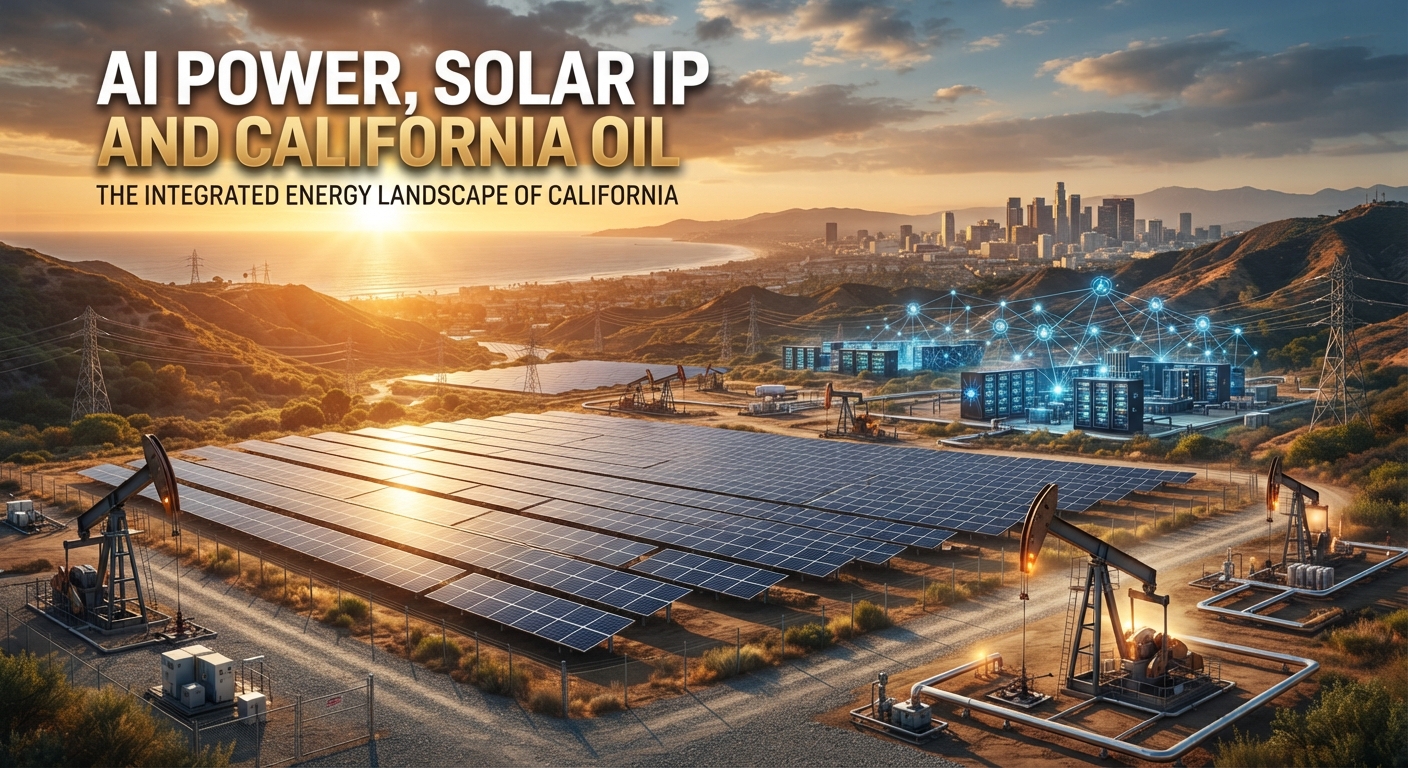
The energy market is developing a new hierarchy of importance: dependable power for artificial intelligence, domestic solar capacity insulated from fragile supply chains, and barrels that can reach market efficiently. Bloom Energy Corp. (NYSE: BE), First Solar, Inc. (NASDAQ: FSLR), T1 Energy Inc. (NYSE: TE) and Sable Offshore Corp. (NYSE: SOC) sit at four different but increasingly relevant intersections of that trend. This is not a group bound by a tidy industry classification. It is a collection of companies serving the physical economy beneath the headlines, electricity for data centers, solar modules for utilities, manufacturing capacity for America’s energy transition, and oil production for a still-hydrocarbon-dependent nation. Wall Street may admire software margins, but it tends to get serious when the power goes out.
Bloom Energy: AI Needs Electrons, Not Just Algorithms
Bloom Energy (NYSE: BE) has emerged as a high-profile beneficiary of the AI infrastructure buildout because data centers need massive, reliable power long before they can monetize a single chatbot query or train another large language model. Oracle Corp. (NYSE: ORCL) reaffirmed a roughly 2.4-gigawatt fuel-cell commitment with Bloom tied to Project Jupiter, an AI data-center campus in Doña Ana County, New Mexico. Bloom shares moved higher after Oracle’s reaffirmation, despite concerns about a reported force-majeure notice associated with a delayed natural-gas pipeline. In investor terms, the message was encouraging: the demand signal appears intact even if the construction schedule has acquired a touch more drama. Oracle and Bloom have a broader agreement covering as much as 2.8 GW of Bloom fuel-cell capacity. Bloom has said the arrangement began with an initial 1.2 GW deployment and is designed to accelerate Oracle Cloud Infrastructure’s ability to bring AI-focused data-center capacity online. The appeal is straightforward. Conventional utility interconnections can take years in congested regions, while data-center operators face pressing demand for computing capacity today. Bloom’s on-site solid-oxide fuel-cell systems offer a potential path to dedicated power without relying entirely on an already crowded grid. For BE, the bull case rests on the idea that “time to power” becomes a competitive asset. If hyperscalers, cloud providers and colocation operators continue to prioritize speed, reliability and scalable on-site generation, Bloom could occupy an unusually attractive position in the AI capital-expenditure cycle. The risk is equally clear: large projects can slip, fuel infrastructure matters, customer concentration can amplify volatility, and a multigigawatt contract is only as valuable as the pace at which it becomes deployed revenue. Still, Oracle’s continued commitment keeps Bloom’s central narrative very much alive.
First Solar: U.S. Manufacturing Meets an IP Moat
First Solar (NASDAQ: FSLR) offers a more established version of the domestic-solar thesis. The company is expanding U.S. manufacturing capacity while taking a more assertive stance on intellectual-property enforcement related to TOPCon solar technology. First Solar said it would withdraw its Section 337 complaint before the U.S. International Trade Commission and concentrate on current and anticipated U.S. District Court litigation concerning alleged infringement of its TOPCon patent portfolio. The company cited changes following Section 232 action involving polysilicon and related materials, arguing that the trade backdrop has improved its ability to focus on court-based enforcement.The company said its existing and potential actions involve affiliates of Canadian Solar Inc. (NASDAQ: CSIQ), Jinko Solar, Trina Solar and T1 Energy Inc. (NYSE: TE). That makes the issue more than a legal footnote: it places ownership and use of next-generation solar-cell technology closer to the center of competitive strategy in the U.S. market. First Solar acquired its TOPCon intellectual-property portfolio through its 2013 acquisition of TetraSun. The relevant patents cover important markets and, depending on the jurisdiction and patent, may extend to 2030 or later. Meanwhile, First Solar is building scale. It operates five U.S. manufacturing facilities across Alabama, Louisiana and Ohio, with a sixth facility under construction in South Carolina. The company expects initial operations at the South Carolina plant in the second half of 2026 and forecasts approximately 17 GW of U.S. module-manufacturing capacity by 2027.
For FSLR investors, the opportunity lies in several reinforcing themes:
- Utility-scale solar deployment continues to require dependable module supply.
- U.S. energy policy increasingly values domestic production, traceable supply chains and manufacturing investment.
- First Solar’s thin-film technology differentiates it from the crystalline-silicon module market.
- Large domestic capacity can improve customer relevance, policy alignment and supply certainty.
- Patent enforcement could protect proprietary technology, create licensing leverage or discourage competitors from using disputed processes.
No lawsuit is a revenue line until a court says it is. Yet First Solar’s combination of technology, domestic manufacturing and trade-policy alignment gives it an unusually tangible solar-investment narrative.
T1 Energy: A Solar Challenger With U.S. Manufacturing Ambition
T1 Energy (NYSE: TE) adds a higher-risk, higher-upside dimension to the U.S. solar manufacturing conversation. The company is pursuing an integrated American solar-manufacturing strategy that combines module production with plans to build U.S. solar-cell capacity. That positioning matters because module assembly is only one part of the solar supply chain. Domestic cell production, the technology-intensive component that converts sunlight into electricity, has become strategically important as the United States seeks to reduce dependence on overseas manufacturing and build more resilient clean-energy supply chains. T1 Energy’s role in First Solar’s stated TOPCon enforcement strategy introduces a notable investor consideration. The company is among the solar-industry participants named by First Solar in connection with existing or contemplated patent litigation. The outcome of any legal proceedings remains uncertain, and investors should treat allegations as allegations rather than conclusions. Still, the situation places TE squarely in a consequential debate over access to and ownership of high-efficiency solar-cell technology.
For investors who can tolerate volatility, the upside case for TE centers on execution:
- Successfully expanding U.S. module and cell-manufacturing operations.
- Capturing customer demand for domestically produced solar equipment.
- Benefiting from favorable incentives and demand for resilient U.S. supply chains.
- Improving manufacturing utilization, unit economics and access to project customers.
- Navigating IP disputes in a manner that preserves operational momentum.
The public market is treating T1 Energy as an early-stage manufacturing story rather than a mature earnings compounder. As of the latest available market data, TE traded at $3.815 per share, had a market capitalization of about $1.06 billion, and had a negative trailing earnings per share figure, an appropriate reminder that manufacturing ambitions require cash, operational discipline and patience before they become durable profit engines. That does not eliminate the investment appeal. It merely clarifies its category: TE is a more speculative solar-infrastructure equity, where manufacturing milestones and financing discipline may matter as much as industry demand.
Sable Offshore: California Oil Gets a Cash-Flow Narrative
Sable Offshore (NYSE: SOC) occupies the hydrocarbon side of the U.S. energy-infrastructure equation. The company reported $137.1 million in second-quarter 2026 revenue and $9.4 million in positive operating cash flow, representing its first full quarter of revenue and positive operating cash flow since inception. The more striking detail was the production trajectory. Sable averaged approximately 21,000 net barrels of oil per day during the second quarter but exited the period at about 40,000 net barrels per day, reflecting a 149% increase from the quarter’s opening day. The company also reported preliminary July sales of approximately 38,000 gross barrels per day and said August sales averaged about 42,000 gross barrels per day through August 9. During July, an average of 47 wells were online across the Harmony and Heritage platforms, with all 77 producing wells at those two platforms expected to return during the third quarter. Sable reduced the midpoint of its second-half 2026 capital-expenditure guidance by 41% to $85 million, emphasizing cash-flow generation and debt amortization. It expects to average 42,500 net barrels of oil equivalent per day in 2027, with oil projected to account for approximately all production. The bullish argument for SOC is that higher well availability, increased sales volumes and potentially improved marketing logistics can turn a complicated offshore restart into a more visible production-and-cash-flow growth story. The caution is just as important. Sable faces operational constraints, California regulatory complexity, near-term throughput limitations, crude-price exposure and a costly senior secured term loan with a 15% annual coupon. The company also uses hedges that provide some downside protection but limit part of its upside if oil prices rise.
Energy Bottlenecks
| Company | Ticker | Core theme | Potential upside driver | Primary investor concern |
|---|---|---|---|---|
| Bloom Energy | NYSE: BE | On-site fuel-cell power for AI data centers | Oracle and other customers accelerating demand for dedicated, rapid-deployment power | Project timing, fuel availability and customer concentration |
| First Solar | NASDAQ: FSLR | U.S. thin-film solar manufacturing and IP protection | Domestic capacity expansion, policy alignment and potential patent leverage | Litigation uncertainty, competitive pricing and policy changes |
| T1 Energy | NYSE: TE | Emerging U.S. solar module and cell manufacturing | Execution of domestic manufacturing strategy and customer demand for U.S.-made equipment | Financing needs, negative earnings, scale-up risk and IP litigation exposure |
| Sable Offshore | NYSE: SOC | Offshore California oil-production ramp | Higher production, greater sales volumes, lower unit costs and debt reduction | Debt burden, logistics, regulation and oil-price exposure |
| Oracle | NYSE: ORCL | AI cloud and data-center expansion | Scaling AI infrastructure and solving the power bottleneck | Heavy capital spending and energy-project execution |
The Broad Investment Thesis
The most compelling element of this group is the way their stories intersect with structural U.S. priorities. Bloom Energy (BE) addresses the immediate need for data-center power as artificial intelligence drives unprecedented electricity demand. First Solar (FSLR) supplies scale, technology and domestic manufacturing depth in a solar market where energy security now carries commercial weight. T1 Energy (TE) represents the riskier, earlier-stage bid to build more of that manufacturing supply chain in the United States. Sable Offshore (SOC) provides a reminder that oil production and energy security remain part of the national economic equation, even as solar capacity and AI power demand gather momentum. The energy transition, in other words, is not a clean substitution of one fuel for another. It is a large and expensive expansion of the entire energy system, more generation, more manufacturing, more transmission, more fuel logistics and more infrastructure capable of surviving real-world deadlines. That expansion can create opportunities across industries that are usually evaluated separately. Investors looking at BE, FSLR, TE and SOC are not choosing between “old energy” and “new energy” so much as choosing among different approaches to America’s growing need for reliable power and secure supply.
Catalysts to Monitor
- Bloom Energy (NYSE: BE): Project Jupiter construction milestones, resolution of natural-gas pipeline issues, Oracle deployment schedules, new fuel-cell contracts and gross-margin progress.
- Oracle (NYSE: ORCL): AI cloud demand, capital-expenditure trends, data-center commissioning, financing capacity and the pace at which new power becomes operational.
- First Solar (NASDAQ: FSLR): South Carolina factory progress, capacity ramp toward its 2027 target, new bookings, TOPCon patent-case developments and U.S. trade-policy decisions.
- T1 Energy (NYSE: TE): Manufacturing-scale milestones, domestic solar-cell strategy, capital needs, customer contracts, policy developments and any progression in the First Solar-related IP matter.
- Sable Offshore (NYSE: SOC): Platform Hondo’s return, online-well counts, production and sales volumes, realized pricing, debt repayment and solutions to throughput constraints.
Bottom Line
The best energy stories increasingly begin with a hard physical question: Who can deliver dependable power, strategic equipment or marketable energy when the economy needs it? Bloom Energy (NYSE: BE) is aiming to become a critical power-enablement partner for AI infrastructure. First Solar (NASDAQ: FSLR) is pairing domestic manufacturing scale with an increasingly forceful IP strategy. T1 Energy (NYSE: TE) offers investors a more speculative opportunity to participate in the buildout of a U.S.-based solar supply chain. Sable Offshore (NYSE: SOC) is working to translate an offshore California restart into sustained production, cash flow and balance-sheet improvement. The risks are real, the execution burden is high, and the market will not hand out gold stars merely for announcing a factory, fuel-cell order or production target. But companies that solve energy’s practical bottlenecks may find that investors are willing to pay attention, especially when the rest of the economy discovers that artificial intelligence, solar deployment and industrial growth all share one inconvenient dependency: somebody has to keep the lights on.
The Sources
- Bloom Energy Jumps 8% as Oracle Reaffirms 2.4 GW Fuel Cell Deal
- Oracle, BorderPlex and Bloom Energy to Power Project Jupiter With Fuel Cell Technology
- Bloom Energy and Oracle Expand Strategic Partnership to Deploy Up to 2.8 GW for AI Infrastructure
- Oracle and Bloom Energy Collaborate to Deliver Power to Data Centers at the Speed of AI
- Oracle Taps Bloom Energy to Power AI Data Centers
- First Solar Recalibrates TOPCon IP Enforcement Strategy Following Section 232 Action
- Sable Offshore Corp. Reports Second Quarter 2026 Financial and Operational Results
- Bloom Energy Gains Another Meaningful Proof Point With Project Phoenix, RBC Says
- Oracle Jumps, Bloom Energy Soars on AI Data Center Power Deal
- Bloom Energy’s Single Largest Fuel Cell Deployment Is in Trouble
- A Delayed Pipeline Put Bloom Energy’s Role in a $165 Billion AI Project in Question
- T1 Energy Inc. (NYSE: TE) Stock Quote, News and Financial Information
Stay Updated with Vista Partners
Subscribe to receive market insights, investing ideas, and the latest updates directly in your inbox.