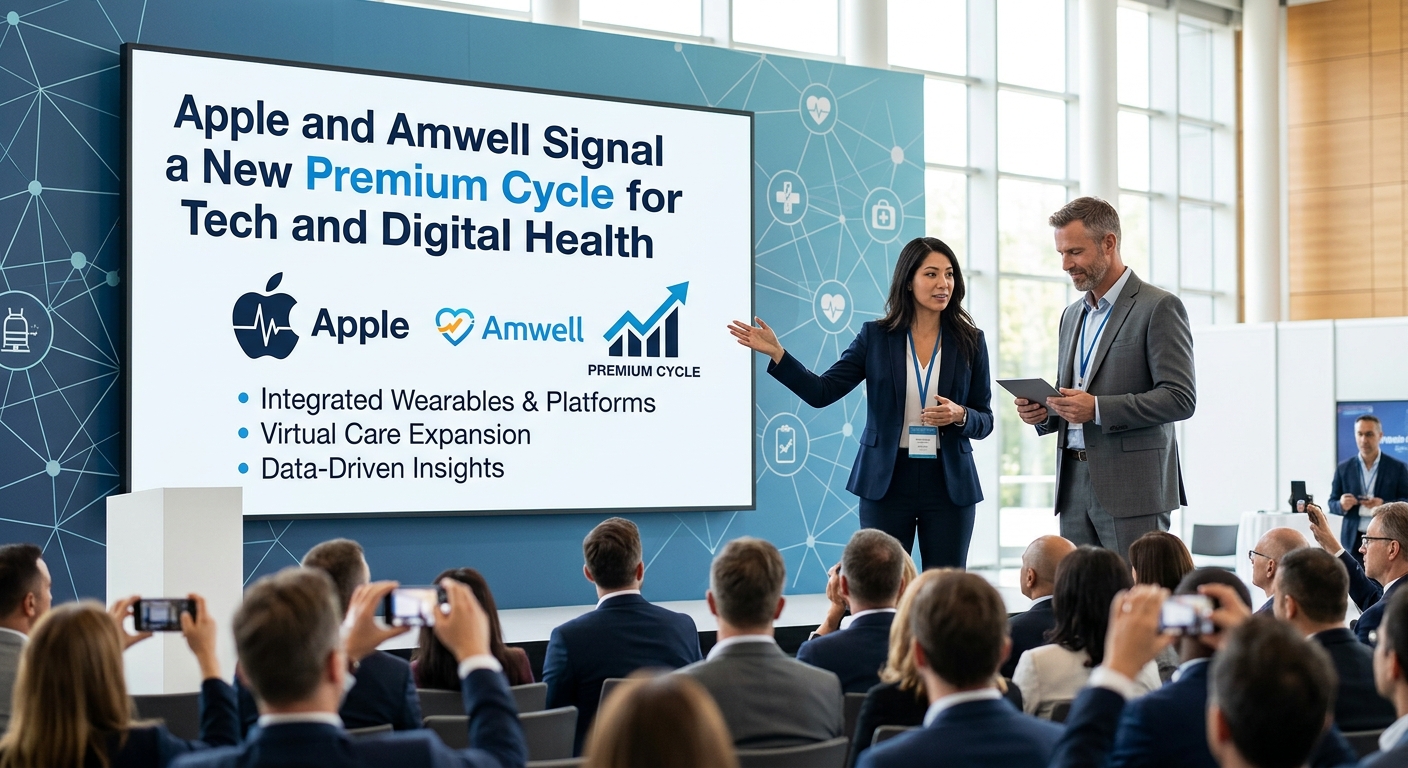
Apple Inc. (NASDAQ: AAPL) is betting that the next smartphone upgrade cycle will fold neatly into consumers’ pockets, while Amwell (NYSE: AMWL) is positioning its virtual-care platform for a potentially consequential role inside the U.S. Department of Veterans Affairs. Together, the developments highlight a broader bullish theme for investors: premium technology, mission-critical software and AI-era infrastructure are still attracting capital, even when the supply chain is charging admission at the door.
Apple Finds a Fresh Reason to Upgrade
Apple introduced the iPhone Duo, its first foldable iPhone, with a starting price of $1,999. The device uses a book-style design, pairing a 5.4-inch outer display with a 7.6-inch internal screen intended for video, gaming, work and multitasking. Preorders are scheduled to begin October 16, with retail availability planned for October 23. The headline number is not merely the price tag, although $1,999 is a figure that suggests Apple has finally decided the smartphone can also qualify as a small appliance. The more important point is that Apple is creating a differentiated, ultra-premium category inside its enormous installed base. The iPhone Duo is powered by Apple’s A20 Pro chip and a new cooling system that the company says enables 35% higher sustained performance than the iPhone 17 Pro. Apple also cites up to 31 hours of video playback on a single charge, with a redesigned camera configuration and software features intended to make the folding form factor useful rather than merely theatrical. For investors, the foldable iPhone represents a potential catalyst in three places:
- Average selling prices: A $1,999 entry point can lift the revenue generated from each premium upgrade, even if early unit volumes remain measured.
- Replacement demand: A materially different form factor gives existing iPhone owners a new reason to consider upgrading beyond camera refinements and incremental processor gains.
- Services and ecosystem engagement: A larger internal screen can make Apple’s software, video, productivity, gaming and communication ecosystem more valuable in daily use.
Apple’s ability to turn new hardware categories into ecosystem extensions has long been one of its most durable strategic advantages. The device itself matters, but so does everything that happens after the box is opened.
The Supply-Chain Squeeze Could Favor Scale
The promising product backdrop arrives amid a less comfortable reality for the electronics sector: a sharp escalation in memory and storage costs tied to the buildout of AI data centers. In the referenced report, Tim Cook characterized the memory-price environment as a “hundred-year flood,” while Tesla Inc. (NASDAQ: TSLA) Chief Executive Elon Musk described the increase as the largest price jump he had seen in anything. This is not an ideal condition for hardware makers. Rising component costs can pressure gross margins, force price increases or make lower-end devices less attractive economically. The industry has seen versions of this movie before, but rarely with AI data centers competing so directly for advanced memory capacity. Yet Apple may be better positioned than many competitors to navigate the turbulence.
- Apple’s scale, supplier relationships and purchasing sophistication can provide more flexibility than smaller device makers possess.
- A premium product lineup gives Apple more room to defend margins through product mix and pricing.
- The iPhone Duo’s high-end positioning may help cushion component inflation, because consumers buying a $1,999 flagship are not typically conducting a forensic audit of the bill of materials.
The central bullish argument is not that memory inflation is benign. It is that cost pressure often separates companies with pricing power from companies that mainly have PowerPoint. Apple’s brand, ecosystem and high-income consumer base could make it one of the more resilient players if the component crunch persists. The same environment may also reinforce demand for advanced semiconductor and memory infrastructure across the AI economy, benefiting the broader supply chain represented by companies such as Microsoft Corp. (NASDAQ: MSFT), Dell Technologies Inc. (NYSE: DELL), Hewlett Packard Enterprise Co. (NYSE: HPE), and other hardware vendors facing both opportunity and procurement pressure.
Amwell Gains a Major Government Signal
While Apple is pursuing the consumer premium cycle, Amwell is receiving a potentially important vote of confidence in enterprise digital health. The U.S. Department of Veterans Affairs has issued Amwell a non-binding Letter of Intent to deploy its virtual-health platform within the VA enterprise and help modernize the agency’s digital health infrastructure. The initiative could support connected care for more than nine million Veteran beneficiaries, according to reports on the announcement. The VA’s evaluation cited several elements of Amwell’s platform, including:
- Scalable video consultation capabilities
- Interoperability with broader care systems
- Cybersecurity compliance
- Support for integrated care delivery
Those factors matter because healthcare technology contracts, especially government-facing ones, are rarely won on a slick user interface alone. Reliability, security, integration and operational scale are the qualities that turn software from a feature into infrastructure. For Amwell investors, the Letter of Intent does not equal booked revenue, a signed contract or a guaranteed deployment. Any final agreement remains subject to negotiation, a definitive contract and federal procurement requirements. That caveat deserves to be stated plainly, preferably before anyone begins pricing celebratory confetti. Still, the strategic signal is meaningful. The VA’s interest suggests that Amwell’s technology has passed a substantial evaluation threshold in one of the country’s most demanding healthcare environments. The company had also previously disclosed a Defense Health Agency intent-to-award milestone, reinforcing the view that its government opportunity may be developing into a more material part of the long-term story.
Digital Health Moves From Experiment to Infrastructure
The Amwell opportunity reflects a more mature chapter for virtual care. The first phase of telehealth was dominated by adoption spikes, reimbursement debates and a parade of video visits that sometimes felt like a doctor’s office had been squeezed into a laptop tab. The next phase is more consequential: embedding virtual-care technology into healthcare infrastructure. For AMWL, a successful VA deployment could strengthen the company’s credentials in several ways:
- It could expand the company’s relevance in public-sector healthcare and large-scale enterprise deployments.
- It could validate Amwell’s technology stack for organizations that prioritize security, system integration and reliability.
- It could create a reference case for additional government, payer and health-system opportunities.
- It may support a more constructive investor view of revenue visibility and operating discipline, themes that have recently been reflected in improved analyst targets.
This is why the VA development has the potential to matter beyond a single contract. Healthcare buyers tend to respect proof, particularly proof delivered under the bright fluorescent lighting of federal procurement.
The Bullish Read-Through for Investors
Apple and Amwell operate in very different markets, but their latest developments share an appealing investment lesson: companies that combine differentiated products with difficult-to-replicate platforms can create opportunity even in an uneven macroeconomic setting.
| Company | Ticker | Potential catalyst | Core investor takeaway |
|---|---|---|---|
| Apple Inc. | NASDAQ: AAPL | iPhone Duo foldable launch at $1,999 | A new premium device category could support higher selling prices, upgrade activity and ecosystem engagement. |
| Amwell | NYSE: AMWL | VA Letter of Intent for digital-health infrastructure | A potential enterprise-wide VA role could validate Amwell’s platform and expand its government-healthcare opportunity. |
| Tesla Inc. | NASDAQ: TSLA | AI-linked component-cost inflation commentary | The memory shortage underscores how deeply AI infrastructure demand is reshaping the electronics supply chain. |
| Microsoft Corp. | NASDAQ: MSFT | Exposure to enterprise computing and AI infrastructure | AI-driven demand is reshaping hardware, cloud and component procurement across the technology sector. |
| Dell Technologies Inc. | NYSE: DELL | Enterprise hardware and AI infrastructure demand | Demand opportunity is significant, though higher memory costs remain a margin and pricing consideration. |
| Hewlett Packard Enterprise Co. | NYSE: HPE | Data-center and enterprise infrastructure activity | AI infrastructure demand creates growth potential but also reinforces supply-chain discipline. |
Apple’s thesis is relatively straightforward: innovate at the high end, monetize a loyal installed base and use the ecosystem to make a premium device feel less like a luxury and more like the obvious next step. Amwell’s thesis is more execution-dependent, but potentially more asymmetric: convert government interest into an actual contract, demonstrate operational success at scale and use that validation to deepen its enterprise-healthcare narrative.
What To Watch Next
The next developments will determine whether these optimistic signals mature into durable investment catalysts. For Apple, the key questions are likely to be early demand for the iPhone Duo, availability constraints, consumer reaction to its $1,999 starting price, and management’s ability to protect margins if memory and storage costs continue rising. Investors should also watch whether the device expands the premium mix without cannibalizing higher-margin existing models. For Amwell, the focus is more direct: whether the VA Letter of Intent progresses to a definitive agreement, what the ultimate scope and economics could look like, and whether implementation milestones emerge. Investors should also monitor the company’s path toward cash-flow breakeven and the degree to which government business improves revenue visibility. The market’s most attractive stories are often built where product ambition meets operational proof. Apple is offering consumers a new kind of iPhone, and Amwell is seeking to become part of a new kind of healthcare backbone. Neither outcome is automatic, but both show why investors still gravitate toward companies building products and platforms that are difficult to ignore, and even harder to replace.
The Sources
- Yahoo Finance Tim Cook’s warning on memory-price pressure and AI-driven component costs
- Yahoo Finance Apple debuts the iPhone Duo foldable at a $1,999 starting price
- Yahoo Finance Amwell receives Department of Veterans Affairs Letter of Intent
- Amwell Investor Relations News releases and official company announcements
- MarketScreener American Well Corporation receives Department of Veterans Affairs Letter of Intent
- Finviz Amwell receives Letter of Intent from the Department of Veterans Affairs
- Stock Titan Amwell VA Letter of Intent and virtual-health platform details
- Yahoo Finance American Well (NYSE: AMWL) fair-value estimate and analyst-target update
Disclosure: This article is for informational and editorial purposes only and does not constitute investment advice, a recommendation, or an offer to buy or sell any security. Investors should conduct independent research and consider their own financial objectives and risk tolerance.
Stay Updated with Vista Partners
Subscribe to receive market insights, investing ideas, and the latest updates directly in your inbox.