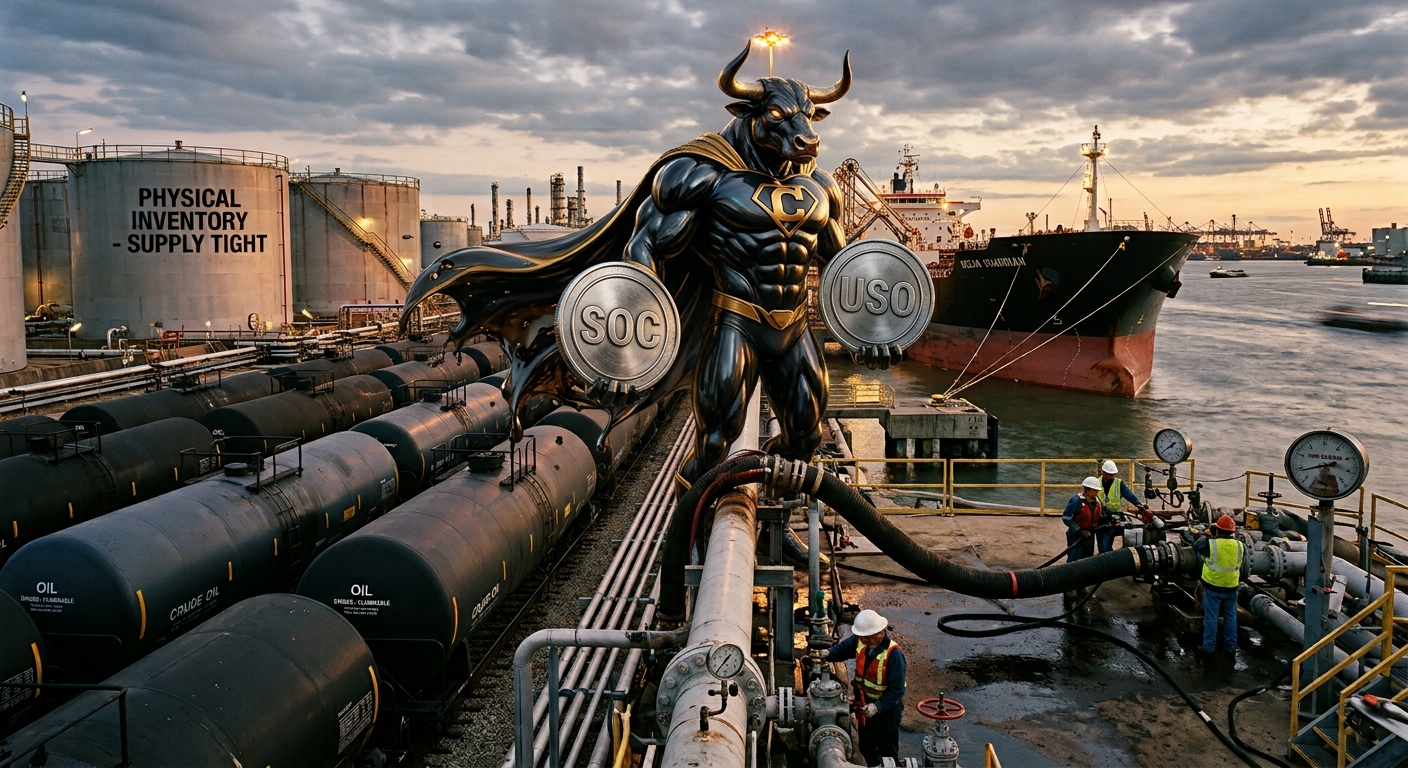
Oil’s latest rally is no longer just a headline trade built on geopolitical anxiety. A tighter physical market, resurgent Chinese buying outside the Persian Gulf, and fresh investment in North American crude logistics are beginning to give the bullish case a sturdier pair of boots. For many, that changes the conversation from “Will crude spike?” to “Which companies can turn a higher-for-longer oil tape into durable cash flow, transport tolls and shareholder returns?” The answer increasingly includes integrated giants such as Exxon Mobil Corp. (NYSE: XOM), infrastructure owner Enbridge Inc. (NYSE: ENB), global producers including Petrobras (NYSE: PBR), and now higher-beta operational turnarounds such as Sable Offshore Corp. (NYSE: SOC).
The Barrel Has Found New Buyers
China’s return to the crude market is reshaping pricing well beyond the Middle East. Chinese imports climbed to 37.9 million metric tons in August, up 6.2% from July, as refiners increased purchases and diversified their supply sources; flows remained lower year over year, but the direction matters in a market where marginal barrels set the mood and frequently the price. That demand recovery is already lifting the value of crude supplies from Africa, Canada and Latin America. Bloomberg reported that Chinese buying, combined with disruptions around the Strait of Hormuz, pushed refiners to look farther afield for replacement barrels. In a commodity business famous for moving molecules through inconvenient geography, a detour is often another word for a premium. Brazil has been one clear beneficiary. The country’s crude production reached a record 4.5 million barrels a day in June, up 19% from a year earlier, while the value of Brazilian oil exports to China more than doubled in the first half to a record $15.1 billion, according to the Brazil-China Business Council. That backdrop supports a constructive view of Petrobras (NYSE: PBR), whose large pre-salt production base offers substantial sensitivity to stronger international crude pricing. It also reinforces the strategic importance of reliable Western Hemisphere barrels for refiners that prefer not to build their entire supply chain around a geopolitical weather forecast.
Geopolitics Adds a Risk Premium
Crude does not need a shortage to rally; sometimes it merely needs the world’s shipping lanes to look less hospitable than usual. The latest reports point to an uncomfortable but market-relevant reality: Iran has signaled its readiness for a more intense conflict and said it would escalate counterstrikes if attacks on its territory and infrastructure continue. The result has been a material geopolitical premium in oil. Brent moved toward $100 a barrel amid attacks on energy infrastructure, tanker-related disruptions and broader Middle East tensions. While price spikes can reverse quickly when diplomacy, inventories or spare capacity enter the chat, the market’s lesson is clear: supply security has become a live economic variable rather than a footnote in an analyst model. For energy equities, that environment tends to favor companies with three attributes:
- Scaled, geographically diverse upstream production.
- Balance sheets able to fund capital programs without treating every oil rally like a lottery ticket.
- Infrastructure positioned to earn fees from greater volume, storage demand and changing trade routes.
The distinction matters. A higher oil price is attractive; a higher oil price paired with dependable assets, low-cost inventory and disciplined capital allocation is where investors tend to find the better-quality story. Note that the United States Oil Fund ETF (USO) closed today at $149.97, +270% on the day and is now up a whopping +116.84% YTD.
Exxon Mobil: Cash Flow With a Tailwind
Exxon Mobil (NYSE: XOM) has become a prominent beneficiary of the stronger oil backdrop. Shares were reported up approximately 40% in 2026 to $164.83, while Brent rose from the low-$60s earlier in the year toward the mid-$90s. Exxon reported $14.5 billion in second-quarter earnings, $23.6 billion of operating cash flow and $17.2 billion of free cash flow. The appeal is not simply that Exxon sells oil when oil is expensive. The company combines upstream exposure with refining, chemicals, trading and a global portfolio that can redirect capital toward higher-return opportunities. Its Permian operations produced more than 1.8 million barrels of oil equivalent per day in the second quarter, giving the company an enormous domestic production platform when U.S. barrels are increasingly valuable to global buyers. Exxon is also pursuing operating improvements rather than relying entirely on macro fortune. The company has said it is using 40 technologies to improve recovery and capital efficiency in the Permian, with an objective of doubling recovery there over time. That is the more durable bull case for XOM: elevated crude prices amplify earnings today, while portfolio quality and operational efficiency seek to preserve returns when the oil market eventually remembers it has moods. Still, investors should not confuse a strong tape with a one-way escalator. One published outlook cited an Energy Information Administration expectation for Brent to fall toward $79 in 2027, underscoring that any $200-per-share aspiration for XOM depends heavily on commodity prices remaining firm. In oil, gravity exists; it merely takes occasional holidays.
Enbridge Buys the Map
If producers benefit from the price of crude, pipeline companies can benefit from the necessity of moving it. Enbridge (NYSE: ENB) has agreed to acquire Tallgrass Energy’s crude transportation business for $2.55 billion in cash, expanding its U.S. liquids network with a 75% interest in the Pony Express Pipeline, a 51% interest in the Powder River Gateway system, 8.4 million barrels of storage capacity across nine terminals and a crude-marketing business. Pony Express connects Rockies supply to the Cushing, Oklahoma hub and carries approximately 460,000 barrels a day of capacity. The deal also includes the PXP2 expansion, a roughly $300 million project expected to lift capacity to about 515,000 barrels per day and enter service in late 2027. For those looking in ENB, the strategic appeal seems to be relatively straightforward:
| Investment feature | Why it matters |
|---|---|
| Expanded Rockies-to-Cushing exposure | Adds infrastructure for U.S. crude that can serve domestic refiners, storage markets and export-oriented trade flows. |
| Storage and marketing assets | Creates optionality when oil markets become dislocated, regional price spreads widen or producers need logistical flexibility. |
| Contracted-style infrastructure economics | Can provide cash-flow resilience compared with owning unhedged barrels outright. |
| Accretive growth potential | Enbridge expects the purchase to add to distributable cash flow per share in the first full year of ownership, though completion remains subject to regulatory approvals. |
In short, Enbridge is making a calculated bet that North American production will remain strategically important for decades. The company appears to be buying not merely a pipeline, but a place at the intersection of changing oil flows. In a market prone to drama, toll booths can be wonderfully unemotional.
Sable’s California Comeback
Sable Offshore (NYSE: SOC) offers a more speculative, operationally driven expression of the oil bull case. The company reported $137.1 million in second-quarter revenue and $9.4 million in positive operating cash flow, its first full quarter of revenue generation and positive operating cash flow since inception. It also increased oil sales from approximately 21,000 net barrels per day on average during the quarter to roughly 40,000 net barrels per day at quarter-end. Operational momentum continued into the third quarter. Sable estimated July sales of approximately 38,000 gross barrels a day and August sales averaging roughly 42,000 gross barrels a day through August 9. The company expects all 77 production wells on its Harmony and Heritage platforms to be online during the third quarter, with Platform Hondo expected to restart in “September“. The upside argument rests on several moving pieces:
- Sable forecasts 2027 average gross sales of about 50,000 barrels of oil equivalent per day, with oil representing roughly 100% of the mix.
- It reduced the midpoint of second-half 2026 capital spending guidance by 41% to $85 million, seeking to protect cash flow and accelerate debt reduction.
- The company has identified potential improvements in marketing optionality, including waterborne sales solutions and possible additional California pipeline access.
- Its hedging program includes Brent collars with a $65-per-barrel floor, helping establish downside protection while limiting some upside above the call prices.
The caveat is equally important. SOC carries substantial execution, balance-sheet, regulatory and midstream risks. The company’s term loan has a 15% annual coupon, quarterly amortization requirements and an excess-cash-flow sweep, while California throughput constraints and quality-related deductions have pressured realized economics. This is not a sleepy dividend stock wearing a hard hat; it is an oil-restart story with both torque and sharp edges.
A Takeaway
The bullish energy case is becoming more balanced than a simple wager on a Middle East escalation. China’s renewed crude buying is strengthening demand for non-Middle Eastern barrels; Brazil is demonstrating how supply diversification can translate into export growth; North American infrastructure is attracting strategic capital; and high-quality operators are converting stronger prices into free cash flow. For a diversified energy investor, the opportunity set is becoming more defined:
- Exxon Mobil (NYSE: XOM) offers large-cap scale, diversified operations, formidable cash generation and direct exposure to stronger oil prices.
- Enbridge (NYSE: ENB) provides a midstream, infrastructure-centered route to rising volumes and shifting North American trade patterns.
- Petrobras (NYSE: PBR) represents a major offshore production story with leverage to robust Brent pricing and Brazilian export demand.
- Sable Offshore (NYSE: SOC) provides higher-risk, higher-potential exposure to a California production ramp and improving oil-market fundamentals.
- Chevron Corp. (NYSE: CVX) and BP p.l.c. (NYSE: BP) remain liquid integrated-major alternatives for investors seeking broad exposure to a firmer crude-price environment.
The central risk remains obvious: oil prices are volatile, geopolitics can de-escalate, demand forecasts can weaken and operational stories can disappoint. But the more constructive reading of today’s market is that the barrel is gaining support from physical demand, trade-route changes and corporate investment, not merely from nervous traders staring at a map of the Persian Gulf. That may not make oil fashionable at every dinner party. It does, however, make the sector increasingly difficult for investors to ignore.
The Sources
- Bloomberg: Latest Oil Market News and Analysis for Sept. 9
- Bloomberg: China Oil Demand Revival Spurs Price Spikes From Congo to Brazil
- Bloomberg: Iran Ready for More Intense War and Won’t Relent, Official Says
- Bloomberg: Canada’s Enbridge Said to Near Deal for Major U.S. Oil Pipeline
- Yahoo Finance: Sable Offshore Corp. Reports Second Quarter 2026 Financial and Operational Results
- Yahoo Finance: ExxonMobil Is Up 40% in 2026 Can Rising Oil Prices and Strong Earnings Boost XOM Stock to $200?
- Reuters: Enbridge to Buy Tallgrass Crude Oil Business for $2.55 Billion
- Bloomberg: China’s Crude Imports Strengthen as Refiners Diversify Supply
- Yahoo Finance: Oil Prices Are Once Again on the Brink of $100
- Yahoo Finance: Brazil Oil Exports Surge as China Seeks Alternatives
- Yahoo Finance: ExxonMobil Touts Permian Synergies, Guyana Cash Flow
This article is for informational and editorial purposes only and does not constitute investment advice, a recommendation, or an offer to buy or sell any security. Investors should conduct independent research and consider their own financial objectives and risk tolerance.
Stay Updated with Vista Partners
Subscribe to receive market insights, investing ideas, and the latest updates directly in your inbox.