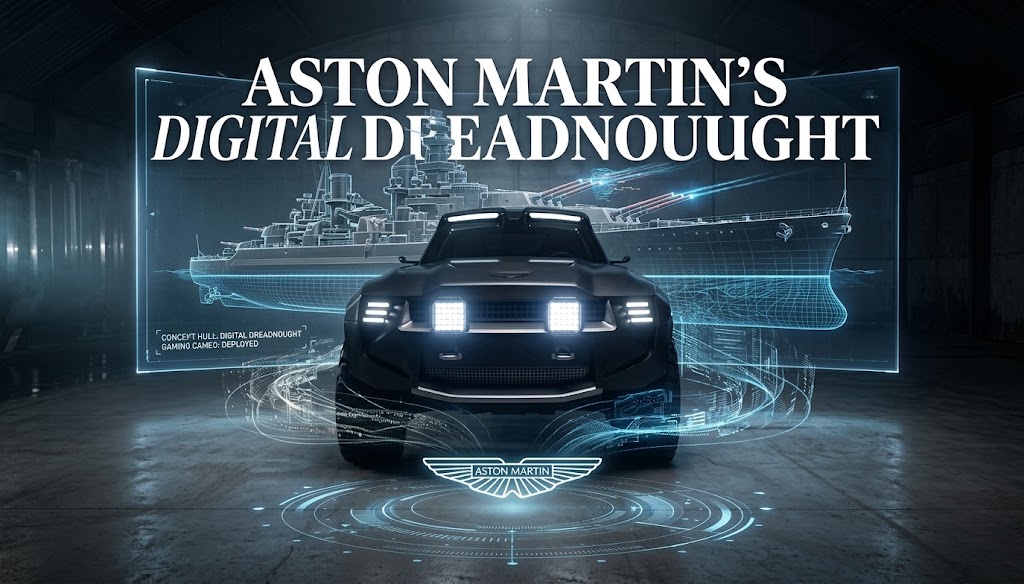
Aston Martin Lagonda Global Holdings plc (LON: AML, AMGDF ) has introduced the Dreadnought, a digital-only, combat-ready V12 supertruck designed for Call of Duty: Modern Warfare 4. It is not a new production model—and that restraint may be precisely what makes the move strategically sharp: Aston Martin gets an outsized cultural megaphone without first needing to build a factory, certify a 40-inch-tire military SUV, or explain it to the neighborhood association,
A Supertruck Built for Screens First
The Dreadnought is a deliberately extravagant virtual vehicle developed with Call of Duty publisher Activision, owned by Microsoft Corporation (NASDAQ: MSFT), and game developer Infinity Ward. It will appear in Modern Warfare 4, including its DMZ and Warzone environments, when the title launches globally on October 23, 2026. The design is Aston Martin turned up several notches past sensible: a high-performance all-wheel-drive tactical SUV with armor-inspired details, towering off-road tires, advanced digital-command interfaces, herringbone carbon fiber, Oxford Tan leather, and a V12 soundtrack. In short, it is less “school run” and more “school run, assuming the school is under siege.” Top Gear’s presentation makes the central point clear: this is a full-scale physical model of a vehicle conceived for the digital world, not a confirmed series-production program. The company has built a spectacular branding artifact, then sent it directly to a global interactive audience rather than an expensive dealership forecourt.
The Real Product Is Brand Relevance
For Aston Martin, the most compelling investment narrative is not whether the Dreadnought’s massive exhaust pipes ever reach public roads. It is whether the brand can convert digital familiarity into enduring luxury relevance among future high-net-worth buyers. That is the strategic wager. Aston Martin’s most valuable assets are design language, heritage, scarcity and emotional pull. The Dreadnought lets the marque translate those attributes into a setting where younger consumers encounter brands through participation rather than advertising. Gamers do not merely see the vehicle; they seek it, drive it and use it as a premium in-game asset. Aston Martin’s stated rationale is to place its high-performance luxury DNA into an immersive digital experience. The company has chosen spectacle over subtlety, but in a media environment crowded with conventional automotive campaigns, subtlety often receives the same attention as a speed bump at a racetrack.
A Modern Luxury Funnel
The collaboration offers a useful blueprint for luxury marketing in the age of gaming, creator media and digital communities:
- Reach without discounting: Aston Martin can introduce itself to a broad audience without compromising its real-world positioning through mass-market price promotions.
- A living design showcase: The Dreadnought draws visual references from celebrated Aston Martin creations, including the Victor, Valour, Vulcan and Valkyrie, helping reinforce the continuity of the brand’s performance design vocabulary.
- Experiential engagement: The vehicle is not merely a logo pasted onto a game asset. It is integrated into gameplay as a capable, high-value machine across flagship modes.
- Physical-to-digital theater: A full-scale Dreadnought model was displayed at Fanatics Fest in New York, creating social-media-ready spectacle while retaining the lower industrial risk of a digital-first project.
That combination matters. Luxury brands increasingly compete not only for wallet share, but also for mental shelf space. Aston Martin is making a bid to become part of the cultural memory of gamers who may eventually have the means to buy a DBX, a Vanquish, a Valhalla—or commission something with considerably more ground clearance than their accountant recommends.
Why It Is Bullish for Aston Martin
The Dreadnought fits a broader premiumization logic: build desire, protect exclusivity, and use limited-run or halo-driven projects to elevate the broader range. Earlier in 2026, Aston Martin reported first-quarter revenue of £270.4 million, up 16% year over year, while gross margin improved to 34.7% from 27.9%; higher average selling prices and deliveries of premium Specials, including 102 Valhalla units, were cited as contributors. Those figures reinforce why a digitally native halo project can be relevant to shareholders. The objective is not to sell virtual armored SUVs one unit at a time; it is to support a higher-value perception of the entire Aston Martin ecosystem. When a brand can maintain pricing power and expand margins, a well-executed cultural partnership becomes more than marketing garnish—it becomes part of the commercial flywheel. The Dreadnought also gives Aston Martin a way to test audience response to unusually aggressive design themes without taking on the costs and regulatory complexity of producing a niche vehicle. If demand proves intense, the company retains optionality: a one-off commission, a limited-edition derivative, design cues for future vehicles, or another digital collaboration. Optionality has a habit of looking obvious only after it becomes expensive.
Microsoft Gains More Than a Vehicle Skin
For Microsoft (NASDAQ: MSFT), the partnership underscores the commercial reach of the Call of Duty franchise. Securing a bespoke Aston Martin vehicle—not simply a branded decal—signals that gaming platforms can serve as premium cultural venues for global luxury companies. The October release across Xbox Series X|S, PlayStation 5, PC platforms, and Nintendo Switch 2 gives the collaboration a broad distribution footprint. That makes the Dreadnought an example of how major game launches can increasingly operate as marketing ecosystems, blending entertainment, automotive design, lifestyle branding and collectible digital experiences.
A Takeaway
Aston Martin’s Dreadnought is not a near-term volume catalyst, nor should investors treat it as one. It is a brand-equity play with unusually efficient economics: a headline-grabbing concept, a major global entertainment partner, immersive audience engagement and no immediate requirement to manufacture a production vehicle that would make even a proper off-roader look demure. For investors watching Aston Martin (LON: AML), the essential question is whether the company can keep translating this kind of cultural heat into improved mix, pricing and margins across its real vehicle portfolio. The early 2026 margin and revenue progress suggests that premiumization is already more than a mood board. The Dreadnought may live in pixels, but the strategy behind it is tangible: make the Aston Martin name feel aspirational to the next generation before that generation starts shopping for its first seven-figure garage.
The Sources
- Top Gear — New Aston Martin Dreadnought: Combat-Ready V12 Supertruck!
- Aston Martin Media — Aston Martin Dreadnought: Built to Deliver Digital Domination in Call of Duty: Modern Warfare 4
- Aston Martin — Activision Blizzard Partnership
- Blizzard News — Aston Martin Meets Modern Warfare
- IGN — Call of Duty: Modern Warfare 4 Has a Bespoke Tactical SUV Designed by Aston Martin
- IGN — Call of Duty: Modern Warfare 4 Official Aston Martin Dreadnought Reveal Trailer
Stay Updated with Vista Partners
Subscribe to receive market insights, investing ideas, and the latest updates directly in your inbox.