Skip to content Skip to sidebar Skip to footer

April 22, 2026 – Indexes Climb To Records as Bad Scenarios Take the Afternoon Off -( $AVGO $EPRX $FLYYQ $INTG $MTWO $NVDA $SOAR $TSLA $WMT Rise!)

U.S. equities staged a broad-based rebound on Wednesday, April 22, 2026, with major indexes climbing as investors responded to easing geopolitical tensions, resilient earnings, and leadership from large-cap technology.

Index and asset snapshot

U.S. stocks traded firmly higher through the session, with strength across large- and small-cap benchmarks.

  • Dow Jones Industrial Average: up roughly 340 points (about 0.69%).
  • S&P 500: higher by about 1.05%.
  • Nasdaq Composite: up roughly 1.64%, again outpacing the broader market.
  • Russell 2000: up about 0.7%, signaling participation beyond megacaps.
  • Crude oil: near 92.48 dollars per barrel, keeping energy costs in focus.
  • 10‑year Treasury yield: around 4.29%, suggesting a steady rates backdrop despite inflation concerns.

Macro and geopolitical backdrop

The tone across risk assets improved as markets interpreted developments in the Middle East as a step away from worst‑case escalation, at least in the near term. Earlier in the week, equity weakness and higher oil had reflected anxiety around U.S.–Iran tensions and risks to shipping lanes, but today’s price action indicated relief as traders reassessed tail‑risk scenarios.

From a macro perspective, the IMF’s April 2026 World Economic Outlook continues to frame the environment: global growth is projected to slow to about 3.1 percent in 2026, with headline inflation expected to edge up this year before resuming a gradual decline in 2027. The report highlights that emerging markets are particularly exposed to energy price volatility and currency swings, amplifying the importance of today’s moves in crude and geopolitical risk premia.

Sector performance and leadership

Technology once again led the advance, with investors rotating back into growth themes tied to artificial intelligence, cloud, and software after recent pullbacks. The Nasdaq’s outperformance and strength across large-cap tech suggest that the secular innovation narrative remains intact, even as macro risks and higher yields persist.

Participation was not limited to tech: financials, industrials, and consumer discretionary also traded higher, a pattern typically associated with healthier market internals. That breadth aligns with recent commentary that the prior March drawdown has been largely retraced, led by transports and cyclicals as investors price in continued, though slower, economic growth.

Rates, inflation, and oil

Despite the equity rally, elevated crude prices around the 90s per barrel kept inflation worries alive, particularly for transportation, logistics, and consumer-facing businesses. Higher fuel costs threaten real spending power and margins, and if sustained could re‑ignite concerns about second‑round inflation effects just as policymakers try to pivot toward a more neutral stance.

The 10‑year Treasury yield hovering near 4.29 percent underscores that the bond market has not fully embraced a disinflationary glide path, but today’s relatively contained move in yields hinted that investors still see a path where central banks avoid dramatically tighter policy from here. That balance—firm but not surging yields alongside rising equities—helped support risk sentiment across both growth and cyclical pockets.

Looking ahead

Into the back half of the week, the tape suggests investors are pivoting from headline‑driven trading toward earnings quality and forward guidance as primary catalysts. Key watchpoints remain: any renewed escalation in global conflicts, the trajectory of oil toward or through the 100‑dollar level, upcoming inflation and activity prints, and fresh signals from central bankers on how firmly they view inflation as contained.

For now, the market is leaning cautiously optimistic: risk assets are pricing out some tail risks and rewarding companies executing through volatility, while still demanding a premium for energy-linked uncertainty and policy missteps.

VP Watchlist Updates

Below is an update‑style snapshot on the VP Watchlist names for the week, focused on recent catalysts, positioning, and narrative rather than precise price moves.

Spirit Aviation Holdings (FLYYQ, $1.50, +455.56%)

Spirit Aviation Holdings has seen its share price rocket by +400%On Wednesday amid speculation of imminent federal support. According to a Wall Street Journal report, the Trump administration is reportedly close to a rescue arrangement for the cash-strapped discount airline. Under the framework under discussion, the U.S. government would extend as much as 500 million dollars in financing to Spirit, receiving warrants that could be exercised for an ownership stake in the company.

Broadcom (AVGO, $422.65, +5.09%)

Broadcom’s latest AI alliance with Google parent Alphabet Inc. (GOOGL, GOOG) and Anthropic is less a routine chip deal and more a declaration that the quiet power behind the cloud plans to stay loud for the next decade. The three-way pact locks in custom AI silicon and multi‑gigawatt compute capacity that could reshape who really controls the tollbooths on the generative AI superhighway.

Eupraxia Pharmaceuticals (EPRX, $7.06, +.57%)

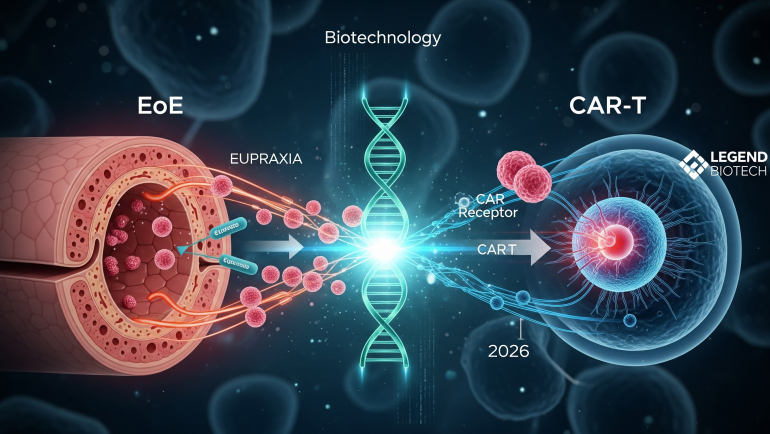
Eupraxia Pharmaceuticals Inc. (EPRX), a clinical-stage biotechnology company leveraging its proprietary Diffusphere™ technology designed to optimize local, controlled drug delivery for applications with significant unmet need, today announced 36-week tissue health and symptom data from patients in the highest dose cohort from its ongoing Phase 1b/2a part of the RESOLVE trial evaluating EP-104GI for the treatment of eosinophilic esophagitis (“EoE”). Dr. James A. Helliwell, Chief Executive Officer of Eupraxia stated, “We are very pleased with the robust and sustained response in both tissue health and symptom data in the highest dose cohort at 36 weeks. This data is consistent with the compelling results we observed at earlier timepoints at this dose level, highlighting the potential to achieve both strong and durable responses after a single administration of EP-104GI. We are also reassured by the excellent safety outcomes across all doses in the trial as we continue to observe no indication of drug related SAEs or spikes in glucose or cortisol. We look forward to the results of the placebo-controlled Phase 2b portion of the study where the same dose is being further evaluated”.

Eupraxia recently co-hosted a Tribe Public www.TribePublic.com, CEO Presentation & Q&A Webinar event, Wednesday, April 1 titled “Turning EOE Into a Once-a-Year Appointment.” The event featured James A. Helliwell, M.D., Co‑founder and CEO of Eupraxia Pharmaceuticals (NASDAQ: EPRX), who discusses the company’s precision drug‑delivery platform, its approach to Eosinophilic Esophagitis (EoE), and broader pipeline priorities, followed by a focused 5–10 minute Q&A. You may watch it now at this Youtube link.

Eupraxia announced (March 17) positive symptom data from patients in the two highest dose cohorts from its ongoing Phase 1b/2a part of the RESOLVE trial evaluating EP-104GI for the treatment of eosinophilic esophagitis (“EoE”). “We are very pleased to see such a meaningful symptom response at 24 weeks in the highest dose of the Phase 1b/2a portion of the RESOLVE study,” said Dr. James A. Helliwell, Chief Executive Officer of Eupraxia. “We believe this type of response based on a single administration procedure would represent a compellingly different option for EoE patients. Importantly, the response that we are observing across cohorts 4-9 has increased as patients progress through the study through to week 24. We believe this demonstrates the importance of stable, continuous long-term local steroids in tamping down signs of inflammation quickly and acting on fibrosis in the longer term. Also, as previously reported, we continue to be encouraged by the safety profile that we have observed with EP-104GI. Currently, with 31 patients dosed in the Phase 1b/2a study, and over 220 months of follow up, there have been no reported serious adverse events.”

Modular Medical (MODD, $4.925)

  • Modular Medical, Inc. (NASDAQ:MODD), a leader in innovative, patient-centric insulin delivery, today announced the pricing of a registered direct offering consisting of 750,000 shares of the Company’s common stock at an offering price of $4.50 per share. The gross proceeds to the Company from the Offering are estimated to be approximately $3.4 million before deducting placement agent fees and other offering expenses. The Offering is expected to close on or about April 21, 2026, subject to the satisfaction of customary closing conditions.
  • Modular Medical’s latest regulatory milestone upgrades the narrative: the company has now secured FDA 510(k) clearance for its Pivot tubeless insulin patch pump, moving from “launch‑ready” to “launch‑approved” in the heart of the fast‑growing diabesity market. The FDA has cleared Modular Medical’s Pivot patch pump as a tubeless, removable insulin delivery system, formally validating the device’s design and performance for commercial use in U.S. adults living with diabetes. The clearance converts what had been a Q1 2026 launch “subject to FDA response” into a tangible commercial pathway, giving the company permission to sell into an insulin pump market that has been estimated at roughly 8 billion dollars globally. Pivot is engineered as a simplified, two‑part patch pump with a 3‑milliliter removable reservoir, no need for battery recharging, and the ability to bolus without a dedicated controller, aiming squarely at patients who have stayed on multiple daily injections because traditional pumps felt too complex, cumbersome, or costly. By clearing Pivot, the FDA is effectively endorsing Modular Medical’s attempt to make advanced insulin delivery feel less like adopting a gadget and more like upgrading a daily habit.

The InterGroup Corporation (INTG, $34.67, +.23%)

  • InterGroup Corporation delivered (Feb. 17) a notably stronger quarter, highlighted by a 20% jump in total revenue to $17.3 million and a 27% surge in hotel revenue as renovated rooms returned to service and travel demand improved. The company swung from a prior-year net loss to $1.0 million in net income, with operating income more than doubling to $2.0 million, underscoring better cost control and improved operating efficiency. Management further enhanced liquidity and sharpened strategic focus by selling a non-core 12‑unit Los Angeles multifamily property, generating a meaningful gain and additional working capital while maintaining stable performance across its real estate portfolio.

Volato Group, Inc. (SOAR, +1.96%) & M2i Global, Inc. (MTWO, +2.46%)

NVIDIA (NVDA, $202.50, +1.31%) & Nokia (NOK, $9.86)

  • On April 13, Vistance Networks (NASDAQ: VISN, $19.11, +.10%), a global provider of intelligent network solutions, today shared that RUCKUS® Networks and Nokia announced early access availability to a combined solution, allowing customers to accelerate adoption of their integrated Wi-Fi 7 and Fiber Optical Lan Solution.
  • In an AI market obsessed with GPUs and stardust, Nokia (NOK) is quietly reminding investors that none of this magic moves without serious plumbing. While Nvidia (NVDA) prepares to headline its GTC 2026 “Woodstock of AI” showcase, the chip giant has already written a very real check to Nokia, committing a $1 billion investment to help rewire the world’s networks for 5G‑Advanced, 6G, and AI‑native workloads. The message is simple enough: GPUs may be the new rock stars, but networking is the stadium.
  • Nvidia delivered strong fourth-quarter results recently, posting revenue of $68.1 billion, well above analyst expectations. Looking ahead, the company projects $7.8 billion in revenue for the first quarter of 2026, reflecting continued robust demand for its AI chips even amid broader market headwinds.
  • NVIDIA and Nebius Group N.V. (NASDAQ: NBIS) (March 11) announced a strategic partnership to develop and deploy the next generation of hyperscale cloud for the AI market, from AI natives to enterprises. NVIDIA will invest $2 billion in Nebius.

McDonald’s (MCD, $300.07)

Opendoor (OPEN, $5.43)

  • April 16, Opendoor Technologies Inc. (OPEN) announced that it will report first quarter 2026 financial results for the period ended March 31, 2026 following the close of the market on Thursday, May 72026. On May 7, 2026, management will host our Financial Open House video livestream at 2:00 p.m. PT (5:00 p.m. ET) to discuss the company’s business and financial results. We invite shareholders to participate directly through Robinhood’s Say Technologies platform by visiting https://app.saytechnologies.com/opendoor-2026-q1
  • Opendoor Technologies, a leading e-commerce platform for residential real estate transactions, reported financial results for its fourth quarter and year ended December 31, 2025. They highlighted the following: October 2025 acquisition cohort tracking as best-performing October in Company history; acquisitions increased 46% quarter-over-quarter while inventory days in possession reduced 23%.
  • Opendoor continues to navigate a challenging housing backdrop characterized by still‑elevated mortgage rates and tight existing‑home inventories, which weigh on transaction volumes even as affordability slowly improves. The company’s focus on disciplined acquisition spreads, inventory turns, and ancillary services remains central to the investment debate as markets handicap the pace and magnitude of any 2026 housing recovery.

Tesla (TSLA, $387.51, +.28% and over $00 in the aftermarket)

Reportedly, Tesla unexpectedly swung to positive free cash flow in the first quarter, a neat trick for a company many on Wall Street still expected to be busily torching cash. The electric-vehicle maker has yet to fully open the spending spigots on artificial intelligence and added manufacturing capacity, suggesting the real splurge is still to come.

Serina Therapeutics (NYSE: SER, $1.95)

Serina Therapeutics (NYSE: SER) (www.serinatx.com) seems to have have just traded itself into Wall Street’s good graces, pairing fresh capital with a late-session pop that suggests investors are finally starting to connect the dots between polymer chemistry and portfolio returns. In Huntsville, Alabama, Serina Therapeutics announced definitive agreements for a private placement of common stock and pre-funded warrants that could bring in up to 30 million dollars in gross proceeds. The first 15 million dollar tranche is expected to close on March 20, 2026, with a second tranche of up to 15 million dollars anticipated by April 30, 2026, subject to customary closing conditions.

What makes the deal stand out in a biotech tape crowded with discounts is the pricing: the securities are being sold at about 2.25 dollars per share, a roughly 68 percent premium to Serina’s March 17 closing price, signaling that insiders are willing to pay up for exposure to the company’s clinical agenda. The financing also adds board-level heft, with director Greg Bailey, M.D., stepping into a Co-Chairman role as he leads the investment, a move that effectively puts the capital and the governance on the same optimistic page. Learn more here.

Walmart (WMT, $129.98, +.29%)

Walmart’s (WMT) latest move into digital health reads less like a retail side-hustle and more like an opening bell in the next leg of the GLP‑1 trade, with syringes, smartphones, and stock tickers all lining up on aisle 7. 

The Sources

  1. Yahoo Finance – “Stock Market Today: Dow, S&P 500, Nasdaq rise as Trump extends U.S.-Iran ceasefire”
    https://finance.yahoo.com/markets/stocks/live/stock-market-today-wednesday-april-22-dow-sp-500-nasdaq-trump-us-iran-ceasefire-230429476.htmlthestreet+1
  2. The Street – “Stock Market Today (Apr. 22, 2026): S&P 500 rises as Trump extends Iran ceasefire”
    https://www.thestreet.com/latest-news/stock-market-today-apr-22-2026-updatesthestreet
  3. Trading Economics – “United States Stock Market Index” (live levels and recent performance)
    https://tradingeconomics.com/united-states/stock-markettradingeconomics
  4. Yahoo Finance – “S&P 500 (^GSPC) Historical Data” (for April 22, 2026 close and record context)
    https://finance.yahoo.com/quote/%5EGSPC/history/finance.yahoo
  5. Seeking Alpha – “S&P 500 Clocks New Record High As Near-Record Winning Streak Continues”
    https://seekingalpha.com/article/4891961-sp500-clocks-new-record-high-near-record-winning-streak-continuesseekingalpha
  6. TCKansas – “Stock Market Surge: S&P 500 Hits Record High”
    https://tckansas.com/2026/04/20/stock-market-surge-april-2026/tckansas
  7. Algebris – “GLOBAL EQUITY BULLETS | Wednesday, 22 April 2026” (macro and risk-on context)
    https://www.algebris.com/market-views/global-equity-bullets-wednesday-22-april-2026/algebris
  8. CNBC – “Daily Open: Trump looks to mitigate tariff, geopolitical blowback”
    https://www.cnbc.com/2026/04/22/trump-tariffs-iran-ceasefire-us-futures-asia-markets.htmlcnbc
  9. IMF – “World Economic Outlook, April 2026” (broader macro growth and inflation backdrop)
    https://www.imf.org/en/publications/weo/issues/2026/04/14/world-economic-outlook-april-2026imf
  10. STL.News – “Stock Market Today, Wednesday, April 22, 2026”
    https://www.stl.news/stock-market-today-wednesday-april-22-2026/stl

From Rockets to Repos: Why SpaceX’s $60 Billion Pre-IPO Bet on Breakout AI Star Cursor Is More Than Just Hype -( $NVDA $TSLA )

SpaceX’s $60 billion option on AI-coding startup Cursor is less a moonshot than a meticulously plotted orbital insertion into the heart of the AI boom. It wraps Elon Musk’s space-and-software empire into a single storyline: rockets, satellites and now the code that will tell them what to think.

A $60 Billion Question: Buy Now, Partner Later, Or Both?

SpaceX’s deal with Cursor grants it the right—though notably not the obligation—to acquire the AI coding startup for $60 billion later this year. The alternative is a mere $10 billion collaboration fee, which in this market passes for the “trial subscription” tier. Cursor, known for its code-generation platform that helps developers write and refine software with AI, has been rapidly climbing the valuation ladder, with talks underway for a separate funding round valuing it at more than $50 billion even before fresh capital.

The structure of the agreement reads like a call option on the future of AI-assisted software: SpaceX secures strategic access today and preserves the right to own the engine outright once the market proves (or over-proves) Cursor’s worth. In a cycle where AI valuations can move from stratospheric to exospheric in a quarter, locking in a price—however eye-popping—may be Musk’s version of hedging against his own optimism.

Cursor: From IDE Sidekick To Center-Stage Asset

Cursor has emerged as one of the breakout stars of the AI developer-tools wave, building a platform that embeds generative AI directly into the software creation process. The company has already attracted heavyweight backers including Andreessen Horowitz, Nvidia, Google, and Thrive Capital, and it has been raising capital at a pace that would make late-stage unicorns of the last cycle blush. Recent reports suggest it is pursuing a new multi‑billion‑dollar round, on top of earlier financings that pushed its valuation from roughly $29.3 billion in late 2025 toward the $50 billion mark in early 2026.

Growth expectations are tuned to AI‑era frequencies. Cursor’s annualized revenue run rate has reportedly been scaling rapidly, with projections that it could surpass $6 billion by year‑end, implying a business where usage—and spending—are compounding as enterprises retool their software workflows around AI. That puts Cursor in the rarefied group of startups that are still technically “private” but whose numbers and investors make them look IPO-ready in everything but ticker symbol.

Musk’s Grand Unification Theory Of Space And AI

The Cursor option doesn’t stand alone; it slots into Musk’s broader strategy to fuse space infrastructure with AI compute. Earlier this year, SpaceX acquired xAI, the developer of the Grok chatbot, in what has been described as a record‑setting deal that combined SpaceX’s roughly $1 trillion valuation with xAI’s estimated $250 billion price tag. Musk has argued that within a few years the lowest‑cost way to run large-scale AI compute may be in orbit, powered by vast, always‑sunny solar arrays and linked via satellite networks—an argument that, notably, pairs nicely with SpaceX’s Starlink business.

Cursor, in that context, looks less like a standalone coding assistant and more like a control panel for Musk’s AI constellation. If xAI is the model factory and Starlink the connectivity fabric, Cursor is the tooling layer that makes it easier for developers to build and deploy applications across this emerging stack. In Wall Street terms, Musk appears to be vertically integrating an AI pipeline from orbital infrastructure to developer keyboard, with Cursor positioned squarely at the keyboard end.

Pre‑IPO Theater: A Very Large, Very Loud Signal

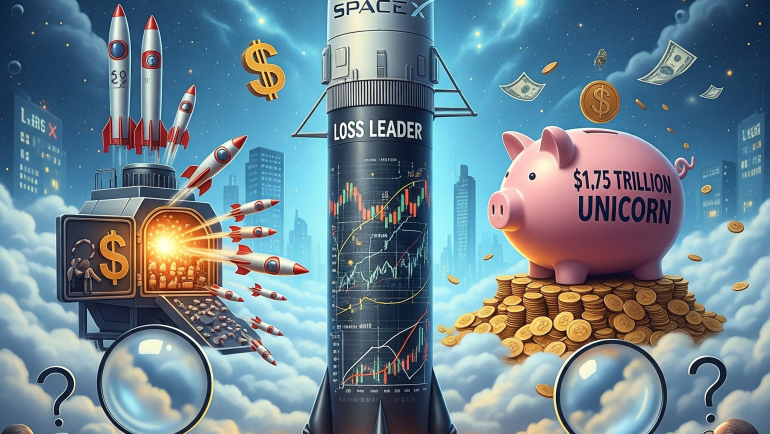
The timing of the Cursor pact is hardly incidental. SpaceX is preparing for what could be the largest initial public offering in history, with reports suggesting a listing that might seek to raise about $75 billion at a valuation near or above $1.75 trillion. Against that backdrop, a $60 billion option looks like both a strategic move and a statement piece: a reminder to prospective investors that this is not just a rocket company, but a full‑spectrum AI and infrastructure platform.

Of course, spending what amounts to roughly 80 percent of the IPO’s expected raise on an AI startup—if SpaceX exercises the option—also telegraphs a certain confidence. It suggests Musk believes the long‑term value of tightly integrating Cursor into his ecosystem will outweigh any near‑term concerns about valuation froth or the optics of deploying that much capital before the ink on the prospectus is dry. For investors, the message is straightforward: buy into the float, and you’re not just getting exposure to launches and satellites; you’re getting a front‑row seat to a very expensive bet on the future of AI‑native development.

AI IPO Season And The Cursor Benchmark

Cursor’s role in the wider market goes beyond its own capitalization table. As AI leaders from OpenAI to Anthropic reportedly prepare their own offerings, space‑adjacent or otherwise, the price tag implied by SpaceX’s option creates a reference point for how the market might value software‑centric AI platforms with robust revenue growth. If an AI coding specialist commands an effective $60 billion ceiling and north‑of‑$50‑billion private valuations, that sets expectations for what general‑purpose model labs and other category leaders might seek when they finally ring the bell.

It also underscores the gravitational pull these companies now exert across industries far removed from pure software. Auto makers, cloud providers, chip designers, and now rocket companies are repositioning themselves as AI platforms, often with balance‑sheet commitments that would have looked excessive in any prior tech cycle. In that context, SpaceX’s Cursor option reads less like an outlier and more like the logical next stage of competitive escalation.

Risk, Reward, And The Fine Print

There is, naturally, no guarantee that SpaceX will pull the trigger on the full acquisition. The deal preserves flexibility: if public markets cool on AI multiples, or if Cursor’s runaway growth slows, a $10 billion partnership could prove the more prudent path while still keeping SpaceX closely tethered to the startup’s technology. And Cursor itself retains leverage, both in ongoing fundraising discussions and in any future negotiations, thanks to a rare combination of strategic suitors and investor demand.

Yet even in its current “option only” form, the agreement pushes Cursor into a different orbit. Prospective customers and engineers now know that the company sits on the short list of assets Musk is willing to value at tens of billions, which has its own magnetism in a talent‑scarce market. For SpaceX, it locks in an inside track to one of the most closely watched AI developer platforms on the market while preserving the right to make it wholly its own—once regulators, IPO investors, and, perhaps, Musk’s own risk appetite align.

In an era when AI deals often read like science fiction, SpaceX’s Cursor option stands out for being both audacious and oddly rational: a structured bet that the future of space, software, and shareholder returns may all hinge on who owns the code that writes the code.

The Sources

Here’s a clean, numbered list of key sources with links you can reference or include at the end of your article:

  1. SpaceX–Cursor deal overview – Yahoo Finance
    https://finance.yahoo.com/markets/article/spacex-strikes-60-billion-deal-for-the-right-to-buy-ai-coding-startup-cursor-143350832finance.yahoo
  2. SpaceX–Cursor option structure and terms – Reuters
    https://www.reuters.com/technology/spacex-says-it-has-option-acquire-startup-cursor-60-billion-2026-04-21/reuters
  3. Deep‑dive on SpaceX’s option and collaboration with Cursor – CNBC
    https://www.cnbc.com/2026/04/21/spacex-says-it-can-buy-cursor-later-this-year-for-60-billion-or-pay-10-billion-for-our-work-together.htmlcnbc
  4. Narrative feature on the deal and AI ambitions – The New York Times
    https://www.nytimes.com/2026/04/21/business/spacex-cursor-deal.htmlnytimes
  5. Market/IPO angle and competitive context vs. OpenAI and Anthropic – Barron’s
    https://www.barrons.com/articles/spacex-cursor-deal-ipo-dad020dabarrons
  6. Commentary and strategic framing of the deal – Fortune
    https://fortune.com/2026/04/22/spacex-strikes-60-billion-deal-cursor/fortune
  7. Tech and developer‑tools focus on the option to buy Cursor – TechCrunch
    https://techcrunch.com/2026/04/21/spacex-is-working-with-cursor-and-has-an-option-to-buy-the-startup-for-60-billion/techcrunch
  8. Background on Cursor’s funding, valuation, and revenue growth – CNBC
    https://www.cnbc.com/2026/04/19/cursor-ai-2-billion-funding-round.htmlcnbc
  9. Additional details on Cursor’s new funding plans and investors – Yahoo Finance (technology section)
    https://finance.yahoo.com/sectors/technology/articles/ai-coding-startup-cursor-seeks-115735149.htmlfinance.yahoo
  10. Context on Musk’s broader AI and space‑compute vision via xAI–SpaceX tie‑up – Fortune
    https://fortune.com/2026/02/03/musk-merges-spacex-xai-ahead-of-potential-ipo/fortune

The New Minerals Club: USA Rare Earth, M2i Global, and Volato Walk Into a Supply Chain… -( $USAR $MTWO $SOAR )

USA Rare Earth’s (USAR) $2.8 billion move on Brazil’s Serra Verde and M2i Global’s (MTWO) tie‑up with Volato Group (SOAR) sketch the same storyline: Washington‑aligned capital quietly rewiring the minerals backbone of the energy transition, one strategic deal at a time. This is industrial policy in action—only instead of speeches, you get term sheets, take‑or‑pay offtakes, and an unexpected supporting role for a private‑jet platform angling to become a critical‑minerals data nerve center.

A New Power Play in Rare Earths

USA Rare Earth has agreed to acquire 100% of Brazil’s Serra Verde Group in a cash‑and‑stock transaction valued at about $2.8 billion, paying roughly $300 million in cash and issuing around 126.8 million new shares. The deal, expected to close in the third quarter of 2026 subject to regulatory approvals, instantly transforms USA Rare Earth from a promising U.S. magnet and mining story into a vertically integrated rare‑earths platform with real tonnage, cash flow, and geopolitical heft.

At the center of the acquisition is Serra Verde’s Pela Ema project in Goiás state, Latin America’s only producing rare‑earth mine and processing facility and one of the few large-scale producers of heavy rare earth elements outside Asia. By 2027, Serra Verde’s operation is expected to account for more than 50% of total non‑China supply of key heavy rare earths, supported by a Phase 2 expansion and a fully permitted, already‑operating plant that began production in 2024.

From Mine Pit to Magnet Plant

The strategic allure is not just in the ore but in the architecture of the combined business: USA Rare Earth will control a full chain that runs from mining and processing through separation, metallization, and magnet manufacturing. Serra Verde’s facilities are projected to produce about 6,400 metric tons of total rare earth oxides annually, including all four key magnetic rare earths—neodymium (Nd), praseodymium (Pr), dysprosium (Dy), and terbium (Tb)—plus other elements such as yttrium that are crucial for advanced electronics and defense systems.

That production base arrives with a safety net: a long‑term offtake agreement backed by a special‑purpose vehicle funded by U.S. government entities and private capital, designed to absorb 100% of initial Nd, Pr, Dy, and Tb output. The structure not only underwrites Serra Verde’s revenue ramp but also aligns the asset directly with U.S. industrial and national‑security priorities, providing a quasi‑policy put option underwritten by Washington’s concern over China’s grip on rare‑earth supply chains.

Cash Flows, Capex—and a Quiet Arms Race

For investors tracking hard‑asset cash generation rather than just critical‑minerals rhetoric, Serra Verde is expected to reach an annualized EBITDA run‑rate of roughly $550 million to $650 million by the end of 2027 on the basis of separated oxides. On a longer term view, the combined company is targeting around $1.8 billion of annualized EBITDA by 2030, with a cash‑flow conversion rate near 80%—numbers that sound less like an early‑stage miner and more like a mature specialty‑materials franchise.

The transaction also dovetails with a $565 million financing package from the U.S. International Development Finance Corporation, earmarked to fully fund Serra Verde’s development and expansion. In effect, U.S. development finance and national‑security capital are subsidizing a Western alternative to China’s heavy rare‑earth complex, leaving equity investors with a de‑risked growth profile and the faint impression that this is what a 21st‑century arms race looks like when it’s waged in spreadsheets instead of shipyards.

Enter M2i Global and Volato: The Supply‑Chain Upgrade

While USA Rare Earth consolidates upstream and midstream capabilities, M2i Global and Volato Group (SOAR) are positioning themselves as the digital and financial scaffolding of the emerging critical‑minerals ecosystem. M2i Global (MTWO), which focuses on building complete global value chains for critical minerals, has signed a strategic collaboration agreement with Titanium X and is working alongside Volato to advance domestic refining capacity and secure materials vital to U.S. industry and defense.

Volato, best known as a technology‑driven aviation and software company, is using its pending acquisition of M2i Global to push deeper into the critical‑minerals arena, promising to layer transparency, traceability, and operational intelligence onto supply chains that have historically been closer to black boxes than dashboards. In practice, this means applying Volato’s data and software capabilities to track materials from mine to refinery to end‑user, an approach that may one day let manufacturers audit their magnet supply with the same granularity frequent fliers expect from loyalty‑point ledgers.

The New Critical‑Minerals Club

Put together, USA Rare Earth’s Serra Verde acquisition and M2i Global’s partnership with Volato suggest a new, loosely coordinated “critical‑minerals club” is taking shape across mining, processing, financing, and data. USA Rare Earth anchors the physical assets and production profile, DFC and government‑backed offtakers anchor the capital stack, and M2i‑Volato‑Titanium X aim to make the entire chain legible, auditable, and ultimately investable for mainstream institutions.

For now, the theme is clear even if the tickers are still getting discovered by generalists: Western policy is increasingly rewarding platforms that can secure rare‑earth and critical‑mineral supply in friendly jurisdictions while delivering credible growth, robust cash metrics, and better data. The opportunity for investors willing to do the homework is that, in this version of industrial strategy, the spreadsheet may be mightier than the speech—and the best way to front‑run a policy pivot might be to read the footnotes before the headlines.

The Sources

  1. USA Rare Earth to acquire Serra Verde for $2.8bn – Yahoo Finance
    https://finance.yahoo.com/markets/commodities/articles/usa-rare-earth-acquire-serra-080512285.htmlfinance.yahoo
  2. USA Rare Earth Announces Definitive Agreement to Acquire Serra Verde – Yahoo Finance / Press Release variant
    https://finance.yahoo.com/sectors/energy/articles/usa-rare-earth-announces-definitive-100000605.htmlfinance.yahoo
  3. USA Rare Earth to Acquire Serra Verde in $2.8 Billion Deal – Yahoo Finance (markets/stocks)
    https://finance.yahoo.com/markets/stocks/articles/usa-rare-earth-acquire-serra-163300510.htmlfinance.yahoo
  4. Serra Verde Group Announces Definitive Agreement to be Acquired by USA Rare Earth – Denham Capital
    https://www.denhamcapital.com/news-article/1913-2/denhamcapital
  5. USA Rare Earth boosts Western supply with $2.8B Brazil deal – MINING.com
    https://www.mining.com/usa-rare-earth-boosts-western-supply-chain-in-2-8b-deal-for-brazil-producer/mining
  6. USA Rare Earth to buy Brazil’s Serra Verde for $2.8 billion – Reuters
    https://www.reuters.com/business/usa-rare-earth-acquire-brazils-serra-verde-28-bln-2026-04-20/reuters
  7. USA Rare Earth to Acquire Serra Verde in $2.8 Billion Deal – Yahoo Finance (newswire format)
    https://finance.yahoo.com/sectors/energy/articles/usa-rare-earth-acquire-serra-111600046.htmlfinance.yahoo
  8. M2i Global, along with Volato Group, and Regenerate Technology … – Yahoo Finance
    https://finance.yahoo.com/sectors/energy/articles/m2i-global-along-volato-group-120000782.htmlfinance.yahoo
  9. M2i Global, along with Volato Group, and Titanium X Sign Strategic Collaboration Agreement – Volato IR
    https://ir.flyvolato.com/news-events/press-releases/detail/130/m2i-global-along-with-volato-group-and-titanium-x-sign-strategic-flyvolato
  10. Volato Group Extends M2i Global Merger Agreement Deadline – The Globe and Mail / Market data page
    https://www.theglobeandmail.com/investing/markets/stocks/SOAR/pressreleases/37156290/volato-group-extends-m2i-global-merger-agre/theglobeandmail

From Policy to Execution: Securing Critical Mineral Markets with Arnab Datta

The Two-Kid Parable That Explains Success Better Than Any Market Cycle -( $SPY $QQQ $DIA )

On a recent afternoon, in a locker room that smelled faintly of ambition and athletic tape, a simple story cut through the usual noise of strategy, stats, and swagger.

It wasn’t about valuation multiples or market timing. It was about two kids.

One was born with everything. The other, almost nothing.

And yet, as any seasoned investor—or coach—will tell you, the starting point rarely determines the final return.

The Rich Kid’s Dilemma: Privilege as a Liability or an Asset

The rich kid enters the world with advantages that read like a private equity term sheet: access to elite coaching, better networks, financial safety nets, and doors that open before he even knocks.

But abundance, like liquidity, can be misallocated.

One path is well-worn. He becomes comfortable. Then entitled. Then, quietly, stagnant. Effort feels optional when outcomes have always been guaranteed. The edge dulls. The hunger fades.

The alternative path is far less common—and far more interesting.

He treats privilege not as a cushion, but as leverage. Every resource becomes a tool. Every opportunity, a responsibility. He works not because he has to, but because he understands what’s at stake: squandering an advantage is its own kind of failure.

In this version, the rich kid doesn’t inherit success. He compounds it.

The Poor Kid’s Advantage: When Scarcity Becomes Fuel

The poor kid’s balance sheet looks different. There’s no safety net, no insider access, no margin for error.

At first glance, it appears to be a structural disadvantage.

And it can be—if interpreted that way.

One option is to internalize the deficit. To see the world as rigged, the odds as fixed, the outcome as predetermined. It’s a narrative that explains everything and improves nothing.

But there’s another path. One that shows up repeatedly in both locker rooms and boardrooms.

Scarcity sharpens focus. It builds resilience. It turns effort into identity. The poor kid learns early that nothing is given, which means everything earned carries weight.

He doesn’t just compete—he outworks, outlasts, and out-prepares.

In markets, we call this asymmetric upside.

The Locker Room Lesson: Same Choice, Different Starting Points

What made the message resonate that day wasn’t its simplicity—it was its universality.

The room was filled with athletes from radically different backgrounds. Some had been groomed for success since childhood. Others had clawed their way into the room through sheer persistence.

Yet the dividing line wasn’t wealth. It wasn’t upbringing. It wasn’t access.

It was mindset.

Each person faced the same binary decision:

  • Take ownership and use circumstances as fuel
  • Or adopt a victim mindset and outsource responsibility

In investing terms, it’s the difference between active management and passive resignation.

Ownership vs. Excuse-Making in a Competitive World

In today’s economy—whether on Wall Street, in Silicon Valley, or on the playing field—the premium is increasingly placed on agency.

Blaming macro conditions, upbringing, or luck may offer short-term psychological relief. But it produces no return.

Ownership, on the other hand, compounds.

It turns advantages into acceleration and disadvantages into differentiation. It reframes obstacles as inputs rather than endpoints.

The rich kid and the poor kid are, in this sense, less characters and more case studies.

Both are handed variables they did not choose.

Both are responsible for what they do next.

The Real Determinant of Success: Which Voice Wins

Strip away the narrative, and what remains is a quieter, more consequential truth.

Each person carries both kids inside them.

There is a version that seeks comfort, rationalizes mediocrity, and leans on excuses—whether born from too much or too little.

And there is another version that takes ownership, embraces discomfort, and converts circumstance into momentum.

The outcome, more often than not, hinges on which voice gets fed.

In markets, as in life, initial conditions matter—but behavior matters more.

April 21, 2026 – Markets Duck, Dive, and Diplomacy: Wall Street Tries to Price Peace (Again) -( $AVGO $INTG $MTWO $NVTS $OPEN $SOAR $VIX $WMT Rise!)

U.S. stocks were mixed on Tuesday, April 21, 2026, as investors weighed ongoing U.S.–Iran peace-talk uncertainty against resilient corporate earnings and still‑solid economic data.

Index performance

Major benchmarks saw modestly negative moves as traders stayed cautious around Middle East headlines and evaluated the durability of the recent rebound in risk assets.

  • The Dow Jones Industrial Average traded slightly higher early on, helped by a rebound in select blue chips, however it ended .59% lower at 49,149.38.
  • The S&P 500 fell .63% to close at 7,064.01.
  • The Nasdaq Composite also fell .59% to close at 24,259.96.
  • The small caps on the Russell 2000 closed 1% slower at 2,754.97.
  • Volatility rose evidenced by the CBOE Volatility Index (VIX) which closed at $20.57, +9.01%.

Sector and style moves table

AreaTone on the day
EnergyBid on higher crude, $90.34/bbl, +3.43% and Hormuz risk.
MaterialsFirm, reflecting commodity support.
Health careMixed after prior weakness.
Tech/CommunicationSlightly positive, rotation within megacaps. 
Defensives (utilities, staples)Used as ballast amid geopolitical noise. 

Macroeconomic and policy backdrop

Macro data and policy expectations provided a stabilizing counterweight to geopolitical anxiety, with investors still assuming a “slow‑cut” path from the Federal Reserve rather than an aggressive easing cycle.

  • Recent U.S. economic releases have pointed to steady growth and moderate inflation, helping support earnings expectations and justify elevated valuations.
  • The S&P 500’s forward price‑to‑earnings multiple has pushed toward the low‑20s, leaving less room for disappointment as this earnings season progresses.
  • Treasury yields remain in the mid‑4% area on the 10‑year, signaling that bond markets are not yet pricing in a sharp growth scare despite geopolitical risks.
  • The U.S. dollar has held firm, reflecting haven demand and relative U.S. economic strength.

An example of the current macro tension: equities have rallied strongly over the last month, yet strategists increasingly describe the setup as “overbought with a geopolitical overhang,” which raises the bar for both economic data and earnings to keep the tape grinding higher.

U.S.–Iran peace‑talk dynamics and markets

Geopolitics remained the dominant narrative driver, with traders focused on the evolving prospects for U.S.–Iran peace talks and the status of the Strait of Hormuz.markets.

  • Over the weekend and into Monday, Iran again claimed the Strait of Hormuz was closed in response to a U.S. naval blockade of Iranian vessels, pushing geopolitical risk back to the forefront.
  • Prediction and derivatives markets show a growing disconnect between near‑term ceasefire odds and the probability of a more durable peace, with shorter‑deadline contracts seeing notable repricing.
  • Energy strategists warn that crude prices may still under‑reflect the tail risk of a prolonged disruption in Gulf exports, even after a sharp move up into the low‑ to mid‑$100s per barrel.
  • President Donald Trump has taken a hard public line, including threats of further military escalation, yet markets continue to price in some probability of a “peace dividend” if negotiations regain momentum.

This leaves equity positioning in a classic “risk‑on with an airbag” stance: investors are leaning into the idea that de‑escalation ultimately prevails but are doing so with hedges and selective sector tilts rather than blanket exposure.

Earnings, micro drivers, and positioning

Beneath the macro headlines, earnings and stock‑specific news continued to shape the tape, especially in large‑cap growth and rate‑sensitive areas.

  • Corporate results so far have generally met or modestly exceeded expectations, but with valuations stretched, “beats” that lack strong guidance are producing muted reactions.
  • Leadership remains concentrated in a handful of megacap names, particularly in technology and communication services, sustaining the broader indices even as equal‑weight measures lag.
  • Within the Dow, health‑care and industrial bellwethers have been volatile, with some names sliding on idiosyncratic news while others catch a bid as defensive growth plays.
  • Trading volumes have been slightly below recent averages, underscoring a wait‑and‑see attitude as investors look for clarity on both geopolitics and the Fed’s reaction function.

A practical takeaway for portfolio construction: many institutional desks are leaning toward balanced exposure — keeping core allocations to U.S. large caps while trimming outright beta and adding energy, commodities, and selective defensives as insurance against an adverse turn in the U.S.–Iran storyline.

VP Watchlist Updates

Below is an update‑style snapshot on the VP Watchlist names for the week, focused on recent catalysts, positioning, and narrative rather than precise price moves.

Navitas Semiconductor (NVTS, $15.33, +16.14%)

Navitas Semiconductor (Nasdaq: NVTS) is a next-generation power semiconductor leader in gallium nitride (GaN) and IC integrated devices, and high-voltage silicon carbide (SiC) technology, driving innovation across AI data centers, performance computing, energy and grid infrastructure, and industrial electrification. Navita’s will will report first quarter 2026 financial results on Tuesday, May 5, 2026, after the market close.

Broadcom (AVGO, $402.17, +.64%)

Broadcom’s latest AI alliance with Google parent Alphabet Inc. (GOOGL, GOOG) and Anthropic is less a routine chip deal and more a declaration that the quiet power behind the cloud plans to stay loud for the next decade. The three-way pact locks in custom AI silicon and multi‑gigawatt compute capacity that could reshape who really controls the tollbooths on the generative AI superhighway.

Eupraxia Pharmaceuticals (EPRX, $7.02)

Eupraxia Pharmaceuticals Inc. (EPRX), a clinical-stage biotechnology company leveraging its proprietary Diffusphere™ technology designed to optimize local, controlled drug delivery for applications with significant unmet need, today announced 36-week tissue health and symptom data from patients in the highest dose cohort from its ongoing Phase 1b/2a part of the RESOLVE trial evaluating EP-104GI for the treatment of eosinophilic esophagitis (“EoE”). Dr. James A. Helliwell, Chief Executive Officer of Eupraxia stated, “We are very pleased with the robust and sustained response in both tissue health and symptom data in the highest dose cohort at 36 weeks. This data is consistent with the compelling results we observed at earlier timepoints at this dose level, highlighting the potential to achieve both strong and durable responses after a single administration of EP-104GI. We are also reassured by the excellent safety outcomes across all doses in the trial as we continue to observe no indication of drug related SAEs or spikes in glucose or cortisol. We look forward to the results of the placebo-controlled Phase 2b portion of the study where the same dose is being further evaluated”.

Eupraxia recently co-hosted a Tribe Public www.TribePublic.com, CEO Presentation & Q&A Webinar event, Wednesday, April 1 titled “Turning EOE Into a Once-a-Year Appointment.” The event featured James A. Helliwell, M.D., Co‑founder and CEO of Eupraxia Pharmaceuticals (NASDAQ: EPRX), who discusses the company’s precision drug‑delivery platform, its approach to Eosinophilic Esophagitis (EoE), and broader pipeline priorities, followed by a focused 5–10 minute Q&A. You may watch it now at this Youtube link.

Eupraxia announced (March 17) positive symptom data from patients in the two highest dose cohorts from its ongoing Phase 1b/2a part of the RESOLVE trial evaluating EP-104GI for the treatment of eosinophilic esophagitis (“EoE”). “We are very pleased to see such a meaningful symptom response at 24 weeks in the highest dose of the Phase 1b/2a portion of the RESOLVE study,” said Dr. James A. Helliwell, Chief Executive Officer of Eupraxia. “We believe this type of response based on a single administration procedure would represent a compellingly different option for EoE patients. Importantly, the response that we are observing across cohorts 4-9 has increased as patients progress through the study through to week 24. We believe this demonstrates the importance of stable, continuous long-term local steroids in tamping down signs of inflammation quickly and acting on fibrosis in the longer term. Also, as previously reported, we continue to be encouraged by the safety profile that we have observed with EP-104GI. Currently, with 31 patients dosed in the Phase 1b/2a study, and over 220 months of follow up, there have been no reported serious adverse events.”

Modular Medical (MODD, $5)

  • Modular Medical, Inc. (NASDAQ:MODD), a leader in innovative, patient-centric insulin delivery, today announced the pricing of a registered direct offering consisting of 750,000 shares of the Company’s common stock at an offering price of $4.50 per share. The gross proceeds to the Company from the Offering are estimated to be approximately $3.4 million before deducting placement agent fees and other offering expenses. The Offering is expected to close on or about April 21, 2026, subject to the satisfaction of customary closing conditions.
  • Modular Medical’s latest regulatory milestone upgrades the narrative: the company has now secured FDA 510(k) clearance for its Pivot tubeless insulin patch pump, moving from “launch‑ready” to “launch‑approved” in the heart of the fast‑growing diabesity market. The FDA has cleared Modular Medical’s Pivot patch pump as a tubeless, removable insulin delivery system, formally validating the device’s design and performance for commercial use in U.S. adults living with diabetes. The clearance converts what had been a Q1 2026 launch “subject to FDA response” into a tangible commercial pathway, giving the company permission to sell into an insulin pump market that has been estimated at roughly 8 billion dollars globally. Pivot is engineered as a simplified, two‑part patch pump with a 3‑milliliter removable reservoir, no need for battery recharging, and the ability to bolus without a dedicated controller, aiming squarely at patients who have stayed on multiple daily injections because traditional pumps felt too complex, cumbersome, or costly. By clearing Pivot, the FDA is effectively endorsing Modular Medical’s attempt to make advanced insulin delivery feel less like adopting a gadget and more like upgrading a daily habit.

The InterGroup Corporation (INTG, $34.59, +4.72%)

  • InterGroup Corporation delivered (Feb. 17) a notably stronger quarter, highlighted by a 20% jump in total revenue to $17.3 million and a 27% surge in hotel revenue as renovated rooms returned to service and travel demand improved. The company swung from a prior-year net loss to $1.0 million in net income, with operating income more than doubling to $2.0 million, underscoring better cost control and improved operating efficiency. Management further enhanced liquidity and sharpened strategic focus by selling a non-core 12‑unit Los Angeles multifamily property, generating a meaningful gain and additional working capital while maintaining stable performance across its real estate portfolio.

Volato Group, Inc. (SOAR, +.49%) & M2i Global, Inc. (MTWO, +2.46%)

NVIDIA (NVDA, $199.88) & Nokia (NOK, $10.40)

  • On April 13, Vistance Networks (NASDAQ: VISN, $19.11, +.10%), a global provider of intelligent network solutions, today shared that RUCKUS® Networks and Nokia announced early access availability to a combined solution, allowing customers to accelerate adoption of their integrated Wi-Fi 7 and Fiber Optical Lan Solution.
  • In an AI market obsessed with GPUs and stardust, Nokia (NOK) is quietly reminding investors that none of this magic moves without serious plumbing. While Nvidia (NVDA) prepares to headline its GTC 2026 “Woodstock of AI” showcase, the chip giant has already written a very real check to Nokia, committing a $1 billion investment to help rewire the world’s networks for 5G‑Advanced, 6G, and AI‑native workloads. The message is simple enough: GPUs may be the new rock stars, but networking is the stadium.
  • Nvidia delivered strong fourth-quarter results recently, posting revenue of $68.1 billion, well above analyst expectations. Looking ahead, the company projects $7.8 billion in revenue for the first quarter of 2026, reflecting continued robust demand for its AI chips even amid broader market headwinds.
  • NVIDIA and Nebius Group N.V. (NASDAQ: NBIS) (March 11) announced a strategic partnership to develop and deploy the next generation of hyperscale cloud for the AI market, from AI natives to enterprises. NVIDIA will invest $2 billion in Nebius.

McDonald’s (MCD, $301.84)

Opendoor (OPEN, $5.45, +1.87%)

  • April 16, Opendoor Technologies Inc. (OPEN) announced that it will report first quarter 2026 financial results for the period ended March 31, 2026 following the close of the market on Thursday, May 72026. On May 7, 2026, management will host our Financial Open House video livestream at 2:00 p.m. PT (5:00 p.m. ET) to discuss the company’s business and financial results. We invite shareholders to participate directly through Robinhood’s Say Technologies platform by visiting https://app.saytechnologies.com/opendoor-2026-q1
  • Opendoor Technologies, a leading e-commerce platform for residential real estate transactions, reported financial results for its fourth quarter and year ended December 31, 2025. They highlighted the following: October 2025 acquisition cohort tracking as best-performing October in Company history; acquisitions increased 46% quarter-over-quarter while inventory days in possession reduced 23%.
  • Opendoor continues to navigate a challenging housing backdrop characterized by still‑elevated mortgage rates and tight existing‑home inventories, which weigh on transaction volumes even as affordability slowly improves. The company’s focus on disciplined acquisition spreads, inventory turns, and ancillary services remains central to the investment debate as markets handicap the pace and magnitude of any 2026 housing recovery.

Tesla (TSLA, $386.42)

Elon Musk reportedly posted an image (April 15) on X about Tesla’s AI new A15 chip and suggesting that it was just one of many that he was going to have to offer.

Recently, it was reported that Elon Musk’s latest Texas-sized ambition is to build his own AI chip empire, and this time the factory floor will sit right next to the robots, rockets, and robotaxis that plan to use it. The Terafab project, a new semiconductor venture linking Tesla (TSLA), SpaceX, and xAI in Austin, aims to churn out custom chips for AI, humanoid robots, and space systems at a scale that makes today’s GPU land rush look like a warm‑up act. Learn more here.

There are open secrets on Wall Street, and then there is SpaceX’s long‑anticipated march toward the public markets, now reportedly via a confidential filing with the SEC that could set up a June debut. For a company that routinely broadcasts rockets into orbit, it is taking a decidedly hush‑hush approach to its paperwork

Serina Therapeutics (NYSE: SER, $2.04)

Serina Therapeutics (NYSE: SER) (www.serinatx.com) seems to have have just traded itself into Wall Street’s good graces, pairing fresh capital with a late-session pop that suggests investors are finally starting to connect the dots between polymer chemistry and portfolio returns. In Huntsville, Alabama, Serina Therapeutics announced definitive agreements for a private placement of common stock and pre-funded warrants that could bring in up to 30 million dollars in gross proceeds. The first 15 million dollar tranche is expected to close on March 20, 2026, with a second tranche of up to 15 million dollars anticipated by April 30, 2026, subject to customary closing conditions.

What makes the deal stand out in a biotech tape crowded with discounts is the pricing: the securities are being sold at about 2.25 dollars per share, a roughly 68 percent premium to Serina’s March 17 closing price, signaling that insiders are willing to pay up for exposure to the company’s clinical agenda. The financing also adds board-level heft, with director Greg Bailey, M.D., stepping into a Co-Chairman role as he leads the investment, a move that effectively puts the capital and the governance on the same optimistic page. Learn more here.

Walmart (WMT, $129.60, +1.31%)

Walmart’s (WMT) latest move into digital health reads less like a retail side-hustle and more like an opening bell in the next leg of the GLP‑1 trade, with syringes, smartphones, and stock tickers all lining up on aisle 7. 

The Sources

  1. IMF – World Economic Outlook, April 2026
    https://www.imf.org/en/publications/weo/issues/2026/04/14/world-economic-outlook-april-2026imf
  2. S&P Global – Global Economic Outlook: April 2026
    https://www.spglobal.com/market-intelligence/en/news-insights/research/2026/04/global-economic-outlook-april-2026spglobal
  3. Mutual of America – Economic & Market Perspective: April 2026
    https://www.mutualofamerica.com/insights-and-tools/learning-center/emp/economic–market-perspective-april-2026mutualofamerica
  4. Fortune – Iran peace talks are back on while the US hunts rogue ships in the Strait of Hormuz
    https://fortune.com/2026/04/16/iran-peace-talks-us-rogue-ships-strait-of-hormuz/fortune
  5. Emirates NBD – CIO Daily Update (Middle East peace talks, oil, markets)
    https://www.emiratesnbd.com/en/cio-corner/cio_daily_updates_150426emiratesnbd
  6. Investing.com – Focus Remains on Middle East Peace Talks, Yen Slides
    https://www.investing.com/analysis/focus-remains-on-middle-east-peace-talks-yen-slides-200678673investing
  7. Noor Capital / Noor Trends – Wall Street Retreats from Record Highs as U.S.-Iran Brinkmanship Threatens Ceasefire and Oil Supply
    https://noortrends.ae/en/wall-street-retreats-from-record-highs-as-u-s-iran-brinkmanship-threatens-ceasefire-and-oil-supply/04/2026/noortrends
  8. KHQ / Associated Press – S&P 500, Nasdaq end at records as markets bet on US-Iran accord
    https://www.khq.com/national/s-p-500-nasdaq-end-at-records-as-markets-bet-on-us-iran-accord/article_723a47e6-6bc5-577d-b2fc-5579b3cb1b4d.htmlkhq
  9. CNBC – S&P 500 and Nasdaq Composite close at fresh records as investors weigh Middle East developments (April 14, 2026)
    https://www.cnbc.com/2026/04/14/stock-market-today-live-updates.htmlcnbc
  10. CNBC – Stock market next week: Outlook for April 20–24, 2026
    https://www.cnbc.com/2026/04/17/stock-market-next-week-outlook-for-april-20-24-2026.htmlcnbc
  11. Yahoo Finance – Monday, April 20, 2026 (Week ahead, macro calendar)
    https://finance.yahoo.com/economy/policy/articles/monday-april-20-2026-210000811.htmlfinance.yahoo
  12. Trading Economics – Week Ahead: April 20th
    https://tradingeconomics.com/calendar?article=29349&g=top&importance=2&startdate=2026-04-17tradingeconomics
  13. The Rio Times – Key Market Events for the Week of April 20–24, 2026
    https://www.riotimesonline.com/latam-pulse-pmis-retail-sales-ifo-april-2026/riotimesonline
  14. X (Twitter) – MarketsDay post on retail sales consensus and data focus
    https://x.com/marketsday/status/2045348424657322063x
  15. Yahoo Finance – LIVE Stock Market Coverage: Stocks sink, oil surges as Iran war escalates (context on prior March moves)
    https://www.youtube.com/watch?v=Vz1uXgfZQRgyoutube
  16. Economic Times – US Stock Market Today | Dow Jones | Nasdaq Live (mixed close, Middle East negotiations)
    https://economictimes.indiatimes.com/markets/us-stocks/news/dow-jones-today-us-stock-market-live-updatesus-stock-market-live-dow-jones-nasdaq-live/articleshow/109318097.cmseconomictimes.indiatimes
  17. Economic Times – US stocks end higher as Middle East peace talks lift sentiment
    https://economictimes.indiatimes.com/markets/us-stocks/news/us-stock-market-live-dow-jones-sp-500-nasdaq-trump-iran-war-israel-lebanon-war-ceasefire-talks/articleshow/109336526.cmseconomictimes.indiatimes

The Nearly Double-Digit Yield Playbook: Can You Gain Income Without Needing a Therapist? -( $ARCC $ET $MO $WES )

An 8% yield portfolio can be built to feel more like a cash-flowing blue-chip than a financial horror movie, especially when it leans on durable cash engines instead of financial pyrotechnics.

The New American Dream? ($80,000 Without a Time Clock)

For some income investors, the magic number in this blueprint is simple: 8% yield on $1,000,000, translating to $80,000 a year in portfolio income. That target apparently sits in a sweet spot for many—high enough to matter for retirees and pre-retirees, but not so high that it requires exotic leverage, distressed credit, or a standing appointment with your cardiologist.

The core idea:

  • Use businesses that throw off steady cash (midstream energy pipelines, a proven business development company, and a consumer staples dividend machine).[
  • Blend sustainable dividend growth (i.e Altria, Energy Transfer) with higher-yield workhorses (i.e. Ares Capital, Western Midstream).
  • Avoid the siren song of 12%–14% yield vehicles that often pay today and apologize tomorrow.

In other words, this is less “YOLO options” and more “family office that still reads the footnotes.”

Why 8% Is the Goldilocks Yield

Not all income is created equal. Here are three rough tiers of yield and the capital they demand to generate roughly $80,000 per year are as follows:

  • Conservative tier (3%–4% yield): You’d need around $2.29 million in capital, generally in dividend growers and broad equity funds. The upside is likely principal appreciation and compounding dividends; the downside is needing the kind of balance sheet more common to endowments than everyday retirees.
  • Moderate tier (5%–7% yield): Capital falls to roughly the low-seven-figure range, using midstream MLPs, preferreds, high-dividend equities, and select staples—solid income, slower growth.
  • Aggressive tier (10%–14% yield): Only about $667,000 is required, but now you’re swimming with leveraged covered-call funds, mortgage REITs, and distressed credit—places where principal erosion, distribution cuts, and permanently impaired capital tend to be features, not bugs.

The 8% “sleep-at-night” tier attempts to thread the needle: it targets $1,000,000 in capital, delivers that $80,000 income mark, and keeps the business models recognizably sane. It’s less a “meme basket” and more a cash consortium.

How This Portfolio Tries to Let You Sleep

The central question posed in the article is not “Can you hit 8%?” but “Can you hit 8% without blowing up either the distribution or your principal?” The answer is yes for many—but only if the route to 8% avoids the usual income traps.

This approach aims to do that by:

  • Favoring durable cash flows over engineered yield: BDC lending models and midstream contracts can possibly support high payouts without requiring heroic growth assumptions.
  • Mixing growth and current yield: Altria and Energy Transfer potentially could provide distribution growth potential; ARCC and Western Midstream could potentially bring higher current yield.
  • Avoiding the “red-zone yields”: Once you drift into the 12%+ neighborhood, history suggests you’re often buying into a slow-motion principal decline, punctuated by distribution cuts when conditions tighten.

The result is an 8% income target that tries to balance three competing objectives: income today, stability of payouts, and survival of principal. It’s not risk-free—this is still equity and credit risk—but it’s designed so you don’t have to refresh your brokerage app every time a headline mentions “rates,” “recession,” or “refinancing.”

The Fine Print: Risks, Trade-Offs, and Investor Fit

Even a “sleep-well-at-night” portfolio comes with disclaimers that would make a prospectus proud.

  • Sector concentration: Midstream energy and a BDC are not the same as a broad-market ETF; regulatory changes, commodity sentiment, and credit cycles can all introduce volatility.
  • Rate sensitivity: Higher rates can pressure high-yield vehicles via refinancing costs, spreads, and equity valuations, even when cash flows stay intact.
  • Income vs. growth: A portfolio engineered for 8% yield naturally emphasizes cash distributions over hyper-growth; that trade-off suits retirees more than 25-year-olds.

Still, for the investor who would like their portfolio to behave a little more like a reliable paycheck and a little less like a startup pitch deck, this 8% framework offers a structured, numbers-backed path. In an era where everything seems to want your attention, designing income that lets you ignore the market for days at a time may be the ultimate luxury asset.

The Sources


[1] The 8% Yield Portfolio That Actually Lets You Sleep at Night https://finance.yahoo.com/markets/stocks/articles/8-yield-portfolio-actually-lets-130556708.html
[2] The 8% Yield Portfolio That Actually Lets You Sleep at Night https://247wallst.com/personal-finance/2026/04/20/the-8-yield-portfolio-that-actually-lets-you-sleep-at-night/
[3] The 8% Yield Portfolio That Actually Lets You Sleep at Night – AOL https://www.aol.com/finance/8-yield-portfolio-actually-lets-130556709.html
[4] A Dividend Portfolio That Pays a $45,000 Salary on $700K Invested https://247wallst.com/personal-finance/2026/04/20/a-dividend-portfolio-that-pays-a-45000-salary-on-700k-invested/
[5] A Dividend Portfolio That Pays a $45000 Salary on $700K Invested https://www.aol.com/articles/dividend-portfolio-pays-45-000-130600989.html
[6] The Ultimate 8%-Yielding Sleep-Well-At-Night Retirement Income … https://seekingalpha.com/article/4876562-the-ultimate-8-percent-yielding-sleep-well-at-night-retirement-income-machine
[7] Cash In: Stocks That Pay You to Own Them – YouTube https://www.youtube.com/watch?v=F0DOA37SCNw
[8] Ares Capital Corporation (ARCC) – Yahoo Finance https://finance.yahoo.com/quote/ARCC/chart/
[9] The ‘Sleep-Well-At-Night’ Portfolio: Monthly Income With Near-Zero … https://www.aol.com/sleep-well-night-portfolio-monthly-194245635.html
[10] The Dividend Stack Strategy: How I’m Building $8K/Month in … https://substack.com/home/post/p-163101689
[11] Western Midstream Partners (WES) News Today – MarketBeat https://www.marketbeat.com/stocks/NYSE/WES/news/
[12] The Dividend Income Strategy That Helps You Sleep Better at Night https://finance.yahoo.com/news/dividend-income-strategy-helps-sleep-180754271.html
[13] High Yield BDCs & REITs That Create An Income Snowball – YouTube https://www.youtube.com/watch?v=9HExMPp-_4g
[14] ET Stock Quote Today & Investment Insights – Public.com https://public.com/stocks/et
[15] Josh Schafer – Yahoo Finance https://finance.yahoo.com/author/josh-schafer/

Precision Meets Possibility: Inside Tribe Public’s Latest CEO Event on Targeted Alpha Therapy with NAYA

In a market often dominated by macro noise and earnings volatility, Tribe Public’s latest CEO Presentation and Q&A Webinar Event offered something far rarer: a glimpse into the future of cancer treatment—and perhaps, a pathway to curing it.

The event, titled “Can Targeted Alpha Therapy Cure Cancer,” featured NAYA Therapeutics Founder and CEO Daniel Teper, who guided investors and attendees through a compelling vision of next-generation oncology innovation. The full event can be viewed here:

A New Frontier in Cancer

NAYA Therapeutics is not approaching cancer incrementally—it is aiming to eradicate residual disease entirely. At the center of this ambition lies a dual-platform strategy:

  • Astatine-211 (²¹¹At) targeted alpha therapies
  • NK-cell-engaging bifunctional antibodies

This combination is designed to deliver what many therapies struggle to achieve: deep and durable responses, particularly in difficult-to-treat cancers like hepatocellular carcinoma (HCC) and multiple myeloma.

Teper’s presentation struck a balance between scientific rigor and commercial realism—no small feat in a sector where optimism often outruns logistics.

The 7.2-Hour Problem—and Opportunity

If there was a quiet star of the discussion, it wasn’t just the science—it was the supply chain.

Targeted alpha therapies operate on a tight clock. Astatine-211, with its 7.2-hour half-life, leaves little room for error. Delays are not inconvenient; they are existential.

NAYA’s strategic insight is simple but powerful: treat logistics as a core competency, not a postscript.

  • The company leverages bismuth-209, a naturally abundant precursor, enabling scalable production
  • It emphasizes decentralized manufacturing, bringing production closer to patients
  • It builds flexibility to support multiple indications without rebuilding infrastructure

In effect, NAYA is engineering reliability into a therapeutic category where timing is everything. It’s less “just-in-time” and more “just-in-survival.”

Pipeline with Purpose

NAYA’s early pipeline reflects this integrated strategy:

  • NY-703 targeting hepatocellular carcinoma
  • NY-738 focused on multiple myeloma

Both programs aim to capitalize on the precision of alpha radiation while minimizing collateral damage—a long-standing challenge in oncology.

The approach aligns clinical ambition with operational execution, a pairing that investors increasingly recognize as essential in radiopharmaceuticals.

Tribe Public’s Expanding Platform

The event also underscored Tribe Public’s growing role as a conduit between companies and capital.

For those unfamiliar, Tribe Public hosts global virtual events and in-person corporate sponsored events across 41 U.S. event venues, connecting:

  • Institutional investors and family offices
  • Portfolio managers and advisors
  • Corporate executives and media professionals

The model blends efficient access with community-building—often over private meals at top-tier venues—creating an environment where conversations extend beyond the slide deck.

Learn more or join the community at www.tribepublic.com.

A Broader Lens: Innovation and Impact

While the webinar focused on cutting-edge oncology, it also fits into a broader narrative: the convergence of innovation, accessibility, and impact.

In a world where figures like MrBeast have redefined philanthropy through scale and visibility—funding surgeries, food access, and clean water—biotech companies like NAYA are pursuing impact at the molecular level. Different methods, same underlying ambition: solve hard problems at scale.

Final Take

Tribe Public’s latest event delivered more than a company presentation—it offered a case study in how science, logistics, and capital markets intersect.

If NAYA Therapeutics succeeds, it won’t just validate targeted alpha therapy—it will reinforce a larger lesson: in modern biotech, the supply chain can be just as innovative as the science itself.

The Sources

  1. Tribe Public – Official Website: https://tribepublic.comtribepublic
  2. Tribe Public – About / Event Platform Overview: https://tribepublic.com/abouttribepublic
  3. Tribe Public – Events Page (Past and Upcoming Events): https://tribepublic.com/eventstribepublic
  4. NAYA Therapeutics – Official Website: https://www.nayatx.comyoutube
  5. NAYA Therapeutics CEO Event Video – “Can Targeted Alpha Therapy Cure Cancer”: https://www.youtube.com/watch?v=XCtt3CedDA8youtube
  6. NAYA Therapeutics Expands HCC Pipeline – Press Coverage of Astatine-211 Programs: https://www.pharmiweb.com/press-release/2025-06-17/naya-therapeutics-expands-its-hepatocellular-carcinoma-hcc-pipeline-with-first-in-class-gpc3-targeted-astatine-211-alpha-radioimmunotherapypharmiweb
  7. NAYA Therapeutics Astatine-211 Partnership – NY-703 and Global Supply Chain: https://trial.medpath.com/news/e4c6693261bb40b5/naya-therapeutics-partners-with-alpha-nuclide-to-advance-astatine-211-therapy-for-hepatocellular-carcinomatrial.medpath
  8. MrBeast Philanthropy Overview – Business Insider: https://www.businessinsider.com/mrbeast-philanthropybusinessinsider
  9. Beast Philanthropy and Global Partnerships – Rockefeller Foundation: https://www.rockefellerfoundation.org/news/beast-philanthropy-and-rockefeller-foundation-launch-strategic-partnershiprockefellerfoundation
  10. MrBeast and “Stunt Philanthropy” – Northeastern University Analysis: https://news.northeastern.edu/2023/11/27/mrbeast-stunt-philanthropynews.northeastern

MrBeast, Billions of Views, and the Country Called YouTube -( $GOOG $GOOGL $SPY )

YouTube has quietly become the largest “country” on earth, and MrBeast is its most influential export—a one‑man media conglomerate built on thumbnails, philanthropy, and a balance sheet that would make a private‑equity partner blush. Alphabet Inc. (GOOG GOOGL), Google’s parent company, acquired the YouTube platform for $1.65 billion in 2006 and operates it as a subsidiary. While it functions under Alphabet’s corporate structure, YouTube operates as a separate entity from Google’s main search business, managed by CEO Neal Mohan.

The New Prime Time Is a Progress Bar

For all the talk about cord‑cutting, the real story is attention‑cutting—and YouTube is winning that war by brute scale. As of 2025, the platform draws roughly 2.5–2.7 billion monthly active users, meaning more than one in three humans now lives part‑time inside the YouTube feed. On any given day, over 1 billion hours of video are watched and more than 500 hours are uploaded every minute, creating an attention market where the marginal unit is not content, but patience.

That scale has turned YouTube from a quirky video site into the default distribution layer for modern culture, from music videos and gaming to finance, education, and politics. India now leads usage with around 491–500 million viewers, followed by some 253 million in the U.S., a reminder that the center of digital gravity sits firmly outside Madison Avenue’s zip code. In this world, creators are not “influencers” on someone else’s medium—they are the medium.

MrBeast: When a Creator Becomes the Platform

Jimmy Donaldson—better known as MrBeast—did not just learn how to win YouTube; he engineered a system that treats the platform like programmable prime time. His main channel and spinoffs now draw over 380 million subscribers and an estimated 3 billion monthly views, with roughly 70% of that audience outside the United States. In a media landscape where traditional networks celebrate if a big-budget show captures 10 million live viewers, MrBeast routinely posts a single video that outdraws them on a random Saturday afternoon.

The core of his approach is disarmingly simple: ruthless focus on the audience. He is fond of saying that any time you complain “the algorithm” didn’t like a video, you should replace that word with “audience.” That mindset drives a creative formula built around a ferocious opening hook, a sequence of micro‑hooks to fight drop‑off, and aggressive editing that cuts everything that does not serve watch time and shareability. The result is content that behaves less like a casual upload and more like a meticulously tested consumer product launch, except the R&D happens in public and at scale.

Key Numbers at a Glance

MetricMrBeast / YouTube
Monthly active YouTube users~2.5–2.7 billion globally (2025–2026)
Daily YouTube watch time1+ billion hours per day
MrBeast subscribers (all chans)380M+ with 70% outside U.S.
MrBeast annual revenue (2024)≈$473M across ventures
Projected Beast revenue 2025≈$899M, with a runway toward multi‑billion scale

The Revenue Investment Loop: Turning Views into a Balance Sheet

If YouTube is the new cable bundle, MrBeast is the channel that reinvests its carriage fees with almost fanatical discipline. Rather than treat viral success as a cash‑out moment, he has spent years plowing nearly every dollar back into production. His oft‑cited confession—“I’ve reinvested everything to the point of stupidity”—is less a joke and more a functional description of a capital‑intensive growth strategy that looks suspiciously like a scaled startup.

This reinvestment cycle has a familiar flywheel shape: bigger budgets produce more spectacular concepts, which attract broader audiences, which yield higher ad and sponsorship revenue, which then fund the next wave of even larger projects. The $3 million recreation of “Squid Game” is the canonical example: a video that not only set a new bar for YouTube production values, but also telegraphed to advertisers and viewers that MrBeast plays in the same arena as prestige TV—just with faster editing and more cash giveaways.

By 2024, this approach had helped push Beast Industries’ revenue to roughly $473 million, more than doubling from the prior year. Internal projections cited in investor materials lay out an aggressive path: about $899 million in 2025 and into the billions later this decade, supported by media operations, consumer products, and licensing. It is YouTube stardom recast as an income statement.

Beast Industries: From Channel to Conglomerate

Behind the thumbnail smiles sits an operation that looks increasingly like a diversified consumer and media company. Beast Industries now touches several lines of business: media, merchandise, and food, each designed to turn attention into durable cash flows.

Media remains the flagship, with roughly $226 million in 2024 revenue driven by AdSense, sponsorships, and deals like a $100 million “Beast Games” competition series with Amazon’s Prime Video. Sponsorship spots can command $2.5–3 million per mention, underscoring just how valuable highly engaged, young audiences have become in the brand economy. Layered atop the main channel is Beast Philanthropy, whose tens of millions of subscribers and charity‑driven content create a virtuous loop: goodwill funds more ambitious projects, which in turn amplify the brand and attract new corporate partners.

On the physical‑goods side, the MrBeast Lab merchandise line generated about $65 million in its first six months, building intellectual property across toys, gaming, animation, and more. Feastables, his snack brand, has scaled even faster: from roughly $96 million in 2023 to about $215 million in 2024, with projections in the hundreds of millions beyond that as distribution expands and product lines move from chocolate bars into items like milk and ice cream. In a neat inversion of traditional marketing, the brand does not rent media from networks; the network, in effect, owns the brand.

Globalization by Dubbing, Not Spin‑Off

Crucially, this empire is not confined to English‑language YouTube. MrBeast has leaned into localization, treating language not as a barrier but as a multiplier. He has launched dedicated channels in Spanish, Portuguese, Russian, French, and more, each using native‑speaker voice‑overs to preserve the pacing and personality that made the originals work. Early in this push, international channels were already drawing hundreds of millions of views, with the broader audience now skewing roughly 70% outside the United States.

The strategy dovetails neatly with how YouTube itself is evolving. India, Brazil, and Indonesia now represent some of the platform’s largest user pools, while the biggest demographic slices globally sit in the 18–34 range. That means a creator who can ship the same story in dozens of languages, tuned for mobile viewing and local prime time, can ride the platform’s geographic expansion almost like an ETF of global attention. MrBeast’s playbook—translated metadata, region‑specific releases, community engagement in local languages—reads like a multinational’s market‑entry manual, just applied to challenge videos instead of detergent.

What Wall Street Should Learn from a Thumbnail

For investors and executives, the MrBeast model offers an uncomfortable yet valuable case study: a 20‑something creator with no legacy infrastructure has built a business that rivals mid‑cap media companies in both revenue and reach. He has done it by treating YouTube not as exposure, but as the core distribution network for an integrated portfolio of products and IP. The platform provides the audience; the creator provides everything else.

Three lessons stand out for anyone trying to allocate capital in this ecosystem. First, audience trust is now a monetizable asset on par with intellectual property. Second, aggressive reinvestment—so often applauded in software—works just as well in content when paired with discipline and data. Third, global distribution is not a nice‑to‑have; it is the default expectation in a world where the average user can tap the same video in Mumbai, São Paulo, and Miami within seconds.

In that sense, YouTube usage and MrBeast’s rise tell the same story: scale is shifting away from broadcast towers and cable bundles and toward feeds run by a handful of platforms and a surprisingly small number of creators. Somewhere, an old‑line media CEO is studying a thumbnail, wondering when exactly the kid giving away Ferraris became the benchmark for modern entertainment economics.

Watch a Recent Interview of MrBeast

The Sources

  1. All Out SEO – “How Many People Use YouTube in 2025? (User Growth & Stats)”
    https://alloutseo.com/youtube-users/alloutseo
  2. Global Media Insight – “YouTube Statistics 2026 [Users by Country + Demographics]”
    https://www.globalmediainsight.com/blog/youtube-users-statistics/globalmediainsight
  3. Statista – “YouTube users by country 2025”
    https://www.statista.com/statistics/280685/number-of-monthly-unique-youtube-users/statista
  4. Backlinko – “YouTube Stats: How Many People Use YouTube?”
    https://backlinko.com/youtube-usersbacklinko
  5. ElectroIQ – “How Many Subscribers Does MrBeast Have? (2025)”
    https://electroiq.com/stats/how-many-subscribers-does-mrbeast-have/electroiq
  6. Fundmates – “How MrBeast Turned YouTube Fame into a Billion-Dollar Business Empire”
    https://www.fundmates.com/blog/how-mrbeast-turned-youtube-fame-into-a-billion-dollar-business-empirefundmates
  7. ThoughtLeaders – “MrBeast’s YouTube Strategy to Earn Money”
    https://www.thoughtleaders.io/blog/mrbeasts-youtube-strategythoughtleaders
  8. Business Insider – “MrBeast’s Philanthropy: Inside the YouTube Star’s Charity Work”
    https://www.businessinsider.com/mrbeast-philanthropybusinessinsider
  9. Northeastern University News – “Does MrBeast’s ‘Stunt Philanthropy’ Make the World Better?”
    https://news.northeastern.edu/2023/11/27/mrbeast-stunt-philanthropy/news.northeastern
  10. Fortune – “MrBeast teams with the Rockefeller Foundation to reshape philanthropy for young people”
    https://fortune.com/2025/11/24/mrbeast-rockefeller-foundation-philanthropy-young-people-gen-z/fortune
  11. Today’s Parent – “The MrBeast Effect: What Parents Need To Know”
    https://www.todaysparent.com/kids/mr-beast-and-your-kids/todaysparent
  12. SEO.ai – “How Many People Use YouTube? Statistics & Facts (2025)”
    https://seo.ai/blog/how-many-people-use-youtubeseo
  13. Digital Web Solutions – “YouTube Statistics 2025: Users, Trends & Insights”
    https://www.digitalwebsolutions.com/blog/youtube-statistics/digitalwebsolutions
  14. HypeAuditor – “MrBeast (@mrbeast) YouTube Stats, Analytics, Net Worth”
    https://hypeauditor.com/youtube/UCX6OQ3DkcsbYNE6H8uQQuVA/hypeauditor
  15. Social Blade – “MrBeast’s YouTube Statistics”
    https://socialblade.com/youtube/handle/mrbeastsocialblade

Amazon Bets Big on Anthropic: Wall Street’s New Favorite AI Power Couple -( $AMZN $GOOG $MSFT $NVDA )

Amazon (AMZN) isn’t just doubling down on artificial intelligence; it’s sending AI a gilded invitation, a room at AWS, and a black card with no spending limit. The company has agreed to invest up to $25 billion more in Anthropic, on top of the $8 billion it has already poured into the fast‑rising AI startup over the past few years.

This expanded pact cements Anthropic as a crown jewel in Amazon’s generative AI strategy, even as the tech giant races to keep pace with Microsoft‑OpenAI and Google in what has become an arms race for AI infrastructure dominance.

The Structure of a Mega-Bet

The new deal isn’t just a blank check; it’s a carefully staged performance with milestones, contingencies and a Wall Street‑friendly narrative baked in.

  • Amazon will invest $5 billion into Anthropic immediately, with another $20 billion available if Anthropic hits “certain commercial milestones,” according to disclosures around the agreement.
  • The investment is tied to Anthropic’s latest funding round, which valued the Claude-maker at about $380 billion earlier this year, more than double its prior valuation from late 2025.
  • The structure gives Amazon meaningful upside if Anthropic’s growth continues, while reassuring investors that most of the $25 billion is tethered to real business traction rather than speculative enthusiasm.

In other words, Amazon is paying venture‑capital prices, but with blue‑chip guardrails.

Anthropic’s $100 Billion Cloud Vow

For Anthropic, this isn’t just about cash—it’s about compute. As part of the expanded agreement, Anthropic has committed to spend more than $100 billion on Amazon Web Services over the next decade, locking AWS in as its primary cloud and AI infrastructure partner.

Key commitments include:

  • Training and deploying future Claude models on Amazon’s custom Trainium chips, including current and upcoming generations.
  • Activating nearly 1 gigawatt of Trainium2 and Trainium3 capacity by year‑end to power its next wave of AI models.
  • Continuing to make Claude models broadly available on Amazon Bedrock, Amazon’s managed generative AI service for enterprise developers.

In plain English: Anthropic has agreed to buy a staggering amount of AI horsepower from Amazon, and then invite Amazon’s corporate customers to come use it.

Chasing Microsoft and Google in the AI Infrastructure Arms Race

The size of Amazon’s commitment makes one thing clear: the AI infrastructure race is no longer about who has the best chatbot demo; it’s about who can build and monetize the biggest AI utility grid.

  • Microsoft (MSFT) has committed roughly $13 billion to OpenAI, helping fuel the GPT model family and embedding AI features across its cloud, productivity and developer stacks.
  • Google (GOOG) has invested several billion dollars in Anthropic and holds a meaningful ownership stake, even as the startup now deepens its technical and commercial alignment with AWS.
  • Amazon, which was initially seen as a late entrant, has now amassed one of the largest single AI bets in the market between its prior $8 billion stake and the new $25 billion commitment.

Amazon CEO Andy Jassy has already signaled that the company expects to spend around $200 billion on capital expenditures this year, with AI infrastructure at the center of that budget. For investors, the message is clear: Amazon isn’t just keeping up; it intends to set the pace—and it’s willing to let the capex line item do the talking.

Anthropic’s Soaring Valuation and the IPO Whisper

While Amazon sharpens its AI tools, Anthropic has been quietly redefining what “hot” looks like in private markets.

  • Anthropic recently raised $30 billion in a Series G round led by global institutional investors, valuing the company at $380 billion post‑money.
  • That figure more than doubles its valuation from the prior funding round in September 2025, when the company was priced near $183 billion.
  • Earlier funding rounds already showcased heavyweight backers including Amazon, Google, Microsoft and Nvidia (NVDA), each seeking both financial upside and strategic influence over one of the leading frontier AI labs.

Speculation about an eventual Anthropic IPO has become a favorite parlor game on Wall Street, with timelines ranging from a year to several depending on how quickly public markets can digest triple‑digit‑billion AI valuations without indigestion. For now, private capital seems more than willing to keep the party going.

AWS, Trainium and the Battle for AI Developers

Under the hood, this partnership is less about headlines and more about a battle for the hearts, minds and workloads of enterprise developers.

AWS gains:

  • A flagship AI tenant in Anthropic, whose Claude models now anchor a growing share of Bedrock‑powered applications across industries.
  • A massive, long‑duration demand signal for Trainium chips, supporting Amazon’s push to build its own AI silicon rather than relying solely on third‑party GPUs.
  • A credible answer to Microsoft’s OpenAI integration and Google’s vertically integrated AI stack, all while maintaining Amazon’s “many models” strategy for Bedrock.

Anthropic gains:

  • Preferential access to a custom chip roadmap designed around its training needs, giving it more control over cost and performance as models grow larger and more complex.
  • A global distribution channel through AWS, enabling Claude to reach “millions” of end users at “tens of thousands” of enterprise customers via Bedrock, according to earlier company statements.
  • A long‑term infrastructure partner aligned with its emphasis on safe, reliable generative AI—an increasingly important selling point as regulators begin scrutinizing frontier models.

Put simply, Amazon is building the grid; Anthropic is supplying some of the brightest bulbs.

What It Signals for Investors

For public‑market investors, Amazon’s expanded Anthropic bet slots neatly into a familiar framework: enormous up‑front spending in exchange for long‑duration competitive advantage. That playbook helped define earlier eras of AWS and logistics expansion; now it’s being rewritten for the age of generative AI.

Key takeaways for the Street:

  • Capex today, operating leverage tomorrow: AI infrastructure spending will likely pressure near‑term free cash flow, but could position AWS as the default backbone for high‑end AI workloads.
  • Strategic equity as a growth engine: With its earlier $8 billion stake in Anthropic already marked up dramatically on paper, Amazon is showing how balance sheets can become stealth growth vehicles in the AI era.
  • Platform, not product: Amazon isn’t trying to win AI with a single headline model; it’s building a platform where multiple model providers—including Anthropic—compete and innovate on top of AWS.

There is, of course, execution risk. If AI demand fails to live up to the current euphoria, or if enterprises balk at the cost and complexity of deploying advanced models, a $200 billion infrastructure budget could start to look less like visionary planning and more like over‑enthusiastic renovation. For now, though, customer adoption of Claude and Bedrock suggests Amazon is building for a very real wave of demand.

The AI Infrastructure Era Has a New Benchmark

With this deal, Amazon and Anthropic have effectively set a new reference point for how large, long‑term and intertwined AI infrastructure partnerships can become. It’s part equity story, part cloud‑computing saga and part arms race, with each mega‑cap tech player vying to be the indispensable utility behind the next generation of AI.

Investors may debate whether this is the peak of AI exuberance or merely the end of the first inning. But on one point, the market seems to agree: in the age of frontier models and custom silicon, scale isn’t just an advantage—it’s the ticket to get in the game.

The Sources


[1] Amazon invest up to $25 billion in Anthropic part of AI infrastructure https://www.cnbc.com/2026/04/20/amazon-invest-up-to-25-billion-in-anthropic-part-of-ai-infrastructure.html
[2] Amazon Doubles Down on Anthropic with $25B AI Bet | The Tech Buzz https://www.techbuzz.ai/articles/amazon-doubles-down-on-anthropic-with-25b-ai-bet
[3] Amazon’s AI Bet on Anthropic Soars to $61 Billion Valuation https://www.businessinsider.com/amazon-ai-bet-anthropic-soars-61-billion-valuation-2026-2
[4] Amazon and Anthropic Announce Strategic Collaboration to … https://www.businesswire.com/news/home/20230923046145/en/Amazon-and-Anthropic-Announce-Strategic-Collaboration-to-Advance-Generative-AI
[5] Amazon and Anthropic deepen strategic collaboration https://www.aboutamazon.com/news/aws/amazon-invests-additional-4-billion-anthropic-ai
[6] Anthropic Is Valued at $380 Billion in New Funding Round https://www.nytimes.com/2026/02/12/technology/anthropic-valuation-380-billion-funding.html
[7] Anthropic raises $30 billion in Series G funding at $380 billion post … https://www.anthropic.com/news/anthropic-raises-30-billion-series-g-funding-380-billion-post-money-valuation
[8] Anthropic clinches $380 billion valuation after $30 billion … – Reuters https://www.reuters.com/technology/anthropic-valued-380-billion-latest-funding-round-2026-02-12/
[9] Amazon Invests Another $4 Bn in Anthropic – CDO Magazine https://www.cdomagazine.tech/aiml/amazon-invests-another-4-bn-in-anthropic
[10] Amazon invests another $4 billion in Anthropic, expands partnership https://www.constellationr.com/insights/news/amazon-invests-another-4-billion-anthropic-expands-partnership
[11] Amazon has agreed to invest up to $25 billion in Anthropic, on top of … https://www.instagram.com/reel/DXXrZ5bEbux/
[12] Amazon and Anthropic deepen strategic collaboration | Matt Garman https://www.linkedin.com/posts/mattgarman_amazon-and-anthropic-deepen-strategic-collaboration-activity-7265735772215885825-aXFx
[13] Amazon has agreed to invest up to $25 billion in Anthropic, on top of … https://www.facebook.com/cnbc/videos/amazon-has-agreed-to-invest-up-to-25-billion-in-anthropic-on-top-of-the-8-billio/4271110889811130/
[14] Amazon has agreed to invest up to $25 billion in Anthropic, on top of … https://www.facebook.com/cnbc/posts/amazon-has-agreed-to-invest-up-to-25-billion-in-anthropic-on-top-of-the-8-billio/1351463250188398/
[15] Amazon to invest up to another $25 billion in Anthropic as part of AI … https://ppam.com.au/amazon-to-invest-up-to-another-25-billion-in-anthropic-as-part-of-ai-infrastructure-deal/

From Waistlines to Warheads: How GLP‑1 Cash Is Quietly Fueling the Radiopharma Revolution -( $AZN $BMY $LLY )

Eli Lilly is turning its GLP-1 windfall into a broader oncology and radiopharma push, just as a new generation of targeted alpha therapies steps onto center stage with companies like NAYA Therapeutics — and investors are starting to notice that “weight loss” cash flows may end up underwriting the next act in the cancer war.


From Waistlines To War Rooms: Lilly’s GLP-1 Cash Machine

For Eli Lilly and Company (NYSE:LLY), the GLP-1 era is no longer a side hustle; it is the business model. GLP-1 drugs for diabetes and obesity have driven Lilly’s market capitalization past the 1 trillion dollar mark, making it the first healthcare company to join a club previously reserved for mega-cap tech. That kind of valuation gravity gives Lilly both a problem and an opportunity: it must convince investors this is not a one‑product story while using its new heft to quietly re-architect the rest of the pipeline.

Lilly has already signaled that strategy by plowing more than 3.5 billion dollars into a new Pennsylvania manufacturing facility focused on next-generation injectable weight-loss medicines like retatrutide, reinforcing its core GLP-1 franchise while it builds beyond it. At the same time, management has pointed to GLP-1 cash flows as the engine funding diversification into immunology, oncology, and genetic medicine, turning a weight-loss boom into a balance-sheet hedge against therapeutic concentration risk. In Wall Street terms, Lilly is using GLP-1s as its own internal private‑equity fund — with better margins and no carried interest.


The Quiet Radiopharma Land Grab

While GLP-1 headlines dominate financial television, the deal tape in radiopharmaceuticals reads like a quiet land rush. AstraZeneca plc (NASDAQ:AZN) stepped in with a roughly 2.4 billion dollar acquisition of Fusion Pharmaceuticals Inc. (NASDAQ:FUSN), paying a hefty premium to secure a platform built around targeted radiopharmaceutical oncology programs. Bristol Myers Squibb Company (NYSE:BMY) followed with a 4.1 billion dollar purchase of RayzeBio, Inc. (NASDAQ:RAYZ), whose lead asset RYZ-101 is in late‑stage development, underscoring big pharma’s willingness to pay up for differentiated radioligand assets.

Eli Lilly has hardly been a bystander. In addition to GLP-1 fuel, Lilly has deployed capital into the radiopharma ecosystem, including a 1.4 billion dollar deal for Point Biopharma Global Inc. (formerly NASDAQ:PNT) and collaboration agreements with Radionetics Oncology and Aktis Oncology, the latter involving upfront payments plus equity and an option to acquire. For investors, the pattern is clear: the same company that mastered metabolic disease with GLP-1s is quietly assembling exposure to radioactive precision oncology — a portfolio hedge that looks suspiciously like a secular theme.


NAYA Therapeutics: Targeted Alpha Therapy Moves From Theory To Pipeline

If big pharma is buying radiopharma at scale, emerging players like NAYA Therapeutics are where that story starts in the clinic. Based in South Florida and led by Founder and CEO Daniel Teper, NAYA is building a pipeline around two synergistic modalities: astatine‑211 targeted alpha therapies and NK‑engaging bifunctional antibodies, initially concentrating on hepatocellular carcinoma (HCC). The goal is to unlock deeper and more durable responses in patients who are not responding to today’s standard-of-care, positioning NAYA at the intersection of radiopharma and immune-oncology.

Targeted alpha therapies (TATs) use alpha‑emitting isotopes to deliver extremely potent radiation directly to tumor cells over a very short range — on the order of 50 to 100 micrometers — minimizing collateral damage to healthy tissue while packing enough punch that a single alpha hit can be lethal to a cancer cell. Astatine‑211, which has a 7.2‑hour half-life and can be produced from naturally abundant bismuth‑209, lends itself to reliable, cost-effective decentralized manufacturing, a design feature that matters when you are trying to scale precision therapies in real healthcare systems. NAYA’s NY‑703 program, a GPC3‑targeting Astatine‑211 TAT for hepatocellular carcinoma backed by a manufacturing partnership with Alpha Nuclide in China, exemplifies this thesis: pair a sharp biological target with a short‑range, high‑energy payload and build the supply chain moat from day one.


Inside Tribe Public’s “Can Targeted Alpha Therapy Cure Cancer?” Event

Last week, Tribe Public hosted its Next CEO Presentation and Q&A Webinar titled “Can Targeted Alpha Therapy Cure Cancer?” featuring NAYA Therapeutics’ Founder & CEO Daniel Teper, drawing investors, clinicians, and radiopharma watchers into the same virtual room. The discussion spotlighted how Astatine‑211–based TATs and bifunctional antibodies can be combined to go after solid tumors more aggressively, particularly in indications like hepatocellular carcinoma where relapse and residual disease remain stubbornly common. For an audience trained to parse GLP-1 prescription curves and obesity coverage debates, the shift to arc minutes and micrometers of alpha-particle range presented a different, but equally compelling, investment vocabulary.

What made the event notable was not just the science, but the capital markets subtext. As major acquirers like Eli Lilly (NYSE:LLY), AstraZeneca (NASDAQ:AZN), and Bristol Myers Squibb (NYSE:BMY) continue to pay rich multiples for radiopharma platforms such as Point Biopharma, Fusion Pharmaceuticals (NASDAQ:FUSN), and RayzeBio (NASDAQ:RAYZ), early-stage private companies like NAYA increasingly look like the upstream deal pipeline for the next wave of oncology M&A. Tribe Public’s format — a CEO‑level deep dive plus Q&A — gave investors an opportunity to interrogate not only the clinical rationale for TATs, but also the manufacturing, regulatory, and partnership strategies that could make NAYA a future target in this consolidating space.

Watch The Event Now


What Wall Street Is Really Hedging

The convergence of Lilly’s GLP‑1 boom, big pharma’s radiopharma buying spree, and NAYA’s alpha‑driven oncology ambitions suggests a deeper narrative: investors are no longer content with single‑modality stories, even when they are printing cash. GLP‑1 therapies have recalibrated expectations for what “blockbuster” means, but that same success is financing bets in areas like radiopharmaceuticals and targeted alpha therapy that may redefine long‑term growth beyond obesity and diabetes.

In that sense, Wall Street is hedging not against GLP‑1s, but against complacency. Companies like Eli Lilly (NYSE:LLY), AstraZeneca (NASDAQ:AZN), and Bristol Myers Squibb (NYSE:BMY) are treating radiopharma and TATs as strategic options on the future of oncology, while innovators like NAYA Therapeutics build the underlying science that will make those options valuable. For investors tracking both waistlines and tumor margins, the emerging theme is straightforward enough: follow the isotopes, and do not underestimate how far a GLP‑1 dollar can travel once it goes radioactive.

The Sources

  1. Eli Lilly Uses GLP-1 Strength To Build Broader Drug Pipeline – Yahoo Finance
    https://finance.yahoo.com/news/eli-lilly-uses-glp-1-210630652.htmlfinance.yahoo
  2. The 1 Trillion Dollar Drug Bet: How Eli Lilly Outsprinted Big Tech on Fat – Yahoo Finance
    https://finance.yahoo.com/news/1-trillion-drug-bet-eli-174728500.htmlfinance.yahoo
  3. Eli Lilly Expands Beyond GLP-1 With New Deals And Cancer Win – Yahoo Finance
    https://finance.yahoo.com/news/eli-lilly-expands-beyond-glp-141202430.htmlfinance.yahoo
  4. Eli Lilly soars past expectations to hit 45% sales growth in 2025 – Pharmaceutical Technology
    https://www.pharmaceutical-technology.com/news/eli-lilly-soars-past-expectations-to-hit-45-sales-growth-in-2025/pharmaceutical-technology
  5. Recap of Recent Radiopharmaceutical Deals – Maven Bio Blog
    https://mavenbio.com/research/radiopharmaceutical-deals-recapmavenbio
  6. As companies rush to radiopharmaceuticals for oncology, what’s next? – Fierce Pharma
    https://www.fiercepharma.com/pharma/2025-forecast-companies-rush-radiopharmaceuticals-oncology-whats-nextfiercepharma
  7. AstraZeneca joins radiopharmaceutical deals spree with 2.4 billion dollar Fusion buy – BioPharmaDive
    https://www.biopharmadive.com/news/astrazeneca-fusion-acquire-radiopharmaceuticals/710651/biopharmadive
  8. Targeted alpha anticancer therapies: update and future prospects – PMC (Journal article)
    https://pmc.ncbi.nlm.nih.gov/articles/PMC4232037/pmc.ncbi.nlm.nih
  9. Targeted Alpha Therapy – Orano Med
    https://www.oranomed.com/en/targeted-alpha-therapyoranomed
  10. Targeted alpha-particle therapy – Wikipedia
    https://en.wikipedia.org/wiki/Targeted_alpha-particle_therapywikipedia
  11. Medical applications of radionuclides and targeted Alpha Therapy – European Commission, JRC
    https://joint-research-centre.ec.europa.eu/projects-and-activities/nuclear-science-base-standardisation-0/medical-applications-radionuclides-and-targeted-alpha-therapy_enjoint-research-centre.europa
  12. New targeted alpha therapy shows promise for patients with radioiodine-refractory thyroid cancer – News-Medical
    https://www.news-medical.net/news/20251205/New-targeted-alpha-therapy-shows-promise-for-patients-radioiodine-refractory-thyroid-cancer.aspxnews-medical
  13. Astatine-211 Targeted Alpha Therapies – NAYA Therapeutics
    https://www.nayatx.com/astatine-211-targeted-alpha-therapiesnayatx
  14. NAYA Therapeutics partners with Alpha Nuclide to advance Astatine-211 therapy for hepatocellular carcinoma – Medpath trial news
    https://trial.medpath.com/news/e4c6693261bb40b5/naya-therapeutics-partners-with-alpha-nuclide-to-advance-astatine-211-therapy-for-hepatocellular-carcinomatrial.medpath
  15. BoB In South Florida: Daniel Teper, NAYA Therapeutics – Business of Biotech (podcast / transcript)
    https://podcasts.apple.com/us/podcast/bob-in-south-florida-daniel-teper-naya-therapeutics/id1508008606?i=1000731581783podcasts.apple
  16. BoB In South Florida: Daniel Teper, NAYA Therapeutics – YouTube episode
    https://www.youtube.com/watch?v=dTs9N0j7hzoyoutube
  17. Daniel Teper – Founder & CEO, NAYA Therapeutics (speaker bio)
    https://targeted-radiopharma-target-selection-drug-design.com/speaker/daniel-teper/targeted-radiopharma-target-selection-drug-design
  18. Targeted Alpha Therapy could be the next frontier in cancer treatment – CBC News
    https://www.cbc.ca/news/health/cancer-treatment-research-targeted-alpha-therapy-1.7384434cbc
  19. Targeted Alpha Therapy: Potent candidates for TAT – ScienceDirect (abstract)
    https://www.sciencedirect.com/science/article/abs/pii/S0969805125000368sciencedirect
  20. Killing cancer cells with alpha particles – explanatory overview (CBC)
    https://www.cbc.ca/news/health/cancer-treatment-research-targeted-alpha-therapy-1.7384434cbc
  21. Naya Therapeutics’ Founder & CEO, Daniel Teper – Tribe Public / YouTube CEO presentation
    https://www.youtube.com/watch?v=XCtt3CedDA8youtube
  22. Tribe Public – Company overview (platform hosting CEO & Q&A events)
    https://pa.linkedin.com/company/tribe-publiclinkedin
Your Guide To Staying Informed In The Markets

Subscribe For Free Email Updates Access To Exclusive Research

Vista Partners — © 2026 — Vista Partners LLC (“Vista”) is a Registered Investment Advisor in the State of California. Vista is not licensed as a broker, broker-dealer, market maker, investment banker, or underwriter in any jurisdiction. By viewing this website and all of its pages, you agree to our terms. Read the full disclaimer here