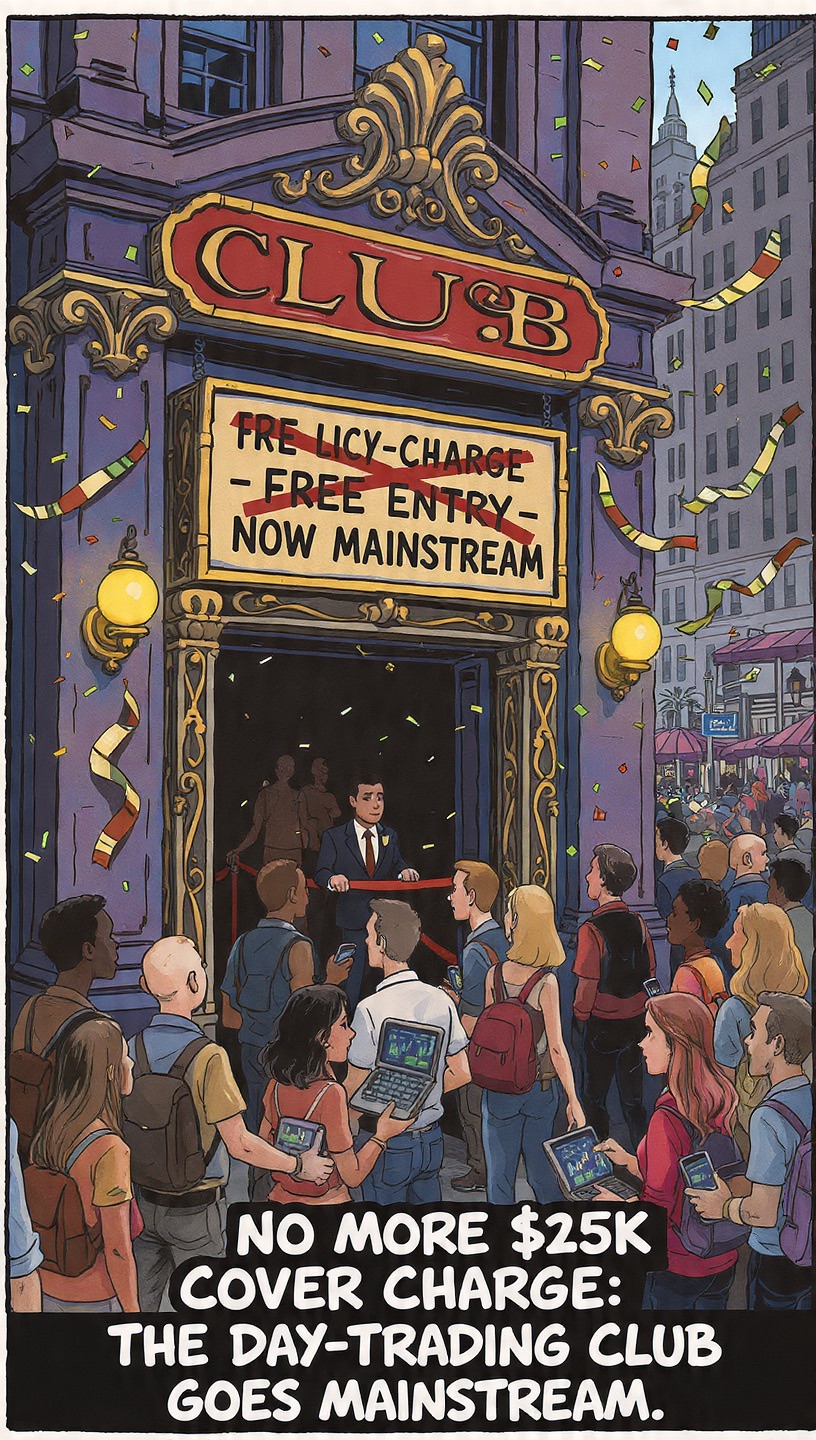
The Securities and Exchange Commission just took a red pen to one of Wall Street’s most annoying footnotes, and suddenly a whole generation of would‑be day traders is reading the fine print again—this time with a smile.
The Rule That Outlived the Flip Phone
For 25 years, the $25,000 pattern day trader rule sat in brokerage disclosures like that gym membership you never used but somehow kept paying for. Born in the ashes of the dot‑com bust in 2001, the rule tried to protect small investors from themselves by insisting that frequent margin day traders keep at least $25,000 in their accounts—or sit on their hands. The logic was paternal, if not entirely flattering: if you wanted to trade like a pro, you needed a pro‑size balance sheet.
That era ended when the SEC approved changes to FINRA’s Rule 4210 in April 2026, green‑lighting the removal of the $25,000 minimum and the “pattern day trader” label itself. The new framework takes effect June 4, 2026, and brokerages have until October 20, 2027, to fully flip the switch, which gives compliance departments just enough time to update their policies and their coffee machines.
From Hard Floor to Smart Risk
The old world was binary: fall below $25,000 and your day‑trading ambitions were effectively on T+Never. The new world is more nuanced—and more modern. Instead of a fixed dollar hurdle, intraday risk will be managed by brokerages using dynamic margin models that look at a client’s positions, maintenance requirements, and real‑time exposure.
In practical terms, eligible margin accounts now only need more than $2,000 to access intraday buying power, with each firm setting its own risk‑based limits. The familiar 25% maintenance margin still applies, but the rigid pattern day trader designation and day‑trade counting regime are being retired to the same museum where we keep paper tickets and modem sounds.
Retail’s New On‑Ramp
The immediate reaction wasn’t subtle. Online brokers saw their shares trade higher as the market priced in what fewer barriers and more intraday flexibility could mean for volumes and engagement. Robinhood, for example, rallied as investors digested the idea that the platform’s core demographic—smaller, active accounts—could finally trade intraday without the $25,000 albatross.
Platforms like Schwab and SoFi stand to benefit as well, especially among investors who previously parked at the sidelines once they bumped up against the rule’s thresholds. Coinbase and other broker‑like venues could also see knock‑on effects as active traders increasingly treat intraday market access as table stakes. The rule change doesn’t guarantee a new bull market in memes, but it does remove a structural ceiling on retail activity that has been in place since many of today’s traders were in grade school.
Opportunity, Meet Risk Management
If the pre‑2020s day trader was the cautionary tale of speculative excess, the post‑rule trader is being handed both a permission slip and a warning label. The SEC and FINRA have not suddenly become day‑trading evangelists; they’ve simply swapped a blunt rule for more surgical, firm‑level risk controls. Brokers must still monitor leverage, stress test exposures, and clamp down on accounts that treat margin like a suggestion rather than a constraint.
For investors, the new regime demands a different kind of discipline. Intraday margin isn’t free money; it is leveraged exposure that amplifies both the clever and the careless trade. In other words, the guardrails now sit inside risk systems rather than in a single, conspicuous number, which puts more pressure on broker education, in‑app risk disclosures, and the quiet but vital work of margin surveillance.
What This Signals About Policy
Regulation rarely moves fast, and when it does, it usually has a story to tell. FINRA proposed these changes in 2025, and the SEC’s April 2026 approval marks a notable shift away from one‑size‑fits‑all restraints toward tech‑enabled oversight. This comes alongside a broader trend in which the Commission has pulled back or revisited several rules from prior administrations, including climate disclosure requirements and a slate of proposals on cybersecurity and data analytics.
For investors, that pattern suggests a regulatory environment more comfortable with market access and innovation, and more skeptical of prescriptive, front‑end barriers. It is not deregulation so much as re‑regulation: fewer bright‑line thresholds, more reliance on systems, surveillance, and firm‑level judgment.
How Investors Can Position
For active traders, the obvious first step is strategic: revisit what intraday tactics make sense when your capital constraint shifts from “$25,000 or bust” to “$2,000 plus margin discipline.” Scalping and event‑driven intraday strategies that were previously out of reach for smaller accounts can now be modeled, tested, and sized appropriately, ideally with a risk plan that includes stop‑losses, max‑loss per day limits, and strict rules on leverage.
For long‑only or more traditional investors, this is less about turning into full‑time day traders and more about understanding the new behavior at the margin. Higher retail intraday activity can influence liquidity, short‑term volatility, and the microstructure of how names with strong narratives—AI, biotech, and early‑stage growth in particular—trade around catalysts. Watching which platforms lean into the new rules with education, analytics, and risk tools may also surface investable themes in brokerage, market infrastructure, and trading‑tech names.
The Sources
[1] Broker stocks rally as FINRA scraps $25K day-trading rule https://finance.yahoo.com/markets/stocks/articles/broker-stocks-rally-finra-scraps-162441004.html
[2] Pattern Day Trading $25K Rule Abolished by SEC – Gotrade https://www.heygotrade.com/en/news/sec-abolishes-pattern-day-trader-rule-retail-brokers/
[3] SEC Approves Scrapping $25000 Day Trader Minimum https://www.schwab.com/learn/story/sec-approves-scrapping-25000-day-trader-minimum
[4] SEC Withdraws Proposed Rules Affecting Investment … https://www.stinson.com/newsroom-publications-sec-withdraws-proposed-rules-affecting-investment-advisers-funds-and-broker-dealers
[5] SEC Pulls Back 14 Proposed Rules from Prior Administration https://401kspecialistmag.com/sec-pulls-back-14-proposed-rules-from-prior-administration/
[6] SEC Votes to End Defense of Climate Disclosure Rules https://www.sec.gov/newsroom/press-releases/2025-58
[7] The $25000 Day Trading Rule Is Being Eliminated After 25 … https://www.youtube.com/watch?v=gdNDJG8JxLU&vl=en
[11] Book Review – The Wall Street Journal Guide to Information … https://www.youtube.com/watch?v=bz7sQBW9Nco
[12] Marketing Compliance – Frequently Asked Questions https://www.sec.gov/rules-regulations/staff-guidance/division-investment-management-frequently-asked-questions/marketing-compliance-frequently-asked-questions
[14] The SEC gave the go-ahead for sweeping changes to a … https://www.facebook.com/bloombergbusiness/posts/the-sec-gave-the-go-ahead-for-sweeping-changes-to-a-restriction-on-day-trading-a/1374254727893950/
Stay Updated with Vista Partners
Subscribe to receive market insights, investing ideas, and the latest updates directly in your inbox.