
Wall Street has a new favorite subplot in the diabetes and obesity saga: a three-act story where Sanofi (SNY) shores up the autoimmune front, Modular Medical (MODD) quietly rewires insulin delivery, and the GLP‑1 heavyweights audition next‑gen obesity drugs on the ADA stage. Together, they sketch a future where diabetes care looks less like a chronic crisis and more like a fully financed turnaround.
Act I: Sanofi’s Tzield Buys Time – And Optionality
Sanofi’s Tzield (teplizumab‑mzwv) has stepped into a rarefied role: a disease‑modifying antibody for type 1 diabetes that’s designed to delay the march to full‑blown, insulin‑dependent disease. The FDA has granted accelerated approval to Tzield in children 8–17 with stage 3 type 1 diabetes to slow the decline of their own insulin production, extending its earlier positioning as the first drug to delay onset of stage 3 in stage 2 patients. Regulators have also accepted a supplemental biologics application for priority review to push the age window lower, aiming to include children as young as one year with stage 2 disease and a target action date in late April 2026. If successful, that expansion would effectively move Sanofi’s addressable market upstream, where each “extra year” before insulin dependence isn’t just a clinical win but a compounding economic and quality‑of‑life asset for families and payers.
Why Tzield Matters To Investors
For long‑term investors, Tzield’s story is not just about revenue per vial; it’s about where in the disease curve Sanofi chooses to compete. By targeting stage 2 and early stage 3 type 1 diabetes, the company inserts itself into the high‑value window where preserving endogenous insulin can alter lifetime costs and complications. That positioning not only supports pricing power but also strengthens Sanofi’s broader diabetes franchise narrative in a world increasingly obsessed with GLP‑1‑driven obesity headlines. The accelerated and priority review paths give investors a concrete regulatory catalyst stack—each label expansion reinforcing Tzield’s platform potential and Sanofi’s execution credibility. In a market that routinely rewards “pathway optionality,” Tzield looks like a strategic foothold in immune‑mediated metabolic disease rather than a one‑off product.
Act II: Modular Medical’s Pivot Pump Unplugs Legacy Insulin Delivery
While Sanofi works upstream on immune modulation, Modular Medical (NASDAQ: MODD) is going after a more prosaic but highly levered pain point: the daily grind of insulin delivery. The company has recently secured FDA 510(k) clearance for Pivot, its next‑generation tubeless insulin patch pump, and is now rolling out a new website built around the question, “Is it time to pivot away from multiple daily injections?” The Pivot system is designed to simplify pump therapy for physicians and patients who have historically found legacy pumps too complex, too fiddly, or simply too intimidating to prescribe and use. By leaning into connectivity and simplicity rather than feature overload, Modular Medical is effectively targeting the very real adoption gap between sophisticated technology and everyday clinic workflow, which is estimated to be approximately a $3 billion dollar market that they call the adult “almost-pumpers,” people managing diabetes who haven’t adopted traditional pumps due to complexity, cost, or training barriers.
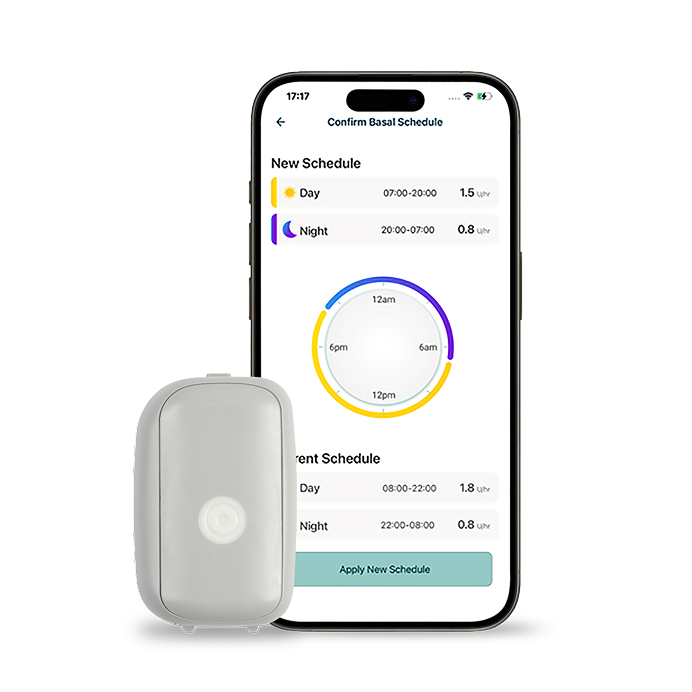
A Small Cap Taking Aim At A Big Installed Base
Investors have long known that insulin pump penetration remains stubbornly below its theoretical potential, constrained by training, inertia, and the perceived hassle factor. Pivot’s tubeless design, combined with a web‑first educational push, is clearly calibrated to lower those switching costs and pull multiple‑daily‑injection patients into the device ecosystem. For a small‑cap name, the math is straightforward: modest share gains from a very large, structurally underpenetrated pool of insulin‑requiring patients can move the revenue needle quickly. If Modular Medical can convince even a small fraction of primary care‑driven practices to “pivot” alongside their patients, the operating leverage could be more exciting than the hardware itself.
Act III: GLP‑1 Heavyweights Rewrite The Obesity Playbook
On the other side of the metabolic ledger, obesity therapies are undergoing a transformation that feels more like a platform arms race than an incremental product cycle. At the American Diabetes Association Scientific Sessions in New Orleans, Eli Lilly (LLY) and Novo Nordisk (NVO) showcased new GLP‑1 pills and injectable candidates while competitors and fast followers used the same stage to signal their own ambitions.. Lilly, already leading the injectable obesity market, presented Phase 3 data on its triple‑agonist retatrutide, which targets GLP‑1, GIP, and glucagon receptors and produced approximately 28% weight loss—about 70 pounds over 80 weeks—in the TRIUMPH‑1 obesity study. Novo and Lilly also highlighted that prescriptions for Novo’s oral Wegovy pill surpassed 3 million within five months of launch, underscoring the demand for more convenient, non‑injectable options.
Beyond Weekly Shots: Pills, Triples, And Monthly Dosing
The competitive script is evolving beyond “who has the best weekly shot.” Lilly’s Foundayo, a newly launched small‑molecule GLP‑1 pill, is already viewed as a future blockbuster, while other players like Structure Therapeutics (GPCR) and AstraZeneca (AZN) are pushing mid‑stage oral GLP‑1 candidates that could reach the market around 2029 if Phase 3 data cooperate. Pfizer (PFE), unwilling to sit out the sequel after its earlier GLP‑1 setbacks, rolled out Phase 2b data on berobenatide, a new injectable it acquired via its roughly 10 billion dollar purchase of Metsera, showing around 16% weight loss at higher weekly doses and about 12% placebo‑adjusted weight loss at 28 weeks in a separate maintenance study. The company is positioning berobenatide as a “foundational medicine” with 10 planned or ongoing Phase 3 trials and an eye toward both weekly and potentially monthly dosing regimens later in the decade.
The Payment Plot Twist: Medicare Joins The Cast
No modern obesity story is complete without the payor subplot, and this one is finally getting interesting. Lilly and Novo are actively working to improve insurance coverage for GLP‑1 weight‑loss medications, arguing that the long‑term cardiometabolic benefits justify broader access. In the near term, millions of Medicare beneficiaries are poised to gain access to these drugs with out‑of‑pocket costs reportedly around 50 dollars per month, a potential inflection point for volume that investors have been waiting for. If that access persists and expands, GLP‑1s could migrate from “elite benefit” to a more standard component of cardiometabolic care, with all the volume, pricing, and policy debates that implies.
One Metabolic Theme, Multiple Investable Angles
Taken together, Tzield, Modular Medical’s (MODD) Pivot, and the new class of obesity drugs share a common thread: shifting diabetes and obesity management from late‑stage firefighting to earlier, more elegant intervention. Sanofi is trying to buy patients time before insulin dependence, Modular Medical is simplifying life once insulin is unavoidable, and GLP‑1 leaders are attacking the obesity and type 2 diabetes axis with escalating pharmacologic sophistication. For investors, this translates into a portfolio of uncorrelated but thematically linked exposures—immune modulation, device adoption, and obesity pharmacology—that all ride the same long‑duration megatrend: the global, policy‑supported push to bend the cardiometabolic cost curve. The market will, of course, oscillate between rewarding near‑term prescription curves and long‑dated pipeline readouts, but the underlying demand drivers are more structural than cyclical at this point.
A Brief Note Of Sophisticated Caution
Amid the excitement, the usual caveats apply: immunotherapies like Tzield must continue to demonstrate durable benefit and acceptable safety in younger children; devices like Pivot have to navigate reimbursement, training, and real‑world adherence; and the GLP‑1 race will be shaped not only by efficacy but by tolerability, convenience, and political scrutiny over drug costs. The sector, in other words, offers plenty of catalysts—but also ample room for sentiment swings and valuation indigestion. For investors willing to live with those swings, the current setup feels less like a speculative trade and more like an evolving franchise opportunity across multiple modalities of metabolic care. In Wall Street terms, this isn’t just a story about who sells the most injections this quarter—it’s about who gets written into the standard of care over the next decade.
Learn More Here
The Sources
- Sanofi – Tzield US approval and label expansion updates (press releases and background)
https://www.sanofi.com/en/media-room/press-releases/2026/2026-06-12-22-09-58-3311349
https://www.sanofi.com/en/media-room/press-releases/2026/2026-01-05-06-00-00-3212420
https://www.sanofi.com/en/media-room/press-releases/2026/2026-04-22-Sanofis-Tzield-approved-in-the-US-to-delay-the-onset-of-stage-3-type-1-diabetes-in-young-children - Clinical and prescribing background on Tzield (efficacy, safety, indication)
https://www.tzield.com/about-tzield/efficacy-and-safety
https://www.sanofi.com/assets/countries/canada/docs/products/prescription-products/Tzield_RMP/MAT-CA-2400962_TZI_RMP-Tool-HCP-Guide-EN-Approved.pdf - Sanofi SEC filing referencing Tzield priority review
https://www.stocktitan.net/sec-filings/SNY/6-k-sanofi-current-report-foreign-issuer-e0eb0782364b.html - Modular Medical – Corporate site and Pivot / MODD1 positioning
https://www.modularmedical.com - Modular Medical – FDA 510(k) clearance for the Pivot tubeless insulin patch pump
https://www.drugdeliverybusiness.com/modular-medical-fda-clearance-pivot-pump/
https://www.massdevice.com/modular-medical-fda-clearance-pivot-pump/ - CNBC – “GLP-1s: Lilly, Novo, Pfizer look to new weight loss drugs” (ADA 2026 coverage, Foundayo, berobenatide, Medicare coverage)
https://www.cnbc.com/2026/06/13/glp-1s-lilly-novo-pfizer-look-to-new-weight-loss-drugs.html - BioPharma Dive – ADA ’26 metabolic/GLP‑1 conference recap (retatrutide, Pfizer berobenatide data)
https://www.biopharmadive.com/news/ada-2026-lilly-retatrutide-pfizer-berobenatide-roche-enicepatide/822208/ - ScienceDaily – New oral GLP‑1 pill for type 2 diabetes and weight loss (additional context on GLP‑1 oral therapies)
https://www.sciencedaily.com/releases/2026/06/260614011850.htm
Stay Updated with Vista Partners
Subscribe to receive market insights, investing ideas, and the latest updates directly in your inbox.