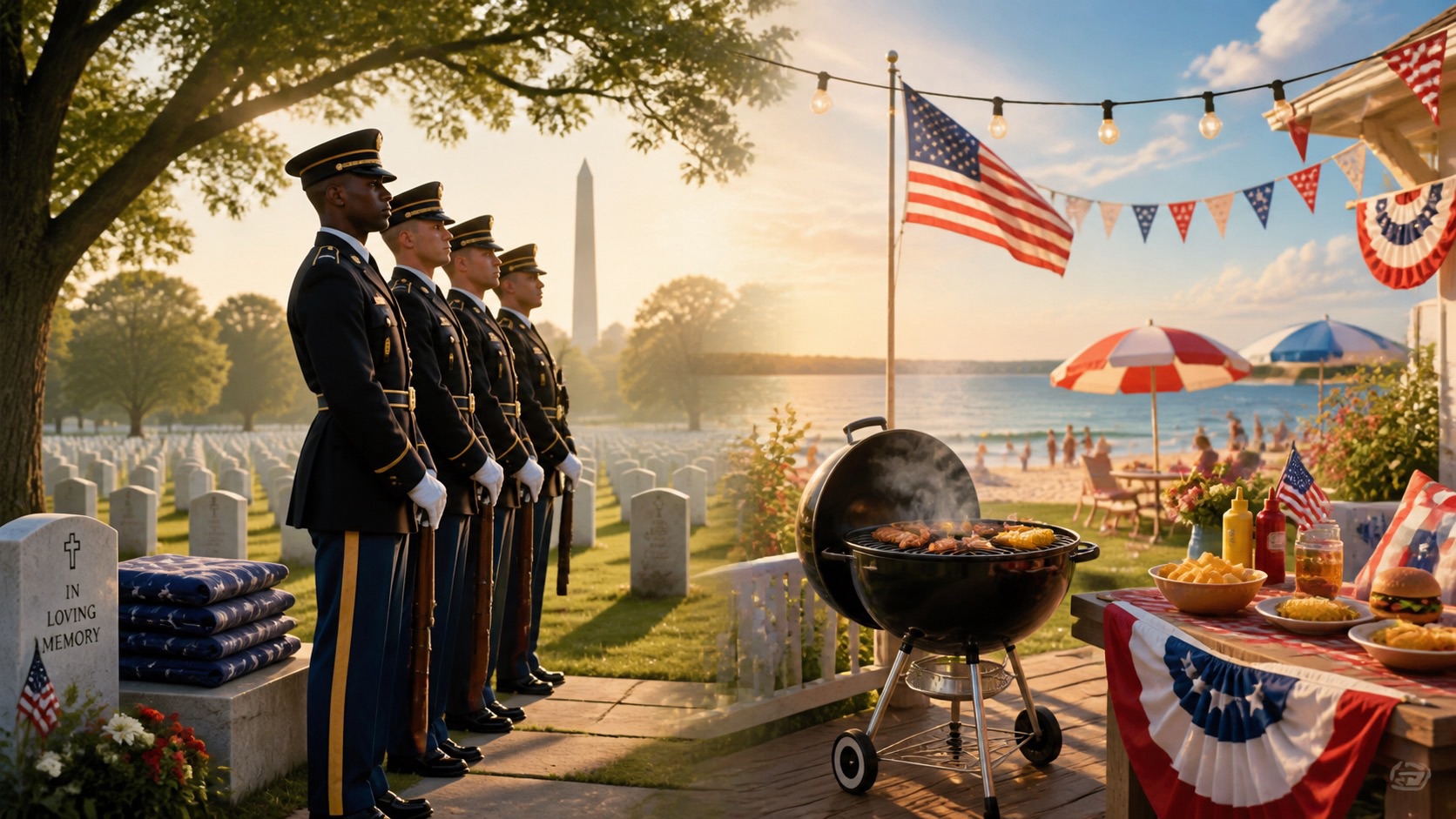
Memorial Day occupies a uniquely American position in the national calendar—a solemn tribute to fallen service members that doubles as the unofficial kickoff to summer, complete with barbecues, beach trips, and retail promotions. This dual identity, far from diminishing the holiday’s significance, reflects a democratic impulse to weave remembrance into the fabric of everyday life rather than sequestering it in hushed ceremonial spaces.
From Flowers to Federal Holiday
The holiday emerged from the aftermath of the Civil War, which claimed approximately 620,000 lives—roughly 2% of the nation’s population—and necessitated the creation of America’s first national cemeteries. In the late 1860s, communities across the country spontaneously began springtime tributes, decorating soldiers’ graves with flowers and reciting prayers. One of the earliest documented observances occurred less than a month after the Confederacy’s surrender in 1865, organized by formerly enslaved people in Charleston, South Carolina, who transformed a former racetrack prison for Union captives into a proper burial ground.newsroom.
On May 5, 1868, General John A. Logan, leader of the Grand Army of the Republic—an organization of Union veterans—formalized these grassroots efforts by calling for a nationwide “Decoration Day” on May 30th. He deliberately selected a date that marked no particular battle, ensuring the observance would honor sacrifice itself rather than military victory. The federal government later designated Waterloo, New York, as the official birthplace of Memorial Day, recognizing the town’s 1866 community-wide event during which businesses closed and residents decorated graves with flowers and flags.
The Evolution of Remembrance
Initially honoring only Civil War dead, the holiday expanded after World War I to commemorate American military personnel who died in all conflicts, including World War II, Korea, Vietnam, and the wars in Iraq and Afghanistan. By 1890, all Northern states had made Decoration Day an official state holiday, though Southern states continued honoring their dead on separate days until after the First World War.
The transformation from Decoration Day to Memorial Day culminated in 1971, when Congress passed the Uniform Monday Holiday Act, establishing the observance on the last Monday of May and declaring it a federal holiday. The legislation created a three-day weekend for federal employees—a move that perhaps unintentionally accelerated the holiday’s commercial dimension while maintaining its commemorative core.
Modern Traditions and the Paradox of Memory
Today’s Memorial Day observances span a remarkable spectrum: large-scale parades in Chicago, New York, and Washington, D.C., featuring military personnel and veterans’ organizations; cemetery visits and memorial services; and the wearing of red poppies inspired by a World War I poem. At 3:00 p.m. local time each Memorial Day, a national moment of remembrance invites Americans to pause collectively.
Yet these solemn rituals coexist with weekend getaways, backyard parties, and the retail extravaganza that marks summer’s unofficial arrival. This juxtaposition might seem jarring to purists, but it embodies a distinctly American approach to civic life—one that trusts citizens to hold gratitude and leisure, reverence and recreation, in productive tension rather than rigid compartmentalization. The holiday’s enduring power lies not in choosing between remembrance and celebration, but in demonstrating that a mature democracy can honor both impulses simultaneously.
The Sources
- Memorial Day 2024: Facts, Meaning & Traditions – HISTORY
- What is Memorial Day? Facts, Meaning, and History – Wounded Warrior Project
- History of Memorial Day – PBS National Memorial Day Concert
- History of Memorial Day – Danvers, MA
- The History of Memorial Day – Armed Services Officers Mutual Foundation
- Memorial Day History – National Cemetery Administration
Stay Updated with Vista Partners
Subscribe to receive market insights, investing ideas, and the latest updates directly in your inbox.