
Tenon Medical, Inc. (NASDAQ: TNON) is had the sort of trading day that causes even seasoned small-cap investors to refresh their screens twice. Shares closed up $5.96, or 109.36%, to $11.41, after hitting an intraday high of $16.28..Volume exceeded 48.4 million shares—roughly 123 times its 383,642-share average daily volume—suggesting that the market has abruptly moved this small medical-device story from the waiting room to the examination room. The catalyst is not merely momentum wearing a lab coat. Tenon has assembled a sequence of commercial, regulatory, financing and margin developments that give the company a more tangible growth narrative heading into the second half of 2026. For a company focused on sacroiliac-joint fusion, that is an especially apt outcome: the pieces are beginning to fuse.
A Revenue Inflection With Better Economics
Tenon Medical (NASDAQ: TNON) reported second-quarter 2026 revenue of $1.3 million, up 127% from $0.6 million in the prior-year quarter. Gross profit rose 232% to $0.8 million, while gross margin expanded 21 percentage points to 64%, from 43% a year earlier. First-half revenue of $2.7 million increased 106% year over year, and first-half gross margin reached 66%. Those results matter because they indicate more than a one-quarter sales spike. The company cited increased surgical procedures across both its Catamaran® and SImmetry+® SI-joint fusion platforms, alongside greater production-overhead absorption. In ordinary English: a growing procedural base is allowing a fixed-cost-heavy device business to produce more attractive incremental economics.The company is still loss-making, reporting a second-quarter net loss of $4.1 million and cash of $1.7 million as of June 30. Yet the investment case is increasingly centered on whether revenue growth and gross-margin expansion can narrow that gap—not on whether Tenon can generate commercial activity at all.
FDA Clearance Adds a Margin Lever
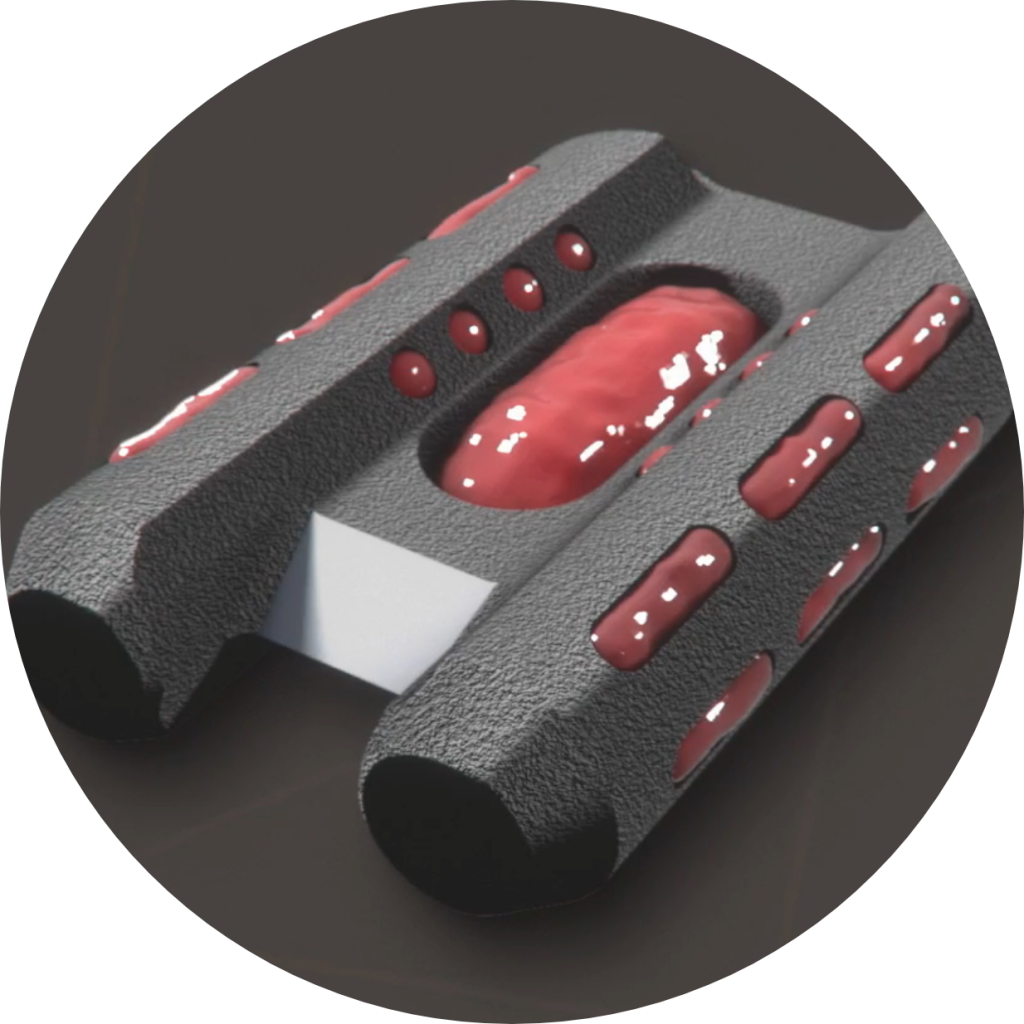
In July, Tenon announced FDA 510(k) clearance for an updated Catamaran® SI Joint Fusion System. The clearance includes instrument upgrades and reclassifies certain instruments from disposable to reusable, a change management expects to improve system performance and reduce per-procedure costs. That is a potentially important development for a young medtech commercial platform. Reusable instrumentation can help reduce recurring case costs, which could make each procedure economically stronger for Tenon (NASDAQ: TNON) as volume grows. It is not every day that a product update has the potential to make both surgeons and gross margins feel a bit more comfortable. Management has indicated that the updated configuration’s benefits should begin contributing meaningfully in the third quarter. If execution matches the thesis, the company could be moving toward the attractive medtech combination of higher case volume and better contribution margins.
Training Is Becoming a Commercial Engine
The company reported that physician and distributor training events increased 98% in the first half of 2026 versus the second half of 2025. That commercial investment was followed by record monthly surgical case volume in July. For device companies, training is not simply a line item; it is often the bridge between regulatory clearance and recurring procedure demand. Tenon’s expanding clinical and distribution education footprint may therefore be a leading indicator for wider adoption of its Catamaran and SImmetry+ systems. Tenon’s strategy addresses three SI-joint opportunities: primary procedures, revisions of failed SI-joint implants, and SI-joint fusion used as an adjunct to spinal-fusion constructs. That diversified procedural focus gives the company several pathways to grow utilization rather than leaning on a single clinical use case.
Capital and Compliance Improve the Setup
Tenon closed a $4.2 million public offering on July 1, producing approximately $3.6 million in net proceeds. The proceeds are earmarked for partial repayment of convertible notes, commercial expansion, clinical research, product development and general corporate purposes. Separately, Nasdaq notified Tenon that it had regained compliance with the minimum $2.5 million stockholders’ equity requirement following the offering. The company must still demonstrate continued compliance in future filings, and it is also working to regain compliance with Nasdaq’s minimum-bid-price requirement after implementing a 1-for-35 reverse split effective August 10. This is not a “risk-free” balance-sheet story—indeed, small-cap medtechs rarely arrive with silk gloves and a treasury full of cash. Tenon disclosed $5.2 million in convertible notes maturing September 11, 2026, extendable to December 11, 2026, and cautioned that it cannot assure full repayment or refinancing. Investors should consider dilution, liquidity, debt resolution and listing compliance central parts of the TNON debate.
Why TNON Is Getting Attention Today
Today’s move appears to reflect a collision of improved fundamentals and an unusually tight trading backdrop. At the latest quote, TNON was trading at $11.72 versus a $5.45 prior close, with a $9.89–$17.84 intraday range and more than 47 million shares traded. That degree of turnover can accelerate a rerating—but it can also produce sharp reversals..
The bullish interpretation is straightforward:
- Revenue growth has accelerated, with Q2 sales up 127% year over year.
- Gross margin has expanded sharply to 64%.
- FDA-cleared Catamaran upgrades could further lower procedural costs.
- Training activity and July case volume suggest commercial traction is deepening.
- Fresh capital provides near-term resources for commercial and clinical priorities.
- Nasdaq equity compliance has been regained, even as other listing matters remain outstanding.
A Bullish View
Tenon Medical (NASDAQ: TNON) is seemingly emerging as a speculative medtech turnaround and growth story rather than a purely developmental microcap. The company now has reported revenue acceleration, meaningful gross-margin expansion, regulatory progress, a broader product lineup and measurable commercial activity behind its SI-joint franchise.
The next proof point is execution: sustained procedure growth, realization of the reusable-instrument cost benefits, management of the convertible-note obligation and continued Nasdaq compliance. If those items progress constructively, today’s move may look less like an isolated trading event and more like the market recognizing an early-stage commercial inflection.
The Sources
- Tenon Medical Investor Relations — Company news, investor materials, SEC filings and stock-information portal.
- Tenon Medical Reports Second Quarter 2026 Financial Results — Q2 revenue, gross-profit and margin results; FDA 510(k) clearance; training and procedure-volume commentary; financing and liquidity disclosures.
- Tenon Medical Regains Nasdaq Stockholders’ Equity Compliance — SEC Exhibit 99.1 — Nasdaq stockholders’ equity compliance announcement and related corporate disclosure.
- Tenon Medical Q2 2026 Earnings Call Transcript — Yahoo Finance — Management discussion of Q2 performance, gross-margin expansion and Catamaran system clearance.
- Tenon Medical Q2 2026 Earnings Analysis — Yahoo Finance — Third-party coverage of revenue growth, margin performance and the Catamaran system update.
- Tenon Medical Press Releases — Nasdaq — Press-release archive for Tenon Medical, Inc. (NASDAQ: TNON).
- Tenon Medical Q2 2026 Earnings Report — MarketBeat — Discussion of the reported results and expected reusable-instrument cost benefits.
- Tenon Medical Stock Quote — Yahoo Finance — General market-data and news landing page for Tenon Medical, Inc. (NASDAQ: TNON).
Disclosure: This content is for informational purposes only and is not investment advice, a recommendation or an offer to buy or sell securities. Microcap medical-device stocks, including Tenon Medical (NASDAQ: TNON), can be highly volatile and involve substantial risks, including financing, dilution, debt, regulatory, commercialization and listing-compliance risks.
Stay Updated with Vista Partners
Subscribe to receive market insights, investing ideas, and the latest updates directly in your inbox.