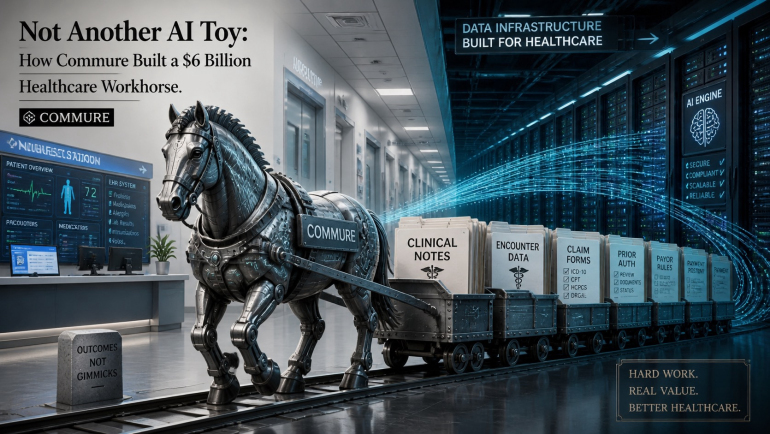
Commure’s latest funding round reads less like a startup press release and more like a subtle reset for how Wall Street thinks about AI in healthcare—less science project, more infrastructure play with real revenue attached.
A $6 Billion Reminder That Healthcare Runs on Admin
Healthcare may be a $4.5 trillion industry, but the part Commure is chasing is the least glamorous line item on the bill: the more than $500 billion the U.S. spends every year just pushing paperwork and reconciling claims. The company has quietly built itself into a kind of operating rails provider for this back office, with an AI-native revenue cycle platform, ambient clinical documentation tools, and practice management software that now touch more than 130 health systems and hundreds of thousands of clinicians nationwide.
That footprint helps explain why recent funding has come at multibillion-dollar valuations, including a reported combined valuation of around $6 billion following its tie-up with Athelas and subsequent growth financings. In a market where many AI companies still lead with model benchmarks and lab demos, Commure’s pitch is artfully prosaic: it helps hospitals get paid correctly, faster, and with fewer humans staring at coding screens at 11:37 p.m. on a Tuesday.
From Overfunded Demos to Actually Working Software
For years, health-tech conference stages were crowded with demos promising seamless interoperability, ambient documentation, and automated coding—usually powered by slide decks and optimism. Commure’s platform, built to be FHIR-native and EHR-agnostic, is designed to do the unglamorous work those demos promised: make different electronic health record systems talk to each other, transcribe and structure clinical conversations, and generate billing-ready codes without blowing up compliance.
The company’s technology is already processing tens of millions of patient interactions annually across major health systems, including a large-scale ambient AI rollout with HCA Healthcare focused on emergency departments, hospital medicine, and ambulatory care. That scale matters because the economics of AI in healthcare have shifted from “if it works” to “how much time and money it saves,” and Commure’s customers increasingly treat the software less as innovation theater and more as infrastructure—closer to a utility than a gadget.
The Business Case: Automate First, Innovate Second
Hospitals have discovered an uncomfortable truth: AI that helps with clinical wizardry is nice, but AI that improves the margin gets budget approval. Commure leans into that calculus by focusing on revenue cycle management, autonomous coding, and productivity tools that directly affect operating income, turning previously manual workflows into automated sequences that handle claim creation, documentation, and follow-up.
Billions of dollars in annual revenue cycle automations now flow through the platform, and the company reports annual recurring revenue in the hundreds of millions, having doubled for three consecutive years. In an era when investors have grown wary of AI companies that scale servers faster than sales, a model where software rides on top of existing EHR installs and charges for tangible financial lift is the kind of old-fashioned story even a skeptical credit committee can appreciate.
Ambient AI Moves From Buzzword to Utility
One of Commure’s more visible bets is ambient AI—systems that listen to clinical encounters, generate documentation, and quietly push structured data back into the EHR while physicians focus on patients, not keyboards. The company is rolling out what has been described as one of the largest ambient AI deployments in U.S. healthcare, aiming to cut down on after-hours charting while keeping documentation accurate enough to satisfy both payers and auditors.
This fits a broader industry trajectory in which AI is increasingly deployed to handle high-volume, repetitive tasks such as documentation, imaging analysis, and administrative processing, freeing clinicians to focus on higher-order decisions. For hospitals, ambient AI becomes less of a gadget and more of a staffing strategy: if software can absorb a chunk of clerical work, the marginal value of each clinician shifts up, and the burnout curve, at least in theory, bends down.
Why General Catalyst and Friends Keep Writing Checks
Commure did not emerge from a garage but from a venture-creation effort led by General Catalyst, which has treated the company as a flagship bet on rebuilding healthcare’s digital infrastructure. Subsequent funding rounds, including a $200 million growth financing backed by General Catalyst’s Customer Value Fund and other investors, have been explicitly tied to performance milestones and scaled deployments, reflecting a more disciplined phase of the AI funding cycle.
The investor roster now ranges from early-stage venture names like Sequoia and Y Combinator to later-stage firms and strategics, a mix that signals expectations for both continued high growth and eventual public-market scrutiny. With more than $250 million in cash on its balance sheet after its combination with Athelas and subsequent raises, Commure has the unusual luxury—at least by startup standards—of building out its infrastructure and product suite without living quarter-to-quarter on the next term sheet.
Valuation in an Age of AI Fatigue
In a market moment where AI valuations have ranged from frothy to fantastical, Commure’s multibillion-dollar price tag is being underwritten more by installed base and recurring revenue than by speculative model IP. The platform supports more than half a million clinicians across hundreds of care sites, and more than $10 billion already flows through its systems, providing investors with the sort of usage metrics that look more like enterprise software than experimental health tech.
Growth has been robust, with the company reporting more than 300% year-over-year expansion over the past two years, aided by a health system customer list that increasingly treats AI tools as part of core operations rather than pilots. If AI fatigue has crept into broader markets, Commure’s thesis is that hospitals will remain willing buyers of software that reliably turns documentation into cash flow; as business models go, “we help you get paid” continues to age better than “we’ll eventually find a use case.”
The Broader AI-in-Healthcare Tailwind
Commure is riding a secular wave that extends beyond revenue cycle and documentation: the global AI-in-healthcare market is expected to grow from tens of billions of dollars mid-decade to several hundred billion—or more than $900 billion—by the mid-2030s, driven by demand for efficiency, better diagnostics, and personalized care. As health systems digitize everything from imaging to patient engagement, platforms that can orchestrate data, apply machine learning, and deliver measurable operational improvements stand to capture a disproportionate share of that spend.
Research and industry roadmaps suggest that ambient intelligence, predictive analytics, and connected digital infrastructures will move from pilot programs to standard of care over the next decade, making AI less of an add-on and more of the default way healthcare is delivered. If that forecast holds, companies like Commure that position themselves as operating systems for the administrative and financial side of care may find that their addressable market expands every time a hospital retires a fax machine.
Can Commure Stay Boring Enough to Win?
The paradox for Commure is that its path to long-term success may hinge on remaining relatively unexciting: healthcare infrastructure companies are at their best when they are dull, predictable, and slightly under-covered. The company will have to navigate the usual gauntlet—data privacy expectations, regulatory oversight, and the risk that payers or large health systems decide to build competing tools in-house—while continuing to deliver the mundane magic of fewer denials, faster claims, and lighter documentation loads.
For now, though, investors appear content to back a healthcare AI story whose hero is a revenue cycle engine rather than a humanoid robot or a consumer app; in a sector defined by complexity, opacity, and thin margins, an AI platform that makes the bills add up may be the most grounded version of disruption on offer.
The Sources
Commure – Company Website https://www.commure.comcommure
“Commure Raises $200M in Growth Financing From General Catalyst” – Fierce Healthcare https://www.fiercehealthcare.com/health-tech/commure-raises-200m-growth-financing-general-catalystfiercehealthcare
“Commure Nabs $500M in Funding for Health Software” – MobiHealthNews https://www.mobihealthnews.com/news/commure-nabs-500m-funding-health-softwaremobihealthnews
Commure Company Profile – LinkedIn https://www.linkedin.com/company/commurelinkedin
“Commure Raises $200M, Valued at $6B, With AI-Powered Healthcare Platform” – LinkedIn Post https://www.linkedin.com/posts/jesselandry23_patient-fhir-ehr-activity-7342953840524095489-G6XXlinkedin
“Our Creation of Commure” – General Catalyst https://www.generalcatalyst.com/stories/announcing-commuregeneralcatalyst
“Artificial Intelligence in Healthcare: Transforming the Practice of Medicine” – PMC (NIH) https://pmc.ncbi.nlm.nih.gov/articles/PMC8285156/pmc.ncbi.nlm.nih
“AI in Healthcare Market Rises 37.66% Healthy CAGR by 2035” – Towards Healthcare https://www.towardshealthcare.com/insights/ai-in-healthcare-markettowardshealthcare
“How AI Is Used in Healthcare and Future Trends” – USAHS https://www.usa.edu/blog/how-ai-is-revolutionizing-healthcare/usa
Eupraxia’s (NASDAQ: EPRX) current analyst chorus post their most recent First Quarter 2026 Financial Results report is now singing from the same hymn book: this is a late-stage GI platform story with cash in the bank, near-term catalysts, and price targets that sit comfortably above the current quote. What sharpens the narrative is the competitive backdrop: Sanofi (SNY) and Regeneron’s (REGN) Dupixent already owns the distinction of being the first approved drug for EoE, but analysts increasingly see room for a more durable and procedure-friendly alternative if EP-104GI continues to deliver.
EoE 101: A Growing Market Hiding in Plain Sight
Eosinophilic esophagitis, or EoE, is a chronic immune-mediated inflammatory disease of the esophagus that can make swallowing difficult, painful, and at times hazardous because inflammation and tissue remodeling can narrow the esophageal lumen. Analysts covering Eupraxia describe EoE as a large and growing indication with meaningful unmet need, and Raymond James estimates the U.S. opportunity at roughly 400,000 to 700,000 patients. LifeSci’s valuation framework uses about 375,000 diagnosed U.S. patients today, while third-party market research cited in recent coverage places U.S. diagnosed prevalence at roughly 445,000 to 500,000 cases and says the United States represents the largest share of diagnosed patients among major markets.
The commercial market is no longer theoretical. DelveInsight estimated the EoE treatment market across the seven major markets at about $1.8 billion in 2023, while Mordor Intelligence projects the global EoE market to reach about $2.8 billion by 2030 with North America as the largest regional market. For investors, that means EoE has graduated from orphan-like obscurity into a bona fide specialty market where a differentiated therapy can still take meaningful share.
Dupixent Opened the Door
Sanofi and Regeneron’s Dupixent was first approved by the FDA for EoE in 2022 for patients aged 12 and older, and that label was expanded in 2024 to include children as young as 1 year old weighing at least 15 kg. The prescribing information states that for EoE, patients weighing 40 kg or more receive 300 mg every week, while lower-weight pediatric patients receive weight-based dosing every two weeks. In other words, Dupixent deserves credit for proving the market exists, but it also established a treatment rhythm that asks many patients to keep showing up for frequent injections.
That matters because William Blair highlights Dupixent as the only FDA-approved chronic therapy for EoE and argues many patients still have incomplete disease control, leaving room for a safe, effective, and durable treatment that can be administered once per year during a routine endoscopy. Recent Phase 4 data from Regeneron and Sanofi also suggest Dupixent may improve esophageal function and structural disease measures over 24 weeks, reinforcing that the standard of care is improving even as competitive expectations rise.
Why EP-104GI Looks Different
The common thread across the analyst reports is that EP-104GI appears designed to compete not by imitating Dupixent, but by changing the treatment cadence and site of action. Eupraxia’s lead asset is a long-acting, controlled-release fluticasone formulation delivered through submucosal injection into the esophageal wall, and analysts believe that localized delivery may offer a combination of durability, low systemic exposure, and practical integration into GI workflows.
Several potential advantages over Dupixent recur across the Street’s framing:
Less frequent treatment burden, because analysts describe EP-104GI as aiming for once-yearly administration during routine endoscopy rather than weekly injections for many Dupixent-treated patients.
Localized delivery, because LifeSci notes systemic fluticasone exposure has remained low in the RESOLVE program while the drug appears to stay active in esophageal tissue over an extended period.
Durable tissue effect, because analysts cite improvements in histology, endoscopic features, and symptoms through 36 weeks in higher-dose cohorts, with the 4Q26 Phase 2b readout seen as the major de-risking event.
Workflow fit, because both William Blair and LifeSci emphasize that GI physicians already operate in an endoscopy-centered setting, making a procedure-based therapy potentially more natural for specialists than a long sequence of self- or caregiver-administered injections.
Optionality beyond EoE, because analysts also see EP-104GI as a credible candidate for benign esophageal strictures and potentially other fibro-inflammatory GI conditions, whereas current published valuation for Dupixent in these analysts’ reports are centered on its approved EoE use.
To be clear, this is still a clinical-stage story, so “seems to have” is doing important work here. Dupixent is approved, validated, and commercially real, while EP-104GI is still earning the right to make those advantages more than a persuasive slide in a conference ballroom.
The Street’s Ratings and Price Targets
On rating, Eupraxia enjoys the kind of unanimity usually reserved for blue-chip tech or post-merger arbitrage: every analyst in this document set is bullish.
Firm
Rating
Target
Valuation view
Raymond James
Strong Buy
$18.00
Risk-adjusted SOTP DCF with base and M&A scenario weighting.
LifeSci Capital
Outperform
$16.00
DCF through 2045 with EoE peak sales as the central driver.
Craig-Hallum
Buy
$14.00
DCF that includes EoE and additional EP-104 opportunities.
William Blair
Outperform
$14.00 fair value
Risk-adjusted SOTP for EP-104GI in EoE across the U.S., Europe, and Japan.
Raymond James sits at the top of the range, with an $18 target based on a blended sum-of-the-parts DCF that assigns substantial value to EP-104GI in EoE and includes a takeover scenario in the mix. LifeSci lands at $16, while Craig-Hallum and William Blair both arrive at $14, suggesting the Street sees substantial upside even without assuming perfection.
Why the Setup Has Teeth
Analysts are effectively telling the same story with slightly different accents: EP-104GI looks positioned to be a differentiated EoE therapy with a potentially friendlier practice model than today’s approved option, and the balance sheet gives the company time to prove it. Eupraxia reported roughly $139 million to $140 million in cash, cash equivalents, and investments at quarter-end, and the firms broadly agree that this should fund operations into the second half of 2028, carrying the company beyond the next key clinical milestones.
That leaves the investment case balanced on a familiar biotech hinge: if the Phase 2b RESOLVE data in 4Q26 validate the durability and efficacy suggested so far, EP-104GI could emerge as a genuine challenger in a market Dupixent helped create.
The Sources
Sanofi press release – initial FDA approval of Dupixent for EoE (ages 12+; 300 mg weekly) https://www.sanofi.com/en/media-room/press-releases/2022/2022-05-20-19-15-00-2447906sanofi
Sanofi press release – FDA approval of Dupixent for pediatric EoE (ages 1–11) https://www.sanofi.com/en/media-room/press-releases/2024/2024-01-25-19-30-00-2817342sanofi
Dupixent HCP dosing information for EoE (weekly / every‑2‑weeks regimens) https://www.dupixenthcp.com/eoe/dosage-administrationdupixenthcp
Dupixent full prescribing information (EoE indication included) https://www.regeneron.com/downloads/dupixent_fpi.pdfregeneron
APFED explainer – FDA approval of Dupixent for EoE (patient‑advocacy summary) https://apfed.org/blog/dupixent-receives-fda-approval-to-treat-eoe-in-people-ages-12-and-older/apfed
Regeneron/Sanofi news – Dupixent improves esophageal function and structure in EoE https://investor.regeneron.com/news-releases/news-release-details/dupixentr-dupilumab-demonstrates-improved-esophageal-functioninvestor.regeneron
DelveInsight – Eosinophilic esophagitis market size and 7MM overview https://www.delveinsight.com/insights/eosinophilic-esophagitis-market-sizedelveinsight
Mordor Intelligence – global eosinophilic esophagitis market size and forecast https://www.mordorintelligence.com/industry-reports/eosinophilic-esophagitis-marketmordorintelligence
Coherent Market Insights – global EoE market (value and CAGR 2026–2033) https://www.coherentmarketinsights.com/market-insight/eosinophilic-esophagitis-market-4909coherentmarketinsights
Yahoo Finance / DelveInsight summary – U.S. EoE market size (~$647M, 72% of 7MM) https://finance.yahoo.com/sectors/healthcare/articles/eosinophilic-esophagitis-market-us-grow-170000214.htmlfinance.yahoo
ACG/DDW abstract – EP‑104GI RESOLVE Phase 1b/2a efficacy and PK in EoE https://gi.org/media/press-info-scientific-meeting/featured-science/p3911-efficacy-and-pharmacokinetic-results-from-ongoing-dosegi
Eupraxia ISDE/DDW poster – diffusion‑based localized delivery of EP‑104GI in EoE https://www.eupraxiapharmaceuticals.com/wp-content/uploads/2025/08/2024_09_10_ISDE-2024-EoE-poster_FINAL.pdfeupraxiapharmaceuticals
EP‑104GI DDW poster (treatment duration, safety, histology; PDF via public archive) https://lapal.medicinespatentpool.org/storage/resources/BfgF0hve9Pwj_EP-104IGI-DDW2024_poster_FINAL.pdflapal.medicinespatentpool
Swiss trial registry entry – RESOLVE EP‑104GI study design in adults with EoE https://www.humanforschung-schweiz.ch/en/trial-search/study-detail/67276/translate/en/humanforschung-schweiz
PatientWorthy article – lay summary of positive early EP‑104GI EoE data https://patientworthy.com/2024/06/11/ep104gi-performs-well-eosinophilic-esophagitis-eoe-trial/patientworthy
EOS Network article – overview of Dupilumab effectiveness and dosing in EoE https://www.eosnetwork.org/news/dupilumab-at-managing-eosinophilic-oesophagitiseosnetwork
EOS Network feature – DiffuSphere and EP‑104GI targeted drug delivery https://www.eosnetwork.org/news/diffusphere-advancing-targeted-drug-deliveryeosnetwork
US stocks traded choppy on Monday, May 18, 2026, as investors balanced war headlines, rising oil, and anticipation for Nvidia’s mid‑week earnings, with indexes hovering near recent records while breadth and small caps lagged. Bond yields eased after last week’s spike, even as fresh data and Fed projections kept a “higher for longer” narrative alive.
Index performance
Major benchmarks saw modest, mixed moves as traders came back from the weekend to a market already priced for strong growth and AI optimism. The Nasdaq and broader growth complex underperformed as investors digested last week’s tech run and rotated selectively into defensives and energy.
The S&P 500 (7,403.05, -.07%) traded near recent all‑time highs after last week’s AI‑driven rally, but intraday action was range‑bound as traders waited on Nvidia’s numbers and FOMC minutes later this week.
The Dow (49,686.12, +.32%) hovered around the 50,000 level it reclaimed earlier this month, with industrials and select blue‑chip value names offering a bit more stability than high‑beta growth.
The Nasdaq (26,090.73, -.51%) saw more pronounced selling pressure as traders took profits in mega‑cap tech ahead of a dense earnings and macro calendar.
Sector and stock highlights
Trading remained story‑driven, with AI leaders, energy, and select consumer names setting the tone.
Nvidia (NVDA, $222.32, -1.33%) stayed at the center of attention as the market braced for its fiscal Q1 FY27 report on Wednesday; expectations are lofty, with analysts looking for roughly 80% year‑on‑year revenue growth and a more than doubling of EPS, leaving little room for disappointment.
Broader AI‑linked names in semis and cloud continued to trade like macro bellwethers, with investors treating any weakness as a referendum on capex for accelerated computing and generative AI.investor.
In the Dow, healthcare lagged as UnitedHealth slipped after Berkshire Hathaway disclosed first‑quarter selling, while legacy retailers and airlines got a boost from Berkshire’s new and added positions in Macy’s (M, $18.53, +.65%) and Delta (DAL, $70.25, +.03%).
Energy shares found support from higher crude at $101.78, +.75%, while small‑cap and more cyclical pockets underperformed as investors weighed the risk of a growth scare if oil’s rise persists.
Macro data and Fed narrative
The macro backdrop remains one of resilient growth, sticky but improving inflation, and a Federal Reserve that is in no rush to cut.
The latest weekly recap shows headline CPI running in the high‑3% range year on year, with core near the high‑2% area, reinforcing the idea that the “last mile” to 2% will be bumpy.
Retail sales recently surprised to the upside, rising around 0.5% month on month, consistent with a consumer that is still spending but increasingly trading down and prioritizing value.
The Fed’s March Summary of Economic Projections points to a soft‑landing baseline: moderate real GDP growth, unemployment near current levels, and inflation gliding lower over the next two years, but with a wide confidence band that keeps risk premia in play.
Markets are now pricing fewer rate cuts than at the start of the year, aligning more closely with Fed guidance and reinforcing the “higher for longer, but not forever” narrative. That backdrop has supported equities so long as earnings – particularly from AI and cloud – keep surprising to the upside.
Geopolitics, oil, and risk sentiment
Geopolitics remained a key swing factor for risk appetite, with investors monitoring developments in the Middle East and their implications for energy and inflation.adamtooze.substack+3
Reports of potential progress toward ending the war helped tame some of last week’s risk‑off tone, but nothing is yet confirmed, leaving markets vulnerable to headlines.
Brent crude is hovering around the 100‑dollar mark, with investors focused on diesel and jet fuel supply and the risk that sustained price pressure could re‑ignite inflation worries.
Rising oil and lingering geopolitical tension have added a risk premium across energy and defense, while also acting as a de facto tax on consumers and non‑energy cyclicals if sustained.
Earnings season pulse
We are late in the Q1 reporting season, but this week’s lineup remains market‑moving, especially in retail and AI infrastructure.
Nvidia’s Wednesday report is widely viewed as the week’s main event, with investors laser‑focused on data center demand, AI accelerator supply, and any commentary on the next‑generation Rubin platform’s economics and timeline.
On the consumer side, Home Depot (HD, $300.03, +.85%) and Target (TGT, $123.39, +1.52%) report mid‑week, followed by Walmart (WMT, $133.34, +1.44%) and off‑price names like Ross Stores, which together will offer a read‑through on housing, big‑ticket demand, and trade‑down behavior.
Overall, earnings season has reinforced a bifurcated narrative: mega‑cap tech and AI are delivering outsized growth, while the broader corporate universe faces a more mixed backdrop shaped by input costs, wage dynamics, and uneven demand.
Big-picture takeaways for investors
For now, the market is trying to reconcile three forces: robust AI‑driven earnings, a still‑resilient but slowing macro environment, and an exogenous shock from war and higher energy prices. That combination keeps volatility events highly path‑dependent around data, Fed communication, and marquee earnings like Nvidia.
Short term, the path of least resistance for equities likely depends on whether Nvidia can clear an exceptionally high bar and whether oil stabilizes rather than grinds higher.
Medium term, the Fed’s higher‑for‑longer stance and the IMF’s projections for slower global growth argue for selectivity: quality balance sheets, pricing power, and exposure to secular AI and infrastructure themes remain favored, while more levered, energy‑sensitive, and purely cyclical names may stay volatile.
VP Watchlist Updates
Below is an update‑style snapshot on the VP Watchlist names for the week, focused on recent catalysts, positioning, and narrative rather than precise price moves.
GeoVax Labs (GOVX, $2.21 , +79.67%)
A new Ebola outbreak in Congo is once again testing global health systems, but it is also spotlighting a small group of vaccine developers who have spent the quiet years preparing for noisy ones like this. As health agencies scramble on the ground, companies from micro-cap GeoVax to blue-chip Merck (MRK, $112.55, +1.05%) and Johnson & Johnson (JNJ, $228.98, +1%) are jostling—politely—for a role in turning cutting-edge science into boots-on-the-ground protection.
Amwell announced (May 5) financial results for the first quarter ended Mar. 31, 2026. “Entering 2026, Amwell’s main focus was to consolidate our platform to fulfill the unmet needs of our Payer and Provider customers. The Technology-Enabled Care infrastructure we have developed to fill that gap in the market continues to gain traction as customers recognize its clear advantages: lower costs, better outcomes, stronger market share and an increased level of control and agility. Our platform is performing well and built to leverage the latest AI-powered innovations, positioning it as essential infrastructure for tech-enabled care delivery,” said Dr. Ido Schoenberg, Chairman and CEO of Amwell. “We are seeing powerful validation of the platform with significant pipeline growth and a number of meaningful renewals. With this momentum and the favorable regulatory tailwinds, Amwell is well-positioned for continued strong execution this year and to reach our goal of positive cash flow from operations in the fourth quarter.”
FMC Corporation (NYSE: FMC, $13.54)
FMC Corporation (NYSE:FMC) reported (April 29) first quarter 2026 results above guidance with Adjusted EBITDA above high end of range, reaffirms full-year outlook. Their first quarter 2026 revenue of $759 million, down 4 percent versus first quarter 2025. First quarter 2026 revenue, excluding India, was $762 million, down 4 percent versus first quarter 2025, which included India. On a GAAP basis, the company reported a loss of $2.25 per diluted share in the first quarter, a decrease of $2.13 versus first quarter 2025. First quarter adjusted loss per diluted share of $0.23 was down 41 cents versus first quarter 2025. FMC Corporation also announced today that its board of directors declared a regular quarterly dividend of 8 cents per share (roughly 2.26%), payable on July 16, 2026, to shareholders of record as of the close of business on June 30, 2026.
Eupraxia Pharmaceuticals (EPRX, $6.69)
Eupraxia Pharmaceuticals Inc. (EPRX), a clinical-stage biotechnology company leveraging its proprietary Diffusphere™ technology designed to optimize local, controlled drug delivery for applications with significant unmet need, announced (May 5) the first Eosinophilic Esophagitis Endoscopic Reference Score (EREFS) data from its ongoing Phase 1b/2a part of the RESOLVE trial evaluating EP-104GI for the treatment of eosinophilic esophagitis (“EoE”). These data were also presented at the ongoing Digestive Disease Week (“DDW”) conference in Chicago. “The EREFS is an important, validated visual index of severity of EoE disease in the esophagus of patients. It measures edema, rings and strictures and other visible markers of disease often associated with symptoms. Today’s data demonstrated improvement in two key outcomes with EP-104GI in the treatment of EoE: first, that a full injection protocol of 20 injections resulted in more pronounced improvement than a protocol with fewer injections and less coverage area within the esophagus; second, with the higher number of injections, a consistent response in both the inflammatory and fibrotic sub scores of EREFS was observed,” said Dr. James A. Helliwell, Chief Executive Officer of Eupraxia. “This EREFS data being reported at DDW is consistent with the improvements we have seen in EoE symptoms and tissue health (EoEHSS) and suggests improvement in inflammation, fibrosis and the associated narrowing of the esophagus.”
Eurpraxia announced on Friday, May 1, the appointment of Dr. Jeymi Tambiah as Chief Medical Officer (CMO) as well as the retirement of Dr. Mark Kowalski, Eupraxia’s current CMO. Dr. Jeymi Tambiah (MB ChB, FRCS, MS, FAPCR, FFPM), is a Board Certified Cardiothoracic Surgeon physician scientist who practiced at Guys and St Thomas’ Hospitals prior to entering the biopharmaceutical industry in 2008. Dr. Tambiah brings over 18 years of experience in clinical development, medical and regulatory strategy, and product commercialization across pharmaceutical and biotechnology organizations.
Eupraxia recently co-hosted a Tribe Public www.TribePublic.com, CEO Presentation & Q&A Webinar event, Wednesday, April 1 titled “Turning EOE Into a Once-a-Year Appointment.” The event featured James A. Helliwell, M.D., Co‑founder and CEO of Eupraxia Pharmaceuticals (NASDAQ: EPRX), who discusses the company’s precision drug‑delivery platform, its approach to Eosinophilic Esophagitis (EoE), and broader pipeline priorities, followed by a focused 5–10 minute Q&A. You may watch it now at this Youtube link.
Modular Medical (MODD, $3.36, +1.66%)
Modular Medical, Inc. (NASDAQ:MODD), a leader in innovative, patient-centric insulin delivery, saw (May 1) CEO Jeb Besser join Tribe Public’s members to unpack a simple question with big implications: what happens when an “almost‑pumper” market finally meets an FDA‑cleared device built for the rest of us, not just the superusers? Tribe Public hosted its CEO Presentation and Q&A Webinar, “From FDA Wins to Scaling Manufacturing – What Investors Should Watch,” on Friday, May 1, 2026, at 8:00 a.m. PT / 11:00 a.m. ET. In keeping with Tribe’s reputation for efficient programming, the session ran approximately 30 minutes, pairing a focused prepared talk with a 5–10 minute live Q&A segment that allowed investors to drill into timelines, capital needs, and commercial strategy. Besser’s formal remarks were framed under the title “From FDA Wins to Scaling Manufacturing – What Investors Should Watch,” setting the tone for a discussion that sat at the intersection of regulation, innovation, and recurring‑revenue hardware. By registering, attendees also joined Tribe Public’s membership base, ensuring they will receive future invitations to CEO briefings, sector spotlights, and investor wish‑list events.
Modular Medical announced (APRIL 19) the pricing of a registered direct offering consisting of 750,000 shares of the Company’s common stock at an offering price of $4.50 per share. The gross proceeds to the Company from the Offering are estimated to be approximately $3.4 million before deducting placement agent fees and other offering expenses. The Offering is expected to close on or about April 21, 2026, subject to the satisfaction of customary closing conditions.
Modular Medical’s latest regulatory milestone upgrades the narrative: the company has now (April 9) secured FDA 510(k) clearance for its Pivot tubeless insulin patch pump, moving from “launch‑ready” to “launch‑approved” in the heart of the fast‑growing diabesity market. The FDA has cleared Modular Medical’s Pivot patch pump as a tubeless, removable insulin delivery system, formally validating the device’s design and performance for commercial use in U.S. adults living with diabetes. The clearance converts what had been a Q1 2026 launch “subject to FDA response” into a tangible commercial pathway, giving the company permission to sell into an insulin pump market that has been estimated at roughly 8 billion dollars globally. Pivot is engineered as a simplified, two‑part patch pump with a 3‑milliliter removable reservoir, no need for battery recharging, and the ability to bolus without a dedicated controller, aiming squarely at patients who have stayed on multiple daily injections because traditional pumps felt too complex, cumbersome, or costly. By clearing Pivot, the FDA is effectively endorsing Modular Medical’s attempt to make advanced insulin delivery feel less like adopting a gadget and more like upgrading a daily habit.
The InterGroup Corporation (INTG, $37.50, +2.68%)
InterGroup Corporation delivered (Feb. 17) a notably stronger quarter, highlighted by a 20% jump in total revenue to $17.3 million and a 27% surge in hotel revenue as renovated rooms returned to service and travel demand improved. The company swung from a prior-year net loss to $1.0 million in net income, with operating income more than doubling to $2.0 million, underscoring better cost control and improved operating efficiency. Management further enhanced liquidity and sharpened strategic focus by selling a non-core 12‑unit Los Angeles multifamily property, generating a meaningful gain and additional working capital while maintaining stable performance across its real estate portfolio.
Volato Group, Inc. (SOAR, +17.60%) & M2i Global, Inc. (MTWO)
Volato Group, Inc. (NYSE American: SOAR) (the “Company” or “Volato”) announced (May 18) that its pro-forma cash balance was $5.5 million at March 31, 2026. This pro-forma cash balance equates to $0.14 cash per share. The pro-forma calculation includes cash raised in April from its now completed ATM Prospectus Supplement filed on March 30, 2026.
Nokia is quietly turning the humble home router into a mini network strategist, and Wall Street is starting to notice. NVIDIA’s billion‑dollar bet on the Finnish vendor in 2025 only sharpened that narrative, tying living‑room Wi‑Fi to the coming 6G, AI‑native era. Nokia has rolled out “agentic AI” for home and broadband networks, aiming to move consumer connectivity from reactive trouble‑ticket handling to proactive, autonomous optimization. Instead of waiting for a frustrated customer to reboot the router, Nokia’s software layer watches traffic patterns, anticipates congestion, and adjusts in real time to keep streaming, gaming, and video calls on track. The company describes agentic AI as a paradigm where AI systems set and pursue goals with limited or no human intervention, making decisions continuously rather than executing one‑off predictions. In practice, that means fleets of micro‑agents embedded in broadband platforms like Corteca and other access software, each tasked with jobs such as fault isolation, congestion management, or quality‑of‑experience tuning.
NVIDIA (NVDA, $222.32)
NVIDIA CEO Jensen Huang is working through significant regulatory headwinds by joining President Trump’s delegation to China in an effort to repair trade ties after a dramatic collapse in the company’s China revenue, which previously made up a substantial portion of its data center business. Although the U.S. authorized H200 chip sales to 10 Chinese companies in late 2025, demand has remained soft as Chinese buyers have been reluctant to commit.
NVIDIA will host a conference call on Wednesday, May 20, at 2 p.m. PT (5 p.m. ET) to discuss its financial results for the first quarter of fiscal year 2027, which ended April 26, 2026. The call will be webcast live (in listen-only mode) on investor.nvidia.com.
McDonald’s (MCD, $282.47, +2.20%)
Morgan Stanley (April 21) has adjusted its price target on McDonald’s (MCD) to $334, maintaining an Equal Weight stance on the stock. The firm’s analyst highlighted consumer strength heading into first-quarter results, noting that earnings quality will likely vary across the restaurant and food distribution landscape . While some operators may face headwinds, the underlying consumer backdrop remains robust, which could support McDonald’s performance as one of the industry’s quality players positioned to navigate the current environment .
Tesla (TSLA, $409.99)
Tesla’s latest reveal reads a bit like a family group chat gone public—over $500 million in revenue tied to Elon Musk’s own empire, because apparently vertical integration now includes your boss’s other companies. Meanwhile, the solar business is having a cloudy moment, robotics competition is heating up, and just to keep things interesting, Tesla snagged a jaw-dropping 370 Semi order. Oh, and in case that wasn’t enough, there’s talk of a casual $119 billion chip manufacturing push—because why not add semiconductors to the to-do list?
Serina Therapeutics (NYSE: SER, $1.51)
Serina Therapeutics, Inc. (“Serina” or the “Company”) (NYSE American: SER), a clinical-stage biotechnology company developing its proprietary POZ Platform™ drug optimization technology, reported (May 14) its financial results for the first quarter ended March 31, 2026, along with key business updates. The company highlighted the follow: Phase 1b Registrational Clinical Study of SER-252 Underway in Advanced Parkinson’s Disease; TFL data from the SAD study arm targeted for first half of 2027 & Closed $21.2 million private placement financing to support continued advancement of SER-252. “With our Phase 1b registrational study of SER-252 now underway and a strengthened balance sheet, Serina is entering an important execution phase as we work toward our first clinical data in patients with advanced Parkinson’s disease,” said Steve Ledger, Chief Executive Officer of Serina. “SER-252 represents the first clinical validation of our POZ Platform™, which is designed to optimize well-understood therapeutics by improving pharmacokinetics, tolerability and dosing profiles. We believe this approach has the potential to unlock meaningful value across multiple modalities, and we are building a pipeline and partnership strategy to fully leverage the breadth of the platform.”
In a world where investors handicap everything from rate cuts to chip cycles, a quieter thesis is gaining traction: exposure to actual trees may be as material to human performance as exposure to Treasury yields. A growing body of research in leading behavioral and medical journals shows that contact with natural environments measurably improves mental, physical, and even cognitive health outcomes, and the signal is getting harder for the healthcare industry to ignore. For telehealth platforms such as American Well Corporation (NYSE: AMWL), which sit at the digital front door of care, that evidence is starting to look less like a curiosity and more like a roadmap.
The New Outperformance: Time Outside
Large reviews of nature‑based interventions have found that the vast majority of studies report improved mental health when people engage with natural outdoor environments, with similarly strong—though slightly lower—rates of improvement in physical and cognitive health. In everyday terms, going outside tends to make people feel better, move better, and think more clearly, and the relationship appears robust across ages and geographies. The benefits often increase with the duration and regularity of exposure, suggesting compounding returns on time spent in green spaces that many portfolio managers would envy.
Behavioral Science Meets Telehealth
Behavioral economics has already taught executives that human decisions rarely follow textbook rationality; people discount the future, chase noise, and stick with habits even when they know better. The emerging “nature and health” literature extends that story into clinical practice by tying environment directly to outcomes such as stress levels, mood, and adherence. For digital‑first providers like Amwell, which already orchestrate virtual encounters, chronic‑care pathways, and integrated behavioral‑health services, this opens an intriguing possibility: structured “green prescriptions” that can be woven into care plans and monitored remotely. A video visit that ends with a dosage adjustment today could, in a few years, routinely end with a quantified walk in the nearest park.
Healthcare 2026: Platform Plus Park
The healthcare industry enters 2026 at a familiar crossroads: costs are rising, demographics are unforgiving, and innovation is finally scaling. Virtual care, remote monitoring, and AI‑enabled triage are now core infrastructure rather than side projects, and platforms like Amwell have positioned themselves as critical rails that connect patients, clinicians, and payers. At the same time, health systems and employers are experimenting with low‑tech complements—guided outdoor activity, nature‑integrated rehabilitation, and community‑based wellness programs—as they pivot from fee‑for‑service volume to value‑based outcomes. Telehealth platforms that can integrate those offerings, document them, and tie them to measurable improvements may find themselves owning not just the digital front door, but the front gate of the local park.
From Telehealth to “Tree‑Health”
Telehealth adoption surged during the pandemic and has remained elevated, with virtual visits now embedded into primary care, behavioral health, and post‑acute follow‑up. As these models mature, some clinicians are pairing screen‑based encounters with off‑screen assignments, such as structured walks, outdoor physical‑activity goals, or mindfulness sessions conducted in natural settings. A platform like Amwell is well placed to turn these assignments into data: nudging patients via app, integrating step or location metrics when appropriate, and feeding outcome data back to clinicians and payers. It is a curious pairing—cutting‑edge cloud infrastructure on the back end, a brisk walk under actual clouds on the front end—but the evidence increasingly supports both sides of that equation.
Investors Sniff an Emerging Theme
Healthcare dealmakers remain focused on biopharma pipelines, medtech innovation, and AI‑driven decision support, but they are also watching which platforms can demonstrate real leverage on costs and outcomes. Companies that can credibly turn the “nature effect” into a measurable feature of virtual care—through digital coaching, remote monitoring of activity, and reimbursement‑friendly wellness programs—may be able to tell a differentiated story to both clinicians and CFOs. For a stock like Amwell (AMWL), that is top approximately 51% YTD and whose narrative has long centered on virtual access, an evolution toward “virtual plus environmental” outcomes could add a new chapter: not just moving visits online, but moving people, regularly, offline. It is not hard to imagine investor decks where heat maps of utilization share slide space with satellite views of urban green coverage.
The Quiet Re‑rating of Lifestyle Risk
Health systems are being evaluated less by the volume of procedures performed and more by how effectively they manage populations over time. That shift elevates previously “soft” variables—stress, rumination, sleep, daily routines—into hard metrics that affect readmissions, medication adherence, and long‑run cost curves. Nature‑based programs fit neatly into this new math: they are relatively low cost, carry minimal downside risk in the research surveyed so far, and appear to improve outcomes across multiple domains at once. Telehealth platforms that can standardize, document, and scale such programs may find themselves not only complying with evolving value‑based contracts but shaping them.
A Market Where Everyone Wants Alpha
Behavioral research has long documented that people tend to overestimate rare, dramatic risks and underestimate slow‑burn threats to well‑being. In markets, that shows up as a fascination with short‑term volatility; in health, it can mean fixating on rare events while under‑investing in daily environments that drive chronic conditions. The emerging evidence around nature and health essentially argues for a rebalancing: less fear of missing out on the latest gadget, more focus on consistent exposure to calming, restorative settings. For platforms like Amwell, the opportunity is to make that rebalancing practical—integrating simple, nature‑linked habits into digital care journeys and turning them into a data‑rich, clinically credible part of the plan rather than an afterthought.
The Human Capital Trade
For boards and executives, this research reframes “human capital” from a line in an ESG report to a portfolio that responds predictably to environmental inputs. Whether through redesigned campuses, benefits that reward outdoor activity, or partnerships with community organizations, the same instinct that drives optimization in supply chains is now edging into everyday experience design for employees and patients. Telehealth platforms are increasingly the operating systems through which those choices are delivered and measured. That may not yet earn its own factor in quantitative models, but the macro thesis is straightforward: healthier, more focused people tend to be more productive, more innovative, and more resilient across cycles—and the path to that outcome may run, quite literally, through the nearest park, with Amwell quietly keeping score in the background.
The Sources
Nature Human Behaviour – journal homepage https://www.nature.com/nathumbehav/nature
Nature – Human behaviour research topic page https://www.nature.com/subjects/human-behaviournature
“What is the impact of nature on human health? A scoping review of the literature” – PMC article https://pmc.ncbi.nlm.nih.gov/articles/PMC9754067/pmc.ncbi.nlm.nih
J.P. Morgan – “Five trends shaping healthcare in 2026” https://www.jpmorgan.com/insights/banking/investment-banking/health-care-conference-2026-trendsjpmorgan
Vizient – “New margin math: Healthcare industry outlook 2026” https://www.vizientinc.com/insights/reports/annual-trends-and-forecasting-reports/2026-trends-reportvizientinc
American Hospital Association – “Assessing the Health Care Environment for 2026: Key Signals for the Field” https://www.aha.org/aha-center-health-innovation-market-scan/2025-12-23-assessing-health-care-environment-2026-key-signals-fieldaha
Wikipedia – “Thinking, Fast and Slow” (background on behavioral economics) https://en.wikipedia.org/wiki/Thinking,_Fast_and_Slowwikipedia
LinkedIn – “Trends Shaping Healthcare in 2026” (supplemental perspective) https://www.linkedin.com/pulse/trends-shaping-healthcare-2026-clive-makombera-8pahelinkedin
LinkedIn – “The Power of Positive Thinking (via the Wall Street Journal)” (human‑behavior/attitudes context) https://www.linkedin.com/pulse/power-positive-thinking-via-wall-street-journal-sonita-lontohlinkedin
U.S. markets woke up to a strangely reassuring mix of higher builder cheer, pricier crude, a firmer dollar, and a rocket company doing what rockets do best—splitting the atmosphere, and now, its stock.
Housing: Confidence Rises, Affordability Still Bites
Homebuilder sentiment has edged higher, offering a modest vote of confidence in the U.S. housing outlook even as affordability remains the industry’s chronic migraine. The latest readings from builder surveys show sentiment ticking up but still below the threshold that signals outright optimism, underscoring a market where demand exists but buyers and builders are both doing the math twice.
Builders continue to cite elevated land, labor, and materials costs as headwinds, with many turning to incentives and selective price cuts to keep traffic flowing through model homes. Roughly a third of builders are trimming prices and nearly two-thirds are using perks—from rate buydowns to upgrade packages—in a kind of nationwide “closing-cost karaoke” designed to hit the right note with payment‑sensitive buyers.
Oil: Strait Talk and Higher Crude
In energy markets, oil prices have climbed as geopolitical tension in the Middle East once again reminds traders that the Strait of Hormuz is not just a narrow waterway but a wide risk premium. Brent crude has pushed higher above $100/bbl, helped by concerns that disruptions around key shipping lanes and regional infrastructure could linger, keeping supply anxiety front and center on trading desks.
Investors are increasingly pricing in “higher for longer” oil, with analysts noting that each leg up in crude tightens the inflation narrative just as central banks would prefer to tell a gentler story. The result: energy equities have found a tailwind, airlines have rediscovered the curse of jet fuel, and macro strategists have updated their slide decks to add a few more charts on Middle East risk—figuratively, of course.
Dollar and Bonds: Gravity Returns to Risk
The dollar has firmed against major peers as higher oil prices and a global bond selloff nudge investors back toward perceived safety, or at least toward yield. Recent sessions have seen Treasury yields hover near one‑year highs, with benchmark 10‑year paper and shorter maturities both reflecting skepticism that inflation will glide lower on schedule.money.
Barclays and other strategists have highlighted that rising crude often goes hand in hand with a stronger greenback, estimating that the dollar tends to gain as oil climbs, especially when markets are already on edge over policy tightening. That combination—higher yields, stronger dollar, and elevated energy prices—has weighed on risk appetite, leaving equities to thread the needle between resilient earnings and more expensive money.
SpaceX: A Stock Split Aims for Softer Landing
Against this backdrop, SpaceX has introduced its own brand of market stimulus: a 5‑for‑1 stock split as it inches closer to what could be one of the most closely watched IPOs in recent history. Shareholders were notified that the fair value per share was reset from roughly the mid‑$500s to just above $100, a move designed to make eventual public‑market pricing look less like orbital mechanics and more like a typical growth listing.
The split does not change the company’s valuation but recalibrates optics, giving potential investors more palatable per‑share math ahead of a planned listing that has been described as the biggest IPO on the launching pad. For a market juggling housing affordability, energy shocks, and bond volatility, the prospect of a marquee space IPO offers something rare: a story where gravity is optional, at least in the marketing materials.
The Big Picture: A Market of Mixed Messages
Taken together, these threads paint a market that is cautiously constructive but structurally uneasy. Higher builder sentiment suggests underlying demand is intact, yet affordability keeps housing from fully taking flight; rising oil prices and firming yields hint at lingering inflation heat; and a stronger dollar reminds global investors that the U.S. remains the default destination when uncertainty spikes.
At the same time, corporate America continues to produce headline‑friendly events—from a potential SpaceX IPO to energy‑sector earnings geared to higher crude—that help anchor equity narratives in earnings and innovation rather than fear alone. For investors, the message is less “risk on” or “risk off” than “risk selective”: keep an eye on where pricing power is real, balance sheets are sturdy, and management teams can navigate a world where homebuyers are cautious, tankers are watched by drones, and rockets are splitting—just not hairs—on their way to the public markets.
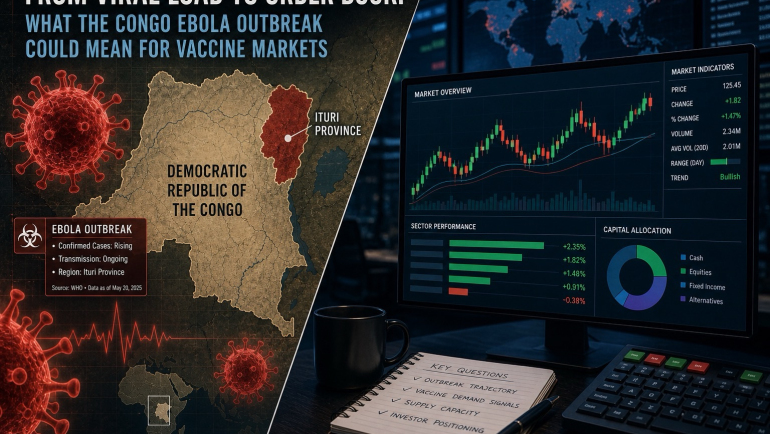
A new Ebola outbreak in Congo is once again testing global health systems, but it is also spotlighting a small group of vaccine developers who have spent the quiet years preparing for noisy ones like this. As health agencies scramble on the ground, companies from micro-cap GeoVax to blue-chip Merck and Johnson & Johnson are jostling—politely—for a role in turning cutting-edge science into boots-on-the-ground protection.
Outbreak In Ituri: A Deadly Reminder
Health officials in the Democratic Republic of Congo are confronting a new Ebola outbreak centered in Ituri province, a remote but strategically sensitive region bordering Uganda and South Sudan. Africa CDC reports roughly 246 suspected cases and at least 65 deaths, making this the deadliest flare-up in several years and raising alarms that the numbers could climb as surveillance catches up.
Authorities have flagged Mongwalu and Rwampara health zones—mining and trading hubs with constant movement of workers—as early hot spots, underscoring how a virus that travels by bodily fluids can still hitch a ride on global supply chains. Officials worry this strain may blunt the effectiveness of existing vaccines, adding scientific uncertainty to an already complex response in a region where security and logistics are rarely cooperative.
Global Health Steps Back Into The Spotlight
The World Health Organization has declared the outbreak an emergency of international concern, triggering a familiar choreography of emergency meetings, flight manifests, and hastily repurposed budget lines. Africa CDC and local health ministries are racing to expand screening and contact tracing, a labor‑intensive exercise that requires everything from lab kits to fuel for motorbikes.
International partners, including Western aid agencies, are preparing to support everything from diagnostic capacity to cold-chain logistics, where a broken refrigerator can be just as dangerous as a broken promise. Yet the emerging question is not whether the world will respond, but whether the tools on hand—especially vaccines designed for earlier Zaire-lineage outbreaks—will match the genomic realities of this year’s virus.
Vaccine Bench: From Merck To Micro-Caps
Merck, now working with the Coalition for Epidemic Preparedness Innovations (CEPI), remains one of the central players in Ebola preparedness thanks to its WHO‑prequalified vaccine, Ervebo. Earlier this year the partners launched a roughly $30 million initiative aimed at developing updated versions of the vaccine and improving manufacturing so doses can be made more cheaply and deployed more flexibly in low‑ and middle‑income countries.
The push includes collaboration with Hilleman Laboratories to streamline production and delivery, with an eye toward lowering prices for public sector buyers that typically operate on budgets better described as “aspirational” than “ample.” For investors, Merck’s Ebola program is a rounding error on a large P&L, but strategically it reinforces the company’s positioning as a go‑to countermeasure supplier when the world’s phone starts ringing.
Johnson & Johnson’s Two‑Step Approach
Johnson & Johnson, through its Janssen unit, has also carved out a place in Ebola preparedness with a two‑dose vaccine regimen that has earned WHO prequalification. The company has committed up to 200,000 vaccine regimens to a WHO‑led early access program in Sierra Leone and other at‑risk regions, positioning its product for proactive use in communities where Ebola is a recurring visitor rather than a rare guest.
Developed in collaboration with Bavarian Nordic, the regimen is designed for preventive campaigns among adults and children, a strategy that aligns more with fireproofing the neighborhood than racing the fire truck once the blaze starts. For J&J shareholders accustomed to discussions about oncology and immunology blockbusters, the Ebola franchise is small in revenue terms but large in reputational and strategic value, reinforcing the firm’s role in global health security.
GeoVax: Small Cap, Big Ambition
At the other end of the market‑cap spectrum sits GeoVax Labs (Nasdaq: GOVX), a clinical‑stage biotech whose portfolio reads like a catalog of global anxiety: COVID‑19, HIV, Zika, and hemorrhagic fever viruses including Ebola, Sudan and Marburg. GeoVax’s platform uses a modified vaccinia Ankara (MVA) viral vector to generate noninfectious virus‑like particles (VLPs) inside the vaccinated individual, a strategy designed to mimic natural infection and generate both antibody and T‑cell responses.
The company has reported that a single intramuscular dose of its Ebola candidate, GEO‑EM01, provided 100% protection in rhesus macaques challenged with a lethal dose of Zaire ebolavirus, a result that has quietly circulated among specialist investors who watch primate data as closely as earnings estimates. GeoVaxhas demonstrated that its MVA‑VLP vaccines can elicit protection in animal models of Ebola, Zaire, Ebola Sudan and Marburg in under two weeks, an attractive trait in outbreaks where viral doubling times do not wait for committee meetings.
Platform Play: Beyond A Single Strain
GeoVax’s earlier work outlined monovalent and trivalent Ebola vaccine constructs designed to cover multiple lethal strains—Zaire, Sudan, and Bundibugyo—highlighting a platform mentality rather than a one‑off product bet. Both candidates build on the same MVA backbone, making the science modular enough that, in principle, new constructs could be engineered as sequence data from emerging outbreaks becomes available.
This approach aligns with a broader shift in vaccine R&D: investors increasingly value flexible platforms that can be retuned for the next virus rather than single‑pathogen shots optimized for yesterday’s epidemic. In that context, GeoVax’s recent patent covering its MVA‑VLP Ebola technology is less about a narrow claim and more about securing a piece of the intellectual‑property scaffolding for future hemorrhagic-fever countermeasures.
Investor Lens: Public Health As A Risk Asset
For public companies operating in the outbreak space, the revenue math is notoriously lumpy, but the option value is substantial. Merck’s partnership with CEPI explicitly targets manufacturing efficiency and lower pricing, which may cap margins but could expand volumes and open doors to long‑term procurement deals with global health agencies. Johnson & Johnson’s commitment of hundreds of thousands of donated regimens builds goodwill with regulators and multilateral buyers, a relationship asset that often pays out over many therapeutic areas.
Micro‑caps like GeoVax trade more on potential than on near‑term Ebola revenue, but positive preclinical data, a growing patent estate, and a diversified pipeline of pandemic‑relevant assets can all contribute to a “preparedness premium” when headlines turn from interest rates to infection rates. For investors, the challenge is to separate durable platform value from outbreak-driven trading spikes, especially in a sector where the news cycle can move faster than clinical timelines.
The Next Question: Matching Vaccines To This Outbreak
The most immediate scientific unknown is whether vaccines tuned to earlier Zaire‑lineage viruses will retain efficacy against the strain driving the current Ituri outbreak. WHO and Africa CDC officials have already warned that the existing vaccine “might not work” for this variant, making genomic surveillance and neutralization assays as important as logistics and field staffing.
If significant antigenic drift is confirmed, the market narrative could shift from deployment to redesign, putting a spotlight on platform developers who can rapidly update constructs, manufacture at scale, and navigate emergency‑use pathways. In that scenario, companies like GeoVax, Merck, and Johnson & Johnson are not merely headline cameos in a public‑health drama; they become the recurring cast in a franchise where sequels are all but guaranteed.
The Sources
[1] Ebola outbreak in Congo kills dozens, may be hitting … https://www.cbsnews.com/news/ebola-congo-dozens-dead-hundreds-more-possible-cases/ [2] Merck & Co., Inc. (MRK) and CEPI Launch Effort to Make Ebola … https://finance.yahoo.com/news/merck-co-inc-mrk-cepi-141429621.html [3] There is a new Ebola outbreak in the Democratic Republic … https://www.facebook.com/CBSNews/videos/there-is-a-new-ebola-outbreak-in-the-democratic-republic-of-congo-that-has-alrea/1021301253654258/ [4] GeoVax Announces Issuance of Ebola Vaccine Patent – Georgia Bio https://www.galifesciences.org/geovax-announces-issuance-of-ebola-vaccine-patent/utm_sourcerssutm_mediumrssutm_campaigngeovax-announces-issuance-of-ebola-vaccine-patent [5] Johnson & Johnson Joins World Health Organization in Efforts to … https://www.investor.jnj.com/investor-news/news-details/2021/Johnson-Johnson-Joins-World-Health-Organization-in-Efforts-to-Prevent-Spread-of-Ebola-in-West-Africa-05-13-2021/default.aspx [6] Health officials battle new Ebola outbreak https://www.youtube.com/watch?v=43MtedrHqyQ [7] Congolese report constant burials as deaths in new Ebola … https://www.youtube.com/watch?v=vlmCTitsJ8o [8] WHO declares Ebola outbreak an emergency of … https://www.youtube.com/watch?v=GtLL01nH4oQ [9] GeoVax Labs Inc. Provides Progress Report On Its Ebola Vaccine … https://www.biospace.com/geovax-labs-inc-provides-progress-report-on-its-ebola-vaccine-program [10] Company update, Capital Raise, and multiple world-threatening … https://geovax-govx.reportablenews.com/pr/company-update [11] Africa CDC confirms new Ebola outbreak in Congo https://www.cbsnews.com/video/africa-cdc-ebola-outbreak-congo/ [12] Ebola Virus – News, Pictures, Videos & Facts on the deadly … https://www.cbsnews.com/ebola/ [13] The Wall Street Journal – Vol. 276 No. 126 (27 Nov 2020) PDF – Scribd https://www.scribd.com/document/486552020/The-Wall-Street-Journal-Vol-276-No-126-27-Nov-2020-pdf [14] How to write headlines like The Wall Street Journal – Ragan Communications | Ragan Communications and PR Daily https://www.linkedin.com/posts/ragan-communications_how-to-write-headlines-like-the-wall-street-activity-7319045828017377280-MVMv [15] Gavi commits to purchasing Ebola vaccine for affected countries https://www.gavi.org/news/media-room/gavi-commits-purchasing-ebola-vaccine-affected-countries
America’s economy is starting to look like the letter K drawn by an urban planner: straight lines for the haves, sharp angles for the have‑nots, and a few confused arrows in between. At the center of the story are homeowners, shoppers, and bond traders—and a few familiar corporate tickers watching it all unfold.
A Tale of Two Housing Markets
The housing market has become the front line of this K‑shaped reality, with affluent buyers still writing offers while everyone else reads listings like fiction. At the top of the K, higher earners with locked‑in pandemic‑era mortgage rates or ample cash can afford to wait for the right property or sit tight and let their home equity quietly compound.
Down the other arm, would‑be buyers face the unpleasant combo of elevated prices, higher rates, and thin inventory, which turns “starter home” into more of a theoretical concept than a practical one. Rents and prices are diverging in many markets, underscoring how ownership remains a wealth‑building escalator—provided you can afford the ticket to get on.
When Americans Treat Appliances Like Luxury Goods (WHR)
Inside the nation’s kitchens and laundry rooms, another story is unfolding: Americans are acting like they’re in a recession even if the data still insists they’re not. Whirlpool Corporation (WHR) has flagged what looks suspiciously like recession‑level demand for big household appliances, with industry volumes sliding as consumers push off anything that isn’t truly broken.
The company is seeing a notable drop in discretionary appliance purchases, a sign that middle‑income homeowners are trading “new kitchen” daydreams for “let’s see if the dishwasher survives another year” pragmatism. Higher rates, low housing turnover, and rising everyday costs are squeezing budgets, making big‑ticket upgrades the easiest line item to delay.
The Consumer: Cautious, Selective, and Clipping Coupons (MCD, WHR)
Corporate leaders across sectors are now harmonizing on the same theme: the consumer is still standing, but no longer in a buying mood for anything that doesn’t come with fries or a discount code. Fast‑food bellwether McDonald’s (MCD) has pointed to pressure on its core customer, while Whirlpool (WHR) is warning that the strain spans income levels, from value‑seekers to suburban homeowners.
This pullback is classic late‑cycle behavior: households continue to spend on essentials but grow more selective and promotion‑sensitive everywhere else. Retailers and manufacturers now face the uncomfortable math of higher financing costs, softening volumes, and consumers who have discovered that “wait” is, in fact, a perfectly viable purchasing strategy.
Bond Traders Smell a New Era (Treasuries, TLT)
Over in the bond market, traders are watching yields climb and asking a simple question with very expensive implications: what if “higher for longer” is not a slogan but a regime? Long‑term U.S. Treasury yields, which investors can access via vehicles like the iShares 20+ Year Treasury Bond ETF (TLT), have pushed toward multi‑decade highs as war‑driven energy shocks and stubborn inflation fears trigger some of the worst stretches for bonds in years.
The move has spilled across global fixed income, with debt markets from the UK to Japan repricing what persistent price pressures and heavier government borrowing might mean. For investors raised on the idea that every bond selloff was a buying opportunity, this new landscape feels less like a dip to be bought and more like a tectonic plate quietly shifting under their portfolios.
K‑Shaped Risks, K‑Shaped Opportunities
The K‑shaped economy may be brutal for policymakers, but it is oddly generous to active investors who know where each arm of the letter is pointing. On the upside, sectors tied to higher‑income households and structural trends—from certain corners of real estate to data‑centric infrastructure—continue to attract capital and command pricing power.
On the downside, businesses tethered to big‑ticket discretionary spending face slower demand and tougher conversations with their lenders as yields reset higher. The spread between winners and strugglers grows wider with every central‑bank meeting and geopolitical headline, making “average” an increasingly unreliable investment strategy.
What It Means for Investors and Homeowners
For homeowners comfortably on the upper arm of the K, rising rates and firm prices reinforce the value of staying put—or at least negotiating from a position of strength. For renters and first‑time buyers, the path to ownership is steeper, but not necessarily closed; markets with more balanced supply or softer demand could offer windows of opportunity as the cycle grinds on.
Bond investors, meanwhile, are being forced to consider a world where the “risk‑free rate” comes with more drama than many tech earnings calls. In this environment, duration, credit quality, and sector selection matter again, and the old habit of reaching for yield without reading the fine print looks increasingly out of fashion.
The global economy is serving up a curious 2026 prix fixe: China shopping for U.S. commodities again, CEOs quietly hiking menu prices, tankers dodging tension near Hormuz, and Nvidia (NVDA) back on investors’ dessert tray as “flavor of the day.”
China’s $17 Billion Shopping List: From Trade War Hangover To Commodity Courtship
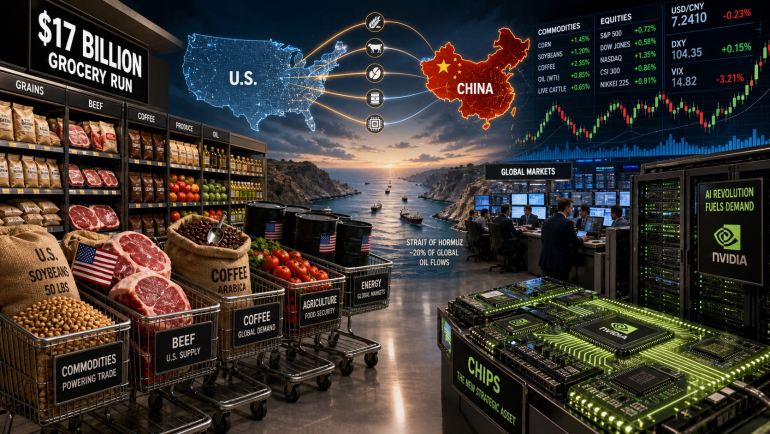
China is back in the U.S. checkout line, agreeing to purchase at least $17 billion a year of American agricultural goods through 2028, a move that effectively reopens a critical export valve for U.S. farmers still nursing bruises from earlier trade skirmishes. The White House has framed the deal as a marquee outcome of President Donald Trump’s latest summit in Beijing, even as Chinese officials keep some of the fine print artfully vague.
For Washington, locking in multi‑year demand from the world’s second‑largest economy helps stabilize a sector that has weathered tariffs, droughts, and pandemic‑era volatility in one long, bruising cycle. For Beijing, committing to American supply is less an act of charity than a hard‑nosed hedge in a world where energy flows are disrupted and food security is back at the top of every Politburo agenda.
Energy Security Meets Food Security
China’s renewed appetite for U.S. commodities is unfolding as tensions around Iran and the Strait of Hormuz keep oil markets on edge and policymakers awake at inconvenient hours. The conflict has already produced the largest disruption to global oil supply in modern history, sending Brent crude roughly 50% higher and gas above $7 in California at the local Chevron (CVX) station reminding investors that “just‑in‑time” shipping can quickly become “not‑this‑month.”
In that context, American barrels and bushels look less like ordinary exports and more like geopolitical insurance policies, with buyers seeking reliability as much as price. The Western Hemisphere’s energy producers, from Texas shale to Alberta sands, suddenly find themselves in the unusual position of being cast as the grown‑ups in the room, supplying a world that has rediscovered the downside of relying on a single chokepoint in the Gulf.
America’s Kitchen Table Inflation: Beef, Coffee, And The New Normal
While tankers navigate geopolitics, U.S. households are navigating grocery aisles a the Walmart’s (WMT) of the world that feel more like luxury boutiques than staples markets. Food prices rose 0.5% month over month and 3.2% year over year in April, the fastest annual pace in three years, with grocery prices up 2.9% and restaurant tabs climbing 3.6%. Even the most disciplined shoppers are discovering that their carts have developed champagne tastes on a beer budget.
The sticker shock is particularly acute in the protein and caffeine aisles, where raw ground beef prices have jumped about 15% from a year earlier to a record $6.90 per pound, and coffee prices are up 18.5% year over year and 2% from just last month. CEOs from fast‑casual chains like McDonald’s (MCD) to global restaurant conglomerates say elevated beef costs are “persisting,” forcing them into a delicate balancing act: protecting margins without testing customer loyalty with every menu reprint.
CEOs Walk A Pricing Tightrope
Corporate leaders, who spent much of 2024 insisting inflation was “transitory,” now talk more like chefs staring at a volatile futures curve than macro theorists debating Phillips curves. Executives at restaurant operators such as Chipotle (CMG) and Restaurant Brands International (QSR), parent of Burger King, have flagged mid‑single‑digit beef inflation and high‑single‑digit overall food cost increases, highlighting how a single input can chew up a quarter of the cost structure.
Many chains are responding with the kind of quiet, surgical price increases that show up more clearly on a receipt than in a press release, as they attempt to pass along higher input costs without triggering a consumer revolt. For now, strong labor markets and rising nominal wages are cushioning the blow, but the longer food inflation lingers, the more it risks eroding the discretionary spending that has underpinned much of the post‑pandemic expansion.
Strait Of Hormuz: A Narrow Passage With Wide Consequences
The unresolved standoff around the Strait of Hormuz sits behind much of this pricing anxiety, acting as a kind of invisible surcharge baked into everything from gasoline to groceries. Iran’s semi‑official Fars news agency has outlined five U.S. conditions for a peace deal—ranging from transferring uranium stockpiles to releasing less than a quarter of Iran’s frozen assets—though Washington has not confirmed those terms, leaving markets to trade on rumor as much as fact.
With Trump warning that “the clock is ticking” and midterm elections looming, the administration faces a three‑part puzzle: reopen the strait, cool oil prices, and de‑escalate a conflict that has already upended shipping routes. Until there is a durable solution, traders will price in a risk premium, ensuring that energy remains a key transmission channel for geopolitical tension into global inflation data—and into the mood at the average U.S. gas pump.
Nvidia: Still The Market’s Favorite Flavor
While households debate the cost of burger night, Wall Street appears content to supersize its exposure to artificial intelligence, with Nvidia once again emerging as the market’s “flavor of the day.” The chipmaker has rejoined the exclusive $5 trillion market‑cap club, and some analysts now sketch out a path to a $9 trillion valuation as the company extends its reach beyond GPUs into AI inference, custom silicon, and consumer‑facing AI platforms.
Heading into its next earnings report on Wednesday, May 20, analysts see revenue growth potentially in the mid‑50% to near‑60% range, with gross margins hovering around 71% and a valuation multiple below that of the broader semiconductor ETF, even after a 70% year‑to‑date surge in the SOXX index. Wall Street’s enthusiasm is not just about chips; Nvidia is rolling out a new CPU to challenge Intel (INTC) and AMD while partnering with Corning (GLW) on optical technology to clear bottlenecks in the AI supply chain, drawing 76 buy ratings and a near‑cult‑like following among momentum traders.
When AI Meets The Aisle Endcap
The contrast between Nvidia’s high‑flying multiple and the grounded reality of beef and coffee inflation is stark but instructive: in modern markets, narrative is a currency of its own. Investors are willing to look through short‑term macro turbulence—oil shocks, food price spikes, diplomatic brinkmanship—so long as the long‑duration earnings stories in AI, cloud, and automation remain intact.
Over time, though, these worlds overlap: AI‑driven logistics, precision agriculture, and smarter energy grids all promise to make supply chains more resilient, potentially easing some of the very bottlenecks now inflating grocery bills and jolting fuel prices. If Nvidia and its peers can deliver those efficiencies at scale, the “flavor of the day” trade in semiconductors could ultimately help bring a bit more predictability—and perhaps a few cheaper steaks—to the real economy.
A World Of Higher Stakes And Thinner Margins
Taken together, China’s commodity commitments, Hormuz‑linked energy risk, sticky food inflation, and AI exuberance describe an economy that is both surprisingly resilient and perpetually on edge. Governments are relearning the old lesson that supply security matters, companies are rediscovering the art of pricing power, and investors are reminded daily that the most reliable growth stories often live far from the nearest shipping lane.
For portfolio managers, the message is clear: energy security, food inflation, and AI leadership are no longer separate chapters—they are now interlocking themes that will drive asset prices and policy debates alike. In this environment, diversification is not a cliché but a survival skill, as the global economy continues to serve a menu where the specials change fast, the bill keeps rising, and the market’s favorite flavor remains whatever promises growth in a world suddenly obsessed with scarcity.
The Sources
China’s multi‑year agreement to buy at least $17 billion annually in U.S. agricultural goods https://finance.yahoo.com/economy/policy/articles/china-buy-least-17-billion-173148370.htmlbloomberg
Rising U.S. food prices and CEO commentary on beef, coffee, and tomatoes https://finance.yahoo.com/news/beef-coffee-tomatoes-americas-ceos-call-out-where-food-prices-are-rising-194217489.htmlfinance.yahoo
U.S.–Iran tensions and the difficulty of reaching a deal over the Strait of Hormuz https://finance.yahoo.com/sectors/energy/articles/us-iran-far-hormuz-deal-171143829.htmlfinance.yahoo
Nvidia’s renewed momentum and why it could again become the market’s “flavor of the day” https://finance.yahoo.com/video/how-nvidia-could-once-again-become-the-flavor-of-the-day-150527580.htmlfinance.yahoo
The FDA’s latest reshuffle of its top drug and biologics leaders lands biotech in yet another plot twist—but this one may read more like a quirky chapter break than a full-blown cliffhanger for investors.
FDA’s New Cast at the Top
The Food and Drug Administration is once again rotating the nameplates outside its most powerful offices, including the drug and biologics divisions that decide which therapies make it from lab bench to bedside. With several key posts now occupied by acting leaders and interim appointees, the agency looks less like a marble-clad regulator and more like a long-running Broadway show midway through a cast change.
A Leadership Vacuum, With Biotech on the Line
The departure of Commissioner Marty Makary and earlier exits from senior biologics leadership have left the FDA navigating a rare leadership vacuum just as complex cell and gene therapies are hitting the regulatory inbox. Biotech executives, already juggling long trial timelines and rising capital costs, now face the added sport of handicapping which regulatory philosophy will prevail when the acting crowd gives way to permanent leadership.
Biologics: Where Uncertainty Meets Opportunity
Turnover at the Center for Biologics Evaluation and Research (CBER) is especially sensitive because this unit referees everything from cutting‑edge gene therapies to vaccines and biosimilars. Investors know that a modest shift in CBER’s stance on risk–benefit, endpoints or manufacturing standards can redraw valuation maps for entire subsectors of biotech almost overnight.
Acting Chiefs and the 210‑Day Clock
Several of the agency’s top regulatory seats are now filled by acting officials whose legal authority is governed by a 210‑day clock, a reminder that Washington’s definition of “long term” rarely matches biotech’s. That countdown raises the odds of additional turnover, forcing drug developers to plan pivotal trials and launch strategies under a regulatory regime that may change before their primary endpoint reads out.
Policy Whiplash and Market Sentiment
Makary’s tenure blended biotech‑friendly rhetoric with pockets of controversy, leaving some companies applauding faster approvals while others felt the sting of high‑profile rejections.barrons+2 His exit briefly lifted biotech sentiment, as investors bet that a fresh regime might smooth out perceived inconsistencies, but the ensuing musical chairs at the FDA has replaced euphoria with a more measured, “trust but verify” stance.virginiabusiness+2
Biotech’s Regulatory Risk Premium
In a sector where development timelines can stretch close to a decade, regulatory visibility is almost as valuable as clinical data, and sudden leadership shifts can fatten the risk premium investors demand. Analysts warn that the current uncertainty may make it harder to green‑light marginal projects, pushing capital toward companies with cleaner trial designs, clearer endpoints and enough cash to wait out policy noise.
Strategic Playbook for Drug Developers
For management teams, the latest shuffle argues for over‑communication with regulators, not retreat from the FDA’s front door. Sponsors are increasingly advised to lock in early scientific advice, stress‑test manufacturing plans and document every assumption as though they might need to brief an entirely new review team halfway through the process.
What Investors Should Actually Watch
For all the headline drama, the most important signals are still quietly buried in guidance documents, advisory‑committee patterns and the tempo of actual drug approvals. If approval rates for innovative biologics hold up and review times stay roughly on track, markets may eventually treat the leadership saga as background noise rather than a thesis‑shaping event.
A Regulator in Search of Its Next Chapter
The FDA’s revolving door at the top comes at a moment when pressure is mounting to reconcile faster access to breakthrough treatments with deepening scrutiny of safety, pricing and post‑market surveillance. How the next permanent team squares those demands will determine whether today’s leadership shuffle becomes a historical footnote—or the prologue to a new regulatory era for biotech and big pharma alike.
The Sources
CNBC – “FDA shuffles top drug, biologics leaders in latest shakeup” https://www.cnbc.com/2026/05/15/fda-shuffles-top-drug-biologics-leaders-in-latest-leadership-shakeup.htmlcnbc
The BioIntel – “Implications of FDA Leadership Changes for the Biopharmaceutical Sector” https://www.thebiointel.com/article/implications-fda-leadership-changes-biopharmathebiointel
SafeBiologics – “Erratic FDA Leadership is Creating a Crisis of Confidence” https://safebiologics.org/erratic-fda-leadership-is-creating-a-crisis-of-confidence/safebiologics
Nature Biotechnology feature (via Nature Portfolio / Facebook teaser) – “Fresh from the biotech pipeline: FDA turmoil overshadows 2025 approvals” https://www.facebook.com/NaturePortfolioJournals/posts/leadership-changes-staff-cuts-and-a-raft-of-new-policies-marked-a-fda-in-2025facebook
C&EN (Chemical & Engineering News) – “How will FDA changes reshape drug approval in 2025 and beyond?” https://cen.acs.org/pharmaceuticals/drug-development/FDA-changes-reshape-drug-approval/103/web/2025/05cen.acs
Medicine to Market – “Leadership Changes at the FDA: What Richard Pazdur’s Role Means for CDER and CBER Collaboration” https://medicinetomarket.com/leadership-changes-at-the-fda-what-richard-pazdurs-role-means-for-cder-and-cber-collaboration/medicinetomarket
BioSpace – “Biotech leaders pitch Pazdur as next FDA chief” https://www.biospace.com/fda/biotech-leaders-pitch-pazdur-as-next-fda-chiefbiospace
GuruFocus – “AstraZeneca (AZN) Sees Leadership Changes at FDA” https://www.gurufocus.com/news/8863630/astrazeneca-azn-sees-leadership-changes-at-fdagurufocus
Manatt Health / Making Medicine Podcast – “FDA Leadership After Marty Makary: What Biotech Needs Next” (episode + linked report) https://www.youtube.com/watch?v=zY2XIZuRu8syoutube
FDA – “Office of New Drugs” (background on FDA’s new-drug review structure) https://www.fda.gov/about-fda/cder-offices-and-divisions/office-new-drugsfda
PMC (Journal article) – “Food and Drug Administration (FDA) Approvals of Biological Products in 2023” https://pmc.ncbi.nlm.nih.gov/articles/PMC11428688/pmc.ncbi.nlm.nih
Billionaire investor Bill Ackman has revealed a significant new position in Microsoft (MSFT), announcing Friday that his hedge fund Pershing Square (PS) quietly accumulated shares starting in February when the stock tumbled following disappointing fiscal Q2 2026 earnings. The Warren Buffett disciple secured his stake at 21 times forward earnings—essentially market average pricing for a company that, until recently, commanded a premium valuation befitting its dominance in enterprise software and cloud computing. In a market where AI anxiety has investors second-guessing every Big Tech name, Ackman is betting that Wall Street has fundamentally mispriced the Redmond giant’s future.
The Discount That Caught a Contrarian’s Eye
Microsoft shares have declined nearly 12-15% in 2026, creating what Ackman characterizes as “a highly attractive valuation” for a firm his team has monitored for years. The current pricing doesn’t account for Microsoft’s approximately 27% economic interest in OpenAI, which Ackman estimates is worth around $200 billion—roughly 7% of Microsoft’s total market capitalization based on OpenAI’s most recent funding round. For perspective, Microsoft reported fiscal Q3 2026 earnings of $4.27 per share on revenues of $82.89 billion (up 18% year-over-year), while Azure cloud services expanded 40% and the AI segment hit an annualized run rate of $37 billion, representing 123% growth. These aren’t exactly the numbers of a struggling enterprise, which makes the sell-off look less like rational repricing and more like an opportunity for patient capital.
The M365 Moat Investors Are Underestimating
The market’s primary concerns center on two questions: Can Microsoft 365 withstand competition from sophisticated AI offerings like Anthropic’s Claude Cowork, and will Azure’s growth trajectory endure as Microsoft’s relationship with OpenAI evolves? Ackman argues that investors are significantly undervaluing the resilience of the M365 suite, which is “intricately woven into the daily operations of nearly every major corporation” and reinforced by Microsoft’s security, compliance, and data governance framework that would be exceedingly difficult to replicate. Unlike standalone software vulnerable to disruption by superior AI alternatives, M365 benefits from deep enterprise integration and compelling price-value economics, with monthly average revenue per user creating attractive bundle economics. The addition of Copilot AI assistant at $30 per user monthly provides a substantial monetization pathway as enterprises embrace AI-powered productivity tools.
The OpenAI Partnership: Divorce Rumors Greatly Exaggerated
Critics pointed to Microsoft and OpenAI’s revised partnership agreement announced in late April 2026 as evidence of a weakening relationship, but Ackman frames it differently. The restructured deal caps revenue share payments to Microsoft through 2030, allows OpenAI to serve customers across multiple cloud platforms, and removes Microsoft’s exclusive license to OpenAI’s intellectual property—changes that initially spooked investors. However, Ackman views the arrangement “not as a concession but as part of a deliberate pivot toward a more open, multi-model architecture that better serves enterprise customers”. Microsoft continues to receive 20% of OpenAI’s revenue from ChatGPT and its API platform, including income from services delivered on competing clouds like AWS, while remaining OpenAI’s primary cloud provider. For a company transitioning from per-seat pricing to hybrid consumption-based models that capture AI agent usage, the flexibility to offer multi-model solutions may prove more valuable than exclusivity.
A Conviction Play From a Billionaire Known for Going Big
While the exact size of Ackman’s Microsoft position awaits disclosure in the Q1 2026 13F filing due Friday, market observers expect this to become one of Pershing Square’s top three holdings—potentially rivaling the fund’s $2.8 billion Brookfield position. Ackman emphasized his optimism regarding Microsoft’s R&D commitment, particularly CEO Satya Nadella’s direct involvement with Copilot development, stating “we believe these initiatives will result in enhanced product development and increased customer engagement over time”. The investment thesis rests on Azure’s market dominance and M365 Copilot monetization positioning Microsoft as the leader in enterprise AI adoption during a period when the company trades at a rare discount. For an investor who built his reputation on deep conviction plays in undervalued large-cap technology firms like Alphabet, calling Microsoft “underpriced” in May 2026 represents a significant endorsement that could shift sentiment as the market reassesses its AI anxieties.