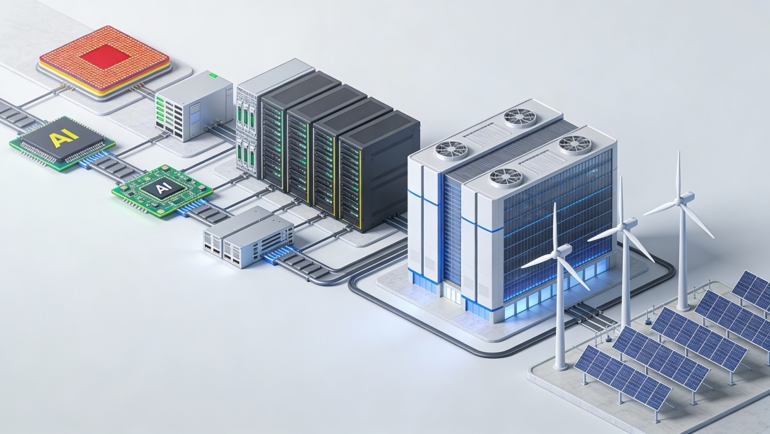
Investors watching Micron Technology (MU), global oil demand, and Hudson Pacific Properties (HPP) this week could be forgiven for feeling like they’re toggling between three different asset classes and two different economic cycles at once. Yet taken together, these storylines sketch a surprisingly constructive backdrop: AI infrastructure spend accelerating, energy markets easing, and coastal office REITs quietly tightening up their balance sheets instead of their nerves.In a market still obsessed with “higher for longer” and “landing of indeterminate hardness,” the through line here is capital discipline with upside optionality. In other words, the market is nervous, but the checks are still clearing.
Micron (MU): When AI Capex Becomes A National Sport
Micron’s decision to aggressively lift U.S. spending ($250B) around advanced memory and AI infrastructure is another sign that the AI buildout is moving from headline to hardware. The company is leaning into domestic capacity and high‑bandwidth memory at a moment when hyperscalers, GPU vendors, and sovereigns are all competing to secure supply. For equity holders, this isn’t just patriotism; it’s positioning. Expanded U.S. investment can unlock incentives, deepen relationships with key AI ecosystem partners, and potentially support pricing power when the next leg of AI workloads migrates from experimentation to production at scale. The risk, of course, is classic semiconductor cyclicality—only this time, the cycle is dressed up in AI buzzwords—but investors have seen that movie before and usually stay through the sequel.
AI Infrastructure As The New Defensive Growth
What makes Micron’s U.S. spend particularly interesting is where it sits in the macro mix. While traditional cyclicals still track every twitch in the PMI data, AI infrastructure looks increasingly like its own capital cycle, driven less by near‑term GDP and more by competitive fear of falling behind. For portfolio construction, AI‑levered names like MU offer something close to a “growth‑tilted semi‑defensive”: earnings sensitivity to tech cycles, yes, but supported by multi‑year cloud, data center, and on‑device AI roadmaps that don’t turn on a single quarter’s GDP print. That profile can be particularly appealing when investors want equity upside but are tiring of checking dot plots between Fed meetings.
Oil Demand Cools: Macro Headwind Or Quiet Tailwind?
While silicon is heating up, global oil demand has been showing signs of cooling, with U.S. trends contributing to softer growth expectations. For energy producers, that can translate into pressure on pricing power and capital spending plans, particularly for higher‑cost barrels. For the rest of the market, however, a more subdued oil backdrop is closer to a stealth stimulus. Easing pressure at the pump can temper inflation expectations, give central bankers a little more breathing room, and lower input costs across transportation‑heavy industries. In a world where investors have turned into amateur Fed watchers, softer oil can be the macro equivalent of a deep breath.
Lower Crude, Higher Multiple?
Investors often forget that lower‑than‑feared oil demand doesn’t just affect the energy complex; it can reset valuations across rate‑sensitive sectors. If weaker demand translates into more anchored inflation expectations, the implied discount rate on long‑duration cash flows—think AI infrastructure, software, select REITs—can edge lower. That’s not a guarantee of multiple expansion, but it does change the conversation from “how much more damage do higher rates do?” to “which growth stories can actually compound in a calmer inflation regime?” Micron’s capex narrative fits into that second bucket, especially if investors start to re‑rate structurally important AI suppliers as infrastructure, not just cyclical tech.
Hudson Pacific (HPP): West Coast Real Estate Tries A Plot Twist
Against that macro backdrop, Hudson Pacific Properties (HPP) has been quietly moving its own story forward, recently flagging key upcoming dates for investors and continuing to refine its office‑and‑studio‑heavy portfolio along the U.S. West Coast. In a post‑pandemic office world where “hybrid” sometimes sounds like a euphemism for “empty,” the company’s focus on media, tech, and premium locations may prove more durable than the broader office narrative implies. For a market that tends to paint all office REITs with the same brush, HPP’s steady disclosure cadence and focus on high‑barrier coastal submarkets is a reminder that real estate is still about microeconomics: leasing velocity, rent spreads, capital recycling, and balance sheet management. Investors who have written off the entire office complex may want to re‑examine which platforms actually control scarce, irreplaceable locations.
Where A Coastal REIT Fits In A Tech‑And‑Oil Tape
The interesting wrinkle with HPP is how it fits next to names like MU in a diversified portfolio. AI‑heavy semis offer earnings torque and capex‑driven upside, while a West Coast office‑studio REIT offers yield, potential recovery optionality, and an embedded call option on the eventual normalization of urban usage patterns. If global oil demand trends keep inflation pressures more contained than feared, rate‑sensitive assets like REITs can move from “uninvestable” to “under‑owned” faster than consensus models update. In that environment, investors may find themselves pairing growth exposure in MU with income‑and‑recovery exposure in HPP, using softer oil as the macro glue holding the trade together.
A Market That Still Rewards Thoughtful Risk
Threading these narratives together, investors are left with a market that still rewards thoughtful risk‑taking over broad risk‑on or risk‑off calls. Micron’s U.S. AI infrastructure push positions MU at the center of a multi‑year capex wave; moderating oil demand adds a quiet tailwind to rate‑sensitive and growth assets; and Hudson Pacific’s HPP story offers selective exposure to coastal real estate and media‑linked demand that doesn’t depend on a full‑blown office renaissance. In other words, this remains a stock picker’s tape: silicon where AI is real, barrels where balance sheets are disciplined, and buildings where location still earns its premium. The humor, perhaps, is that a market that feels endlessly anxious is still quietly building the foundations of the next cycle—one capex announcement, one demand revision, and one REIT update at a time.
The Sources
- Yahoo Finance – Micron aggressively lifts U.S. spending for AI and advanced memory (Micron Technology, Inc. (MU))[1]
- Link: https://finance.yahoo.com/technology/ai/articles/micron-aggressively-lifts-u-spending-155702354.html
- Yahoo Finance – Global oil demand signals softening, with U.S. trends contributing to weaker growth expectations[2]
- Link: https://finance.yahoo.com/energy/articles/global-oil-demand-dropping-us-211342726.html
- Yahoo Finance – Hudson Pacific Properties announces key investor‑related dates and updates (Hudson Pacific Properties, Inc. (HPP))[1]
- Link: https://finance.yahoo.com/real-estate/articles/hudson-pacific-properties-announces-date-130000741.html
Stay Updated with Vista Partners
Subscribe to receive market insights, investing ideas, and the latest updates directly in your inbox.