Wall Street woke up Saturday to a jarring reminder that risk never really goes off‑balance sheet, even when the headlines insist on ceasefires, safety records, and trillion‑dollar paper fortunes.
A Ceasefire In Name Only
Israel’s latest strikes in southern Lebanon, launched just hours after a ceasefire framework was supposed to take effect, underline how fragile the new security architecture really is. Lebanese state media and international reports cite multiple fatalities, including civilians, as Israel responds to continued projectiles from Hezbollah despite a U.S.-brokered agreement that was meant to halt hostilities and pull fighters north of the Litani River.
For markets, this is not just another Middle East headline to be filed under “geopolitical noise.” The combination of formal ceasefire language and continued kinetic action injects a fresh layer of uncertainty into oil supply assumptions, risk premia for regional assets, and the positioning of energy, defense, and shipping names that had quietly started to price in de‑escalation.
Energy, Defense And The Risk Premium Trade
The renewed strikes arrive just as investors had begun to lean into the “peace dividend” narrative, trimming hedges and rotating out of classic geopolitical beneficiaries. With missiles flying after memoranda of understanding have been signed, traders are being reminded that PDFs and press releases do not, in fact, stop rockets.
In practical terms, this environment tends to support higher implied risk premia for crude, tanker routes in the Eastern Mediterranean, and for defense contractors whose order books historically fatten whenever ceasefires look more like commas than full stops. For allocators, the key is not panic, but repricing: revisiting assumptions on volatility, insurance costs, and regional growth, while distinguishing between assets structurally levered to conflict and those merely passing through the neighborhood.
A NetJets Crash Shocks The Private Capital Class
On the other side of the Atlantic, a very different kind of shock hit the venture ecosystem. In Texas, NetJets suffered the first fatal crash in its history when one of its aircraft went down on a highway in Laredo, killing Joshua Baer, the 50‑year‑old founder and CEO of Austin startup accelerator Capital Factory. The aircraft burst into flames after impact, and while investigators have not speculated on the cause, the loss of such a central figure in the regional tech scene reverberated quickly through startup and LP networks..
For years, NetJets has been shorthand for premium safety and efficiency for executives and dealmakers who have more board meetings than free evenings. That brand now carries an asterisk, even if only temporarily, as regulators probe the crash and risk officers at funds quietly revisit their own travel policies and insurance coverage. In a world where human capital is often the most irreplaceable asset on a firm’s balance sheet, the tragedy is a stark reminder that key‑person risk is not merely a line item in an offering memorandum.
When The Pilot Is A Trillionaire (On Paper)
The day’s third storyline, fittingly, comes from low Earth orbit. Elon Musk’s SpaceX, fresh off a blockbuster IPO and now valued north of 85 billion dollars after underwriters exercised a greenshoe overallotment, has minted or enlarged fortunes across a who’s‑who list of billionaire backers. Musk himself holds a stake worth over 1 trillion dollars at current valuations, effectively turning SpaceX into a gravitational field for global capital as much as for rockets. Around him sits a constellation of early believers: Antonio Gracias and Valor entities sit on a stake valued from tens to over a hundred billion dollars depending on the lens, dwarfing most traditional private equity wins. Longtime associates like Luke Nosek, who first wrote a check in 2008 that may now be worth several billion, and company leaders such as Gwynne Shotwell and CFO Bret Johnsen, each hold positions sized in the billion‑dollar neighborhood thanks to the listing. For once, the phrase “life‑changing equity” can be wielded without hyperbole.
The New Capital Stack: Rockets, Risk And Resilience
Taken together, these three stories sketch a picture of a market where risk is being repriced vertically as well as horizontally. In Lebanon, political risk bleeds into energy and defense valuations as investors rediscover that ceasefires are not binary events but stochastic processes. In Texas, an aviation tragedy pierces the aura of frictionless private travel just as capital allocators were using jets as time machines to squeeze more deals into each quarter. And in Hawthorne and beyond, the SpaceX cap table is forcing everyone—from sovereign funds to family offices—to reconsider how much exposure they have, or lack, to the commercialization of space. The irony is that while rockets and fighter jets dominate the imagery, the real story is more prosaic: basis points and probabilities. Geopolitical flare‑ups move the probability distributions around energy prices; aviation incidents nudge the perceived tail risk attached to key personnel and private transportation; and a successful mega‑IPO shifts the distribution of future returns for late‑stage venture and crossover investors who sat this one out.
Where The Smart Money Might Look Next
For investors, the temptation on a day like this is to chase headlines rather than build frameworks. A more durable approach could focus on three themes:
- Resilient energy and logistics: Companies with diversified sourcing, strong balance sheets, and the ability to flex around Eastern Mediterranean disruptions are positioned to turn geopolitical noise into operating leverage.
- Institutional‑grade safety and redundancy: From business aviation to cybersecurity, firms that can credibly demonstrate above‑market safety and continuity standards may see renewed demand from risk‑sensitive clients and boards.
- The space industrial complex: Beyond the halo of Musk’s personal stake, the broader ecosystem—suppliers, satellite operators, launch services, data and communications platforms—stands to benefit from SpaceX’s public‑market validation and the investor education it provides.
In each case, the opportunity is not simply to buy what’s in the headline, but to own what the headline forces the world to need more of: redundancy, reliability, and reach.
A Market That Still Rewards Adults In The Room
Despite the drama—jets in the sky, jets in space, jets on a highway—the through line is that markets continue to reward disciplined risk management over dramatics. Companies that can operate through conflict rather than around it, that treat safety as infrastructure instead of marketing, and that align insiders and outside capital in ways that survive turbulence, are likely to compound value long after today’s front pages have become tomorrow’s fish wrappers. For the professional investor, the job is not to predict the next headline, but to pre‑underwrite the next shock. In a week where a ceasefire could not keep the peace, a storied aviation brand could not avoid tragedy, and a rocket company turned its insiders into a new billionaire class, the lesson is less about surprise and more about structure: those who build portfolios with shock absorbers rather than spoilers tend to arrive at their destination—even if, unlike rockets and private jets, they are in no particular hurry to land.
The Sources
- CNBC – “At least five killed in Israeli strikes on south Lebanon despite ceasefire”
https://www.cnbc.com/2026/06/20/at-least-five-killed-in-israeli-strikes-on-lebanon-despite-ceasefire.html - CNBC – “NetJets’ first fatal crash kills influential Texas VC founder”
https://www.cnbc.com/2026/06/19/netjets-first-fatal-crash-kills-influential-texas-vc-founder.html - CNBC – “Who are SpaceX’s billionaire shareholders?”
https://www.cnbc.com/2026/06/19/musk-spacex-billionaire-shareholders.html - CNBC – “SpaceX IPO raises total of $85.7 billion as underwriters exercise ‘greenshoe’ overallotment option”
https://www.cnbc.com/2026/06/15/spacex-ipo-spcx-greenshoe-overallotment.html - CNBC – “Ron Baron bought $1 billion of SpaceX shares in IPO, lifting stake to $2.5 billion”
https://www.cnbc.com/2026/06/15/ron-baron-bought-1-billion-of-spacex-shares-in-ipo-lifting-stake-to-25-billion.htm - Reuters via Internazionale – “Israeli strikes kill at least 10 in Lebanon hours after ceasefire”
https://www.internazionale.it/ultime-notizie-reuters/2026/06/20/at-least-five-killed-in-israeli-strikes-on-south-lebanon-despite - X (Twitter) – CNBC post “NetJets’ first fatal crash kills influential Texas VC founder”
https://x.com/CNBC/status/2067955062589042692 - CNY Central – “1 dead after private plane crashes onto Texas highway, bursts into flames”
https://cnycentral.com/news/nation-world/1-dead-after-netjets-private-plane-crashes-onto-laredo-texas-highway-bursts-into-flames - Xinhua / English – “Israel intensifies strikes in Lebanon, casting shadow over …”
https://english.news.cn/20260619/b7f4c5ac8d2341b689ea8e408d17c537/c.html - CNBC – “Israel and Lebanon agree to implement ceasefire”
https://www.cnbc.com/2026/06/03/israel-and-lebanon-agree-to-implement-ceasefire.html - Sedaily – “SpaceX IPO Set to Mint Billionaires Among Musk’s Early Backers”
https://en.sedaily.com/international/2026/06/12/spacex-ipo-set-to-mint-billionaires-among-musks-early - 24/7 Wall St. – “SpaceX’s IPO is Set to Make Elon Musk a Trillionaire. Here’s 4 Key Figures That Will Become Billionaires.”
https://247wallst.com/investing/2026/06/05/spacexs-ipo-is-set-to-make-elon-musk-a-trillionaire-heres-4-key-figures-that-will-bec
Did You Miss This Story?
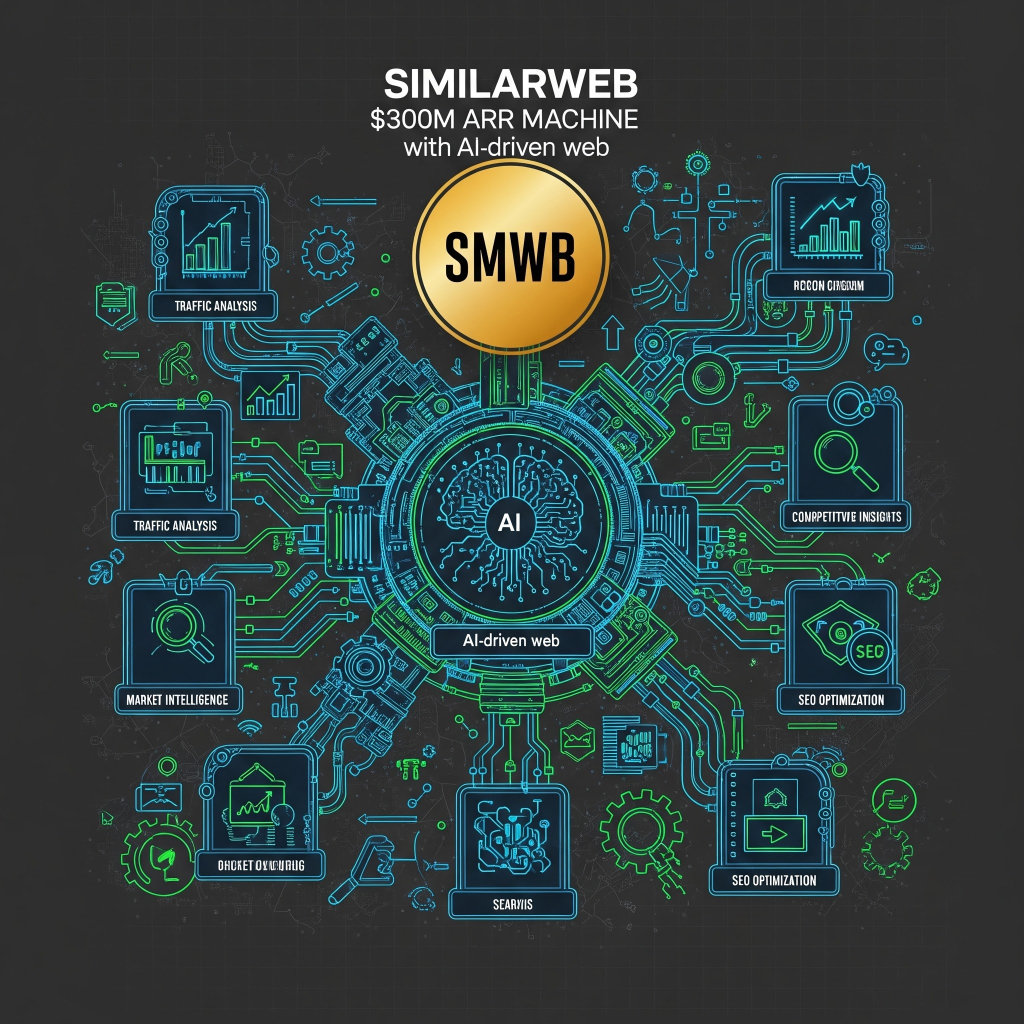
Inside Similarweb’s $300M ARR Machine: Profitable Growth in an AI‑Driven Web -( $SMWB )
Similarweb’s (NYSE: SMWB) recent stream of press releases sketches a familiar Wall Street archetype: a once‑scrappy digital data outfit that has decided, somewhat inconveniently for short‑sellers, that it would like to grow up into a durable, cash‑generating platform business. For investors willing to read past the headline numbers, the story is not just about crossing $300 million in ARR, but about quietly building a data franchise that is increasingly wired into AI workflows, retail decision‑making, and the C‑suites of brands and agencies that cannot afford to fly blind online. READ THE BALANCE OF THE STORY.
Stay Updated with Vista Partners
Subscribe to receive market insights, investing ideas, and the latest updates directly in your inbox.