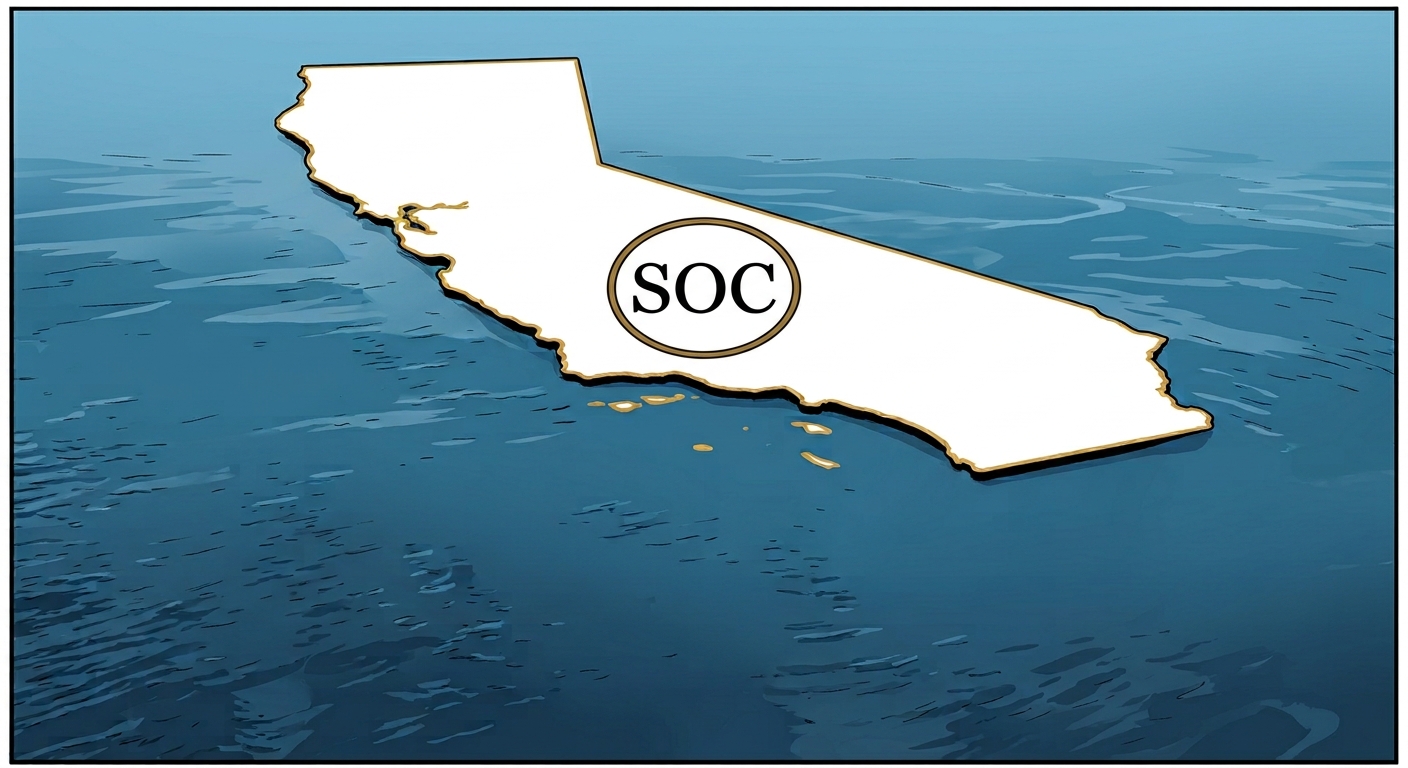
Sable Offshore Corp. (NYSE: SOC) is beginning to look less like a pure courtroom wager and more like an operating turnaround with legal momentum, rising production and an increasingly visible route to cash flow. The company’s recent Form 8-K reinforced its federally supported pathway to operate the Santa Ynez Pipeline System, while its second-quarter release showed that the restart is already producing tangible financial and operational results. The central investment proposition is seemingly becoming clearer: if Sable can convert legal progress into sustained throughput, it may be able to turn a previously constrained offshore asset into a substantial domestic-oil cash-flow platform. That remains an execution story, not a victory lap, but the lights are now on, the wells are producing, and the market is unlikely to ignore a ramp that keeps gathering speed.
The 8-K Removes a Major Overhang
Sable’s recent Form 8-K describes a significant federal-court ruling involving the Santa Ynez Pipeline System, or SYPS. The U.S. District Court for the Central District of California modified a 2020 consent decree, replacing California’s Office of the State Fire Marshal with the federal Pipeline and Hazardous Materials Safety Administration, or PHMSA, as the regulator overseeing pipeline operations under that decree. The court found that Sable had restarted segments of the system without prior OSFM authorization and imposed a $1.449 million penalty. Crucially, it declined California’s request to shut down the onshore pipeline segments, finding that Sable was no longer in violation because PHMSA had approved the company’s Restart Plan. That is the legal distinction investors should focus on. A penalty can be modeled. A court-ordered operational shutdown could have threatened the entire recovery thesis. In a special-situations stock, the difference between those two outcomes is roughly the difference between a speed bump and a drawbridge.
Federal Authority Strengthens the Operating Case
The 8-K filing also states that the court denied California’s request for a preliminary injunction against the federal Pipeline Capacity Prioritization and Allocation Order issued under delegated Defense Production Act authority. California filed a notice of appeal on August 20, so the matter remains active and should not be dismissed as a legal footnote. Even so, the immediate result is favorable to Sable Offshore (NYSE: SOC). The company retained its ability to operate under a PHMSA-approved Restart Plan, while the state failed to obtain the injunction that could have halted the onshore system. In the related Sable v. Quintero proceeding, the court declared that California’s Department of Parks and Recreation is barred from bringing legal action designed to stop Sable from operating the onshore pipeline segments in compliance with the federal order. The court also indicated that the ruling may be dispositive in a parallel trespass matter, inviting Sable to seek summary judgment. The legal risks remain material, including the appeal, potential regulatory actions and continued public-policy opposition. But the federal court decisions create a more defined operating framework—an important development for a company whose valuation has long been tied to the timing and durability of its restart.
The Restart Is Showing Up in Revenue
The bullish case becomes more credible because Sable is not simply presenting a legal theory; it is reporting an operating ramp. In its August 10 second-quarter release, Sable Offshore (NYSE: SOC) reported $137.1 million in revenue and $9.4 million in positive operating cash flow, its first full quarter of revenue generation and positive operating cash flow since inception. Average daily net sales volumes were approximately 21,000 barrels of oil per day during the second quarter. More notably, Sable exited the quarter selling approximately 40,000 net barrels of oil per day—an entry-to-exit increase of 149%.
The company’s production progression also appears substantial:
| Metric | Reported result |
|---|---|
| Second-quarter revenue | $137.1 million |
| Second-quarter operating cash flow | $9.4 million |
| Average Q2 net sales volume | ~21,000 barrels per day |
| Exit-Q2 net oil sales | ~40,000 barrels per day |
| Entry-to-exit oil-sales growth | 149% |
| Q2 capital expenditures | $39.4 million |
| Average producing wells per day in Q2 | 35 |
| Average wells online in June | ~39 |
| July wells online at Harmony and Heritage | ~47 |
Sable reported average production of 723 barrels of oil per day per well during the quarter from an average of 35 producing wells per day. By June, it had approximately 39 wells online on average, up roughly 50% from approximately 26 wells in April. That type of ramp matters because it moves SOC beyond an abstract “asset value” story. Production growth is beginning to produce sales volumes, revenue and operating cash flow—items markets tend to find more persuasive than even the most elegant PowerPoint slide.
Production Could Continue to Build
Sable’s latest operational update points to additional near-term catalysts. The company estimated July oil sales at approximately 38,000 gross barrels per day and reported an August-to-date average of approximately 42,000 gross barrels per day through August 9. Management said approximately 47 wells at Platforms Harmony and Heritage were online in July, generating an average of about 721 gross barrels per day per well. The company expects all 77 production wells across those two platforms to be online during the third quarter of 2026 and anticipates that Platform Hondo will resume production in September. The Hondo restart is especially relevant. Sable expects five completed perforation additions, or “Perf Adds,” to contribute an estimated incremental 600 gross barrels of oil per day each when brought online with the platform’s restart. Four additional Perf Adds are planned for early fourth quarter, also forecast to contribute roughly 600 gross barrels per day each.
These are company estimates, not guarantees. But they give investors identifiable milestones to monitor:
- Full ramp of 77 production wells at Platforms Harmony and Heritage during the third quarter
- Planned restart of Platform Hondo in September
- Initial Hondo Perf Adds expected to add an estimated 3,000 gross barrels of oil per day
- Four more planned Hondo Perf Adds targeted for early fourth quarter
- Continued well-optimization work and Perf Add activity at Platform Harmony
If Sable executes, the company’s sales capacity could become more meaningful just as the legal framework supporting operations is becoming firmer.
Midstream Constraints Are the Near-Term Bottleneck
The story is not without complications. Sable’s second-quarter release made clear that the central near-term operational challenge is not a lack of productive wells, but moving and marketing crude oil efficiently. The company said California refiners were unable to plan for initial Santa Ynez Unit deliveries, forcing them to displace imported cargoes. That disruption contributed to $18.5 million of nonrecurring demurrage charges during the second quarter. The company also cited sulfur-related quality deductions and a temporary constraint that limited downstream sales throughput to an average maximum of 40,000 gross barrels per day beginning in July. Sable has suggested that they expected the short-term throughput limitation to begin easing in the second half of August as California refiners adjust crude slates beginning in September to accept more Pacific Outer Continental Shelf barrels and fewer imported barrels. The company is also pursuing waterborne marketing alternatives through existing Los Angeles-area marine terminals. That matters because the bull case is not just about producing more barrels. It is about improving realized value per barrel by reducing bottlenecks, demurrage exposure, quality deductions and the need to accommodate a market that was not prepared for a rapid return of domestic supply. The company’s 2027 guidance notably assumes no benefit from waterborne marketing solutions, chemical treatments designed to improve crude quality, or broader California infrastructure improvements. If those solutions materialize, they could represent upside to the company’s stated outlook rather than a requirement for meeting it.
A More Disciplined Financial Structure
Sable also strengthened its maturity profile through refinancing transactions completed July 2. The company replaced its prior senior secured term loan with a $675 million senior secured Term Loan B due December 15, 2028, and issued $345 million of 6.5% convertible senior notes due July 1, 2031. It also issued $115 million in common stock at $3.08 per share. The refinancing provides runway, although it comes at a price: the Term Loan B carries a 15% annual coupon, mandatory amortization requirements and a 100% quarterly excess-cash-flow sweep. That is not inexpensive capital. It is, however, capital structured around a company seeking to complete an operational ramp and reduce debt as cash generation expands. Sable also started a commodity-hedging program with $65-per-barrel Brent floors. Its reported collar positions cover average volumes of 28,000 barrels per day through year-end 2026, 25,000 barrels per day during 2027 and 21,000 barrels per day during 2028. The respective call ceilings are $89.39, $80.00 and $73.17 per barrel. The hedge book is believed to provide downside protection around Brent while preserving some exposure to higher oil prices up to the applicable call ceilings. It is not a free lunch, those are famously scarce in energy markets, but it may help support debt reduction and capital discipline through the early stages of the ramp.
Guidance Suggests a Cash-Flow Focus
Management reduced the midpoint of its planned second-half 2026 capital-expenditure budget by 41% to $85 million, citing a focus on cash-flow optimization and faster debt amortization. Sable’s guidance calls for second-half 2026 gross average sales of 47,500 to 52,500 barrels of oil equivalent per day, equating to 40,000 to 45,000 net barrels of oil equivalent per day based on an 83.6% working-interest and net-revenue-interest assumption. The company expects the production mix to be roughly 100% oil. For 2027, Sable’s outlook calls for 50,000 gross barrels of oil equivalent per day and 42,500 net barrels of oil equivalent per day, again at an approximately 100% oil mix. It forecasts estimated marketing and gathering, processing and transportation deductions of $21 per barrel, lease operating expense of $9 per net barrel of oil equivalent and cash general and administrative expense of $3.50 per net barrel of oil equivalent. These remain management forecasts, subject to commodity prices, regulatory events, production performance, midstream availability and financing constraints. But the trajectory is notable: lower projected capital spending, more oil-heavy output, improving production scale and a stated priority on debt amortization.
Why SOC May Draw Attention
The investment case for Sable Offshore (NYSE: SOC) now has several connected components:
- A federal court left the company’s operating pathway intact under a PHMSA-approved Restart Plan and declined to order a shutdown of the onshore pipeline system.
- California did not obtain its requested injunction against the federal DPA-related order, though the appeal remains a critical risk.
- Sable reported its first full quarter of positive operating cash flow since inception, supported by $137.1 million of second-quarter revenue.
- Net oil sales exited the second quarter at approximately 40,000 barrels per day, up 149% from the first day of the quarter..
- A potential Hondo restart, well activations and perforation additions offer identifiable third- and fourth-quarter operating catalysts.
- Refinery adjustments, waterborne marketing alternatives and crude-quality improvements could ease the bottlenecks that affected second-quarter realized economics.
- The company has hedged a portion of anticipated Brent exposure, reduced planned capital spending and extended debt maturities.
The Takeaway
Sable Offshore (NYSE: SOC) remains a high-risk, high-reward energy special situation. Its California concentration, legal challenges, federal-versus-state regulatory conflict, midstream limitations, crude-quality issues, financing costs and commodity-price exposure are not minor considerations. California’s appeal, in particular, remains an active and material variable. But the recent Form 8-K and the company’s second-quarter operating report together suggest a meaningful shift. Sable has not only secured a more supportive legal framework for operations; it has also demonstrated revenue generation, positive operating cash flow, sharply higher oil sales and an active plan to expand production while lowering its capital-spending midpoint. For those willing to accept volatility, the appeal of SOC is increasingly straightforward: the market is being asked to assess a company that may be moving from legal uncertainty into measurable execution. If the legal pathway holds and throughput improves as management anticipates, Sable could evolve from an offshore controversy into a sizeable domestic-oil cash-flow story, one with enough moving pieces to keep the lawyers employed, but enough barrels to keep investors interested.
The Sources
- Sable Offshore Corp. Form 8-K, dated August 19, 2026 U.S. Securities and Exchange Commission
- Sable Offshore Corp. Form 8-K filing index, filed August 24, 2026 U.S. Securities and Exchange Commission
- Sable Offshore Corp. Reports Second Quarter 2026 Financial and Operational Results Yahoo Finance / Company Press Release
Disclosure: This article is for informational and editorial purposes only and is not investment advice. Forward-looking statements, including Sable Offshore’s production, sales, capital-spending, marketing and operational expectations, are inherently uncertain. Investors should review the company’s SEC filings, including its recent Form 8-K, second-quarter materials, debt agreements and risk disclosures before making an investment decision.
Stay Updated with Vista Partners
Subscribe to receive market insights, investing ideas, and the latest updates directly in your inbox.