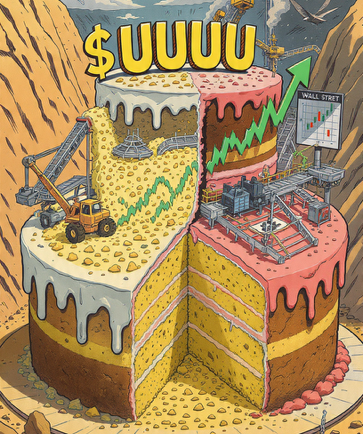
Older Americans are “un-retiring” in growing numbers, turning the golden years into the “gone back to the office” years—driven mostly by higher living costs, but also by a desire to stay sharp and connected. This revival of gray-collar labor is reshaping the job market, Social Security math, and even how we define retirement itself.
The New American Pastime: Un-Retiring
Retirement used to be a one-way exit—cake, speeches, and a permanent handoff of the office keycard. Now, for a meaningful slice of older Americans, it looks more like a round-trip ticket. Recent data show that around 6–7% of retirees have reentered the labor force in just the past several months, with millions more either working beyond 65 or considering a return.
Behind the numbers is a simple story: life got more expensive, and retirement savings did not keep pace. As inflation and housing, health care, and everyday expenses rose in recent years, more retirees discovered that “fixed income” sometimes means “fixed, but not quite enough.”
When “Fixed Income” Meets Flexible Work
Survey after survey points to a common motive: money. An AARP study finds that nearly half of older adults who have gone back to work say the primary reason is to earn more income, with basic living costs topping the list. Among people 50 and older who are working or job hunting, roughly four in ten say they’re doing so mainly to cover everyday expenses, not luxuries.
Social Security offers a baseline, but it rarely feels like a finish line. About half of older Americans receive less than roughly $20,500 a year in Social Security benefits, and median retiree income sits under $30,000—numbers that can look thin against modern rent, groceries, and medical bills. For many, the most realistic “yield-enhancement strategy” is the oldest one in the book: go back to work.
The Silver Labor Force Steps Back In
The once-narrow trickle of post-retirement workers has become a meaningful share of the labor market. Nearly one in five adults aged 65 and older is now working or looking for work, the highest level in decades, and older workers are the only age group with a rising labor-force participation rate. In some studies, as many as 20–25% of retirees are working part- or full-time by their late 60s or 70s, with several more percent actively searching.
Economists have long noted that retirement is not always a one-and-done decision. Longitudinal research suggests that a significant minority of retirees follow “nontraditional” paths, leaving full-time careers, then reentering the labor market as part-time employees, consultants, or even small-business owners. In other words, the corporate farewell party may be less a finale and more an intermission.
Inflation, Longevity, and the Math of “Enough”
Un-retirement is not happening in a vacuum; it is happening in an era of longer lifespans, volatile markets, and persistent inflation. Many retirees planned for a 20-year stretch; the actuarial tables increasingly suggest a 30-year horizon—and that extra decade has to be funded somehow.
Compounding the pressure, a meaningful share of older Americans reaches retirement with limited or no savings. One survey finds that about 18% of people 50 and older have nothing set aside for retirement, while others are watching their modest nest eggs eroded by higher prices. When portfolio withdrawals collide with rising costs, going back to work can feel less like a lifestyle choice and more like a line item in the household budget.
Beyond the Paycheck: Purpose, Brains, and Boredom
The story, however, is not all about financial strain. A notable slice of older workers say they are returning to the job market because they like what they do, want to stay active, or simply miss the daily rhythm of work. Studies of older adults show strong nonfinancial motives: enjoying their work, staying mentally alert, maintaining a sense of purpose, and keeping social connections alive.
In one survey of older adults who continue working, more than 40% cite enjoyment or staying active as key reasons, with many highlighting the role of work in keeping their brains engaged. For these un-retirees, the new job description might read: will work for stimulus, camaraderie, and a little extra income on the side.
Flexible Schedules and Second Acts
Today’s un-retirees are not necessarily lining up for 40-hour weeks under fluorescent lights. Many say they would be eager to return to work if they could secure flexible schedules, part-time roles, or hybrid arrangements that accommodate health needs and family responsibilities.
Surveys suggest that a sizable minority of retirees are either open to or actively looking for work, with flexibility as a key condition. Options range from consulting and gig work to customer-service roles, professional services, and small-business ventures, often without traditional benefits but with more control over time. It is the semi-retired portfolio career: a bit of income, a bit of stimulation, and ideally, no commute longer than one podcast.
Employers Discover the Value of Experience
For employers, this gray wave represents both a challenge and an opportunity. Older workers bring decades of institutional knowledge, soft skills, and professional networks, at a moment when many industries face labor shortages and demographic shifts. Public workforce programs are already serving more workers age 50 and over, reflecting their growing share among job seekers.
The friction lies in hiring practices and perceptions. Many retirees worry that their age will be a barrier, and some are not wrong: surveys show a significant portion expect age to make job hunting harder, even as employers publicly tout their interest in experience. The labor market is still learning how to price wisdom.
Redefining Retirement in Real Time
Put together, the data suggest that retirement in America is moving from a destination to a phase—one that can include encore careers, part-time stints, and periodic returns to the labor market. By late 2024, estimates indicated that as many as a quarter of retirees were working in some form, with additional retirees actively seeking jobs.
That shift carries implications for policymakers as well as households. As older Americans work longer, questions about Social Security, labor protections, retraining programs, and age discrimination become more central, not less. At the kitchen-table level, financial planning increasingly means modeling not just “When can I retire?” but “When might I un-retire—and on what terms?”
If the old goal was to stop working as soon as possible, the emerging model is more nuanced: work longer, pause, pivot, then work differently. For a growing number of older Americans, retirement is less like closing the book and more like turning the page to a new chapter—one that, at least for now, still comes with a timesheet.
The Sources
[1] Considering un-retirement? More older Americans are rejoining the … https://finance.yahoo.com/economy/article/considering-un-retirement-more-older-americans-are-rejoining-the-workforce-often-out-of-financial-need-120341567.html
[2] Retirement on Pause: High Costs Push Older Americans Back to Work https://www.aarp.org/press/releases/2026-02-05-high-costs-older-americans-back-to-work.html
[3] More U.S. Residents Are Working Past Retirement Age https://www.pew.org/en/research-and-analysis/articles/2025/08/04/more-us-residents-are-working-past-retirement-age
[4] The Aging of America: A Changing Picture of Work and Retirement https://cri.georgetown.edu/the-aging-of-america-a-changing-picture-of-work-and-retirement/
[5] Improving workforce programs for older workers | Research Highlights https://www.upjohn.org/research-highlights/improving-workforce-programs-older-workers
[6] For some older Americans, retirement today means unretiring https://www.cbsnews.com/news/retirement-older-americans-going-back-to-work/
[7] [PDF] Reentering the labor force after retirement https://www.bls.gov/opub/mlr/2011/06/art2full.pdf
[8] Older Adults Are Returning to Work https://www.councilonaging.org/blog/older-adults-returning-to-work/
[9] Americans are leaving retirement and heading back to work. New … https://www.facebook.com/NewsOn6/posts/more-americans-are-leaving-retirement-and-heading-back-to-worknew-research-from-/1317542656860468/
[10] From Retired to Rehired: The Rise of ‘Unretirement’ in America https://www.ncsl.org/resources/details/from-retired-to-rehired-the-rise-of-unretirement-in-america
[11] Back to Work: Expectations and Realizations of Work after Retirement https://pmc.ncbi.nlm.nih.gov/articles/PMC4004604/
[12] Nearly a third of retirees want to rejoin the workforce – LinkedIn https://www.linkedin.com/pulse/nearly-third-retirees-want-rejoin-workforce-other-world-taylor-borden
[13] People return to work for many reasons, but the biggest is financial … https://www.facebook.com/nytimes/posts/people-return-to-work-for-many-reasons-but-the-biggest-is-financial-need-as-cost/1366211435361316/
[14] Finance and Markets https://www.wsj.com/finance
[15] Prompt Library – ChatHub https://chathub.gg/prompt-library
Stay Updated with Vista Partners
Subscribe to receive market insights, investing ideas, and the latest updates directly in your inbox.