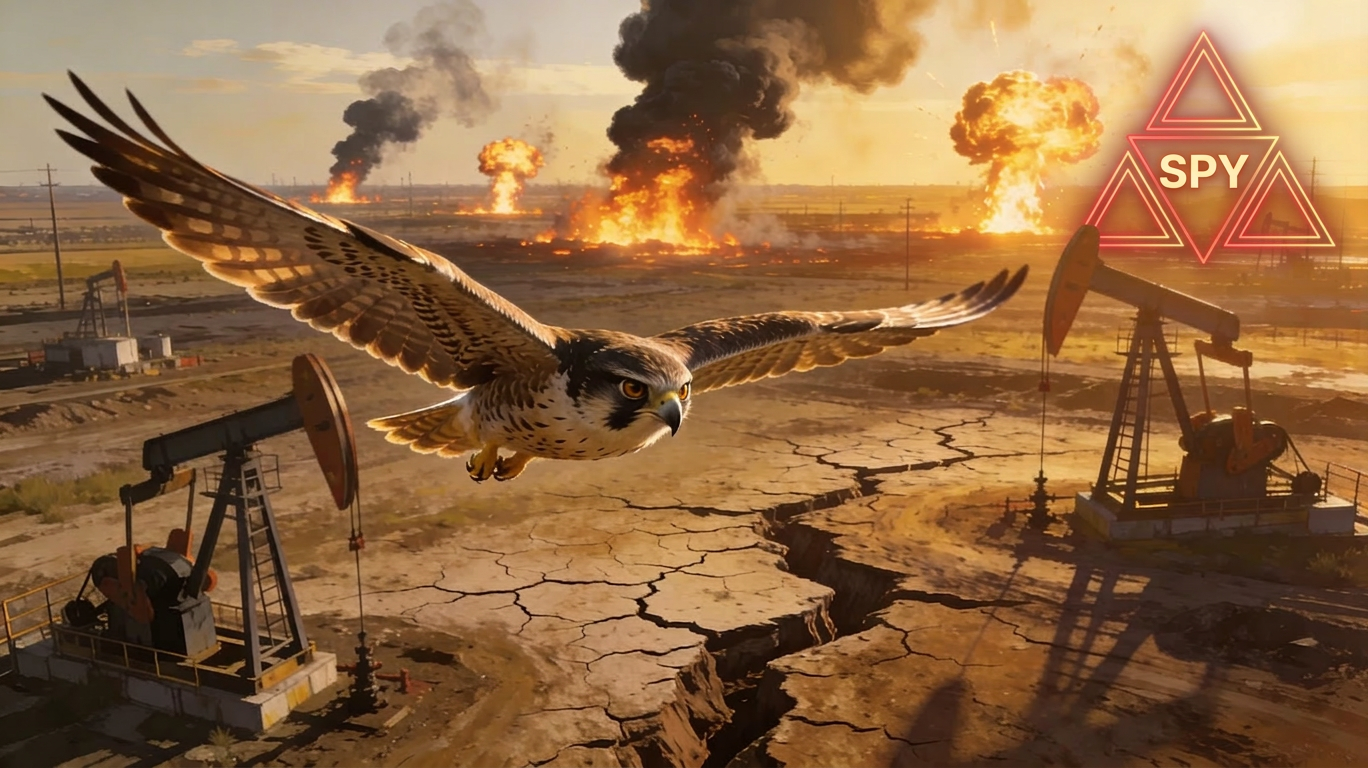
Central banks just stumbled into a new plot twist: an oil‑driven inflation shock from the Iran war just as the global economy was finally catching its breath, but the story is more policy tightrope than doom spiral. The good news—for now—is that the Fed, ECB, Bank of England and others are choosing patience over panic, trying to buy time rather than accidentally engineer a recession.
A War, An Oil Shock, And An Awkward Timing Problem
The conflict in Iran has pushed crude above pre‑crisis levels as shipping routes are disrupted and tankers avoid key chokepoints, reviving the classic “oil shock meets fragile growth” storyline. Higher fuel and transport costs are already working their way into consumer prices, just months after headline inflation had begun to drift back toward targets in the U.S. and Europe..
For central bankers, this is the macroeconomic equivalent of being handed a double‑espresso right before bedtime: energy‑driven price pressures are picking up just as manufacturing, trade and GDP momentum are softening across advanced economies. The result is an uncomfortably familiar trade‑off—fight inflation harder and risk choking growth, or support growth and risk re‑anchoring inflation expectations at a higher level.
The Fed: Higher For A Little Longer
In Washington, the Federal Reserve heads into its meeting with markets no longer debating how fast cuts are coming, but whether they meaningfully arrive at all this year. Analysts now see the Fed holding its policy rate steady and sketching a path with fewer cuts in 2026, and some even float the risk of a token hike if inflation proves more stubborn.
Oil‑related pressures are expected to show up in revised projections as slightly hotter inflation and somewhat weaker growth, a combination that argues for strategic patience rather than heroics. Fed officials are signaling that they will “look through” a short‑lived energy spike, but will respond if higher fuel costs bleed into wages and stickier core prices—as they did after Russia’s invasion of Ukraine.
For investors, that likely means a “higher for longer” rate narrative that extends the carry trade and rewards balance‑sheet discipline, without yet slamming the door on a gentle landing. In Wall Street terms, the Fed is trying to stay hawkish enough to keep inflation in check, without scaring the equity market out of its soft‑landing storyline.
Europe And The UK: Energy Hangover, Growth Headache
In the euro area, the European Central Bank faces a similar but sharper dilemma: an energy‑sensitive economy, soft growth, and fresh oil‑driven upside risks to prices. ECB officials have long argued that they can “look through” temporary oil spikes, but new estimates suggest that a sustained jump in crude and gas could lift eurozone inflation by around one percentage point, with the UK not far behind.
That is awkward math for a region already flirting with stagnation, yet markets expect the ECB to hold rates steady this week while it waits for clearer data on how durable the shock will be. Long‑term bond yields have grown choppier as investors weigh higher inflation risk against the rising probability that growth undershoots, especially in energy‑importing members.
Across the Channel, the Bank of England arguably has the toughest assignment: elevated inflation risks, lackluster GDP, and a labor market losing some steam. The latest spike in fuel prices has already pushed back expectations for BoE rate cuts, underscoring that the bar for easing remains high until policymakers are convinced this oil shock is a spike, not a plateau.
Emerging Markets: Walking The Narrowest Line
For emerging Asian central banks, the calculus is even more complicated: growth needs support, but higher fuel costs and a stronger U.S. dollar raise the risk of capital outflows and currency pressure. Some, like the Reserve Bank of India, are inclined to keep policy relatively growth‑friendly while leaning more heavily on FX intervention to stabilize their currencies.
History is not entirely comforting here. Prior oil shocks have shown that higher energy prices can simultaneously lift inflation and weaken demand, leaving EM policymakers juggling inflation, fiscal pressures and financial stability all at once. Still, most central banks outside the most fragile economies are signaling caution rather than aggressive hikes, hoping that the conflict and commodity spike prove shorter‑lived than feared.
Why This Is A “Trap”—And Why It Might Still Have An Exit
Economists describe the current situation as a policy “trap” because the usual playbooks—cut rates to support growth or hike to contain prices—both carry unusually high costs in an energy‑led shock. Cut too soon, and central banks risk re‑igniting an inflation dynamic they’ve spent years wrestling back toward target; hold or hike too long, and they risk bending an already slowing global economy toward recession.
Yet there are reasons this may be more tightrope than dead end. First, if the Iran conflict and supply disruptions ease, models suggest the ultimate inflation bump could be measured in tenths of a percentage point across many advanced economies, not a 1970s‑style rerun. Second, unlike prior oil shocks, many households and firms are entering this episode with somewhat less leverage and more awareness of inflation risks, making a wage‑price spiral less automatic than in past cycles.
That leaves central banks trying to do something they are historically not famous for: nothing dramatic. By holding policy steady, emphasizing data dependence and resisting the urge to chase every headline in the oil market, they are betting that patience—and a bit of luck on the geopolitical front—can keep both inflation and growth on a survivable path.
The Sources
- Yahoo Finance – “Central banks face policy trap as Iran war drives inflation shock just as growth momentum fades”
https://finance.yahoo.com/news/central-banks-face-policy-trap-as-iran-war-drives-inflation-shock-just-as-growth-momentum-fades-100015782.html[finance.yahoo] - Reuters – “Iran war fuels central bank rate hike bets on inflation fears”
https://www.reuters.com/business/energy/iran-war-fuels-central-bank-rate-hike-bets-inflation-fears-2026-03-09/[reuters] - CNBC – “Middle East conflict puts central banks on edge as oil shock fuels inflation risk”
https://www.cnbc.com/2026/03/04/iran-israel-us-war-middle-east-conflict-oil-gas-lng-surge-central-banks-inflation-risk.html[cnbc] - Barron’s – “Central Banks Meet As Mideast War Fuels Inflation Fears”
https://www.barrons.com/articles/central-banks-meet-as-mideast-war-fuels-inflation-fears-a1c09ef1[barrons] - Bloomberg – “Central Banks Face Fresh Inflation Threat Amid Iran War”
https://www.bloomberg.com/news/newsletters/2026-03-16/iran-war-central-banks-confront-fresh-inflation-threat[bloomberg] - Canadian Press via Yahoo – “Soaring fuel prices sparked by war in Middle East hit shippers and consumers in Canada”
https://ca.news.yahoo.com/soaring-fuel-prices-sparked-war-080006699.html[ca.news.yahoo] - Modern Diplomacy – “Oil Shock From Iran War Raises Fears of Financial Stress for Central Banks”
https://moderndiplomacy.eu/2026/03/10/oil-shock-from-iran-war-raises-fears-of-financial-stress-for-central-banks/[moderndiplomacy] - Al Jazeera – “How badly has the Iran war hit the global economy? The tell-tale signs”
https://www.aljazeera.com/news/2026/3/16/the-tell-tale-signs-how-bad-has-the-iran-war-hit-the-global-economy[aljazeera] - Chatham House – “How will the Iran war affect the global economy?”
https://www.chathamhouse.org/2026/03/how-will-iran-war-affect-global-economy[chathamhouse] - Forex Factory (syndicated Reuters/Yahoo) – “Central banks face policy trap as Iran war drives inflation shock just …”
https://www.forexfactory.com/news/1389108-central-banks-face-policy-trap-as-iran-war[forexfactory]
Stay Updated with Vista Partners
Subscribe to receive market insights, investing ideas, and the latest updates directly in your inbox.