U.S. stocks launched February with a flourish, as major indexes shrugged off weekend volatility in commodities and crypto to end Monday sharply higher.
S&P 500: Brushing Past Its Nerves
The S&P 500 spent the day flirting with record territory, ultimately closing just shy of a fresh high as investors rotated back into large-cap growth and AI beneficiaries after last week’s shakeout. Gains were broad rather than manic, with cyclicals, communication services, and select tech names doing the heavy lifting, suggesting buyers were more discerning than euphoric. The index’s near-record close, even as bond yields ticked higher, spoke to a market that has decided modestly higher real rates are a tolerable price for solid growth and robust earnings.
Dow 30: Blue Chips Take a Victory Lap
The Dow Jones Industrial Average added roughly 515 points, kicking off the month with a rally that looked more like a renewed vote of confidence in corporate America than a short-covering spasm. Financials, industrials, and a handful of mega-cap consumer names paced the advance, with McDonald’s helping lead the charge after investors rewarded its steady traffic and pricing power in an otherwise jittery consumer landscape. The move leaves the blue-chip benchmark back within striking distance of its highs, reinforcing the impression that, for all the hand-wringing about AI bubbles, the old economy is enjoying its own quiet bull market.
Nasdaq: AI Darlings Keep Their Crowns—With a Tilted Halo
The Nasdaq Composite joined the party, closing higher as investors selectively rebuilt positions in AI and semiconductor leaders after last week’s brutal factor unwind. Nvidia traded with a noticeable wobble early in the session as lingering doubts over a reported multibillion-dollar OpenAI investment kept traders on edge, but the stock’s resilience into the close underscored how tough it is to keep the market’s preferred growth engine in the shop for long. Apple, by contrast, enjoyed a robust session, with shares climbing about 4% to finish near 270 dollars as investors leaned into its cash flow reliability and optionality around on-device AI—even if the product roadmap remains more whispered than revealed.
Russell 2000: The Small-Cap Sigh of Relief
The Russell 2000 finally caught a bid, trading higher through the session as rate-sensitive banks, industrials, and domestic cyclicals staged a modest comeback. With the index traversing between roughly 258 and 264 on the day—still not far below its 52‑week high—small caps began to look less like the forgotten stepchild of the rally and more like a belated beneficiary of solid growth and a Federal Reserve that appears content to sit tight rather than slam the brakes. For now, the move feels like a tentative re-rating rather than a full-throated “risk-on” roar, but it is the kind of incremental breadth improvement strategists have been pining for since last year’s mega‑cap dominance.
Macroeconomy: Solid Growth, Benign Inflation, and a Fed in No Hurry
On the macro front, investors continued to digest a backdrop that is irritatingly good for those waiting for a Fed rescue cut. Third‑quarter 2025 GDP was recently revised to a stronger‑than‑expected 4.4% annualized pace, powered by consumer spending and still‑healthy business investment. December consumer price data showed headline and core inflation running in the mid‑2% range year‑over‑year—comfortably off the peaks, but not yet tame enough to justify aggressive easing, especially with food prices still rising briskly. That combination has left policymakers signaling patience: at its first 2026 meeting, the Fed left the funds rate at 3.50% to 3.75%, with language that described growth as “solid” and the labor market as stabilizing—hardly the description of an economy in need of emergency stimulus.
Rates and Yield Curve: Higher, Flatter, but Not Panicked
Treasury yields drifted higher, with the 2‑year note edging up to about 3.57%, extending a slow climb over the past month even as levels remain well below where they sat a year ago. The upward nudge at the front end reflected both the Fed’s hawkish‑leaning hold and a market reassessing how urgently it should price in rate cuts, particularly after President Trump’s renomination of Kevin Warsh, perceived as more tolerant of higher real yields. The curve itself stayed relatively flat by historical standards, a reminder that investors still expect monetary policy to cool the economy over time—even if Monday’s equity action suggested they’re in no hurry to abandon growth stories just yet.
Trade and Tariffs: A Softer Edge With India
Trade headlines added a diplomatic gloss to the day’s risk tone as President Donald Trump unveiled an initial trade agreement with India that trims U.S. reciprocal tariffs on Indian goods from 25% to 18%. In return, New Delhi pledged to halt purchases of Russian oil and significantly boost imports from the U.S. and even Venezuela, underscoring how trade policy, geopolitics, and energy markets now share the same conference call. The deal’s details remain thin, but for markets still scarred by the tariff volleys of earlier years, the move looked more like a de‑escalation than another front in the trade wars—and that alone was worth a few basis points of relief in equity risk premiums.
Fed Watch: Minutes and Next Steps
The week’s central‑bank focal point will be the release of minutes from the January 27–28 FOMC meeting, due in mid‑February, which traders hope will clarify just how close the Committee came to cutting rates. Looking further out, the Fed’s 2026 schedule keeps its familiar eight‑meeting cadence, with the next policy decision set for March 17–18, leaving markets to trade in the uncomfortable space between solid growth data and investors’ yearning for looser financial conditions.
Commodities and Crypto: Glitter, Gloom, and a Bitcoin Hangover
Recent fireworks in precious metals left traders dizzy as gold, which had spiked above 5,550 dollars per ounce last week, remained volatile after suffering an 11% slide on Friday and another early‑Monday downdraft to the mid‑4,000s before stabilizing around 4,740. Silver, which endured an even steeper 31% plunge in recent sessions, managed a modest rebound on the day rising 5.356% to $82.410/oz, helped by a small bounce in risk appetite and incremental bargain hunting. Bitcoin, however, remained firmly in the doghouse: the token hovered in the mid‑70,000s after a weekend slide from above 83,000, extending a retreat from October’s 126,000‑plus peak that has reminded even the most zealous hodlers that volatility is not just a line item in the prospectus—it is the prospectus
Sector and Stock Highlights: AI, Chips, and the Usual Suspects
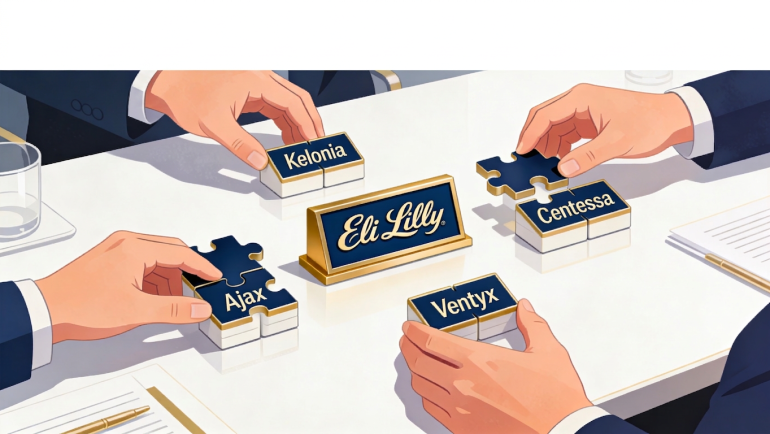
Eli Lilly (LLY) continued to trade as a high‑priced staple of the new healthcare order, holding above the 1,000‑dollar line after a mid‑January wobble and supported by a powerful GLP‑1 franchise, late‑stage pipeline wins, and its recently announced 1.2 billion‑dollar deal to acquire Ventyx Biosciences. Investors remain broadly constructive, with analysts’ consensus ratings skewed toward “Buy” despite ongoing legal scrutiny around insulin pricing and questions about how long Lilly can command premium margins in weight‑loss and cardiometabolic markets.
Taiwan Semiconductor (TSM, $341.36, +3.27%) continued to consolidate after its torrid start to the year, as shares digested a January earnings update in which management projected nearly 30% revenue growth for 2026—only a modest deceleration from 2025’s 31.6% surge. That outlook, combined with rising AI‑related capital spending and an upwardly revised Street price target approaching the low‑400s, has kept TSM firmly in the pantheon of essential infrastructure for the AI age.
Nvidia ($185.61, -2.89%) spent the day in the crosshairs of both hope and skepticism after reports of pushback to a proposed OpenAI investment of up to 100 billion dollars prompted another bout of soul‑searching over just how much capital the AI ecosystem can profitably absorb. Shares slipped in early trading before moderating as CEO Jensen Huang sought to tamp down the more aggressive funding chatter, with markets ultimately treating the noise as a reminder that even the market’s most admired chip designer is not exempt from the laws of return on capital.
Micron Technology (MU, $437.80, +5.52%) enjoyed a stronger tone, with shares trading north of 430 dollars intraday and gaining roughly 4% as investors continued to re‑rate high‑bandwidth memory suppliers tied to next‑generation AI servers. The move extended a run in which Micron has emerged as one of the purer ways to express the memory and storage side of the AI build‑out, even as its cyclicality keeps valuation debates lively.
Apple (AAPL) put in one of the more notable performances among the megacaps, rising a little over 4% to finish the day around 270 dollars as investors leaned back into its balance‑sheet strength, ecosystem stickiness, and potential to monetize on‑device AI—without the headline risk of mega‑sized venture checks into frontier models. The stock’s bounce also reflected growing confidence that hardware refresh cycles and services growth can coexist, giving Apple room to surprise on both revenue and margin mix later this year.
Tesla, by contrast, remained a source of spirited debate after closing near 422 dollars, down about 2% on the session and still wrestling with concerns over EV demand elasticity, intensifying competition, and the company’s shifting narrative toward autonomy and robotics. The stock’s nearly 10‑dollar intraday range underscored how every incremental headline—whether about pricing, regulation, or full‑self‑driving timelines—still has the power to move the tape meaningfully.
Broadcom traded with a steadier hand but edged down .06% on the day, benefiting from its hybrid identity as both an AI infrastructure play and a diversified chip-and-software conglomerate, even as some investors fretted about capital‑spending fatigue among hyperscalers. Meta Platforms (META, $706.41, -1.41%) continued to enjoy halo effects from its outsized role in social advertising and generative‑AI infrastructure, though the stock’s path higher has grown more measured as questions about content costs, capex intensity, and regulatory scrutiny have re‑entered the conversation.
Nokia (NOK) remained a quieter participant in the day’s action but still rose 3.58% to $6.66, buffered by expectations around 5G and network spending cycles that have yet to fully reignite but stand to benefit from any renewed corporate capex tied to edge computing and AI‑enabled devices. Rio Tinto shares, while more tied to the global commodities cycle, traded as a barometer of industrial‑metals sentiment against a backdrop of volatile metals prices and a recent deal in which the miner and China’s Chalco agreed to acquire a roughly 900‑million‑dollar stake in Brazilian aluminum producer CBA.
McDonald’s (MCD, $318.53, +1.12%) helped lift the Dow as investors continued to reward its ability to pass through higher costs without scaring off diners, a combination that has become the envy of both restaurateurs and central bankers. Oracle and Intel (INTC, $48.81, +5.04%), each in their own way, served as second‑derivative AI plays—Oracle through cloud infrastructure and database modernization, Intel via its ongoing effort to reassert itself in data‑center and foundry markets—leaving both stocks sensitive to any hint that AI‑related spending plans might be stretched too far or too fast.
Among the more speculative names, Oklo (OKLO, $73.62, -7.52%) remained a niche but much‑watched player in the advanced nuclear space, drawing attention from investors looking for long‑dated energy transition stories with a tech‑like narrative arc. Opendoor (OPEN, $4.82) still tied to the vicissitudes of U.S. housing liquidity and mortgage rates, traded more as a macro proxy than a stock‑specific story, with its fortunes closely linked to whether the Fed can engineer lower borrowing costs without breaking the broader economy.
Palantir Technologies (PLTR, $157.71, +.80%) posted Q4 earnings & revenue above Analyst’s expectations after the close on Monday. Revenues surged 70% from the year-earlier period to $1.4B.
Deals, IPOs, and Corporate Maneuvers
The year’s M&A drumbeat continued in the background, with investors still parsing a string of late‑January deals that ranged from VSE’s 2‑billion‑plus purchase of Precision Aviation to Boston Scientific’s 14.5‑billion‑dollar agreement to acquire Penumbra—transactions that underscore how, even in a higher‑rate environment, strategic buyers remain willing to pay for scale and specialization. Rio Tinto’s(RIO, $92.52, +1.64%) tie‑up with China’s Chalco on a near‑900‑million‑dollar stake in Brazilian aluminum producer CBA added to the sense that industrials and miners are quietly re‑positioning for a multi‑year energy‑transition build‑out, even as day‑to‑day commodity prices remain volatile.
On the primary‑market front, the IPO calendar stayed busy but orderly, with listings such as Community Bancorp on Nasdaq and new DoubleLine‑branded ETFs on NYSE Arca highlighting the continued demand for niche banking stories and income‑oriented vehicles rather than high‑octane growth narratives. For now, that mix suggests a market that is open for business but still discriminating—more willing to reward steady business models than the pre‑profit concept stocks that defined the last cycle’s froth.
Vista Partners Watchlist Updates
Modular Medical, Inc. (Nasdaq: MODD., $.4757, +5.48%), a leader in innovative insulin delivery technology targeting the $3 billion adult “almost-pumpers” diabetes market with user-friendly, affordable patch pumps, announced (Dec. 10) that it had priced an underwritten public offering (the “offering”) of 12,173,000 shares of its common stock and accompanying warrants to purchase 6,086,500 shares of its common stock. Each two shares of common stock are being offered and sold together with one accompanying warrant at a combined offering at a price of $0.77, yielding an effective price of $0.38 per share and $0.01 per warrant. The warrants will have an exercise price of $0.45 per share, are exercisable immediately upon issuance and will expire five years following the date of issuance. In connection with the offering, Modular Medical has granted the underwriter a 30-day option to purchase up to an additional 15% of common shares and/or warrants at the public offering price, less underwriting discounts and commissions. The over-allotment option may be elected with respect to, at the underwriter’s sole discretion, shares and warrants together, solely shares, solely warrants, or any combination thereof. Newbridge Securities Corporation is acting as the sole bookrunner for the offering. Assuming no exercise of the over-allotment option, the gross proceeds to the Company from the offering are expected to be approximately $4.68 million, before deducting underwriting discounts, commissions, and estimated offering expenses payable by the Company. The Company intends to use the net proceeds from the offering to fund operations and for working capital and general corporate purposes, including capital expenditures.
On Nov. 17, Modular announced Institutional Review Board (“IRB”) approval to conduct an in-house study of its next-generation Pivot™ insulin delivery system using insulin on people with diabetes (the “Study”). Pursuant to U.S. Food and Drug Administration (“FDA”) regulations, an IRB is a group that has been formally designated to review and monitor biomedical research involving human subjects. The Study will simulate real-world conditions by delivering insulin to adult participants to gather critical data on device function and usability and obtain user feedback. Modular Medical’s Pivot tubeless patch pump aims to enhance accessibility for underserved patients with diabetes and drive market penetration and expansion.
On Nov. 14, Modular Medical announced the 510(k) premarket submission of its next generation Pivot™ tubeless patch pump to the U.S. Food and Drug Administration (the “FDA”). The Company expects to commence the commercial launch of its Pivot pump in Q1 2026. On Nov. 3, Modular Medical the successful validation of its Pivot controller line, a critical milestone in preparing for the commercial launch of its Pivot patch pump targeted for Q1 2026. The Pivot controller line validation further demonstrates manufacturing readiness for high-volume production, positioning Modular Medical to meet the growing demand in the diabetes treatment market for advanced technology.
Eupraxia Pharmaceuticals Inc. (NASDAQ: EPRX, $7.88), a clinical-stage biotechnology company leveraging its proprietary Diffusphere™ technology to optimize local, controlled drug delivery for diseases with significant unmet need, announced (Nov. 13) the second set of 52-week follow up data from its ongoing Phase 1b/2a RESOLVE trial evaluating a single administration EP-104GI for the treatment of eosinophilic esophagitis (“EoE”). James A. Helliwell, Chief Executive Officer of Eupraxia stated,“These data further highlight the strong durability and tolerability profile of EP-104GI, reinforcing its potential to become a convenient, once-a-year treatment that fits seamlessly into routine disease management by aligning with annual patient endoscopies. The Cohorts 5 & 6 patients – the only groups to have reached 52 weeks in the trial – are demonstrating levels of symptom relief that is durable and clinically meaningful – we are very encouraged by this outcome. We’re also pleased that our previously announced 52-week data were presented as a late-breaking presentation at the American College of Gastroenterology Annual Scientific Meeting (ACG). These new results build on that momentum. Given that current EoE therapies often struggle with long-term adherence, we believe a durable, once-yearly treatment could meaningfully improve patient outcomes and establish EP-104GI as a preferred option for both physicians and their patients.”
GeoVax Labs, Inc. (Nasdaq: GOVX, $2.80, +.18%), a clinical-stage biotechnology company developing multi-antigen vaccines and immunotherapies for infectious diseases and cancer.
GeoVax is heading into the 44th Annual J.P. Morgan Healthcare Conference week (“JPM2026”) in San Francisco, CA Jan. 12-15 with the kind of narrative biotech investors typically like to hear: a differentiated platform, large funded trials lining up, and multiple shots on goal in both infectious disease and oncology. The company is leaning into its MVA platform as a potential franchise engine rather than a one‑product science experiment. Specifically, investors can meet David Dodd, Chairman & CEO of GeoVax, during his presentation at the Hilton Union Square, 333 O’Farrell Street, Yosemite A (Ballroom Level), San Francisco, CA on January 13, 2026, 2:30 pm PST.
GeoVax announced (Dec. 19) that it has entered into definitive securities purchase agreements with several institutional and individual investors for the purchase and sale of approximately 13.2 million units, each comprised of one share of the Company’s common stock and warrants, as described below, to purchase shares of the Company’s common stock, at a price of $0.245 per unit in a public offering. The Company will issue warrants to purchase up to approximately 26.5 million shares of common stock. The warrants will have an exercise price of $0.245 per share, will be exercisable immediately following the date of issuance and will have a term of five years following the date of issuance. Roth Capital Partners is acting as the exclusive placement agent for the offering. The gross proceeds to the Company from this offering are expected to be approximately $3.2 million, before deducting the placement agent’s fees and other offering expenses payable by the Company. The Company intends to use the net proceeds from this offering for working capital and general corporate purposes. The closing of the offering is expected to occur on or about December 22, 2025, subject to the satisfaction of customary closing conditions.
GeoVax announced (Dec. 18) the publication of a peer-reviewed article in Frontiers in Immunology titled: “Multi-antigen MVA-vectored SARS-CoV-2 vaccine, GEO-CM04S1, induces cross-protective immune responses to ancestral and Omicron variants.” The study provides definitive preclinical evidence that GeoVax’s multi-antigen COVID-19 vaccine candidate, GEO-CM04S1, delivers full cross-variant protection, driven predominantly by robust T-cell responses, even in the absence of neutralizing antibodies. The findings reinforce the design philosophy behind GeoVax’s MVA-based, multi-antigen platform and provide mechanistic insight that is increasingly relevant for immunocompromised individuals, who often fail to respond optimally to the first-generation COVID-19 vaccines.
GeoVax announced (Dec. 17) the successful completion of fill-finish for the initial clinical batch of GEO-MVA, its next-generation Mpox/smallpox vaccine. The product has now entered final release evaluation, the concluding quality-control and compliance process required before shipment for clinical use, positioning the Company for Phase 3 immunobridging trial start-up activities in Q1 2026. Fill-finish – the sterile, cGMP-regulated process of filling, sealing, and packaging vaccine vials – marks the last manufacturing step before a vaccine may enter clinical study supply channels. With fill-finish complete and GEO-MVA now undergoing final release evaluation, GeoVax has moved into the final pre-clinical-deployment phase of its EMA-aligned clinical program. In June 2025, the European Medicines Agency (EMA) Scientific Advice confirmed that a single Phase 3 immunobridging study demonstrating immune comparability to the approved MVA vaccine, Imvanex(R), would be sufficient to evaluate GEO-MVA’s efficacy. This provides a clear, accelerated regulatory path to licensure. This milestone coincides with increasing Mpox activity globally – including expanding Clade I outbreaks in Africa and emerging cases in the United States – exposing vulnerabilities associated with global dependence on a sole foreign MVA vaccine supplier. GEO-MVA is designed to expand supply, diversify sources, and strengthen biodefense infrastructure.
Volato Group, Inc. (NYSE American: SOAR, $.6093) and M2i Global, Inc. (MTWO, $.0467), a company specializing in the development and execution of a complete global value supply chain for critical minerals, reaffirmed, on Tuesday, Jan. 20, their expectation to complete their targeted first-quarter 2026 closing timeline for the previously announced business combination, citing steady advancement through the SEC review process alongside continued progress in operational planning and integration readiness. Subject to the effectiveness of the registration statement on Form S-4, stockholder approvals, and other customary closing conditions, the companies continue to expect the merger to close in the first quarter of 2026. To align the transaction timeline with the current stage of the SEC review process, the companies have mutually agreed to extend the end date of the merger agreement through March 31, 2026. This extension reflects disciplined execution and provides additional runway to complete the remaining regulatory steps in an orderly manner, while maintaining transaction commitment and protecting stockholder interests. Amendment No. 1 to the Form S-4 was filed on Monday, January 12, 2026, to respond to SEC comments and advance the registration statement through the review process. The review timeline was affected in part by a temporary slowdown in SEC operations following the recent federal government shutdown. With the amendment now on file, the companies are focused on completing the remaining steps of the SEC review process.
On Jan. 9, M2i Global and Volato Group announced that they have entered into a strategic collaboration agreement with Australian company Titanium X to advance critical mineral development in the US. This partnership represents a significant move towards enhancing domestic refining capacity and strengthening the critical materials supply chain that underpins US industry and national security. Titanium X and M2i Global will work together on the financing, development and commercialisation of the former’s critical mineral assets. M2i Global will apply its global experience in delivering mineral projects to support these initiatives. The companies are also in talks to conclude an exclusive titanium concentrate supply agreement.
On Jan. 7, M2i Global, Inc. (MTWO , $,05) along with Volato Group, Inc. (NYSE American: SOAR, $.45), a technology-driven company, announced a strategic collaboration agreement with Titanium X, marking a major step forward in advancing domestic refining capabilities and securing the critical materials supply chain essential to U.S. industry and national security.
Volato Group, Inc. today (Dec. 29) announced the appointment of Alan D. Gaines to its Board of Directors, effective immediately. Mr. Gaines will also serve as Chairman of the Audit Committee.
On Dec. 23, Volato Group, Inc. announced preliminary financial guidance for the fourth quarter and full year ending December 31, 2025, reflecting continued execution against its strategic and balance sheet objectives. For the fourth quarter of 2025, Volato expects to report revenue between $27 million and $28 million. For the full year 2025, the Company anticipates total revenue between $78 million and $79 million, with net income of $6 million to $8 million. These results reflect a year of meaningful progression aligning operational performance with Volato’s long-term growth initiatives and advancing its pending merger with M2i Global, Inc. (OTC: MTWO). During 2025, Volato also made substantial progress strengthening its balance sheet. As of September 30, 2025, the Company reduced total liabilities to $9.5 million, satisfying the debt reduction condition required under its pending merger agreement with M2i Global, Inc. (OTC: MTWO). Volato expects continued improvement in its capital structure as it advances toward a targeted first-quarter 2026 closing of the transaction. “Our 2025 results reflect a year of transformation and disciplined balance sheet execution,” said Mark Heinen, Chief Financial Officer of Volato. “We made significant progress reducing liabilities while sharpening our focus on scalable, technology-driven businesses that are designed to complement and strengthen the M2i Global platform over the long term.”
Serina Therapeutics (NYSE American: SER, $2.72), Alabama-based biotech is betting its proprietary POZ platform and reimagined approach to apomorphine delivery may redefine the treatment paradigm for patients who have exhausted standard oral therapies.
On Jan. 29, The U.S. Food and Drug Administration cleared Serina Therapeutics’ investigational new drug (IND) application for SER‑252, the company’s POZ‑enabled formulation of apomorphine being developed for patients with advanced Parkinson’s disease. This clearance allows Serina to move ahead with a registrational‑intent clinical program under the 505(b)(2) NDA pathway, leveraging existing data on apomorphine while aiming to improve its dosing profile and tolerability for patients who need more consistent symptom control. In practical terms, the FDA’s feedback and subsequent clearance provide Serina with a more capital‑efficient route to a potential new drug application, shortening the distance between preclinical promise and commercial reality. For Parkinson’s patients and their clinicians, the stakes are high: SER‑252 is designed to offer a more predictable therapeutic profile, potentially smoothing out some of the daily volatility, patient caregiver burden that has long defined advanced disease management.
On Dec. 11, Serina announced the appointment of Joshua Thomas, Ph.D., as Vice President and Head of Chemistry. He will oversee internal and external chemistry efforts to optimize POZ-based candidates, supporting efficient translation from discovery through development.
The InterGroup Corporation (NASDAQ: INTG, $29.66) announced (Jan. 6) that on December 29, 2025, it completed the sale of a non-core 12-unit apartment complex in Los Angeles County for a gross sales price of approximately $4,850,000. InterGroup expects to report a GAAP net gain on sale of approximately $3,509,000, which will be reflected in the Company’s Form 10‑Q for the quarter ended December 31, 2025. The transaction is expected to result in federal and state income tax liability, the amount of which will be determined based on the Company’s final tax position and applicable tax rules.
DoubleVerify Holdings Inc. (DV) closed at $10.60. DoubleVerify, which built its franchise on media verification and ad performance analytics, is now the first badged TikTok Marketing Partner focused specifically on attention measurement, tapping impression-level signals from the platform. Brands gain a granular view of how exposure and user interaction come together across TikTok formats, ad sets, creatives, and objectives, effectively treating every swipe as a tiny A/B test.
flyExclusive, Inc. (NYSE American: FLYX, $3.07, +3.72%), one of the nation’s largest private jet operators and a certified Part 145 Repair Station, today announced it has signed an authorized dealership agreement with Starlink, becoming a certified dealer and installer for Starlink’s high-speed, low-latency aviation connectivity system.
The Sources
- Investopedia – “Markets News, Feb. 2, 2026: Stock Indexes End Sharply Higher to Begin February; Dow Adds 515 Points, S&P 500 Just Misses Record”
https://www.investopedia.com/dow-jones-today-02022026-11897235[investopedia] - Yahoo Finance – “Stock Market News for Feb 2, 2026”
https://sg.finance.yahoo.com/news/stock-market-news-feb-2-142400481.html[sg.finance.yahoo] - Traders’ Insight (Interactive Brokers) – “Economic Update: Week of February 2, 2026”
https://www.interactivebrokers.com/campus/traders-insight/securities/macro/economic-update-week-of-february-2-2026/[interactivebrokers] - TS2.Tech – “Nvidia stock slips early as OpenAI deal doubts hang over NVDA ahead of Feb. 25 results”
https://ts2.tech/en/nvidia-stock-slips-early-as-openai-deal-doubts-hang-over-nvda-ahead-of-feb-25-results/[ts2] - TS2.Tech – “Nvidia stock slips before the bell as OpenAI funding talk shifts and earnings loom”
https://ts2.tech/en/nvidia-stock-slips-before-the-bell-as-openai-funding-talk-shifts-and-earnings-loom/[ts2] - MarketBeat – “Eli Lilly and Company (NYSE:LLY) Trading Down 2%”
https://www.marketbeat.com/instant-alerts/eli-lilly-and-company-nyselly-trading-down-2-should-you-sell-2026-01-08/[marketbeat] - StockAnalysis – “Eli Lilly and Company (LLY) Stock Price History 1970–2026”
https://stockanalysis.com/stocks/lly/history/[stockanalysis] - StockAnalysis – “Micron Technology (MU) Stock Price History 1984–2026”
https://stockanalysis.com/stocks/mu/history/[stockanalysis] - StockAnalysis – “Apple (AAPL) Stock Price History 1982–2026”
https://stockanalysis.com/stocks/aapl/history/[stockanalysis] - StockAnalysis – “Tesla (TSLA) Stock Price History 2010–2026”
https://stockanalysis.com/stocks/tsla/history/[stockanalysis] - Yahoo Finance – “Dear Palantir Stock Fans, Mark Your Calendars for February 2”
https://finance.yahoo.com/news/dear-palantir-stock-fans-mark-160002073.html[finance.yahoo] - Yahoo Finance – “Upcoming and recent IPOs – IPOs calendar”
https://au.finance.yahoo.com/calendar/ipo?from=2026-02-01&to=2026-02-07&day=2026-02-02[au.finance.yahoo] - Intellizence – “Largest Mergers and Acquisitions (M&A) Deals Data”
https://intellizence.com/insights/merger-and-acquisition/largest-merger-acquisition-deals/[intellizence] - CNN Business – “Precious metals swing, bitcoin tumbles as markets start February on …”
https://www.cnn.com/2026/02/02/investing/gold-silver-bitcoin-us-stock-market[cnn] - Federal Reserve Board – February 2026 Calendar
https://www.federalreserve.gov/newsevents/2026-february.htm[federalreserve] - ABA Banking Journal – “FOMC releases tentative meeting schedule for 2025, 2026”
https://bankingjournal.aba.com/2024/08/fomc-releases-tentative-meeting-schedule-for-2025-2026/[bankingjournal.aba] - Reuters – “US to cut tariffs on India to 18%, India agrees to end Russian oil purchases”
https://www.reuters.com/world/india/trump-says-agreed-trade-deal-with-india-2026-02-02/[reuters] - The New York Times – “Trump Announces Initial Trade Deal With India, Cutting Tariffs to 18%”
https://www.nytimes.com/2026/02/02/us/politics/trump-tariffs-india-trade-deal.html[nytimes] - Trade Compliance Resource Hub – “Trump 2.0 tariff tracker”
https://www.tradecomplianceresourcehub.com/2026/01/27/trump-2-0-tariff-tracker/[tradecomplianceresourcehub] - TradingEconomics – “US 2 Year Treasury Bond Note Yield”
https://tradingeconomics.com/united-states/2-year-note-yield[tradingeconomics] - Nasdaq Global Index Watch – “History for COMP (Nasdaq Composite)”
https://indexes.nasdaqomx.com/Index/History/COMP[indexes.nasdaqomx] - Barchart – “Russell 2000 Index Chart, Components, Prices”
https://www.barchart.com/stocks/indices/russell/russell2000[barchart]
Stay Updated with Vista Partners
Subscribe to receive market insights, investing ideas, and the latest updates directly in your inbox.