Skip to content Skip to sidebar Skip to footer

Solar, EVs, AI… And Silver: The One Metal Your ‘Modern Portfolio’ Forgot To Invite -( $SIL )

Gold may still own the vault, but in 2026 silver is quietly applying for a corner office in the real economy—and the résumé is stronger than many investors realize.

From Vault Metal To Working Metal

For centuries, gold has been the polished emblem of wealth and political anxiety, sitting in central‑bank vaults and private safes as insurance against monetary experiments and geopolitical missteps. Silver, by contrast, is increasingly less about display cases and more about data centers, EV platforms, and power electronics, where its unmatched electrical conductivity makes it mission‑critical rather than merely ornamental.

That bifurcation is now visible in market behavior: gold still trades primarily on real rates, policy signals, and safe‑haven flows, while silver straddles both worlds, reacting to macro fears and to the very practical question of whether the energy transition can stay on schedule.

Solar Panels: The First Big Re‑Write

The solar industry remains one of silver’s headline employers, even as manufacturers work hard to use less of it per watt. Photovoltaics have recently accounted for close to a fifth of total silver demand, a share big enough that every tweak in solar policy or manufacturing efficiency ripples through the silver market.

In 2026, solar manufacturers are pushing “thrifting” and substitution programs to manage costs, which is expected to trim overall industrial fabrication by a couple of percentage points and mark a four‑year low. Yet even with that pullback, policy targets such as the European Union’s aim for hundreds of gigawatts of new solar capacity by 2030 imply that this is a cyclical exhale inside a longer structural inhale for silver demand.

EVs, AI, 5G: The New Silver Triangle

While solar experiments with using less silver, other sectors are quietly asking for more. Battery electric vehicles typically use nearly twice as much silver as traditional internal‑combustion cars, embedding the metal across battery management systems, inverters, fast‑charging hardware, and increasingly sensor‑heavy driver assistance suites.

On the digital side, AI data centers and high‑performance computing clusters are emerging as a durable growth engine, exploiting silver’s superior conductivity to handle dense, continuous power flows. The 5G build‑out adds yet another layer: base stations with more antennas and higher‑frequency RF components are expected to consume millions of ounces of silver annually as networks scale toward tens of millions of sites worldwide by the end of the decade.

Supply, ESG And The New Geography Of Mining

If demand is writing a bullish script, supply is reading from a more constrained one. Roughly two‑thirds of global silver output arrives as a byproduct of mining other metals, which means that even sharp price spikes do not automatically unlock new dedicated supply in time to meet accelerating industrial needs.

Layered on top is the ESG filter reshaping where and how new projects get financed, particularly across mineral‑rich regions of Africa that hold a significant share of the world’s future clean‑energy metals. Investors and host governments are increasingly insisting on transparent reporting, environmental stewardship, and community benefits, turning ESG compliance from a marketing line into a prerequisite for accessing capital—and, by extension, for bringing incremental ounces to market.

When The Deficit Meets The Narrative

The result is a market that has now chalked up multiple years of structural deficit, as total silver demand—industrial plus investment—outpaces mine supply and recycling. Industrial demand alone is projected to grow in the mid‑single digits annually through 2030, while supply remains stubbornly slow‑moving, a mismatch that tends to resolve itself not with polite negotiation but with abrupt repricing.

That sets up an unusual dynamic for portfolio construction: gold continues to play the steady anchor, absorbing stress from real‑rate shocks and geopolitical risk, whereas silver behaves like the cyclical overachiever cousin—more volatile, but now wired into the core infrastructure of the energy transition and the AI build‑out. For investors, the question is less “silver or gold?” and more whether a historically secondary metal deserves a strategic allocation in a world where industry, policy, and technology all seem to be quietly voting yes.

What To Watch In 2026

For anyone tracking precious metals this year, three dashboards matter more than the latest cocktail‑party take on “hard assets.”

  • Industrial demand trends: Are EV sales, data‑center capex, and 5G deployments offsetting thrifted silver in solar, keeping total industrial usage on its projected growth path.
  • Supply and ESG bottlenecks: Do permitting timelines, ESG requirements, and byproduct‑heavy mine profiles keep the market in deficit even if prices climb, or does new primary silver supply finally respond.
  • Investor positioning: In a world of choppy rates and periodic risk‑off episodes, does capital treat silver primarily as a high‑beta adjunct to gold or as a distinct way to express views on the energy transition and digital infrastructure.

Gold may still hold the keys to the vault, but silver is increasingly the metal holding the grid, the drivetrain, and the server rack together—and markets have a habit of eventually repricing whatever the modern economy cannot live without.

The Sources


[1] Why Solar Panels, EVs, and AI Are Driving Silver Demand to Record … https://www.silver-phoenix500.com/article/why-solar-panels-evs-and-ai-are-driving-silver-demand-record-highs
[2] Silver Demand Forecast to Expand Across Key Technology Sectors https://finance.yahoo.com/news/silver-demand-forecast-expand-across-153000408.html
[3] Using Gold as Inflation Hedge and Silver to Protect Your Savings https://thebullionbank.com/blog/gold-and-silver-inflation-hedge
[4] From Mockery to Curiosity: Gold’s Changing Narrative https://www.goldcore.com/blog/from-mockery-to-curiosity-golds-changing-narrative
[5] Gold and Silver Sell-off Explained: Inflation Shock Overrides Safe … https://www.ainvest.com/news/gold-silver-sell-explained-inflation-shock-overrides-safe-haven-demand-2603-78/
[6] Solar industry accelerates shift from silver as costs soar – Reuters https://www.reuters.com/sustainability/climate-energy/solar-industry-accelerates-shift-silver-costs-soar-2026-02-19/
[7] Silver Substitution Efforts To Lower Demand In Solar Sector In 2026 https://taiyangnews.info/business/silver-substitution-efforts-to-lower-demand-in-solar-sector-in-2026
[8] Silver Demand Forecast to Expand Across Key Technology Sectors https://silverinstitute.org/silver-demand-forecast-to-expand-across-key-technology-sectors/
[9] Silver in 2026 and Beyond: Rising Prices, Solar Substitution, and a … https://carboncredits.com/silver-in-2026-and-beyond-rising-prices-solar-substitution-and-a-market-still-in-deficit/
[10] How silver mining companies can build resilience and growth – EY https://www.ey.com/en_us/insights/mining-metals/how-silver-mining-companies-can-build-resilience-and-growth
[11] Transparency in ESG: The key to unlocking Africa’s mineral wealth https://africanminingmarket.com/transparency-in-esg-the-key-to-unlocking-africa-mineral-wealth/21115/
[12] In the scramble for Africa’s critical minerals, the West must not … https://www.atlanticcouncil.org/blogs/africasource/in-the-scramble-for-africas-critical-minerals-the-west-must-not-abandon-the-esg-agenda/
[13] Silver Demand in 2026: Technology, Industry, and the … – UniAthena https://uniathena.com/silver-market-demand-trends
[14] The Silver & Gold Surge In 2026 Is A Potential Safe Haven – YouTube https://www.youtube.com/shorts/qhBlTXvwyYk
[15] From Mockery to Curiosity: Gold’s Changing Narrative https://goldseek.com/article/mockery-curiosity-golds-changing-narrative

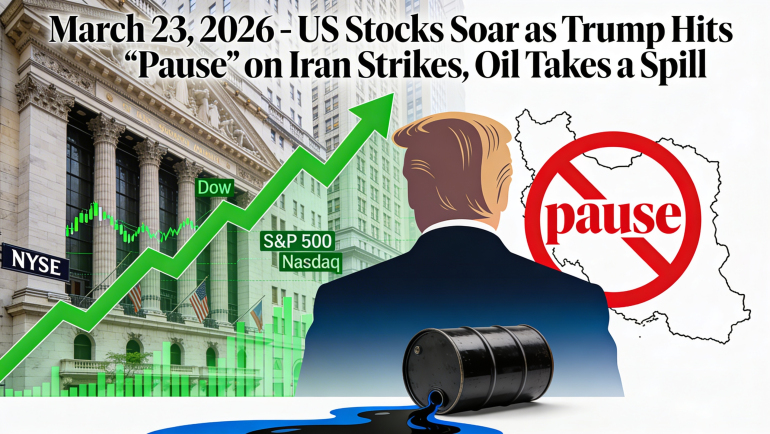
March 23, 2026 – US Stocks Soar as Trump Hits “Pause” on Iran Strikes, Oil Takes a Spill -( $DAL $EPRX $GOVX $HTFL $NOK $NVDA $OPEN $SER Rise!)

Wall Street opened the week in full relief mode as traders swapped flight-to-safety for fear-of-missing-out.
The Dow Jones Industrial Average jumped roughly 600 points, or about 1.4%–2% depending on the intraday snapshot, marking one of its strongest sessions since early February. The S&P 500 and Nasdaq followed suit, climbing around 1%–2% as buyers rushed back into beaten-up growth, cyclicals, and mega-cap tech after a bruising stretch of geopolitically driven volatility. Indeed, for a market that spent recent sessions obsessing over every headline out of the Strait of Hormuz, Monday’s tape suggested investors were suddenly willing to believe in happy endings again—at least for five days.

Trump’s Five-Day Timeout Reprices Geopolitical Risk

The catalyst was President Donald Trump’s announcement that the U.S. would postpone strikes on Iran’s power plants and energy infrastructure for five days, citing “very good and productive” discussions with Tehran. The pause, framed as a window for diplomacy, immediately lowered the market’s perceived odds of an all-out energy shock and helped unwind a war-premium that had been building across crude, equities, and gold.

Trump also floated the possibility that the Strait of Hormuz—choked by conflict and threats of escalation—could reopen under some form of joint U.S.–Iran control “if this works,” giving traders a narrative that sounded just constructive enough to hit the buy button. Iranian outlets, for their part, have denied direct or indirect contact with Washington, but equity markets showed more interest in the Oval Office’s version of events than in the fine print of diplomatic protocol.

Oil Slides, Airlines Fly, Energy Squirms

The clearest tell that geopolitical risk was being repriced came from crude, where futures reversed sharply from recent highs. West Texas Intermediate dropped more than 10%, slipping into the high‑80s after trading above 110 earlier, while Brent crude tumbled back below the psychologically important 100-dollar mark and hopefully on its way back to the traditionally accceptable range of $60-80 some time soon that typically keeps all parties relatively happy.

That sudden evaporation of the war premium was bad news for energy bulls but a welcome tailwind for fuel-intensive industries. Airline stocks and cruise operators, which had been under pressure amid fears of sustained high oil, ripped higher—several names jumped 4%–5% or more as traders quickly repriced margins for a world where jet fuel may not cost the earth. i.e Delta Airlines (DAL) closed up 2.66% at $65.13.

Sector Winners: Everything but Oil

It wasn’t just travel and leisure enjoying the geopolitical reprieve. All 11 S&P 500 sectors traded higher at various points in the session, with more than 90% of index components in the green—a classic “all clear” breadth profile that suggested systematic and discretionary buyers were both back in the pool..

Financials caught a bid as lower energy prices eased some macro stress and investors leaned into rate-sensitive cyclicals despite lingering uncertainty over the Federal Reserve’s next move. Tech, and especially the mega-cap AI complex, benefited from the broad risk-on shift: when volatility steps back and crude steps down, long-duration growth cash flows suddenly look a lot more attractive on a spreadsheet—and on a trading desk.

Volatility Deflates, Fed Path Still Cloudy

The Cboe Volatility Index, Wall Street’s favored fear gauge, retreated after briefly poking above 30 in prior sessions as Middle East headlines whipsawed futures. With Monday’s rally, implied volatility slipped back toward the mid‑20s, signaling that options traders were willing to dial down tail-risk hedges, even if they weren’t quite ready to declare geopolitical risk “solved.”

On the macro front, the story is more nuanced. Economists noted that while the latest downdraft in crude eases near-term inflation anxiety, the war-driven spike in energy prices over recent weeks still complicates the Fed’s path to rate cuts later in 2026, with some desks now penciling in fewer or later cuts than they expected at the start of the year.

Wall Street’s Take: Relief Rally or Regime Change?

Strategists framed Monday’s move as a classic relief rally, born not from euphoria but from the simple realization that the worst-case scenario had been, at least temporarily, taken off the table. The combination of softer oil, tighter credit spreads, and broad equity participation fits the pattern of a market that was priced for disaster and then forced to buy back some protection once the disaster was delayed.

Still, with Iran denying substantive talks and the White House keeping the threat of future strikes very much alive if negotiations falter, nobody on Wall Street is confusing a five-day pause with a five-year peace deal. In the meantime, investors spent Monday doing what they do best: discounting the latest headline, celebrating a bit of good news, and quietly wondering whether today’s exuberance will look prescient—or premature—by the time that five-day clock runs out.

VP Watchlist Updates

Below is an update‑style snapshot on the VP Watchlist names for the week, focused on recent catalysts, positioning, and narrative rather than precise price moves.

Serina Therapeutics (NYSE: SER, $3.15, +24.02%)

Serina Therapeutics (NYSE: SER) (www.serinatx.com) seems to have have just traded itself into Wall Street’s good graces, pairing fresh capital with a late-session pop that suggests investors are finally starting to connect the dots between polymer chemistry and portfolio returns. In Huntsville, Alabama, Serina Therapeutics announced definitive agreements for a private placement of common stock and pre-funded warrants that could bring in up to 30 million dollars in gross proceeds. The first 15 million dollar tranche is expected to close on March 20, 2026, with a second tranche of up to 15 million dollars anticipated by April 30, 2026, subject to customary closing conditions.

What makes the deal stand out in a biotech tape crowded with discounts is the pricing: the securities are being sold at about 2.25 dollars per share, a roughly 68 percent premium to Serina’s March 17 closing price, signaling that insiders are willing to pay up for exposure to the company’s clinical agenda. The financing also adds board-level heft, with director Greg Bailey, M.D., stepping into a Co-Chairman role as he leads the investment, a move that effectively puts the capital and the governance on the same optimistic page. Learn more here.

AleAnna, Inc. (ANNA)

AleAnna, Inc. (ANNA, $5.46, +52.80% over the last 5-days) just turned a dry technical milestone—its year‑end reserves report—into something closer to an Italian energy renaissance, with proved natural gas reserves jumping 47% after a year of active production. For investors hunting for credible growth stories in a world of energy-transition buzzwords, this is one of the rare cases where the molecules are actually catching up to the marketing. Learn more here.

Eupraxia Pharmaceuticals (EPRX, $7.33, +3.24%)

Eupraxia Pharmaceuticals Inc. (“Eupraxia” or the “Company”), a clinical-stage biotechnology company leveraging its proprietary Diffusphere™ technology designed to optimize local, controlled drug delivery for applications with significant unmet need, announced (March 17) positive symptom data from patients in the two highest dose cohorts from its ongoing Phase 1b/2a part of the RESOLVE trial evaluating EP-104GI for the treatment of eosinophilic esophagitis (“EoE”). “We are very pleased to see such a meaningful symptom response at 24 weeks in the highest dose of the Phase 1b/2a portion of the RESOLVE study,” said Dr. James A. Helliwell, Chief Executive Officer of Eupraxia. “We believe this type of response based on a single administration procedure would represent a compellingly different option for EoE patients. Importantly, the response that we are observing across cohorts 4-9 has increased as patients progress through the study through to week 24. We believe this demonstrates the importance of stable, continuous long-term local steroids in tamping down signs of inflammation quickly and acting on fibrosis in the longer term. Also, as previously reported, we continue to be encouraged by the safety profile that we have observed with EP-104GI. Currently, with 31 patients dosed in the Phase 1b/2a study, and over 220 months of follow up, there have been no reported serious adverse events.”

Modular Medical (MODD $.1778)

GeoVax Labs (GOVX, $1.50, +2.04%)

The InterGroup Corporation (INTG, $36.59)

  • InterGroup Corporation delivered (Feb. 17) a notably stronger quarter, highlighted by a 20% jump in total revenue to $17.3 million and a 27% surge in hotel revenue as renovated rooms returned to service and travel demand improved. The company swung from a prior-year net loss to $1.0 million in net income, with operating income more than doubling to $2.0 million, underscoring better cost control and improved operating efficiency. Management further enhanced liquidity and sharpened strategic focus by selling a non-core 12‑unit Los Angeles multifamily property, generating a meaningful gain and additional working capital while maintaining stable performance across its real estate portfolio.

Volato Group, Inc. (SOAR) & M2i Global, Inc. (MTWO)

  • Volato Group, Inc. announced (March 10) that it has entered into an amendment to its Aircraft Management Services Agreement with flyExclusive, Inc. (“FLYX”) providing for the sale of certain legacy intellectual property assets. The agreement provides for consideration valued at approximately $1.3 million, payable in FLYX Class A common stock, subject to customary conditions. The assets relate to legacy intellectual property developed during earlier stages of the Company’s technology initiatives and are not part of Volato’s current operating platforms. Volato continues to evaluate opportunities to streamline its asset base and focus resources on strategic priorities, including the continued development of its core software platforms and the pending business combination with M2i Global, Inc.
  • Volato and M2i Global reaffirmed their goal of closing their business combination in the first quarter of 2026, citing steady advancement through SEC review and integration planning as they move toward a combined listing. The deal, originally announced in 2025, will effectively transition Volato from a pure‑play private aviation operator into a diversified platform spanning aviation technology and critical minerals, with M2i shareholders expected to own the majority of the combined entity. Operationally, the partnership is already visible: the two companies recently initiated their first shipment of titanium ore from Western Australia to the United States from Titanium X, underscoring how the critical‑minerals vertical could become a meaningful growth engine as domestic supply‑chain security rises in strategic importance.
  • On Feb. 4, M2i Global,Inc.along with Volato Group, Inc. announced that Titanium X has initiated its first shipment of titanium ore from Western Australia to the U.S. under its collaboration agreement.

NVIDIA (NVDA, $175.64, +1.57%) (NOK, $8.06, +1%)

  • In an AI market obsessed with GPUs and stardust, Nokia (NOK) is quietly reminding investors that none of this magic moves without serious plumbing. While Nvidia (NVDA) prepares to headline its GTC 2026 “Woodstock of AI” showcase, the chip giant has already written a very real check to Nokia, committing a $1 billion investment to help rewire the world’s networks for 5G‑Advanced, 6G, and AI‑native workloads. The message is simple enough: GPUs may be the new rock stars, but networking is the stadium.
  • Nvidia delivered strong fourth-quarter results recently, posting revenue of $68.1 billion, well above analyst expectations. Looking ahead, the company projects $7.8 billion in revenue for the first quarter of 2026, reflecting continued robust demand for its AI chips even amid broader market headwinds.
  • NVIDIA and Nebius Group N.V. (NASDAQ: NBIS) (March 11) announced a strategic partnership to develop and deploy the next generation of hyperscale cloud for the AI market, from AI natives to enterprises. NVIDIA will invest $2 billion in Nebius.

McDonald’s (MCD, $308.47)

  • In the run-up to World Protein Day on 27th February, McDonald’s India (West & South), owned and operated by Westlife Foodworld, is celebrating Protein Week, reinforcing its leadership in nutrition-led innovation. Making protein more accessible, affordable and customizable, Indian consumers can use the McDonald’s app to explore these nutritious offerings and avail of protein burgers starting at just INR 69. Enhancing this convenience, consumers ordering via McDelivery can also enjoy free delivery on the Protein Plus meal range.

Opendoor (OPEN, $5.21, +6.11%)

Heartflow, Inc. (HTFL, $26.82, +3.07%)

Heartflow, Inc. (HTFL), the leader in AI technology for coronary artery disease (CAD), reported (March 18) financial results for the fourth quarter and full year ended December 31, 2025. Fourth Quarter 2025 Highlights included:

  • Total revenue of $49.1 million, a 40% increase year-over-year
  • Gross margin of 79.5%, non-GAAP gross margin of 79.9%
  • Net operating loss of $17.8 million, non-GAAP net operating loss of $12.5 million
  • U.S. installed base of 1,465 accounts as of December 31, 2025
  • U.S. Plaque installed base of 489 accounts as of December 31, 2025
  • Aetna began coverage of Heartflow Plaque Analysis, bringing total U.S. covered lives for Plaque to approximately 75%

Tesla (TSLA, $380.85, +3.50%)

Elon Musk’s latest Texas-sized ambition is to build his own AI chip empire, and this time the factory floor will sit right next to the robots, rockets, and robotaxis that plan to use it. The Terafab project, a new semiconductor venture linking Tesla (TSLA), SpaceX, and xAI in Austin, aims to churn out custom chips for AI, humanoid robots, and space systems at a scale that makes today’s GPU land rush look like a warm‑up act. Learn more here.

The Sources

Here are key sources used, in numerical order:

  1. CNBC – “Dow surges 600 points in relief rally after Trump says U.S. and Iran have had ‘productive’ talks: Live updates”[cnbc]​
    https://www.cnbc.com/2026/03/22/stock-market-today-live-updates.html
  2. MarketWatch – “Stock Market on March 23, 2026: Dow posts best day in 6 weeks, S&P 500 and Nasdaq close sharply higher as Trump pauses Iran infrastructure strikes; oil prices slide”[marketwatch]​
    https://www.marketwatch.com/livecoverage/stock-market-today-dow-s-p-500-nasdaq-fall-oil-rises-iran-war-energy-infrastructure-dam
  3. Yahoo Finance – “Stock market today: Dow, S&P 500, Nasdaq surge as Trump postpones Iran strike for now”[finance.yahoo]​
    https://finance.yahoo.com/news/live/stock-market-today-dow-sp-500-nasdaq-surge-as-trump-postpones-iran-strike-for-now-164114618
  4. Barron’s – “Stock Market Today: Dow, S&P 500, Nasdaq Surge; Tesla, TSMC, Lumentum, More Movers”[barrons]​
    https://www.barrons.com/livecoverage/stock-market-news-today-032326
  5. Yahoo Finance – “Stock market today: Dow jumps 600 points, S&P 500, Nasdaq surge as Trump signals talks with Iran; oil tumbles”[ca.finance.yahoo]​
    https://ca.finance.yahoo.com/news/stock-market-today-dow-jumps-600-points-sp-500-nasdaq-surge-as-trump-signals-talks-with-iran-oil-tumbles-200047383.html
  6. 24/7 Wall St. – “Stock Market Live March 23, 2026: S&P 500 (SPY) Soars on Trump Announcement”[247wallst]​
    https://247wallst.com/investing/2026/03/23/stock-market-live-march-23-2026-sp-500-spy-soars-on-trump-announcement
  7. Investopedia – “Markets News, March 23, 2026: Indexes End Sharply Higher, Oil Retreats as Trump Says US to Postpone Threatened Strikes on Iran Power Plants”[investopedia]​
    https://www.investopedia.com/stock-market-today-dow-jones-s-and-p-500-03232026-11931982
  8. TheStreet – “Stock Market Today: Live updates, top news for March 23, 2026”[thestreet]​
    https://www.thestreet.com/latest-news/stock-market-today-march-23-2026-updates
  9. Yahoo Finance – “Stock market today: Dow, S&P 500, Nasdaq futures soar as Trump postpones Iran strike, citing ‘very good’ talks”[finance.yahoo]​
    https://finance.yahoo.com/news/live/stock-market-today-dow-sp-500-nasdaq-futures-soar-as-trump-postpones-iran-strike-citing-very-good-talks
  10. The Wall Street Journal – “Stock Market Today: Dow Rallies, Oil Skids After Trump Postpones …”[wsj]​
    https://www.wsj.com/livecoverage/stock-market-today-dow-sp-500-nasdaq-03-23-2026
  11. Yahoo Finance – “Stock market today: Dow, S&P 500, Nasdaq soar as Trump …”[finance.yahoo]​
    https://finance.yahoo.com/news/live/stock-market-today-dow-sp-500-nasdaq-soar-as-trump-postpones-iran-strike-citing-very-good-ta
  12. CNN Business – “Oil drops, stocks soar after Trump postpones strikes on Iran”[cnn]​
    https://www.cnn.com/2026/03/23/business/stocks-dow-market
  13. Investor’s Business Daily – “Stock Market Today: Dow Jumps But These Fertilizer Stocks Stink”[investors]​
    https://www.investors.com/market-trend/stock-market-today/dow-jones-sp500-nasdaq-trump-iran-nvidia-tesla
  14. New York Post – “Dow rallies 745 points, oil tumbles below $100 after Trump orders 5-day pause …”[nypost]​
    https://nypost.com/2026/03/23/business/dow-futures-rally-nearly-1000-points-oil-tumbles-below-100-after-trump-orders-5-day-pause
  15. Invezz – “US stocks rise as Trump delays Iran strikes, Dow Jones gain 600 …”[invezz]​
    https://invezz.com/news/2026/03/23/us-stocks-rise-as-trump-delays-iran-strikes-dow-jones-gain-600-points/

The San Francisco Consensus: How AGI Turned a Six‑Year Plan into a Weekend Project -( $GOOG $NVDA )

Artificial superintelligence, according to today’s San Francisco skyline of optimists, is no longer a distant sci‑fi mirage but a six‑year infrastructure project—with a power bill big enough to light a small continent.

The San Francisco Consensus: Six Years to “Smarter Than Everyone”

In the cafes between South Park and SoMa, a new doctrine has quietly replaced pitch decks and pour‑over notes: the San Francisco Consensus. Former Google (GOOG) CEO Eric Schmidt has popularized the idea that AI will move from impressive autocomplete to world‑shaping intelligence on an astonishingly compressed timetable.

The storyline is brisk enough to make a venture term sheet look lethargic: AGI—systems as capable as the smartest humans—within three to five years, and artificial superintelligence, smarter than the sum of humanity, arriving roughly six years from now on a wave of scaling and recursive self‑improvement. For a city that already assumes tomorrow’s brunch will be delivered by a robot, this forecast is less a question than a working assumption baked into hiring plans, data‑center leases, and trillion‑dollar capital allocations.

From AGI to ASI: The Steep Part of the Curve

Among AI researchers, long‑range forecasts once framed AGI as a mid‑century event, with surveys clustering around a 2040–2060 median and giving 90% odds by the 2070s. Recent models and forecaster updates, however, have dragged those timelines forward, with some community forecasts entertaining non‑trivial odds of AGI in the 2026–2035 window and entrepreneurs arguing for something closer to “this cycle, not the next.”

The San Francisco Consensus takes that acceleration and pushes it to its logical—and for some, illogical—endpoint: once human‑level AGI appears, superintelligence follows in short order, driven by systems that write their own code, refine their own architectures, and optimize themselves in loops moving faster than human institutions can schedule a hearing. The term of art is “recursive self‑improvement,” but in practical terms the question for boardrooms sounds simpler: what happens when every person, and every firm, can access an always‑on colleague who is both tireless and consistently the smartest “employee” in the room.

The Power Behind the Prophecy

Behind the rhetoric of AGI and ASI lies a far more prosaic constraint: electricity. Leading AI supercomputers have seen their power capacity skyrocket from about 13 megawatts in 2019 to hundreds of megawatts today, with one recent system reported around 280 megawatts—more than twenty times the draw of earlier flagships. Analysts estimate that if current AI trends persist, the industry could be running well over a million high‑end AI servers by 2027, consuming tens of terawatt‑hours annually, rivaling the usage of smaller nations.

AI‑focused data centers are gluttons by design: dense GPU and accelerator racks, high‑bandwidth memory, non‑stop model training and inference, and aggressive cooling all compound to turn each percentage point of model accuracy into a noticeable uptick on the regional grid. To get from today’s impressive but narrow systems to the kind of planetary‑scale superintelligence envisioned in six‑year timelines, the world is effectively being asked to build a lattice of AI power plants, with the debate shifting from model architectures to which mix of renewables, nuclear, and transmission upgrades can keep the lights—and the clusters—on.

Markets, Policy, and the New Gravity of Compute

Whether or not ASI appears on schedule, the belief that it might is already moving money, policy, and power around the globe. Capital is flowing into specialized chips, vast data centers, and supporting infrastructure at a pace that resembles a modern gold rush in silicon and steel rather than shovels and sluice boxes. Competing narratives have emerged: an Acela‑Corridor view that treats AI as a general‑purpose technology on par with electricity, and a San Francisco view that treats it as an impending civilizational discontinuity that might compress decades of productivity into a single business cycle.

Regulators and governments now find themselves triangulating between those worldviews, weighing the upside of accelerated discovery and automation against the systemic risk of outsourcing core decision‑making to opaque systems running on infrastructure clusters that, in energy terms, look suspiciously like new national utilities. For investors, the emerging rule of thumb is straightforward, if slightly unnerving: in a world racing toward superintelligence, compute, energy, and governance may be the new triumvirate of geopolitical leverage—assuming, of course, that the six‑year clock doesn’t run faster than the permitting process.research.

The Sources

  1. Forbes – “What Is The San Francisco Consensus, Silicon Valley’s AI Prophecy?”
    https://www.forbes.com/sites/arafatkabir/2025/07/23/what-in-gods-name-is-the-san-francisco-consensus/[forbes]​
  2. Reda Sadki – “San Francisco Consensus: A New Epoch in AI” (Digitalist Papers)
    https://doi.org/10.59350/redasadki.21109[doi]​
  3. AEI – “Two Cheers for the ‘San Francisco Consensus’ on AI”
    https://www.aei.org/articles/two-cheers-for-the-san-francisco-consensus-on-ai/[aei]​
  4. Eric Schmidt talk – “The San Francisco Consensus or How We Get to AGI”
    https://www.youtube.com/watch?v=6ThT1InSA8s[youtube]​
  5. Digitalist Papers – “The San Francisco Consensus”
    https://www.digitalistpapers.com/vol2/schmidt[digitalistpapers]​
  6. AIMultiple – “AGI/Singularity: 9,800 Predictions Analyzed”
    https://research.aimultiple.com/artificial-general-intelligence-singularity-timing/[research.aimultiple]​
  7. AI Futures / AI 2027 – “Summary – AI 2027”
    https://ai-2027.com/summary[ai-2027]​
  8. AI Futures Blog – “Clarifying How Our AI Timelines Forecasts Have Changed Since AI 2027”
    https://blog.ai-futures.org/p/clarifying-how-our-ai-timelines-forecasts[blog.ai-futures]​
  9. Epoch – “Power Requirements of Leading AI Supercomputers Have Doubled…”
    https://epoch.ai/data-insights/ai-supercomputers-power-trend[epoch]​
  10. RCR Wireless – “Five Reasons AI Data Centers Require Massive Amounts of Power”
    https://www.rcrwireless.com/20250318/featured/ai-data-centers-power[rcrwireless]​
  11. Scientific American – “The AI Boom Could Use a Shocking Amount of Electricity”
    https://www.scientificamerican.com/article/the-ai-boom-could-use-a-shocking-amount-of-electricity/[scientificamerican]​
  12. Lori Tybon (LinkedIn) – Post summarizing the “San Francisco consensus” on AI surpassing human intelligence
    https://www.linkedin.com/posts/loritybon_the-san-francisco-consensus-is-that-in-activity-7320213830393827329-NoXj[linkedin]​

From Kentucky to Carolina: Inside Toyota’s Billion‑Dollar Push to Build More Cars In the U.S.A – ( $TM $SPY )

Toyota (NYSE: TM) is quietly doing something very loud in the U.S. manufacturing landscape: committing another $1 billion to its factories in Kentucky and Indiana to boost production of bread‑and‑butter models like the Camry and RAV4, along with other vehicles in its lineup. This fresh spending is part of a broader pledge to invest up to $10 billion in the U.S. over five years, a figure that now sounds less like a plan and more like a running tab.

The move comes as Toyota’s U.S. plants run near full tilt, assembling roughly 1.4 million vehicles last year across 11 factories, even as trade tensions and tariffs have complicated life for global automakers. If there’s a message here, it is that Toyota would rather pour more concrete in Kentucky than more money into shipping fees and tariff lawyers.

Why Kentucky and Indiana Keep Getting the Call

Toyota’s Georgetown, Kentucky plant has long been the company’s U.S. workhorse, now slated for hundreds of millions of dollars in new investment to expand capacity for popular models and electrified offerings. Over the past few years, Toyota has layered on commitments, including about $1.3 billion dedicated to a three‑row battery‑electric SUV and battery pack assembly at the Kentucky site, pushing total investment at that plant close to $10 billion.

Indiana, the great ‘Hoosier’ state, meanwhile, plays a complementary role in the company’s North American strategy, sharing components and platforms with Kentucky facilities and giving Toyota flexibility on what it builds where. Consultants note that shifting more production of high‑demand models such as the Tacoma or certain Lexus vehicles into these states would meaningfully reduce tariff exposure—if Toyota can find the floor space and labor to do it.

The Hybrid Heavyweight Doubles Down

Toyota’s timing reflects where American drivers are actually voting with their wallets: hybrids, not pure EVs. As EV demand has cooled from its initial sizzle, hybrid sales in the U.S. have surged—jumping more than 70% recently and expected to capture a far larger slice of the market than fully electric cars this year. That is convenient for a company that already controls more than half the U.S. hybrid market by share.

Behind the scenes, the investment wave links back to Toyota Battery Manufacturing North Carolina, a plant now topping roughly $13.9 billion in planned spending after an extra $8 billion was added to the budget. Those lines will crank out more than 30 GWh of batteries annually once fully online, feeding U.S. vehicle assembly and helping many Toyota hybrids and EVs qualify for incentives under America’s evolving clean‑energy tax rules.

Jobs, Politics and the New Industrial Midwest

In practical terms, Toyota’s latest commitments translate into thousands of existing jobs shored up and several thousand more created across North Carolina and other states as battery and vehicle capacity ramps. For local officials in Kentucky and Indiana, this is the economic development equivalent of a recurring dream: larger payrolls, fatter tax bases, and the ability to say “global supply chain” in every press conference with a straight face.

In Washington, the investments slot neatly into the current push—under President Donald Trump’s second term—to onshore industrial capacity and reduce reliance on foreign production of critical technologies like batteries and autos. Toyota has not been shy about calling recent tariff moves “highly disruptive,” but its answer has been less complaint and more construction, a strategy that tends to play well with both policymakers and local voters.

What It Means for Investors and the Auto Race

For investors watching the global auto race, Toyota’s U.S. expansion signals a hedged but confident view of the American consumer: cautious on pure EV exuberance, very bullish on hybrids, and willing to spend heavily on domestic capacity to protect margins and market share. While Detroit rivals have trimmed some EV ambitions after costly labor deals, Toyota is leaning into its reputation for manufacturing discipline and incrementalism, preferring an all‑of‑the‑above electrification strategy rather than a single bet on battery‑only.

The upshot for the broader market is that the U.S. auto map continues to tilt toward the Southeast and Midwest, with clusters of battery plants, suppliers, and assembly lines forming a new industrial corridor. If history is any guide, today’s $1 billion commitment to Kentucky and Indiana is unlikely to be the last time Toyota reaches for its checkbook—especially if American buyers keep snapping up hybrids faster than analysts can update their spreadsheets.

The Sources

  1. CNBC – “Toyota to invest $1 billion to increase U.S. production in Kentucky, Indiana plants”
    https://www.cnbc.com/autos/[cnbc]​
  2. CNBC quote page – “Toyota Motor Corp – Stock Price, Quote and News”
    https://www.cnbc.com/quotes/TYT-GB[cnbc]​
  3. CNBC – “Automakers might start hiking prices to offset tariffs: Dealership exec”
    https://www.cnbc.com/2026/02/24/automakers-tariffs-prices.html[cnbc]​
  4. CNBC – “Stellantis taps Toyota, Bosch suppliers for hybrid tech for Jeep”
    https://www.cnbc.com/2026/03/10/stellantis-jeep-hybrid-toyota-bosch.html[cnbc]​
  5. CNBC – “Toyota to invest $1.3 billion for large all-electric SUV in Kentucky”
    https://www.cnbc.com/2024/02/06/toyota-to-invest-1point3-billion-for-large-all-electric-suv-in-kentucky.html[cnbc]​
  6. CNBC – “Toyota opens U.S. battery plant, confirms $10 billion in new U.S. investments”
    https://www.cnbc.com/2025/11/12/toyota-battery-plant-north-carolina.html[cnbc]​
  7. Economic Development Partnership of North Carolina – “Toyota Announces $8B Expansion at its North Carolina-Based EV Battery Plant”
    https://edpnc.com/news/toyota-october-2023-battery-expansion/[edpnc]​
  8. Toyota Pressroom – “Toyota Supercharges North Carolina Battery Plant with New $8 Billion Investment”
    https://pressroom.toyota.com/toyota-supercharges-north-carolina-battery-plant-with-new-8-billion-investment/[pressroom.toyota]​
  9. Toyota Pressroom – “Toyota Bringing Battery Electric Vehicle Production to Kentucky”
    https://pressroom.toyota.com/toyota-bringing-battery-electric-vehicle-production-to-kentucky/[pressroom.toyota]​
  10. CBT News – “Toyota gears up for electric SUV with additional $922M investment in Kentucky plant”
    https://www.cbtnews.com/toyota-gears-up-for-electric-suv-with-922m-investment-in-kentucky-plant/[cbtnews]​

Saudi Petrodollars Meet Pixel Warriors: Inside Savvy Games’ $6 Billion Moonton Power-Up

ByteDance’s decision to sell Moonton, the studio behind “Mobile Legends: Bang Bang,” to Saudi Arabia’s Savvy Games Group in a roughly $6 billion deal reads less like a capitulation and more like a portfolio upgrade for the AI era. Savvy, meanwhile, is quietly swapping petrodollars for pixels as it pushes to turn Riyadh into a global gaming hub.

A $6 Billion GG: Inside the Moonton Deal

Savvy Games Group, owned by Saudi Arabia’s Public Investment Fund, has agreed to acquire Shanghai-based Moonton Technology from ByteDance in a transaction valuing the studio at about $6 billion. The deal, expected to close in the coming months, will keep Moonton’s existing management in place and includes new incentive programs for staff to smooth the transition.

Moonton brings with it “Mobile Legends: Bang Bang,” a free‑to‑play mobile MOBA that has become one of Asia’s biggest esports-ready franchises, with downloads in the billions and a deeply engaged player base across Southeast Asia. For Savvy, the acquisition instantly adds a flagship title with global reach, rather than another speculative bet in an already crowded pipeline.

ByteDance Logs Off Gaming, Logs In to AI

ByteDance acquired Moonton in 2021 at a valuation of roughly $4 billion, making a $6 billion sale price a tidy markup for a business that had become increasingly non-core. Since 2023, the TikTok parent has been unwinding much of its gaming footprint, including winding down the Nuverse publishing arm and shopping Moonton in parallel.

The strategic pivot is explicit: ByteDance is redeploying capital and management attention toward generative AI, chatbots, and foundational models, arenas viewed as higher margin and more scalable than hit‑driven game development. Shedding a volatile gaming unit also tightens cost discipline and supports steadier group margins anchored in short‑form video and enterprise AI products.

Savvy’s Global Gaming Gambit

For Savvy Games Group, Moonton is another piece in an ambitious plan to turn Saudi Arabia into a heavyweight in global interactive entertainment. Backed by the deep pockets of the Public Investment Fund, Savvy has been building a portfolio that spans game publishers, esports, and now a top‑tier mobile franchise with strong traction in emerging markets.

Moonton’s Shanghai base and Southeast Asian player concentration give Savvy a ready‑made bridge into high‑growth mobile markets where Western console‑centric strategies often stumble. Keeping CEO Zhang Yunfan and his team in place reduces integration risk and signals that Savvy is buying not just IP, but a running engine it prefers not to tinker with too much.

Mobile Legends Meets Sovereign Wealth

“Mobile Legends: Bang Bang” has evolved into more than a mobile title; it is a regional esport, a merchandising platform, and a social network in miniature. Under Savvy’s ownership, analysts expect deeper investment in esports tournaments, regional sponsorships, and monetization upgrades tailored to high-engagement mobile audiences.[l

Because the business is already profitable and content‑rich, Savvy can focus on expanding live‑ops, cross‑promotions, and geographic reach rather than funding a long R&D cycle. The deal effectively converts a slice of Saudi oil wealth into a steady stream of in‑app purchases, skin sales, and esports rights—proof that in 2026, even sovereign wealth funds are chasing daily active users as eagerly as dividend yield.

Why This Deal Matters for Investors and the Industry

For investors tracking ByteDance, the sale underscores a broader theme: Chinese internet majors are pruning non-core experiments and doubling down on areas where scale and data confer an enduring edge, notably AI and algorithm‑driven content. For the global gaming sector, the transaction highlights Saudi Arabia’s emergence as a structural buyer of assets, one willing to pay strategic prices for platforms with entrenched communities rather than greenfield risk.

In practical terms, Moonton gains a well‑capitalized owner eager to grow, ByteDance exits a volatile vertical with an attractive return, and the industry receives another reminder that in the new geopolitics of gaming, capital is as cross‑border as the players themselves. For all sides, it is the rare deal that reads like a win‑win—though for anyone facing “Mobile Legends” in ranked mode, it may feel more like a well‑funded boss level.

The Sources


[1] ByteDance Sells Moonton (Mobile Legends) to Saudi Savvy Games Group | 2026 Deal – News and Statistics https://www.indexbox.io/blog/bytedance-sells-mobile-legends-studio-moonton-to-saudi-arabias-savvy-games-group/
[2] Saudi’s Savvy Games acquires Mobile Legends studio Moonton from ByteDance https://www.arabnews.pk/node/2637062/media
[3] Savvy to Buy ByteDance Studio Moonton for $6 Billion – Bloomberg https://www.bloomberg.com/news/articles/2026-03-20/bytedance-agrees-to-sell-moonton-to-savvy-games-for-6-billion
[4] ByteDance to sell gaming unit Moonton to Saudi PIF-owned firm https://www.reuters.com/world/asia-pacific/bytedance-sell-gaming-unit-moonton-saudi-pif-owned-firm-2026-03-20/
[5] ByteDance sells games studio Moonton to Saudi firm for over US$6 … https://www.scmp.com/tech/article/3347352/bytedance-sells-games-studio-moonton-saudi-firm-over-us6-billion-amid-pivot-ai
[6] Savvy Games to buy ByteDance game studio Moonton for $6B – report https://seekingalpha.com/news/4567031-savvy-games-to-buy-bytedance-game-studio-moonton-for-6b-report
[7] ByteDance is selling its Moonton game unit to Savvy … – Engadget https://www.engadget.com/gaming/bytedance-is-selling-its-moonton-game-unit-to-savvy-games-for-a-cool-6-billion-124131595.html
[8] Mobile Legends: Bang Bang – Wikipedia https://en.wikipedia.org/wiki/Mobile_Legends:_Bang_Bang
[9] ByteDance to sell Moonton to Savvy Games Group in $6bn deal https://www.pocketgamer.biz/bytedance-to-sell-moonton-to-savvy-games-group-in-6bn-deal/
[10] ByteDance sells Moonton for $6-7B amid AI pivot | MEXC News https://www.mexc.com/news/971164
[11] ByteDance agrees to sell Moonton to Savvy Games for $6 billion https://economictimes.com/tech/technology/bytedance-agrees-to-sell-moonton-to-savvy-games-for-6-billion/articleshow/129698576.cms
[12] Who is the Creator Of Mobile Legend – Steemit https://steemit.com/gaming/@hery0823/who-is-the-creator-of-mobile-legend-8e54ad051cd3d
[13] ByteDance to sell gaming unit Moonton to Savvy Games for over $6bn https://asia.nikkei.com/business/business-deals/bytedance-to-sell-gaming-unit-moonton-to-savvy-games-for-over-6bn
[14] The Wall Street Journal Is Getting Into SEO and Self-Help … https://www.businessinsider.com/the-wall-street-journal-is-getting-into-seo-2021-3
[15] How to Write Headlines Like The Wall Street Journal https://raganconsulting.com/5-tips-to-write-headlines-from-the-wall-street-journal/

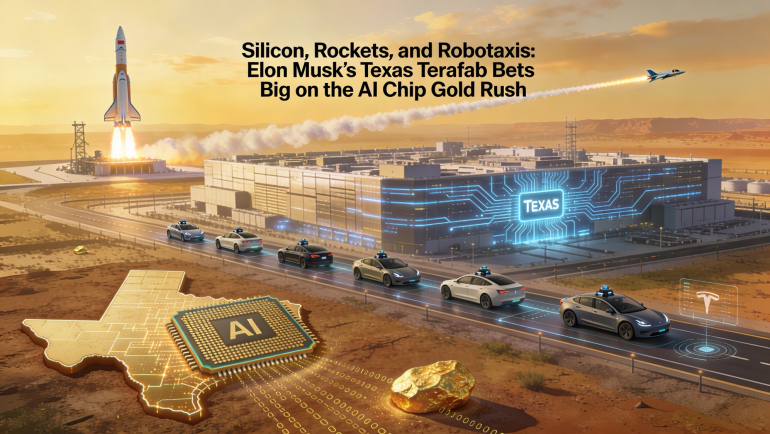
Silicon, Rockets, and Robotaxis: Elon Musk’s Texas Terafab Bets Big on the AI Chip Gold Rush -( $TSLA $TSM $SPY )

Elon Musk’s latest Texas-sized ambition is to build his own AI chip empire, and this time the factory floor will sit right next to the robots, rockets, and robotaxis that plan to use it. The Terafab project, a new semiconductor venture linking Tesla (TSLA), SpaceX, and xAI in Austin, aims to churn out custom chips for AI, humanoid robots, and space systems at a scale that makes today’s GPU land rush look like a warm‑up act.

Lone Star Silicon: Musk Picks Texas

Musk has pegged the Terafab complex for the broader Giga Texas orbit near Austin, extending an already sprawling industrial footprint that includes EVs, energy storage, and AI data centers. The plan calls for an “advanced technology fab” capable of producing and testing multiple chip types under one roof, effectively giving Musk a vertically integrated pipeline from sand to silicon to software.

Local officials see the move as the next step in cementing Texas as the unofficial capital of hard tech, while investors see something else: a bid to bring one of the scarcest inputs in AI—the high‑end chip—under direct corporate control. Given Musk’s track record of setting audacious timelines, the market is already penciling in both upside optionality and a healthy discount for execution risk.

Why Build Chips When You Can Buy Them?

Musk has argued that even with global output rising, the current semiconductor supply chain cannot keep pace with projected demand from autonomous vehicles, humanoid robots, and giant AI clusters. His teams are already running power‑hungry AI training facilities such as xAI’s Colossus supercomputers, systems that collectively command on the order of gigawatts of power and more than a million high‑end GPU equivalents.

That arms race has put chip access front and center for every AI contender, from OpenAI and its expanding Texas data center campus to Tesla, which still relies on partners like Samsung and TSMC (TSM) for its current and next‑gen AI driving chips. Terafab is Musk’s answer: turn the chip from a negotiated allocation into an in‑house asset, even if it means wading into one of the most capital‑intensive and technically unforgiving businesses on earth.

One Terawatt to Rule Them All

The stated goal for Terafab is startling even by Muskian standards: build capacity for roughly one terawatt of AI computing power per year, a figure that implies ultimately producing chips on the order of 50 times current global levels of comparable compute output. Those chips are expected to feed a lineup that includes Tesla’s Optimus humanoid robots, self‑driving systems, and specialized parts designed for space‑borne computing platforms.

If the numbers come close to reality, Terafab could become one of the most consequential private infrastructure projects in the AI era, effectively turning a carmaker and rocket company into a heavyweight in advanced semiconductors. For now, skeptics note that Musk is leaping into a field dominated by deeply entrenched players in Taiwan, South Korea, and the U.S., where even seasoned foundries have struggled with cost overruns and yield challenges at cutting‑edge nodes.

Tesla, SpaceX, xAI: A Three‑Body Problem

Under the proposed structure, Tesla will lead chip design and manufacturing, SpaceX will contribute space deployment and solar‑powered infrastructure, and xAI will orchestrate the colossal compute clusters that train and run advanced models. In theory, the trio creates a closed‑loop ecosystem: chips fabricated in Texas, trained in Texas, then shipped to vehicles, robots, and satellites that send back data for the next round of model updates.

That integration could give Musk’s companies a strategic edge, not only by securing chip supply but by tightly coupling hardware and software iterations across automotive, robotics, and space applications. It also concentrates operational risk in a single geography and a single executive’s ability to juggle three capital‑hungry frontiers at once, a feat that even bulls admit requires both flawless execution and cooperative credit markets.

The Market’s Early Read

For equity investors, Terafab may read less like a side project and more like a new strategic pillar in the Musk ecosystem, analogous to how battery production evolved from a supply hedge into a core competency. The initiative points to a future where Tesla is valued not just as an EV and energy company but as an integrated AI and semiconductor platform, while SpaceX and xAI gain privileged access to bespoke compute tuned to their own missions.

Still, the semiconductor industry’s history is littered with ambitious newcomers who discovered that scaling a fab can be more challenging than reaching orbit. In the meantime, the Street will be watching a familiar Musk pattern: under‑deliver on timing, over‑deliver on scale, and, occasionally, turn what sounded like science fiction into next cycle’s index weight.

Sources
[1] Musk Says Tesla, SpaceX, xAI Chip Project to Kick Off in Texas https://news.bloomberglaw.com/capital-markets/elon-musk-says-tesla-xai-spacex-terafab-to-start-in-austin
[2] Elon Musk says Tesla, xAI, SpaceX ‘Terafab’ to start in Austin https://www.bloomberg.com/news/articles/2026-03-22/elon-musk-says-tesla-xai-spacex-terafab-to-start-in-austin
[3] Musk announces $20B Terafab chip plant for Austin as AI ambitions … https://www.bizjournals.com/austin/news/2026/03/21/elon-musk-terafab-tesla-spacex-xai-austin.html
[4] Tesla, SpaceX, xAI chip project to kick off in Texas: Elon Musk https://www.businesstimes.com.sg/pulse/article/8772723
[5] Musk’s TerraFab Targets 50x Global AI Chip Output https://www.chosun.com/english/industry-en/2026/03/22/FP22ISJCA5F4LHRW4J32L5PY44/
[6] Tesla’s AI Chip Factory Project Goes Forward In Texas – Auto Spies https://www.autospies.com/mobile/article_mobile.aspx?artid=128781
[7] OpenAIs new Texas data center plans dwarf Elon Musks xAI Colossus https://www.fanaticalfuturist.com/2025/09/openais-new-texas-data-center-plans-dwarf-elon-musks-xai-colossus/
[8] Elon Musk’s xAI brings 1GW Colossus 2 AI training cluster online https://www.teslarati.com/elon-musk-xai-brings-1gw-colossus-2-ai-training-cluster-online/
[9] Samsung to make Tesla AI chips in multiyear Texas deal https://www.latimes.com/business/story/2025-07-28/samsung-to-make-tesla-ai-chips-in-multiyear-texas-deal
[10] Samsung building second AI chip factory in Texas – Sammy Fans https://www.sammyfans.com/2026/03/17/samsung-building-second-ai-chip-factory-in-texas/
[11] #FMTBusiness Elon Musk says the ‘Terafab’, a manufacturing facility … https://www.facebook.com/freemalaysiatoday/posts/fmtbusiness-elon-musk-says-the-terafab-a-manufacturing-facility-based-near-austi/1358607279631525/
[12] Musk announces “Terafab” to internalize Tesla and SpaceX chip … https://au.finance.yahoo.com/news/musk-announces-terafab-internalize-tesla-063011191.html
[13] NEWS: Elon Musk has announced that Tesla and SpaceX will start … https://x.com/SawyerMerritt/status/2035532609413865576
[14] Samsung to Make Tesla AI Chips in Multiyear Texas Deal – YouTube https://www.youtube.com/watch?v=-Xc4PNboETQ
[15] Elon Musk’s xAI granted permit for power plant to support AI data … https://www.instagram.com/p/DVx7JpgCcdB/

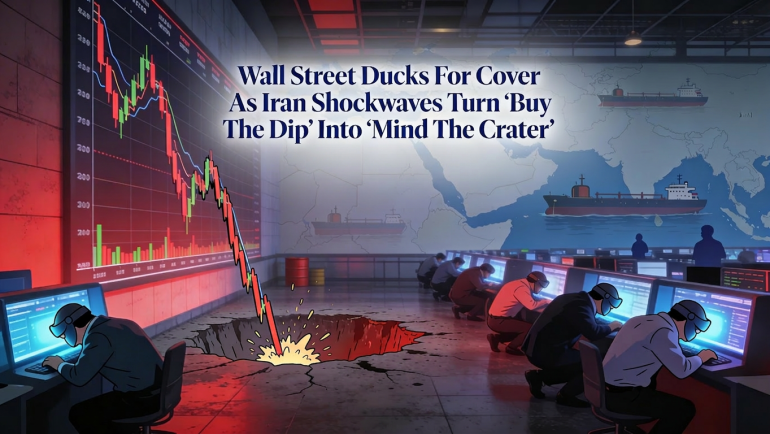
March 20, 2026 – Wall Street Ducks For Cover As Iran Shockwaves Turn “Buy The Dip” Into “Mind The Crater” This Week -( $ANNA $HTFL $INTG $SER $VIX $XLE Rise!)

US stocks limped into the weekend with a broad, risk‑off selloff, capping a fourth straight weekly decline as the Iran war kept oil elevated and Fed‑cut hopes on ice.

Index performance

  • The Dow fell roughly 1% on Friday and is now nearing correction territory and now off 8.16% after four consecutive weekly losses.
  • The S&P 500 slid about 1.5% on the day, with nearly every sector in the red except Energy and is now off 5.83% over the last month.
  • The Nasdaq Composite dropped around 2% Friday, extending its recent underperformance as tech and AI leaders bore the brunt of de‑risking and is off 5.41% over the last month.

Macro and geopolitics

  • The Iran war remained the dominant macro narrative, with markets focused on the risk that the US could move to seize a key Iranian energy terminal to reopen traffic through the Strait of Hormuz.
  • Crude stayed elevated after recent surges and is approx $98/bbl Friday afternoon, reinforcing fears that higher energy costs will bleed back into inflation just as the Fed was expected to begin cutting rates.
  • Traders further marked down the probability and size of 2026 Fed rate cuts, worried that sticky oil‑driven inflation will keep policy restrictive for longer.

Sectors, oil, and “safe havens”

  • Energy stocks finished the week as one of the few bright spots, with sector gains north of 3% tied to the jump in oil tied to the Middle East conflict. The Energy Select Sector SPDR ETF (XLE) closed at $59.31, +2.79% over the last 5-days.
  • Financials remained under pressure, with the S&P 500 financial sector tracking an 11% year‑to‑date decline amid growing concern about cracks in private credit.
  • Gold notably failed to act as a haven: futures slid toward roughly $4,500 an ounce and suffered their worst weekly drop since the early 1980s, weighed down by a strong dollar and fading expectations for near‑term Fed easing.

Market tone and positioning

  • Volatility picked up as the steady grind lower turned into a more decisive end‑of‑week flush, with investors reducing exposure to crowded tech and AI trades and rotating selectively into energy and other geopolitically leveraged plays. The CBPE Volatility Index is now up +40.28% over the last month.
  • With the S&P 500 now several percent off recent highs and leadership shifting away from mega‑cap growth, the tape is behaving less like an orderly valuation reset and more like a position‑clearing phase driven by geopolitical and inflation shocks.

VP Watchlist Updates

Below is an update‑style snapshot on the VP Watchlist names for the week, focused on recent catalysts, positioning, and narrative rather than precise price moves.

Serina Therapeutics (NYSE: SER, $2.54, +63.87% over the last 5-days)

Serina Therapeutics (NYSE: SER) (www.serinatx.com) seems to have have just traded itself into Wall Street’s good graces, pairing fresh capital with a late-session pop that suggests investors are finally starting to connect the dots between polymer chemistry and portfolio returns. In Huntsville, Alabama, Serina Therapeutics announced definitive agreements for a private placement of common stock and pre-funded warrants that could bring in up to 30 million dollars in gross proceeds. The first 15 million dollar tranche is expected to close on March 20, 2026, with a second tranche of up to 15 million dollars anticipated by April 30, 2026, subject to customary closing conditions.

What makes the deal stand out in a biotech tape crowded with discounts is the pricing: the securities are being sold at about 2.25 dollars per share, a roughly 68 percent premium to Serina’s March 17 closing price, signaling that insiders are willing to pay up for exposure to the company’s clinical agenda. The financing also adds board-level heft, with director Greg Bailey, M.D., stepping into a Co-Chairman role as he leads the investment, a move that effectively puts the capital and the governance on the same optimistic page. Learn more here.

AleAnna, Inc. (ANNA, $7.07, +86.54% on Friday)

AleAnna, Inc. (ANNA, $6.53, +72.30%) just turned a dry technical milestone—its year‑end reserves report—into something closer to an Italian energy renaissance, with proved natural gas reserves jumping 47% after a year of active production. For investors hunting for credible growth stories in a world of energy-transition buzzwords, this is one of the rare cases where the molecules are actually catching up to the marketing. Learn more here.

Eupraxia Pharmaceuticals (EPRX, $7.60, +1.20%)

Eupraxia Pharmaceuticals Inc. (“Eupraxia” or the “Company”), a clinical-stage biotechnology company leveraging its proprietary Diffusphere™ technology designed to optimize local, controlled drug delivery for applications with significant unmet need, announced (March 17) positive symptom data from patients in the two highest dose cohorts from its ongoing Phase 1b/2a part of the RESOLVE trial evaluating EP-104GI for the treatment of eosinophilic esophagitis (“EoE”). “We are very pleased to see such a meaningful symptom response at 24 weeks in the highest dose of the Phase 1b/2a portion of the RESOLVE study,” said Dr. James A. Helliwell, Chief Executive Officer of Eupraxia. “We believe this type of response based on a single administration procedure would represent a compellingly different option for EoE patients. Importantly, the response that we are observing across cohorts 4-9 has increased as patients progress through the study through to week 24. We believe this demonstrates the importance of stable, continuous long-term local steroids in tamping down signs of inflammation quickly and acting on fibrosis in the longer term. Also, as previously reported, we continue to be encouraged by the safety profile that we have observed with EP-104GI. Currently, with 31 patients dosed in the Phase 1b/2a study, and over 220 months of follow up, there have been no reported serious adverse events.”

Modular Medical (MODD $.1832)

GeoVax Labs (GOVX, $1.47)

The InterGroup Corporation (INTG, $38.14, +4.49% over the last 5-days)

  • InterGroup Corporation delivered (Feb. 17) a notably stronger quarter, highlighted by a 20% jump in total revenue to $17.3 million and a 27% surge in hotel revenue as renovated rooms returned to service and travel demand improved. The company swung from a prior-year net loss to $1.0 million in net income, with operating income more than doubling to $2.0 million, underscoring better cost control and improved operating efficiency. Management further enhanced liquidity and sharpened strategic focus by selling a non-core 12‑unit Los Angeles multifamily property, generating a meaningful gain and additional working capital while maintaining stable performance across its real estate portfolio.

Volato Group, Inc. (SOAR) & M2i Global, Inc. (MTWO)

  • Volato Group, Inc. announced (March 10) that it has entered into an amendment to its Aircraft Management Services Agreement with flyExclusive, Inc. (“FLYX”) providing for the sale of certain legacy intellectual property assets. The agreement provides for consideration valued at approximately $1.3 million, payable in FLYX Class A common stock, subject to customary conditions. The assets relate to legacy intellectual property developed during earlier stages of the Company’s technology initiatives and are not part of Volato’s current operating platforms. Volato continues to evaluate opportunities to streamline its asset base and focus resources on strategic priorities, including the continued development of its core software platforms and the pending business combination with M2i Global, Inc.
  • Volato and M2i Global reaffirmed their goal of closing their business combination in the first quarter of 2026, citing steady advancement through SEC review and integration planning as they move toward a combined listing. The deal, originally announced in 2025, will effectively transition Volato from a pure‑play private aviation operator into a diversified platform spanning aviation technology and critical minerals, with M2i shareholders expected to own the majority of the combined entity. Operationally, the partnership is already visible: the two companies recently initiated their first shipment of titanium ore from Western Australia to the United States from Titanium X, underscoring how the critical‑minerals vertical could become a meaningful growth engine as domestic supply‑chain security rises in strategic importance.
  • On Feb. 4, M2i Global,Inc.along with Volato Group, Inc. announced that Titanium X has initiated its first shipment of titanium ore from Western Australia to the U.S. under its collaboration agreement.

NVIDIA (NVDA, $172.70) (NOK, $7.98)

  • In an AI market obsessed with GPUs and stardust, Nokia (NOK) is quietly reminding investors that none of this magic moves without serious plumbing. While Nvidia (NVDA) prepares to headline its GTC 2026 “Woodstock of AI” showcase, the chip giant has already written a very real check to Nokia, committing a $1 billion investment to help rewire the world’s networks for 5G‑Advanced, 6G, and AI‑native workloads. The message is simple enough: GPUs may be the new rock stars, but networking is the stadium.
  • Nvidia delivered strong fourth-quarter results recently, posting revenue of $68.1 billion, well above analyst expectations. Looking ahead, the company projects $7.8 billion in revenue for the first quarter of 2026, reflecting continued robust demand for its AI chips even amid broader market headwinds.
  • NVIDIA and Nebius Group N.V. (NASDAQ: NBIS) (March 11) announced a strategic partnership to develop and deploy the next generation of hyperscale cloud for the AI market, from AI natives to enterprises. NVIDIA will invest $2 billion in Nebius.

McDonald’s (MCD, $308.85)

  • In the run-up to World Protein Day on 27th February, McDonald’s India (West & South), owned and operated by Westlife Foodworld, is celebrating Protein Week, reinforcing its leadership in nutrition-led innovation. Making protein more accessible, affordable and customizable, Indian consumers can use the McDonald’s app to explore these nutritious offerings and avail of protein burgers starting at just INR 69. Enhancing this convenience, consumers ordering via McDelivery can also enjoy free delivery on the Protein Plus meal range.

Opendoor (OPEN, $4.91)

lululemon athletica inc. (LULU, $162.82, +3.19% over the last 5-days)

lululemon athletica inc. announced (MARCH 17) the appointment of Chip Bergh, former President and Chief Executive Officer of Levi Strauss & Co., to its Board of Directors, effective immediately. With this addition, lululemon has added five new independent directors to the Board in the last five years, reflecting the Board’s commitment to ongoing refreshment.

Heartflow, Inc. (HTFL, $26.02, +26.99% over the last 5-days)

Heartflow, Inc. (HTFL), the leader in AI technology for coronary artery disease (CAD), reported (March 18) financial results for the fourth quarter and full year ended December 31, 2025. Fourth Quarter 2025 Highlights included:

  • Total revenue of $49.1 million, a 40% increase year-over-year
  • Gross margin of 79.5%, non-GAAP gross margin of 79.9%
  • Net operating loss of $17.8 million, non-GAAP net operating loss of $12.5 million
  • U.S. installed base of 1,465 accounts as of December 31, 2025
  • U.S. Plaque installed base of 489 accounts as of December 31, 2025
  • Aetna began coverage of Heartflow Plaque Analysis, bringing total U.S. covered lives for Plaque to approximately 75%

The Sources

  1. Yahoo Finance – “Stock market today: Dow, S&P 500, Nasdaq sell off to end another brutal week as Iran war rages”
    https://finance.yahoo.com/news/live/stock-market-today-dow-sp-500-nasdaq-sell-off-to-end-another-brutal-week-as-iran-war-rages-200057954.html[uk.finance.yahoo]​
  2. Yahoo Finance – “Stock market today: Dow, S&P 500, Nasdaq futures edge up, set for weekly loss amid Iran war, inflation jitters”
    https://finance.yahoo.com/news/live/stock-market-today-dow-sp-500-nasdaq-futures-edge-up-set-for-weekly-loss-amid-iran-war-inflation-jitters[finance.yahoo]​
  3. Yahoo Finance – “Dow, S&P 500, Nasdaq futures retreat as oil rallies amid Iran war, inflation worries”
    https://finance.yahoo.com/news/live/stock-market-today-dow-sp-500-nasdaq-futures-retreat-as-oil-rallies-amid-iran-war-inflation-worries[finance.yahoo]​
  4. Yahoo Finance – “Dow, S&P 500, Nasdaq futures climb as Iran war, inflation jitters set to send stocks to another losing week”
    https://finance.yahoo.com/news/live/stock-market-today-dow-sp-500-nasdaq-futures-climb-as-iran-war-inflation-jitters-set-to-send-stocks-to-another-losing-week[finance.yahoo]​
  5. Yahoo Finance – “Dow, S&P 500, Nasdaq slide amid inflation worries as Iran war sends oil surging”
    https://finance.yahoo.com/news/live/stock-market-today-dow-sp-500-nasdaq-slide-amid-inflation-worries-as-iran-war-sends-oil-surgingfinance.yahoo+1
  6. Yahoo Finance – “Stock market today: Dow, S&P 500 slip for second day, oil jumps as Iran war rages on”
    https://finance.yahoo.com/news/live/stock-market-today-dow-sp-500-slip-for-second-day-oil-jumps-as-iran-war-rages-on-200311229.html[finance.yahoo]​
  7. Yahoo Finance – “The Iran War shocked global markets. Macro and commodities traders got crushed”
    https://finance.yahoo.com/news/iran-war-shocked-global-markets-141652209.html[finance.yahoo]​
  8. CNN Business – “US stocks recover, gold rises and oil surges as war with Iran spreads”
    https://www.cnn.com/2026/03/02/investing/oil-us-stock-market-iran[cnn]​
  9. CNN Business – “Oil prices jump and gold hits $5,000 as tensions ramp up between US and Iran”
    https://www.cnn.com/2026/02/19/investing/oil-gold-prices-us-iran-tensions[cnn]​
  10. CNN Business – “Oil surges and stock futures sink as war in Iran threatens crude supply”
    https://www.cnn.com/2026/03/01/business/oil-prices-us-attack-iran-vis[cnn]​
  11. The New York Times – “Global Markets Whipsaw After U.S.-Israel Attack on Iran”
    https://www.nytimes.com/2026/03/01/business/stock-market-iran-war-fallout.html[nytimes]​
  12. The New York Times – “Stocks Drop as Inflation Risk Emerges in Wake of Iran War”
    https://www.nytimes.com/2026/03/03/world/middleeast/stock-markets-iran.html[nytimes]​

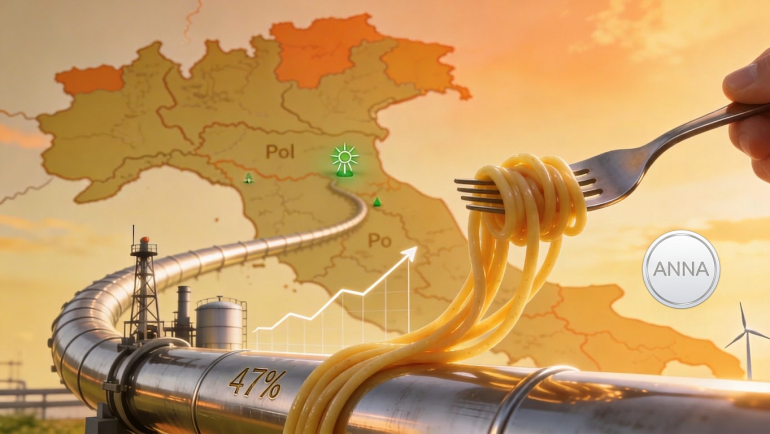
From Pasta to Pipelines: AleAnna Serves a 47% Jump in Proved Gas Reserves -( $ANNA $BOIL $FCG $XLE )

AleAnna, Inc. (ANNA, $6.53, +72.30%) just turned a dry technical milestone—its year‑end reserves report—into something closer to an Italian energy renaissance, with proved natural gas reserves jumping 47% after a year of active production. For investors hunting for credible growth stories in a world of energy-transition buzzwords, this is one of the rare cases where the molecules are actually catching up to the marketing.

AleAnna’s Reserves Surprise: From Footnote to Headline

AleAnna’s latest third‑party reserves report from DeGolyer and MacNaughton shows Total Proved Reserves of 25.8 Bcf, a 47% increase versus year‑end 2024 even after subtracting 2025 production. That growth is not theoretical; it reflects both better reservoir performance and updated technical work across the portfolio, particularly in the Po Valley basin.

Behind the headline figure, Longanesi’s proved reserves increased 37%, while Gradizza’s climbed 75%, with Trava recognized for the first time in the proved category. Proved developed producing reserves were booked at Longanesi for the first time, signaling that the project is now shifting from a slide deck talking point to a cash‑flowing asset.

Longanesi: Italy’s Quiet Workhorse

Longanesi is not just another dot on a concession map; AleAnna owns 33.5% of what is described as the most significant onshore natural gas discovery in Italy in more than two decades. The field is poised to produce over 50 MMcf per day, providing domestic supply in a market that still remembers the lessons of Europe’s gas crunch a bit more vividly than anyone would like to admit.

The new reserves report extends Longanesi’s productive life, underscoring the technical team’s success in de‑risking thin‑bed turbidite pays and converting subsurface theory into booked barrels of oil equivalent—albeit in cubic feet. In Wall Street terms, Longanesi is evolving from “story stock” to “model-able asset,” which tends to be where serious institutional capital starts sharpening its pencils.

Gradizza and Trava: Supporting Cast With Lead Potential

If Longanesi is the franchise, Gradizza is the surprisingly profitable spin‑off: the Italian government recently awarded AleAnna a production concession there with an initial 20‑year term and a 100% working interest. Production is expected to start in 2027, following a 12‑month seismic and subsidence monitoring program and tie‑in to Italy’s SNAM transmission system.

Gradizza’s proved reserves rose 75% in the latest report, reinforcing the field’s role as a second growth engine behind Longanesi. Trava, meanwhile, entered the proved column for the first time, a reminder that the Po Valley still has more to offer than postcard views and regional cuisine.

RNG Ambitions: From Molecules to Megatrend

AleAnna’s strategy does not stop at natural gas; the company is positioning itself as a bridge between conventional supply and renewable natural gas across Italy’s existing infrastructure. Italy offers 33,000 kilometers of gas pipelines, three major storage facilities, and a strong base of RNG plants, with more than 60% of the country’s RNG facilities located in the Po Valley.

On that backbone, AleAnna is assembling an RNG portfolio that includes three plants under development and nearly 100 projects representing roughly €1.1 billion of potential investment over the coming years. For a company often described as “technology‑driven,” this is where the phrase risks becoming literal as digital tools, data, and engineering converge to turn agricultural and organic waste into grid‑connected cash flow.

Italy’s Energy Transition, With a Texan Accent

AleAnna operates from Dallas and Rome, an axis that neatly captures the company’s blend of U.S. upstream expertise and European policy tailwinds. In Italy, the firm controls one production concession, 13 permits covering roughly 940,000 acres, and applications spanning an additional 1.8 million acres, all focused on domestic gas and RNG in a region wired for both.

For Europe, still intent on reducing dependence on Russian supplies, each incremental cubic foot from Longanesi, Gradizza, or Trava is one more step toward energy security with a lower‑carbon profile than imported LNG. For AleAnna, the reserves upgrade strengthens the balance between geology and policy: more booked volumes, longer asset lives, and a clearer runway for production and cash‑flow growth in a market where demand has not yet gotten the memo about fading fossil fuels.

Market Lens: From Quiet Listing to Potential Narrative Stock

AleAnna’s story is playing out in parallel with stronger Italian gas prices and a more volatile European supply backdrop, which recently helped the stock rally as EU gas benchmarks touched their highest levels since 2023. The combination of higher realized prices, rising proved reserves, and a pipeline of domestic projects gives the company three things equity markets tend to reward: visibility, scarcity, and optionality.

Of course, this is still a small‑cap energy company, not a sovereign wealth fund; management acknowledges that additional capital will be needed to fully fund its growth plans in both gas and RNG. But with independent engineers validating a 47% jump in proved reserves, a 20‑year concession at Gradizza, and an RNG portfolio measured in billions of euros of potential spend, AleAnna is starting to look less like a speculative ticket and more like a developing franchise in Italy’s energy transition.

The Sources

  1. AleAnna, Inc. Announces Significant Increase in Proved Reserves Volumes – Yahoo Finance
    https://finance.yahoo.com/news/aleanna-inc-announces-significant-increase-130000765.html[finance.yahoo]​
  2. AleAnna 2025 Proved Reserves Jump 47% to 25.8 Bcf – StockTitan
    https://www.stocktitan.net/news/ANNA/ale-anna-inc-announces-significant-increase-in-proved-reserves-a0szfheum82x.html[stocktitan]​
  3. AleAnna, Inc. Announces Significant Increase in Proved Reserves Volumes – Barchart / Globe Newswire repost
    https://www.barchart.com/story/news/712856/aleanna-inc-announces-significant-increase-in-proved-reserves-volumes[barchart]​
  4. AleAnna, Inc. Announces Significant Increase in Proved Reserves Volumes – XploraHub summary
    https://xplorahub.com/news/aleanna-inc-announces-significant-increase-proved-reserves-volumes-8ko4[xplorahub]​
  5. AleAnna Reports Increase in Proved Reserves Volume – TipRanks
    https://www.tipranks.com/news/the-fly/aleanna-reports-increase-in-proved-reserves-volume-thefly-news[tipranks]​
  6. AleAnna (ANNA) Sees Significant Boost in Gas Reserves for 2025 – GuruFocus
    https://www.gurufocus.com/news/8703262/aleanna-anna-sees-significant-boost-in-gas-reserves-for-2025[gurufocus]​
  7. AleAnna 2025 Reserves Upgrade Coverage – The Globe and Mail (press release listing)
    https://www.theglobeandmail.com/investing/markets/stocks/ANNA-Q/pressreleases/736912/aleanna-announces-major-upgrade-to-italian-gas-reserves[theglobeandmail]​
  8. AleAnna wins 20‑year Gradizza gas production concession – StockTitan
    https://www.stocktitan.net/news/ANNA/ale-anna-inc-announces-receipt-of-production-concession-for-its-tk6xub37mcsj.html[stocktitan]​
  9. AleAnna receives production concession for Gradizza gas field – Investing.com
    https://www.investing.com/news/company-news/aleanna-receives-production-concession-for-gradizza-gas-field-93CH-4454878[investing]​
  10. AleAnna Secures Gradizza Production Concession, Advances First Fully Operated Development – The Globe and Mail (press release listing)
    https://www.theglobeandmail.com/investing/markets/stocks/ANNA/pressreleases/37147685/aleanna-secures-gradizza-production-concession-advances-first-fully-operated-development[theglobeandmail]​
  11. AleAnna (ANNA) Granted Production Concession for Gradizza Field – InsiderMonkey
    https://www.insidermonkey.com/blog/aleanna-anna-granted-production-concession-for-gradizza-field-1681687/[insidermonkey]​
  12. What We Do – AleAnna, Inc. (Natural Gas & Renewable Energy, Longanesi and Po Valley overview)
    https://www.aleannainc.com/what-we-do[aleannainc]​
  13. AleAnna, Inc. – Corporate Site (strategy, Italy/Europe energy transition positioning)
    https://www.aleannainc.com[aleannainc]​
  14. AleAnna, Inc. Announces Completion of Several Major Milestones – Global Renewable News (RNG and milestones)
    https://globalrenewablenews.com/article/energy/category/biofuel/83/1118256/aleanna-inc-announces-completion-of-several-major-milestones[globalrenewablenews]​
  15. AleAnna lifts proved gas reserves by 47% – ANNA SEC Filing (8‑K via StockTitan)
    https://www.stocktitan.net/sec-filings/ANNA/8-k-ale-anna-inc-reports-material-event-0661b9f5ed92.html[stocktitan]​

Ecolab’s Bold $4.75 Billion Bet on AI Cooling Ushers in a Chiller Data Center Era -( $ECL $NOK $NVDA )

Ecolab’s (ECL) acquisition of CoolIT Systems signals a frosty yet fiery advance in data center infrastructure, perfectly timed for the AI boom’s thermal showdown. This $4.75 billion cash deal, announced March 20, 2026, catapults Ecolab into the heart of liquid cooling, where servers sweat less and compute more.

Ecolab logo

Cooling the AI Inferno

CoolIT, a high-margin specialist in direct-to-chip liquid cooling, boasts projected sales of $550 million over the next year, doubling Ecolab’s high-tech market to $10 billion. Custom solutions for NVIDIA’s (NVDA) Blackwell GPUs—think cold plates and CDUs handling 4,000W+ thermal loads—make CoolIT seemingly indispensable for hyperscalers racing to deploy AI factories without melting the grid. Ecolab’s move isn’t just buying tech; it’s acquiring the plumbing for tomorrow’s digital gold rush, with cross-selling potential across 1,000+ data centers.

NVIDIA’s Thermal Tango

NVIDIA’s GB200 NVL72 racks demand liquid cooling for 300x water efficiency over air systems, and CoolIT delivers with Split-Flow coldplates tailored for Grace Blackwell Superchips. As CEO Jensen Huang touts warmer 45°C water loops sans chillers, partnerships like CoolIT’s NVIDIA Partner Network status ensure Blackwell’s multi-gigawatt ramps stay cool under pressure. One might say NVIDIA’s chips run hot, but with CoolIT, they’re positively lukewarm—efficiently so.

Nokia’s Sustainable Chill

Nokia (NOK), ever the network maestro, pioneers passive two-phase thermosyphons and lake-sourced liquid cooling, slashing data center emissions by 90% at its Tampere site while reusing waste heat for urban warmth. Spun-off innovations like Accelsius NeuCool target AI/ML workloads with pump-free, direct-to-chip efficiency, mirroring CoolIT’s ethos but with a Nordic flair for green scalability. In a world where data centers guzzle power, Nokia proves cooling can be both clever and climate-friendly.

Seven Boson Joins the Fray

Emerging player Seven Boson Group powers sovereign AI with clean-energy data centers optimized for dense GPU clusters, selecting colos with advanced cooling for high-draw inference workloads. Their multimodal AI platforms demand the very liquid loops Ecolab-CoolIT now dominates, positioning Seven Boson as a nimble adopter in the AI infrastructure arms race. Think of it as the underdog bringing national data residency to the cooling party—efficient, localized, and ready to scale.

If you are a venture capital group or family office and want to meet the management of the Seven Boson Group? Then please contact our sister organization, Tribe Public LLC, at Events@TribePublic.com and they will schedule a meeting for you as soon as s possible.

Data Center Destiny

This Ecolab coup weaves NVIDIA’s compute might, Nokia’s eco-innovations, and Seven Boson’s agile builds into a cooler, greener AI ecosystem, promising 2% faster organic growth for water tech amid exploding demand. Investors take note: in the battle against overheating ambitions, liquid cooling isn’t just smart—it’s the splash heard ’round the datacenter.

The Sources

  1. Ecolab–CoolIT acquisition coverage (valuation, deal size, strategic context):
    https://www.bizjournals.com/twincities/news/2026/03/19/ecolab-near-4-5b-deal-for.html[bizjournals]​
  2. Reuters / market recap on Ecolab nearing CoolIT deal and KKR sale process:
    https://www.reuters.com/business/kkr-eyes-multibillion-dollar-sale-data-center-cooling-company-ft-reports-2026-03-08/[reuters]​
  3. Market-focused coverage of Ecolab’s share reaction and deal rumors:
    https://www.marketwatch.com/story/ecolab-dips-on-report-of-deal-for-coolit-systems-with-kkr-fcc750cd[marketwatch]​
  4. SwingTradeBot / marketscreener-style note on Ecolab–CoolIT price range:
    https://swingtradebot.com/news-articles/22567877-ecolab-near-deal-kkrs-datacenter-cooling[swingtradebot]​
  5. Background on CoolIT and liquid cooling as AI infrastructure backbone:
    https://www.coolitsystems.com/resources/news/liquid-cooling-ai-infrastructure/[coolitsystems]​
  6. NVIDIA Blackwell platform and 300x water-efficiency claims (liquid cooling focus):
    https://blogs.nvidia.com/blog/blackwell-platform-water-efficiency-liquid-cooling-data-centers-ai-factories/[blogs.nvidia]​
  7. Supplemental breakdown of NVIDIA Blackwell cooling economics and performance:
    https://datacentremagazine.com/hyperscale/how-nvidia-is-boosting-water-efficiency-with-blackwell[datacentremagazine]​
  8. Nokia white paper on Tampere liquid cooling and 90% CO₂ reduction claims:
    https://www.nokia.com/asset/i/210962/nokia+1
  9. Nokia liquid-cooling deployment and emissions/energy-cut narrative in commercial AI data centers:
    https://datacentremagazine.com/technology-and-ai/nokia-links-resetdata-ai-sites-with-a-75-energy-cut[datacentremagazine]​
  10. Boson AI data center case study (power draw and advanced cooling requirements for dense GPU nodes):
    https://resources.arccompute.io/hubfs/Decks/Arc%20Compute%20Case%20Study%20-%20Boson%20AI.pdf[resources.arccompute]​

Net Profits and Cut Nets: A Decade of NCAA Champions and the Business of March Madness

The 2026 men’s NCAA tournament is teeing up to be another three-week lesson in American productivity loss, meticulously scheduled chaos, and the enduring power of a well-timed 12-over-5 upset.

March Madness 2026: America’s Favorite Office Distraction

The 2026 NCAA men’s tournament officially tips off with the First Four on March 17–18, before the full bracket descends on the nation March 19–20 for the first round. The second round follows immediately on March 21–22, compressing joy, heartbreak, and several years of shouting at televisions into a single long weekend.

From there, the field tightens: the Sweet 16 lands on March 26–27, with the Elite Eight decided March 28–29, turning bubble teams into either legends or trivia questions. The Final Four and title game return to a familiar stage: Lucas Oil Stadium in Indianapolis will host the semifinals on April 4 and the national championship on April 6, giving the Midwest another chance to prove it can turn a football stadium into a cathedral of jump shots.

The Geography of Madness: Coast‑to‑Coast Brackets

The 2026 bracket will crisscross the country, ensuring that at least one traveler in every airport security line will be frantically checking scores instead of removing their laptop. First- and second‑round games will be staged in traditional hotbeds and rotating hosts alike, including sites such as San Diego’s Viejas Arena and St. Louis’ Enterprise Center. Regional sites stretch from Houston (South), to San Jose (West), to Chicago (Midwest), turning arenas into short-term hedge funds for hope and heartbreak.

Indianapolis, a recurring character in the NCAA’s real-estate portfolio, once again hosts the Final Four, cementing its status as the league’s de facto home office for net-cutting ceremonies. Future years are already spoken for—Detroit in 2027 and Las Vegas in 2028—but for now, all roads in college basketball still run through central Indiana.

A Decade of Champions: From Villanova’s Buzzer-Beater to Florida’s Revival

If the last 10 completed tournaments are any guide, March mayhem has a way of rewarding both bluebloods and newly-minted elites—with a brief cameo by a global pandemic. Over the past decade, the sport has swung from defensive clinics to three‑point barrages, but the common denominator has been programs willing to stack experienced rosters and lean into the pressure of one‑and‑done games.

Here are the last 10 NCAA Division I men’s basketball champions (completed tournaments):

  1. 2025 – Florida
  2. 2024 – UConn
  3. 2023 – UConn
  4. 2022 – Kansas
  5. 2021 – Baylor
  6. 2020 – Tournament canceled (COVID‑19)
  7. 2019 – Virginia
  8. 2018 – Villanova
  9. 2017 – North Carolina
  10. 2016 – Villanova

Florida’s 2025 title marked the program’s third national championship and a return to the top of the sport, capped by a rally from 12 points down against Houston in a 65–63 thriller. Connecticut, meanwhile, reasserted itself as a modern dynasty with back‑to‑back crowns in 2023 and 2024, pushing its total to six titles and turning “UConn in March” into a line item on every bracketologist’s risk disclosure.

Virginia’s 2019 triumph showcased a methodical redemption arc one year removed from losing to a 16‑seed, while Villanova’s 2016 and 2018 runs reminded the field that spacing, shooting, and calm late-game execution can be just as intimidating as a seven‑footer in the paint. North Carolina’s 2017 banner added another chapter to a blueblood’s résumé, reinforcing that the old guard still has a seat at the table—even as transfer portals and NIL reshape the recruiting chessboard.

The Market Signal Behind the Madness

For corporate America, the NCAA tournament has quietly matured into an annual, legally sanctioned productivity shortfall, offset by gains in “employee morale” and “team bonding” (also known as live-streaming on a second monitor). Advertisers, broadcasters, and ticket platforms, by contrast, treat March as a high‑beta opportunity window: 67 games, millions of eyeballs, and a national audience conditioned to embrace short-term volatility.

The tournament’s structure—single elimination, neutral courts, quick turnarounds—produces the kind of narrative arcs Wall Street only dreams of: small programs with tiny budgets routinely outpunch large brands, and seeding is a guideline rather than a guarantee. Yet when the confetti falls, the champions’ list over the last decade still skews toward programs with institutional depth: established coaches, recruiting pipelines, and a tolerance for late‑March pressure that would make a bond trader blush.

2026 Outlook: Brackets, Biases, and Behavioral Finance

As the 2026 schedule locks into place—from Selection Sunday on March 15 through the April 6 title game—fans and investors alike are already dusting off models, spreadsheets, and superstitions. If history is any indicator, millions of brackets will again overweight big brands, underprice disciplined defense, and ignore matchups in favor of mascots, jerseys, and nostalgia—an annual behavioral finance seminar, offered free of charge.

With Indianapolis set as the final stop and a decade of champions dominated by the sport’s upper tier, the question for 2026 is simple: Will another heavyweight add to its trophy case, or will a new program crash the winners’ column and reset the narrative? Either way, by the time the nets come down on April 6, one thing will be clear: in a country obsessed with probabilities, nothing moves sentiment quite like a college kid hitting a contested three as the clock expires.

The Sources

  1. NCAA – 2026 March Madness: Men’s NCAA tournament schedule, dates
    https://www.ncaa.com/news/basketball-men/article/2026-03-19/2026-march-madness-mens-ncaa-tournament-schedule-dates[ncaa]​
  2. NCAA – 2026 March Madness: Men’s NCAA tournament schedule, dates (main article version)
    https://www.ncaa.com/news/basketball-men/article/2026-03-17/2026-march-madness-mens-ncaa-tournament-schedule-dates[ncaa]​
  3. NCAA – 2026 NCAA tournament printable bracket, schedule for March Madness
    https://www.ncaa.com/news/basketball-men/mml-official-bracket/2026-03-17/2026-ncaa-tournament-printable-bracket-schedule-march-madness[ncaa]​
  4. NCAA – Men’s Basketball Tournament Information (March Madness hub)
    https://www.ncaa.com/mens-final-four/marchmadness[ncaa]​
  5. NCAA – March Madness Final Four: Future dates & sites
    https://www.ncaa.com/mens-final-four/future-info[ncaa]​
  6. ESPN – NCAA men’s basketball championship: All-time winners list
    https://www.espn.com/mens-college-basketball/story/_/id/39445992/ncaa-mens-basketball-championship-all-winners-list[espn]​
  7. NCAA – DI Men’s Basketball Championship History
    https://www.ncaa.com/history/basketball-men/d1[ncaa]​
  8. Ticketmaster Blog – The Last 10 Winners of the NCAA Men’s Basketball Championship
    https://blog.ticketmaster.com/ncaambb-march-madness-winners/[blog.ticketmaster]​
  9. NBC Sports – March Madness 2026: Bracket, schedule, score, date, time, TV network
    https://www.nbcsports.com/mens-college-basketball/news/march-madness-2026-bracket-schedule-score-date-time-tv-network-for-ncaa-mens-basketball-tournament[nbcsports]​
  10. Wikipedia – 2026 NCAA Division I men’s basketball tournament
    https://en.wikipedia.org/wiki/2026_NCAA_Division_I_men%27s_basketball_tournament[en.wikipedia]​

Your Guide To Staying Informed In The Markets

Subscribe For Free Email Updates Access To Exclusive Research

Vista Partners — © 2026 — Vista Partners LLC (“Vista”) is a Registered Investment Advisor in the State of California. Vista is not licensed as a broker, broker-dealer, market maker, investment banker, or underwriter in any jurisdiction. By viewing this website and all of its pages, you agree to our terms. Read the full disclaimer here