Skip to content Skip to sidebar Skip to footer

Why X-Energy’s Nuclear IPO Has AI Data Centers Glowing -( $AMZN $CPYFF $DOW $NVDA $XE )

X-Energy’s stock-market debut delivered exactly what Wall Street loves: a big narrative, bigger numbers, and just enough nuclear jargon to make everyone feel smarter reading about it. The Amazon.com Inc. (AMZN)–backed reactor developer X-Energy Inc. (XE) raised about $1.02 billion in its initial public offering, then promptly watched its shares jump roughly 27% above the IPO price as investors decided that small modular reactors might be the new large-cap story.

A Nuclear IPO That Refused To Stay Small

X-Energy came to market marketing its IPO at between 16 and 19 dollars a share, then priced at 23 dollars after demand proved more energetic than even its own advanced fuel. The company sold roughly 44.3 million shares, giving it an initial market value of about 9.1 billion dollars based on its regulatory filings, before trading enthusiasm pushed its valuation higher in early sessions.

On its first day, shares opened more than 30% above the IPO price and settled still up about 27%, a performance that placed X-Energy among the more notable recent U.S. listings and underscored growing investor appetite for nuclear-themed energy solutions. For a sector that not long ago was better known for regulatory headaches than headline-grabbing debuts, the showing suggested that “nuclear” may now scan less as a four-letter word and more as an AI-adjacent growth category.

Amazon’s New Kind of Prime Power

Amazon’s interest in X-Energy extends beyond simple financial curiosity; the e‑commerce and cloud computing giant has been exploring nuclear as a way to feed the power-hungry growth of Amazon Web Services data centers. With artificial intelligence workloads driving energy demand higher, X-Energy’s next-generation reactors are being positioned as bespoke power plants for industrial campuses and AI data farms rather than as traditional grid-scale behemoths.

The partnership places AMZN in an unusual role: potential anchor customer, strategic backer, and case study in how hyperscalers might secure long-duration, carbon-free baseload power. In an era when cloud providers worry that electricity could become the new bottleneck for growth, having a nuclear specialist on speed dial may be the new version of owning your own undersea cables.

Dow and Centrica Bring Industrial Credibility

If Amazon supplies the tech buzz, Dow Inc. (DOW) and Centrica Plc (CPYYF) offer the industrial bona fides. X-Energy is developing more than 11 gigawatts of new nuclear capacity through commercial partnerships in the U.S. and UK, including a proposed four‑unit Xe‑100 plant for Dow in Texas to power energy‑intensive chemical operations.

Centrica, the British multinational energy and services group, has committed to up to 6 gigawatts of capacity tied to X-Energy’s technology, signaling European interest in modular nuclear solutions amid efforts to decarbonize heavy industry and secure reliable supply. Between DOW’s industrial heat demand and CPYYF’s energy portfolio, the company’s pipeline looks more like a long-term infrastructure schedule than a speculative science project.

The Reactor: Pebbles, Helium and a Safety Pitch

At the core of X-Energy’s story is the Xe‑100, an 80‑megawatt high‑temperature gas‑cooled reactor that uses helium as coolant and fuel pebbles filled with so‑called TRISO pellets. Each pebble contains tiny uranium kernels embedded in protective layers, a design meant to keep the fuel structurally intact even at very high temperatures and to naturally slow the reaction as heat rises.

Because the Xe‑100 is modular, units can be manufactured in a more standardized way and then deployed as needed, a concept intended to avoid the notorious cost overruns of bespoke, single‑site mega‑reactor projects. X‑Energy also produces its own TRISO‑X fuel, giving it tighter control over supply chains than competitors that rely on third‑party fuel vendors, a detail that investors have treated as a small but meaningful moat.

Government Support and a Second Chance at Going Public

X-Energy’s path to Nasdaq was not a straight line. The company previously planned to go public via a special-purpose acquisition company linked with Ares Acquisition but scrapped that deal in 2023 amid a chill in SPAC markets and concerns triggered by the cancellation of another U.S. small modular reactor project.

In the interim, the company kept attracting capital, raising hundreds of millions of dollars from private investors, including a 700 million dollar Series D round led by Jane Street Group. Its development efforts have also benefited from U.S. Department of Energy support through programs such as the Advanced Reactor Demonstration Program, which aims to help bring new reactor designs to commercial deployment. For policy-watchers, it’s a reminder that sometimes Washington’s long timelines and Wall Street’s short attention spans do eventually intersect in the same prospectus.

The AI Energy Arms Race

The timing of X-Energy’s IPO has coincided with a broader market narrative: artificial intelligence as both the driver of and solution to an energy crunch. As data centers deploy more accelerators from semiconductor leaders such as NVIDIA Corp. (NVDA) to run large AI models, their electricity demand grows faster than local grids can comfortably accommodate, strengthening the case for colocated, high‑reliability power.

X-Energy is positioning its Xe‑100 reactors as tailored answers to that power challenge, capable of serving not just data centers but also industrial customers that need high‑temperature steam and steady baseload power with low direct emissions. The market response to XE’s debut indicates that investors are increasingly comfortable treating nuclear power as a potential beneficiary of the AI build‑out, rather than as a regulatory footnote in the climate discussion.

Ark, Amazon and the New Nuclear Basket

Among the institutional names circling the offering is Ark Investment Management, the high‑profile fund complex known for concentrating bets on disruptive technologies. Ark signaled interest in purchasing up to 105 million dollars’ worth of shares at the IPO price, a detail that helped frame XE as a member of the same thematic universe as high‑growth innovators across energy, automation, and AI.

For Amazon shareholders, the move adds another line to the company’s already eclectic roster of strategic initiatives, which ranges from e‑commerce and streaming to satellite networks and healthcare. While the financial impact of any single energy partnership is likely to be modest for a company the size of AMZN, the symbolic impact—tying its AI ambitions to a clearer long‑term energy strategy—may be harder for investors to ignore.

A Market That Suddenly Likes Atoms Again

X-Energy’s post‑IPO valuation climbed into the low double‑digit billions, marking a swift upsizing from its earlier SPAC-era aspirations and underscoring how quickly sentiment around nuclear can change when the story is framed as climate‑friendly and AI‑ready. Less than three years after pulling its prior listing plans, the company now stands as one of the more prominent publicly traded pure‑play developers of advanced nuclear reactors.

Investors still face the usual questions: regulatory timelines, construction risk, and the challenge of bringing first‑of‑a‑kind reactors into commercial service by the early 2030s. But for now, the market message is straightforward: in a world racing to power its algorithms and decarbonize heavy industry at the same time, ticker XE has entered the conversation—and this time, the atoms are getting the kind of multiple usually reserved for bits.

The Sources


[1] Amazon-Backed Nuclear Firm X-Energy Raises $1.02 Billion in IPO https://finance.yahoo.com/markets/stocks/articles/amazon-backed-nuclear-firm-x-001155364.html
[2] Amazon-Backed X-Energy Climbs 27% After $1.02 Billion US IPO https://www.bloomberg.com/news/articles/2026-04-24/amazon-backed-x-energy-climbs-31-after-1-02-billion-us-ipo
[3] X-Energy IPO Set to Deliver Big Wins to Amazon and Ken Griffin – WSJ https://www.wsj.com/finance/investing/x-energy-ipo-xe-stock-6b96c412
[4] Amazon-backed X-Energy raises over $1 billion in IPO | Reuters https://www.reuters.com/business/energy/amazon-backed-x-energy-raises-102-billion-ipo-2026-04-24/
[5] Amazon-backed nuclear developer X-energy surges 27% in trading … https://www.ft.com/content/905d06cf-9b28-494a-be26-4a64f8269b73?syn-25a6b1a6=1
[6] Amazon-Backed Nuclear Tech Company X-Energy Raises Over $1 … https://www.esgtoday.com/amazon-backed-nuclear-tech-company-x-energy-raises-over-1-billion-in-ipo/
[7] X-energy raises $1B in the largest nuclear public equity offering of … https://techfundingnews.com/x-energy-1b-nasdaq-ipo-advanced-nuclear-reactors/
[8] X-energy – Wikipedia https://en.wikipedia.org/wiki/X-energy
[9] Amazon-backed nuclear startup X-Energy raises $1.02B in IPO (XE:Pending) https://seekingalpha.com/news/4579196-amazon-backed-nuclear-startup-x-energy-raises-102b-in-ipo
[10] Nuclear Start-Up X-Energy Is About to Go Public. Amazon Is an Investor. https://www.barrons.com/articles/-x-energy-nuclear-ipo-amazon-72db4288
[11] Amazon-Backed Nuclear IPO X-Energy Quickly Jumps 27 … – Barron’s https://www.barrons.com/articles/x-energy-ipo-stock-ticker-today-f7553a76
[12] X-energy – LinkedIn https://www.linkedin.com/company/x-energy
[13] How to Write Headlines Like The Wall Street Journal https://raganconsulting.com/5-tips-to-write-headlines-from-the-wall-street-journal/
[14] Amazon-Backed Nuclear Firm X-Energy Raises $1.02 Billion in IPO https://www.youtube.com/watch?v=EGoP1OQnZ5s
[15] Your Three-Minute Guide to WSJ.com https://www.wsj.com/edition/resources/documents/quickref-find.html

April 24, 2026 – AI Chips, Hot PMIs, and Cooler Heads: A Week Where Macro Tried to Matter -( $AMZN $APLD $AVGO $EPRX $INTG $NOK $NVDA $OPEN $SOAR $WMT Rise!)

US equities wrapped the week on a mixed but tech-led footing, with AI and semis doing the heavy lifting while macro data and Middle East risk kept a lid on cyclicals and financials.

Index performance and risk tone

By end of the day Friday, the S&P 500 was up roughly 0.8%, around 7,165, confirming a fourth straight week of gains, while the Nasdaq was up 1.63% as chipmakers extended their outperformance. The Dow lagged, trading slightly lower as weakness in cyclicals and financials offset the tech bid.

Across the week, investors looked past lingering Middle East tensions and an uneasy standoff around Hormuz, leaning back into growth and AI plays even as broader global indices showed more muted or negative returns. Volatility stayed elevated but contained, reflecting a market that is repricing sector winners and losers rather than wholesale de‑risking.

Macro data and policy narrative

The macro backdrop was defined less by a single blockbuster data print and more by a steady stream of indicators that support the “resilient but slowing” growth narrative heading into the coming Fed meeting. PMI readings highlighted a divergence: euro area composite PMI slipped back into contraction territory in April, while US manufacturing reached a four‑year high as firms pulled forward orders amid concerns about supply disruptions.

On the policy front, markets spent the week positioning ahead of late‑April and early‑May central bank decisions, with particular focus on how sticky services inflation and firm labor demand might constrain the Fed’s ability to ease. The IMF’s April World Economic Outlook reinforced this cautious stance, projecting global growth near 3.1% for 2026 with a modest uptick in headline inflation before pressures ease again in 2027, underscoring that policymakers must juggle both downside growth risks and renewed price pressures.

AI, semis, and Nvidia’s $5T club

AI enthusiasm again dominated equity leadership, with semiconductor indices extending a powerful multi‑month run; one widely tracked chip index is now up more than 50% over the past six months and has logged gains in each of the last 17 sessions. Within that backdrop, Nvidia (NVDA, $208.27, +4.32%) reclaimed the headlines as its market capitalization pushed back above the $5 trillion threshold, reasserting its status as the market’s core AI bellwether.

This $5T zone is not new for Nvidia—last year it became the first public company to close above that level—but the latest move comes after the company reported record fiscal‑year revenue of about $216 billion and a blowout Q4 driven by an AI data‑center run rate north of $190 billion annually. Looking ahead, investors are now laser‑focused on Nvidia’s upcoming May 20 earnings, where management has guided to roughly $78 billion in Q1 revenue, even as competition from Broadcom (AVGO, $422.76, +3.99% over the last 5-days) and hyperscalers like Amazon(AMZN, $263.99, +5.365 over the last 5-days) intensifies in custom AI silicon.

Earnings season: Intel and sector rotation

Earnings flow this week reinforced the bifurcation within tech. Intel (INTC, $82.54) became a major story on Friday as the stock surged more than 20% after posting stronger‑than‑expected profit and issuing upbeat guidance tied to AI‑driven data‑center and foundry demand, sparking a broad rally across legacy chip and PC‑exposed names. That strength helped offset softness in cyclicals and financials, which struggled under the weight of higher‑for‑longer rate fears and a flatter curve narrative.

Outside the US, equity markets were more cautious: European indices were mixed despite weak PMI data, and several Asia‑Pacific bourses ended lower as investors de‑risked around geopolitical headlines and energy price volatility. The divergence between US mega‑cap tech and the rest of the global equity complex remains stark, adding to debate about concentration risk and the sustainability of the AI‑led melt‑up.

Big‑picture takeaway for the week

For the week ending Friday, April 24, 2026, the dominant theme was “AI strength versus macro skepticism”: Nvidia’s return to the $5 trillion club and Intel’s breakout kept the Nasdaq and S&P on an upward trajectory, even as global growth forecasts softened and geopolitical risk stayed front and center. With a heavy macro calendar and a pivotal Fed meeting on deck, the market now faces a familiar test: can earnings and AI capex momentum continue to outrun concerns about policy constraints, inflation flare‑ups, and concentrated leadership at the top of the tape.

VP Watchlist Updates

Below is an update‑style snapshot on the VP Watchlist names for the week, focused on recent catalysts, positioning, and narrative rather than precise price moves.

Applied Digital (NASDAQ: APLD, $34.98, +10.94% over the last 5-days)

In late April, Applied Digital (APLD) inked a roughly 15-year, $7.5 billion lease with a new U.S.-based, high investment-grade hyperscaler at its 430 MW Delta Forge 1 “AI Factory” campus, securing 300 megawatts of critical IT load dedicated to AI and high-performance computing. The deal lifts the company’s total contracted lease revenue to more than $23 billion and brings its hyperscale tenant roster to three, with over half of that backlog supported by investment-grade customers.

Broadcom (AVGO, $422.76, +3.99% over the last 5-days)

Broadcom’s latest AI alliance with Google parent Alphabet Inc. (GOOGL, GOOG) and Anthropic is less a routine chip deal and more a declaration that the quiet power behind the cloud plans to stay loud for the next decade. The three-way pact locks in custom AI silicon and multi‑gigawatt compute capacity that could reshape who really controls the tollbooths on the generative AI superhighway.

Eupraxia Pharmaceuticals (EPRX, $7.16, +.85% over the last 5-days)

Eupraxia Pharmaceuticals Inc. (EPRX), a clinical-stage biotechnology company leveraging its proprietary Diffusphere™ technology designed to optimize local, controlled drug delivery for applications with significant unmet need, today announced 36-week tissue health and symptom data from patients in the highest dose cohort from its ongoing Phase 1b/2a part of the RESOLVE trial evaluating EP-104GI for the treatment of eosinophilic esophagitis (“EoE”). Dr. James A. Helliwell, Chief Executive Officer of Eupraxia stated, “We are very pleased with the robust and sustained response in both tissue health and symptom data in the highest dose cohort at 36 weeks. This data is consistent with the compelling results we observed at earlier timepoints at this dose level, highlighting the potential to achieve both strong and durable responses after a single administration of EP-104GI. We are also reassured by the excellent safety outcomes across all doses in the trial as we continue to observe no indication of drug related SAEs or spikes in glucose or cortisol. We look forward to the results of the placebo-controlled Phase 2b portion of the study where the same dose is being further evaluated”.

Eupraxia recently co-hosted a Tribe Public www.TribePublic.com, CEO Presentation & Q&A Webinar event, Wednesday, April 1 titled “Turning EOE Into a Once-a-Year Appointment.” The event featured James A. Helliwell, M.D., Co‑founder and CEO of Eupraxia Pharmaceuticals (NASDAQ: EPRX), who discusses the company’s precision drug‑delivery platform, its approach to Eosinophilic Esophagitis (EoE), and broader pipeline priorities, followed by a focused 5–10 minute Q&A. You may watch it now at this Youtube link.

Eupraxia announced (March 17) positive symptom data from patients in the two highest dose cohorts from its ongoing Phase 1b/2a part of the RESOLVE trial evaluating EP-104GI for the treatment of eosinophilic esophagitis (“EoE”). “We are very pleased to see such a meaningful symptom response at 24 weeks in the highest dose of the Phase 1b/2a portion of the RESOLVE study,” said Dr. James A. Helliwell, Chief Executive Officer of Eupraxia. “We believe this type of response based on a single administration procedure would represent a compellingly different option for EoE patients. Importantly, the response that we are observing across cohorts 4-9 has increased as patients progress through the study through to week 24. We believe this demonstrates the importance of stable, continuous long-term local steroids in tamping down signs of inflammation quickly and acting on fibrosis in the longer term. Also, as previously reported, we continue to be encouraged by the safety profile that we have observed with EP-104GI. Currently, with 31 patients dosed in the Phase 1b/2a study, and over 220 months of follow up, there have been no reported serious adverse events.”

Modular Medical (MODD, $4.86)

  • Modular Medical, Inc. (NASDAQ:MODD), a leader in innovative, patient-centric insulin delivery, today announced the pricing of a registered direct offering consisting of 750,000 shares of the Company’s common stock at an offering price of $4.50 per share. The gross proceeds to the Company from the Offering are estimated to be approximately $3.4 million before deducting placement agent fees and other offering expenses. The Offering is expected to close on or about April 21, 2026, subject to the satisfaction of customary closing conditions.
  • Modular Medical’s latest regulatory milestone upgrades the narrative: the company has now secured FDA 510(k) clearance for its Pivot tubeless insulin patch pump, moving from “launch‑ready” to “launch‑approved” in the heart of the fast‑growing diabesity market. The FDA has cleared Modular Medical’s Pivot patch pump as a tubeless, removable insulin delivery system, formally validating the device’s design and performance for commercial use in U.S. adults living with diabetes. The clearance converts what had been a Q1 2026 launch “subject to FDA response” into a tangible commercial pathway, giving the company permission to sell into an insulin pump market that has been estimated at roughly 8 billion dollars globally. Pivot is engineered as a simplified, two‑part patch pump with a 3‑milliliter removable reservoir, no need for battery recharging, and the ability to bolus without a dedicated controller, aiming squarely at patients who have stayed on multiple daily injections because traditional pumps felt too complex, cumbersome, or costly. By clearing Pivot, the FDA is effectively endorsing Modular Medical’s attempt to make advanced insulin delivery feel less like adopting a gadget and more like upgrading a daily habit.

The InterGroup Corporation (INTG, $36.58, +9.85% over the last 5-days)

  • InterGroup Corporation delivered (Feb. 17) a notably stronger quarter, highlighted by a 20% jump in total revenue to $17.3 million and a 27% surge in hotel revenue as renovated rooms returned to service and travel demand improved. The company swung from a prior-year net loss to $1.0 million in net income, with operating income more than doubling to $2.0 million, underscoring better cost control and improved operating efficiency. Management further enhanced liquidity and sharpened strategic focus by selling a non-core 12‑unit Los Angeles multifamily property, generating a meaningful gain and additional working capital while maintaining stable performance across its real estate portfolio.

Volato Group, Inc. (SOAR, +1.33% over the last 5-days) & M2i Global, Inc. (MTWO)

NVIDIA (NVDA, $208.27, +3.27% over the last 5-days) & Nokia (NOK, $10.46, +1.45% over the last 5-days)

  • Nokia just served Wall Street a quietly confident Q1, the kind of quarter that doesn’t light up the meme feeds but does make long-only portfolio managers reach for their notebooks instead of the antacids.
  • In an AI market obsessed with GPUs and stardust, Nokia (NOK) is quietly reminding investors that none of this magic moves without serious plumbing. While Nvidia (NVDA) prepares to headline its GTC 2026 “Woodstock of AI” showcase, the chip giant has already written a very real check to Nokia, committing a $1 billion investment to help rewire the world’s networks for 5G‑Advanced, 6G, and AI‑native workloads. The message is simple enough: GPUs may be the new rock stars, but networking is the stadium.
  • Nvidia delivered strong fourth-quarter results recently, posting revenue of $68.1 billion, well above analyst expectations. Looking ahead, the company projects $7.8 billion in revenue for the first quarter of 2026, reflecting continued robust demand for its AI chips even amid broader market headwinds.
  • NVIDIA and Nebius Group N.V. (NASDAQ: NBIS) (March 11) announced a strategic partnership to develop and deploy the next generation of hyperscale cloud for the AI market, from AI natives to enterprises. NVIDIA will invest $2 billion in Nebius.

McDonald’s (MCD, $299.36)

  • Morgan Stanley (April 21) has adjusted its price target on McDonald’s (MCD) to $334, maintaining an Equal Weight stance on the stock . The firm’s analyst highlighted consumer strength heading into first-quarter results, noting that earnings quality will likely vary across the restaurant and food distribution landscape . While some operators may face headwinds, the underlying consumer backdrop remains robust, which could support McDonald’s performance as one of the industry’s quality players positioned to navigate the current environment .

Opendoor (OPEN, $5.56., +4.61% over the last 5-days)

  • April 16, Opendoor Technologies Inc. (OPEN) announced that it will report first quarter 2026 financial results for the period ended March 31, 2026 following the close of the market on Thursday, May 72026. On May 7, 2026, management will host our Financial Open House video livestream at 2:00 p.m. PT (5:00 p.m. ET) to discuss the company’s business and financial results. We invite shareholders to participate directly through Robinhood’s Say Technologies platform by visiting https://app.saytechnologies.com/opendoor-2026-q1
  • Opendoor Technologies, a leading e-commerce platform for residential real estate transactions, reported financial results for its fourth quarter and year ended December 31, 2025. They highlighted the following: October 2025 acquisition cohort tracking as best-performing October in Company history; acquisitions increased 46% quarter-over-quarter while inventory days in possession reduced 23%.
  • Opendoor continues to navigate a challenging housing backdrop characterized by still‑elevated mortgage rates and tight existing‑home inventories, which weigh on transaction volumes even as affordability slowly improves. The company’s focus on disciplined acquisition spreads, inventory turns, and ancillary services remains central to the investment debate as markets handicap the pace and magnitude of any 2026 housing recovery.

Tesla (TSLA, $376.30)

Reportedly, Tesla unexpectedly swung to positive free cash flow in the first quarter, a neat trick for a company many on Wall Street still expected to be busily torching cash. The electric-vehicle maker has yet to fully open the spending spigots on artificial intelligence and added manufacturing capacity, suggesting the real splurge is still to come.

Serina Therapeutics (NYSE: SER, $1.97)

Serina Therapeutics (NYSE: SER) (www.serinatx.com) seems to have have just traded itself into Wall Street’s good graces, pairing fresh capital with a late-session pop that suggests investors are finally starting to connect the dots between polymer chemistry and portfolio returns. In Huntsville, Alabama, Serina Therapeutics announced definitive agreements for a private placement of common stock and pre-funded warrants that could bring in up to 30 million dollars in gross proceeds. The first 15 million dollar tranche is expected to close on March 20, 2026, with a second tranche of up to 15 million dollars anticipated by April 30, 2026, subject to customary closing conditions.

What makes the deal stand out in a biotech tape crowded with discounts is the pricing: the securities are being sold at about 2.25 dollars per share, a roughly 68 percent premium to Serina’s March 17 closing price, signaling that insiders are willing to pay up for exposure to the company’s clinical agenda. The financing also adds board-level heft, with director Greg Bailey, M.D., stepping into a Co-Chairman role as he leads the investment, a move that effectively puts the capital and the governance on the same optimistic page. Learn more here.

Walmart (WMT, $129.92, +1.90% over the last 5-days)

Walmart’s (WMT) latest move into digital health reads less like a retail side-hustle and more like an opening bell in the next leg of the GLP‑1 trade, with syringes, smartphones, and stock tickers all lining up on aisle 7. 

The Sources

  1. Nvidia hits $5 trillion valuation as AI boom powers meteoric rise – Reuters
    https://www.reuters.com/business/nvidia-poised-record-5-trillion-market-valuation-2025-10-29/reuters
  2. Nvidia becomes first company to close above $5 trillion market cap – Yahoo Finance
    https://finance.yahoo.com/news/nvidia-becomes-first-company-to-close-above-5-trillion-market-cap-133101442.htmlfinance.yahoo
  3. As Nvidia crosses $5 trillion, 5 charts on the unstoppable tech rally – Morningstar
    https://www.morningstar.com/markets/nvidia-crosses-5-trillion-5-charts-unstoppable-tech-rallymorningstar
  4. Nvidia is first company worth $5 trillion – NBC News
    https://www.nbcnews.com/business/markets/nvidia-record-five-trillion-ai-bubble-rcna240447nbcnews
  5. NVIDIA (NVDA) – Market capitalization – CompaniesMarketCap
    https://companiesmarketcap.com/nvidia/marketcap/companiesmarketcap
  6. S&P 500, Nasdaq close at records after U.S. extends Iran ceasefire – CNBC
    https://www.cnbc.com/2026/04/21/stock-market-today-live-updates.htmlcnbc
  7. S&P 500 rises as Intel soars, investors bet on Iran talks restarting – CNBC
    https://www.cnbc.com/2026/04/23/stock-market-today-live-updates.htmlcnbc
  8. United States Stock Market Index (US500) – Trading Economics
    https://tradingeconomics.com/united-states/stock-markettradingeconomics
  9. World Economic Outlook, April 2026 – International Monetary Fund
    https://www.imf.org/en/publications/weo/issues/2026/04/14/world-economic-outlook-april-2026imf
  10. Global Economic Outlook: Analyzing the IMF’s April 2026 Report – Investing.com
    https://www.investing.com/analysis/global-economic-outlook-analyzing-the-imfs-april-2026-report-200678466investing
  11. Macroeconomic Forecast – April 2026 – Ministry of Finance, Czech Republic
    https://mf.gov.cz/en/fiscal-policy/macroeconomic-analysis/macroeconomic-forecast/2026/macroeconomic-forecast-april-2026-63635mf
  12. Stock Market Live April 22, 2026: S&P 500 (SPY) Rises on Cease Fire News Again – 24/7 Wall St.
    https://247wallst.com/investing/2026/04/22/stock-market-live-april-22-2026-sp-500-spy-rises-on-cease-fire-news-again/247wallst

Not Just Chips and Giggles: Pairing High‑Flying Tech With Serious Healthcare Winners -( $AI $AMD $CAH $CVS $EPRX $MODD $JNJ $NVDA $PODD $TNDM )

Investors are quietly building a new playbook: keep riding the AI rocket, but pair it with old‑economy resilience and under‑the‑radar healthcare innovators that actually move the needle in patients’ lives.

When Tech Flies Too Close to the Sun

Wall Street’s love affair with high‑flying tech has gone from fling to full‑blown relationship status, but even the biggest AI romantics are starting to ask a practical question: what do you own with your chip darlings so the portfolio can still sleep at night? Jim Cramer has been leaning into that very dilemma, urging investors to anchor their AI exposure with companies that throw off cash, sport defensible franchises, and aren’t priced like the future has already arrived.

His latest prescription: look beyond the usual megacap suspects and toward healthcare and consumer names that benefit from secular trends, resilient demand, and, ideally, some good old‑fashioned multiple expansion. It is a subtle message wrapped in a familiar Cramerism—own the winners, but don’t confuse a momentum trade with a retirement plan.

Cramer’s Quiet Counterweight Strategy

Cramer’s recent segment on pairing “high‑flying tech” with four more grounded stocks reads like a gentle intervention for investors who have never met a semiconductor they did not like. Among his favored names are stalwarts such as CVS Health (CVS), Johnson & Johnson (JNJ), and Cardinal Health (CAH)—companies that, in his view, have been pushed to the sidelines as investors chased AI at any price.

CVS Health (CVS), he argues, still sits at the spine of the American healthcare system, straddling insurance, pharmacies, and primary care at a time when consumers are demanding more convenient, integrated solutions. Johnson & Johnson (JNJ) brings fortress‑like balance sheet strength and a diversified pharma and medtech engine, the sort of profile that can quietly compound while investors argue about who really owns the AI crown. Cardinal Health (CAH), meanwhile, has been “decimated,” in Cramer’s telling, more because of investor fashion than a breakdown in fundamentals, as it shifts from traditional drug distribution into higher‑margin services supporting specialized medical practices.

In other words, while everyone is staring at GPU shipments from the likes of NVIDIA (NVDA) and its peers, Cramer is gently pointing at the plumbing of healthcare and asking, “You sure you want to ignore this?”

The Healthcare Undercard: Where Innovation Meets Cash Flow

Yet the real story may be what sits just beyond the blue‑chip healthcare universe: a set of smaller, more focused companies riding concrete clinical and regulatory milestones rather than narrative alone. This is where the new playbook gets interesting—pair megacap resilience with specialist names that can grow far faster if their science and execution line up.

Two such stories have begun to break through the noise: Modular Medical (MODD), a diabetes‑tech innovator, and Eupraxia Pharmaceuticals (EPRX), a clinical‑stage company targeting eosinophilic esophagitis, a chronic inflammatory condition of the esophagus often shorthand as EoE. Both live in the slipstream of larger healthcare themes—metabolic disease and immune‑mediated disorders—yet operate with the focus and urgency of earlier‑stage platforms.

Modular Medical: A Tubeless Shot at the Diabetes Market

Modular Medical (MODD) has spent the past few years working on its Pivot tubeless insulin patch pump, aiming squarely at the millions of people with diabetes who find traditional pumps too complex, too invasive, or simply too intimidating. After navigating a delayed regulatory timeline linked in part to the broader U.S. government shutdown saga, the company secured FDA 510(k) clearance for Pivot in April of this year, effectively unlocking its path to commercial launch.

The company has been methodically de‑risking the story: submitting its 510(k) filing, validating manufacturing lines, and obtaining institutional review board approval to collect real‑world insulin‑delivery data in controlled environments while awaiting feedback from regulators. Management has consistently framed Pivot’s value proposition around “transformative simplicity”—a deliberately lower‑friction device designed to capture patients who have been left behind by highly sophisticated but complex pump ecosystems from larger players like Insulet (PODD) and Tandem Diabetes Care (TNDM).

If Pivot can deliver on that promise, Modular Medical (MODD) is suddenly not just a device company but a leverage play on the intersection of medtech, chronic disease management, and the ongoing shift toward more user‑friendly wearables. For investors riding AI‑driven software names such as C3.ai (AI) or cloud‑heavy platforms, Pivot offers exposure to a very different sort of “interface”—one that sits on the skin, not the cloud.

Eupraxia: Quietly Re‑Writing the EoE Playbook

Further up the risk curve, Eupraxia Pharmaceuticals (EPRX) has been steadily advancing EP‑104GI in eosinophilic esophagitis, a condition where chronic inflammation narrows the esophagus and erodes quality of life. In a field historically defined by short‑lived responses and cumbersome treatment regimens, Eupraxia’s recent data readouts have started to look like the clinical equivalent of compound interest.

In its open‑label, dose‑escalation Phase 1b/2a RESOLVE trial, the company reported positive nine‑month data from the highest‑dose cohort, with sustained symptom relief and improved tissue health and, notably, no serious adverse events. Subsequent 52‑week results from the broader RESOLVE program showed durable symptom and tissue responses beyond nine months, with roughly two‑thirds of patients in one cohort maintaining clinical remission a year after a single dose.

Financially, Eupraxia Pharmaceuticals (EPRX) has signaled that its balance sheet can support operations through upcoming trial milestones, a runway that spans several important data catalysts, including further Phase 2b readouts. For a clinical‑stage company, that combination—compelling early efficacy, a tolerable safety profile so far, and funded visibility to the next set of results—is exactly the mix that tends to interest risk‑aware healthcare investors.

Building the New “Barbell” Portfolio

So how does an investor translate this mosaic into an actual portfolio framework rather than a collection of anecdotes? The emerging template looks like a refined barbell:

  • On one side, the AI leaders and high‑growth tech names—think NVIDIA (NVDA), Advanced Micro Devices (AMD), and select software plays—that dominate headlines and capture secular compute and software trends.
  • In the middle, Cramer‑style ballast—cash‑generative healthcare and consumer franchises such as CVS Health (CVS), Johnson & Johnson (JNJ), and Cardinal Health (CAH) that can benefit if investors eventually remember that earnings still matter.
  • On the other side, targeted innovation plays like Modular Medical (MODD) and Eupraxia Pharmaceuticals (EPRX), where well‑timed regulatory wins or clinical data can move the needle far more than one more AI press release.

The humor, if one can call it that, is that in an era obsessed with artificial intelligence and data centers, some of the most compelling opportunities are coming from very human problems: better managing blood sugar, keeping food from getting stuck in the esophagus, and making the healthcare system slightly less maddening to navigate. The machines may be learning, but so, slowly, is the market.

The Upshot for Investors

For allocators trying to write their next quarterly letter—or their next social‑media thread—the takeaway is less about abandoning growth than about broadening what “growth” means. High‑flying tech remains a core part of the story, but pairing it with resilient healthcare incumbents and emerging medtech and biotech names can create a portfolio that is more than just a bet on the next GPU cycle.

In that sense, following Cramer’s nudge toward under‑owned healthcare and layering in names like CVS Health (CVS), Johnson & Johnson (JNJ), Cardinal Health (CAH), Modular Medical (MODD), and Eupraxia Pharmaceuticals (EPRX) is less a contrarian stance than a return to first principles: diversify across cash flows, cycles, and scientific risk. For investors willing to do that work, the opportunity is not only to participate in the AI boom, but to own the kind of companies that may still be compounding long after today’s buzzwords have been replaced by the next big thing.

The Sources

  1. CNBC – “Cramer says look to these 4 stocks to go with your high-flying tech names”
    https://www.cnbc.com/2026/04/23/cramer-says-look-to-these-4-stocks-to-go-with-your-high-flying-tech-names.html
  2. CNBC – Mad Money with Jim Cramer (show page / segment context)
    https://www.cnbc.com/mad-money/cnbc
  3. Yahoo Finance – “Modular Medical Receives FDA 510(k) Clearance for Pivot Tubeless Insulin Pump”
    https://finance.yahoo.com/sectors/healthcare/articles/modular-medical-receives-fda-510-130000624.htmlfinance.yahoo
  4. Yahoo Finance – “Modular Medical Achieves Key Manufacturing Milestone for Pivot Tubeless Insulin Patch Pump”
    https://finance.yahoo.com/news/modular-medical-achieves-key-manufacturing-133000481.htmlfinance.yahoo
  5. Yahoo Finance – “Modular Medical Submits Pivot Tubeless Insulin Patch Pump for FDA 510(k) Clearance”
    https://finance.yahoo.com/news/modular-medical-submits-pivot-tubeless-140000932.htmlfinance.yahoo
  6. Yahoo Finance – “Eupraxia Pharmaceuticals Reports Positive Nine-Month Tissue Health and Symptom Data from the Highest Dose Cohort in its Ongoing Phase 1b/2a RESOLVE Trial in Eosinophilic Esophagitis”
    https://finance.yahoo.com/sectors/healthcare/articles/eupraxia-pharmaceuticals-reports-positive-nine-110000734.htmlfinance.yahoo
  7. GlobeNewswire – “Eupraxia Pharmaceuticals Reports Positive Nine-Month Tissue Health and Symptom Data from the Highest Dose Cohort in its Ongoing Phase 1b/2a RESOLVE Trial in Eosinophilic Esophagitis”
    https://www.globenewswire.com/news-release/2026/04/21/3277764/0/en/eupraxia-pharmaceuticals-reports-positive-nine-month-tissue-health-and-symptom-data.htmlglobenewswire
  8. BioSpace – “Eupraxia Pharmaceuticals Reports Third Quarter 2025 Financial Results”
    https://www.biospace.com/press-releases/eupraxia-pharmaceuticals-reports-third-quarter-2025-financial-resultsbiospace
  9. Investing.com – “Eupraxia reports durable 52-week results for EoE treatment”
    https://ca.investing.com/news/company-news/eupraxia-reports-durable-52week-results-for-eoe-treatment-93CH-4316257investing
  10. Yahoo Finance – Eupraxia Pharmaceuticals Inc. (EPRX) news page
    https://finance.yahoo.com/quote/EPRX.TO/news/finance.yahoo

Intel’s Come‑From‑Behind Run: Betting Big on AI, Retooling the Chip Machine -( $INTC $NVDA )

Intel’s (INTC) stock has ricocheted off its recent lows, with shares up more than 100% year‑to‑date through early‑April 2026, as the semiconductor giant claws its way back into investors’ favor. After years of shrinking margins, deferred product cycles, and a stock that once traded at a substantial discount to book value, Intel’s first‑quarter 2026 results have begun to look less like a Hail Mary pass and more like the first inning of a deliberate comeback. Revenue rose roughly 7% year‑over‑year to about $13.6 billion, edging past analyst expectations and marking the first quarter of growth after a string of quarterly declines.


The Data Center Engine and That “Unprecedented Demand” Line

Executives are quick to point to the data‑center segment as the unsung hero of the revival. Server‑side CPU revenue climbed around 22% year‑on‑year to roughly $5.1 billion, fueled in part by demand for AI‑ready processors and better‑aligned supply‑chain execution. At one earnings call, Intel’s leadership described demand for its AI‑oriented chips as “unprecedented,” a phrase that, while slightly over‑caffeinated, squares with the company’s own commentary that demand now exceeds supply across several key product lines.

Sophisticated investors might smile at the earnestness of the line, but they’re also nodding along: in a world where every cloud provider and large enterprise wants to “do AI, but not all the way on Nvidia,” Intel’s portfolio of x86 CPUs and emerging accelerators suddenly looks more like a hedge than a relic.


AI PCs, Panther Lake, and the “Local AI” Mantra

Away from the data center, Intel is doubling down on its bet that the next computing wave will live on the desktop and laptop, not just in the cloud. The company’s AI‑enabled PC strategy—centered on Core Ultra chips with integrated neural‑processing units (NPUs)—has gained traction as it reprograms the narrative of the PC as a “bridge” between edge inference and cloud training. At CES 2026, Intel showcased its Panther Lake architecture built on the 18A manufacturing process, signaling that it still intends to compete on both design and process node, not just on price.

The target is straightforward: if half of new PCs sold in 2026 ship with local AI capabilities, and Intel remains the dominant supplier of integrated chipsets, then the company’s PC business can quietly act as a tollbooth for the broader AI ecosystem. It’s a clever, if somewhat cheeky, way of saying, “You don’t need to buy one of our GPUs; you’ll just keep buying our CPUs and chipsets anyway.”


Manufacturing Ambitions and the “Make‑or‑Break” 2026

Beyond the buzzwords, 2026 is widely seen as Intel’s make‑or‑break year for manufacturing. The company’s 18A node—successor to Intel 14A—has been touted as a pivotal test of its ability to reclaim process‑node leadership after years of delays. With nearly $8 billion in U.S. federal grants tied to its fab‑expansion plans, Intel is under quiet pressure not just to innovate, but to ship volume reliably.

Analysts disagree on the company’s long‑term moat—Morningstar assigns it a “very high” uncertainty rating despite a current trading price near its fair‑value estimate—while traditional Wall‑Street‑style coverage notes that the stock trades at a premium to book value but still below its prior highs. To the seasoned investor, that tells a familiar story: a turnaround candidate with a lot of execution risk, but now adorned with fresh AI tailwinds.


Stock Market Reaction: From “Buy‑out Rumor” to “Come‑Back Story”

The market’s mood toward Intel has shifted from speculation about a potential strategic breakup or takeover to a more mundane, if welcome, narrative: earnings beats and forward‑guidance upgrades. After the first‑quarter 2026 release, shares jumped roughly 20% in post‑market trading, following a string of quarters where actual EPS repeatedly trounced even modest expectations. That kind of surprise‑premium run, allied with a larger‑than‑average trading volume, suggests that short‑term traders are now riding the same train as longer‑term believers.

Still, the tone around INTC is measured: aggregate analyst ratings lean toward “hold,” with a relatively modest upside implied by 12‑month price targets. In other words, the Street is not yet hosting a ticker‑tape parade; it’s more like a cautious standing‑ovation after a shaky performance that somehow ended on a strong note.


The Sources

  1. CNBC – Intel Corporation (INTC) quote and overview:
    https://www.cnbc.com/quotes/INTC?qfsearchterm=
  2. CNBC – Intel’s Q1 2026 earnings report and stock reaction:
    https://www.cnbc.com/2026/04/23/intel-intc-q1-2026-earnings-report.htmlcnbc
  3. Investopedia – “Unprecedented Demand Has Intel Stock Soaring After Its Latest Earnings Report”:
    https://www.investopedia.com/unprecedented-demand-has-intel-stock-soaring-after-its-latest-earnings-report-intc-11957396investopedia
  4. Yahoo Finance – Intel Corporation (INTC) stock price, news, quote & history:
    https://finance.yahoo.com/quote/INTC/finance.yahoo
  5. Robinhood – Intel (INTC) stock quote and news:
    https://robinhood.com/stocks/INTCrobinhood
  6. StockAnalysis – Intel (INTC) stock price & overview:
    https://stockanalysis.com/stocks/intc/stockanalysis
  7. Morningstar – Intel stock price, rating and news (NASDAQ: INTC):
    https://www.morningstar.com/stocks/xnas/intc/quotemorningstar
  8. Public.com – Intel (INTC) earnings: latest report, call & financials:
    https://public.com/stocks/intc/earningspublic
  9. MarketBeat – Intel (INTC) earnings dates and reports 2026:
    https://www.marketbeat.com/stocks/NASDAQ/INTC/earnings/marketbeat
  10. Channel Insider – “Intel Charts Growth Path in 2026 Following Rocky 2025”:
    https://www.channelinsider.com/infrastructure/intel-sambanova-ai-chips-2026/channelinsider
  11. LinkedIn – “Intel’s 2026: A Year of Truth for Its Manufacturing Tech”:
    https://www.linkedin.com/posts/jeffcooper_intel-says-2026-will-be-pivotal-year-for-activity-7369541537694756865-7G9Alinkedin
  12. Capital.com – Intel stock forecast, Q4 earnings beat and 18A update:
    https://capital.com/en-int/market-updates/intel-stock-forecast-16-04-2026capital
  13. Barron’s – “The Case for Intel Stock’s Comeback Strengthens. The Chart Tells …”:
    https://www.barrons.com/articles/intel-stock-price-ai-chips-buy-5c65a522barrons
  14. CloudSyntrix – “Intel’s Data Center and AI Strategy: A 2025 Update”:
    https://www.cloudsyntrix.com/blogs/intels-data-center-and-ai-strategy-a-2025-update/cloudsyntrix
  15. Tom’s Hardware – “Intel’s roadmaps examined — 14A, Nova Lake, Diamond Rapids …”:
    https://www.tomshardware.com/tech-industry/semiconductors/intel-chip-roadmap-2026-2028tomshardware
  16. Wccftech – “Intel’s AI Strategy Will Favor a ‘Broadcom-Like’ ASIC Model Over the Training Hype”:
    https://wccftech.com/intel-ai-strategy-will-favor-a-broadcom-like-asic-model-over-the-training-hype/wccftech
  17. Markets / Chronicle Journal – “Intel’s Pivot Point: A 2026 Deep Dive into the Foundry-First …”:
    https://markets.chroniclejournal.com/chroniclejournal/article/finterra-2026-3-19-intels-pivot-point-a-2026-deep-dive-into-the-foundry-firstmarkets.chroniclejournal
  18. LinkedIn – “Intel’s AI Roadmap Gains Steam Following U.S. Investment …”:
    https://www.linkedin.com/pulse/intels-ai-roadmap-gains-steam-following-us-investment-sramana-mitra-yumtclinkedin
  19. Public.com – Intel (INTC) stock forecast, analyst ratings & price targets:
    https://public.com/stocks/intc/forecast-price-targetpublic
  20. Benzinga – Intel Corp (INTC) stock price prediction: 2026, 2027, 2030:
    https://www.benzinga.com/money/intel-stock-price-predictionbenzinga

Is Nanobiotix Building a Toll Road for Genetic Drugs? Early Preclinical Data Says “Maybe” -( $NBTX $JNJ $IBB $XBI )

Nanobiotix’s (NBTX) latest preclinical data suggest that its Nanoprimer technology may do for lipid nanoparticle (LNP) DNA immunotherapy what noise-cancelling headphones did for air travel: make a powerful experience markedly more tolerable. For investors watching the crossroad of oncology and genetic medicines, the French nanomedicine specialist is quietly sketching a broader platform story than the market price currently implies.

A Small Company With Outsized Ambitions

Nanobiotix S.A. (NASDAQ: NBTX) sits at the intersection of physics, immunology, and old-fashioned radiation therapy, with a business model that increasingly looks like a platform rather than a single-asset story. Best known for its radioenhancer NBTXR3 (also known as JNJ-1900 under its collaboration with Johnson & Johnson’s Janssen (JNJ) unit), the company has already pushed that program into a global Phase 3 trial in head and neck cancer and a Johnson & Johnson–sponsored randomized Phase 2 lung cancer study.

The newer headline, however, is not about radiation fields, but about blood flow: Nanobiotix’s Nanoprimer platform aims to re-route intravenously administered therapeutics away from the liver and toward their intended targets, a problem that has dogged the entire LNP field since its inception. With fresh preclinical data now in hand, the company is signaling that its technology might become as relevant to genetic medicines as its core product is to radiation oncology.

Inside the New Preclinical Data

In a mouse model presented at AACR 2026, Nanobiotix evaluated a sequencing strategy in which animals received Nanoprimer before intravenous administration of an LNP-delivered recombinant DNA immunotherapy (LNP‑DNA). Compared with LNP‑DNA given alone, pre-treatment with Nanoprimer increased systemic bioavailability of the DNA cargo, reduced liver uptake and associated hepatic toxicity, and attenuated activation of the cGAS‑STING inflammatory pathway.

The logic is straightforward but clinically meaningful: by transiently “occupying” hepatic clearance pathways before the LNP drug arrives, Nanoprimer appears to give more of the therapeutic payload a chance to circulate and reach extrahepatic tissues, while dialing down the liver-centric toxicity and innate immune overactivation that can limit dose and durability. For drug developers wrestling with the trade-off between efficacy and tolerability in systemic nucleic acid therapies, that kind of pharmacology could be worth more than a few basis points of margin.

Why LNP-Delivered DNA Needs a Wingman

Lipid nanoparticles have become the workhorse chassis for delivering nucleic acids, from mRNA vaccines to emerging DNA and gene-editing constructs, but their success comes with a catch: the liver insists on acting like the overzealous host who intercepts every guest at the door. Most IV LNP formulations show dominant hepatic uptake, which is useful for liver-directed applications but problematic when the therapeutic target resides elsewhere—and even more so when repeated dosing drives cumulative toxicity.nanobiotix+2

Nanobiotix’s Nanoprimer seeks to modulate this first-pass effect without changing the therapeutic’s design, offering a modular pre-treatment that could, in principle, be paired with multiple LNP platforms aiming for extrahepatic delivery. The recent mouse data, showing both higher systemic exposure and reduced liver inflammation when Nanoprimer precedes LNP‑DNA, hint at a future where genetic medicines may travel on less hazardous circulatory routes. In a field obsessed with capsids, constructs, and chemistries, a strategically timed pre-dose may prove to be the least glamorous but most scalable innovation in the room.

From Radioenhancer to Platform Story

The Nanoprimer results arrive as Nanobiotix continues to build out a more conventional value driver: the NBTXR3 radioenhancer program. NBTXR3 consists of hafnium oxide nanoparticles injected directly into tumors, where they are designed to increase local energy deposition from radiotherapy, boosting tumor cell death and potentially priming a more robust adaptive immune response.

Clinically, that physics-first approach is beginning to show its hand. In the Johnson & Johnson–sponsored Phase 2 CONVERGE trial in stage 3 inoperable non-small cell lung cancer, early data in seven patients showed an objective response rate of 71.4 percent and a disease control rate of 100 percent after concurrent chemoradiotherapy and before anti‑PD‑L1 consolidation, with an acceptable safety profile and no serious treatment-emergent adverse events. Meanwhile, the lead Phase 3 NANORAY‑312 study in locally advanced head and neck cancer continues to evaluate NBTXR3 activated by radiation, with or without cetuximab, in patients ineligible for platinum-based chemotherapy—a population for which the candidate has already secured FDA Fast Track designation.

Taken together, the radioenhancer and Nanoprimer stories position Nanobiotix less as a single-asset biotech and more as a company trying to rewrite how physical and biological mechanisms intersect in cancer and genetic medicine. If NBTXR3 proves clinically transformative in solid tumors while Nanoprimer becomes the go-to “on-ramp” for safer extrahepatic LNP delivery, the company’s current market capitalization could one day be remembered with the same nostalgia reserved for pre-FAANG acronyms.

Partnership Potential and Strategic Optionality

Beyond the science, Nanobiotix is already demonstrating an appreciation for leverage that would make any Wall Street banker nod approvingly. The company’s global collaboration and licensing agreement with Janssen for the development and commercialization of NBTXR3 gives it access to big-pharma development muscle, particularly in large, radiation-heavy tumor indications such as head and neck and lung cancer.

On the Nanoprimer side, management has outlined a strategy built around material transfer agreements and preclinical collaborations with biotech and pharmaceutical partners developing intravenously administered therapeutics, including those using advanced extrahepatic LNP systems. Each successful pairing has the potential to validate Nanoprimer as a broadly applicable enabling technology, opening doors to royalty-bearing deals or co-development structures that diversify revenue beyond any single oncology readout. With a cash runway now projected into early 2028 and key NBTXR3 readouts expected by 2027, the company has time to let both sides of the platform thesis mature—always assuming, of course, that the data continue to cooperate.

What It Means for the Future of Genetic Medicines

If the preclinical Nanoprimer findings translate into humans, the implications extend well beyond a single LNP‑DNA immunotherapy. Extrahepatic delivery is becoming a central challenge for the next wave of nucleic acid therapeutics, from in vivo gene-editing platforms to repeat-dose immunotherapies, and the field is discovering that simply turning up the volume on LNP potency tends to turn up the toxicity as well.

A plug‑and‑play, pre-treatment technology that increases systemic exposure, reduces liver burden, and dampens inflammatory signaling could become a coveted component of combination regimens for companies seeking to move beyond the liver without leaving safety reviewers in a cold sweat. For Nanobiotix, that scenario would transform Nanoprimer from an interesting scientific footnote into a quiet tollbooth on one of biotech’s busiest future highways—just the kind of story that long-term investors, and perhaps more than a few seasoned portfolio managers, might want to keep on their radar screens.

The Sources

  1. Nanobiotix Announces New Preclinical Data Supporting Improved Systemic Bioavailability and Reduced Toxicity for LNP-Delivered DNA Immunotherapy – Yahoo Finance
    https://finance.yahoo.com/sectors/healthcare/articles/nanobiotix-announces-preclinical-data-supporting-063000390.htmlfinance.yahoo
  2. Nanobiotix Announces Preclinical Data on Improved Delivery, Safety of LNP-DNA Immunotherapy – Reuters (via MarketScreener)
    https://www.marketscreener.com/news/latest/Nanobiotix-announces-preclinical-data-on-improved-delivery-safety-of-LNP-DNA-immunotherapy–46532879/marketscreener
  3. Improving Cancer Treatment with NBTXR3 – Nanobiotix (Company Science Page)
    https://nanobiotix.com/our-science/nbtxr3/nanobiotix
  4. NANOBIOTIX Reports Positive Phase I/II Preliminary Data on Feasibility and Safety of NBTXR3 in Liver Cancers – FirstWord Pharma
    https://firstwordpharma.com/story/4284866firstwordpharma
  5. Study Details: JNJ-90301900 (NBTXR3) Activated by Radiotherapy for Head and Neck Cancer – ClinicalTrials.gov (NCT04892173)
    https://clinicaltrials.gov/study/NCT04892173clinicaltrials
  6. A Nanoprimer to Improve the Systemic Delivery of siRNA and mRNA – Nanobiotix / Curadigm (Scientific PDF)
    https://nanobiotix.com/wp-content/uploads/2024/12/a-nanoprimer-to-improve-systemic-delivery-of-si-and-mrna-saunders-2020-nano-letters.pdfnanobiotix
  7. NANOBIOTIX Announces Curadigm Nanoprimer Platform Advancements – Euronext Company News
    https://live.euronext.com/en/products/equities/company-news/2025-11-13-nanobiotix-announces-curadigm-nanoprimer-platformlive.euronext
  8. Redefining Drug Design with Nanoprimers (Curadigm Nanoprimer Platform Overview) – Nanobiotix
    https://nanobiotix.com/our-science/curadigm/nanobiotix
  9. Pipeline Overview: NBTXR3 in the Clinic – Nanobiotix
    https://nanobiotix.com/pipeline/nanobiotix
  10. Curadigm Announces the Selection of its Nanoprimer Technology by the National Cancer Institute – BioSpace
    https://www.biospace.com/article/releases/curadigm-announces-the-selection-of-its-nanoprimer-technology-by-the-national-cancer-institute-for-a-challenge-on-nanotechnology-based-cancer-immunotherapy-/biospace
  11. Patient Resources and Clinical Trials – Nanobiotix
    https://nanobiotix.com/patients/nanobiotix
  12. Nanobiotix Announces New Preclinical Data Supporting Improved Systemic Bioavailability and Reduced Toxicity for LNP-Delivered DNA Immunotherapy – Business Insider / Markets
    https://markets.businessinsider.com/news/stocks/nanobiotix-announces-new-preclinical-data-supporting-improved-systemic-bioavailability-and-reduced-toxicity-for-lnp-delivered-dna-immunotherapy-1034764765markets.businessinsider
  13. Nanobiotix Provides Third Quarter 2025 Operational and Financial Update – FirstWord Pharma
    https://firstwordpharma.com/story/6686428firstwordpharma

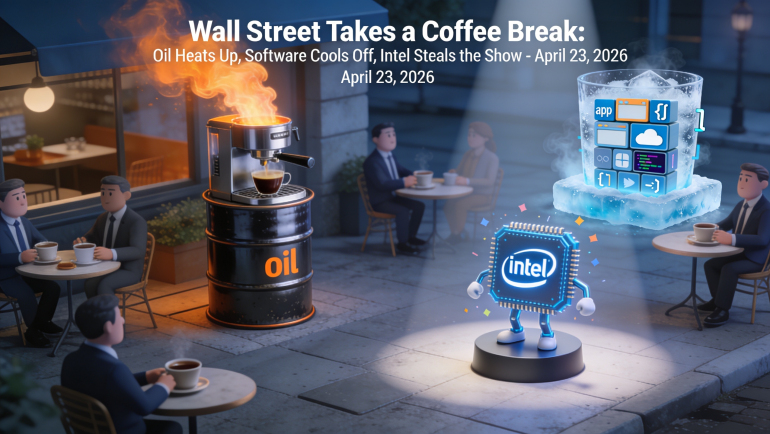
April 23, 2026 – Wall Street Takes a Coffee Break: Oil Heats Up, Software Cools Off, Intel Steals the Show -( $APLD $EPRX $INTC $INTG $MCD $NOK Rise!)

US stocks slipped on Thursday, April 23, 2026, as rising oil prices, stalled US‑Iran peace progress, and a post‑earnings hangover in key tech names weighed on risk appetite, even as semis and Intel’s earnings beat offered a bright spot in the sector.


Index moves and risk tone

  • The S&P 500 eased around 0.41% after notching fresh records earlier in the week, reflecting mild profit‑taking rather than a full‑blown de‑risking.
  • The Dow (-.36%) and Nasdaq (-.89%) each fell with weakness concentrated in large‑cap software and select mega‑cap growth stocks.
  • Under the surface, the PHLX Semiconductor Index stayed green, extending its recent outperformance as investors rotated within tech rather than abandoning the sector outright.
  • the Small caps on the Russell 200 also fell ,37% to close at 2,775.10.

One useful framing: today looked more like a rotation day than a risk‑off day, with chips and cyclicals absorbing flows leaving stretched software winners.


Macro backdrop and oil market

  • Geopolitically driven risk premium remained embedded in crude, with oil prices moving higher again at $97/bbl as progress toward a durable US‑Iran ceasefire appeared to stall.
  • Higher energy prices are re‑igniting the debate about whether central banks will truly be able to deliver the amount of easing currently priced in, or if stickier inflation will limit cuts later in 2026.
  • Strategists increasingly frame the macro trade‑off as: can policy rates “keep up” with any renewed inflation pulse from energy, without choking off already moderating global growth.

For equity investors, this mix—firm oil, nagging inflation risk, but no obvious growth shock yet—helps explain why cyclicals tied to energy and infrastructure are holding up while long‑duration software names are more vulnerable to valuation pressure.


Sector moves: software versus semis

  • Software and broader tech services lagged, with several high‑multiple names giving back a portion of their year‑to‑date gains as investors reassessed rich valuations in a higher‑for‑longer rate scenario.
  • Semiconductor shares were a notable pocket of resilience, with the SOX index continuing its rally even as the major indices traded in the red.
  • The underlying narrative: AI and compute‑heavy spending remain intact, but the market is getting more discriminating, rewarding firms with clear earnings visibility while punishing those with more aspirational growth stories.

This “barbell” within tech—pressure on expensive software, bid for select chips—sets up an interesting relative trade for active managers heading deeper into Q1 earnings season.


Intel earnings: beat and raised, stock pops

  • Intel’s first‑quarter report landed on the strong side, with revenue and earnings above consensus expectations and management guiding to a more constructive outlook for the rest of 2026.
  • The company highlighted better‑than‑feared demand trends and progress in strategic initiatives like its high‑end manufacturing build‑out (including projects such as its Terafab effort), reinforcing the turnaround story in its core CPU and foundry businesses.
  • Coming into the print, the stock had already rallied more than 50% over the past year, yet shares still jumped as investors rewarded the combination of upside to Q1 and a confident forward tone.

For the broader semi complex, Intel’s beat and constructive guide help validate positioning in AI‑adjacent and compute infrastructure names, even as the market remains unforgiving toward companies that miss or offer cautious outlooks.


Big picture for investors

  • Earnings season is ramping, with roughly 85% of early S&P 500 reporters beating expectations, a backdrop that has helped push the index to new highs despite bouts of macro anxiety.
  • At the same time, higher oil and lingering geopolitical risk are feeding a slow grind higher in long‑term yields, keeping a lid on equity multiples at the margin.
  • Against that backdrop, today’s tape seems to reinforce three themes: stay selective in long‑duration tech, lean into semis and real‑earnings AI beneficiaries, and respect the risk that energy‑driven inflation could complicate the path of rate cuts later this year.

VP Watchlist Updates

Below is an update‑style snapshot on the VP Watchlist names for the week, focused on recent catalysts, positioning, and narrative rather than precise price moves.

Applied Digital (NASDAQ: APLD, $36.35, +12.09%)

In late April, Applied Digital (APLD) inked a roughly 15-year, $7.5 billion lease with a new U.S.-based, high investment-grade hyperscaler at its 430 MW Delta Forge 1 “AI Factory” campus, securing 300 megawatts of critical IT load dedicated to AI and high-performance computing. The deal lifts the company’s total contracted lease revenue to more than $23 billion and brings its hyperscale tenant roster to three, with over half of that backlog supported by investment-grade customers.

Broadcom (AVGO, $419.94)

Broadcom’s latest AI alliance with Google parent Alphabet Inc. (GOOGL, GOOG) and Anthropic is less a routine chip deal and more a declaration that the quiet power behind the cloud plans to stay loud for the next decade. The three-way pact locks in custom AI silicon and multi‑gigawatt compute capacity that could reshape who really controls the tollbooths on the generative AI superhighway.

Eupraxia Pharmaceuticals (EPRX, $7.25, +2.69%)

Eupraxia Pharmaceuticals Inc. (EPRX), a clinical-stage biotechnology company leveraging its proprietary Diffusphere™ technology designed to optimize local, controlled drug delivery for applications with significant unmet need, today announced 36-week tissue health and symptom data from patients in the highest dose cohort from its ongoing Phase 1b/2a part of the RESOLVE trial evaluating EP-104GI for the treatment of eosinophilic esophagitis (“EoE”). Dr. James A. Helliwell, Chief Executive Officer of Eupraxia stated, “We are very pleased with the robust and sustained response in both tissue health and symptom data in the highest dose cohort at 36 weeks. This data is consistent with the compelling results we observed at earlier timepoints at this dose level, highlighting the potential to achieve both strong and durable responses after a single administration of EP-104GI. We are also reassured by the excellent safety outcomes across all doses in the trial as we continue to observe no indication of drug related SAEs or spikes in glucose or cortisol. We look forward to the results of the placebo-controlled Phase 2b portion of the study where the same dose is being further evaluated”.

Eupraxia recently co-hosted a Tribe Public www.TribePublic.com, CEO Presentation & Q&A Webinar event, Wednesday, April 1 titled “Turning EOE Into a Once-a-Year Appointment.” The event featured James A. Helliwell, M.D., Co‑founder and CEO of Eupraxia Pharmaceuticals (NASDAQ: EPRX), who discusses the company’s precision drug‑delivery platform, its approach to Eosinophilic Esophagitis (EoE), and broader pipeline priorities, followed by a focused 5–10 minute Q&A. You may watch it now at this Youtube link.

Eupraxia announced (March 17) positive symptom data from patients in the two highest dose cohorts from its ongoing Phase 1b/2a part of the RESOLVE trial evaluating EP-104GI for the treatment of eosinophilic esophagitis (“EoE”). “We are very pleased to see such a meaningful symptom response at 24 weeks in the highest dose of the Phase 1b/2a portion of the RESOLVE study,” said Dr. James A. Helliwell, Chief Executive Officer of Eupraxia. “We believe this type of response based on a single administration procedure would represent a compellingly different option for EoE patients. Importantly, the response that we are observing across cohorts 4-9 has increased as patients progress through the study through to week 24. We believe this demonstrates the importance of stable, continuous long-term local steroids in tamping down signs of inflammation quickly and acting on fibrosis in the longer term. Also, as previously reported, we continue to be encouraged by the safety profile that we have observed with EP-104GI. Currently, with 31 patients dosed in the Phase 1b/2a study, and over 220 months of follow up, there have been no reported serious adverse events.”

Modular Medical (MODD, $4.645)

  • Modular Medical, Inc. (NASDAQ:MODD), a leader in innovative, patient-centric insulin delivery, today announced the pricing of a registered direct offering consisting of 750,000 shares of the Company’s common stock at an offering price of $4.50 per share. The gross proceeds to the Company from the Offering are estimated to be approximately $3.4 million before deducting placement agent fees and other offering expenses. The Offering is expected to close on or about April 21, 2026, subject to the satisfaction of customary closing conditions.
  • Modular Medical’s latest regulatory milestone upgrades the narrative: the company has now secured FDA 510(k) clearance for its Pivot tubeless insulin patch pump, moving from “launch‑ready” to “launch‑approved” in the heart of the fast‑growing diabesity market. The FDA has cleared Modular Medical’s Pivot patch pump as a tubeless, removable insulin delivery system, formally validating the device’s design and performance for commercial use in U.S. adults living with diabetes. The clearance converts what had been a Q1 2026 launch “subject to FDA response” into a tangible commercial pathway, giving the company permission to sell into an insulin pump market that has been estimated at roughly 8 billion dollars globally. Pivot is engineered as a simplified, two‑part patch pump with a 3‑milliliter removable reservoir, no need for battery recharging, and the ability to bolus without a dedicated controller, aiming squarely at patients who have stayed on multiple daily injections because traditional pumps felt too complex, cumbersome, or costly. By clearing Pivot, the FDA is effectively endorsing Modular Medical’s attempt to make advanced insulin delivery feel less like adopting a gadget and more like upgrading a daily habit.

The InterGroup Corporation (INTG, $35.29, +3.31%)

  • InterGroup Corporation delivered (Feb. 17) a notably stronger quarter, highlighted by a 20% jump in total revenue to $17.3 million and a 27% surge in hotel revenue as renovated rooms returned to service and travel demand improved. The company swung from a prior-year net loss to $1.0 million in net income, with operating income more than doubling to $2.0 million, underscoring better cost control and improved operating efficiency. Management further enhanced liquidity and sharpened strategic focus by selling a non-core 12‑unit Los Angeles multifamily property, generating a meaningful gain and additional working capital while maintaining stable performance across its real estate portfolio.

Volato Group, Inc. (SOAR) & M2i Global, Inc. (MTWO)

NVIDIA (NVDA, $199.64) & Nokia (NOK, $9.86)

  • Nokia just served Wall Street a quietly confident Q1, the kind of quarter that doesn’t light up the meme feeds but does make long-only portfolio managers reach for their notebooks instead of the antacids.
  • In an AI market obsessed with GPUs and stardust, Nokia (NOK) is quietly reminding investors that none of this magic moves without serious plumbing. While Nvidia (NVDA) prepares to headline its GTC 2026 “Woodstock of AI” showcase, the chip giant has already written a very real check to Nokia, committing a $1 billion investment to help rewire the world’s networks for 5G‑Advanced, 6G, and AI‑native workloads. The message is simple enough: GPUs may be the new rock stars, but networking is the stadium.
  • Nvidia delivered strong fourth-quarter results recently, posting revenue of $68.1 billion, well above analyst expectations. Looking ahead, the company projects $7.8 billion in revenue for the first quarter of 2026, reflecting continued robust demand for its AI chips even amid broader market headwinds.
  • NVIDIA and Nebius Group N.V. (NASDAQ: NBIS) (March 11) announced a strategic partnership to develop and deploy the next generation of hyperscale cloud for the AI market, from AI natives to enterprises. NVIDIA will invest $2 billion in Nebius.

McDonald’s (MCD, $302.53, +.82%)

Opendoor (OPEN, $5.22)

  • April 16, Opendoor Technologies Inc. (OPEN) announced that it will report first quarter 2026 financial results for the period ended March 31, 2026 following the close of the market on Thursday, May 72026. On May 7, 2026, management will host our Financial Open House video livestream at 2:00 p.m. PT (5:00 p.m. ET) to discuss the company’s business and financial results. We invite shareholders to participate directly through Robinhood’s Say Technologies platform by visiting https://app.saytechnologies.com/opendoor-2026-q1
  • Opendoor Technologies, a leading e-commerce platform for residential real estate transactions, reported financial results for its fourth quarter and year ended December 31, 2025. They highlighted the following: October 2025 acquisition cohort tracking as best-performing October in Company history; acquisitions increased 46% quarter-over-quarter while inventory days in possession reduced 23%.
  • Opendoor continues to navigate a challenging housing backdrop characterized by still‑elevated mortgage rates and tight existing‑home inventories, which weigh on transaction volumes even as affordability slowly improves. The company’s focus on disciplined acquisition spreads, inventory turns, and ancillary services remains central to the investment debate as markets handicap the pace and magnitude of any 2026 housing recovery.

Tesla (TSLA, $373.72)

Reportedly, Tesla unexpectedly swung to positive free cash flow in the first quarter, a neat trick for a company many on Wall Street still expected to be busily torching cash. The electric-vehicle maker has yet to fully open the spending spigots on artificial intelligence and added manufacturing capacity, suggesting the real splurge is still to come.

Serina Therapeutics (NYSE: SER, $1.94)

Serina Therapeutics (NYSE: SER) (www.serinatx.com) seems to have have just traded itself into Wall Street’s good graces, pairing fresh capital with a late-session pop that suggests investors are finally starting to connect the dots between polymer chemistry and portfolio returns. In Huntsville, Alabama, Serina Therapeutics announced definitive agreements for a private placement of common stock and pre-funded warrants that could bring in up to 30 million dollars in gross proceeds. The first 15 million dollar tranche is expected to close on March 20, 2026, with a second tranche of up to 15 million dollars anticipated by April 30, 2026, subject to customary closing conditions.

What makes the deal stand out in a biotech tape crowded with discounts is the pricing: the securities are being sold at about 2.25 dollars per share, a roughly 68 percent premium to Serina’s March 17 closing price, signaling that insiders are willing to pay up for exposure to the company’s clinical agenda. The financing also adds board-level heft, with director Greg Bailey, M.D., stepping into a Co-Chairman role as he leads the investment, a move that effectively puts the capital and the governance on the same optimistic page. Learn more here.

Walmart (WMT, $132.03, +1.58%)

Walmart’s (WMT) latest move into digital health reads less like a retail side-hustle and more like an opening bell in the next leg of the GLP‑1 trade, with syringes, smartphones, and stock tickers all lining up on aisle 7. 

The Sources

  1. Yahoo Finance – “Dow, S&P 500, Nasdaq retreat as software stocks plunge, oil surges…” (live blog for April 23, 2026)
    https://finance.yahoo.com/markets/stocks/live/stock-market-today-thursday-april-23-dow-sp-500-nasdaq-oil-rises-software-233045213.htmlfinance.yahoo
  2. Yahoo Finance – “Dow, S&P 500, Nasdaq waver as oil rises and software stocks sink”
    https://finance.yahoo.com/markets/stocks/live/stock-market-today-dow-sp-500-nasdaq-waver-as-oil-rises-and-software-socks-sink-23finance.yahoo
  3. Yahoo Finance Video – “SOX continues rally as US stocks pull back: A closer look”
    https://finance.yahoo.com/video/sox-continues-rally-as-us-stocks-pull-back-a-closer-look-192152168.htmlfinance.yahoo
  4. Yahoo Finance Video – “Intel will see ‘drastic dollar expansion’: Earnings takeaways”
    https://finance.yahoo.com/video/intel-will-see-drastic-dollar-expansion-earnings-takeaways-211433394.htmlfinance.yahoo
  5. Zacks – “Why Intel (INTC) is Poised to Beat Earnings Estimates Again”
    https://www.zacks.com/stock/news/2904721/why-intel-intc-is-poised-to-beat-earnings-estimates-againzacks
  6. Capital.com – “Intel Stock Forecast | Q4 Earnings Beat, 18A Reconsidered”
    https://capital.com/en-int/market-updates/intel-stock-forecast-16-04-2026capital
  7. MarketWatch – “Intel’s stock has soared ahead of earnings. Are expectations now too high?”
    https://www.marketwatch.com/story/intels-stock-has-soared-ahead-of-earnings-are-expectations-now-too-high-1b9d9b9bmarketwatch
  8. Schwab Network post – “Software stocks plunged after disappointing results…” (ServiceNow, IBM, sector color)
    https://www.facebook.com/schwabnetwork/posts/april-23-2026-software-stocks-plunged-after-disappointing-results-from-now-and-i/facebook
  9. Mutual of America – “Economic & Market Perspective: April 2026” (macro/inflation/earnings backdrop)
    https://www.mutualofamerica.com/insights-and-tools/learning-center/emp/economic–market-perspective-april-2026mutualofamerica
  10. AgWest Farm Credit – “April 2026 Quarterly Economic Update” (Fed, GDP, energy‑inflation channel)
    https://www.agwestfc.com/docs/default-source/business-resources/monthly-market-reports/april-2026-quarterly-economic-update.pdfagwestfc
  11. CNBC – “Stock market next week: Outlook for April 20–24, 2026” (context for earnings season and sentiment)
    https://www.cnbc.com/2026/04/17/stock-market-next-week-outlook-for-april-20-24-2026.htmlcnbc
  12. Yahoo Finance – General “Stock Market News for Apr 23, 2026” page
    https://finance.yahoo.com/markets/stocks/articles/stock-market-news-apr-23-111800806.htmlfinance.yahoo

Consistency: The Quiet Edge Powering Outperformance -( $DIA $SPY $QQQ $VIX )

In markets, as in life, the most decisive advantages rarely announce themselves with fanfare. They accumulate quietly, almost invisibly, until the results become impossible to ignore. Consistency is one of those advantages—a trait often mistaken for temperament, but in reality, more akin to a trained muscle than an inherited gift.

Every follow-through in an inconvenient moment—every early morning analysis, every disciplined allocation, every resisted impulse—adds another “rep.” The returns on those reps don’t post in real time. They compound in the background, surfacing later as resilience, clarity, and, ultimately, performance.

The Myth of Momentum in Easy Cycles

It is easy to appear consistent during bull markets or favorable cycles. Liquidity is abundant, narratives are forgiving, and even marginal decisions can look prescient. In such environments, consistency can masquerade as momentum.

But prosperity is a poor testing ground for discipline.

The real separation emerges when conditions tighten—when volatility rises, conviction is tested, and motivation fades. That is where consistency stops being cosmetic and starts becoming structural. Investors, operators, and leaders alike are forced to confront a less flattering question: not how they perform when conditions cooperate, but who they are when they don’t.

Identity Is Forged in Resistance

Periods of friction—drawdowns, missed opportunities, macro uncertainty—strip away the luxury of enthusiasm. What remains is process.

Discipline, in this context, is not intensity. It is adherence. It is the decision to execute what matters most precisely when the emotional incentive to do so is weakest.

This is where identity takes shape. Not in moments of visibility or applause, but in quiet repetitions: reviewing positions when others disengage, refining strategy after setbacks, maintaining standards when shortcuts beckon.

In markets, as in athletics, resistance is not an obstacle to identity—it is the mechanism that reveals it.

From Habit to Competitive Advantage

Relying on consistency only when conditions are favorable turns it into a dependency. It becomes something you access when it’s easy, rather than something you embody when it’s not.

Training consistency during difficult periods, by contrast, transforms it into an asset—one that compounds.

Over time, this creates a subtle but powerful divergence. While others oscillate with sentiment, those who have built the “consistency muscle” operate with steadiness. Their decision-making improves not because they avoid volatility, but because they are less governed by it.

In practical terms, this might look like:

  • Maintaining disciplined portfolio rebalancing during drawdowns
  • Continuing research coverage even when deal flow slows
  • Executing long-term strategies despite short-term noise

None of these actions are glamorous. All of them are differentiating.

The Standard That Rarely Slips

High performers are often celebrated for moments of brilliance—outsized returns, bold calls, decisive wins. But those moments, while visible, are not the foundation of sustained success.

The true hallmark of champions is far less dramatic: they rarely fall below their own standard.

This is not about perfection. It is about minimizing drift. While others fluctuate between peaks and troughs, top performers compress that range. Their “off days” are still within striking distance of their best.

That consistency of baseline—more than flashes of excellence—is what compounds into long-term outperformance.

Building a Place for Success to Live

Consistency, when practiced deliberately, becomes less an action and more an environment. It creates a framework where productive habits have somewhere to reside—where discipline is not summoned in crisis, but embedded in routine.

This is the quiet architecture behind sustained success. Not reactive bursts of effort, but daily, intentional reinforcement.

In a world increasingly drawn to immediacy—instant insights, rapid trades, viral narratives—the edge may belong to those willing to do something decidedly less exciting: show up, follow through, and repeat.

Because in the end, consistency doesn’t just shape outcomes.

It shapes the people who produce them.

An Applied $7.5 Billion Signal From the Heartland -( $APLD $CRWV $GOOG )

Applied Digital’s (NASDAQ: APLD) latest mega-lease reads less like a data-center contract and more like a sovereign-infrastructure plotline for the AI age, and that is precisely where Seven Boson Group’s sovereign AI lab vision strides onto the stage.

A $7.5 Billion Signal From the Heartland

In late April, Applied Digital (APLD) inked a roughly 15-year, $7.5 billion lease with a new U.S.-based, high investment-grade hyperscaler at its 430 MW Delta Forge 1 “AI Factory” campus, securing 300 megawatts of critical IT load dedicated to AI and high-performance computing. The deal lifts the company’s total contracted lease revenue to more than $23 billion and brings its hyperscale tenant roster to three, with over half of that backlog supported by investment-grade customers.

Delta Forge 1, slated to begin initial operations around mid-2027, is designed as a purpose-built environment for large-scale AI infrastructure, a far cry from yesterday’s generic server farms. To keep pace with this growth, Applied Digital (APLD) expects to secure up to a $300 million senior secured bridge facility for a 150 MW build at Polaris Forge 1, plus another up to $300 million revolving credit facility to support development and working capital across its expanding platform.

From Bitcoin Barns to AI Factories

Applied Digital (APLD) has spent the past several years quietly reinventing itself from a high-performance computing specialist with blockchain roots into a key landlord for AI infrastructure. In North Dakota, the company already has long-duration agreements in place to deliver 250 MW of IT load to CoreWeave, Inc. (NASDAQ: CRWV), the AI hyperscaler now trading on the Nasdaq Global Select Market, supporting its AI and HPC stack at the Ellendale campus in a series of deals expected to generate about $7 billion over roughly 15 years.digital.

Those contracts sit alongside a separate $5 billion, 15‑year lease with another U.S.-based investment-grade hyperscaler at Polaris Forge 2, adding 200 MW of capacity and pushing the company’s leased footprint across its North Dakota campuses to around 600 MW. When added to the Delta Forge 1 agreement, the result is an industrial-scale pivot: multi-campus AI “factories” stitched together by long-term, annuity-like cash flows with hyperscalers that prefer steel, concrete, and power contracts to marketing hype.

Enter Sovereign AI: Seven Boson’s Angle

If Applied Digital (APLD) is laying down the highways of the AI economy, Seven Boson Group is aiming to define who controls the traffic. The firm positions itself as a sovereign AI automated decision-intelligence platform, optimized with clean energy, built for nations and enterprises that insist on owning and governing their AI end-to-end. Note that Carl Page, the brother of Google’s (GOOG) Larry Page is on the BOD.

Where public cloud providers ask customers to trust shared infrastructure and opaque governance, Seven Boson’s thesis is that governments, strategic institutions, and critical enterprises will increasingly demand sovereign AI stacks: data, models, and decision engines that never leave their jurisdiction, compliance perimeter, or political comfort zone. In an era when AI decisions can move markets, shape elections, and steer energy grids, that argument has the kind of staying power investors usually reserve for bond covenants and tax codes.

The Sovereign AI Lab Meets the AI Factory

Put the two narratives together and a new category comes into focus: AI factories physically rooted in places like North Dakota, powering sovereign AI labs that answer not to distant boardrooms, but to nations and flagship institutions. Applied Digital’s (APLD) campuses—Delta Forge and Polaris Forge—deliver the industrial hardware: hundreds of megawatts of critical IT load, engineered for dense GPU clusters and high-performance networking, wrapped in multi-year lease structures that hyperscalers clearly find attractive.

Seven Boson, meanwhile, is architecting the sovereign AI layer on top of that kind of infrastructure: automated decision-intelligence platforms that can sit on dedicated, clean-energy-optimized capacity, potentially in sovereign-controlled or sovereign-partnered facilities. In practice, that means a finance ministry, central bank, or national security agency could train and deploy sensitive models on infrastructure that is not only physically and legally within its borders, but also governed under its own regulatory and ethical regimes—while still tapping industrial-scale GPU horsepower.

Why Wall Street Is Paying Attention

For investors, the combination of long-dated, contracted AI infrastructure and sovereign AI demand taps into several themes at once: digital industrials, mission-critical software, and geopolitical risk management. Applied Digital’s (APLD) multi-billion-dollar backlog provides a line of sight that many software-as-a-service firms would envy, while Seven Boson’s sovereign AI lab proposition speaks directly to regulators, policymakers, and institutions increasingly wary of over-reliance on a handful of global cloud platforms.

The strategic logic is straightforward: as AI systems move from experimental pilots to system-of-record status—allocating capital, managing grids, routing logistics, even advising on defense posture—the tolerance for black-box dependencies and cross-border data exposure falls sharply. That shift creates a premium not just for any GPU-rich data center, but for those that can be integrated with sovereign-grade governance, security, and energy profiles.

A New Playbook for Nations and Hyperscalers

The emerging playbook looks something like this: hyperscalers sign long-term leases with industrial AI factory operators such as Applied Digital (APLD), locking in power, cooling, and capacity at scale, while sovereign AI specialists like Seven Boson design and operate decision-intelligence labs on top of that foundation, tailored to national and institutional requirements. Instead of a single, monolithic “cloud,” the result is a federated landscape of AI estates—some commercial, some sovereign, all hungry for dedicated infrastructure that can be audited, financed, and, crucially, trusted.

It is not hard to imagine future announcements where phrases like “sovereign AI campus,” “national decision-intelligence lab,” and “clean-energy-powered GPU estate” sit side by side with 15‑year, multi‑billion‑dollar lease figures. In that world, Applied Digital’s (APLD) AI factories and Seven Boson Group’s sovereign AI labs are not separate stories; they are successive chapters in the same narrative about who builds, owns, and ultimately governs the intelligence infrastructure of the 21st century—alongside public AI hyperscalers such as CoreWeave (CRWV), whose appetite for specialized infrastructure shows little sign of abating.

The Sources

  1. Reuters via Yahoo Finance – “Applied Digital signs $7.5 billion AI data center lease with US hyperscaler”
    https://finance.yahoo.com/sectors/technology/articles/applied-digital-signs-7-5-133658684.htmlfinance.yahoo
  2. Applied Digital – Investor Relations main site
    https://ir.applieddigital.comapplieddigital
  3. Applied Digital – “Applied Digital Reports Fiscal First Quarter 2026 Results” (IR press release, APLD overview and strategy)
    https://ir.applieddigital.com/news-events/press-releases/detail/131/applied-digital-reports-fiscal-first-quarter-2026-resultsapplieddigital
  4. Applied Digital – “AI Factories” overview page (Delta Forge / Polaris Forge positioning)
    https://www.applieddigital.com/ai-factoriesapplieddigital
  5. Applied Digital – “Applied Digital Breaks Ground on Delta Forge 1, a 430 MW AI Factory Campus”
    https://finance.yahoo.com/news/applied-digital-breaks-ground-delta-130000390.htmlfinance.yahoo
  6. StockTitan – “Applied Digital starts 430 MW Delta Forge 1 AI campus” (additional technical and timeline details)
    https://www.stocktitan.net/news/APLD/applied-digital-breaks-ground-on-delta-forge-1-a-430-mw-ai-factory-4qi8w060ds70.htmlstocktitan
  7. Yahoo Finance – Applied Digital Corporation (NASDAQ: APLD) quote page
    https://finance.yahoo.com/quote/APLD/finance.yahoo
  8. Seven Boson Group – About page (sovereign AI thesis and positioning)
    https://sevenbosongroup.com/about/sevenbosongroup
  9. Seven Boson Group – Investors page (focus on sovereign AI infrastructure and strategy)
    https://sevenbosongroup.com/investors/sevenbosongroup
  10. Seven Boson Group Ltd – LinkedIn company profile
    https://www.linkedin.com/company/seven-boson-group-ltdlinkedin
  11. MEXC Research – “CoreWeave’s $30 Billion AI Data Centre Expansion” (scale of AI infrastructure build-out)
    https://www.mexc.com/news/946106mexc
  12. DataCenterKnowledge – “Nvidia Commits $2B to CoreWeave for 5 GW Data Center Expansion”
    https://www.datacenterknowledge.com/investing/nvidia-invests-2b-more-in-coreweave-for-5-gw-data-center-pushdatacenterknowledge
  13. Yahoo Finance – Context piece on Sovereign AI fund (industry backdrop for sovereign AI themes)
    https://finance.yahoo.com/sectors/technology/articles/uk-announces-sovereign-ai-fund-092804426.htmlfinance.yahoo
  14. ComputerWeekly – “UK’s Sovereign AI supports supercomputing and drug discovery AI startups”
    https://www.computerweekly.com/news/366641874/UKs-Sovereign-AI-supports-supercomputing-and-drug-discovery-AI-startupscomputerweekly
  15. Applied Digital – Groundbreaking and earnings/stock context (broader market narrative, optional)
    • “Applied Digital Braces for High-Stakes Earnings as AI Infrastructure …”
      https://markets.financialcontent.com/wral/article/marketminute-2026-1-2-the-power-behind-the-prompt-applied-digital-braces-for-hmarkets.financialcontent
    • “Applied Digital stock slides after insider sale filing — what investors watch next”
      https://ts2.tech/en/applied-digital-stock-slides-after-insider-sale-filing-what-investors-watch-next/ts2

Nokia’s Optical Glow-Up: When Old-School Telecom Meets New-School AI Cash Flow -( $NOK $NVDA )

Nokia just served Wall Street a quietly confident Q1, the kind of quarter that doesn’t light up the meme feeds but does make long-only portfolio managers reach for their notebooks instead of the antacids.

A Solid Quarter In An Unforgiving Market

Nokia’s first quarter of 2026 delivered exactly what nervous telecom investors have been begging for: progress that shows up in the numbers, not just the slideware.
Comparable net sales grew year over year on a constant currency and portfolio basis, with reported net sales edging higher to roughly mid-single-digit billion-euro territory.
More importantly for a company working its way out of a multi-year downcycle, gross margin expanded meaningfully, with comparable margins climbing several hundred basis points and reported margins moving firmly into the mid-40s.
Comparable operating margin also improved, rising by around two full percentage points, while operating profit jumped by more than half versus the prior year.
For shareholders used to Nokia’s historic habit of creating more drama than earnings leverage, an earnings-per-share print that steps up from last year’s level qualifies as a pleasantly boring surprise.

Free cash flow landed solidly positive in the quarter, adding to a multi‑billion‑euro net cash position that gives the company room to execute rather than simply react.
Management reaffirmed its full-year comparable operating profit outlook in a range that suggests the quarter’s performance was not a one-off optical illusion created by cost cutting alone.

Network Infrastructure: Optical Becomes The New Fashion

If Q1 had a runway, it belonged to Network Infrastructure, which quietly became the best‑dressed segment in the portfolio.
Net sales in Network Infrastructure rose at a healthy clip year over year, with reported sales advancing at a double‑digit pace as demand for high‑capacity backbone and enterprise gear continued to build. The star of the show was Optical Networks, where net sales surged at a strong double‑digit rate, reflecting robust demand for high‑capacity transport as data traffic continues to fatten faster than most enterprise budgets.

That mix shift mattered for profitability.
Network Infrastructure delivered a gross margin in the low‑40s and an operating margin in the mid‑single digits, underlining the idea that this is no longer just a scale game—it’s increasingly a quality‑of‑revenue story.
For investors tracking the AI‑driven upgrade cycle in data centers and backbone networks, Nokia’s order book is starting to look less like a cyclical recovery and more like a structural rerating of the asset base.

AI & Cloud: From Buzzword To Billable Line Item

In Q1, Nokia’s AI & Cloud customer base stopped being a talking point and started behaving like a business. Net sales to AI & Cloud clients grew at a striking near‑50% year‑over‑year pace and now account for a mid‑single‑digit to high‑single‑digit percentage of group net sales, a notable milestone for a segment that was barely visible a few years ago. The company also booked around a billion euros in orders from AI & Cloud customers during the quarter, underscoring that demand is not just theoretical, nor confined to a single hyperscaler.

Behind the numbers sits a strategy years in the making. Nokia has been building out its Cloud RAN and AI‑RAN credentials, including collaborations that pair its anyRAN approach with advanced CPU and GPU platforms to enable AI‑ready radio access networks.
Operators and cloud providers are increasingly testing and deploying Nokia’s software on AI‑accelerated platforms, effectively turning AI‑native 6G from conference chatter into early fieldwork. For investors, the sharp growth in AI & Cloud revenue is a numerical footnote to a more important message: Nokia is increasingly plugged into the capex cycles of AI data centers and cloud‑native networks, not just legacy mobile builds.

Mobile Networks And Core Software: Grinding, Not Glamorous

While Network Infrastructure and AI & Cloud stole the narrative, the core connectivity engine did its part. Mobile Networks net sales managed modest growth on a constant currency basis, a respectable showing in a market where 5G enthusiasm has cooled from “revolutionary” to “please just make the economics work.” Within the broader portfolio, core software grew faster than the hardware side, while radio networks turned in a more muted performance, and standards and licensing revenue provided a welcome contribution.

The segment-level figures underline a shift from headline‑grabbing rollouts to operational and software‑led monetization. Operators are rationalizing spending, tilting budgets toward software, automation and cloud‑native cores that can handle both traditional traffic and emerging AI workloads. Nokia’s positioning in core SaaS and cloud‑native 5G supports a strategy aimed at recurring, higher‑margin revenue rather than brute‑force volume.

Margins, Cash, And The Quiet Art Of Expectations Management

If the top line showed steady progress, the margin story is where Nokia’s Q1 becomes more interesting for fundamental investors.
Comparable gross margin moved into the mid‑40s, helped by a richer mix of high‑value optical, software and AI‑related business, as well as ongoing cost discipline. Operating expenses stayed under control, with the company trimming or reallocating costs without resorting to the kind of slash‑and‑burn tactics that usually come back to haunt future growth.

Reported results also told a more forgiving story than in prior years. Net sales improved modestly year over year, while reported gross margin climbed several percentage points.
Operating profit swung from a small loss in the prior‑year quarter to a solid profit, lifting the operating margin out of negative territory.
Profit for the period also flipped to a positive figure, emphasizing that this is not just an accounting mirage built on adjustments.

From a capital allocation standpoint, a multi‑billion‑euro net cash position and healthy free cash flow give Nokia options—whether that means continued R&D investment, disciplined shareholder returns, or opportunistic moves in software and AI infrastructure.For now, management appears focused on reinforcing the operating model and executing against an unchanged full‑year profit outlook, a choice that should resonate with investors who prefer compounding to theatrics.

From Turnaround Talk To AI-Ready Telecom Utility

Nokia’s Q1 2026 doesn’t read like the climax of a turnaround saga; it reads like the early chapters of a company settling into its role as an AI‑era telecom utility—predictable enough for bond‑like comfort, with just enough growth optionality to keep the equity side awake.
Network Infrastructure is leaning into secular demand for optical and IP networks, AI & Cloud is emerging as a meaningful growth engine, and Mobile Networks is grinding through the mid‑cycle reality of 5G with a sharper focus on software and cloud‑native solutions.
Layered on top is a strategic partnership web that includes hyperscalers, cloud providers and AI silicon players, positioning Nokia at the crossroads of data, compute and connectivity.

In an equity market that still tends to sort old‑world telecom names into the “ex‑growth” bucket, Nokia’s quarter offers an alternative narrative: a historically cyclical vendor methodically retooling itself for AI‑heavy, cloud‑centric networks without blowing up its balance sheet. In that context, NVIDIA’s (NVDA) headline‑grabbing, multi‑billion‑dollar investment in Nokia adds a punchline the market can’t ignore: when the world’s most closely watched AI chipmaker writes a roughly 1.5‑billion‑dollar check into a Finnish network stalwart, it signals that the pipes, optics and RAN software behind the AI boom may be where the next quietly compounding chapter gets written.

The Sources

  1. Nokia Corporation Interim Report for Q1 2026 – Yahoo Finance
    https://finance.yahoo.com/markets/stocks/articles/nokia-corporation-interim-report-q1-050000132.html[1]
  2. Nokia Corporation Interim Report for Q1 2026 – Nokia Investor Relations
    https://www.nokia.com/newsroom/nokia-corporation-interim-report-for-q1-2026/[2]
  3. Nokia Q1 2026 Interim Report – MarketScreener snapshot and metrics
    https://www.marketscreener.com/news/nokia-oyj-results-2026-q1-ce7f59d9da8bff26[3]
  4. Nokia Corporation Interim Report for Q1 2026 – Yahoo Finance UK edition
    https://uk.finance.yahoo.com/news/nokia-corporation-interim-report-q1-050000254.html[4]
  5. Nokia results, reports and filings hub (including Q1 2026)
    https://www.nokia.com/about-us/investors/results-reports/[5]
  6. Nokia Investor Relations main page (events, webcasts, Q1 materials)
    https://www.nokia.com/about-us/investors/[6]
  7. Nokia to publish first-quarter 2026 interim report on 23 April 2026 – Nokia newsroom
    https://www.nokia.com/newsroom/nokia-to-publish-first-quarter-2026-interim-report-on-23-april-2026/[7]
  8. MarketBeat: Nokia Q1 2026 Earnings Report snapshot
    https://www.marketbeat.com/earnings/reports/2026-4-23-nokia-co-stock/[8]
  9. Nokia to Report Q1 Earnings: Can Strong Revenues Drive Growth? – Yahoo Finance
    https://finance.yahoo.com/markets/stocks/articles/nokia-report-q1-earnings-strong-151800966.html[9]
  10. Nokia holds steady as ‘long-term’ AI infrastructure play starts to pay – RCR Wireless
    https://www.rcrwireless.com/20260130/network-infrastructure/nokia-holds-stead-ai-infrastructure[10]
  11. Nokia accelerates AI-RAN momentum with new partnerships, driving path to AI-native 6G – Nokia
    https://www.nokia.com/newsroom/nokia-accelerates-ai-ran-momentum-with-new-partnerships-driving-path-to-ai-native-6g-mwc26/[11]
  12. Nokia to revolutionize mobile networks with Cloud RAN and AI powered by NVIDIA – 5G Americas
    https://www.5gamericas.org/nokia-to-revolutionize-mobile-networks-with-cloud-ran-and-ai-powered-by-nvidia/[12]
  13. NVIDIA and Nokia to pioneer the AI platform for 6G – Nokia (investment and strategic partnership)
    https://www.nokia.com/newsroom/nvidia-and-nokia-to-pioneer-the-ai-platform-for-6g–powering-americas-return-to-telecommunication[13]
  14. Nokia partners with NVIDIA – Nokia press release (AI-RAN, 6G and $1B stake)
    https://www.nokia.com/newsroom/nokia-partners-with-nvidia/[14]
  15. Nokia’s AI MWC26 push tests long-term growth and margin story – Yahoo Finance
    https://finance.yahoo.com/news/nokia-ai-mwc26-push-tests-031715106.html[15]
  16. The Five-Trillion Dollar Titan: NVIDIA’s AI Hegemony and the Nokia Partnership – FinancialContent
    https://markets.financialcontent.com/stocks/article/finterra-2026-2-9-the-five-trillion-dollar-titan-nvidias-ai-hegemony-and-the[16]
  17. A Deep Dive into Nokia’s Global Infrastructure Pivot – FinancialContent
    https://markets.financialcontent.com/stocks/article/finterra-2026-2-20-architects-of-the-ai-supercycle-a-deep-dive-into-nokias-g[17]
  18. Nokia will publish its Q1 2026 interim report on April 23, 2026 – SAMENA Council (X/Twitter)
    https://x.com/SAMENAcouncil/status/2046858842907222035[18]
  19. NVIDIA’s $1B Investment in Nokia: AI’s Expansion Beyond the Data Center and the Dawn of 6G – YouTube
    https://www.youtube.com/watch?v=rKhy2bHytKM[19]

A Father’s Letter to His Children: Lessons on Life, Time, and What Truly Matters


It’s a strange thing, sitting down to write something you never imagined you’d need.

Most of us move through life with an unspoken assumption: there will be time. Time to grow, to evolve, to watch the people we love become who they’re meant to be. It’s a comforting idea. It’s also, as it turns out, not guaranteed.

This isn’t a story about fear. It’s about clarity.

The Illusion of Time

For years, I believed in the long runway ahead—birthdays, milestones, quiet moments that would stack into decades. I assumed I’d be there for all of it.

But life has a way of revising expectations without asking for permission.

What becomes clear, when that illusion fades, is how fragile life really is. Time isn’t something we own—it’s something we’re briefly allowed to borrow.

And once you see that, everything begins to sharpen.

What Actually Matters in Life

The things that once felt urgent—deadlines, minor frustrations, the endless pursuit of more—lose their edge.

What remains are the moments that don’t announce themselves as important at the time: sitting at the dinner table, laughing at something small, being together without distraction.

These are the moments that define a life well lived.

So if there’s advice to give, it’s this: be intentional with your attention. Where you place it determines the quality of your life.

How to Live Well (Not Perfectly)

Take care of your body—not because it needs to look a certain way, but because it carries you through everything that matters.

Go outside more than seems necessary. The sky, the sun, fresh air—these simple things have a way of resetting your perspective.

Be thoughtful about what you chase. Money, status, and possessions can fade. Time with people you love does not.

Say what you mean. Tell people you love them—often and without hesitation.

Complain less. It rarely improves anything. Choose generosity instead. Helping others is one of the few things in life that reliably creates real happiness.

And be present. Put the phone down. Show up fully. Attention is one of the most valuable gifts you can give.

The Courage to Choose Your Life

You don’t need to have everything figured out.

You won’t—and that’s okay.

What matters is noticing what makes you feel alive. What gives you energy, curiosity, and meaning. Move toward those things.

And just as importantly, walk away from what drains you—even if it looks good on paper.

A meaningful life isn’t perfect. It’s honest.

In the End

If you’re reading this one day when I’m no longer around, know this:

I wasn’t thinking about achievements or possessions.

I was thinking about you.

And if there’s one lesson worth holding onto, it’s this: live your life well. Not perfectly. Not for show. Just fully, honestly, and with intention.

That’s enough.

And if there’s anything beyond all of this, I like to believe we’ll find each other again.


Your Guide To Staying Informed In The Markets

Subscribe For Free Email Updates Access To Exclusive Research

Vista Partners — © 2026 — Vista Partners LLC (“Vista”) is a Registered Investment Advisor in the State of California. Vista is not licensed as a broker, broker-dealer, market maker, investment banker, or underwriter in any jurisdiction. By viewing this website and all of its pages, you agree to our terms. Read the full disclaimer here