A November Reminder With Year-Round Commercial Implications
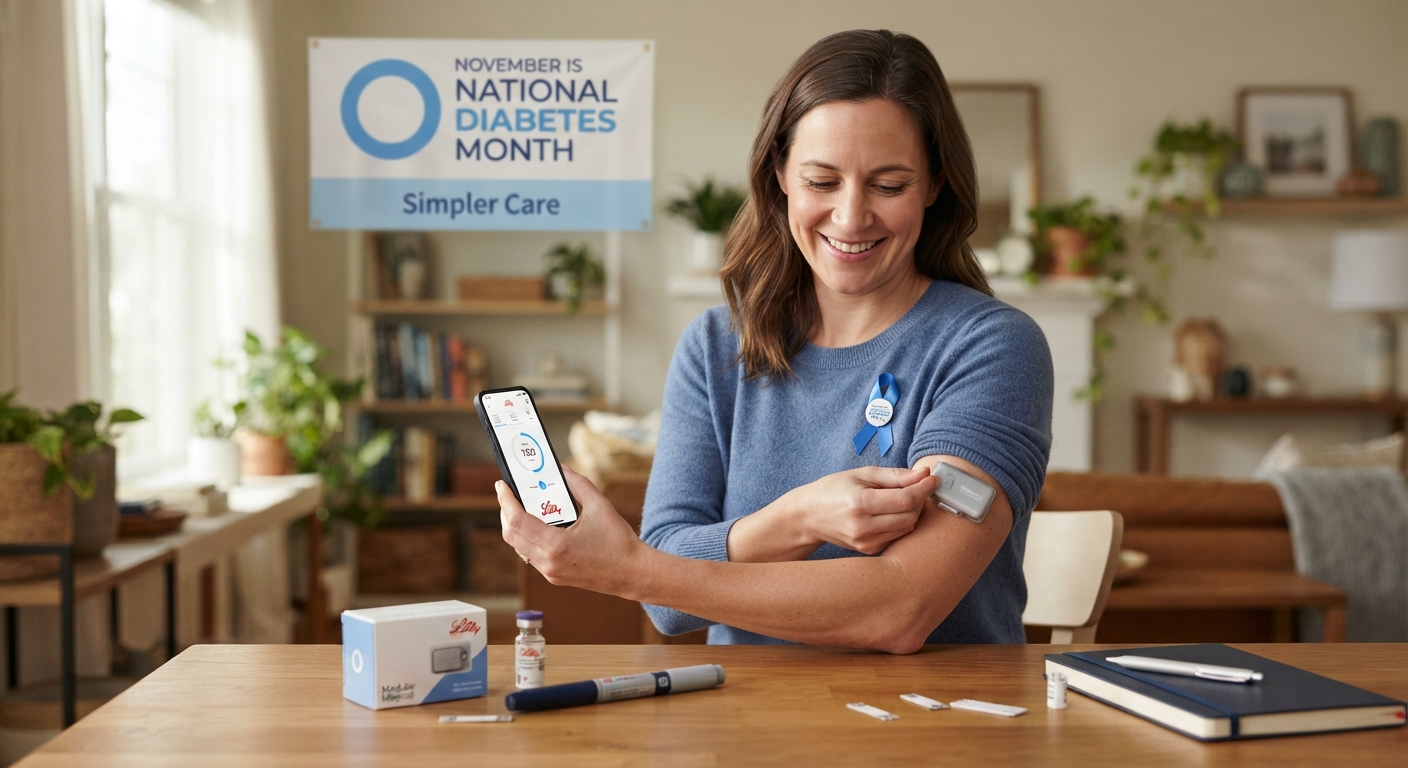
Diabetes does not consult the calendar. November, however, provides a useful occasion to reconsider how much work its management still requires. National Diabetes Month brings attention to preventing complications and improving daily care. The National Institute of Diabetes and Digestive and Kidney Diseases, or NIDDK, emphasizes managing blood glucose, blood pressure and cholesterol, taking medicines as prescribed, building healthier habits and working with a coordinated healthcare team. Its message is practical: better outcomes begin with actions people can sustain. That framework offers a compelling lens through which to examine Eli Lilly and Company (NYSE: LLY) and Modular Medical (NASDAQ: MODD). Lilly represents an established pharmaceutical approach to diabetes treatment and support. Modular is developing a much smaller, device-centered business around a straightforward proposition: insulin-pump therapy could appeal to more appropriate patients if it required less daily complication. These are separate businesses addressing different aspects of the same disease, not a partnership or a shared product program. For many following healthcare stocks, the connection is commercially interesting. Medical progress creates possibilities. Making that progress accessible and manageable helps determine how broadly those possibilities are used.
National Diabetes Month Highlights the Value of Everyday Execution
NIDDK’s National Diabetes Month guidance does not present diabetes management as a single-product solution. It describes an ongoing combination of medication, monitoring, nutrition, activity, weight management and professional support. It also acknowledges that medicines, devices and office visits can be expensive. That combination of clinical need and practical burden matters for healthcare companies. A product’s usefulness depends not only on what it can do, but also on whether the intended patient can obtain it, learn it and incorporate it into everyday life. NIDDK’s accompanying “Take Charge of Tomorrow” video reinforces the point. Its diabetes ABCs refer to A1C, blood pressure and cholesterol, with medication adherence and healthy routines helping support the broader effort to prevent complications. The commercial opportunity, in other words, is not to replace sound medical care with a clever gadget. It is to make an appropriate part of care easier to carry out. Healthcare has never suffered from a shortage of instructions. The more valuable innovation sometimes involves reducing the homework.
Eli Lilly Provides the Established Diabetes-Care Anchor
Lilly’s diabetes resources distinguish between type 1 diabetes, which requires insulin, and type 2 diabetes, for which treatment may or may not include insulin. The company also emphasizes that diabetes can change over time and that treatment needs can change with it. That distinction is essential when assessing the market. The Centers for Disease Control and Prevention estimates that 40.1 million Americans had diagnosed or undiagnosed diabetes in 2023. That is a measure of the disease’s prevalence, not the number of people who need an insulin pump. Similarly, the American Diabetes Association places the total cost of diagnosed diabetes at $412.9 billion in its economic-cost materials. The figure illustrates the substantial financial burden associated with the disease, but it should not be mistaken for revenue available to any individual company. Lilly provides an established pharmaceutical reference point within this broad landscape. Modular’s opportunity is narrower and more specific: serving insulin-requiring patients who could benefit from pump therapy but have remained on injections.
Modular Medical’s Pivot Pump Makes Simplicity the Product Strategy
Modular’s Pivot insulin pump is designed around a reusable pump and a three-day disposable cartridge. According to its SEC filings, the system holds 300 units of insulin, delivers background insulin and allows additional doses through an on-device button. It does not require a separate external controller, a charging routine or user battery replacement. Those features support a deliberate positioning choice. Rather than compete solely on adding capabilities, Modular is trying to lower the practical barriers that have discouraged some people from adopting pumps. Its annual filing describes an audience it calls “Almost Pumpers”: people who recognize potential benefits but remain on multiple daily injections because of factors including complexity, training requirements, cost or prior experiences. The company says it interviewed more than 200 people in that category during development. That does not establish future demand, but it gives the product strategy a defined customer problem rather than a vague aspiration to disrupt healthcare. The bullish proposition is straightforward: a less burdensome option could help expand adoption among appropriate patients who have declined existing choices. Sometimes the most persuasive feature is one fewer thing to manage.
PBM Agreements Add a Potential Commercial Advantage
A simpler product still needs a workable route through the reimbursement system. Our recent report highlights that Modular announced agreements on November 19, 2026, with the nation’s three largest pharmacy benefit managers: CVS Caremark, part of CVS Health (NYSE: CVS); Express Scripts, part of The Cigna Group (NYSE: CI); and Optum Rx, part of UnitedHealth Group (NYSE: UNH). The report describes a combined network reach exceeding 182 million people. That figure requires careful interpretation. It is not a count of covered Pivot users, eligible pump patients or guaranteed prescriptions. Individual access remains subject to health-plan formularies and benefit design. Nevertheless, the agreements strengthen the commercial framework around the device. Engineering can reduce the friction of using a pump. Reimbursement arrangements can help address the separate challenge of obtaining one. For a small medical-device company, progress on both fronts is more useful than an elegant product demonstration alone.
The $3 Billion Opportunity Is a Model, Not a Purchase Order
Modular estimates an addressable opportunity of approximately $3 billion. Its annual SEC filing connects that estimate to potential adoption among insulin-requiring patients and an assumption of approximately $4,100 in annual cartridge revenue per patient. The recurring-supply structure is an important part of the business case. A reusable pump paired with disposable cartridges creates the potential for continuing revenue as patients remain on therapy. But management’s addressable-market estimate is not booked business. Prescriptions, paid claims, active users and repeat orders will determine whether the model develops into a substantial commercial operation. That distinction does not diminish the opportunity. It identifies the work required to capture it. The most constructive bullish case rests on a growing, durable patient base, not on multiplying an ambitious market estimate by an agreeable percentage.
Competition Gives the Opportunity Context
Insulet (NASDAQ: PODD), maker of Omnipod, and Tandem Diabetes Care (NASDAQ: TNDM) appear in Modular’s SEC filings as established participants in the competitive landscape. Their presence makes execution demanding, but it also helps define Modular’s strategic choice: appeal to people whose preferences have not been met by existing offerings. Modular also brings relevant development experience. Its corporate materials identify Modular’s founder Paul DiPerna as the creator of Tandem Diabetes and the t:slim pump. That background is useful context, although prior accomplishments do not guarantee a successful new launch. The company’s opportunity is therefore not limited to persuading an existing pump user to switch. Its more distinctive ambition is to give some injection users a reason to enter the category. That is an attractive direction for competition: more choices for different needs, rather than another contest to produce the longest instruction manual.
Commercial Progress Must Travel With Financial Discipline
Modular’s filings describe a progression from FDA clearance in April 2026 to initial U.S. shipments in June. An August registration statement said initial patients had completed onboarding and training and were actively using Pivot, with the company collecting feedback and utilization information. Those milestones move the story beyond product development. They do not yet establish commercial scale. A November report describes a phased rollout in five markets ahead of an anticipated broader launch in 2027. It also reports approximately $5.1 million in cash at September 30, substantial operating cash use and a going-concern warning. Earlier SEC filings independently establish the capital requirement. Modular’s June-quarter Form 10-Q states that additional financing is necessary and that insufficient funding could force reductions in commercialization and development. Its April financing announcement further illustrates that capital raising is already part of the operating story. Financing risk belongs inside the analysis, not in the fine print. A promising product needs enough financial runway to become an established business.
The Bullish Case: Less Friction, More Opportunity
National Diabetes Month provides a useful reminder that diabetes care succeeds through sustained daily action, not a single annual awareness campaign. NIDDK’s guidance emphasizes medication adherence, individualized goals, healthy habits and coordinated support. Lilly and Modular occupy different positions within that larger effort. Lilly’s diabetes resources address treatment and management across a broad patient population. Modular is pursuing a focused device opportunity among insulin-requiring patients who may prefer a simpler alternative to their current routine. For many following MODD, the next meaningful evidence will be concrete: paid prescriptions, repeat cartridge orders, patient retention, manufacturing consistency and sufficient capital to support expansion. The appeal is not that diabetes has suddenly become simple. It is that making one important part of its management less complicated could create meaningful value. In a healthcare system exceptionally skilled at adding steps, a company trying to remove a few merits attention.
The Sources
- NIDDK: National Diabetes Month
- NIDDK: “Take Charge of Tomorrow: Preventing Diabetes Health Problems” video
- Eli Lilly and Company (NYSE: LLY): Diabetes Management, Resources and Support
- CDC: National Diabetes Statistics Report
- American Diabetes Association: The Staggering Costs of Diabetes
- SEC.gov: Modular Medical (NASDAQ: MODD), Fiscal 2026 Form 10-K
- SEC.gov: Modular Medical, August 5, 2026 Form S-3
- SEC.gov: Modular Medical, Form 10-Q for the Quarter Ended June 30, 2026
- Vista Partners: Modular Medical’s Pivot Opportunity and Major PBM Agreements
- Modular Medical: Corporate Overview and Founder Background
- SEC.gov: Modular Medical, April 19, 2026 Financing Announcement
Stay Updated with Vista Partners
Subscribe to receive market insights, investing ideas, and the latest updates directly in your inbox.