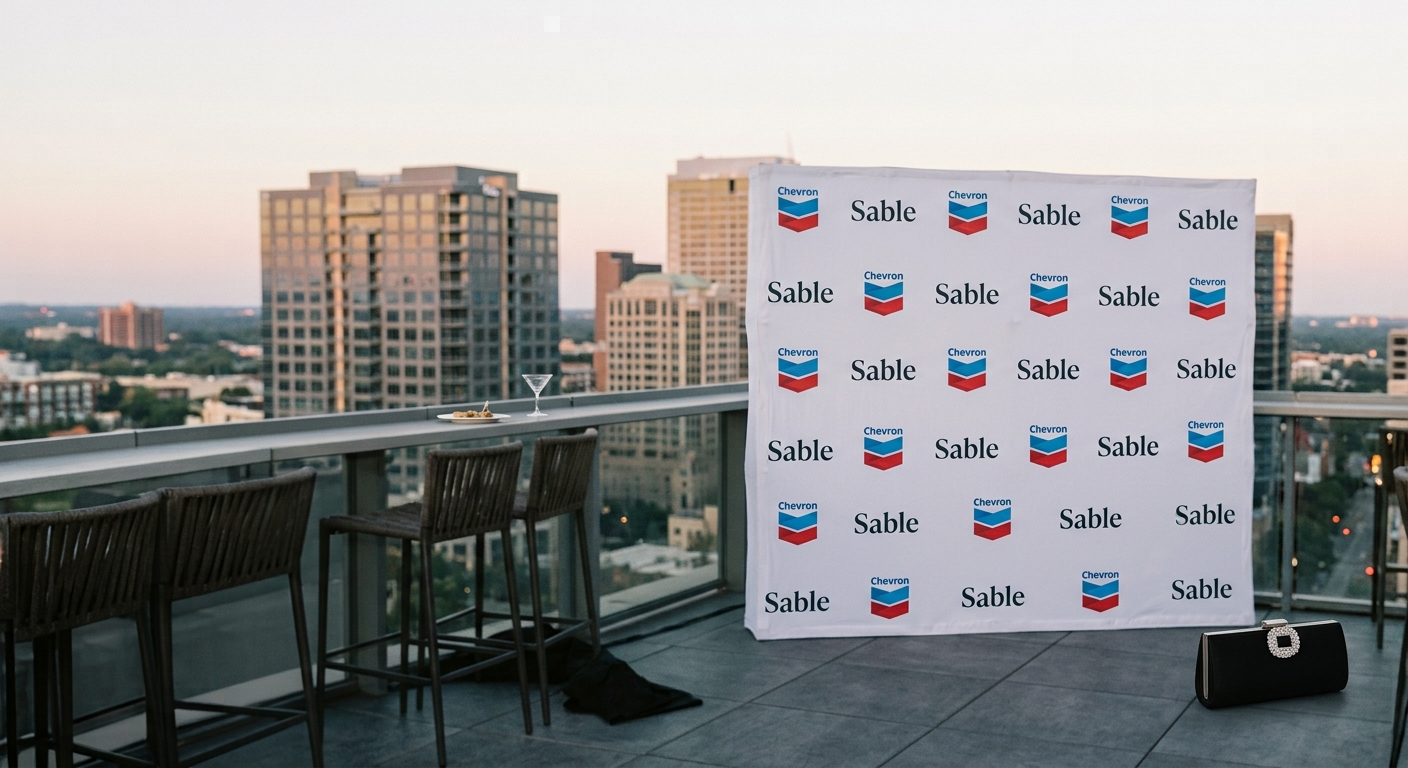
Energy investors are being handed a familiar but compelling proposition: assets with long geological lives, existing infrastructure and a clearer route to incremental production can become unusually valuable when the industry’s appetite for new supply remains selective. Chevron Corp. (NYSE: CVX) is expanding in Venezuela with a stated low-cost growth plan, while Sable Offshore Corp. (NYSE: SOC) is converting a long-idled California asset base into revenue, cash flow and rising oil sales. The two opportunities are not interchangeable, one is a global integrated major pursuing a multiyear international expansion; the other is a concentrated, operationally leveraged offshore restart story. But together they underline a more constructive energy-market theme: the next attractive barrel may come less from wildcatting and more from reviving, extending and optimizing assets that already have roads, pipes, platforms and a prior operating history.
Chevron Turns Venezuela Into a Long-Duration Call Option
Chevron (NYSE: CVX) said it plans to invest more than $7 billion through its Venezuelan joint ventures over five years, targeting roughly 600,000 barrels per day of production, about twice its present Venezuelan output. Its expanded Petroindependencia position adds adjacent acreage in the Carabobo region of the Orinoco Belt, an area defined by enormous resource potential and, crucially, operating infrastructure that can reduce the cost and complexity of growth. That last point may be the investment thesis in work boots. Chevron has indicated that expected production costs are below $20 per barrel and that the development can build from existing facilities and pipeline systems rather than requiring a full greenfield buildout. In oil, a road already built, a pipe already laid and a processing system already understood can be worth more than an especially handsome slide deck. Chevron’s advantage is also institutional. The company has operated in Venezuela since 1923 and retains three joint ventures there, including Petroindependencia and Petropiar in the Orinoco Belt and Petroboscan in western Zulia. That century-long operating presence does not make political risk disappear, oil has never been known to respect a tidy spreadsheet, but it does give Chevron a reservoir of local knowledge, commercial relationships and asset familiarity that a new entrant cannot purchase overnight. For CVX shareholders, Venezuela is not the entire story. It is a potentially meaningful layer of lower-cost, long-cycle supply within a much broader portfolio spanning upstream production, refining, chemicals, trading and shareholder returns. The appeal is less a heroic wager on one country than the possibility that a modest slice of Chevron’s capital program could unlock disproportionately durable barrels.
The $100 Billion Question Helps Define Chevron’s Edge
The broader Venezuelan oil revival is attracting attention partly because of its enormous funding ambition. A separate U.S.-backed arrangement involving private Venezuelan producer North American Blue Energy Partners, or NABEP, has been associated with an estimated $100 billion capital requirement to develop infrastructure and raise production substantially. Yet the source of that financing remains unsettled, and the U.S. government has said it is not making a direct cash investment. NABEP reportedly seeks to grow output past 1 million barrels per day, while the U.S. government has a 35% equity interest in the new venture and rights related to future crude purchases. The scale is undeniable; so is the financing hurdle. Ambition may be abundant, but drilling rigs, pipelines, power systems and export logistics still prefer actual capital to enthusiastic adjectives. That uncertainty may sharpen the contrast with Chevron (NYSE: CVX). Chevron’s announced $7 billion plan is large, but it is specific, tied to its existing joint ventures and framed around incremental development in areas near established operations. The company is not presenting Venezuela as a blank map in need of a miracle; it is treating it as an industrial asset base that can be expanded under improved fiscal, commercial and legal terms. For many, this distinction matters:
| Investor consideration | Chevron (NYSE: CVX) | Venezuela’s broader rebuild effort |
|---|---|---|
| Capital source | Chevron’s corporate balance sheet and established capital-allocation system | Large-scale outside financing still needs to be assembled |
| Operating foundation | Existing Venezuelan joint ventures and decades of local operating experience | Broader infrastructure renewal needs substantial investment |
| Production strategy | Expand adjacent areas and use established facilities | Rebuild and scale a national oil system over time |
| Principal appeal | Low-cost production growth within a diversified major | Potentially massive resource upside, accompanied by execution and funding uncertainty |
Venezuela’s resource base is vast: the cited reports describe national reserves of about 303 billion barrels, while the fields contemplated in the NABEP arrangement are estimated to contain about 65 billion barrels. But reserves are not production, and production is not free cash flow. Chevron’s prospective appeal is that it may be positioned to move from geology to marketed barrels with less reinvention required.
Sable Offshore: A California Restart Becomes a Cash-Flow Story
Sable Offshore Corp. (NYSE: SOC) offers a much more concentrated version of the same broad idea: existing assets can produce powerful equity torque when operational bottlenecks begin to clear. In its second-quarter 2026 update, Sable reported $137.1 million in revenue and $9.4 million of positive operating cash flow, its first full quarter of both revenue generation and positive operating cash flow since inception. The company’s average daily net sales volume was approximately 21,000 barrels of oil per day, while exit-rate oil sales reached about 40,000 net barrels per day, representing 149% growth from the first day of the quarter. The company’s Santa Ynez Unit restart is showing the traits investors typically want from an operational recovery:
- Production from Platform Heritage resumed in early April 2026.
- July preliminary sales were approximately 38,000 gross barrels per day.
- August sales averaged approximately 42,000 gross barrels per day through August 9.
- Sable expected all 77 producing wells at Platforms Harmony and Heritage to be online in the third quarter.
- Platform Hondo was expected to return in September, with five completed perforation additions forecast to add an estimated 600 gross barrels per day each.
That is not merely an “oil-price story.” It is a throughput, execution and asset-utilization story. If more wells come online, transportation and refining constraints ease, and higher-value barrels find better market access, the company’s revenue base can grow even without assistance from a more generous commodity tape. Sable has also reduced its midpoint second-half 2026 capital-expenditure guidance by 41% to $85 million, explicitly prioritizing cash-flow optimization and faster debt amortization. Its 2027 guidance assumes approximately 42,500 net barrels of oil equivalent per day, nearly all oil, with projected lease operating expense of $9 per net BOE and projected cash general-and-administrative expense of $3.50 per net BOE. The public should treat those as company targets, not settled facts, but the framework is attractive: ramp high-margin oil volumes while lowering the capital burden required to support the restart.
Regulatory Progress Removes One Layer of Uncertainty
Sable (NYSE: SOC) is not free of regulatory, environmental, operating or financing risk. In fact, its own disclosures make clear that pipeline oversight, restart timing, marketing arrangements, commodity pricing, litigation and debt obligations remain central considerations. Still, a recent federal court development provided a constructive signal. A federal judge dismissed environmental groups’ challenge seeking to halt drilling authorization at a Sable platform, ruling that the Bureau of Ocean Energy Management did not have to conduct a new review of the company’s latest operating plans in the circumstances presented. The decision did not erase broader environmental or regulatory scrutiny, but it removed one potential obstacle to the restart process. That nuance is important. The public should also not mistake a legal win for a blank check. California offshore operations remain politically and environmentally sensitive. But markets often value the difference between “uncertainty exists” and “a specific restriction has been cleared.” The former is ordinary business; the latter can be a catalyst.
The Bull Case: Barrels, Bottlenecks and Optionality
The bullish case for Chevron (NYSE: CVX) and Sable Offshore (NYSE: SOC) rests on different scales of opportunity but a shared operating logic. Chevron’s bull case is measured rather than theatrical. The company may add meaningful low-cost Venezuelan production over time, use existing infrastructure, benefit from revised commercial terms and embed a long-duration resource opportunity inside a diversified global enterprise. Its Venezuela plan need not transform the company to matter; sustained production growth at competitive cost can be quite enough. Sable’s bull case is more dramatic and therefore more fragile. The company has moved from a restart narrative toward demonstrated revenue and positive operating cash flow, while sales volumes have increased sharply. If the Hondo restart, well optimization, midstream improvements, refinery acceptance and potential marketing alternatives unfold as management expects, Sable could see meaningful operating leverage from a largely oil-weighted production base. The principal risks remain substantial:
- Chevron faces Venezuelan sovereign, sanctions, legal, fiscal and execution risk, along with normal commodity-price volatility.
- Sable faces concentrated-asset risk, California regulatory and environmental risk, debt-service demands, midstream constraints, oil-quality issues and exposure to the successful restart of its platforms and related infrastructure.
- Both stories depend on turning technically available resources into reliably marketed, economic barrels.
Yet many often look for situations where the risk is visible but the pathway to improvement is also visible. That is the difference between speculation and a genuine catalyst-driven thesis.
Why Energy Investors May Pay Attention
The strongest conclusion is not that every oil barrel is suddenly worth a standing ovation. It is that incremental barrels from known reservoirs, supported by preexisting infrastructure and paired with improving commercial conditions, may command more investor attention than their seemingly unglamorous origins suggest. Chevron (NYSE: CVX) offers the established-major version of that proposition: disciplined capital deployment, a deep operational history and a potentially significant Venezuelan growth lane. Sable Offshore (NYSE: SOC) offers the higher-beta version: a restart that is beginning to show revenue, cash flow and volume momentum, with clear operational milestones still ahead. For energy-focused investors, the appeal is straightforward. The oil industry may be famous for grand promises, but markets usually reward something more mundane and more profitable: barrels that can actually get from reservoir to customer without requiring a new civilization to be built in between.
The Sources
- Reuters via Yahoo Finance “Chevron expands Venezuela presence with $7 billion plan to double output in five years”
- Yahoo Finance “The biggest unanswered question in Trump’s Venezuelan oil deal: Where will the $100B in funding come from?”
- Yahoo Finance “Sable Offshore Corp. Reports Second Quarter 2026 Financial and Operational Results”
- Bloomberg Law “Sable’s Drilling Restart Doesn’t Warrant New Review, Judge Says”
- Reuters “Chevron expands Venezuela presence with $7 billion plan to double output in five years”
- CNBC “Chevron will expand Venezuela operations, more than doubling oil production”
- The New York Times “Chevron Expansion in Venezuela Extends U.S. Influence Over Oil Riches”
- NPR “Chevron to expand in Venezuela, days after the U.S. and Venezuela strike oil deal”
- Reuters “Sable Offshore fined $1.45 million, allowed to continue pipeline operations”
- Oil & Gas Journal “Federal judge allows Sable Offshore to continue California pipeline operations”
Disclosure: This article is for informational and editorial purposes only and is not investment advice. Oil-and-gas equities can be highly volatile, and investors should review company filings, debt terms, commodity-price exposure, legal developments and their own risk tolerance before making an investment decision.
Stay Updated with Vista Partners
Subscribe to receive market insights, investing ideas, and the latest updates directly in your inbox.