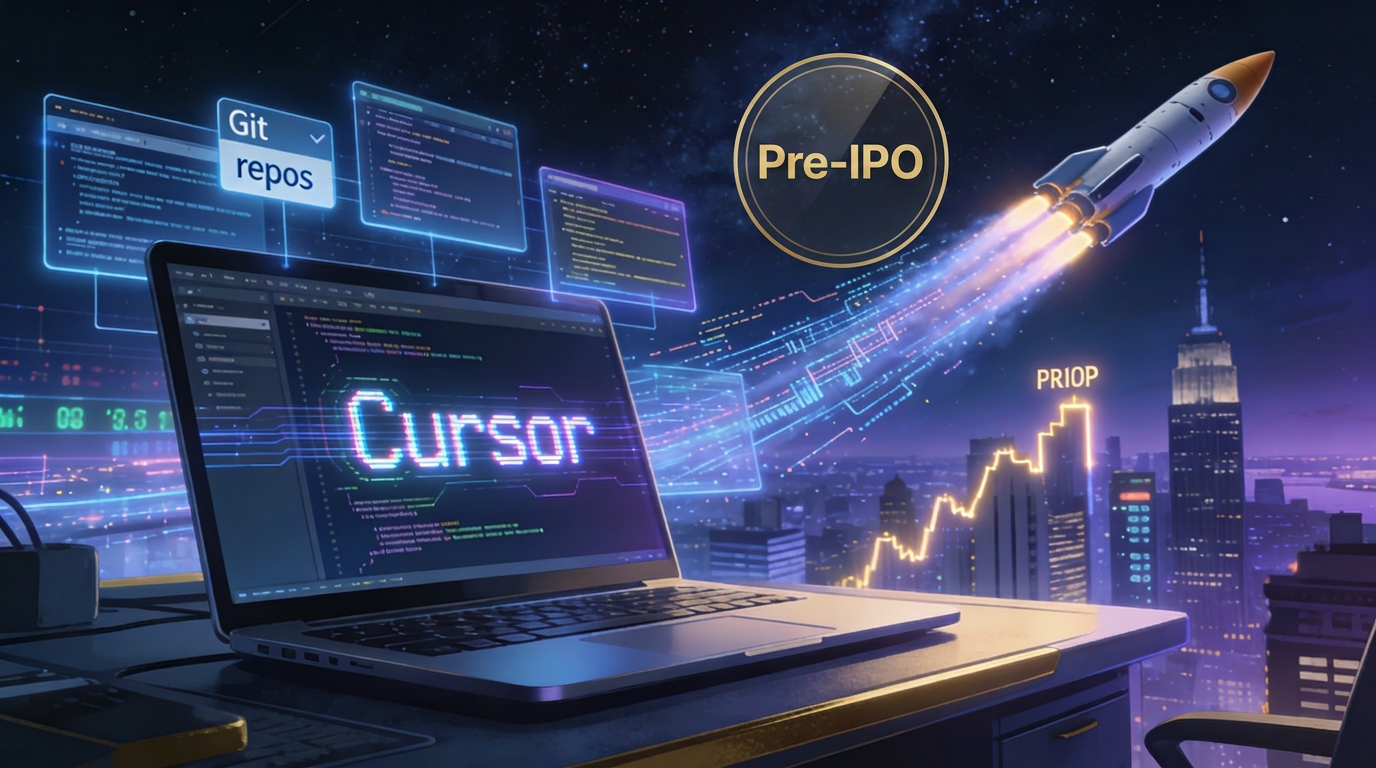
SpaceX’s $60 billion option on AI-coding startup Cursor is less a moonshot than a meticulously plotted orbital insertion into the heart of the AI boom. It wraps Elon Musk’s space-and-software empire into a single storyline: rockets, satellites and now the code that will tell them what to think.
A $60 Billion Question: Buy Now, Partner Later, Or Both?
SpaceX’s deal with Cursor grants it the right—though notably not the obligation—to acquire the AI coding startup for $60 billion later this year. The alternative is a mere $10 billion collaboration fee, which in this market passes for the “trial subscription” tier. Cursor, known for its code-generation platform that helps developers write and refine software with AI, has been rapidly climbing the valuation ladder, with talks underway for a separate funding round valuing it at more than $50 billion even before fresh capital.
The structure of the agreement reads like a call option on the future of AI-assisted software: SpaceX secures strategic access today and preserves the right to own the engine outright once the market proves (or over-proves) Cursor’s worth. In a cycle where AI valuations can move from stratospheric to exospheric in a quarter, locking in a price—however eye-popping—may be Musk’s version of hedging against his own optimism.
Cursor: From IDE Sidekick To Center-Stage Asset
Cursor has emerged as one of the breakout stars of the AI developer-tools wave, building a platform that embeds generative AI directly into the software creation process. The company has already attracted heavyweight backers including Andreessen Horowitz, Nvidia, Google, and Thrive Capital, and it has been raising capital at a pace that would make late-stage unicorns of the last cycle blush. Recent reports suggest it is pursuing a new multi‑billion‑dollar round, on top of earlier financings that pushed its valuation from roughly $29.3 billion in late 2025 toward the $50 billion mark in early 2026.
Growth expectations are tuned to AI‑era frequencies. Cursor’s annualized revenue run rate has reportedly been scaling rapidly, with projections that it could surpass $6 billion by year‑end, implying a business where usage—and spending—are compounding as enterprises retool their software workflows around AI. That puts Cursor in the rarefied group of startups that are still technically “private” but whose numbers and investors make them look IPO-ready in everything but ticker symbol.
Musk’s Grand Unification Theory Of Space And AI
The Cursor option doesn’t stand alone; it slots into Musk’s broader strategy to fuse space infrastructure with AI compute. Earlier this year, SpaceX acquired xAI, the developer of the Grok chatbot, in what has been described as a record‑setting deal that combined SpaceX’s roughly $1 trillion valuation with xAI’s estimated $250 billion price tag. Musk has argued that within a few years the lowest‑cost way to run large-scale AI compute may be in orbit, powered by vast, always‑sunny solar arrays and linked via satellite networks—an argument that, notably, pairs nicely with SpaceX’s Starlink business.
Cursor, in that context, looks less like a standalone coding assistant and more like a control panel for Musk’s AI constellation. If xAI is the model factory and Starlink the connectivity fabric, Cursor is the tooling layer that makes it easier for developers to build and deploy applications across this emerging stack. In Wall Street terms, Musk appears to be vertically integrating an AI pipeline from orbital infrastructure to developer keyboard, with Cursor positioned squarely at the keyboard end.
Pre‑IPO Theater: A Very Large, Very Loud Signal
The timing of the Cursor pact is hardly incidental. SpaceX is preparing for what could be the largest initial public offering in history, with reports suggesting a listing that might seek to raise about $75 billion at a valuation near or above $1.75 trillion. Against that backdrop, a $60 billion option looks like both a strategic move and a statement piece: a reminder to prospective investors that this is not just a rocket company, but a full‑spectrum AI and infrastructure platform.
Of course, spending what amounts to roughly 80 percent of the IPO’s expected raise on an AI startup—if SpaceX exercises the option—also telegraphs a certain confidence. It suggests Musk believes the long‑term value of tightly integrating Cursor into his ecosystem will outweigh any near‑term concerns about valuation froth or the optics of deploying that much capital before the ink on the prospectus is dry. For investors, the message is straightforward: buy into the float, and you’re not just getting exposure to launches and satellites; you’re getting a front‑row seat to a very expensive bet on the future of AI‑native development.
AI IPO Season And The Cursor Benchmark
Cursor’s role in the wider market goes beyond its own capitalization table. As AI leaders from OpenAI to Anthropic reportedly prepare their own offerings, space‑adjacent or otherwise, the price tag implied by SpaceX’s option creates a reference point for how the market might value software‑centric AI platforms with robust revenue growth. If an AI coding specialist commands an effective $60 billion ceiling and north‑of‑$50‑billion private valuations, that sets expectations for what general‑purpose model labs and other category leaders might seek when they finally ring the bell.
It also underscores the gravitational pull these companies now exert across industries far removed from pure software. Auto makers, cloud providers, chip designers, and now rocket companies are repositioning themselves as AI platforms, often with balance‑sheet commitments that would have looked excessive in any prior tech cycle. In that context, SpaceX’s Cursor option reads less like an outlier and more like the logical next stage of competitive escalation.
Risk, Reward, And The Fine Print
There is, naturally, no guarantee that SpaceX will pull the trigger on the full acquisition. The deal preserves flexibility: if public markets cool on AI multiples, or if Cursor’s runaway growth slows, a $10 billion partnership could prove the more prudent path while still keeping SpaceX closely tethered to the startup’s technology. And Cursor itself retains leverage, both in ongoing fundraising discussions and in any future negotiations, thanks to a rare combination of strategic suitors and investor demand.
Yet even in its current “option only” form, the agreement pushes Cursor into a different orbit. Prospective customers and engineers now know that the company sits on the short list of assets Musk is willing to value at tens of billions, which has its own magnetism in a talent‑scarce market. For SpaceX, it locks in an inside track to one of the most closely watched AI developer platforms on the market while preserving the right to make it wholly its own—once regulators, IPO investors, and, perhaps, Musk’s own risk appetite align.
In an era when AI deals often read like science fiction, SpaceX’s Cursor option stands out for being both audacious and oddly rational: a structured bet that the future of space, software, and shareholder returns may all hinge on who owns the code that writes the code.
The Sources
Here’s a clean, numbered list of key sources with links you can reference or include at the end of your article:
- SpaceX–Cursor deal overview – Yahoo Finance
https://finance.yahoo.com/markets/article/spacex-strikes-60-billion-deal-for-the-right-to-buy-ai-coding-startup-cursor-143350832finance.yahoo - SpaceX–Cursor option structure and terms – Reuters
https://www.reuters.com/technology/spacex-says-it-has-option-acquire-startup-cursor-60-billion-2026-04-21/reuters - Deep‑dive on SpaceX’s option and collaboration with Cursor – CNBC
https://www.cnbc.com/2026/04/21/spacex-says-it-can-buy-cursor-later-this-year-for-60-billion-or-pay-10-billion-for-our-work-together.htmlcnbc - Narrative feature on the deal and AI ambitions – The New York Times
https://www.nytimes.com/2026/04/21/business/spacex-cursor-deal.htmlnytimes - Market/IPO angle and competitive context vs. OpenAI and Anthropic – Barron’s
https://www.barrons.com/articles/spacex-cursor-deal-ipo-dad020dabarrons - Commentary and strategic framing of the deal – Fortune
https://fortune.com/2026/04/22/spacex-strikes-60-billion-deal-cursor/fortune - Tech and developer‑tools focus on the option to buy Cursor – TechCrunch
https://techcrunch.com/2026/04/21/spacex-is-working-with-cursor-and-has-an-option-to-buy-the-startup-for-60-billion/techcrunch - Background on Cursor’s funding, valuation, and revenue growth – CNBC
https://www.cnbc.com/2026/04/19/cursor-ai-2-billion-funding-round.htmlcnbc - Additional details on Cursor’s new funding plans and investors – Yahoo Finance (technology section)
https://finance.yahoo.com/sectors/technology/articles/ai-coding-startup-cursor-seeks-115735149.htmlfinance.yahoo - Context on Musk’s broader AI and space‑compute vision via xAI–SpaceX tie‑up – Fortune
https://fortune.com/2026/02/03/musk-merges-spacex-xai-ahead-of-potential-ipo/fortune
Stay Updated with Vista Partners
Subscribe to receive market insights, investing ideas, and the latest updates directly in your inbox.